
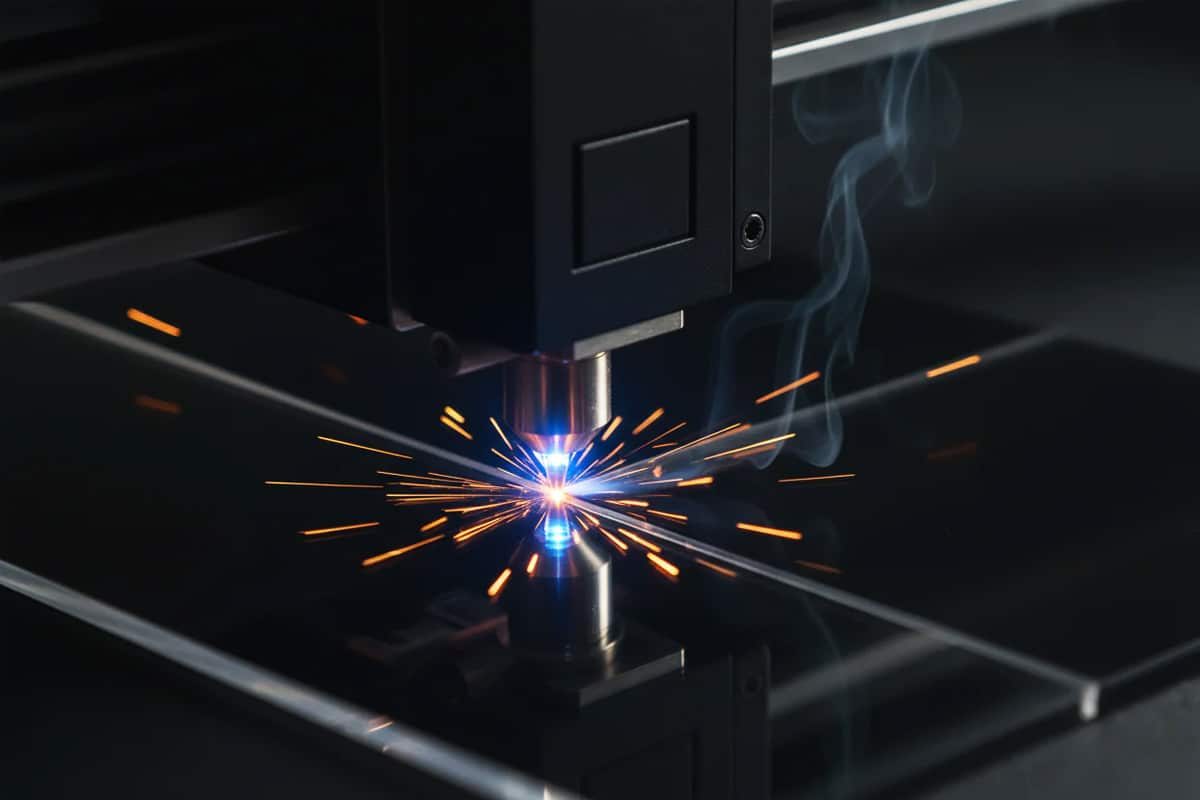
What Ventilation or Air Extraction Requirements Are Needed During Laser Cutting?
Laser cutting is widely used in modern manufacturing because it offers high cutting speeds, narrow kerfs, excellent accuracy, and the ability to process a broad range of metals and non-metallic materials. However, the cutting process also produces smoke, fumes, fine particles, gases, vapors, and sometimes combustible dust. If these contaminants are not effectively captured and removed, they can reduce air quality, contaminate machine components, create fire or explosion hazards, and expose operators to potentially harmful substances. For this reason, proper ventilation and air extraction are essential parts of safe and reliable laser cutting installations.
The ventilation requirements for laser cutting machines depend on several factors, including the laser type, machine power, material being processed, sheet thickness, cutting speed, assist gas, enclosure design, cutting-table configuration, and production volume. Cutting mild steel, stainless steel, aluminum, coated metals, plastics, wood, or composite materials can generate very different emissions. Some processes mainly produce particulate matter, while others may release hazardous metal fumes, volatile organic compounds, acidic gases, or other chemical by-products.
An effective extraction system should capture contaminants as close to the cutting zone as possible and remove them before they spread into the workshop. This usually involves a combination of enclosed machine design, zoned or downdraft extraction, correctly sized ductwork, adequate airflow and static pressure, suitable filtration, and safe exhaust-air discharge. Make-up air and overall workshop ventilation may also be necessary to maintain stable airflow and indoor air quality.
This article explains the ventilation and air-extraction requirements needed during laser cutting, including contaminant sources, airflow considerations, filtration methods, duct design, exhaust arrangements, fire and combustible-dust precautions, system maintenance, and the factors that should be evaluated when selecting an extraction solution for different laser cutting applications.
Table of Contents
Understanding Fumes, Dust, and Gases Generated During Laser Cutting
Laser cutting is a thermal material-removal process. The laser beam concentrates a large amount of energy into a very small area, rapidly heating the material until it melts, vaporizes, oxidizes, decomposes, or is blown away by an assist gas. These physical and chemical processes inevitably generate airborne contaminants. Depending on the material and cutting conditions, the emissions may include coarse dust, fine particulate matter, ultrafine particles, metal fumes, metal oxides, vapors, volatile organic compounds, and gaseous reaction products.
Understanding what is actually produced during laser cutting is essential when designing a ventilation or air-extraction system. A system that appears effective because it removes visible smoke may still allow significant quantities of invisible fine particles or gases to remain in the workplace. Likewise, an extraction system designed primarily for metal cutting may not be suitable for plastics, coated materials, composites, or other materials that can release chemical vapors.
The type, size, concentration, and chemical composition of the contaminants determine how they should be captured, transported, filtered, and discharged. For this reason, ventilation requirements should always be based on the actual cutting process rather than simply on laser power or machine dimensions.
How Laser Cutting Produces Airborne Contaminants
Airborne contaminants are generated primarily at the point where the focused laser beam interacts with the workpiece. Temperatures in the cutting zone can become extremely high within a fraction of a second. The material may melt, partially vaporize, react with oxygen, thermally decompose, or undergo several of these processes simultaneously.
During metal cutting, molten material is normally expelled through the kerf by a high-pressure assist gas. Although much of this molten material leaves the cut as relatively large droplets or slag, a portion can be converted into extremely small particles. Vaporized metal can cool rapidly after leaving the cutting zone, condensing into fine solid particles that remain suspended in the surrounding air.
Oxidation also contributes to particulate generation. When oxygen is used as the assist gas, it reacts with the heated metal and produces metal oxides. These reaction products may become part of the visible cutting plume or form extremely fine particles that can travel with the extraction airflow.
When non-metallic or coated materials are processed, thermal decomposition becomes particularly important. Plastics, adhesives, paints, protective films, oils, laminates, and composite materials may release vapors and chemical gases when exposed to laser heat. Some compounds may condense into aerosols after cooling, while others remain in gaseous form.
The resulting emission plume is therefore rarely composed of a single contaminant. It is usually a mixture of solid particles, condensed fumes, vapors, gases, and process-generated reaction products.
Fine Particles and Ultrafine Particles
A significant portion of laser-cutting emissions can consist of very small particles. Fine particles generally remain airborne much longer than larger dust particles because gravity has relatively little effect on them. Ultrafine particles are even smaller and can behave almost like gases within the airflow.
These particles are commonly produced when vaporized material cools rapidly. Metal vapor leaving the high-temperature cutting zone can nucleate and condense into extremely small particles. Individual particles may then combine into larger agglomerates, but much of the resulting particulate matter can still be small enough to remain suspended for extended periods.
Particle size can vary considerably according to the material, laser power, cutting speed, beam quality, assist gas, and thermal conditions. High-energy processes can generate substantial amounts of very fine particulate matter even when the total mass of visible dust seems relatively low.
Fine and ultrafine particles are particularly important from an occupational-exposure perspective because they can be inhaled deeply into the respiratory system. They are also more difficult to capture with basic dust collectors or low-efficiency filters.
For extraction-system design, this means that simply removing large particles or sparks is not sufficient. The filtration stages must also be capable of controlling the fine fraction of the cutting emissions.
Metal Fumes and Metal Oxides
When metals are heated to sufficiently high temperatures, some of the material can vaporize. As the hot metal vapor enters cooler surrounding air, it rapidly condenses into extremely fine particles. This condensed particulate is generally referred to as metal fume.
Metal fumes differ from ordinary mechanically generated dust. Grinding or machining often produces comparatively larger particles, whereas thermal processes such as laser cutting can produce much smaller particles through vaporization and condensation.
The chemical composition of these fumes depends on the metal being cut. Mild steel commonly generates iron-containing particulate matter and iron oxides. Stainless steel may produce particles containing iron, chromium, nickel, manganese, and other alloying elements. Aluminum cutting produces aluminum-containing particulate matter and oxides, while copper, brass, galvanized steel, and other alloys can generate their own characteristic emissions.
Oxidation can significantly influence the composition of the plume. When oxygen is used as an assist gas, the heated material reacts rapidly with oxygen, creating oxide particles and additional heat. Galvanized materials can produce zinc-containing fumes, while painted or coated metals may produce a combination of metal particulate and decomposition products from the coating.
Because different metals create different exposure hazards, filtration and workplace controls should be selected based on material composition rather than assuming that all metal-cutting fumes are equivalent.
Vapors and Volatile Organic Compounds
Laser cutting does not always produce only solid particulate matter. When organic materials, coatings, adhesives, oils, protective films, plastics, laminates, or composites are heated, they can release vapors and volatile organic compounds.
The exact compounds depend heavily on the material formulation and cutting temperature. Some substances may vaporize directly, while others undergo pyrolysis, a thermal decomposition process that breaks larger molecules into smaller chemical compounds.
These emissions may include a mixture of hydrocarbons, aldehydes, organic acids, and other volatile or semi-volatile compounds. Certain vapors can condense onto cooler duct surfaces or filtration components, creating sticky deposits that complicate maintenance.
Protective films applied to sheet metal can also contribute significantly to emissions. Although the underlying material may be ordinary steel or stainless steel, the polymer film and adhesive layer can produce additional smoke and organic compounds during cutting.
Because particulate filters are designed primarily to capture solid or liquid particles, they may not remove gaseous VOCs effectively. Applications that generate substantial organic vapors may therefore require additional gas-phase filtration, adsorption media, specialized treatment equipment, or safe discharge to the outside atmosphere.
Process Gases and Reaction Products
Assist gases are essential to many laser-cutting processes. Oxygen, nitrogen, compressed air, and occasionally other gases are used to remove molten material from the kerf, improve cutting performance, and control chemical reactions.
The assist gas itself is not necessarily the primary contaminant, but its interaction with the workpiece can influence the emissions produced. Oxygen supports rapid oxidation and can create substantial quantities of metal oxides. Nitrogen is comparatively inert and is often used when oxidation of the cut edge should be minimized, although particulate emissions are still produced as molten and vaporized material is expelled.
Compressed air contains both oxygen and nitrogen and can therefore produce a mixture of oxidation behavior and mechanical melt removal.
Thermal decomposition can also generate gaseous reaction products. Depending on the material, these may include carbon monoxide, carbon dioxide, nitrogen-containing compounds, acidic gases, and other chemical species. Materials containing chlorine, fluorine, halogens, or certain additives can produce particularly problematic decomposition products.
This is one reason why material identification is critical before laser cutting begins. Materials with unknown chemical composition should not automatically be considered safe simply because they can physically be cut by the laser.
Gas concentrations can also become relevant in enclosed equipment or poorly ventilated rooms. An extraction system must therefore consider both particulate capture and the removal or dilution of gaseous contaminants.
Visible Smoke Versus Invisible Contaminants
Visible smoke is often used informally as an indicator of whether an extraction system is working. If no smoke escapes from the machine enclosure, operators may assume that air quality is acceptable. This can be misleading.
The visible portion of the cutting plume represents only part of the total emissions. Many fine particles are too small to be seen individually. Likewise, gases and vapors may be completely invisible even when their concentrations are significant.
An extraction system may remove the most obvious smoke while allowing ultrafine particulate matter to escape through inadequate filters. Conversely, a system with effective particulate filtration may still allow gaseous contaminants to pass through if no gas-phase treatment is provided.
Odor is also an unreliable indicator. Some hazardous substances can be present before operators notice a strong smell, while other relatively low-risk compounds can have very noticeable odors at low concentrations.
Effective ventilation therefore needs to be evaluated according to airflow, capture efficiency, filtration performance, material hazards, and occupational-exposure requirements rather than visual appearance alone. Where higher-risk materials are processed, air monitoring may be necessary to verify that contaminants are being adequately controlled.
Why Particle Size Matters for Extraction and Filtration
Particle size has a major influence on how contaminants behave inside the machine, ductwork, filtration system, and workplace.
Larger particles have greater mass and tend to settle more quickly. They may accumulate underneath the cutting table, inside extraction channels, or in dust-collection containers. Sparks and larger molten particles may also require dedicated separation or spark-control measures before the airflow reaches the main filters.
Fine particles behave differently. Because they have very little mass, they can remain suspended in moving air and travel considerable distances. If they are not captured near the cutting zone, they can disperse throughout the workshop.
Ultrafine particles can be particularly difficult to control. Their extremely small size allows them to follow airflow patterns closely, making good source capture essential. Once released into the general workshop atmosphere, removing them through room ventilation alone can be much less efficient.
Particle size also affects filter selection. Pre-filters or spark separators may remove large debris, while finer filtration stages are needed for small particulate matter. High-efficiency filters may be required where very fine particles must be controlled before air is recirculated.
The extraction system must therefore be designed as a complete process. Effective source capture, sufficient duct velocity, particle separation, filter efficiency, and safe exhaust arrangements all need to work together.
Factors Affecting the Quantity of Fumes Generated
The amount of smoke and particulate matter generated during laser cutting can vary dramatically from one application to another. Material composition is one of the most important variables. Different metals have different thermal properties, vaporization characteristics, oxidation behavior, and alloying elements.
Material thickness also influences emissions. Cutting thicker material generally requires greater energy input and may involve longer interaction times, larger molten volumes, and increased particulate generation.
Laser power is another important factor, although higher power does not automatically mean proportionally higher emissions. The relationship depends on how efficiently the laser energy is used. A high-power laser operating at optimized parameters may complete a cut quickly, while inefficient settings can cause excessive heating, vaporization, or burning.
Cutting speed has a similar effect. Excessively slow cutting can increase heat input per unit length and may produce more smoke or vaporization. Cutting too quickly, however, can create unstable cutting conditions, incomplete penetration, or excessive ejection of material.
Assist-gas type and pressure also affect the plume. Oxygen can increase oxidation products, while high-pressure nitrogen or air can strongly eject fine particles from the kerf. Nozzle condition, nozzle alignment, focal position, and gas-flow stability can further influence emission behavior.
The condition of the workpiece should also be considered. Oil, grease, paint, rust inhibitors, protective films, galvanized coatings, and surface contamination may all increase fumes or introduce additional chemical compounds.
Production volume is equally important. A machine cutting intermittently for a few minutes creates a very different ventilation load from automated laser cutting systems operating continuously across multiple shifts. Extraction capacity should therefore be based on realistic production conditions rather than only on a single short cutting test.
Machine design influences the quantity of contaminants that actually reach the workshop. A well-enclosed system with efficient zoned extraction can capture emissions before they escape, while poorly sealed enclosures or insufficient airflow may allow the same cutting process to create significantly higher workplace concentrations.
Laser cutting generates a complex mixture of airborne contaminants rather than a single type of smoke or dust. The intense heat of the laser can melt, vaporize, oxidize, and thermally decompose materials, producing fine particles, ultrafine particles, metal fumes, metal oxides, organic vapors, gases, and other reaction products.
The composition of these emissions depends on the workpiece material, coatings, laser parameters, assist gas, cutting speed, thickness, production rate, and machine configuration. Metal cutting commonly produces fine condensed fumes and oxide particles, while plastics, coatings, adhesives, and composite materials may also release VOCs and gaseous decomposition products.
Visible smoke should not be treated as the only indicator of contamination. Many of the particles most relevant to occupational exposure are extremely small and may be invisible, while gases and vapors cannot normally be judged visually at all. Particle size is especially important because it determines how long contaminants remain airborne and how effectively they can be captured and filtered.
For these reasons, effective laser-cutting ventilation should begin with a clear understanding of what the specific process generates. Extraction capacity, capture location, duct design, filter efficiency, gas treatment, exhaust arrangements, and maintenance requirements should all be matched to the actual contaminants involved. Understanding the emission characteristics of the cutting process provides the foundation for selecting an air-extraction system that protects operators, keeps the machine cleaner, reduces contamination of the workplace, and supports safe, reliable laser cutting operations.
How Cutting Materials Affect Ventilation Requirements
The material being processed is one of the most important factors in determining ventilation and air-extraction requirements for laser cutting. Different materials produce very different combinations of particulate matter, metal fumes, vapors, gases, odors, and thermal-decomposition products. Even materials that appear similar can require different extraction strategies because of differences in alloy composition, surface coatings, oils, adhesives, or other contaminants.
For metal cutting, ventilation systems generally need to capture fine particulate matter and condensed metal fumes directly from the cutting zone. For coated metals, plastics, wood, rubber, foam, and composite materials, the extraction system may also need to control organic vapors, corrosive gases, sticky aerosols, or combustible dust. Some materials should not be laser cut at all unless their composition is known and suitable engineering controls are available.
Ventilation requirements should therefore never be based solely on machine size or laser power. The materials being processed, their coatings, expected production volume, and potential hazardous emissions should all be evaluated before selecting extraction airflow, filtration stages, exhaust arrangements, and maintenance procedures.
Mild Steel and Carbon Steel
Mild steel and carbon steel are among the most commonly laser-cut materials. Their emissions mainly consist of iron-containing particulate matter, iron oxides, and small quantities of other substances associated with alloying elements or surface contamination.
When oxygen is used as the assist gas, the cutting process involves rapid oxidation. This reaction contributes additional heat and produces significant quantities of iron oxide particles. Much of the visible plume generated during oxygen cutting consists of these oxide particles and condensed metal fumes.
Nitrogen cutting produces less oxidation of the cut edge, but it can still generate substantial particulate matter because molten and vaporized metal is expelled from the kerf at high velocity.
For mild steel, a well-designed downdraft or zoned extraction system is normally required to capture fumes beneath or close to the cutting area. Fine particulate filtration is important because a significant portion of laser-cutting emissions can consist of particles that remain airborne for long periods.
Production volume has a major influence on system sizing. An occasional low-power cutting operation may produce relatively modest emissions, while a high-power automated machine operating continuously may require high airflow, large filter capacity, automatic filter cleaning, and careful spark management.
Scale, rust, oil, primer, paint, and other surface treatments can significantly alter the emission profile. Their presence should therefore be considered separately from the base steel itself.
Stainless Steel
Stainless steel requires greater attention to fume control because its emissions can contain alloying elements such as chromium, nickel, manganese, iron, and other metals.
During laser cutting, small quantities of the metal may vaporize and subsequently condense into fine particles. These particles can contain the same alloying elements found in the parent material, although their proportions and chemical forms may change during the thermal process.
Chromium-containing fumes are particularly important from an occupational-health perspective. Depending on cutting conditions and oxidation reactions, chromium-containing particulate may include hazardous forms that require stricter exposure control. Nickel and manganese can also present occupational exposure concerns.
For this reason, stainless-steel cutting should generally use effective local exhaust ventilation with high capture efficiency. The machine enclosure should remain under controlled negative pressure so that fumes are drawn toward the extraction system rather than leaking into the workshop.
High-efficiency particulate filtration may be necessary, especially where cleaned air is recirculated indoors. If air is returned to the workplace, the suitability of recirculation should be evaluated carefully against applicable occupational-exposure regulations and the efficiency of the filtration system.
Filter inspection and disposal may also require greater care because collected dust can contain hazardous metal compounds. Maintenance personnel should therefore be protected from secondary exposure when handling filters or dust containers.
Galvanized and Zinc-Coated Steel
Galvanized steel presents additional ventilation concerns because the zinc coating is heated and vaporized during laser cutting. Zinc has a relatively low boiling point compared with steel, so cutting can generate significant quantities of zinc-containing fumes.
As zinc vapor cools, it can condense into very fine zinc oxide particles. These particles may remain suspended in the air and can be inhaled if they are not effectively captured.
Cutting galvanized steel can therefore create a more intense fume plume than cutting uncoated mild steel of similar thickness. Extraction capacity should be sufficient to capture the plume immediately, particularly when high production rates are involved.
Good enclosure sealing, zoned downdraft extraction, and effective fine-particle filtration are important. Filters may also load faster than they do during equivalent uncoated-steel cutting because of the additional particulate generated by the zinc layer.
Other metallic coatings can introduce additional hazards. For example, coatings containing aluminum, magnesium, tin, or specialty corrosion-resistant alloys may create different particulate compositions.
The exact coating should be identified before cutting rather than treating all coated steels as equivalent.
Aluminum and Aluminum Alloys
Laser cutting aluminum and aluminum alloys generates aluminum-containing particulate matter and aluminum oxides. The quantity and composition of the emissions depend on the alloy, material thickness, laser parameters, assist gas, and cutting efficiency.
Fine aluminum dust deserves special attention because certain concentrations of finely divided aluminum can present a combustible-dust or explosion hazard.
An extraction system used for aluminum should therefore do more than simply maintain acceptable air quality. The design should also consider the behavior of combustible metal dust within ductwork, separators, filters, and collection containers.
Mixing aluminum dust with other materials can create additional hazards. For example, collecting aluminum particulate in the same dry dust collector used for large quantities of ferrous-metal dust may not always be appropriate. The compatibility of different dust streams should be assessed during system design.
Spark management is also important. Hot particles or sparks entering a dust collector containing accumulated combustible metal dust can create an ignition risk.
Depending on the application, specialized collection equipment, explosion-protection measures, wet collection, isolation, or dedicated extraction systems may be required. Applicable combustible-dust standards and local regulations should guide the final design.
Copper and Copper Alloys
Copper, brass, bronze, and other copper-containing alloys can generate fine metal fumes and particulate matter during laser cutting.
Pure copper presents processing challenges because of its high reflectivity and thermal conductivity, but modern fiber lasers can cut copper effectively under suitable conditions. Once cutting occurs, however, the process still produces molten material, condensed metal particles, and oxide products that require extraction.
Copper fumes and copper oxide particles should not be allowed to accumulate in the workplace. Effective local exhaust ventilation is required to capture emissions close to the cutting zone.
Copper alloys require additional attention because alloying elements may introduce different hazards. Brass, for example, commonly contains zinc. Laser cutting brass can therefore produce a combination of copper-containing particulate and zinc-containing fumes.
Bronze and specialty copper alloys may contain tin, nickel, aluminum, lead, beryllium, or other elements. Their ventilation requirements should consequently be based on the actual alloy composition rather than simply categorizing the material as copper.
Certain specialty copper alloys can present substantially greater health risks than ordinary copper. Material identification is therefore essential before cutting begins.
Titanium and Other Specialty Metals
Titanium and specialty metals can require more stringent extraction and fire-control measures than ordinary steels.
Titanium particles can be highly reactive, particularly when finely divided. Fine titanium dust can present significant fire and explosion hazards under certain conditions. Hot titanium particles may also continue reacting after leaving the immediate cutting zone.
Extraction systems used for titanium should therefore be designed with careful consideration of combustible-metal-dust hazards, ignition sources, particle collection, and safe dust handling.
Other specialty materials may include nickel-based superalloys, cobalt alloys, magnesium alloys, refractory metals, aerospace alloys, and specialty corrosion-resistant metals. Their fumes can contain hazardous elements that require strict occupational-exposure control.
Magnesium deserves particular caution because finely divided magnesium is highly combustible and reacts aggressively when ignited. Conventional dry dust collection may be unsuitable for some magnesium-processing applications.
Some aerospace or technical alloys can contain cobalt, chromium, nickel, beryllium, or other substances that require enhanced containment and filtration.
Because specialty-metal compositions can vary significantly, ventilation requirements should be determined from the exact alloy specification and relevant safety documentation.
Painted, Coated, Oily, or Contaminated Metals
The condition of a metal surface can alter the cutting emissions as much as the base metal itself.
Painted steel, powder-coated metal, oily sheet, adhesive-covered parts, protective-film-covered sheet, primer-coated steel, and contaminated scrap can release additional vapors, smoke, aerosols, and decomposition products.
Paints and primers may contain pigments, resins, solvents, plasticizers, corrosion inhibitors, and metallic compounds. When exposed to laser heat, these substances can decompose into a mixture of particles and gases.
Oils and lubricants can generate smoke, organic vapors, and sticky deposits. These contaminants can accumulate inside extraction ducts and filters, increasing maintenance requirements and potentially creating fire hazards.
Protective plastic films can also produce substantial smoke. The adhesive layer underneath the film may generate additional organic compounds that are not present during cutting of clean bare metal.
Unknown coatings present the greatest uncertainty. Older paints, industrial coatings, or scrap components may contain lead, chromium compounds, halogenated materials, or other hazardous substances.
Where practical, excessive oil, grease, residues, or removable coatings should be cleaned from the material before cutting. If coatings must remain, their composition should be evaluated, and the extraction system should be suitable for both particulate and gaseous contaminants.
Plastics and Polymers
Plastics can create much more chemically complex emissions than most metals.
Rather than simply melting, many polymers undergo thermal decomposition when exposed to laser beams. This process can generate smoke, fine particles, aerosols, volatile organic compounds, irritating gases, and potentially toxic decomposition products.
The specific emissions depend entirely on the polymer chemistry. Materials such as polyethylene, polypropylene, polyester, polyamide, polycarbonate, ABS, PVC, polyurethane, and engineering plastics can behave very differently under laser heating.
A particulate filter alone may therefore be inadequate. While it can capture smoke particles, it may allow many gases and VOCs to pass through.
Plastic-cutting systems may require activated carbon or other gas-phase adsorption media in addition to particulate filters. In some applications, exhausting filtered air outdoors is preferable to recirculating it indoors.
Some plastics can generate corrosive gases that damage ductwork, filters, fans, machine components, and nearby equipment. Others can produce flammable vapors or sticky condensates.
Before cutting any plastic, its exact chemical identity should be confirmed. Unknown plastics should not be assumed safe simply because they can be cut successfully.
Acrylic
Acrylic, commonly known as PMMA, is widely used for laser cutting because it can produce clean edges and, with CO2 lasers, often develops an attractive polished appearance.
During cutting, acrylic thermally decomposes and can release methyl methacrylate and other organic vapors. These emissions can create strong odors and may irritate the eyes or respiratory system if they accumulate.
Effective source extraction is therefore necessary even when relatively little visible smoke appears to be present.
The extraction system should remove vapors continuously from the cutting enclosure and prevent them from spreading into the room. Because gaseous organic compounds are involved, particulate filtration alone may not fully control the emissions.
Where indoor air recirculation is considered, appropriate gas-phase filtration may be needed. Activated carbon is commonly used for odor and VOC control, although its capacity is finite and depends on contaminant loading, contact time, humidity, and other operating conditions.
Acrylic vapors can also be flammable under some conditions, so good airflow and control of ignition hazards are important.
Wood and Wood-Based Materials
Laser cutting wood produces smoke, char particles, fine dust, organic vapors, and combustion products.
Natural wood contains cellulose, hemicellulose, lignin, resins, moisture, and extractives. When heated by a laser, these components decompose and release a complex mixture of particulate matter and gases.
Plywood, MDF, particleboard, and other engineered wood products can create additional emissions because they contain adhesives, resins, waxes, and other additives. MDF, for example, may produce more chemically complex fumes than untreated natural wood.
Extraction systems for wood cutting need to handle both particulate matter and gaseous decomposition products. Strong odors can remain even when most visible smoke has been captured.
Wood dust and deposited char are also combustible. Accumulation inside the machine, ducts, or filtration system can increase fire risk. Regular cleaning and filter maintenance are therefore particularly important.
Spark or ember transport should also be considered. Burning particles entering a dust collector containing accumulated wood dust can potentially initiate a fire.
High-volume wood processing may require extraction equipment specifically designed for combustible organic particulate rather than a basic light-duty laser fume extractor.
Fabrics, Leather, Rubber, Foam, and Composite Materials
These materials can generate highly variable emissions, making material identification especially important.
Natural fabrics such as cotton or wool typically produce smoke, char, fine fibers, and organic decomposition products. Synthetic fabrics may behave more like plastics and release VOCs or chemical gases depending on the polymer.
Leather can generate strong odors and complex decomposition products because it contains proteins, tanning chemicals, dyes, oils, and finishing agents. The exact tanning process can influence the substances released during cutting.
Rubber can produce dense smoke, odors, fine particulate matter, hydrocarbons, and other decomposition products. Synthetic rubbers vary considerably in composition, so one rubber formulation may be suitable for controlled laser processing while another may require much more specialized extraction.
Foams present similar challenges. Polyurethane, polyethylene, polyester, EVA, and other foam types generate different gases and aerosols when heated. Some foams can also ignite easily.
Composite materials are particularly complex because they combine multiple constituents. Fiber-reinforced polymers, coated fabrics, laminates, sandwich materials, and adhesive-bonded structures can generate emissions from both the reinforcement and the resin system.
For these materials, an extraction system may need high-efficiency particulate filtration combined with gas-phase filtration and outdoor exhaust. The safest configuration depends on the exact material formulation.
Materials That Should Not Be Laser Cut Without Specialized Controls
Some materials can release highly toxic, corrosive, reactive, or otherwise dangerous emissions when exposed to laser energy. Such materials should not be laser cut unless their composition is clearly known and appropriate engineering controls have been specifically designed for the process.
PVC and other chlorine-containing polymers are common examples. Heating chlorine-containing materials can generate hydrogen chloride and other corrosive or hazardous decomposition products. These emissions can pose risks to operators and can severely corrode machine components and extraction equipment.
Materials containing fluorinated polymers may also produce hazardous decomposition products under intense heat.
Some brominated flame-retardant materials can generate problematic halogen-containing emissions. Unknown flame-retardant plastics should therefore be treated cautiously.
Materials containing beryllium or beryllium alloys can generate highly hazardous airborne contaminants and require specialized industrial hygiene controls.
Lead-painted materials, cadmium-containing coatings, certain chromium-containing coatings, and specialty alloys containing toxic metals may also require enhanced extraction, containment, respiratory protection, exposure monitoring, and hazardous-waste procedures.
Asbestos-containing materials must not be processed casually by laser. Similarly, unknown composites, scrap materials, and unidentified plastics should not be cut simply because the machine is physically capable of cutting them.
Combustible metals such as magnesium, titanium, and certain aluminum alloys may require specialized dust-collection and fire-protection systems rather than conventional dry extraction.
The key principle is that laser compatibility is not only about whether the beam can cut the material. The emissions produced during cutting must also be capable of being controlled safely.
Importance of Reviewing Material Safety Data Before Cutting
Material safety documentation should be reviewed whenever there is uncertainty about the composition or potential hazards of a material.
A Safety Data Sheet, or SDS, can provide information about chemical composition, hazardous ingredients, exposure limits, decomposition products, fire hazards, required personal protective equipment, and recommended handling procedures.
However, an SDS should not always be interpreted as a complete description of laser-cutting emissions. Safety Data Sheets are generally written for the material under normal conditions of storage, handling, and foreseeable use. Laser cutting exposes the material to extremely high temperatures, which can create decomposition products that are not present under normal conditions.
The sections concerning composition, hazardous ingredients, exposure controls, fire hazards, stability, reactivity, and hazardous decomposition products are particularly relevant.
For alloys, technical material specifications may also be necessary because an SDS may not provide detailed concentrations of every alloying element.
For coated or laminated products, safety information should ideally be obtained for every layer, including the substrate, coating, adhesive, protective film, and surface treatment.
If the chemical composition remains uncertain, the material supplier should be consulted before cutting. Industrial hygienists, ventilation specialists, or occupational-safety professionals may also need to evaluate higher-risk applications.
Material review should become part of the normal process-approval procedure for laser cutting rather than being performed only after fumes, odors, or operator complaints become noticeable.
Laser-cutting ventilation requirements vary substantially according to the material being processed. Mild and carbon steels mainly generate iron-containing particulate matter and oxides, while stainless steel can generate chromium-, nickel-, and manganese-containing fumes that require more rigorous exposure control. Galvanized steel introduces zinc-containing fumes, and aluminum, titanium, magnesium, and other reactive metals can create additional combustible-dust or fire hazards.
Copper alloys and specialty metals may contain hazardous alloying elements that require material-specific assessment. Surface coatings, oils, paints, protective films, and contamination can also change the emission profile significantly, even when the underlying metal would otherwise be relatively straightforward to process.
Non-metallic materials can be even more complex. Plastics, acrylic, wood, rubber, foam, leather, fabrics, and composites can release mixtures of particulate matter, VOCs, odors, corrosive gases, and thermal-decomposition products. As a result, particulate filtration alone may not always be sufficient, and gas-phase filtration or outdoor exhaust may be required.
Certain materials, including chlorine-containing polymers, fluorinated materials, toxic-metal-containing coatings, beryllium alloys, and unknown composites, should not be laser cut without specialized controls and a clear understanding of the hazards involved.
The safest approach is to evaluate each material before production begins. Reviewing Safety Data Sheets, technical specifications, coatings, additives, and possible decomposition products allows the extraction system to be matched to the real emissions generated. Material-specific ventilation planning is essential for protecting operators, preventing equipment contamination, reducing fire and dust hazards, and maintaining a safe laser-cutting environment.
Factors That Determine Required Extraction Capacity
The extraction capacity required for laser cutting systems cannot be determined from a single specification such as laser power or table size. Effective ventilation depends on how much contaminant is generated, how quickly it must be captured, how efficiently the machine enclosure and extraction zones contain the plume, and how much resistance exists throughout the duct and filtration system.
A properly designed extraction system must provide enough airflow to maintain controlled movement of contaminated air away from the cutting zone while also generating sufficient static pressure to overcome losses through ducts, dampers, spark-control devices, filters, and other components. Oversizing airflow can increase energy consumption, disturb lightweight workpieces, and shorten filter life, while insufficient airflow can allow fumes to escape into the workshop.
The required capacity should therefore be based on the complete cutting process, including the laser, materials, machine configuration, operating schedule, extraction-zone design, and occupational-exposure objectives. The following factors have the greatest influence on system sizing.
Laser Power
Laser power is an important indicator of potential fume generation because higher-power lasers are capable of delivering more thermal energy to the workpiece and processing thicker materials at higher production rates.
A low-power laser cutting thin material intermittently will normally generate a lower total contaminant load than a multi-kilowatt system operating continuously on thick plate. High-power fiber lasers can remove large quantities of material rapidly, which may create substantial particulate loading even when individual cuts are completed quickly.
However, extraction capacity should not be selected by simply assigning a fixed airflow to a particular laser power. A 12 kW machine cutting thin stainless steel at high speed may produce a different emission profile from the same machine cutting thick carbon steel with oxygen.
Higher power can also increase the intensity of sparks, molten-particle ejection, and thermal plumes. The extraction system may therefore require not only higher airflow but also greater filter capacity, spark management, and dust storage capacity.
Laser power should be treated as one part of the overall process load rather than as the sole basis for ventilation design.
Cutting Speed
Cutting speed affects how much heat is introduced into the material per unit length and how quickly the laser progresses through the workpiece.
At excessively slow cutting speeds, the laser remains over a given area longer, increasing thermal input. This can increase melting, oxidation, vaporization, and smoke generation. Slow cutting of thick or difficult materials can therefore create a concentrated fume plume.
Higher cutting speeds reduce the interaction time at each point, but they can also increase the total amount of material processed per hour. A high-speed production machine may generate more total particulate over an entire shift than a slower machine, even if emissions per unit length are lower.
Rapid acceleration, cornering, piercing, and frequent short cuts can also affect fume generation. Piercing operations often produce particularly intense short-duration bursts of smoke and particles.
Extraction systems should therefore be sized for both average operating conditions and short-term peak emission events.
Material Type and Thickness
Material type is one of the strongest determinants of required extraction capacity. Different materials generate different quantities and types of fumes, particles, gases, and vapors.
Carbon steel, stainless steel, galvanized steel, aluminum, copper, titanium, plastics, wood, composites, and coated materials can have very different ventilation requirements even when processed on the same machine.
Thickness is equally important. Thicker materials generally require greater energy input and may generate more molten material, oxide particles, fumes, and sparks. Cutting thick carbon steel with oxygen, for example, can produce a much heavier particulate load than cutting thin sheet at high speed.
Some materials also produce contaminants that require more than ordinary particulate filtration. Galvanized steel generates zinc-containing fumes, stainless steel can generate chromium- and nickel-containing particles, and plastics may release VOCs and gaseous decomposition products.
Consequently, extraction capacity should be based on the most demanding materials and thicknesses that will be processed regularly rather than on the easiest cutting conditions.
Cutting Process and Assist Gas
The cutting method and assist gas directly affect fume formation and plume behavior.
Oxygen cutting promotes exothermic oxidation. This reaction generates additional heat and can create large quantities of metal oxide particles. The resulting fume load may be substantially different from that produced with an inert assist gas.
Nitrogen cutting minimizes oxidation of the cut edge but commonly uses high gas pressure. The strong gas jet can eject molten metal and fine particulate rapidly through the kerf, creating a high-velocity contaminant plume beneath the workpiece.
Compressed air combines oxygen and nitrogen and can produce both oxidation and high-pressure melt ejection.
Piercing cycles also deserve consideration because they can create concentrated bursts of fumes and sparks. Frequent piercing in nested cutting programs may create higher peak extraction requirements than long continuous cuts.
Gas pressure, nozzle diameter, stand-off distance, focus position, and cutting quality can all influence how contaminants are released and where they travel. The extraction system must therefore be compatible with the actual process parameters used in production.
Size of the Cutting Table
The size of the cutting table affects how difficult it is to create effective airflow at the active cutting location.
A small cutting table can often be ventilated with a relatively compact extraction system because the distance between the cutting zone and extraction openings is limited. Large-format machines present a more difficult challenge.
If an entire large table is extracted continuously at the same airflow rate, a very high total air volume may be required to maintain adequate velocity across the full area. This approach can be inefficient.
For this reason, many large laser cutting machines use zoned extraction. The table is divided into sections, and dampers open only in the zone where the cutting head is operating. Concentrating extraction beneath the active area can provide higher local capture velocity without requiring the airflow that would be necessary to extract the entire table simultaneously.
Table width, length, bed depth, slat configuration, slag accumulation, and internal partitions all influence airflow distribution.
The extraction capacity should therefore be considered together with the table’s internal airflow design rather than simply increasing fan size as the table becomes larger.
Open Versus Enclosed Machine Design
Machine enclosure has a major effect on ventilation performance.
Fully enclosed laser cutting machines can use the enclosure itself as part of the contaminant-control strategy. By maintaining the enclosure under slight negative pressure, fumes can be prevented from escaping into the workshop through doors, joints, access openings, and loading areas.
Because the enclosure limits uncontrolled air movement, effective capture may be achieved with less airflow than would be required to control the same plume in an open environment.
Open-frame machines are more difficult to ventilate. Cross drafts from doors, fans, HVAC systems, or natural ventilation can interfere with plume capture and carry contaminants away from the extraction zone.
Semi-enclosed systems fall between these two conditions. Their extraction performance depends greatly on the size and location of openings.
For open equipment, localized hoods or carefully positioned extraction inlets may be necessary. In some cases, retrofitting an enclosure can improve fume control more effectively than simply installing a larger fan.
Frequency and Duration of Cutting
The operating schedule influences both airflow requirements and the capacity of filters, dust collectors, and exhaust equipment.
A machine used for occasional prototype work may generate fumes only for short periods. A similar machine in a production environment may cut continuously for eight, sixteen, or twenty-four hours per day.
Continuous operation places much greater demands on the filtration system. Filters accumulate particulate faster, dust containers fill more quickly, and pressure drop can increase throughout the production period.
Long cutting cycles can also cause heat to build up inside ductwork and filtration equipment.
The extraction system should therefore be designed for realistic duty cycles. Specifying equipment based on occasional operation when the machine will actually run continuously can lead to frequent filter blockage, poor airflow, increased maintenance, and uncontrolled fume escape.
Automatic filter cleaning can become especially valuable in high-duty-cycle applications.
Number of Machines Operating Simultaneously
When multiple laser cutting machines are connected to a centralized extraction system, the required capacity must reflect how many machines may operate at the same time.
It is rarely safe to calculate the system based only on average machine usage if several machines can run simultaneously during peak production.
Each machine contributes airflow demand and contaminant loading. A central system must maintain sufficient extraction at the most distant and hydraulically unfavorable branches even when several extraction points are open.
Automatic dampers can help manage airflow by closing branches serving inactive machines. Variable-speed fans can then adjust system output according to actual demand.
Without proper balancing, machines close to the extractor may receive excessive airflow while more distant machines receive insufficient suction.
Expansion plans should also be considered. If additional laser cutting machines are likely to be installed later, designing some reserve capacity into the duct and collector system can reduce the need for major modifications.
Fume Generation Rate
Fume generation rate represents the actual quantity of airborne contaminant produced by the cutting process over time.
This is more useful for engineering design than relying solely on nominal laser power. Two machines with identical power ratings may generate very different contaminant loads depending on what and how they cut.
Fume generation can be influenced by material composition, thickness, cutting speed, kerf width, piercing frequency, assist gas, surface coating, laser parameters, and machine utilization.
Where accurate data is available, measured or experimentally determined emission rates can help engineers estimate filter loading and extraction requirements.
For new applications, representative cutting tests may be useful. Smoke behavior, visible leakage, dust accumulation, filter pressure increase, and workplace contaminant concentrations can provide practical information about whether an extraction system is adequate.
The system should be capable of handling peak fume generation, not merely the long-term average.
Hood and Extraction-Zone Design
Extraction capacity depends heavily on how efficiently contaminated air is captured.
A well-designed extraction hood or zone can control fumes using much less airflow than a poorly positioned extraction opening. The closer the extraction point is to the contaminant source, the less air generally needs to be moved.
Laser cutting tables commonly use downdraft extraction so that fumes and particles are pulled downward through the slats and into collection channels beneath the workpiece.
Zoned extraction improves efficiency by concentrating airflow beneath the active cutting area. Dampers or mechanically controlled compartments open as the cutting head moves across the table.
Side extraction may also be used in some machine designs, particularly where the plume naturally moves toward the extraction inlet.
The geometry of the enclosure, hood, or zone should prevent dead areas where smoke can accumulate. Air should move predictably from clean areas toward contaminated areas and then into the extraction system.
Poor hood design cannot always be corrected by adding fan power. Improving capture geometry is often a more efficient solution than simply increasing airflow.
Duct Length and Configuration
Airflow leaving the laser cutting machine must travel through ductwork before reaching the filtration unit and exhaust fan. Every section of duct creates resistance to airflow.
Longer ducts generally create greater friction losses. Small-diameter ducts can create particularly high pressure losses if large volumes of air are forced through them.
Elbows, branches, reducers, dampers, flexible hoses, tees, and abrupt transitions increase resistance further. Tight bends are generally more restrictive than gradual-radius bends.
Dust accumulation inside ductwork can reduce the effective cross-sectional area and further increase resistance.
The layout should therefore be as short, direct, and smooth as practical. Duct diameter should be selected to provide an appropriate transport velocity without creating unnecessary pressure loss.
Transport velocity is especially important where particulate or sparks are present. Airflow that is too slow may allow material to settle inside ducts, while excessively high velocity increases pressure loss, fan energy consumption, erosion, and noise.
System designers must therefore balance contaminant transport requirements against energy efficiency and static-pressure demand.
Filter Resistance and System Pressure Loss
An extraction fan must provide sufficient static pressure to overcome all resistance within the system.
Filters are often one of the largest sources of pressure loss. As particulate accumulates on filter media, resistance increases. If the fan cannot compensate, airflow at the cutting table will gradually decrease.
This means that an extraction system should not be designed only for the pressure drop of clean filters. It must remain effective at the expected operating pressure drop before filters are cleaned or replaced.
Pre-filters, spark arrestors, cyclones, ductwork, dampers, HEPA filters, activated-carbon stages, silencers, and exhaust stacks can all add additional resistance.
Automatic pulse-cleaning systems can help maintain a more stable pressure drop in cartridge filters. Differential-pressure monitoring is also useful because it allows operators to identify filter loading before extraction performance becomes inadequate.
Variable-frequency fan control can compensate for changing resistance by increasing fan speed as filters load, although this must remain within the equipment’s design limits.
A complete extraction specification should therefore state both required airflow and required static pressure. Airflow capacity alone does not indicate whether the system can overcome real operating resistance.
Required Workplace Exposure Control
The final purpose of extraction is not simply to remove visible smoke from the machine. It is to keep operator exposure to hazardous contaminants within acceptable limits.
Workplace exposure requirements depend on the substances being generated. Iron oxide, zinc oxide, chromium compounds, nickel, manganese, aluminum, copper, VOCs, and other contaminants may each have different occupational exposure limits.
Some materials require much stricter control than others. Stainless steel, certain specialty alloys, coated metals, and hazardous polymers may therefore require higher capture efficiency, better filtration, or additional engineering controls even if the visible plume appears modest.
Local regulations, occupational exposure limits, industrial hygiene requirements, and applicable safety standards should be considered when determining acceptable system performance.
Where hazardous contaminants are involved, workplace air sampling may be necessary to verify that the extraction system is achieving adequate control.
Recirculating filtered air into the workplace requires particular care. The filtration system must be capable of removing the relevant contaminants to a sufficiently high level, and recirculation must be permitted by applicable regulations.
In many higher-risk applications, exhausting appropriately treated air outdoors may provide a greater safety margin.
The required extraction capacity should therefore ultimately be based on achieving acceptable contaminant concentrations in the operator’s breathing zone and the wider workplace, rather than merely keeping the inside of the laser enclosure visually clear.
The extraction capacity required for laser cutting is determined by a combination of contaminant generation, machine design, airflow distribution, system resistance, and occupational-exposure requirements. Laser power is important, but it cannot be used alone to size a ventilation system.
Cutting speed, material type, thickness, assist gas, piercing frequency, and production volume all influence the amount and nature of fumes generated. Machine characteristics such as table size, enclosure design, and extraction zoning determine how efficiently those emissions can be captured.
The ventilation system itself also affects the required fan performance. Long ducts, bends, dampers, filters, spark-control devices, and other components create pressure losses that must be overcome while maintaining adequate airflow at the cutting zone. Filter resistance increases as dust accumulates, so the system must remain effective throughout the normal filter-loading cycle.
For multiple machines, simultaneous operation and duct balancing must also be considered. Centralized systems may benefit from automatic dampers and variable-speed fans that adjust airflow according to actual demand.
Most importantly, extraction capacity should be selected according to the level of contaminant control required in the workplace. A system is not adequate simply because visible smoke disappears. It must reliably capture airborne contaminants and maintain operator exposure within applicable limits under realistic production conditions. Effective laser-cutting ventilation therefore requires an integrated assessment of the cutting process, machine configuration, extraction geometry, ductwork, filtration system, and workplace safety objectives.
Local Exhaust Ventilation for Laser Cutting
Local exhaust ventilation (LEV) is the primary engineering control used to capture smoke, fumes, fine particles, vapors, and gases generated during laser cutting. Instead of allowing contaminants to disperse into the workshop and then attempting to remove them with general room ventilation, LEV captures emissions at or close to the point where they are generated. This approach normally provides much more effective contaminant control while requiring less total airflow.
Laser cutting LEV systems may incorporate downdraft extraction through the cutting bed, under-table extraction compartments, side-draft inlets, overhead hoods, or extraction from a fully enclosed cutting chamber. Modern large-format machines commonly divide the cutting table into multiple extraction zones so that suction can be concentrated near the moving cutting head.
Effective source capture depends not only on fan capacity but also on airflow direction, extraction-zone geometry, enclosure integrity, pressure relationships, and surrounding air movement. The objective is to establish a predictable airflow path that continuously moves contaminants away from operators and toward the extraction system before they can escape into the workplace.
Why Source Capture Is Preferred
Source capture is preferred because controlling contaminants immediately after they are generated is generally much easier than removing them after they have dispersed throughout a workshop.
Laser cutting creates a concentrated plume at the interaction point between the laser beam and workpiece. If extraction airflow intercepts this plume immediately, a relatively small volume of contaminated air can be captured and transported to the filtration or exhaust system.
Once the plume escapes from the machine, however, thermal buoyancy, assist-gas flow, machine movement, HVAC airflow, and workshop drafts can spread contaminants over a much larger area. General ventilation must then move significantly greater volumes of air to reduce contaminant concentrations.
Source capture also reduces worker exposure. Instead of relying primarily on dilution after contaminants enter the breathing zone, LEV attempts to prevent them from reaching the operator in the first place.
Additional benefits include cleaner machine components, reduced contamination of optics and electrical equipment, less dust deposition throughout the workshop, lower cleaning requirements, and better visibility inside the cutting enclosure.
For hazardous materials such as stainless steel, galvanized steel, coated metals, or certain specialty alloys, effective source capture becomes particularly important because even relatively small quantities of escaping fumes may contain substances subject to strict occupational exposure limits.
Capturing Fumes Before They Enter the Workshop
An effective LEV system should create airflow that intercepts the fume plume before it leaves the cutting machine.
This requires extraction openings to be positioned according to the natural movement of the contaminants. During most sheet-metal laser cutting, assist gas forces molten material, sparks, and particulate downward through the kerf. As a result, extraction beneath the workpiece is usually highly effective.
At the same time, some hot fumes may rise above the sheet because of thermal buoyancy or turbulence. Enclosed machines help contain these emissions long enough for the extraction system to remove them.
Doors, loading openings, material pass-through points, cable openings, and gaps around the enclosure can become leakage paths. The extraction system should therefore maintain airflow inward through these openings rather than allowing contaminated air to flow outward.
Capture effectiveness should be evaluated during representative production conditions, including piercing, high-speed cutting, thick-plate cutting, and processing near the edges of the table. A system that captures fumes effectively during light-duty cutting may struggle during peak emission events.
Visible smoke escaping when doors are closed, lingering haze after cutting, strong odors outside the machine, or dust deposits around enclosure openings can indicate inadequate source capture.
Downward Extraction Through the Cutting Bed
Downdraft extraction is one of the most common ventilation arrangements used in flat-sheet laser cutting machines.
During cutting, the assist gas drives molten material and particulates downward through the kerf. A downdraft system takes advantage of this natural direction by pulling contaminated air through the cutting bed and into extraction channels below.
This arrangement provides several advantages. Extraction occurs close to the contaminant source, much of the hot particulate travels naturally toward the extraction area, and the operator is generally positioned above or outside the main contaminant flow path.
The cutting-bed design strongly influences performance. Slats, support structures, accumulated slag, scrap pieces, and internal partitions can restrict airflow. Heavy slag accumulation may progressively block extraction pathways and reduce the effectiveness of the system.
Uniform downward extraction across an entire large table would require considerable airflow. Consequently, modern systems often combine downdraft extraction with sectional or zone-based control so that suction is concentrated only where cutting is taking place.
Regular cleaning beneath the cutting bed is important for maintaining airflow and reducing accumulations of combustible material.
Under-Table Extraction
Under-table extraction uses chambers or channels positioned beneath the cutting surface to collect contaminated air, smoke, particles, and sometimes sparks generated during cutting.
The table may contain one large extraction chamber, but sectional chambers are generally more efficient for larger machines. These chambers are connected through ducts to the main extraction unit.
The geometry of the under-table system should encourage even airflow and minimize dead zones. Poorly designed chambers can allow smoke to accumulate in corners or travel considerable distances before reaching an extraction opening.
Accumulated scrap and slag can also interfere with airflow. If large quantities build up beneath the table, they may partially obstruct extraction channels and change the pressure distribution.
Hot particles collected beneath the table can present an additional fire hazard. Regular removal of slag, scrap, and combustible residues should therefore be included in the maintenance program.
Under-table extraction is especially effective when combined with an enclosed machine because the enclosure provides replacement air from above while the extraction system draws contaminated air downward.
Side-Draft Extraction
Side-draft extraction removes fumes horizontally toward extraction openings positioned along one or more sides of the cutting area.
This configuration can be useful when machine geometry makes downward extraction difficult or when contaminants tend to move laterally. Side-draft extraction may also supplement under-table systems in specialized applications.
The primary challenge is maintaining sufficient capture velocity over the distance between the cutting point and extraction opening. The effectiveness of a side-draft inlet decreases as the distance from the source increases.
For large tables, a single extraction opening at one end may provide poor control when the cutting head operates at the opposite end. Multiple side inlets, sectional dampers, or moving extraction arrangements can improve performance.
Air should ideally move across the contaminated area without passing through the operator’s breathing zone. Extraction placement should therefore be coordinated with operator positions, loading areas, and enclosure openings.
Cross-drafts can significantly disrupt side-draft systems because the intended capture airflow is often horizontal and relatively sensitive to competing air movement.
Top or Hood Extraction
Overhead or hood extraction captures fumes that rise above the cutting surface.
Because hot gases naturally rise, overhead extraction may appear to be an obvious solution. However, laser cutting emissions are strongly influenced by assist-gas jets, machine geometry, and surrounding airflow. Much of the particulate may initially travel downward rather than upward.
For this reason, top extraction is often better used as a supplement to source extraction beneath the cutting bed rather than as the only control method for flat-sheet metal cutting.
Hood effectiveness depends heavily on distance from the cutting point. A hood positioned far above a large open table may require extremely high airflow to capture contaminants reliably.
Partial enclosures, canopy arrangements, curtains, or close-fitting hoods can reduce the amount of airflow required by limiting the volume of surrounding air that must be captured.
Overhead extraction can be more appropriate for processes where the plume naturally rises or where machine geometry prevents effective under-table capture.
The hood should never draw contaminants through the operator’s breathing zone before they reach the extraction opening.
Enclosed Cutting-Chamber Extraction
A fully enclosed cutting chamber provides one of the most effective configurations for controlling laser cutting emissions.
The enclosure physically separates the cutting process from the surrounding workplace. Extraction air is continuously removed from the chamber, causing replacement air to enter through controlled openings and small gaps.
This arrangement allows the chamber to operate under negative pressure relative to the workshop. If small leaks exist, clean workshop air tends to flow inward rather than contaminated chamber air flowing outward.
Enclosures also protect the extraction process from external drafts and make airflow patterns more predictable. This can reduce the airflow required compared with controlling emissions from a completely open cutting table.
The enclosure should not simply be treated as a sealed box. Appropriate replacement-air pathways are necessary so that extracted air can be replaced without creating excessive pressure or unwanted turbulence.
Doors and access panels should remain closed during cutting whenever practical. Opening a large door can suddenly change airflow patterns and allow accumulated contaminants to escape.
A suitable post-cut extraction period may also be useful. After cutting stops, the extraction system can continue operating long enough to remove residual smoke before the enclosure is opened.
Zone-Based or Sectional Extraction
Zone-based extraction is particularly important for large-format laser cutting machines.
Instead of extracting air uniformly from the entire cutting table, the bed is divided into separate compartments. Only the compartment or group of compartments close to the active cutting head receives full extraction airflow.
This approach dramatically reduces the total air volume required to achieve strong local suction. For example, concentrating airflow over a relatively small active zone can produce much better capture than distributing the same airflow across the entire table.
Zone dimensions should be selected carefully. Excessively large zones reduce the benefits of sectional extraction, while very small zones can make the damper system unnecessarily complicated.
Partitions between sections should limit unwanted airflow between inactive and active zones. Leakage through inactive compartments can reduce suction where it is actually needed.
Zone-based systems are particularly useful for long-bed and large-format fiber laser cutting machines, where extracting the entire bed continuously would otherwise require very large fans and filtration equipment.
Automatic Extraction-Zone Control
Automatic zone control coordinates extraction with the position of the cutting head.
As the cutting head moves across the table, dampers open in the corresponding extraction sections and close in areas where cutting is not occurring. The process may be controlled mechanically, pneumatically, electrically, or through integration with the machine control system.
Automatic control ensures that suction follows the cutting process without requiring operator intervention.
The timing of damper operation is important. The appropriate extraction zone should be open before or as cutting begins, and adjacent zones may sometimes need to remain active temporarily to capture drifting smoke.
Damper reliability also affects overall extraction performance. A damper that fails to open can cause rapid smoke accumulation in one part of the machine, while dampers that remain unnecessarily open can reduce suction in the active zone.
Periodic inspection should verify that dampers move freely and seal adequately when closed. Dust, slag, vibration, and mechanical wear can gradually interfere with their operation.
Where extraction performance suddenly deteriorates only in certain areas of the table, automatic zone controls should be among the first components inspected.
Maintaining Negative Pressure Around the Cutting Area
Negative pressure means maintaining the pressure inside the cutting enclosure or controlled extraction area slightly below that of the surrounding workshop.
The objective is not to create a strong vacuum. Instead, sufficient negative pressure is maintained so that airflow through openings is directed inward.
This pressure relationship helps contain contaminants. Smoke attempting to escape through a door gap, cable opening, or enclosure joint is opposed by inward-moving replacement air.
Adequate extraction airflow is necessary to establish negative pressure, but enclosure leakage also matters. An enclosure with very large uncontrolled openings may require excessive airflow to maintain the desired pressure relationship.
Replacement air should enter through suitable locations so that it sweeps contaminants toward extraction points rather than creating stagnant areas.
Operators can often identify pressure problems through smoke leakage, but visual observation alone is not sufficient for critical applications. Pressure measurements, airflow testing, or other commissioning procedures may be used to confirm performance.
Negative pressure is especially valuable where hazardous metal fumes or chemical decomposition products are generated because it adds another layer of containment between the process and workplace.
Preventing Cross-Drafts From Disrupting Fume Capture
Cross-drafts are uncontrolled air movements that interfere with the intended airflow pattern of the extraction system.
Common sources include open doors, loading bays, windows, ceiling fans, portable fans, HVAC supply diffusers, compressed-air cleaning, and air movement generated by nearby machinery.
Even relatively modest cross-drafts can affect an open extraction system if their velocity is comparable to or greater than the capture velocity pulling the plume toward the extraction inlet.
A common mistake is to place a portable fan near the laser cutting machine to improve operator comfort. Although the operator may feel cooler, the fan can push cutting fumes away from the extraction zone and into the workshop.
HVAC supply outlets should therefore be positioned and adjusted so that they provide replacement air without directing strong jets across the cutting area.
Enclosed machines are much less sensitive to workshop cross-drafts, which is another reason enclosure improves contaminant control. However, large door openings can still allow external airflow to disturb the chamber.
Smoke visualization or other airflow-testing methods can be useful during commissioning to identify unexpected airflow patterns.
The objective is to create controlled movement from cleaner areas toward the contaminant source and then into the extraction system. Competing airflow should be minimized wherever it interferes with this intended path.
Local exhaust ventilation is the preferred method for controlling airborne contaminants generated during laser cutting because it captures fumes, fine particles, vapors, and gases close to their source before they can disperse throughout the workplace. Effective source capture generally provides better exposure control and requires less total airflow than relying on general workshop ventilation.
For flat-sheet laser cutting, downward and under-table extraction are particularly effective because they work with the direction in which assist gas ejects molten material and particulate through the kerf. Side-draft and overhead extraction can be useful for particular machine configurations, while fully enclosed cutting chambers provide additional containment and make airflow easier to control.
Large cutting tables benefit significantly from zone-based extraction. By opening only the sections close to the active cutting head, the system can concentrate available airflow where it is needed instead of extracting the entire table continuously. Automatic damper control can further improve this process by allowing the extraction zone to follow the cutting head.
Maintaining slight negative pressure inside the enclosure helps prevent contaminated air from leaking into the workshop, while carefully planned replacement air supports predictable movement toward extraction openings. Cross-drafts from doors, fans, HVAC outlets, or nearby processes should be controlled because they can disrupt capture airflow.
Ultimately, successful LEV depends on much more than installing a powerful extraction fan. Source location, enclosure design, extraction-zone geometry, damper operation, pressure relationships, airflow distribution, and surrounding workshop conditions must function together. A well-designed local exhaust system captures contaminants immediately, minimizes worker exposure, reduces workshop contamination, and provides the foundation for effective filtration and safe laser cutting operations.
Airflow and Air-Extraction Requirements
Effective laser-cutting ventilation depends on delivering the right airflow at the right location and maintaining that airflow against the resistance of the complete extraction system. Fan capacity cannot be selected simply by looking at laser power, cutting-table dimensions, or duct diameter in isolation. The design must consider airflow volume, capture velocity, duct transport velocity, static pressure, enclosure leakage, extraction-zone geometry, filter resistance, and the number of active extraction points.
The objective is to capture contaminants as close to the cutting source as possible, transport them reliably through the ductwork, pass them through the required filtration or treatment stages, and discharge or recirculate the cleaned air safely. Too little airflow can allow fumes to escape, while excessive airflow can increase energy consumption, disturb lightweight materials, accelerate filter loading, and create unnecessary noise.
Airflow calculations should therefore be treated as part of a complete ventilation design rather than as a single fan-sizing exercise. After installation, actual performance should also be verified because theoretical calculations do not always reflect real duct losses, leakage, damper behavior, filter condition, or machine operating conditions.
Understanding Airflow Volume
Airflow volume describes how much air moves through an extraction system over a given period of time. It is commonly expressed in cubic meters per hour, cubic meters per second, cubic feet per minute, or similar units.
For laser cutting, airflow volume determines how much contaminated air can be removed from the cutting area. However, a high airflow figure by itself does not guarantee effective fume control. The air must be drawn from the correct location and distributed properly through the cutting table or enclosure.
For example, a large fan may move substantial air through a machine, but if most of the airflow enters through gaps far from the cutting head, local capture at the cutting point may still be poor.
Required airflow is strongly influenced by the size and degree of enclosure of the active extraction area. A fully enclosed machine with well-designed sectional extraction can often achieve effective contaminant control with a lower total airflow than a large open cutting table.
The operating airflow must also be available when filters are partially loaded, dampers are active, and the full duct system is connected. Fan ratings measured under low-resistance conditions should therefore not be confused with actual system airflow.
Understanding Capture Velocity
Capture velocity is the air velocity required at or near the contaminant source to overcome the movement of the fume plume and draw it into the extraction system.
This concept is particularly important for open or partially enclosed laser cutting systems. Contaminants may be influenced by thermal buoyancy, assist-gas jets, cutting-head movement, and workshop air currents. The extraction system must generate sufficient local airflow to overcome these competing forces.
Capture velocity should not be confused with velocity inside the extraction duct. A duct may have a high internal air velocity while the suction effect at the cutting point remains weak because the extraction opening is too far away or poorly positioned.
The farther an extraction inlet is located from the fume source, the more rapidly its effective capture influence decreases. This is one reason close-source extraction, downdraft tables, and sectional systems are preferred.
Enclosures also reduce the capture velocity required because they limit external air movement and contain the contaminant plume. Instead of trying to pull fumes across a large open space, the system only needs to maintain controlled inward airflow and direct contaminated air toward the extraction openings.
Capture requirements should therefore be determined according to plume behavior and machine geometry rather than applying a single universal velocity to all laser cutting applications.
Understanding Duct Velocity
Duct velocity is the speed of air moving inside the extraction ductwork.
Adequate duct velocity is necessary to transport fumes and particles from the laser cutting machine to the filtration system without excessive deposition inside the ducts. If velocity is too low, heavier particles, dust, and debris can settle, gradually narrowing the duct and increasing fire or maintenance risks.
If duct velocity is unnecessarily high, however, pressure losses increase substantially. Higher velocities also increase fan energy consumption, noise, and potentially erosion of duct surfaces.
The correct duct velocity therefore depends on the material being transported. Fine metal fumes can remain suspended at relatively moderate velocities, while heavier sparks or particulate may require greater transport velocity.
Duct diameter has a direct relationship with velocity. For a given airflow volume, a smaller duct produces higher air velocity, while a larger duct reduces velocity.
Designers must select duct dimensions that maintain sufficient contaminant transport while limiting pressure losses. Branch ducts should also be balanced so that adequate velocity is maintained throughout the system.
Accumulated dust should never be allowed to become the normal method of determining whether duct velocity is sufficient. Duct inspection and cleaning should be part of routine maintenance.
Understanding Static Pressure
Static pressure represents the pressure the fan must overcome to move air through the extraction system.
Every component creates resistance. Duct friction, elbows, reducers, dampers, extraction chambers, spark arrestors, pre-separators, filters, silencers, exhaust stacks, and other devices all contribute to total system pressure loss.
A fan may be advertised as capable of moving a certain airflow, but that airflow normally decreases as system resistance increases. Therefore, specifying only an airflow value without the corresponding static pressure requirement is incomplete.
Filter resistance is especially important because it changes during operation. A new clean filter may create relatively low resistance, while a loaded filter can create significantly more pressure drop.
The extraction fan should therefore be selected to provide the required airflow at the expected operating static pressure, not simply under free-air or clean-filter conditions.
Static pressure should also be measured during system commissioning. Unexpectedly high pressure losses may indicate undersized ducts, excessive bends, blocked filters, poorly designed transitions, or other restrictions.
Air Changes Per Hour and Their Limitations
Air changes per hour, commonly abbreviated as ACH, describe how many times the total volume of air in a room is theoretically replaced within one hour.
ACH can be useful for evaluating general workshop ventilation, but it is not an adequate basis for designing laser-cutting source extraction.
For example, a workshop may have a high overall air-change rate while operators near the laser-cutting machine are still exposed to concentrated fumes. Once contaminants enter the room, dilution ventilation must mix them with a much larger volume of air before they can be removed.
Local exhaust ventilation is much more efficient because it captures contaminants before they disperse.
ACH also assumes reasonably uniform air mixing, which may not occur in large industrial buildings. Smoke can accumulate near ceilings, inside machine areas, behind partitions, or in poorly ventilated corners despite an acceptable calculated air-change rate.
General ventilation should therefore supplement rather than replace effective local exhaust ventilation. Room airflow can help control residual contaminants, heat, and gases that escape source extraction, but it should not be relied upon as the primary control for laser cutting fumes.
Why Cutting-Table Size Alone Does Not Determine Fan Capacity
Cutting-table dimensions influence ventilation requirements, but they do not directly determine the required fan capacity.
A 1500 × 3000 mm table, for example, may require very different airflow depending on whether the machine is fully enclosed, how many extraction zones are used, where the extraction openings are positioned, and what materials are being cut.
If the entire table is treated as one open extraction area, a large airflow may be required to maintain useful suction across the full surface. In contrast, a well-designed sectional system may extract only a fraction of the table at any given moment.
Machine enclosure is equally important. An enclosed machine controls incoming air and prevents cross-drafts, allowing more efficient use of the available airflow.
Material and process conditions also matter. Thin sheet cut rapidly may produce a different fume load from thick plate processed with oxygen, even on the same table.
Duct resistance and filtration requirements further influence the fan specification.
For these reasons, simple rules such as assigning a fixed cubic-meter-per-hour value per square meter of table area should be treated cautiously unless they come from the machine manufacturer and apply to the exact equipment configuration.
Calculating Required Airflow for Source Extraction
The required airflow for source extraction is generally determined from the size of the effective extraction opening and the air velocity needed through that opening or controlled zone.
In simplified terms, airflow can be estimated by multiplying the effective open area by the required average air velocity. However, actual laser cutting systems are often more complex because the extraction area is not simply a flat opening.
For a sectional downdraft table, the active extraction area may consist of one or several compartments beneath the cutting head. Engineers evaluate how much airflow is required through those sections to create sufficient suction and capture the contaminant plume.
For enclosed machines, calculations may also consider the inward velocity required through doors, joints, access openings, and intentional make-up-air openings to maintain negative pressure.
Hood-based systems may require calculations based on hood geometry, distance from the source, contaminant release velocity, and expected cross-drafts.
The resulting airflow must then be adjusted for the real configuration of the system. Published design guidance, equipment manufacturer data, industrial ventilation standards, and practical testing should all be considered.
Because contaminant generation can vary substantially during piercing, thick-plate cutting, and certain materials, the system should be capable of controlling peak conditions rather than only average operation.
Allowing for Leakage and System Losses
Calculated airflow at the cutting zone is not the same as the airflow that the fan must ultimately provide.
Some air is lost through leakage in duct joints, machine panels, dampers, access doors, and other system components. Even small leaks can become significant in a large negative-pressure system.
Leakage upstream of the filtration system can reduce useful suction at the machine because the fan is drawing air from unintended locations.
Pressure losses must also be accounted for. Each duct section, bend, transition, filter stage, and control device reduces the pressure available for extraction.
The system should therefore include a reasonable design allowance for expected leakage and operating resistance, but arbitrary over-sizing should be avoided. Excessive fan capacity can create unnecessary energy costs and may require throttling after installation.
A better approach is to minimize leakage through good duct construction and enclosure sealing, then size the fan using a documented pressure-loss calculation.
Filter loading should also be included. The fan should maintain acceptable airflow as filter resistance increases between cleaning or replacement cycles.
Maintaining Uniform Suction Across Large Cutting Tables
Large cutting tables are difficult to ventilate uniformly because pressure naturally decreases along long ducts and extraction channels.
If extraction is connected only at one end, the area closest to the connection may receive strong suction while distant sections receive much weaker airflow.
Internal plenum design can help equalize pressure. Properly sized manifolds, tapered channels, balanced openings, and distributed extraction connections can reduce differences across the table.
Sectional extraction provides an even more effective solution by limiting the active area. Rather than attempting to maintain uniform suction across the entire table, the system concentrates airflow in the region where cutting is occurring.
Slag and scrap accumulation can disrupt this balance. Blocked openings or partially obstructed compartments change local resistance and create uneven extraction.
Routine inspection and cleaning are therefore essential to preserve the airflow distribution established during system design.
For very large machines, airflow measurements at multiple table positions should be included during commissioning to confirm that acceptable extraction is achieved throughout the full working area.
Balancing Multiple Extraction Zones
Zone balancing ensures that active sections receive the airflow required for effective fume capture.
If several zones are connected to a common manifold, differences in duct length, branch diameter, damper resistance, and proximity to the fan can cause uneven airflow.
Zones close to the collector may receive excessive suction while distant zones receive too little.
Balancing dampers, calibrated openings, appropriate duct sizing, and careful manifold design can help distribute airflow correctly.
Automatic zone systems add another challenge because the number of open sections may change continuously as the cutting head moves. The fan and control system should maintain appropriate airflow under these varying conditions.
Some machines intentionally open adjacent zones along with the primary cutting zone to improve plume capture. In these cases, the system should be sized for the maximum number of zones expected to operate simultaneously.
Balancing should be confirmed through measurement rather than assumed from duct dimensions alone.
Variable-Speed Fans and Demand-Controlled Extraction
Variable-speed fans can improve both extraction performance and energy efficiency.
A fixed-speed fan normally operates at the same output regardless of whether one extraction zone or several zones are open. This can result in excessive suction during low-demand conditions and inadequate performance if system resistance changes.
A variable-frequency drive allows fan speed to be adjusted according to actual system demand.
Control signals may come from machine operating status, damper positions, duct pressure sensors, airflow sensors, or filter differential-pressure measurements.
For example, the fan can reduce speed when the laser is idle and increase output automatically when cutting begins. It can also compensate gradually for increasing filter resistance.
Demand-controlled extraction can significantly reduce electricity consumption because fan power changes rapidly with fan speed. It can also reduce noise and unnecessary air movement.
However, control logic must ensure that energy savings do not compromise capture performance. Minimum airflow and pressure levels should be established and verified under all operating modes.
Variable-speed control should therefore be treated as a means of maintaining the required extraction more efficiently, not as a substitute for adequate fan and duct sizing.
Verifying Actual Airflow After Installation
Ventilation design should always be verified after installation and commissioning.
Calculated values can differ from actual performance because of construction tolerances, duct leakage, unexpected pressure losses, filter characteristics, incorrect damper positions, or differences between design assumptions and real operating conditions.
Airflow can be measured at ducts, extraction openings, or other designated test points using appropriate instruments. Static pressure and differential pressure should also be checked.
Smoke visualization can help confirm the direction of airflow and reveal areas where fumes escape from the cutting enclosure. Such visualization is useful for identifying dead zones and cross-draft problems, although it should not replace quantitative measurement where occupational exposure is a concern.
Tests should be performed under representative cutting conditions and, where practical, under the most demanding normal production conditions.
Different table positions should be checked on sectional systems to verify consistent capture. Multiple-machine systems should also be tested with the expected maximum number of machines operating simultaneously.
Filter condition should be considered during testing. A system that performs adequately only with brand-new filters may not maintain sufficient airflow during normal production.
Measured results should be documented to create a baseline for future maintenance. If airflow later decreases significantly, the original commissioning values provide a useful reference for troubleshooting blocked filters, duct buildup, damaged dampers, fan problems, or system modifications.
Airflow and extraction requirements for laser cutting depend on much more than nominal fan capacity. Effective ventilation requires sufficient air volume to remove contaminants, adequate capture velocity at the cutting source, suitable duct velocity for transporting particles, and enough static pressure to overcome resistance throughout the complete system.
Air changes per hour can help evaluate general workshop ventilation, but they should not replace source extraction. Likewise, cutting-table dimensions alone cannot reliably determine fan size because enclosure design, extraction zoning, material type, production conditions, and duct resistance have major effects on the required airflow.
Source-extraction airflow should be calculated from the active extraction area, required capture conditions, machine enclosure, and contaminant behavior. Allowances must then be made for leakage, duct losses, filter resistance, and other system components.
Large cutting tables require particular attention to airflow distribution. Sectional extraction, balanced manifolds, automatic zone control, and properly designed dampers can help maintain strong suction near the cutting head without requiring excessive total airflow.
Variable-speed fans and demand-controlled systems can further improve efficiency by adjusting extraction according to actual operating conditions and filter resistance.
Finally, calculated performance must be confirmed through commissioning measurements. Airflow, static pressure, zone balance, enclosure containment, and fume capture should all be checked under representative production conditions. Laser-cutting ventilation systems should be judged by their measured ability to capture contaminants reliably, not simply by the airflow number printed on the fan nameplate.
Factors to Consider When Choosing the Power of Laser Cleaning Machines
Choosing the right laser cleaning machine power depends on several key factors:
Designing the Ductwork and Extraction Network
The ductwork connecting laser cutting machines to their filtration or exhaust system has a major influence on overall extraction performance. Even a correctly sized fan and high-quality filter unit can perform poorly if the duct network creates excessive pressure loss, allows particulate to settle, leaks air, or distributes suction unevenly between machines and extraction zones. Good duct design should therefore maintain stable airflow, transport contaminants reliably, minimize unnecessary resistance, and provide convenient access for inspection and cleaning.
Laser cutting ducts may carry fine metal fumes, larger particles, sparks, vapors, and other contaminants depending on the materials being processed. The network must be designed for both aerodynamic efficiency and the specific hazards associated with those emissions. Diameter, duct velocity, routing, fittings, surface finish, balancing devices, construction materials, grounding, and maintenance access all need to be considered together.
For larger installations, especially centralized systems serving several machines, the duct network should be treated as an engineered system rather than simply a series of pipes connecting machines to a collector.
Selecting the Correct Duct Diameter
Duct diameter directly affects both air velocity and pressure loss. If a duct is too small for the required airflow, the air velocity becomes excessively high, creating increased friction losses, noise, and fan energy consumption. If the duct is too large, velocity may fall below the level needed to keep particulate suspended.
The correct diameter should therefore be based on the required airflow and the transport velocity needed for the contaminants being conveyed.
Main ducts typically become larger as airflow from multiple branches combines, while individual machine branches may use smaller diameters matched to their specific extraction demand. Sudden changes in diameter should be avoided wherever possible because they create turbulence and unnecessary pressure loss.
When expanding or reducing duct size, gradual transitions are preferable to abrupt steps. The goal is to maintain smooth airflow while preserving sufficient particle transport.
Duct sizing should also account for future expansion where additional machines may be connected later. However, oversized ducts installed solely for possible future airflow can create low velocities during current operation, so expansion planning should be balanced against present transport requirements.
Maintaining Adequate Transport Velocity
Transport velocity is the minimum airflow velocity needed to keep fumes and particulate moving through the duct network rather than settling inside it.
Fine fume particles are relatively easy to carry because they have very little mass, but laser cutting systems may also transport larger particles, flakes, slag fragments, sparks, and other debris. These heavier materials require greater velocity to remain entrained.
If airflow velocity falls too low, particulates can accumulate along horizontal ducts, at elbows, behind dampers, and in low-pressure sections. Over time, this buildup reduces the effective duct area and increases system resistance.
Deposited material may also create a fire or combustible-dust hazard depending on its composition.
At the other extreme, unnecessarily high velocity increases static-pressure demand and energy consumption. It may also cause erosion in bends or sections carrying abrasive particulate.
The objective is therefore to maintain sufficient velocity throughout all active sections of the network without creating excessive resistance.
Branch control must also be considered. If multiple branches are open and system airflow is redistributed, velocity in some sections may fall below the intended transport level. This is particularly important in variable-demand centralized systems.
Minimizing Long Duct Runs
Long duct runs increase friction loss and make the fan work harder to maintain the same airflow at the machine.
Whenever possible, extraction units should be positioned reasonably close to the machines they serve. A compact duct layout generally provides better airflow performance, lower energy consumption, and easier maintenance.
Long horizontal runs are particularly undesirable where substantial particulate is present because they provide more opportunity for material to settle.
If long runs cannot be avoided, duct diameter, transport velocity, fan pressure, and access points should be designed accordingly.
The location of the filtration unit should therefore be considered early in factory layout planning rather than after machines have already been installed.
Centralized extraction systems naturally require longer mains, but careful routing can reduce unnecessary distance. Branch connections should be arranged logically so that air travels toward the collector without repeated direction changes or backtracking.
Reducing duct length can often improve system performance more economically than installing a larger fan.
Reducing Sharp Bends and Restrictions
Every bend, fitting, damper, transition, and restriction creates additional resistance to airflow.
Sharp 90-degree elbows produce significantly more turbulence than gradual-radius bends. Where space permits, long-radius elbows should be used to reduce pressure loss.
Multiple bends positioned close together can be especially restrictive. They can create disturbed airflow that continues downstream and increases resistance beyond the fittings themselves.
Abrupt tees should also be avoided where smoother branch connections can be used. Branches entering a main duct at shallow angles generally create less turbulence than perpendicular connections.
Restrictions caused by crushed flexible ducts, partially closed dampers, undersized transitions, or poorly installed fittings can significantly reduce extraction performance.
Duct layouts should therefore be reviewed not only for overall length but also for the number and type of fittings.
A shorter route with several severe bends may sometimes create more pressure loss than a slightly longer but smoother route.
Using Smooth-Bore Ducting
Smooth internal duct surfaces reduce friction and make it more difficult for particulates to accumulate.
Rigid metal ducting is commonly preferred for permanent laser extraction networks because it offers a relatively smooth interior, good durability, and predictable airflow characteristics.
Flexible hose may be necessary at machine connections or where movement is required, but long lengths of corrugated hose should generally be avoided. The internal ridges increase turbulence and pressure loss and can trap dust.
Flexible duct can also sag, creating low points where particulate accumulates.
Where flexible connections are necessary, they should be kept as short and straight as practical.
Smooth-bore construction is particularly valuable in systems carrying sticky or oily emissions because irregular surfaces can encourage deposit formation.
Internal screws, protruding fasteners, poorly aligned joints, or damaged duct surfaces should also be minimized because they create small turbulence zones where particulate can begin accumulating.
Preventing Dust Accumulation Inside Ducts
Dust accumulation inside ductwork reduces extraction efficiency and can introduce serious maintenance and safety problems.
Settling normally occurs when transport velocity is insufficient, airflow is poorly balanced, or the duct contains areas of low velocity such as oversized sections, sharp bends, dead-ended branches, or horizontal ledges.
The first line of control is therefore good aerodynamic design.
Horizontal duct runs should be minimized where practical, especially when conveying heavier particles. Branches that are no longer used should be properly isolated rather than left as stagnant dead legs.
Extraction systems should also prevent large slag pieces or sparks from entering ductwork unnecessarily. Cutting-table separators, spark traps, or pre-separation devices can reduce the amount of heavy material entering the main network.
Accumulated dust should not be ignored simply because airflow still appears adequate. Some metal dusts and other materials can be combustible, and deposits may create a fuel source if sparks enter the duct.
Routine internal inspection is therefore essential, particularly after changes in materials, cutting power, or operating hours.
Providing Inspection and Cleaning Access
Duct systems should be designed so that they can be inspected and cleaned without requiring major disassembly.
Access doors or removable sections are useful near elbows, long horizontal runs, branch junctions, dampers, spark-control devices, and other locations where deposits are likely to form.
Inspection points should be positioned where maintenance personnel can reach them safely.
A duct that cannot be inspected easily is much more likely to accumulate hidden deposits over time.
Access openings should seal tightly during operation so that they do not introduce significant air leakage. Gaskets, secure fasteners, and suitable door construction are therefore important.
Cleaning methods should be selected according to the contaminant. Vacuum-based removal is generally preferable for fine dust because compressed air can redistribute material into the workplace or create a suspended dust cloud.
Maintenance personnel should also use appropriate personal protective equipment when handling potentially hazardous metal dust.
Documenting inspection intervals and findings can help identify recurring buildup locations and reveal whether airflow or duct design needs improvement.
Balancing Branches in Multi-Machine Systems
Centralized extraction systems serving several laser cutting machines require careful airflow balancing.
Each machine may have a different duct length, branch diameter, extraction demand, and pressure loss. Without balancing, branches closest to the fan or collector may receive excessive airflow while distant machines receive insufficient suction.
Branch sizing is the first part of the solution. Duct diameters should reflect the required airflow and expected resistance of each path.
Balancing dampers can then be used to fine-tune the distribution.
The main duct should also increase in size as additional branch airflow joins the system. If the main remains too small, resistance can rise sharply when several machines operate simultaneously.
Balancing must be evaluated under realistic operating combinations. A system may appear properly balanced when all machines are running but perform differently when only one or two branches are open.
Variable-speed fan control and automatic branch isolation can help maintain stable pressure as demand changes.
Final balancing should be verified with measured airflow or pressure readings rather than relying solely on calculated values.
Dampers and Automatic Isolation Valves
Dampers are used to regulate or isolate airflow in individual branches or extraction zones.
Manual balancing dampers are commonly used during commissioning to adjust airflow distribution between branches. Once properly set, they may remain in a fixed position.
Automatic dampers or isolation valves are useful in systems where machines operate independently. When a machine is not cutting, its branch can close so that airflow is not wasted through an inactive machine.
Closing inactive branches allows the fan to concentrate airflow on active equipment and can significantly reduce energy consumption.
Automatic valves may be controlled by the laser cutting machine, extraction controller, pressure sensors, or production management system.
Valve position should be coordinated with fan speed. If several branches close while the fan remains at full output, pressure and airflow in the remaining branches may rise excessively.
Isolation devices must also be designed so they do not trap excessive dust or create large pressure losses when fully open.
Regular inspection is necessary because deposits, actuator failures, or mechanical wear can prevent dampers from opening or closing correctly.
Preventing Leakage From Negative-Pressure Ducts
Most laser cutting extraction ducts operate under negative pressure, meaning the pressure inside the duct is lower than the surrounding workshop.
As a result, leaks generally draw clean room air into the system rather than pushing contaminated air outward. Although this may reduce direct fume leakage, it still harms system performance.
Air entering through duct leaks consumes fan capacity without contributing to contaminant capture at the machine. Excessive leakage can therefore reduce suction at the cutting table.
Leaks can occur at flanges, access doors, flexible connections, poorly sealed joints, damaged ducts, and improperly fitted branch connections.
Duct joints should be sealed appropriately for the operating pressure and contaminant type. Mechanical connections should remain secure under vibration and thermal cycling.
Leak testing can be useful during commissioning, especially on large centralized systems.
Visible dust marks are less useful for negative-pressure leaks because air is moving inward, so pressure testing or airflow comparison may be needed to identify significant leakage.
Maintaining duct integrity improves both extraction efficiency and energy performance.
Choosing Suitable Duct Materials
Duct materials should be compatible with the contaminants, temperature, mechanical loads, and fire hazards associated with the cutting process.
Metal ducting is commonly used for industrial laser extraction because it provides strength, durability, smooth internal surfaces, and electrical conductivity.
Galvanized steel is frequently suitable for general fume extraction, while stainless steel may be preferred where corrosive contaminants, high cleanliness requirements, or aggressive chemical vapors are present.
Certain plastics or coated duct materials may be suitable for specific chemical exhaust applications, but their fire behavior, static properties, and compatibility with hot sparks must be evaluated carefully.
Hot particles from metal cutting can damage unsuitable polymer ducting.
Corrosive gases generated by some plastics or coated materials may also attack ordinary steel ductwork, requiring corrosion-resistant materials or liners.
Abrasion should be considered where the system transports substantial quantities of coarse particulate.
Duct material selection should therefore be based on the complete emission profile rather than simply choosing the least expensive construction material.
Grounding Conductive Ductwork Where Required
Conductive ductwork may need to be electrically bonded and grounded, particularly where combustible dust or static-sensitive processes are involved.
Air movement and particle transport can generate electrostatic charge. If conductive duct sections are electrically isolated from one another, charge may accumulate.
A static discharge can become an ignition source if a flammable dust cloud or vapor mixture is present.
Metal ducts should therefore have effective electrical continuity where grounding is required. Flexible connectors, gaskets, painted joints, and nonconductive sections can interrupt that continuity and may require bonding straps or other measures.
Grounding requirements are particularly important when handling combustible metal dust, organic dust, or flammable vapors.
Grounding alone does not make a combustible-dust system safe. It must be combined with appropriate dust collection, ignition control, explosion protection, material segregation, and other measures required by applicable codes and standards.
Periodic inspection can verify that bonding connections remain intact and have not been damaged during maintenance or equipment modifications.
The extraction ductwork is a critical part of laser cutting ventilation systems because it determines how effectively contaminated air can be transported from the machine to the filtration or exhaust equipment. Poor duct design can reduce suction, increase fan energy consumption, encourage particulate buildup, and create additional fire or maintenance hazards.
Correct duct diameter should maintain suitable transport velocity without creating excessive pressure loss. Duct runs should be kept as short and direct as practical, with gradual bends, smooth transitions, and smooth-bore surfaces used wherever possible. Long sections of corrugated flexible hose and unnecessary restrictions should be minimized.
Dust accumulation should be controlled through adequate transport velocity, good branch design, and regular cleaning. Inspection doors and removable sections should be provided at likely accumulation points so that the internal condition of the network can be checked safely.
Multi-machine installations require careful branch balancing, appropriate dampers, and often automatic isolation valves so that airflow is directed only to operating machines. Negative-pressure ducts should also be well sealed because inward leakage wastes fan capacity and reduces useful suction at the cutting source.
Finally, duct materials must be compatible with the temperature, chemical composition, abrasiveness, and combustibility of the extracted contaminants. Where combustible dust or static hazards are present, conductive ductwork may require proper bonding and grounding as part of a broader hazard-control strategy.
A well-designed duct network minimizes pressure losses, maintains reliable particle transport, distributes airflow correctly, and remains accessible for maintenance. These characteristics are essential for preserving the extraction performance originally intended by the ventilation system.
Filtration Requirements for Laser Cutting Fumes
Effective laser-cutting ventilation requires more than simply pulling contaminated air away from the cutting zone. Once fumes, fine particles, vapors, and gases are captured, they must be removed or treated before the air is discharged or recirculated. The filtration system therefore plays a central role in protecting workers, maintaining indoor air quality, preventing contamination of equipment, and controlling emissions from the cutting process.
Laser-cutting fumes can contain particles ranging from relatively large slag fragments to extremely fine and ultrafine metal particles. Non-metallic materials may also generate vapors, odors, and volatile organic compounds that cannot be captured by particulate filters alone. As a result, many applications require several filtration stages, each designed to remove a different class of contaminant.
Filter selection should be based on the materials being cut, expected fume loading, particle-size distribution, production volume, whether air will be recirculated, and applicable occupational and environmental requirements. A filter that performs well for carbon-steel cutting may not be suitable for plastics, coated materials, combustible metal dust, or processes producing hazardous alloy constituents.
Why Extraction Alone Is Not Enough
An extraction fan can capture contaminated air, but it does not remove contaminants by itself. Without filtration or another treatment method, the captured fumes are simply transported from the laser cutting machine to another location.
If untreated air is discharged outdoors, particulate matter and chemical contaminants may create environmental, regulatory, or neighboring-property concerns. If contaminated air is recirculated into the workshop without adequate filtration, operators may be repeatedly exposed to fine particles or gases.
Filtration also protects downstream components. Fine particulate can accumulate on fans, duct surfaces, silencers, and heat-recovery equipment if it is not removed effectively.
The required treatment depends on the contaminants present. Metal cutting commonly requires high-efficiency particulate removal, while plastics, coatings, adhesives, or oily materials may also require gas-phase filtration.
Extraction and filtration should therefore be designed as one integrated system. Good source capture without suitable filtration is incomplete, while excellent filters cannot compensate for poor fume capture at the machine.
Pre-Filters for Larger Particles
Pre-filters are used to remove larger particles before contaminated air reaches the main fine-particle filters.
Laser cutting can generate sparks, slag fragments, coarse dust, fibers, and other relatively large material. Allowing all of this material to reach the final filter stage can cause rapid loading and unnecessary filter replacement.
A pre-filter may consist of a coarse filter panel, mesh, separator, spark trap, cyclone, drop-out chamber, or another device designed to remove larger contaminants.
By reducing the coarse particulate load, pre-filtration protects more expensive downstream filters and helps maintain lower pressure drop for longer periods.
Pre-filters are especially useful in processes with heavy slag generation, coated materials, wood, fabrics, or other applications where the contaminant stream includes both coarse and fine fractions.
However, pre-filters should not be mistaken for complete fume filtration. They generally do not capture the very fine particles that make up a substantial portion of laser-cutting fumes.
Their condition should also be monitored because a heavily loaded pre-filter can increase system resistance and reduce extraction airflow.
Cartridge Filters
Cartridge filters are widely used in industrial laser-fume extraction systems because they provide a large filtration area within a relatively compact housing.
The filter media is typically pleated, allowing a large surface area to be packed into each cartridge. This makes cartridge systems well suited to high volumes of fine dry particulate.
Laser-cutting cartridge filters may use different media depending on the application, including synthetic fibers, treated cellulose blends, membrane-coated materials, or other specialized constructions.
Surface-loading media can be particularly useful because much of the particulate remains near the surface rather than penetrating deeply into the filter. This can make pulse cleaning more effective.
Cartridge systems are commonly paired with automatic compressed-air cleaning. Short pulses of air dislodge accumulated dust from the filter surface so that it falls into a collection hopper.
The suitability of cartridge filters depends on the contaminant. Dry metal fumes are often compatible, while sticky, oily, wet, or resinous emissions can blind the pleats and reduce cleaning effectiveness.
Filter-media compatibility should therefore be confirmed for the actual material and process.
Bag Filters
Bag filters use fabric filter elements to capture particulate matter from the extraction airflow.
They are common in many industrial dust-collection applications and can be effective for relatively high dust loads. Depending on the design, filter bags may be cleaned mechanically, by reverse air, or with compressed-air pulses.
Compared with cartridge filters, bag systems can provide different advantages in applications involving larger particulate loads or where particular dust characteristics are better suited to fabric bags.
However, baghouses are often physically larger and may not be necessary for compact laser cutting installations.
Their suitability depends on particle characteristics, dust loading, temperature, moisture, chemical compatibility, and required filtration efficiency.
For fine laser-generated metal fumes, filter media must be selected specifically to achieve the required collection efficiency. A general-purpose industrial dust bag should not automatically be assumed suitable for ultrafine laser fumes.
Bag systems also require attention to dust discharge and hopper design because collected material must be removed without creating secondary exposure or allowing excessive accumulation.
Fine-Particle Filtration
Fine-particle filtration is essential because a substantial fraction of laser-cutting fumes may consist of particles too small to settle quickly.
Thermally generated metal fumes can include very small particles formed when metal vapor cools and condenses. These particles may agglomerate, but many remain within a size range that can stay airborne for extended periods.
Basic coarse filters are not sufficient for controlling these emissions.
Fine-particle filter media should have documented performance characteristics appropriate for the expected particle-size distribution. The required efficiency becomes particularly important when hazardous metals are processed or when cleaned air is returned indoors.
Filter performance should be considered under realistic operating conditions. Dust loading, airflow velocity, humidity, temperature, and cleaning cycles can all affect filtration behavior.
In many systems, fine-particle filtration forms the main collection stage, with pre-filters protecting it from coarse material and final high-efficiency filters providing additional protection where necessary.
HEPA Filtration
HEPA filtration may be used as a final filtration stage when very high particulate-removal efficiency is required.
HEPA filters are designed to remove extremely small airborne particles at high efficiency when properly installed and operated. They are often used as polishing filters after the main dust collector rather than as the primary filter for heavily loaded laser fumes.
Using a HEPA filter directly as the first filtration stage would usually result in rapid loading and excessive replacement costs. Pre-filtration and primary fine-particle collection are therefore normally required upstream.
HEPA filtration can be particularly valuable where filtered air is recirculated into occupied spaces or where hazardous metal fumes require additional control.
However, installing a HEPA filter increases system pressure drop. The fan must be capable of maintaining required airflow with the HEPA stage in place and as it gradually loads.
Filter housings and seals are equally important. High-efficiency media cannot provide the intended protection if contaminated air can bypass the filter through gaps or damaged seals.
HEPA filters should generally be replaced rather than cleaned unless the manufacturer specifically provides an approved cleaning method.
Activated Carbon for Gases and Odors
Particulate filters cannot effectively remove all gases, vapors, and odors. When laser cutting generates volatile organic compounds or other gaseous contaminants, gas-phase filtration may be required.
Activated carbon is commonly used because its porous structure can adsorb many organic vapors and odor-producing compounds.
It may be useful for acrylic, plastics, adhesives, protective films, coatings, leather, rubber, and other materials that release organic vapors during thermal decomposition.
However, activated carbon is not a universal solution. Its effectiveness depends on the specific chemical, concentration, airflow rate, contact time, humidity, temperature, and carbon formulation.
Some gases are poorly adsorbed by standard activated carbon and may require chemically impregnated media or another treatment technology.
Carbon capacity is also finite. Unlike a particulate filter, which often shows a measurable rise in pressure drop as it loads, activated carbon can become chemically saturated without a dramatic change in airflow resistance.
This means replacement intervals may need to be based on service calculations, monitoring, odor breakthrough, process hours, or contaminant measurements rather than differential pressure alone.
Multi-Stage Filtration Systems
Many laser-cutting applications benefit from multi-stage filtration because the contaminant stream contains particles and gases with very different characteristics.
A typical arrangement may begin with spark or coarse-particle separation, followed by a pre-filter, a primary fine-particle cartridge filter, a final high-efficiency particulate stage, and activated carbon or another gas-phase medium where required.
Each stage protects the next.
Removing sparks and coarse debris reduces the risk of damage to the main filters. Pre-filters capture larger particles, extending the life of the fine filtration stage. The primary collector removes most airborne particulate, while a HEPA stage can provide final polishing.
Gas-phase media can then address VOCs and odors that particulate filters cannot remove.
The exact sequence should be selected according to the process rather than assuming that more stages are always better. Every additional stage adds pressure drop, maintenance, cost, and potentially energy consumption.
A properly designed multi-stage system balances contaminant-removal performance with operating efficiency and serviceability.
Filter Efficiency Versus Pressure Drop
Higher filtration efficiency often comes with increased resistance to airflow, making pressure drop an important design consideration.
A very dense filter medium may provide excellent particle capture but require considerably more fan pressure. As the filter loads with dust, resistance usually increases further.
If the extraction fan cannot overcome this resistance, airflow at the laser cutting table will decrease, and fume capture may deteriorate.
Filter selection should therefore consider both efficiency and operating pressure drop. The goal is not simply to install the finest possible filter but to achieve the required contaminant control while maintaining adequate system airflow.
Pleated surface area, filter-media structure, dust-release characteristics, and cleaning method all influence this balance.
A large filter area can reduce face velocity and pressure drop while also increasing dust-holding capacity.
When air is recirculated, higher filtration efficiency may be necessary, but the fan and system design must be upgraded accordingly.
Automatic Pulse-Jet Cleaning
Pulse-jet cleaning is commonly used to maintain cartridge and bag filter performance in high-duty-cycle extraction systems.
Compressed air is released in short pulses into or across the filter element, creating a pressure wave that dislodges accumulated dust from the media surface. The material then falls into a hopper or collection container.
Automatic cleaning helps stabilize pressure drop and extends filter service life, particularly in continuous production.
Cleaning may be triggered at fixed time intervals, after a certain number of machine operating hours, or according to measured differential pressure.
Pressure-based cleaning is often more efficient because it responds to actual filter loading.
Pulse settings must be adjusted correctly. Insufficient cleaning allows excessive dust buildup, while unnecessarily aggressive cleaning can waste compressed air and potentially shorten filter life.
Collected dust must also be removed from the hopper regularly. Pulse cleaning does not eliminate the contaminant; it merely transfers it from the filter surface to the dust-collection section.
Monitoring Filter Differential Pressure
Differential pressure is the pressure difference measured across a filter stage.
As particulate accumulates on the filter, airflow resistance generally increases, causing differential pressure to rise. Monitoring this value provides a practical indication of filter condition.
A differential-pressure gauge, sensor, or electronic monitoring system can help operators identify when filters require cleaning or replacement.
Automatic systems may use pressure readings to activate pulse cleaning only when necessary.
A sudden increase in differential pressure can indicate heavy loading, a blocked filter, moisture contamination, or sticky deposits. A sudden decrease may indicate filter damage, a failed seal, or a bypass path.
Differential-pressure trends are often more useful than isolated readings. Recording values over time can reveal gradual deterioration and help establish realistic maintenance intervals.
Alarm limits should be based on equipment manufacturer guidance and verified during commissioning.
Filter Replacement and Disposal
All filter media eventually reach the end of their useful service life.
Replacement may be necessary because pressure drop remains high after cleaning, the media has become damaged, sticky contamination has blocked the surface, gas-phase media is saturated, or filtration efficiency can no longer be assured.
Filter changes should be performed carefully because accumulated dust can contain concentrated contaminants.
Used filters from stainless steel, galvanized steel, specialty alloys, painted materials, or other hazardous processes may contain chromium, nickel, zinc, lead, or other substances that require controlled handling.
Maintenance workers should avoid shaking or blowing filters clean unless the equipment manufacturer specifically provides a safe procedure. Compressed air can create a cloud of concentrated dust and cause significant secondary exposure.
Suitable personal protective equipment, sealed disposal bags or containers, and controlled cleaning methods may be required.
Collected dust and used filters should be classified and disposed of according to the actual contaminants present and applicable waste regulations.
The disposal procedure should therefore be considered when the filtration system is designed, not only after waste begins accumulating.
Selecting Filters for Specific Materials and Processes
Filter selection should always reflect the materials being processed and the actual contaminants generated.
For carbon steel, the primary requirement is generally effective capture of iron-containing fumes and oxides. A properly sized cartridge or bag system with suitable fine-particle media may be sufficient in many applications.
Stainless steel may justify higher-efficiency filtration because the fumes can contain chromium, nickel, and manganese. Final HEPA filtration may be appropriate where strict exposure control or air recirculation is required.
Galvanized steel can generate substantial zinc-containing particulate, potentially increasing filter loading and requiring frequent cleaning.
Aluminum, magnesium, titanium, and other combustible metal dusts require special attention. Conventional dry filtration arrangements may not be appropriate for all applications because of fire and explosion risks. Dedicated or specialized collectors may be required.
Plastics, acrylic, rubber, coatings, and adhesives can produce VOCs and odors, so particulate filtration may need to be supplemented with activated carbon or other gas-phase treatment.
Wood and wood-based materials generate both particulate and organic decomposition products and may also introduce combustible-dust concerns.
Oily or sticky emissions can rapidly blind conventional pleated filters. Pre-treatment, specialized media, or different filtration technology may be necessary.
The decision should also consider production intensity. A small filter suitable for occasional cutting may become impractical in continuous industrial production because of rapid loading and frequent maintenance.
Where hazardous materials are involved, filter selection should be based on material safety information, industrial hygiene requirements, applicable regulations, equipment manufacturer guidance, and, where necessary, specialist ventilation engineering.
Filtration is an essential part of laser-cutting ventilation because extraction only captures and transports contaminated air; it does not remove the contaminants. An effective system must separate particulate matter, fine fumes, and, where necessary, gases and vapors before the air is safely discharged or recirculated.
Pre-filters help remove coarse debris and protect downstream components, while cartridge and bag filters provide the main particulate-collection stage in many industrial systems. Fine-particle filtration is especially important because laser cutting can generate large quantities of small, thermally produced particles that remain airborne easily. HEPA filters may provide an additional final stage where very high particulate-removal efficiency is required.
Activated carbon or other gas-phase media may be necessary when cutting plastics, acrylic, coated metals, adhesives, rubber, or other materials that release VOCs and odors. Multi-stage filtration allows each contaminant category to be addressed separately.
Filter efficiency must always be considered together with pressure drop. As filters load, resistance increases, and extraction airflow can decrease unless the system has sufficient fan capacity and effective cleaning. Automatic pulse-jet cleaning and differential-pressure monitoring can help maintain more stable performance.
Filter replacement and disposal also require careful planning because collected dust may contain concentrated hazardous substances.
Ultimately, there is no single filter configuration suitable for every laser cutting process. Filter media and system architecture should be selected according to the material, particle characteristics, gaseous emissions, production rate, recirculation strategy, combustible-dust hazards, and required level of workplace exposure control. Proper filtration ensures that captured contaminants remain controlled throughout the entire ventilation process rather than simply being moved from the laser cutting machine to another location.
Exhausting Air Outdoors Versus Recirculating Filtered Air
After laser-cutting fumes have been captured, the ventilation system must determine what happens to the extracted air. In most installations, there are two basic approaches: discharge the treated air outdoors or filter it and return it to the workshop. Both methods can be effective, but they involve different requirements for filtration, energy use, pressure balance, environmental compliance, and worker protection.
Outdoor exhaust is generally the simpler approach from an indoor-air-quality perspective because contaminants are removed from the workplace rather than returned to it. However, exhausting large volumes of conditioned air can create significant heating and cooling losses and requires adequate replacement air. Recirculation can reduce energy consumption, especially in climate-controlled facilities, but it places much greater importance on filtration efficiency, filter integrity, contaminant monitoring, and the control of gases and vapors that may not be removed by ordinary particulate filters.
The correct choice depends on the materials being cut, contaminant hazards, production volume, local regulations, climate, energy costs, and whether the filtration system can reliably reduce all relevant contaminants to acceptable levels.
Direct Outdoor Exhaust Systems
A direct outdoor exhaust system removes contaminated air from the laser cutting machine and discharges it outside the building after any required filtration or treatment.
The basic airflow path normally includes the cutting enclosure or extraction table, ductwork, particulate separation or filtration equipment, an extraction fan, and an outdoor exhaust point. Depending on the process and local requirements, the air may pass through several filtration stages before discharge.
Outdoor exhaust should terminate in a location where discharged contaminants cannot be drawn back into the building through doors, windows, roof openings, HVAC intakes, or other air inlets.
Exhaust-stack height, discharge direction, outlet velocity, nearby buildings, roof geometry, and prevailing airflow can all influence dispersion.
Even when air is exhausted outdoors, filtration may still be necessary. Environmental regulations may limit particulate or chemical emissions, while uncontrolled dust discharge can create nuisance deposits or expose neighboring properties.
Outdoor discharge should therefore be considered part of an engineered ventilation system rather than simply routing a duct through an exterior wall.
Advantages of Outdoor Exhaust
The main advantage of outdoor exhaust is that captured contaminants are removed from the occupied workplace.
This provides an important safety margin when the cutting process generates substances that are difficult to filter completely, particularly gaseous contaminants, VOCs, odors, or hazardous thermal-decomposition products.
Outdoor exhaust also reduces the risk that a damaged filter, incorrect filter installation, or unexpected contaminant will be returned directly to the operator breathing zone.
This approach can be especially appropriate when cutting stainless steel, galvanized materials, coated metals, plastics, composites, or specialty materials with uncertain or hazardous emissions.
Outdoor exhaust can also simplify control of odors. Even if particulate filters remove visible smoke effectively, residual gaseous compounds may produce strong smells if air is returned indoors.
Another advantage is that the filtration system may not always need the same final-stage efficiency required for indoor recirculation, although applicable environmental discharge rules still need to be met.
For facilities where worker exposure control is the primary concern and energy loss is manageable, outdoor discharge is often the preferred arrangement.
Disadvantages of Outdoor Exhaust
The main disadvantage of outdoor exhaust is that every cubic meter of air removed from the building must eventually be replaced.
During winter, replacement air may need to be heated. During summer, it may require cooling and dehumidification. In facilities with high extraction volumes, these energy costs can become substantial.
Uncontrolled replacement air can also create drafts, reduce indoor comfort, and interfere with process stability.
If extracted air is not replaced properly, the building can develop excessive negative pressure. This may make doors difficult to open, reduce HVAC performance, pull dust or unconditioned air through building gaps, and interfere with other exhaust systems.
Outdoor discharge also creates environmental obligations. Depending on the location and contaminants, permits, emission limits, stack design requirements, or pollution-control equipment may be necessary.
Installation can be more complicated when the extraction unit is far from an exterior wall or roof because additional ductwork increases pressure loss.
Outdoor exhaust therefore provides strong contaminant separation from the workplace but can increase energy use and infrastructure requirements.
Filtered-Air Recirculation Systems
A recirculation system filters the contaminated air and returns the cleaned air to the workshop rather than discharging it outdoors.
The principal advantage is energy conservation. Because conditioned air remains inside the building, the HVAC system does not need to heat or cool the same volume of replacement air.
This can be particularly valuable in regions with cold winters, hot summers, or strict indoor climate-control requirements.
Recirculating systems normally require more sophisticated filtration than outdoor exhaust systems. Fine particulate must be removed to a very high level, and gaseous contaminants may also require treatment.
The filter housing must be well sealed so that contaminated air cannot bypass the media. Filter condition also needs to be monitored carefully.
Recirculation should not be selected solely to reduce energy costs. The suitability of returning air indoors must be evaluated against the exact contaminants generated and applicable occupational safety requirements.
When Recirculation May Be Appropriate
Recirculation may be appropriate when the contaminant stream is well understood, filtration technology is capable of controlling it reliably, and regulations permit cleaned air to be returned to the workplace.
Laser cutting of relatively consistent clean metals can sometimes be suitable, particularly where the primary contaminants are particulate, and a high-efficiency filtration system is installed.
The machine should ideally be enclosed and equipped with effective local exhaust ventilation so that only a controlled contaminant stream enters the filtration system.
Recirculation is also more practical when production materials and processes remain stable. A facility repeatedly cutting known grades of clean carbon steel is easier to evaluate than a job shop processing constantly changing materials, coatings, plastics, and unknown customer parts.
High-efficiency particulate filtration, reliable filter monitoring, regular maintenance, and appropriate workplace air monitoring may all be required.
Recirculation becomes more attractive where outdoor temperatures make replacement-air heating or cooling expensive.
However, energy savings should only be considered after adequate contaminant control has been demonstrated.
When Recirculation Should Be Avoided
Recirculation should be avoided when hazardous contaminants cannot be removed reliably or when applicable regulations prohibit returning the extracted air indoors.
Processes that generate significant gaseous contaminants can be particularly problematic. Conventional particulate filters may remove smoke particles while allowing gases and vapors to pass through.
Cutting plastics, coated materials, adhesives, rubber, unknown composites, or materials containing halogens may therefore make recirculation unsuitable unless specialized gas-treatment equipment is used and its effectiveness is verified.
Recirculation may also be inappropriate when cutting materials containing highly hazardous metals or substances for which extremely low workplace exposure limits apply.
Unknown materials create another problem. If their chemical composition cannot be confirmed, the filtration system cannot be confidently selected for the emissions they may generate.
Facilities that frequently change materials may therefore prefer outdoor exhaust because it provides a larger margin for unexpected contaminants.
Recirculation should also be reconsidered if filters are poorly maintained, filter bypass is possible, or no reliable method exists for verifying indoor air quality.
Requirements for High-Efficiency Filtration
When filtered air is returned to the workshop, particulate removal must generally be more stringent than when air is discharged outdoors.
The filtration system may include coarse pre-separation, primary cartridge or bag filtration, and a final high-efficiency stage such as HEPA filtration where appropriate.
The objective is to minimize the concentration of fine and ultrafine particles returned to the occupied space.
Filter efficiency should be documented for the relevant particle sizes, and the complete installed system should prevent leakage around filter seals.
High-efficiency filters also create additional pressure drop. The extraction fan must therefore be sized to maintain required source capture even as filters become loaded.
Differential-pressure monitoring is useful for identifying increasing resistance and determining when filters require service.
Filters must also be compatible with the contaminant. Sticky, oily, hygroscopic, or reactive particulate can reduce filter performance or shorten service life.
Where hazardous metal fumes are involved, workplace air monitoring may be needed to verify that filtration performance remains sufficient over time.
Controlling Gaseous Contaminants Before Recirculation
Gaseous contaminants are one of the most important limitations of recirculating laser extraction systems.
Particulate filters, including high-efficiency filters, are designed primarily to remove solid and liquid particles. They do not necessarily remove VOCs, acidic gases, solvent vapors, or other gaseous decomposition products.
Activated carbon or other adsorption media may be used for certain gases and odors. Specialized chemically treated media may be needed for compounds that standard carbon does not capture effectively.
Gas-phase filter performance depends on contaminant identity, concentration, humidity, temperature, airflow rate, and contact time.
Unlike particulate filters, adsorption media may become saturated without producing a large increase in pressure drop. This makes simple differential-pressure monitoring insufficient for determining replacement intervals.
Where significant toxic gases can be generated, direct outdoor exhaust may be safer and simpler than attempting to rely on gas-phase filtration for recirculation.
If recirculation is used, all relevant gaseous contaminants should be identified, and the filtration technology should have documented capability to control them.
Replacement Air and Workshop Pressure Balance
Outdoor exhaust systems remove large quantities of air from the building, so an equivalent amount of replacement or make-up air must enter.
If make-up air is not provided in a controlled way, the building can become excessively depressurized.
This can draw outside air through doors, wall gaps, loading docks, and other uncontrolled openings. In cold weather, strong drafts may develop. In hot or humid climates, unconditioned air may increase cooling and moisture loads.
Negative building pressure can also interfere with combustion appliances, paint booths, dust collectors, HVAC systems, and other ventilation equipment.
A properly designed make-up-air system supplies replacement air in a controlled location and quantity.
The replacement air should not create cross-drafts that interfere with laser-fume capture. Supply diffusers should therefore be arranged so that clean air moves toward contaminated areas without pushing fumes away from extraction inlets.
In facilities with several large exhaust systems, overall pressure balance should be assessed at the building level rather than considering the laser extraction system alone.
Heating and Cooling Implications of Outdoor Exhaust
Outdoor exhaust can create a significant thermal load because conditioned indoor air is continuously removed from the building.
In winter, cold replacement air must be heated to maintain comfortable working conditions. In summer, hot outdoor air may need to be cooled, and in humid climates it may also require dehumidification.
The energy penalty increases with extraction airflow and operating hours.
For a high-production laser workshop operating multiple machines across several shifts, ventilation can become a major part of the facility’s HVAC energy consumption.
Heat-recovery systems may reduce some of this loss by transferring heat between outgoing and incoming air streams. However, the suitability of heat recovery depends on the contaminant because dirty exhaust air must not contaminate the incoming supply.
Demand-controlled extraction can also reduce energy use. Variable-speed fans and automatic dampers can decrease airflow when machines are idle or when fewer extraction zones are active.
These strategies allow outdoor exhaust to remain practical while reducing unnecessary conditioned-air losses.
Environmental and Local Discharge Requirements
Discharging laser-cutting exhaust outdoors does not eliminate the need to control emissions.
Local environmental regulations may limit particulate matter, metal compounds, VOCs, odors, smoke, or other contaminants released to the atmosphere.
Requirements can vary according to the material, facility size, location, exhaust volume, and total annual emissions.
Some jurisdictions may require filtration before discharge, specific stack heights, minimum outlet velocities, permits, emission testing, or documentation of the substances being processed.
Exhaust location is also important. Discharge should not create a nuisance for neighboring properties or allow contaminants to re-enter the same building.
Particulate containing hazardous metals may require especially effective filtration before outdoor release.
Collected dust and spent filters may also be regulated as waste, depending on their composition.
Facilities should therefore review applicable occupational, environmental, building, fire, and air-pollution requirements when designing the system.
Local regulations should take precedence over generic airflow or filtration recommendations because acceptable discharge arrangements can vary significantly between regions.
Laser-cutting extraction systems can either discharge treated air outdoors or filter and return it to the workshop. Outdoor exhaust generally offers the strongest separation between process emissions and workers because captured contaminants are physically removed from the building. It is particularly useful where gases, vapors, odors, hazardous metal fumes, or uncertain materials are involved.
Its main disadvantages are energy loss, make-up-air requirements, potential building depressurization, and environmental discharge obligations. Large exhaust volumes may significantly increase heating and cooling costs unless controlled replacement air, heat recovery, or demand-based extraction is used.
Recirculation can reduce HVAC energy consumption, but it requires much greater confidence in filtration performance. Fine and ultrafine particles must be removed at sufficiently high efficiency, filter bypass must be prevented, and gaseous contaminants must be controlled separately where present. Recirculation should generally be avoided when emissions are unknown, difficult to filter, highly hazardous, or prohibited from indoor return by applicable regulations.
Whichever approach is selected, air balance must be considered at the workshop level. Outdoor exhaust requires adequate replacement air, while recirculation requires reliable filtration, monitoring, and maintenance.
The final decision should therefore be based on the actual contaminants generated, the effectiveness of available filtration technology, occupational exposure objectives, environmental requirements, climate conditions, and energy costs. The safest and most efficient system is the one that controls the entire airflow path—from contaminant capture at the laser cutting source to final discharge or verified safe return of the cleaned air.
Ventilation Requirements for Different Types of Laser Cutting Machines
Ventilation requirements vary significantly between different laser cutting machine configurations. The laser source itself influences the materials that can be processed and the amount of thermal energy delivered to the workpiece, but machine architecture is equally important. A fully enclosed sheet-metal fiber laser, open-frame CO2 laser cutting machines, a tube laser, and a compact desktop machine can all require different extraction strategies even when they process similar materials.
Effective ventilation should therefore be matched to the specific machine design, working envelope, cutting power, material type, production rate, enclosure configuration, and fume-generation pattern. Large industrial machines may need sectional downdraft extraction, automatic dampers, high-capacity filtration, and centralized duct networks, while smaller enclosed machines may use compact dedicated extractors.
The most important objective remains the same for every machine type: capture contaminants as close to the cutting source as possible, maintain controlled airflow around the process, transport fumes safely through the extraction network, and filter or discharge the contaminated air according to the hazards involved.
Fiber Laser Cutting Machines
Fiber laser cutting machines are widely used for processing carbon steel, stainless steel, aluminum, copper, brass, galvanized steel, and other metals. Their high electrical efficiency, fast cutting speeds, and increasing laser powers make them highly productive, but these characteristics can also create substantial fume and particulate loads.
Most industrial fiber laser cutting machines use extraction beneath the cutting bed. The assist gas drives molten metal, sparks, and particulate downward through the kerf, making downdraft or under-table extraction particularly effective.
Large fiber laser beds are commonly divided into multiple extraction zones. Dampers open only in the area where the cutting head is operating, allowing suction to be concentrated locally rather than distributed across the entire table.
High-speed fiber laser cutting can process a large amount of material per hour, so the extraction system should be designed for total production load rather than only visible smoke intensity at any one moment.
Filter selection should also reflect the metals being processed. Stainless steel, galvanized steel, aluminum, and specialty alloys may require more stringent filtration or additional hazard controls than ordinary carbon steel.
CO2 Laser Cutting Machines
CO2 laser cutting machines are commonly used for metals as well as acrylic, wood, plastics, fabrics, leather, rubber, and other non-metallic materials, depending on machine design and power.
Because CO2 lasers often process a broader range of organic materials, ventilation requirements can involve both particulate and gaseous contaminants.
When cutting acrylic, plastics, wood, leather, or rubber, the machine may generate smoke, VOCs, odors, aerosols, and thermal-decomposition gases. Particulate filtration alone may therefore be insufficient.
CO2 laser cutting systems used for non-metallic materials often benefit from enclosed cutting chambers with extraction positioned behind, below, or above the workpiece depending on plume behavior.
Air should move consistently across the working area toward the extraction outlet. Excessive airflow can disturb lightweight materials such as paper, thin fabrics, or films, so extraction should be strong enough to capture emissions without disrupting the workpiece.
When potentially hazardous polymers are involved, the material must be identified before cutting. Some plastics should not be processed without specialized controls.
Sheet-Metal Laser Cutting Machines
Sheet-metal laser cutting machines typically use large flat cutting beds and are well suited to downdraft extraction.
The cutting table should be designed so that fumes and particles generated above and below the sheet are drawn into extraction channels beneath the workpiece.
For small beds, the entire underside may be extracted at once. For larger machines, sectional extraction is usually more efficient.
The position of the cutting head should determine which extraction zone is active. This improves local capture velocity and reduces the total airflow required.
Sheet thickness affects the fume load significantly. Thin material may be cut quickly with relatively short thermal interaction, while thick plate can generate heavy smoke, sparks, oxide particles, and prolonged piercing emissions.
The extraction system should therefore be sized according to the thickest and most demanding materials processed regularly, not just the nominal table size.
Slag buildup beneath the bed should also be controlled because it can obstruct airflow and increase fire risk.
Tube Laser Cutting Machines
Tube laser cutting machines present different ventilation challenges because the cutting point moves around and along hollow profiles rather than across a flat sheet.
Fumes may be generated both outside and inside the tube. Some contaminants can travel through the hollow section before emerging from the open end, making capture more complicated.
Local extraction should be positioned near the cutting head and, where practical, near locations where fumes exit from the tube.
Long tubes can behave like temporary ducts, carrying smoke away from the actual cutting location. This is especially important when cutting rectangular, square, or round hollow sections.
Extraction design should also consider the chuck area, loading zone, and internal cavity of the workpiece.
Automatic or moving extraction arrangements may be useful when the cutting head travels over a large distance.
The system should prevent fumes from being released toward operators stationed at loading or unloading positions.
High-Power Laser Cutting Machines
High-power laser cutting machines require particularly careful ventilation design because they can process thick material rapidly and generate large quantities of particulate, sparks, and molten ejecta.
Modern fiber lasers operating at very high power may cut material that previously required slower or different processes. This increased productivity can create a much higher hourly contaminant load.
The extraction system may need larger airflow capacity, greater filter area, stronger automatic cleaning, larger dust-storage capacity, and more robust spark-control measures.
High-power cutting can also produce intense short-duration emissions during piercing. The system should therefore handle peak fume generation rather than only average operating conditions.
Large-format high-power machines should generally use sectional extraction so that airflow is concentrated beneath the active cutting area.
Fire detection and spark management become increasingly important as power and material thickness increase.
For combustible metals or materials producing reactive dust, specialized collection methods may be required.
Open-Type Laser Cutting Machines
Open-type laser cutting machines are more difficult to ventilate because there is no complete enclosure to contain the fume plume.
Workshop air currents can easily interfere with extraction. HVAC supply air, open doors, ceiling fans, portable fans, and nearby equipment can push contaminants away from extraction openings.
Downdraft extraction beneath the cutting bed can still be effective, particularly for metal cutting, but it may not capture all fumes rising above the workpiece.
Side-draft or hood extraction may be needed as a supplement depending on the application.
Because the process is open to the room, more airflow may be required to achieve the same level of contaminant control as an enclosed machine.
Operator positioning is also critical. The extraction airflow should not pull fumes through the worker’s breathing zone.
If significant hazardous fumes are generated, adding a partial or full enclosure may provide better control than simply increasing fan capacity.
Fully Enclosed Laser Cutting Machines
Fully enclosed laser cutting machines provide the best opportunity for controlled ventilation because the cutting process is physically separated from the workshop.
The enclosure can be maintained under slight negative pressure so that air flows inward through small openings rather than allowing fumes to escape outward.
Extraction is usually combined with downdraft or sectional under-table suction.
The enclosure reduces interference from cross-drafts and allows airflow to be directed predictably toward extraction points.
Doors should remain closed during cutting whenever possible. Large access doors can temporarily disturb pressure balance, so the extraction system may need to continue operating after cutting stops before the enclosure is opened.
Enclosure leakage should be minimized, but controlled make-up-air openings may be necessary to ensure stable airflow.
For higher-risk materials, enclosed machines provide an important additional barrier between the cutting process and operators.
Exchange-Table Laser Cutting Machines
Exchange-table laser cutting machines use two or more worktables that alternate between the cutting area and the loading or unloading position.
This configuration improves productivity, but it creates additional ventilation challenges because one table may be moving while another is actively cutting.
The extraction system should maintain effective capture in the cutting chamber regardless of table position.
Seals around the exchange-table openings are important because large gaps can reduce negative pressure and allow fumes to escape.
When the table moves out of the enclosed cutting area, residual smoke may still be present above or below the material. A suitable post-extraction period can help reduce the amount released during table exchange.
The under-table ducting and sectional extraction system must also accommodate the moving table design without creating excessive leakage.
Where two tables share the same extraction system, airflow should be directed primarily to the active cutting table rather than wasted on the loading area.
Compact or Desktop Laser Cutting Machines
Compact and desktop laser cutting machines often have much smaller working areas, but they still require effective ventilation.
Because these machines are frequently installed in offices, laboratories, schools, workshops, or small production spaces, contaminants may accumulate quickly if extraction is inadequate.
Small enclosed machines are commonly connected to compact fume extractors or outdoor exhaust ducts.
The extraction system should maintain slight negative pressure inside the enclosure so that smoke does not escape when the machine operates.
When cutting acrylic, wood, leather, plastics, or coated materials, the system may require both particulate filtration and activated carbon or another gas-phase treatment stage.
Compact extractors have limited filter capacity, so filters may become saturated much faster than users expect.
Desktop-machine owners should also avoid assuming that visible smoke removal equals safe air quality. Fine particles and gases can remain even when the enclosure appears clear.
Outdoor exhaust may be preferable when materials produce strong odors or chemical vapors, provided local discharge requirements are met.
Multiple Laser Cutting Machines Connected to Centralized Extraction
A centralized extraction system can serve several laser cutting machines through a common duct network and filtration unit.
This approach can reduce equipment duplication, simplify dust collection, and improve maintenance efficiency in large production facilities.
However, the system must be designed for the maximum realistic number of machines operating simultaneously.
Each branch should receive sufficient airflow despite differences in duct length, machine resistance, and extraction-zone configuration.
Automatic isolation dampers are especially useful. When a machine is idle, its branch can close so that fan capacity is directed toward operating machines.
Variable-speed fan control can then adjust total airflow according to the number of active branches.
Centralized systems require careful balancing. Without proper design, machines closest to the collector may receive excessive suction while distant machines experience poor fume capture.
Filter capacity must also reflect the combined dust load from all connected machines.
Material compatibility deserves special attention. It may not be appropriate to combine certain combustible metal dusts, reactive materials, or chemically incompatible emissions in the same collector.
Dedicated Versus Central Extraction Systems
A dedicated extraction system serves one laser cutting machine, while a central system serves several machines.
Dedicated systems are simpler to size and balance because all airflow is associated with a single machine. They are often easier to troubleshoot and allow filtration to be matched precisely to the materials processed by that machine.
They can also isolate different contaminant streams. For example, a machine cutting aluminum or specialty alloys can have a dedicated collector rather than sharing one with carbon-steel equipment.
The disadvantage is that several individual extractors may require more floor space, more maintenance points, and potentially higher total equipment cost.
Centralized systems can provide economies of scale and simplify filter servicing. They may also be more energy-efficient when combined with automatic dampers and variable-speed fans.
However, they require more complex ductwork, balancing, controls, and hazard assessment.
A central system must also remain capable of providing adequate extraction if several machines operate at maximum production simultaneously.
The choice between dedicated and centralized extraction should therefore consider production layout, material compatibility, expansion plans, maintenance strategy, energy use, and the consequences of system downtime. A failure in a centralized collector can affect several machines at once, while a dedicated-system failure normally affects only one.
Different types of laser cutting machines require different ventilation strategies because machine architecture, laser power, material range, cutting geometry, and production rate all affect how fumes are generated and captured.
Fiber laser cutting machines commonly rely on sectional downdraft extraction for metal fumes and fine particulate, while CO2 lasers may require additional gas-phase filtration when processing plastics, wood, acrylic, leather, or other organic materials. Sheet-metal machines benefit from under-table extraction, whereas tube lasers require attention to fumes traveling through hollow workpieces and emerging away from the cutting point.
High-power systems need robust extraction, large filter capacity, spark control, and sufficient performance for peak piercing and thick-material cutting. Open machines are more vulnerable to cross-drafts and may require higher airflow or supplemental hoods, while fully enclosed machines can maintain negative pressure and provide much stronger containment.
Exchange-table machines must control leakage during table movement, and compact desktop systems still require effective source extraction despite their small size.
For facilities operating several lasers, centralized extraction can be efficient when branches are properly balanced, inactive machines are isolated, and material streams are compatible. Dedicated systems, however, provide simpler control and easier separation of different hazards.
The appropriate ventilation configuration should therefore be selected according to the specific machine and process rather than applying one extraction concept to every laser cutting machine. Matching the extraction system to machine architecture is essential for reliable fume capture, efficient airflow, safe filtration, and consistent workplace air quality.
Occupational Health and Safety Requirements
Ventilation for laser cutting is fundamentally an occupational health control. The process can generate fine particles, ultrafine particles, metal fumes, metal oxides, vapors, and gases that may be harmful if they are inhaled or allowed to accumulate in the workplace. The exact health risk depends on the material being cut, its coatings and contaminants, the laser parameters, the assist gas, the duration of exposure, and the effectiveness of the extraction system.
Some laser cutting emissions mainly create nuisance dust and irritation, while others may contain substances associated with much more serious health effects. Stainless steel can generate chromium- and nickel-containing particulate, galvanized materials can release zinc oxide fumes, and certain plastics or coated products can generate toxic or corrosive gases. Because many hazardous contaminants are invisible, the absence of visible smoke cannot be used as proof that exposure is adequately controlled.
Occupational safety should therefore be based on a hierarchy of controls. Material selection, source containment, local exhaust ventilation, effective filtration, and safe discharge should provide the primary protection. Personal protective equipment should supplement these engineering controls rather than replace them. Where hazardous materials are processed, workplace exposure monitoring and compliance with applicable occupational-safety regulations may also be necessary.
Respiratory Hazards From Laser Cutting Fumes
The respiratory system is one of the primary routes of exposure to laser-cutting contaminants. During cutting, heated material can produce a complex aerosol containing solid particles, condensed fumes, smoke, vapors, and gases.
Once released into the air, these contaminants may be inhaled by machine operators, maintenance personnel, nearby workers, or anyone entering the cutting area.
Short-term exposure can irritate the nose, throat, and respiratory tract, depending on the material and contaminant concentration. Some fumes may also cause coughing, headaches, nausea, dizziness, or temporary breathing discomfort.
Repeated or long-term exposure is a greater concern when emissions contain hazardous metals or toxic chemical compounds. The health effects can vary widely depending on the substance involved and may include chronic respiratory disease, sensitization, systemic toxicity, or other occupational illnesses.
The priority should therefore be to prevent fumes from entering the breathing zone through effective containment and local exhaust ventilation.
Exposure to Fine and Ultrafine Particles
Laser cutting can generate a large proportion of very small airborne particles. Fine particles remain suspended much longer than coarse dust, while ultrafine particles can behave almost like gases in the surrounding airflow.
These particles are important because their small size allows them to penetrate deeply into the respiratory system.
Larger particles may be trapped in the nose or upper respiratory tract, while smaller particles can reach the lower airways. Ultrafine particles may deposit in the deepest regions of the lungs.
Particle size also affects how easily contaminants spread through a workshop. Very small particles can remain airborne long after visible smoke has disappeared.
This is one reason general housekeeping and visual inspection are not enough to assess exposure.
Effective source extraction and high-efficiency particulate filtration are important for controlling these fine fractions. Where exposure to hazardous particulate is possible, air monitoring should consider the appropriate particulate size fraction rather than relying only on total visible dust.
Exposure to Hazardous Metals
Many metals contain alloying elements or coatings that can become part of the airborne fume generated during laser cutting.
Depending on the material, emissions may contain iron, manganese, chromium, nickel, zinc, copper, aluminum, cobalt, lead, cadmium, beryllium, or other metals.
The health significance varies substantially between these substances. Some may primarily irritate the respiratory system, while others can affect the nervous system, kidneys, lungs, or other organs after sufficient exposure.
Certain metals also have very low occupational exposure limits because of their toxicity.
The chemical form of the metal matters as well. Thermal processes can produce oxides or other compounds that differ from the original bulk material.
For this reason, ventilation design should be based on the actual alloy and coating composition rather than simply referring to a workpiece as “steel” or “metal.”
Material specifications and Safety Data Sheets should be reviewed before production, especially for specialty alloys or coated components.
Risks From Chromium and Nickel When Cutting Stainless Steel
Stainless steel requires particular attention because it commonly contains chromium and nickel.
During laser cutting, some of these alloying elements can enter the fume as fine particulate or metal oxides.
Chromium is especially significant because certain chromium compounds, including hexavalent chromium, have very stringent occupational exposure requirements and are associated with serious health risks.
The exact amount and chemical form produced during laser cutting can depend on alloy composition, temperature, oxidation conditions, assist gas, and process parameters.
Nickel-containing fumes are also a concern. Certain nickel compounds are associated with respiratory sensitization and other long-term occupational health effects.
For these reasons, stainless-steel cutting should use effective source containment, high capture efficiency, and suitable fine-particle filtration.
Where exposure cannot be confidently demonstrated to be below applicable limits, industrial hygiene sampling may be necessary.
Filter handling should also be treated carefully because collected dust may contain concentrated chromium- and nickel-containing particulate.
Zinc Fumes From Galvanized Materials
Galvanized steel is coated with zinc to improve corrosion resistance. During laser cutting, the zinc layer can be heated above its vaporization temperature and released as zinc-containing fume.
As the vapor cools, it commonly forms fine zinc oxide particles.
High short-term exposure to zinc oxide fume can cause metal fume fever, an acute flu-like condition characterized by symptoms such as fever, chills, fatigue, headache, muscle aches, and respiratory irritation.
Although symptoms are often temporary, exposure should not be treated as acceptable or inevitable.
Galvanized materials can generate more visible fume than comparable uncoated steel, particularly during piercing or when thick coatings are present.
Effective downdraft or localized extraction should capture the plume immediately.
Filter capacity may also need to be increased because zinc-containing particulate can contribute significantly to dust loading.
Employees should be informed that galvanized steel requires different exposure precautions from ordinary carbon steel even though both materials may appear similar.
Toxic Gases From Certain Nonmetal Materials
Nonmetal materials can introduce hazards that particulate filtration alone cannot control.
Some plastics and composites decompose into toxic, irritating, or corrosive gases when heated by a laser.
Chlorine-containing polymers, for example, can generate hydrogen chloride and other hazardous decomposition products. Fluorinated materials may release highly toxic compounds when subjected to intense heat.
Certain foams, rubbers, adhesives, coatings, and flame-retardant materials can also produce complex mixtures of gases and VOCs.
These emissions may be invisible even when they are present at harmful concentrations.
Unknown plastics are particularly risky because visual appearance does not reliably reveal polymer chemistry.
Before cutting nonmetal materials, their exact composition should be confirmed and hazardous decomposition products identified.
Where toxic gases cannot be controlled reliably through suitable extraction and treatment, the material should not be laser cut under ordinary workshop conditions.
Workplace Exposure Limits
Workplace exposure limits establish maximum or recommended concentrations of hazardous substances in occupational air.
Different jurisdictions may use different systems and terminology, including permissible exposure limits, occupational exposure limits, threshold limit values, short-term exposure limits, or ceiling limits.
Some limits apply as an average over an eight-hour work shift, while others control short-duration exposure or prohibit concentrations from exceeding a specified ceiling at any time.
Laser-cutting contaminants may involve several limits simultaneously. For example, stainless-steel fumes may require consideration of chromium, nickel, manganese, and total or respirable particulate.
The presence of multiple substances can make exposure assessment more complex.
Workplaces should use the legally applicable limits in their jurisdiction and should not rely solely on generic values from another country.
Where no specific regulatory limit exists, recognized occupational hygiene guidance may still be useful.
Ventilation should be designed with sufficient margin to maintain exposures below applicable limits under realistic production conditions, including peak workloads.
Importance of Source-Control Measures
Engineering controls should be the primary method for protecting employees from laser-cutting fumes.
The most effective strategy is to prevent contaminants from entering the general workplace in the first place.
This normally includes enclosing the cutting process where practical, using localized downdraft or sectional extraction, maintaining negative pressure, and capturing fumes close to the cutting point.
Contaminated air should then be transported through suitable ductwork and treated by filtration or safe outdoor discharge.
Source control is more reliable than attempting to protect every worker individually with respiratory equipment.
It also protects people who may not be wearing PPE, including maintenance workers, visitors, supervisors, and employees working nearby.
Good source control additionally reduces dust deposition on equipment and surfaces, limiting secondary exposure during cleaning and maintenance.
The system should be evaluated whenever cutting parameters, materials, machine power, production rate, or factory layout changes.
Personal Protective Equipment as a Secondary Control
Personal protective equipment can provide additional protection, but it should generally be considered a secondary control rather than the main solution for routine laser cutting fumes.
Respiratory protection may be necessary during maintenance, filter replacement, duct cleaning, abnormal conditions, or temporary situations where engineering controls cannot fully control exposure.
The correct respirator depends on the contaminant. A particulate filter may protect against certain metal fumes but will not necessarily protect against toxic gases or organic vapors.
Respirator selection should therefore be based on a documented hazard assessment.
Where respiratory protection is required, the program may need to include fit testing, medical evaluation, filter or cartridge replacement schedules, user training, inspection, storage, and maintenance according to local regulations.
Protective gloves, eye protection, and suitable work clothing may also be needed during dust handling or maintenance.
PPE should never be used to justify operating an extraction system that is obviously inadequate during normal production.
Air-Quality and Exposure Monitoring
Air monitoring provides a way to verify whether ventilation and filtration controls are actually keeping employee exposure within acceptable limits.
Personal sampling can measure contaminants in an employee’s breathing zone during a work shift. Area sampling can help identify contaminant concentrations at fixed locations around the machine or workshop.
Sampling may be especially valuable when processing stainless steel, galvanized materials, coated metals, specialty alloys, or substances with low exposure limits.
Monitoring can also help evaluate new machines, new materials, changes in production volume, or modifications to the extraction system.
For particulate exposure, the sampling method should match the contaminant and relevant regulatory limit. Some limits apply to inhalable particulate, others to respirable fractions, and some to specific chemical compounds.
Direct-reading particle instruments can provide useful information about changes in airborne particle concentration, but they may not identify chemical composition.
Gas or VOC monitoring may require separate instruments or laboratory analysis.
The results should be interpreted by competent personnel, particularly when hazardous metals or complex chemical mixtures are involved.
Employee Training and Safe Work Procedures
Employees should understand the hazards associated with the materials they cut and the purpose of the ventilation system.
Training should explain why extraction must be operating before cutting begins, why enclosure doors should remain closed when required, and how to recognize signs of ventilation failure.
Operators should know how to respond to visible smoke leakage, unusual odors, airflow alarms, high filter differential pressure, or extraction fan failures.
They should also understand that changing materials can change the hazard. Cutting an unidentified plastic, coated plate, or specialty alloy without approval can introduce contaminants for which the existing filtration system was never designed.
Safe work procedures should cover start-up checks, material verification, extraction operation, emergency shutdown, cleaning, filter servicing, and waste handling.
Compressed air should generally not be used to blow fine dust from machines or clothing because it can resuspend contaminants.
Maintenance personnel need specific training for handling dust collectors, used filters, and contaminated ductwork.
Training should be refreshed when equipment, materials, procedures, or regulations change.
Regulatory and Local Occupational-Safety Requirements
Laser-cutting ventilation must comply with the occupational health and safety requirements applicable to the facility’s location.
Regulations can address local exhaust ventilation, exposure limits, respiratory protection, hazardous substances, combustible dust, waste handling, indoor air recirculation, and ventilation-system maintenance.
Requirements may differ significantly between countries and even between regional jurisdictions.
Standards from occupational-safety agencies, industrial hygiene organizations, fire authorities, building codes, and environmental regulators may all apply to the same installation.
Facilities processing combustible metals may also need to comply with specialized fire and explosion-prevention requirements.
Recirculation of filtered air can be restricted for certain hazardous substances even when the filters appear technically capable of removing them.
Employers should therefore verify local legal requirements rather than relying only on machine-manufacturer recommendations.
For complex or high-risk operations, consultation with qualified industrial hygienists, ventilation engineers, fire-protection specialists, or occupational-safety professionals may be appropriate.
Compliance documentation should include material hazard information, ventilation design data, commissioning results, maintenance records, exposure-monitoring results where required, and employee training records.
Occupational health and safety requirements are a central part of laser-cutting ventilation design because the process can generate respiratory hazards that are not always visible. Fine and ultrafine particles can remain airborne for long periods, while metal fumes may contain hazardous elements such as chromium, nickel, zinc, manganese, or other alloying constituents.
Stainless steel deserves particular attention because of chromium- and nickel-containing emissions, while galvanized steel can produce zinc oxide fume. Certain plastics, foams, coatings, and composites can release toxic or corrosive gases that particulate filters cannot remove.
Workplace exposure limits should guide the required level of control, but compliance should not rely on PPE alone. Source containment, local exhaust ventilation, effective filtration, controlled discharge, and good maintenance should provide the primary protection. Respiratory and other personal protective equipment should supplement these engineering measures when residual risks remain or during maintenance activities.
Air-quality and personal exposure monitoring can verify that the system performs effectively under actual production conditions. Employees should also be trained to recognize ventilation problems, verify material suitability, follow safe work procedures, and respond appropriately to abnormal conditions.
Finally, local occupational-safety regulations must be reviewed because exposure limits, ventilation requirements, recirculation restrictions, respiratory-protection rules, and hazardous-material controls vary by jurisdiction. A safe laser-cutting operation combines effective engineering controls with monitoring, training, maintenance, and regulatory compliance to keep airborne exposures as low as reasonably achievable and within applicable limits.
Fire, Explosion, and Combustible-Dust Considerations
Laser cutting ventilation systems do more than remove fumes from the workplace. They also transport hot sparks, molten particles, fine combustible dust, and reactive residues into ducts, separators, filters, and dust-collection containers. Under the wrong conditions, this can create fire or explosion hazards inside the extraction system itself.
The level of risk depends heavily on the materials being cut. Carbon-steel cutting may produce large quantities of sparks and hot particles, while aluminum, magnesium, titanium, and other reactive metals can generate combustible metal dust. Wood, plastics, and composite materials can produce combustible organic dust and deposits. If these materials accumulate inside ducts or filters and are exposed to an ignition source, a localized fire can spread quickly through the ventilation network.
A safe extraction system therefore needs to address both contaminant control and ignition prevention. This may involve spark arrestors, pre-separation, suitable filter media, automatic fire detection, fire suppression, dust segregation, grounding, explosion protection, and emergency shutdown procedures. The required measures should be determined by the actual dust characteristics, process conditions, local codes, and applicable fire and combustible-dust standards.
Why Laser Cutting Extraction Systems Can Create Fire Risks
Laser cutting is inherently a high-temperature process. The beam can heat material to melting, vaporization, or ignition temperatures within fractions of a second. Assist gas then ejects molten metal, sparks, and hot particulate away from the cutting zone.
When extraction is operating correctly, these hot materials may be drawn directly into the ventilation system. This is useful for fume capture, but it also means that ignition sources can enter ducts and filters.
The risk increases if combustible dust has accumulated inside the system. A single hot particle may be enough to ignite a deposit or smoldering layer. Once ignition begins, airflow can supply oxygen and carry burning material farther downstream.
Filters are particularly vulnerable because they concentrate large quantities of fine particulate in a relatively small area. If the collected dust is combustible, the filter section can become a significant fuel source.
Fire risk can also increase when oil, adhesive residue, plastic vapor condensate, or other sticky contaminants accumulate on internal surfaces.
For this reason, fire prevention should be integrated into the design rather than treated as a separate maintenance issue.
Hot Sparks and Molten Particles Entering the Extractor
Hot sparks and molten particles are common during metal laser cutting, especially when cutting thicker plate, piercing, using oxygen assist gas, or operating at high laser power.
These particles can retain enough heat to ignite combustible material after they leave the cutting bed.
The hazard is not limited to visibly glowing sparks. Small hot particles may travel through ductwork and remain hot long enough to reach the filter section.
Long straight ducts can allow sparks to travel considerable distances without losing enough heat. High airflow may carry them rapidly toward the dust collector.
If they impact a filter loaded with combustible dust, a fire may start immediately or smolder before becoming visible.
Extraction design should therefore aim to cool, separate, or extinguish hot particles before they reach sensitive filtration stages.
Cutting parameters also matter. Frequent piercing, unstable cuts, damaged nozzles, poor focus, or excessive oxygen can increase spark production and should be corrected rather than relying entirely on downstream fire controls.
Combustible Metal Dust
Many metals that appear noncombustible in solid form can burn vigorously when divided into very fine particles.
The large surface area of fine metal dust allows rapid reaction with oxygen. Under certain conditions, a dispersed dust cloud can burn extremely quickly or explode.
Combustible-metal hazards depend on particle size, concentration, composition, moisture content, and the presence of ignition sources.
Metal dust collected from laser cutting may be much finer than ordinary chips or machining swarf. Thermal fume particles can be extremely small, while molten droplets may cool into larger particles.
The dust collector can therefore contain a mixture of particle sizes with very different combustion behavior.
Combustible-metal risks should be assessed for each material rather than assuming that all metal-cutting dust can be handled by the same dry collector.
Where significant quantities of combustible metal dust are generated, specialized collection systems and fire or explosion controls may be required.
Aluminum and Other Reactive Metal Dusts
Aluminum is one of the most important materials to consider because fine aluminum dust can be highly combustible.
A dense deposit may appear stable, but if fine particles become dispersed in air within the right concentration range, ignition can produce a rapid pressure rise.
Magnesium, titanium, zirconium, and some other metals can present even greater reactivity under certain conditions.
These materials should not automatically be collected in the same dry filtration system used for carbon steel or other nonreactive dusts.
The compatibility of the collection method must be assessed carefully. Some applications may require dedicated collectors, wet collection technology, specialized inerting, or other controls.
Water-based collection is not universally appropriate for every reactive metal because some metals can react with water and generate hydrogen or other hazardous conditions. The system must therefore be specifically designed for the material involved.
Mixing reactive metal dusts with other materials can create additional hazards. Dedicated collection and clear material segregation are often preferable.
Combustible Dust From Wood, Plastics, and Composites
Nonmetal materials can also create serious combustible-dust hazards.
Wood dust is well known to be combustible. Fine sawdust, char particles, and laser-generated residues can accumulate in ducts, filters, and collection bins.
Plastics may generate soot, carbonaceous particles, and combustible decomposition products. Some polymer vapors can also condense into deposits that burn readily.
Composite materials can be especially complex because they combine fibers, resins, adhesives, coatings, and fillers. The resulting dust may have different ignition characteristics from any single component.
Dust from fabrics, paper, foam, leather, and other organic materials may also be combustible.
The hazard increases when extraction systems are not cleaned regularly or when filters are allowed to become excessively loaded.
Fire prevention for nonmetal cutting therefore requires the same attention to dust accumulation, spark control, and ignition-source management as metal cutting, even if the laser power is relatively low.
Spark Arrestors and Spark Traps
Spark arrestors and spark traps are used to reduce the likelihood that hot particles will reach the main filter section.
These devices may change the direction of the airflow, create turbulence, increase travel distance, or cause larger hot particles to drop out before they reach the filter.
Some designs use baffles, mesh, chambers, cyclonic motion, or other mechanisms to separate sparks.
A spark arrestor should be selected for the actual particle size, airflow, and cutting process. A device that works well for large steel sparks may not stop extremely fine glowing particles.
Spark-control devices also require maintenance. Accumulated slag or dust inside a spark trap can become a secondary fire hazard if it is not removed.
Pressure loss must also be considered. A heavily loaded spark arrestor can restrict airflow and reduce capture performance at the cutting machine.
Spark arrestors should therefore be viewed as one layer of protection rather than a guarantee that no ignition source will reach the filter.
Pre-Separation of Hot Particles
Pre-separation removes heavier or hotter particles from the airflow before it enters fine filtration stages.
This can be achieved with drop-out boxes, cyclones, expansion chambers, inertial separators, or other suitable devices.
By reducing the amount of coarse hot material reaching the main filter, pre-separation can extend filter life and lower fire risk.
It can also reduce abrasion and prevent large slag fragments from damaging filter media.
The pre-separator should be positioned so that collected material can be removed safely and regularly.
Temperature should also be considered. Some hot particles may remain capable of ignition even after being separated from the main airflow.
Collected material should not be emptied into combustible waste containers until it has cooled sufficiently.
For demanding applications, temperature monitoring or specialized cooling stages may also be appropriate.
Fire-Resistant Filter Media
Filter media should be selected with the fire characteristics of the contaminant stream in mind.
Some filter materials are more resistant to ignition or flame propagation than standard media.
Fire-resistant or flame-retardant filter media can provide additional protection if sparks or hot particles reach the filtration stage.
However, no filter should be treated as fireproof simply because it has enhanced fire resistance.
If combustible dust accumulates on the surface, the dust itself may ignite even if the filter substrate resists flame.
Media selection should therefore be combined with spark control, dust removal, and other fire-prevention measures.
Chemical compatibility is also important. Filter media must remain stable when exposed to oils, vapors, moisture, corrosive gases, or reactive dusts generated by the process.
The equipment manufacturer should confirm whether the selected media is suitable for the specific laser-cutting application.
Fire Detection and Suppression Systems
Fire detection can provide early warning before a small ignition develops into a major collector fire.
Detection systems may use temperature sensors, infrared or optical spark detectors, smoke detection, heat-sensitive cables, or other technologies.
Some systems are designed to detect sparks in ductwork and activate suppression before the particles reach the filter.
Others monitor the filter housing or dust hopper for signs of overheating.
Automatic suppression may use water, dry chemical agents, inert gases, or another medium selected for the specific hazard.
The suppression method must be compatible with the collected dust. Water should not be used indiscriminately on reactive metal fires.
Combustible-metal fires may require specialized extinguishing agents and procedures.
Fire detection and suppression systems should be designed by qualified specialists where the hazard justifies them, particularly for high-power machines, combustible dusts, or centralized collectors serving multiple lasers.
Preventing Dust Accumulation
Preventing accumulation is one of the most effective ways to reduce fire and explosion risk.
Dust should not be allowed to build up excessively inside cutting beds, ducts, filter housings, hoppers, collection bins, or surrounding work areas.
Regular cleaning removes fuel that could otherwise support a fire.
Extraction performance also benefits because accumulated dust can restrict airflow and increase system resistance.
Housekeeping methods should avoid creating airborne dust clouds. Industrial vacuum systems suitable for the specific dust are generally preferable to sweeping or blowing with compressed air.
Collection containers should be emptied before they become overfilled.
Dust deposits on elevated surfaces, structural members, and hidden areas should also be included in housekeeping programs.
Maintenance intervals should be based on actual production load rather than fixed assumptions. A machine cutting continuously may require much more frequent cleaning than one used intermittently.
Separating Incompatible Dust Streams
Different dusts should not automatically be mixed in one extraction system.
Reactive metals, combustible organic dusts, and chemically incompatible materials can create hazards when combined.
For example, aluminum dust collected with iron-containing dust may behave differently from either material alone. Mixing reactive metals with moisture, oxidizers, or other contaminants can also increase risk.
Wood, plastic, and metal dust streams may have different fire, filtration, and disposal requirements.
Dedicated collection may therefore be necessary for certain processes.
Material changes should be evaluated before routing a new dust type into an existing central system.
If the collector has been used previously for another material, residual dust should also be considered because small quantities of incompatible material can remain inside ducts and filters.
Clear production procedures should define which materials can share an extraction system and which require separation.
Grounding and Static-Electricity Control
Moving air and particles can generate electrostatic charge within ducts and dust collectors.
If charge accumulates on isolated conductive components, a spark discharge can occur.
In a combustible dust or vapor environment, that spark may become an ignition source.
Metal ductwork and conductive equipment may therefore require bonding and grounding to maintain electrical continuity.
Flexible hoses, gaskets, painted connections, and nonconductive sections can interrupt the conductive path and may require additional bonding measures.
Static control is particularly important for dry fine dust, plastic particles, organic materials, and combustible metal dusts.
However, grounding does not eliminate all ignition sources and should not be treated as a complete explosion-prevention strategy.
Its effectiveness should be verified periodically, especially after maintenance or system modifications.
Explosion Protection Where Required
If a dust has the potential to form an explosive atmosphere inside the collector or ductwork, explosion protection may be required.
Possible protective measures include explosion venting, flameless venting, suppression systems, isolation valves, chemical isolation, or other engineered controls.
The objective is either to safely relieve pressure, suppress the explosion, or prevent flame and pressure from propagating into connected equipment.
Explosion protection must be selected based on the characteristics of the specific dust, including explosibility data where available.
The location of the collector is also important. Venting an explosion directly into an occupied indoor area can create a severe secondary hazard.
Centralized systems may require particular attention because interconnected ducts can allow pressure and flame fronts to propagate between machines or areas.
Explosion protection should be designed according to applicable codes and standards by qualified specialists. Generic assumptions based only on machine size or laser power are not sufficient.
Emergency Shutdown Procedures
Every laser cutting facility should have clear procedures for responding to a fire or suspected ignition within the extraction system.
Operators should know how to stop the laser, shut down or isolate the affected machine, and activate emergency systems.
The correct response for the extraction fan depends on the system design and fire scenario. In some cases, continued airflow can feed a fire or spread sparks; in others, shutting down ventilation immediately may allow smoke to escape into the workplace. Emergency logic should therefore be defined by the system manufacturer or fire-protection design rather than improvised during an incident.
Automatic isolation dampers may be used to prevent fire from spreading through shared ductwork.
Emergency stops should be easily accessible and clearly labeled.
Employees should also know which extinguishing agents are appropriate for the materials being processed. Water can be dangerous for certain reactive-metal fires.
After any fire, even a small one, the extraction system should be inspected before production resumes. Filters, ducts, dampers, electrical components, sensors, and collection bins may have sustained hidden damage.
Incidents should also be investigated to identify the root cause and determine whether changes to maintenance, extraction design, cutting parameters, or fire protection are required.
Laser cutting extraction systems can create fire and explosion hazards because they collect ignition sources and combustible material in the same airflow path. Hot sparks and molten particles may enter ducts and filters, while fine metal, wood, plastic, or composite dust can accumulate as fuel.
Combustible and reactive metal dusts require particular caution. Aluminum, magnesium, titanium, and similar materials may need dedicated or specialized collection systems, and incompatible dust streams should not be mixed without a proper hazard assessment.
Spark arrestors, pre-separation, fire-resistant filter media, automatic detection, and suitable suppression systems can reduce risk, but they should operate as part of a layered protection strategy. Good housekeeping and regular removal of dust deposits remain essential because fire and explosion severity increases as combustible material accumulates.
Grounding and bonding can reduce electrostatic ignition risks, while facilities handling explosible dust may require venting, suppression, and isolation designed to applicable combustible-dust standards.
Emergency procedures should define how to stop the laser, control the extraction system, isolate affected equipment, and use extinguishing methods appropriate to the specific material.
Ultimately, fire safety in laser cutting ventilation begins with understanding the materials being processed. Extraction systems should be designed not only to move fumes effectively but also to prevent hot particles, combustible dust, reactive materials, static discharge, and pressure propagation from creating secondary hazards inside the ventilation network.
Installation, Commissioning, and Performance Verification
Laser-cutting extraction systems are only effective if it is installed correctly and their performance is verified under real operating conditions. Even a well-designed system can fail to control fumes if the extractor is poorly positioned, duct connections leak, make-up air is inadequate, filters are installed incorrectly, or airflow is not properly balanced across the cutting table.
Commissioning should therefore confirm that the complete system performs as intended—from contaminant capture at the cutting zone to filtration and final discharge. This includes checking machine connections, airflow direction, duct pressure, extraction-zone performance, filter resistance, exhaust location, building pressure balance, and workplace exposure.
Verification should be carried out with the machine operating under representative production conditions, including demanding materials, thicknesses, cutting speeds, and piercing cycles where practical. Baseline airflow and pressure readings should then be documented so that future maintenance teams can identify gradual performance deterioration.
A properly commissioned extraction system provides measurable evidence that fumes are being captured effectively rather than relying only on visual impressions.
Positioning the Extraction Equipment
The location of the extraction unit has a major influence on duct length, pressure loss, maintenance access, noise, and overall system efficiency.
Where practical, the extractor should be positioned reasonably close to the laser cutting machine. Shorter duct runs reduce friction losses and make it easier for the fan to maintain the required airflow at the cutting table.
The location should also provide sufficient space for filter replacement, dust-container removal, inspection, fire-protection equipment, and routine servicing. Installing an extractor tightly against walls or machinery can make maintenance unnecessarily difficult.
Outdoor placement may be appropriate for larger filtration units, particularly where noise, fire risk, or dust handling is a concern. However, outdoor equipment must be designed for weather exposure and appropriate operating temperatures.
Indoor units should not obstruct emergency exits, machine access, material handling, or maintenance routes.
Noise and heat generated by the extraction unit should also be considered, especially in smaller workshops.
For centralized systems, the extractor should be positioned so that duct routes to multiple machines remain as short and balanced as reasonably possible.
Connecting the Extractor to the Laser Cutting Machine
The connection between the extraction system and laser cutting machine should maintain airtight, low-resistance airflow.
Duct diameter should match the machine manufacturer’s extraction connection or the engineered airflow requirement. Reducing the duct diameter immediately after the machine outlet can substantially increase pressure loss and reduce extraction performance.
Connections should be smooth and direct wherever possible. Excessive flexible hose, sharp bends, abrupt reducers, and poorly aligned joints should be avoided.
Flexible connectors may be useful for vibration isolation or moving equipment, but they should be kept short because corrugated interiors create additional resistance.
All joints should be secured and sealed appropriately. Negative-pressure leaks may draw unwanted workshop air into the duct, reducing useful suction at the machine.
For sectional tables, each duct and damper connection should be checked to ensure that the intended extraction zones correspond correctly with cutting-head position.
The complete connection should also allow access for inspection and cleaning where dust or slag may accumulate.
Providing Adequate Make-Up Air
Every exhaust system removes air from the building, and that air must be replaced.
If make-up air is inadequate, excessive negative pressure can develop inside the workshop. This can reduce extraction performance, create drafts, interfere with HVAC systems, and pull uncontrolled outdoor air through doors, windows, or structural gaps.
Make-up air should therefore be supplied in a controlled quantity and location.
The supply should not create strong cross-drafts across the laser cutting area. Replacement air should ideally move from cleaner zones toward the cutting area and then into the extraction system.
In cold or hot climates, make-up air may need heating, cooling, or dehumidification to maintain acceptable indoor conditions.
Large installations should consider the combined effect of laser extraction, welding exhaust, paint booths, dust collectors, combustion equipment, and other ventilation systems operating simultaneously.
Building pressure should be evaluated under peak exhaust conditions rather than assuming that natural leakage will provide sufficient replacement air.
Preventing Exhaust Air From Re-Entering the Building
Outdoor exhaust should be discharged where contaminants cannot be drawn back into the building.
The outlet should be located away from outdoor-air intakes, windows, doors, loading bays, roof vents, and other openings.
Roof geometry, neighboring structures, prevailing wind direction, and nearby exhaust systems can all influence plume movement.
Discharging horizontally against a nearby wall can cause contaminated air to recirculate toward the building. Vertical discharge with sufficient exit velocity may provide better dispersion in many applications.
Stack height and placement should be determined according to local environmental and building requirements.
The location should also avoid exposing workers, pedestrians, neighboring properties, or frequently occupied outdoor areas.
If visible deposits, odors, or fumes are detected near air intakes after installation, the exhaust configuration should be reviewed.
Outdoor discharge should be treated as part of the ventilation design rather than simply as the end of the duct.
Checking Hood and Table Capture Performance
Commissioning should confirm that fumes are actually captured at the cutting source.
For downdraft tables, extraction should be checked across the full cutting area, not only near the main duct connection.
Weak extraction at distant table positions can indicate poor zone balancing, blocked passages, damper problems, or inadequate fan pressure.
For hood or side-draft systems, capture should be evaluated at the expected cutting locations and under realistic cross-draft conditions.
The machine should be tested during representative operations such as piercing, high-speed cutting, thick-material cutting, and cutting near enclosure openings.
Visible smoke should move consistently toward the extraction point rather than escaping into the workshop.
For enclosed machines, the enclosure should remain under slight negative pressure during cutting. Air should flow inward through small gaps rather than allowing fumes to leak outward.
Any consistent smoke escape should be investigated before the system is accepted.
Measuring Airflow and Static Pressure
Quantitative measurements are essential for confirming ventilation performance.
Airflow can be measured in ducts, extraction openings, or designated test points using suitable instruments and methods.
Static pressure should also be measured at relevant locations, including the machine connection, before and after filters, and near the fan where appropriate.
These measurements show whether the fan is operating at the expected duty point and whether the system is experiencing excessive resistance.
Measured airflow should be compared with design values or the laser cutting machine manufacturer’s extraction requirements.
If airflow is low, possible causes include undersized ducts, excessive bends, closed dampers, blocked filters, leakage, incorrect fan rotation, or unexpected pressure losses.
Measurements should be taken with the system in its normal operating configuration.
For multi-zone systems, readings should be checked under different damper combinations. Central systems should also be tested with realistic combinations of machines operating simultaneously.
Conducting Smoke or Visualization Tests
Smoke or airflow visualization can reveal problems that are difficult to identify from measurements alone.
A suitable visible test medium can be used to observe how air moves around the cutting table, enclosure openings, hood, or extraction zones.
The test can show whether air is being drawn toward the intended extraction point or diverted by cross-drafts.
Visualization is particularly useful for identifying dead zones, recirculation areas, enclosure leakage, and poorly positioned make-up-air outlets.
For an enclosed machine, test smoke released near door seams or access openings should normally be drawn inward when extraction is operating.
For open systems, smoke should move directly toward the extraction inlet without passing through the operator’s breathing zone.
Visualization tests should be performed carefully and should not introduce hazardous substances into the workplace.
They are useful diagnostic tools but should complement, not replace, quantitative airflow measurements and occupational exposure monitoring.
Checking Duct Leakage
Duct leakage reduces useful extraction capacity.
Because most laser-fume systems operate under negative pressure, leaks usually draw clean workshop air inward. This may not create visible contamination outside the duct, but it wastes fan capacity.
Large centralized networks can lose significant airflow through poorly sealed joints, access doors, flexible connections, and damaged sections.
Leak checks can involve visual inspection, pressure testing, airflow comparison, or other commissioning methods.
Particular attention should be given to flanges, inspection doors, branch connections, flexible couplings, and damper housings.
Any access panel opened during installation should be checked for proper sealing before commissioning is completed.
Ducts should also be inspected for deformation, loose connections, or installation damage.
Correcting leakage can sometimes restore extraction performance without increasing fan speed or replacing equipment.
Confirming Filter Performance
Filter performance should be checked before the extraction system is accepted for normal operation.
Filters must be the correct type, properly installed, and seated securely so that contaminated air cannot bypass them.
Differential pressure across each filtration stage should be measured and compared with expected clean-filter values.
Unexpectedly high resistance may indicate incorrect filters, shipping damage, installation problems, or blocked airflow.
Where HEPA or other high-efficiency final filtration is used, filter integrity may need to be verified according to the relevant application and regulatory requirements.
Activated-carbon or gas-phase media should also be checked for correct quantity, orientation, and contact configuration.
Filters should be matched to the materials being processed. A system commissioned for carbon steel should not automatically be assumed suitable for plastics, coated materials, or reactive metal dust.
The commissioning record should document the filter type, model, initial pressure drop, and any relevant performance classification.
Establishing Baseline Pressure and Airflow Readings
Baseline readings provide a reference for future maintenance and troubleshooting.
Immediately after commissioning, airflow and pressure should be recorded at key system locations under defined operating conditions.
These may include airflow at the machine connection, static pressure in the main duct, differential pressure across filters, fan operating speed, and pressure inside the cutting enclosure.
For sectional extraction systems, representative readings should be recorded for different table zones.
For central systems, readings should be documented for specific combinations of active machines.
These baseline values make it much easier to recognize gradual changes. For example, increasing filter differential pressure combined with decreasing airflow may indicate filter loading.
A sudden pressure change could indicate a blocked duct, failed damper, damaged filter, or air leak.
Maintenance personnel should know what range of readings is considered normal and when corrective action is required.
Exposure Monitoring After Installation
Ventilation measurements confirm how the mechanical system is performing, but occupational exposure monitoring verifies whether workers are actually being protected.
Personal breathing-zone sampling may be appropriate for hazardous metal fumes, respirable particulate, chromium, nickel, zinc, manganese, or other contaminants.
Area monitoring can help assess background concentrations in the workshop and identify locations where fumes accumulate.
Sampling should be performed under representative or worst-case normal production conditions.
For facilities processing several materials, monitoring may need to focus on the materials with the lowest occupational exposure limits or greatest toxicity.
Where filtered air is recirculated, post-installation monitoring becomes especially important because any filtration failure can return contaminants directly to the workspace.
Initial monitoring can establish a baseline, while periodic or change-driven testing can confirm continued performance.
Additional monitoring should be considered after major process changes, installation of higher-power lasers, changes in materials, modifications to ductwork, or significant increases in production volume.
Documenting System Commissioning
Commissioning should produce a permanent record of how the ventilation system was installed, tested, and accepted.
Documentation should identify the laser cutting machines served, materials and processes evaluated, extraction-unit specifications, fan operating conditions, duct configuration, filter types, damper settings, and exhaust arrangement.
Measured airflow, static pressure, differential pressure, zone-balance results, and enclosure-pressure readings should be included.
Smoke-visualization observations and any corrective actions should also be recorded.
Where occupational exposure monitoring has been performed, results should be retained according to applicable regulatory requirements.
The commissioning file should also include maintenance instructions, filter replacement criteria, alarm settings, cleaning schedules, fire-protection information, and emergency procedures.
Any limitations should be clearly stated. For example, if the system was approved only for carbon steel and stainless steel, this should be documented so that operators do not later assume it is suitable for magnesium, unknown plastics, or hazardous coated materials.
Good documentation turns commissioning data into a long-term maintenance and safety tool.
Installation and commissioning determine whether laser-cutting extraction systems perform as effectively in practice as it was intended to on paper. The extractor should be positioned to minimize unnecessary duct resistance while remaining accessible for maintenance, and all machine connections should be properly sized, sealed, and arranged for smooth airflow.
Adequate make-up air must be provided so that building depressurization does not reduce extraction performance or create uncontrolled drafts. Outdoor exhaust outlets should be positioned so that contaminated air cannot re-enter through windows, doors, or HVAC intakes.
Commissioning should include both qualitative and quantitative checks. Hood and cutting-table capture performance should be observed under representative cutting conditions, while airflow, static pressure, filter differential pressure, zone balance, and duct leakage should be measured. Smoke or visualization testing can help identify dead zones, cross-drafts, and enclosure leakage that may not be obvious from numerical measurements alone.
Filter installation and performance should also be confirmed before the system enters normal service. Baseline airflow and pressure readings should then be documented so that future changes can be recognized quickly.
Where hazardous contaminants are involved, post-installation workplace exposure monitoring provides additional confirmation that engineering controls are adequately protecting employees.
A complete commissioning record should document the system configuration, test conditions, measurements, filter specifications, acceptable operating ranges, and any material or process limitations. This provides a reliable reference for future maintenance, troubleshooting, modifications, and regulatory compliance, helping ensure that effective fume control continues throughout the working life of the laser cutting system.
Maintaining and Monitoring Laser Cutting Ventilation Systems
Laser cutting ventilation systems must be maintained continuously if it is expected to provide reliable fume control over the long term. Airflow can decline gradually as filters load, ducts accumulate dust, dampers stick, extraction zones become blocked by slag, or fans and motors begin to wear. Because these changes often occur slowly, operators may not notice a problem until visible smoke starts escaping from the machine or workplace air quality has already deteriorated.
Routine monitoring should therefore combine visual inspections, airflow and pressure checks, filter maintenance, cleaning, and periodic verification of workplace air quality. The maintenance program should be matched to the materials being cut, machine operating hours, fume loading, filtration technology, and fire or combustible-dust hazards. A high-power laser running continuously may require much more frequent attention than a machine used occasionally for light-duty cutting.
The goal is not simply to keep the extractor running. The system must continue to provide the airflow, capture efficiency, filtration performance, and pressure conditions established during commissioning. Maintenance records and baseline measurements are especially valuable because they make it easier to recognize gradual performance deterioration before it becomes a safety or production problem.
Daily Inspection of the Cutting and Extraction Area
A brief daily inspection can identify many ventilation problems before they become serious.
Operators should look for visible smoke escaping from the enclosure, unusual dust accumulation around machine openings, blocked table sections, excessive slag buildup, damaged flexible hoses, loose duct connections, and abnormal noises from the extraction unit.
The area beneath the cutting table should also be checked where accessible. Large quantities of slag, scrap, or dust can obstruct extraction pathways and reduce airflow through active zones.
Dust collection containers should be inspected to ensure they are not approaching capacity. Overfilled bins can interfere with collector operation and increase the risk of dust being re-entrained into the airflow.
Operators should also check for unusual odors, especially when cutting coated metals, plastics, rubber, or composite materials. A sudden increase in odor may indicate reduced extraction or saturated gas-phase filters.
Any abnormal condition should be corrected or reported before production continues.
Monitoring Airflow Performance
Airflow should be monitored because effective extraction depends on maintaining sufficient air movement at the cutting source.
Some systems include airflow sensors, pressure switches, or electronic controls that provide continuous indication of extraction performance. Where these are available, operators should verify that readings remain within the normal operating range.
For simpler systems, airflow may be checked periodically using measured duct velocity, hood velocity, or other established test points.
Comparison with commissioning baseline values is particularly useful. A gradual reduction in airflow may indicate filter loading, duct blockage, fan wear, damper problems, or increased leakage.
Airflow should also be checked after major maintenance, duct modifications, filter changes, or installation of additional machines.
The extraction system should not be judged only by whether the fan is running. A fan can continue operating while actual capture airflow at the machine has fallen below an acceptable level.
Checking Differential Pressure
Differential pressure is one of the most useful indicators of filter condition and system resistance.
As dust accumulates on cartridge or bag filters, resistance generally increases. This produces a higher pressure difference across the filter section.
Operators or maintenance personnel should compare the measured differential pressure with the normal operating range established by the equipment manufacturer or during commissioning.
A steadily increasing reading may indicate that filters require cleaning or replacement.
If differential pressure remains high immediately after automatic cleaning, the filter media may be permanently loaded, blinded by sticky material, or otherwise damaged.
An unexpectedly low reading can also indicate a problem. A torn filter, poor seal, bypass path, or failed pressure sensor may allow air to pass without proper filtration.
Differential pressure should therefore be trended over time rather than considered only when an alarm occurs.
Cleaning or Replacing Filters
Filters must be cleaned or replaced before excessive resistance reduces extraction performance.
Automatic pulse-jet systems can remove accumulated dust from cartridge or bag filters during operation, but they do not eliminate the need for inspection and eventual replacement.
Filters can become permanently loaded with fine particles, oily deposits, resin, moisture, or sticky contaminants that pulse cleaning cannot remove effectively.
Replacement intervals depend on production volume, materials, fume loading, filter type, and operating pressure.
Filter servicing should follow the manufacturer’s instructions. Cleaning methods that damage the media or release concentrated dust into the workplace should be avoided.
Used filters may contain hazardous metal compounds or other harmful contaminants. Appropriate PPE and controlled handling may therefore be required during replacement.
Filters should also be installed correctly, with seals checked carefully to prevent contaminated air from bypassing the media.
Emptying Dust Collection Containers
Collected dust and particulate should be removed before containers become overfilled.
An overfilled hopper or dust bin can interfere with pulse cleaning, restrict airflow, allow dust to contact filters, and increase the chance of material being re-entrained into the system.
For combustible or reactive dusts, excessive accumulation also increases the available fuel load.
Dust containers should be emptied according to actual production load rather than waiting until they are visibly overflowing.
Collected material should be handled carefully to avoid creating airborne dust clouds. Containers may need to be sealed before removal, especially where hazardous metal fumes are involved.
Reactive metal dusts may require specialized handling and disposal procedures.
Dust should never be mixed casually with general waste unless its composition and applicable disposal requirements are known.
Inspecting Spark Arrestors and Pre-Separators
Spark arrestors, spark traps, cyclones, and pre-separation devices should be inspected regularly because they are often the first components to receive hot particles and heavy debris.
Accumulated slag, dust, or char can reduce separation efficiency and increase pressure loss.
A loaded spark trap can also become a fire hazard if hot particles continue entering the system.
Internal baffles, screens, or deflection plates should be checked for damage, erosion, or blockage.
Collected material should be removed frequently enough to prevent excessive buildup.
If sparks are regularly reaching the main filter section, the effectiveness of the pre-separation system should be reviewed.
Repeated spark breakthrough may indicate unsuitable equipment, excessive cutting sparks, poor maintenance, or changes in the materials being processed.
Cleaning Ductwork
Ductwork should be inspected and cleaned whenever dust accumulation becomes significant.
Deposits can reduce the effective duct diameter and increase system resistance, causing lower airflow at the laser cutting machine.
Horizontal runs, elbows, branch junctions, dampers, low points, and areas where duct velocity decreases are especially prone to buildup.
Dust deposits can also create fire or explosion hazards if combustible material is present.
Cleaning frequency should therefore be based on inspection findings and process load.
Vacuum-based cleaning methods suitable for the specific dust are generally preferable to compressed-air blowing, which can disperse particulate throughout the workplace.
Access doors and inspection ports should be used to check internal conditions without unnecessarily dismantling the duct network.
After cleaning, access panels should be resealed properly to prevent leakage.
Checking Fans, Motors, and Bearings
The extraction fan is the component that creates the pressure difference needed to move contaminated air through the system.
Fan blades can become coated with dust, reducing efficiency and causing imbalance. Abrasive particles may also erode blades over time.
Motors should be checked for overheating, abnormal current draw, vibration, unusual noise, and signs of electrical deterioration.
Bearings require attention because wear can increase vibration and eventually lead to fan failure.
Belts, couplings, and drive components should also be inspected where applicable.
A gradual reduction in fan speed or mechanical efficiency can lower extraction airflow even if filters and ducts are clean.
Vibration monitoring can be particularly useful on large continuous-duty collectors.
Manufacturer-recommended lubrication and preventive-maintenance intervals should be followed.
Inspecting Dampers and Extraction Zones
Sectional laser cutting tables depend on dampers opening and closing correctly as the cutting head moves.
Dust, slag, mechanical wear, actuator failure, or misalignment can prevent a damper from operating fully.
If a damper fails to open, fumes may accumulate rapidly in that part of the table. If several inactive dampers remain open, airflow may be wasted, and suction in the active zone may fall.
Operators should therefore watch for extraction performance that changes according to cutting-head position.
Periodic inspection should confirm that all dampers move freely and seal adequately.
Automatic control signals should also be checked to ensure that the correct zones are activated at the correct time.
Accumulated slag or scrap should be removed from zone openings and internal passages.
Identifying Declining Extraction Performance
Extraction performance often deteriorates gradually, so recognizing early signs is important.
Common indicators include smoke remaining inside the enclosure longer than usual, fumes escaping through door gaps, increased odor, reduced suction at table openings, more dust around the machine, higher filter pressure, and longer clearing time after cutting stops.
Operators may also notice that extraction works well in one part of the table but poorly in another.
A change in fan sound or increased vibration can indicate mechanical problems.
More frequent filter alarms may suggest that production load has increased beyond the original system design.
Declining performance should be investigated systematically rather than immediately increasing fan speed. The underlying cause may be blocked filters, duct deposits, damper failure, air leakage, fan wear, or an unsuitable process change.
Keeping Maintenance and Inspection Records
Maintenance records provide a history of extraction-system condition and performance.
Records should include filter differential-pressure readings, airflow measurements, filter changes, dust-bin emptying, duct cleaning, fan service, damper repairs, and any fire or smoke incidents.
The materials being processed at the time of unusual problems should also be documented.
Trend data can help identify recurring issues. For example, progressively shorter filter life may indicate higher production volume or a new material generating more particulate.
Records also help demonstrate that the ventilation system is being maintained in accordance with workplace safety procedures.
For regulated or higher-risk processes, documentation may be important during inspections, audits, or occupational exposure investigations.
Maintenance records should be linked where possible to the commissioning baseline so that changes can be evaluated objectively.
Periodic Workplace Air-Quality Testing
Mechanical maintenance confirms that the extraction equipment is functioning, but periodic air-quality testing can verify that workers remain adequately protected.
Testing may include personal exposure sampling, area particulate monitoring, metal-specific analysis, or gas and VOC measurements depending on the process.
Higher-risk materials such as stainless steel, galvanized steel, coated metals, and specialty alloys may justify more frequent monitoring.
Facilities that recirculate filtered air should pay particular attention to workplace air quality because any filtration problem can return contaminants directly to the occupied area.
Testing should also be considered after changes in laser power, production rate, materials, ventilation configuration, or filter technology.
Results should be compared with applicable occupational exposure limits and previous baseline measurements.
Air-quality testing is especially useful when there are operator complaints, unexplained odors, visible haze, or uncertainty about extraction performance.
Common Signs That Extraction Capacity Is Insufficient
Several practical warning signs can indicate that the extraction system no longer has enough effective capacity.
Visible smoke escaping from the machine is one of the most obvious indicators. Persistent haze inside the enclosure after cutting has stopped may also suggest inadequate airflow.
Strong odors outside the machine can indicate poor containment or inadequate gas-phase filtration.
Dust deposits around enclosure seams, loading doors, electronics cabinets, or nearby surfaces may show that fine particulate is escaping.
Filters that block very rapidly can indicate that the collector is undersized for the actual fume load.
In centralized systems, extraction may become weak when several machines operate at the same time, suggesting insufficient total fan capacity or poor branch balancing.
Other signs include excessive negative pressure in some areas, weak suction at distant zones, frequent high-pressure alarms, and poor performance after installation of longer ducts or additional filters.
These symptoms should prompt measurement and investigation rather than relying on visual judgment alone.
When to Upgrade or Replace an Extraction System
An extraction system should be upgraded when production conditions exceed the assumptions used in its original design.
Installing a higher-power laser, cutting thicker materials, increasing shift hours, adding additional machines, or changing from carbon steel to more hazardous or higher-fume materials can all increase ventilation demand.
Upgrades may involve a larger fan, additional filter area, improved sectional extraction, new ductwork, variable-speed controls, enhanced spark separation, or better gas-phase filtration.
A complete replacement may be more practical when the existing unit cannot provide sufficient static pressure, filter capacity, fire protection, or material compatibility.
Older systems may also lack modern differential-pressure monitoring, automatic cleaning, energy-efficient controls, or appropriate filtration for ultrafine particles.
Frequent filter replacement, recurring smoke escape, excessive fan energy use, or repeated repairs can indicate that the system has reached the limits of economical operation.
Any major process change should trigger a ventilation review before production begins rather than waiting for visible problems to appear.
Maintaining and monitoring laser cutting ventilation systems is essential because extraction performance naturally changes as filters load, ducts collect dust, dampers wear, and mechanical components age. A system that met design requirements at commissioning cannot be assumed to remain effective indefinitely without routine attention.
Daily inspections should identify visible smoke leakage, dust buildup, blocked cutting-table sections, abnormal odors, and mechanical problems. Airflow and filter differential pressure should be monitored against established baseline values so that gradual deterioration can be detected early.
Filters, dust containers, spark arrestors, pre-separators, ductwork, fans, motors, bearings, and extraction-zone dampers all require scheduled maintenance. Cleaning and waste handling should be performed in a way that avoids secondary exposure or combustible-dust hazards.
Maintenance records are valuable for tracking trends and demonstrating that the system is being managed properly. Periodic workplace air-quality testing can provide additional confirmation that operators remain protected, particularly when hazardous materials are cut or filtered air is recirculated.
Signs such as escaping smoke, persistent haze, increased odors, uneven table suction, rapidly loading filters, or weak performance during simultaneous machine operation may indicate insufficient extraction capacity.
When production volume, laser power, materials, or machine count increases beyond the original design basis, the extraction system should be reassessed. Timely upgrades or replacement can restore effective contaminant control, reduce fire and maintenance risks, and ensure that ventilation continues to meet both production and occupational-safety requirements.
Summary
Effective ventilation and air extraction are essential requirements for safe, reliable, and efficient laser cutting. The cutting process can generate visible smoke, fine and ultrafine particles, metal fumes, metal oxides, vapors, volatile organic compounds, and potentially hazardous gases. The type and quantity of these contaminants depend on the material, thickness, laser power, cutting speed, assist gas, machine design, and production volume.
The most effective approach is to capture contaminants as close to the cutting source as possible through local exhaust ventilation. Downdraft and under-table extraction are commonly used for sheet-metal laser cutting, while enclosed machines, sectional extraction zones, automatic dampers, and controlled negative pressure can significantly improve capture efficiency. Proper duct sizing, adequate transport velocity, sufficient static pressure, and balanced airflow are equally important for maintaining reliable extraction throughout the system.
Captured contaminants must also be treated correctly. Multi-stage filtration may include spark separation, pre-filters, cartridge or bag filters, fine-particle filtration, HEPA filtration, and activated carbon where gases or odors are present. Whether filtered air is discharged outdoors or recirculated indoors should depend on contaminant hazards, filtration performance, occupational requirements, environmental regulations, and energy considerations.
Fire and explosion risks must also be addressed, especially when sparks, combustible dust, aluminum, titanium, wood, plastics, or other reactive materials are involved. Appropriate separation, grounding, fire detection, suppression, and dust-management measures may be required.
Finally, ventilation performance should be verified during commissioning and maintained throughout the system’s service life. Regular airflow checks, differential-pressure monitoring, filter maintenance, duct cleaning, dust removal, air-quality testing, and documented inspections help ensure continued performance. A properly designed and maintained extraction system protects employees, improves workplace air quality, reduces equipment contamination and fire risks, and supports consistent laser cutting operations.
Get Laser Cutting Solutions
Choosing the right laser cutting machine involves more than comparing laser power, cutting speed, and working area. Ventilation, fume extraction, filtration, machine enclosure, material compatibility, and long-term operating safety should also be considered as part of the complete system. A properly matched solution can help improve cutting stability, maintain a cleaner working environment, reduce contamination of machine components, and support safer production.
Maxcool CNC provides intelligent laser cutting solutions for a wide range of metal-processing applications, including carbon steel, stainless steel, galvanized steel, aluminum, copper, brass, and other commonly used materials. Depending on your production requirements, available solutions can include fiber laser cutting machines, sheet and tube laser cutting systems, fully enclosed machines, exchange-table configurations, and high-power equipment for demanding industrial production.
When selecting a system, factors such as laser power, material thickness, cutting-table size, production volume, assist gas, enclosure design, and expected fume generation should be evaluated together. Extraction requirements may also influence workshop layout, duct routing, filtration capacity, exhaust configuration, and maintenance planning. For applications involving high fume loads, hazardous alloys, or combustible dust, additional engineering and safety measures may be necessary.
Maxcool CNC can help customers evaluate these requirements when configuring laser cutting solutions for a new workshop or upgrading existing production equipment. By considering both cutting performance and supporting systems from the beginning, manufacturers can build a more efficient and reliable production environment.
If you are planning to purchase or upgrade laser cutting machines, contact Maxcool CNC to discuss your materials, thickness range, production capacity, automation requirements, and workshop conditions. Our team can help you select laser cutting solutions suited to your application and support the integration of the equipment into your production process.