
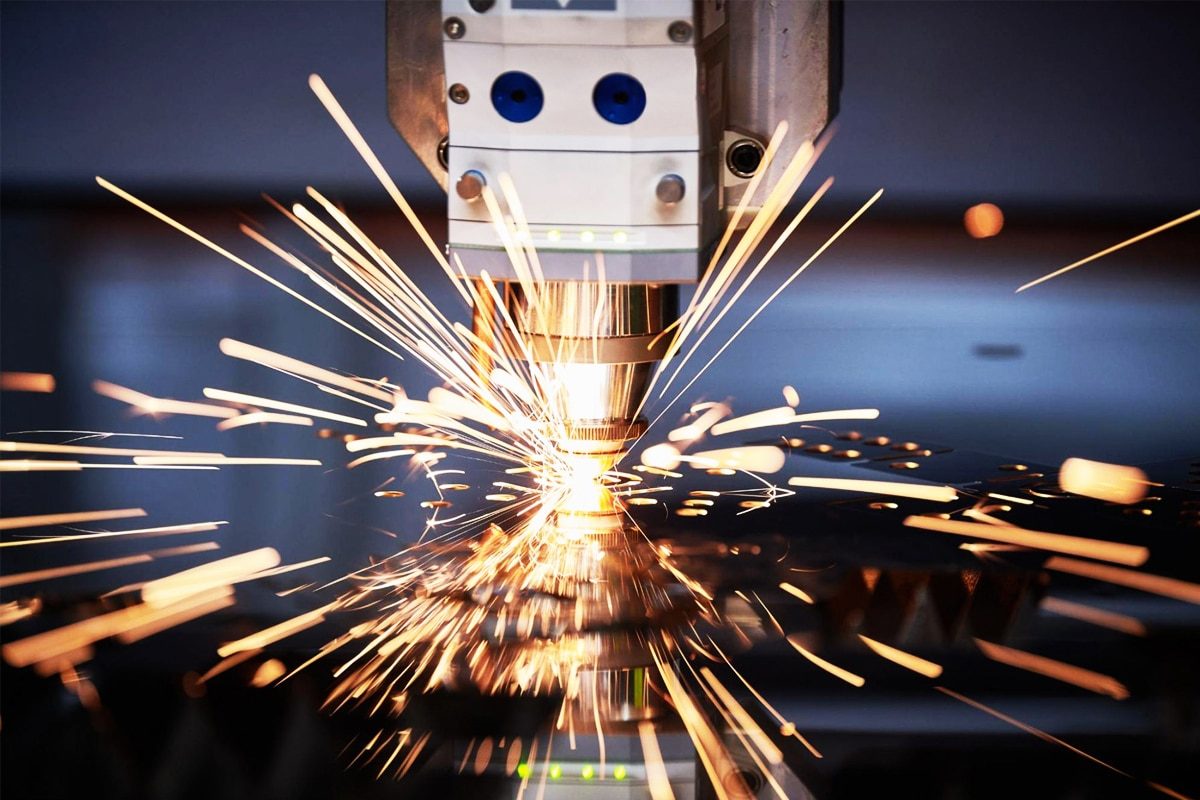
Overview of Fiber Laser Cutting Defects
Broadly speaking, fiber laser cutting defects can be classified into four major categories: geometric and dimensional defects, edge quality defects, surface and metallurgical defects, and process stability defects. Each category reflects a different aspect of process imbalance.
- Geometric and dimensional defects refer to deviations from the intended design specifications. These include excessive kerf width, kerf taper (non-parallel cut walls), corner rounding, contour distortion, and dimensional inaccuracies. Such defects are often linked to improper power-to-speed ratios, incorrect focal position, beam divergence, or insufficient motion control accuracy. In thicker materials, the energy density at the bottom of the kerf may decrease, leading to tapered edges. In intricate profiles, rapid changes in direction can cause localized overheating, resulting in overburn or loss of sharp corner definition.
- Edge quality defects are among the most visible and commonly evaluated problems. Burr formation, dross adhesion, heavy striations, rough cut surfaces, and incomplete penetration fall into this category. Burrs typically form when molten metal is not fully expelled from the kerf, often due to inadequate assist gas pressure, incorrect nozzle distance, or excessive cutting speed. Dross accumulation may indicate unstable melt flow or insufficient energy to maintain full penetration. Striations on the cut edge are natural to some extent, but excessive or irregular striations signal fluctuations in energy delivery, focus stability, or gas flow dynamics.
- Surface and metallurgical defects are related to thermal influence and material response. Although fiber lasers produce a relatively small heat-affected zone compared to plasma or oxy-fuel cutting, localized overheating can still cause microstructural changes. These may include hardened edges in carbon steel, oxide layer formation in oxygen-assisted cutting, discoloration in stainless steel, or microcrack initiation in high-strength alloys. In reflective metals such as aluminum or copper, unstable absorption at the initial cutting stage may cause surface irregularities or spatter adhesion. When nitrogen is used as an assist gas, insufficient pressure can result in surface burning or edge roughness due to incomplete melt removal.
- Process stability defects are often less obvious but critically important for industrial production. These include inconsistent cut quality along long cutting paths, intermittent loss of penetration, vibration-induced edge waviness, and sudden deterioration in surface finish. Such problems frequently originate from equipment-related factors such as lens contamination, protective window damage, nozzle misalignment, unstable gas supply, beam quality degradation, or mechanical backlash in the motion system. Even slight deviations in focus height—often within tenths of a millimeter—can significantly alter energy distribution inside the kerf, leading to noticeable quality changes.
- Material-related variables further complicate defect formation. Variations in sheet flatness, thickness tolerance, alloy composition, surface coating, rust, oil contamination, or galvanization can affect energy absorption and melt behavior. In oxygen cutting, variations in chemical composition influence the intensity of exothermic reactions, directly affecting edge quality and oxidation levels. In stainless steel and aluminum, surface cleanliness plays a decisive role in maintaining consistent cutting stability.
- Environmental and operational factors must also be considered. Temperature fluctuations, humidity, vibration from nearby equipment, and inconsistent compressed air quality can indirectly affect machine calibration and gas purity, contributing to unstable cutting results.
Burr Formation
Causes
Burr formation results from an imbalance between laser energy input, melt generation, and assist gas removal efficiency. Several process variables contribute to this imbalance.</br>
- One of the primary causes is improper cutting speed. If the cutting speed is too high, the laser energy per unit length becomes insufficient to fully penetrate the material, resulting in incomplete melting at the lower portion of the kerf. This partially melted material then solidifies as a burr. Conversely, if the cutting speed is too slow, excessive melting may occur, overwhelming the assist gas’s ability to eject molten metal effectively.
- Insufficient assist gas pressure or poor gas flow quality is another critical factor. The assist gas not only supports oxidation reactions (in oxygen cutting) but also plays a mechanical role in blowing molten material out of the kerf. Low gas pressure, incorrect nozzle distance, nozzle damage, or gas turbulence can reduce melt expulsion efficiency, leading to dross attachment.
- Incorrect focal position can also contribute significantly. If the focus is positioned too high or too low relative to the material surface, the energy distribution inside the kerf becomes uneven. This reduces energy density at the lower cutting front, preventing full penetration and consistent melt flow.
- Material-related factors also play a role. Variations in material thickness, surface contamination (oil, rust, coatings), and alloy composition can affect melting behavior and oxidation intensity. For example, galvanized or coated materials may introduce unstable melt flow due to vaporization of surface layers. In oxygen-assisted cutting of carbon steel, inconsistent chemical reactions may alter heat input, influencing burr formation.
- Machine condition must also be considered. Contaminated protective lenses, misaligned nozzles, unstable beam quality, or mechanical vibration can all disrupt cutting stability and increase the likelihood of burrs.
Effects
Burr formation negatively impacts both product quality and production efficiency. From a quality perspective, burrs compromise edge smoothness and dimensional accuracy. Sharp projections can pose safety hazards during handling and may interfere with assembly processes. In precision industries such as automotive or electronics manufacturing, even minor burrs may exceed tolerance requirements.
- From a mechanical standpoint, burrs can affect downstream operations such as welding, bending, painting, or coating. Excess slag may prevent proper fit-up in welded joints or create surface defects during powder coating. In some applications, burr-induced stress concentrations may contribute to premature fatigue failure.
- Economically, burrs increase post-processing time and labor costs. Manual grinding, mechanical deburring, or secondary finishing operations reduce the productivity advantage that fiber laser cutting is intended to provide. In high-volume production environments, excessive burr rates can significantly increase scrap and rework ratios.
Dross Adhesion
Causes
Dross adhesion arises from a disruption in the balance between melting rate and melt ejection efficiency. One of the primary causes is improper cutting speed. If the cutting speed is too low, excessive heat input produces a larger molten pool than the assist gas can effectively remove. The surplus molten metal accumulates and resolidifies at the bottom edge. On the other hand, if the speed is too high, incomplete penetration may occur, creating unstable melt flow and intermittent slag formation.
- Assist gas performance plays a decisive role. Insufficient gas pressure reduces the mechanical force needed to push molten metal out of the kerf. Gas turbulence, improper nozzle diameter, incorrect nozzle standoff distance, or nozzle misalignment can all compromise melt expulsion. In nitrogen cutting, especially for stainless steel or aluminum, inadequate gas pressure is one of the most common reasons for heavy dross formation.
- Incorrect focal position also contributes significantly. If the focal point is positioned too far above the material surface, energy concentration at the lower cutting front decreases, leading to incomplete melting at the bottom. Conversely, an excessively deep focus may create unstable keyhole dynamics, affecting melt flow consistency.
- Material factors must also be considered. Surface contamination, such as oil, rust, mill scale, or coatings, can interfere with energy absorption and alter melting behavior. Variations in plate thickness or chemical composition can lead to inconsistent thermal response. In oxygen-assisted cutting of carbon steel, uncontrolled exothermic reactions may produce excessive molten material, increasing the likelihood of slag adhesion.
- Machine-related issues such as protective lens contamination, beam quality degradation, mechanical vibration, or unstable gas supply further increase the risk of dross. Even minor fluctuations in beam stability can disrupt the delicate equilibrium of melt formation and removal.
Effects
Dross adhesion negatively affects both product quality and operational efficiency. From a visual and dimensional perspective, adhered slag compromises edge smoothness and can increase the effective part thickness, potentially interfering with assembly tolerances. In precision fabrication, this may lead to part rejection.
- Functionally, dross can disrupt downstream processes. During welding, adhered slag may prevent proper joint fit-up or contaminate weld seams. In bending operations, uneven edges can introduce stress concentrations or deformation inconsistencies. For surface finishing processes such as powder coating, painting, or plating, residual dross can cause coating defects or adhesion failures.
- From a productivity standpoint, dross increases the need for secondary operations such as grinding, scraping, or mechanical deburring. These additional steps reduce overall throughput and increase labor costs. In automated production lines, heavy dross may interfere with robotic handling or stacking systems.
Striations and Rough Cut Edges
Causes
Striations and rough edges are primarily the result of unstable energy distribution and inconsistent molten material flow within the kerf. One of the most critical factors is the relationship between laser power and cutting speed. If the cutting speed is too high relative to the available power, insufficient energy reaches the lower cutting front. This causes uneven melting and irregular melt flow, leading to deep or inconsistent striations. Conversely, excessively low cutting speed can create overheating and turbulent melt behavior, also producing rough edges.
- Focus position plays a decisive role in striation formation. When the focal point is improperly positioned—either too high or too deep—the energy density distribution along the thickness becomes uneven. Insufficient energy at the bottom of the kerf reduces cutting stability and increases roughness, especially in thick plate processing.
- Assist gas dynamics are equally important. In nitrogen cutting, inadequate gas pressure may fail to remove molten material cleanly, causing irregular flow patterns and rough sidewalls. In oxygen cutting, uncontrolled oxidation reactions may intensify heat fluctuations, producing inconsistent striation patterns. Gas turbulence due to incorrect nozzle size, nozzle misalignment, or improper standoff distance can further destabilize melt ejection.
- Beam quality and machine stability also contribute significantly. Poor beam mode quality, lens contamination, or slight misalignment can create non-uniform energy distribution across the focal spot. Mechanical vibration, backlash in motion systems, or unstable acceleration and deceleration during contour changes may introduce additional irregularities along the cut edge.
- Material properties influence striation severity as well. Variations in alloy composition, surface contamination, coatings, or internal stress can affect melting behavior. Highly reflective materials like aluminum or copper may initially resist stable energy absorption, causing fluctuating melt formation and roughness.
Effects
Striations and rough cut edges impact both functional performance and visual quality. From an aesthetic standpoint, rough edges reduce product appearance quality, which is especially critical in visible components such as decorative panels, consumer products, or architectural elements. In high-end applications, surface finish standards may require minimal visible striation depth.
- Functionally, excessive roughness can influence mechanical performance. Deep striations may act as stress concentrators, potentially reducing fatigue resistance in load-bearing components. In precision assemblies, uneven edges can affect part fit and dimensional tolerance.
- Rough cut edges also complicate downstream processing. In welding operations, irregular sidewalls may alter joint geometry and reduce weld consistency. In bending processes, surface irregularities may introduce localized stress concentrations. For coating, painting, or plating, rough surfaces may require additional preparation to ensure uniform coverage and adhesion.
- Economically, poor edge quality increases the need for secondary finishing operations such as grinding or polishing. This reduces the productivity advantages of fiber laser cutting and raises overall manufacturing costs.
Incomplete Cutting
Causes
The most common cause of incomplete cutting is insufficient effective energy density at the cutting front. This may result from inadequate laser power relative to material thickness. If the power is too low, the laser cannot generate enough heat to maintain a stable melt channel through the entire thickness.
- Excessive cutting speed is another frequent cause. When the laser moves too quickly, the energy per unit length decreases, preventing complete melting of the lower portion of the workpiece. This often leads to partial separation or thin residual attachments at the bottom edge.
- Improper focus position significantly contributes to penetration issues. If the focal point is positioned too high above the material surface, energy concentration at the lower cutting zone decreases, making it difficult to sustain a stable cutting front. Conversely, incorrect negative focus in thick plate cutting may destabilize the melt flow.
- Assist gas performance is also critical. Inadequate gas pressure reduces the ability to expel molten material from the kerf. If molten metal accumulates, it can block the beam path and interrupt the cutting process. In oxygen-assisted cutting, insufficient oxygen supply weakens the exothermic reaction that supports penetration. In nitrogen cutting, low pressure reduces melt removal efficiency.
- Material-related factors can further increase the risk. Variations in plate thickness, poor flatness, surface coatings, rust, oil contamination, or inconsistent alloy composition can interfere with energy absorption and melt formation. Highly reflective materials such as aluminum or copper may initially reflect part of the laser energy, reducing effective penetration stability.
- Machine-related issues such as lens contamination, beam quality degradation, unstable power output, nozzle misalignment, or mechanical vibration can also disrupt the consistency of the cutting process and lead to intermittent, incomplete cuts.
Effects
Incomplete cutting has direct consequences for productivity and product quality. From an operational standpoint, parts that remain attached to the sheet require manual intervention, slowing down automated production lines and increasing labor costs. In severe cases, partially cut parts may shift unexpectedly during processing, posing safety risks.
- Dimensional accuracy is also compromised. Residual material can distort part geometry during removal, affecting tolerances. For precision components, even small uncut sections can render the part unusable.
- Incomplete cutting can damage equipment as well. If operators attempt to forcibly remove partially cut parts, they may cause deformation or stress to the sheet. In automated systems, detection failures may lead to stacking or sorting errors.
- Economically, this defect increases scrap rates and rework time. It reduces process reliability and can erode customer confidence when defective parts reach downstream assembly stages.
Burn Marks and Overburning
Causes
The primary cause of burn marks and overburning is excessive energy input relative to the material thickness and cutting speed. When the cutting speed is too slow, the laser dwells too long in one area, allowing heat to accumulate beyond what is necessary for clean penetration. This prolonged exposure enlarges the molten pool and increases thermal diffusion into the surrounding material.
- Excessively high laser power can also contribute, particularly when not matched with appropriate speed adjustments. In thin materials, high power combined with slow acceleration at corners can cause edge melting and deformation.
- Improper focus position plays an important role. If the focal point is positioned too close to the surface, peak energy density may become too intense, causing surface burning or widening of the kerf. Conversely, unstable focus height due to poor sheet flatness or height-sensing errors can lead to inconsistent energy distribution and localized overheating.
- Assist gas selection and pressure significantly influence burn-related defects. In oxygen cutting, uncontrolled oxygen flow can intensify the exothermic reaction, generating additional heat beyond the laser’s direct energy input. In nitrogen cutting, insufficient pressure may fail to remove molten material quickly, causing heat buildup and surface scorching.
- Motion control factors are equally important. Inadequate acceleration and deceleration settings can cause excessive heat accumulation at corners or during piercing operations. Small holes are especially prone to overburning because the laser remains concentrated within a confined area.
- Material characteristics also affect susceptibility. Thin sheets, coated materials, high-carbon steels, and reflective alloys may respond differently to heat input. Surface contamination, such as oil or protective films, can intensify burning effects when exposed to high temperatures.
Effects
Burn marks and overburning negatively affect both appearance and functional quality. Visually, discoloration and oxidation reduce surface finish quality, which is particularly problematic in decorative or exposed components. In stainless steel applications, burn discoloration may require additional cleaning or passivation processes.
- Dimensionally, overburning can enlarge kerf width, reduce edge sharpness, and compromise tolerance accuracy. Fine features such as narrow slots or small radii may lose definition due to excessive melting.
- From a metallurgical perspective, excessive heat can enlarge the heat-affected zone, alter microstructure, and reduce mechanical performance. In carbon steels, overburning may cause edge hardening or increased brittleness. In aluminum alloys, overheating can weaken structural properties.
- Operationally, burn defects increase the need for secondary finishing operations such as grinding, polishing, or chemical cleaning. In severe cases, parts may be scrapped due to unacceptable distortion or oxidation.
Kerf Width Inconsistency
Causes
The most significant cause of kerf width inconsistency is unstable energy density distribution. If laser power fluctuates during cutting, even slightly, the amount of material melted along the cut path will vary. Higher energy input tends to widen the kerf, while insufficient energy may narrow it or cause incomplete melting.
- Improper focus positioning is another major factor. When the focal point shifts due to incorrect setup, poor height sensing, or uneven material flatness, the spot size at the material surface changes. A focus positioned too high above the surface increases spot diameter and widens the kerf. Conversely, a focus positioned too deeply can create unstable cutting fronts and tapering.
- Cutting speed variations also contribute. During acceleration and deceleration—particularly at corners or complex geometries—the effective energy per unit length changes. Slower movement increases heat input, widening the kerf. Faster movement reduces energy density, potentially narrowing it or creating incomplete cuts.
- Assist gas pressure and flow stability play an important role as well. Insufficient gas pressure may allow molten material to adhere to the kerf walls, effectively narrowing the opening. Excessive pressure or turbulent flow may erode sidewalls, increasing kerf width. Nozzle misalignment or incorrect standoff distance can further destabilize gas flow patterns.
- Machine-related factors such as beam mode instability, lens contamination, protective window damage, or mechanical backlash in motion systems can introduce inconsistent energy delivery and positional accuracy. Even minor mechanical vibration can slightly shift the beam path, altering kerf uniformity.
- Material factors also affect kerf consistency. Variations in thickness tolerance, surface coatings, oxidation layers, or alloy composition influence energy absorption and melting behavior. Reflective materials like aluminum and copper may exhibit unstable initial absorption, leading to inconsistent kerf width at piercing points.
Effects
Kerf width inconsistency directly impacts dimensional accuracy and assembly fit. In precision manufacturing—such as aerospace components, electronic enclosures, or mechanical assemblies—tight tolerances are critical. Variations in kerf width can lead to oversized or undersized parts, requiring rework or scrapping.
- In contour cutting, inconsistent kerf width can distort intricate shapes, particularly in small holes or narrow slots. This affects mating components and may introduce gaps or interference during assembly. For nesting operations, unpredictable kerf behavior reduces material utilization efficiency and may compromise layout optimization.
- From a mechanical standpoint, uneven kerf walls can create stress concentration zones, especially if accompanied by roughness or taper. In downstream operations such as welding or bending, inconsistent edges may reduce process stability.
- Economically, kerf inconsistency increases inspection workload and reduces confidence in automated production. Frequent adjustments to compensate for dimensional drift slow production cycles and raise operating costs.
Heat-Affected Zone (HAZ) Issues
Causes
The primary cause of HAZ enlargement or instability is excessive heat input relative to cutting speed. When the laser remains in contact with a specific area for too long—due to low cutting speed or high power settings—heat conduction extends further into the surrounding material. This increases the width of the thermally affected zone.
- Improper power-to-speed balance is a critical factor. High power combined with slow feed rates allows more energy to diffuse into adjacent material. Similarly, repeated exposure in small contours, tight corners, or small hole cutting can lead to localized heat buildup and HAZ expansion.
- Assist gas selection also influences HAZ behavior. In oxygen-assisted cutting of carbon steel, the exothermic oxidation reaction generates additional heat beyond the direct laser input. This can significantly increase thermal penetration and widen the HAZ. In nitrogen cutting, insufficient gas pressure may slow molten material removal, allowing heat to accumulate and spread laterally.
- Incorrect focus position contributes as well. If the focal point is not optimized, energy may be distributed inefficiently, causing excessive surface heating instead of concentrated penetration. Beam instability, lens contamination, or poor height control can further disturb heat concentration and create uneven thermal influence along the cut path.
- Material properties strongly affect HAZ formation. High-carbon steels are particularly susceptible to edge hardening due to rapid cooling. Alloyed materials may undergo microstructural transformations under thermal cycling. Thin sheets may dissipate heat more quickly, but they are also more prone to distortion if overheated. Surface contaminants such as oil or coatings may intensify localized heat effects.
- Environmental and machine-related factors, including inconsistent power output, unstable motion control, or inadequate cooling systems, can indirectly influence HAZ uniformity.
Effects
HAZ issues primarily affect material performance rather than visual appearance alone. One of the most significant effects is microstructural alteration. In carbon steels, rapid cooling after high-temperature exposure can produce martensitic structures, increasing hardness but reducing ductility. This may create brittle edges prone to cracking during bending or welding.
- In stainless steel, excessive oxidation and chromium depletion near the cut edge may reduce corrosion resistance. For aluminum alloys, overheating may alter temper conditions, lowering strength in the affected region.
- Mechanical distortion is another consequence. Uneven heat distribution can cause localized expansion and contraction, leading to warping or residual stress. This is particularly problematic in thin sheets or large flat panels.
- From a manufacturing perspective, HAZ-related hardness changes may complicate secondary processes such as tapping, drilling, or machining near the cut edge. Increased brittleness can reduce formability during bending operations.
- Economically, excessive HAZ may increase rejection rates in industries requiring strict mechanical performance standards, such as aerospace, automotive, or structural fabrication.
Microcracks
Causes
The primary cause of microcracks is thermal stress generated by rapid temperature fluctuations. Fiber laser cutting produces extremely high localized temperatures in a very short time. When the molten zone cools rapidly—especially in thicker plates or materials with high hardenability—internal stresses develop. If these stresses are not relieved, cracking may occur.
- Excessive heat input is a significant contributing factor. High laser power combined with slow cutting speed increases the width of the heat-affected zone and intensifies thermal gradients. This increases the risk of stress accumulation and crack initiation.
- Material composition plays a critical role. High-carbon steels are prone to forming hard, brittle martensitic structures during rapid cooling. This hardened region is less ductile and more likely to crack under residual stress. Alloying elements such as chromium, molybdenum, or vanadium can further increase hardenability, raising crack susceptibility. In aluminum alloys, certain heat-treatable grades may experience localized embrittlement when exposed to excessive heat.
- Assist gas selection and process stability also influence crack formation. In oxygen cutting of carbon steel, excessive oxidation can increase localized heat input, intensifying thermal stress. In nitrogen cutting, insufficient melt removal may cause localized overheating, contributing to uneven cooling rates.
- Geometric factors contribute as well. Sharp internal corners, small holes, and sudden changes in direction create stress concentration points where microcracks are more likely to initiate. Improper piercing parameters can also generate localized overheating and microstructural damage.
- Machine-related factors such as unstable power output, inconsistent focus height, or vibration can further disrupt thermal uniformity, increasing the probability of crack formation.
Effects
Although microcracks may be small, their impact on component performance can be significant. From a structural perspective, microcracks act as stress concentrators. Under cyclic loading or vibration, they can propagate and grow into larger cracks, potentially leading to premature fatigue failure.
- In welded assemblies, pre-existing microcracks near the cut edge may expand during welding due to additional thermal cycles. This compromises joint integrity and may require additional inspection or repair.
- For parts that undergo bending or forming, microcracks reduce ductility at the edge. This can cause visible edge splitting or fracture during forming operations. In high-precision industries such as aerospace, automotive, or pressure vessel manufacturing, even microscopic cracks may result in part rejection.
- From a quality control standpoint, microcracks increase inspection requirements and may necessitate non-destructive testing procedures. This adds time and cost to production.
Oxidation and Edge Discoloration
Causes
The primary cause of oxidation is exposure of hot metal to oxygen during the cutting process. In oxygen-assisted cutting of carbon steel, oxidation is intentional but must be carefully controlled. Excessive oxygen pressure or unstable flow can intensify the exothermic reaction, increasing surface oxidation beyond desirable levels.
- In nitrogen cutting, oxidation usually results from contamination. If nitrogen purity is insufficient or if compressed air systems introduce residual oxygen or moisture, the hot metal surface may react with oxygen, causing discoloration. Leaks in gas supply systems or inadequate sealing around the nozzle can also allow ambient air to enter the cutting zone.
- Excessive heat input is another major factor. High laser power combined with slow cutting speed increases the thermal exposure time, allowing oxidation reactions to intensify. Improper focus position can further exacerbate overheating at the material surface.
- Assist gas pressure and flow stability significantly influence oxidation control. Insufficient gas pressure reduces the shielding effect of nitrogen, allowing oxygen infiltration. Turbulent flow caused by incorrect nozzle selection or misalignment can disrupt the protective gas envelope.
- Material properties also contribute. Stainless steels rely on chromium content for corrosion resistance. If overheating occurs, chromium may preferentially oxidize, creating visible heat tint and potentially reducing corrosion resistance at the edge. Aluminum alloys may form oxide layers rapidly when exposed to elevated temperatures.
- Environmental conditions such as high humidity can increase oxidation severity by introducing additional moisture into the cutting environment.
Effects
Oxidation and edge discoloration impact both appearance and material performance. Visually, discoloration reduces surface quality, which is critical for decorative panels, architectural components, kitchen equipment, and consumer products. In stainless steel applications, customers often expect bright, oxide-free edges.
- Functionally, excessive oxidation may affect weldability. Oxide layers can interfere with weld fusion and may require pre-weld cleaning. In stainless steel, heavy heat tint may reduce corrosion resistance if not properly removed, increasing the risk of pitting or rust in aggressive environments.
- In precision fabrication, oxide buildup may slightly alter edge dimensions, especially if scaling is thick. This can affect fit-up and assembly tolerances.
- Economically, oxidation defects often require secondary processes such as grinding, chemical pickling, passivation, or mechanical cleaning. These additional steps increase production cost and reduce throughput efficiency.
Edge Rounding
Causes
The primary cause of edge rounding is excessive localized heat input. When the laser power is too high relative to the cutting speed, the energy delivered per unit length increases. This leads to overmelting of material near the top surface, causing molten metal to spread laterally before being expelled.
- Slow cutting speed, especially during acceleration and deceleration phases, is a major contributing factor. At corners, small radii, and narrow features, machine movement often slows down. If power output is not dynamically adjusted to match speed reduction, excess energy accumulates, increasing melt pool size and rounding edges.
- Improper focal position also influences edge geometry. If the focal point is positioned too close to the surface, peak energy density may concentrate excessively at the top layer, widening the kerf entrance and softening the edge. Conversely, unstable height control due to sheet warping or improper sensing can create inconsistent energy distribution along the cut path.
- Assist gas dynamics play a role as well. Insufficient gas pressure may fail to remove molten material quickly, allowing it to cling to the edge and solidify as a rounded contour. In oxygen-assisted cutting, uncontrolled exothermic reactions can intensify heat input at the top edge, further promoting rounding.
- Material characteristics affect susceptibility to edge rounding. Thin sheets dissipate heat quickly but are more prone to deformation if overheated. Highly conductive materials like aluminum may spread heat laterally, increasing the likelihood of softened edges if parameters are not optimized.
- Machine-related factors such as unstable power output, beam quality variation, or mechanical vibration can further contribute to inconsistent edge sharpness.
Effects
Edge rounding primarily affects dimensional precision and geometric accuracy. In components requiring tight tolerances or precise mating surfaces, even small deviations from sharp edges can interfere with assembly. Rounded edges may prevent proper alignment or create gaps in fitted parts.
- In sheet metal fabrication, edge rounding can complicate bending operations. Sharp edges help define accurate bend lines; excessive rounding may shift effective bend location or introduce minor dimensional deviations.
- For decorative or exposed parts, softened edges reduce visual quality and may not meet aesthetic expectations. In applications such as enclosures, architectural panels, or consumer products, crisp edge definition is often required.
- From a functional perspective, edge rounding can influence mechanical performance. While slight rounding may reduce stress concentration in some cases, uncontrolled or uneven rounding may create unpredictable edge geometry that affects load distribution.
- Economically, excessive rounding may require secondary machining or finishing to restore dimensional accuracy, increasing production time and cost.
Tapered Edges
Causes
The primary cause of tapered edges is uneven energy distribution through the thickness of the material. Fiber laser beams naturally diverge slightly beyond the focal point. If the focal position is not optimized, energy density at the lower portion of the cut decreases, resulting in reduced melting efficiency at the bottom compared to the top.
- Improper focus placement is one of the most significant contributors. If the focus is set too high above the material surface, the beam expands as it penetrates deeper, reducing energy concentration at the bottom of the kerf. This leads to insufficient melting and a narrower bottom kerf width. Conversely, improper negative focus settings may create instability in the cutting front.
- Insufficient laser power relative to material thickness is another common cause. When cutting thick plates with marginal power, the beam may lack the energy required to maintain a consistent cutting channel through the full thickness, increasing taper.
- Cutting speed also plays a role. Excessively high speeds reduce effective energy input at deeper sections, while extremely slow speeds may cause excessive melt accumulation that alters sidewall geometry.
- Assist gas performance significantly affects taper control. Inadequate gas pressure reduces melt expulsion efficiency at the bottom of the kerf, leading to uneven wall formation. Nozzle misalignment or incorrect standoff distance can disturb gas flow symmetry, increasing taper irregularity.
- Material properties influence taper formation as well. Highly conductive materials such as aluminum dissipate heat rapidly, reducing energy concentration at deeper levels. Variations in material thickness, flatness, or alloy composition can also create inconsistent taper along the cut path.
- Machine-related factors such as beam mode instability, lens contamination, or mechanical vibration may further disrupt consistent energy delivery.
Effects
Tapered edges directly affect dimensional precision and part assembly. In components requiring tight tolerances, angled sidewalls may prevent proper fit, particularly in slot-and-tab or press-fit designs. Even a slight angular deviation can introduce gaps or misalignment in assembled structures.
- In structural applications, uneven sidewalls may affect load distribution or reduce contact surface area between mating parts. For components that require welding, tapered edges can influence joint geometry and weld penetration consistency.
- Taper also impacts aesthetic quality. In decorative or exposed parts, visibly angled edges may not meet appearance standards. In stacked or laminated assemblies, taper can accumulate and amplify dimensional discrepancies.
- From a manufacturing perspective, excessive taper may require secondary machining to restore verticality, increasing production time and cost. In automated fabrication systems, dimensional inconsistency can disrupt downstream robotic operations.
Warping and Distortion
Causes
The primary cause of warping and distortion is uneven thermal expansion and contraction. When the laser introduces concentrated heat into a localized region, that area expands temporarily. If adjacent material remains relatively cool, stress differentials form. Upon cooling, shrinkage may not occur symmetrically, leading to permanent deformation.
- Excessive heat input is a significant factor. High laser power combined with slow cutting speed increases the heat-affected zone and raises the overall thermal load on the sheet. Continuous cutting in a single direction without balanced path planning can concentrate heat in specific areas.
- Improper cutting sequence also contributes. If internal contours are cut after outer profiles, or if long sections are cut without alternating sides, heat accumulation becomes uneven. A poor nesting strategy may concentrate multiple cuts in one region before allowing sufficient cooling.
- Material thickness and properties strongly influence distortion risk. Thin sheets are particularly vulnerable because they have lower structural rigidity. Materials with high thermal expansion coefficients, such as aluminum, are more prone to warping under heat exposure. Residual stresses from prior rolling or forming processes can further amplify deformation once the sheet is cut.
- Clamping and support conditions also matter. If the sheet is not properly supported on the cutting table, sections may sag or shift as material is removed. Uneven slat wear on the cutting bed can create localized support variations.
- Machine-related factors such as unstable power output, inconsistent motion control, or inadequate cooling systems may indirectly increase thermal imbalance.
- Environmental factors, including ambient temperature fluctuations, can slightly influence sheet stability, especially in high-precision applications.
Effects
Warping and distortion directly impact dimensional accuracy and flatness. In sheet metal fabrication, flatness is often critical for assembly, bending, and welding. Distorted parts may not align properly with mating components, leading to assembly difficulties.
- In precision industries, even small deviations from flatness may exceed tolerance limits. This is particularly problematic in enclosures, panels, or parts designed for automated assembly systems.
- Warping can also affect downstream forming operations. When a pre-cut part is bent or shaped, existing distortion may cause unpredictable deformation behavior. In welding operations, distorted components require additional fixturing to maintain alignment.
- From a production standpoint, distorted sheets may interfere with automated part unloading systems. In severe cases, warped material may collide with the cutting head, increasing the risk of equipment damage.
- Economically, warping increases scrap rates and rework time. Straightening operations add labor cost and reduce efficiency. In high-volume production, distortion issues can significantly reduce throughput consistency.
Slag Formation
Causes
The fundamental cause of slag formation is inefficient melt removal. When the molten material volume exceeds the assist gas’s ability to expel it cleanly, residual melt solidifies instead of being ejected.
- Improper cutting speed is a major contributor. If the cutting speed is too slow, excessive heat input generates a large molten pool, increasing the likelihood that some material will remain in the kerf. Conversely, excessively high speed can cause unstable penetration, resulting in partial melting and irregular slag buildup.
- Assist gas pressure and flow dynamics play a critical role. Insufficient gas pressure reduces the mechanical force needed to clear molten material. Turbulent or asymmetric gas flow caused by incorrect nozzle diameter, improper standoff distance, or nozzle misalignment can disrupt melt expulsion efficiency.
- In oxygen-assisted cutting, the exothermic oxidation reaction produces additional molten material. If oxygen flow is excessive or poorly controlled, it may intensify melt generation beyond optimal levels, increasing slag formation.
- Improper focus positioning also affects melt behavior. If the focal point is not correctly aligned with material thickness, energy distribution may be uneven, resulting in unstable melt flow and incomplete ejection at the bottom of the kerf.
- Material properties contribute as well. Variations in thickness tolerance, surface coatings, rust, or alloy composition can alter melting characteristics. High-carbon steels may produce more viscous molten material, increasing adhesion tendencies. Reflective materials like aluminum and copper may experience unstable initial melting, leading to inconsistent slag formation.
- Machine condition is another factor. Contaminated protective lenses, unstable laser output, mechanical vibration, or inconsistent gas supply can all disturb process stability and increase slag risk.
Effects
Slag formation affects both product quality and operational efficiency. From a dimensional standpoint, heavy slag attached to the underside can interfere with assembly fit and flatness. Thick deposits may increase effective part thickness at the edge.
- Functionally, slag can obstruct downstream processes. In welding operations, slag residue must be removed to ensure proper fusion. In bending or forming processes, hardened slag may create localized stress concentrations or cause surface marking.
- Visually, slag reduces edge finish quality, particularly in applications requiring clean, smooth cuts. In decorative or exposed components, visible slag is unacceptable.
- From a production perspective, slag formation increases post-processing requirements. Manual grinding or mechanical cleaning adds labor time and cost. In automated systems, loose slag may accumulate on cutting tables, affecting sheet support stability and potentially damaging subsequent parts.
- Economically, persistent slag problems reduce cutting efficiency, increase scrap rates, and require frequent parameter adjustments.
Back Reflection Damage
Causes
The primary cause of back reflection is the high reflectivity of certain materials at the fiber laser wavelength (typically around 1064 nm). Materials like aluminum and copper have relatively low absorption rates at room temperature. Before the material surface heats up sufficiently to increase absorption, a significant portion of the incident laser energy may be reflected.
- Piercing operations are particularly prone to reflection issues. During piercing, the laser beam remains stationary over a small area, and if initial melting is unstable, reflected energy may travel directly back toward the optics.
- Improper parameter settings increase the risk. Excessively high peak power during piercing, incorrect focus position, or slow piercing time can create unstable molten pools that enhance reflectivity. If assist gas flow is insufficient, molten material may not form quickly enough to absorb the beam effectively.
- Contaminated or damaged protective lenses can worsen the situation. If optical components are already compromised, reflected energy may concentrate unevenly, increasing the likelihood of damage.
- Machine design and protection level also influence susceptibility. Systems without proper optical isolators, back-reflection monitoring sensors, or anti-reflective coatings are more vulnerable. Poor maintenance practices, such as neglecting lens cleaning or replacing damaged windows, further increase risk.
- Environmental factors such as unstable sheet positioning or vibration during piercing may also contribute to inconsistent energy absorption and reflection.
Effects
Back reflection damage primarily affects equipment performance and reliability. Reflected laser energy can cause pitting, cracking, or thermal damage to protective windows and lenses. Over time, this degrades beam quality, leading to reduced cutting precision, increased striations, and unstable performance.
- In severe cases, reflected energy may damage internal fiber components or the laser resonator, resulting in expensive repairs and extended downtime. Even minor optical damage can cause energy distribution irregularities, which indirectly produce other cutting defects such as kerf inconsistency or incomplete cutting.
- Operationally, back reflection increases maintenance frequency and operating costs. Damaged optics must be replaced, and unexpected downtime disrupts production schedules.
- From a safety standpoint, severe reflection events may trigger system alarms or emergency shutdowns. If protective systems are inadequate, equipment failure risks increase.