
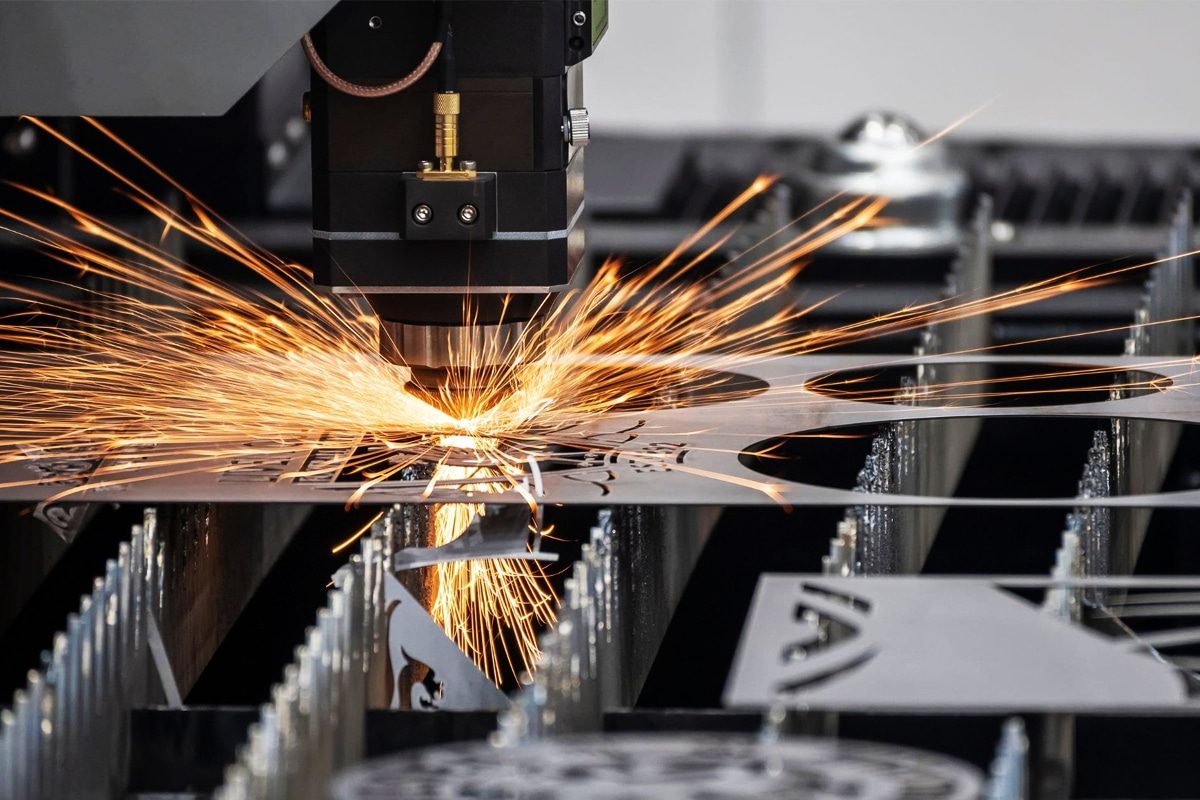
Is Laser Cutting Cost-Effective?
Laser cutting has become one of the most widely used manufacturing technologies for processing metal and other industrial materials. Its high cutting speed, excellent precision, automation capabilities, and ability to produce complex shapes make it attractive to manufacturers ranging from small fabrication shops to large-scale production facilities. However, laser cutting machines can require a significant initial investment, especially when considering the machine itself, auxiliary equipment, installation, power consumption, maintenance, consumables, and operator training. This naturally raises an important question: Is laser cutting cost-effective?
The answer depends on much more than the purchase price of the equipment. The true cost-effectiveness of laser cutting must be evaluated over the entire production process and equipment life cycle. Factors such as cutting speed, labor requirements, material utilization, production volume, energy consumption, maintenance costs, part complexity, accuracy requirements, and secondary processing all influence the final cost per part. Although laser cutting may have higher equipment costs than some traditional cutting methods, it can significantly reduce production time, manual labor, material waste, tooling expenses, and post-processing requirements.
Modern fiber laser cutting machines have further improved the economics of laser processing, particularly for sheet-metal fabrication. Higher electrical efficiency, faster cutting speeds, automated loading and unloading systems, intelligent nesting software, and increasingly reliable components can help manufacturers achieve greater productivity while controlling operating costs.
This article examines whether laser cutting is cost-effective by analyzing initial investment, operating expenses, productivity, labor savings, material utilization, maintenance, automation, and cost per part. It will also compare laser cutting with alternative cutting technologies and explain the production conditions under which investing in laser cutting systems can provide the greatest economic value and long-term return on investment.
Table of Contents
Understanding the Costs of Laser Cutting
Determining whether laser cutting is cost-effective requires a clear understanding of all the expenses involved in purchasing, installing, operating, and financing the equipment. The machine purchase price is only one part of the total investment. Manufacturers must also consider facility preparation, electrical upgrades, auxiliary equipment, software, training, and long-term depreciation. These costs can vary substantially depending on laser power, machine size, automation level, material types, production requirements, and the existing infrastructure of the facility.
A lower-priced machine may reduce the initial investment but may not necessarily provide the lowest long-term production cost. Conversely, a more expensive laser cutting system equipped with higher power, automation, advanced software, and reliable components may achieve higher productivity and lower labor costs. Understanding each cost category therefore helps manufacturers calculate the true total cost of ownership and determine whether the expected production savings can justify the investment.
Initial Machine Purchase Price
The purchase price of laser cutting machines is usually the largest upfront expense. Pricing varies widely according to the type of laser, rated power, working area, machine structure, cutting head, control system, component brands, automation features, and manufacturer.
For metal fabrication, fiber laser cutting machines are commonly available in configurations ranging from relatively low-power systems for thin sheet processing to high-power machines designed for rapid cutting of thick plates. As power and working area increase, the machine price generally rises because larger and more capable laser sources, cutting heads, motion systems, beds, cooling systems, and electrical components are required.
Machine construction also affects cost. A basic open-type sheet laser cutting machine generally requires less investment than an enclosed machine with a protective cover and automatic exchange table. Combination sheet-and-tube machines, dedicated tube laser cutting machines, bevel-cutting systems, and machines equipped with automated material handling typically involve additional investment.
When evaluating purchase price, manufacturers should avoid comparing machines solely on the quoted figure. Cutting performance, component quality, expected service life, technical support, warranty coverage, spare-parts availability, and productivity should also be considered. A machine with a slightly higher purchase price may ultimately provide better economic value if it operates more reliably and produces more parts per hour.
Installation and Commissioning Costs
Laser cutting machines must be properly installed and commissioned before production can begin. Depending on the machine and supplier, installation expenses may include transportation within the factory, positioning, leveling, assembly, electrical connection, gas-system connection, cooling-system setup, calibration, parameter adjustment, and test cutting.
Large-format or high-power machines can require specialized lifting equipment such as cranes or forklifts during installation. If the equipment is imported, additional logistics, customs, inland transportation, and local service costs may also need to be considered.
Commissioning is particularly important because it ensures that the laser source, cutting head, motion system, control system, cooling system, and auxiliary equipment operate correctly together. Technicians may conduct cutting tests using different materials and thicknesses, establish initial process parameters, and verify machine accuracy.
Some manufacturers include installation and commissioning within the machine quotation, while others charge separately. These conditions should be clarified before purchase so that installation expenses do not unexpectedly increase the project budget.
Electrical Infrastructure and Facility Preparation
Laser cutting equipment requires suitable electrical and workshop infrastructure. A facility that already has sufficient electrical capacity may require only minor preparation, while installing high-power laser cutting systems in an older or smaller workshop can require substantial upgrades.
Electrical preparation may include new distribution cabinets, breakers, transformers, voltage stabilizers, cables, grounding systems, and dedicated electrical circuits. High-power fiber lasers and their auxiliary systems can place significant demands on the factory’s electrical supply.
Facility preparation may also involve reinforcing or leveling the floor, creating sufficient space around the machine, improving ventilation, installing exhaust ducting, arranging compressed-air or process-gas pipelines, and establishing appropriate material-loading areas.
Environmental conditions also matter. Laser sources, control electronics, and optical systems generally perform best within specified temperature and humidity ranges. In some factories, additional air conditioning or environmental control may therefore be necessary.
These infrastructure expenses are easy to underestimate because they are not included in the machine’s advertised purchase price. A site assessment before ordering the equipment can help identify these requirements and improve the accuracy of the investment budget.
Laser Source and Machine Configuration
The laser source is one of the most important factors influencing both purchase cost and production capability. Higher-power laser sources generally cost more, but they can provide faster cutting speeds and greater thickness capacity.
Selecting the highest available power is not always the most economical choice. A manufacturer primarily processing thin carbon steel or stainless steel may achieve excellent productivity with a moderate-power system, while a company cutting thick plate or requiring very high throughput may benefit substantially from higher laser power.
Machine configuration also affects cost. Important options can include exchange tables, enclosed protective housings, automatic focusing cutting heads, bevel-cutting heads, rotary attachments, tube-cutting modules, automatic nozzle changers, intelligent monitoring systems, and automated loading and unloading equipment.
The objective should be to select a configuration that matches actual production requirements. Paying for features that are rarely used increases capital cost without necessarily increasing profitability. At the same time, purchasing an undersized machine may create bottlenecks and require an earlier equipment upgrade.
Auxiliary Equipment Costs
Laser cutting cannot normally operate efficiently as a completely standalone process. Several auxiliary systems are required to support reliable operation.
A water chiller controls the temperature of the laser source and optical components. An exhaust and dust-collection system removes smoke, fumes, and particles generated during cutting. Air compressors may be required when compressed air is used as an assist gas or for pneumatic components.
Gas supply can require additional equipment depending on the cutting process. Oxygen, nitrogen, or compressed air may be used for different materials and quality requirements. This can involve gas cylinders, liquid-gas tanks, vaporizers, pipelines, pressure regulators, boosters, or nitrogen-generation systems.
Facilities processing large or heavy sheets may also need cranes, forklifts, sheet-loading equipment, storage racks, or automatic loading and unloading systems.
Although each auxiliary system represents an additional cost, properly selected equipment can improve machine utilization, reduce manual handling, maintain cutting quality, and support safer production. These costs should therefore be included when calculating the complete laser cutting investment.
Software and Programming Costs
Modern laser cutting depends heavily on software. CAD software is used to create or modify part drawings, while CAM and nesting software convert those drawings into efficient cutting programs.
Basic machine-control and nesting software may be included with the laser cutting machine. However, advanced software packages can involve additional license fees, subscription costs, upgrades, or maintenance charges.
Advanced nesting software can significantly improve material utilization by arranging parts efficiently on each sheet. Even a small improvement in sheet utilization can create substantial savings when processing expensive materials or large production volumes.
Software may also provide automatic lead-in generation, common-line cutting, fly cutting, remnant management, production scheduling, quotation calculation, inventory integration, and manufacturing execution system connectivity.
Programming costs also include employee time. Skilled programmers must prepare drawings, optimize nesting layouts, verify cutting paths, and maintain process databases. Automation can reduce this workload, but software-related labor should still be included when calculating production costs.
Operator Training Costs
Laser cutting machines are highly automated, but properly trained personnel are still essential. Operators need to understand machine startup and shutdown procedures, material loading, nozzle selection, focusing, cutting parameters, assist gases, alarms, preventive maintenance, and safe operating practices.
Training may be provided by the machine manufacturer during installation. More advanced systems may require additional instruction for programming, nesting, automation, maintenance, or troubleshooting.
Training expenses can include instructor fees, employee wages during training, travel expenses, production downtime, and the cost of test materials. New employees may also require periodic training as operators change.
Investing in training can reduce operating costs over the long term. Skilled operators are more likely to select correct parameters, recognize equipment problems early, avoid collisions, minimize scrap, maintain consumables correctly, and keep the machine operating efficiently.
Poor training, by contrast, can result in wasted material, excessive nozzle and lens consumption, unnecessary downtime, damaged components, and inconsistent cutting quality. Training should therefore be viewed as an investment in machine productivity rather than simply an additional expense.
Financing and Depreciation
Not every manufacturer purchases laser cutting equipment entirely with available cash. Financing, leasing, installment payments, or equipment loans may be used to spread the capital expense over several years.
Financing can make advanced equipment accessible without consuming a large amount of working capital, but interest and financing fees increase the total acquisition cost. Monthly payments must therefore be compared with expected production revenue and savings.
Depreciation is another important factor when calculating the true cost of laser cutting. Industrial machinery loses accounting and resale value over time as it accumulates operating hours and newer technologies enter the market. Companies generally allocate the equipment’s purchase cost across its expected useful life.
For example, if a machine is expected to operate for many years, its annual depreciation expense can be distributed across the number of parts or production hours generated during that period. Higher machine utilization usually reduces the capital cost attributed to each part.
This is one reason production volume has such a strong influence on laser cutting economics. A machine operating only occasionally may carry a relatively high capital cost per part, whereas the same machine operating for multiple shifts can distribute its fixed investment across a much larger production output.
Understanding the costs of laser cutting requires looking beyond the advertised machine price. The total investment can include the machine itself, installation and commissioning, electrical upgrades, facility preparation, auxiliary systems, software, training, financing, and depreciation.
The size of these expenses depends heavily on the required laser power, machine configuration, automation level, workshop infrastructure, and production objectives. Manufacturers should therefore evaluate the complete system rather than focusing only on the initial purchase price.
At the same time, higher upfront expenditure does not automatically mean poorer cost-effectiveness. Features such as higher cutting speeds, efficient nesting software, automatic loading systems, reliable components, and appropriately sized laser power can improve productivity and reduce labor, material waste, and cost per part.
A realistic total-cost-of-ownership calculation should therefore balance capital expenditure against expected equipment utilization, production capacity, labor savings, material savings, operating efficiency, and machine life. Once these costs are understood, manufacturers can more accurately determine whether laser cutting provides sufficient long-term savings and productivity improvements to justify the investment.
Operating Costs of Laser Cutting
The cost-effectiveness of laser cutting depends not only on the initial investment but also on the ongoing expenses required to keep the machine operating efficiently. These operating costs accumulate over the entire service life of the equipment and directly affect the cost per part, profit margin, and return on investment. Electricity, assist gases, consumables, maintenance, labor, material handling, waste management, and downtime all contribute to the total cost of ownership.
Operating costs can vary significantly according to laser power, material type, thickness, cutting speed, production volume, machine utilization, assist gas selection, maintenance practices, and automation level. A high-power machine may consume more electricity per hour, for example, but its faster cutting speed may reduce the energy cost per part. Similarly, automation may increase equipment investment while reducing labor and material-handling expenses. For this reason, operating costs should be evaluated in relation to actual productivity rather than simply calculated on an hourly basis.
Electricity Consumption
Electricity is one of the most consistent operating expenses in laser cutting. Power is required not only by the laser source but also by the machine’s motors, control system, water chiller, exhaust system, air compressor, dust collector, and other auxiliary equipment.
Fiber laser cutting machines are generally energy-efficient compared with older laser technologies because a relatively high proportion of electrical input is converted into usable laser energy. However, total electricity consumption still increases as laser power and auxiliary equipment requirements increase.
A 3 kW laser cutting machine, for example, will typically require less electrical power than a 12 kW or 20 kW system. Nevertheless, comparing electricity use only on an hourly basis can be misleading. A higher-power machine may cut a part much faster, meaning that its total electricity consumption per finished component can sometimes be lower.
Machine utilization also influences energy efficiency. Long periods of idling, unnecessary operation of extraction equipment, poor scheduling, and excessive warm-up time can increase energy consumption without increasing output. Efficient production planning helps distribute electrical costs across a greater number of finished parts.
Electricity cost should therefore be calculated based on total system consumption, local electricity rates, operating hours, and actual production output.
Assist Gas Consumption
Assist gas is often one of the largest variable operating costs in metal laser cutting. The gas helps remove molten material from the kerf, protects the cutting zone, and influences cutting speed, edge quality, oxidation, and downstream processing requirements.
Oxygen is commonly used for cutting carbon steel because the oxidation reaction contributes additional heat to the cutting process. Nitrogen is frequently selected for stainless steel and aluminum when a clean, oxide-free cutting edge is required. Compressed air can also be used for certain applications where the required cut quality and material thickness permit it.
Nitrogen cutting can be relatively expensive because high gas flow rates and pressures may be required, especially when cutting thicker material. The cost depends on nozzle diameter, gas pressure, cutting time, material thickness, machine parameters, and local gas prices.
Manufacturers with substantial nitrogen consumption may consider bulk liquid nitrogen systems or on-site nitrogen generation rather than relying on individual gas cylinders. Compressed-air cutting can also reduce gas costs in suitable applications, although the air must be clean, dry, and supplied at sufficient pressure.
Optimizing nozzle size, gas pressure, focal position, and cutting parameters can reduce unnecessary consumption. Small efficiency improvements can produce substantial savings in high-volume operations.
Consumables
Laser cutting machines require several consumable components that must be inspected and replaced periodically. Common consumables include cutting nozzles, protective lenses, ceramic rings, sealing components, filters, lubricants, and other wear items.
Nozzles are particularly important because their condition directly affects gas flow and cutting quality. A damaged, contaminated, or poorly centered nozzle can cause unstable cutting, excessive gas consumption, slag formation, or poor edge quality.
Protective lenses shield more expensive optical components from smoke, spatter, and contamination. If the protective lens becomes dirty or damaged and is not replaced promptly, cutting performance may deteriorate, and more expensive optical components can potentially be affected.
Consumable life depends on material type, operating conditions, cutting parameters, machine cleanliness, operator skill, and maintenance quality. Frequent piercing of thick plate, collisions with raised material, severe spatter, and poor extraction can accelerate wear.
Consumables are usually inexpensive compared with major machine components, but their cumulative cost can become significant in continuous production. Proper handling and preventive inspection help maximize consumable life without compromising cutting quality.
Replacement Parts
In addition to routine consumables, laser cutting machines eventually require replacement of mechanical, electrical, pneumatic, and optical components. These may include sensors, valves, switches, cables, belts, bearings, motors, fans, filters, pumps, contactors, and components within the cutting head or cooling system.
The frequency and cost of replacement depend heavily on machine quality, operating environment, workload, maintenance, and component availability.
A well-built machine using reliable components may require fewer unexpected replacements, while equipment operating continuously in dusty, hot, or poorly maintained environments can experience accelerated component degradation.
Availability of spare parts is an important economic consideration. A relatively inexpensive component can become extremely costly if the machine remains idle for several days while the part is being shipped from another country.
Manufacturers evaluating laser cutting equipment should therefore consider not only replacement-part prices but also supplier inventory, local service capability, component standardization, and expected delivery times.
Keeping frequently used spare parts in stock can reduce downtime, particularly in facilities where the laser cutting machine is critical to the production process.
Preventive Maintenance
Preventive maintenance creates a predictable operating expense but can help prevent much larger repair and downtime costs. Regular maintenance typically includes cleaning, lubrication, inspection, calibration, filter replacement, cooling-system checks, optical inspection, gas-system inspection, and verification of moving components.
Maintenance intervals should follow the machine manufacturer’s recommendations while also accounting for actual operating conditions. Machines working multiple shifts or processing materials that generate significant dust and fumes may require more frequent attention.
Water chillers require inspection of coolant quality, water level, filters, and operating temperatures. Dust extraction systems require filter cleaning or replacement. Guideways, racks, pinions, and lubrication systems must also be inspected to maintain accurate motion.
Preventive maintenance requires labor and may involve planned production stops. However, these costs are generally easier to manage than unplanned failures.
Regular maintenance can improve cutting consistency, extend component life, reduce scrap, maintain machine accuracy, and improve equipment availability. From a cost-effectiveness perspective, preventive maintenance should be treated as a method of controlling long-term costs rather than an avoidable expense.
Repair Costs
Unexpected failures can create repair expenses that vary from minor service work to replacement of expensive components. Repair costs may include technician labor, replacement parts, travel expenses, shipping, diagnostics, and lost production.
The laser source, cutting head, control system, servo system, chiller, and electrical components can represent relatively high repair costs if major failures occur. However, the probability and severity of these failures depend strongly on machine quality, operating conditions, maintenance, and correct use.
Warranty coverage can reduce repair expenses during the early years of machine ownership. Buyers should understand exactly which components are covered, how long the warranty lasts, and whether labor and travel expenses are included.
Technical support also affects repair cost. Remote diagnosis can sometimes resolve software, parameter, alarm, or electrical issues without requiring an on-site technician. Strong supplier support can therefore reduce both service expenses and downtime.
Budgeting for occasional repairs provides a more realistic picture of long-term laser cutting costs than assuming the machine will operate indefinitely without failures.
Labor Costs
One of the major economic advantages of laser cutting is its potential to reduce labor requirements compared with more manual cutting processes. Once a cutting program is prepared and the machine is loaded, much of the cutting cycle can operate automatically.
However, labor costs still exist. Operators are required for machine setup, material loading, part unloading, inspection, consumable replacement, maintenance, troubleshooting, and production monitoring. Programmers may also be needed to prepare drawings and nesting layouts.
The amount of labor required depends heavily on automation. A basic machine may require operators to manually load sheets and remove finished parts. Systems equipped with automatic loading and unloading, storage towers, conveyors, and production-management software can significantly reduce direct operator involvement.
Labor cost should be evaluated per finished part rather than simply per employee. Productive laser cutting systems may allow one operator to supervise multiple machines, reducing labor cost per component.
Training also plays a role. Experienced operators tend to produce less scrap, identify process problems more quickly, use consumables more efficiently, and reduce machine downtime.
Material Handling Costs
Material handling is an important but sometimes overlooked operating cost. Metal sheets and plates must be stored, transported to the laser cutting machine, loaded onto the cutting table, unloaded after cutting, sorted, and moved to subsequent processes.
Manual handling may require forklifts, cranes, vacuum lifters, carts, and multiple employees, particularly when processing large or heavy sheets.
Automatic loading and unloading systems can reduce these requirements by moving raw material and finished sheets with less human intervention. Automated storage towers can further reduce handling time by supplying different materials directly to the cutting system.
Material handling costs are influenced by sheet size, material weight, production volume, factory layout, and the distance between storage and processing areas.
Poor material flow can reduce machine utilization because the laser may remain idle while operators search for, transport, or load the next sheet. Efficient workshop layout and production scheduling therefore affect both direct handling cost and machine productivity.
When calculating cost per part, manufacturers should include the labor and equipment required to move materials before and after cutting.
Waste Disposal and Extraction Costs
Laser cutting generates smoke, fine particles, slag, scrap skeletons, remnants, and other waste that must be managed properly. Extraction and waste handling therefore contribute to operating costs.
Dust extraction systems consume electricity and require periodic filter cleaning or replacement. Collection bins and ducts also require maintenance to maintain effective airflow.
Metal slag can accumulate below the cutting table and must be removed periodically. The frequency depends on machine utilization, material type, thickness, and cutting process.
Scrap material also requires sorting, storage, transportation, and disposal or recycling. Fortunately, many metal scraps retain recycling value, which can partially offset waste-management expenses.
Efficient nesting can significantly reduce the volume of scrap generated in the first place. Better sheet utilization means less material must be purchased and less waste must be handled.
Manufacturers should also comply with applicable workplace safety and environmental requirements related to fumes, particulate emissions, and waste disposal. Proper extraction represents an operating expense, but inadequate fume control can create safety, equipment-cleanliness, and regulatory problems that are far more costly.
Cost of Machine Downtime
Machine downtime can be one of the most expensive operating costs because it reduces production without eliminating many fixed expenses. Employees may still need to be paid, financing payments continue, orders may be delayed, and downstream processes can be disrupted.
Downtime may result from mechanical failures, laser alarms, cutting-head collisions, lack of assist gas, damaged consumables, software problems, electrical faults, chiller failures, missing materials, or operator errors.
The financial impact depends on machine productivity and production demand. If laser cutting machines generate significant value every hour, even a relatively short interruption can represent a substantial loss.
Downtime costs may include lost production, overtime required to recover schedules, expedited shipping, outsourcing of cutting work, delayed deliveries, and potential penalties from customers.
Preventive maintenance, operator training, spare-parts inventory, reliable machine components, remote diagnostics, and responsive technical support can all reduce downtime.
Machine reliability should therefore be considered when comparing equipment prices. A cheaper machine that experiences frequent interruptions may ultimately produce a higher cost per part than a more expensive but reliable system.
The operating cost of laser cutting is determined by a combination of direct production expenses and less obvious costs related to maintenance, handling, waste, and equipment availability. Electricity, assist gases, consumables, replacement parts, preventive maintenance, repairs, labor, material handling, extraction, and downtime all contribute to the actual cost of producing laser-cut components.
Some expenses increase with machine power or operating hours, while others can be reduced through higher productivity and automation. For example, a more powerful laser may consume more electricity per hour but complete parts faster, potentially reducing energy and labor costs per component. Automated material handling can require additional investment but improve machine utilization and reduce manual labor.
Efficient operation is therefore essential to achieving good laser cutting economics. Optimized cutting parameters, appropriate assist gas selection, regular preventive maintenance, trained operators, effective nesting, reliable extraction systems, and rapid technical support can all reduce operating costs.
Most importantly, manufacturers should evaluate these expenses in terms of cost per finished part rather than focusing only on hourly consumption. When the machine operates at high utilization with well-controlled consumable, gas, maintenance, and labor costs, laser cutting can achieve a low unit cost while providing the additional benefits of high speed, accuracy, flexibility, and repeatability.
Factors That Influence Laser Cutting Cost per Part
The cost of laser cutting is often evaluated on a per-part basis because this provides a much clearer picture of production economics than simply looking at machine price or hourly operating cost. Two parts cut on the same machine can have very different production costs depending on their material, thickness, geometry, cutting length, gas requirements, batch size, and quality specifications.
Cost per part is influenced by both fixed and variable factors. Fixed costs include machine depreciation, financing, software, and some labor expenses, while variable costs include electricity, assist gas, consumables, material usage, and cutting time. The faster a machine can produce acceptable parts with minimal waste and downtime, the lower the unit cost generally becomes.
For this reason, manufacturers should not assume that a higher-power machine, faster cutting strategy, or cheaper assist gas will always produce the lowest cost. The most economical process is the one that achieves the required quality and tolerances while minimizing total production time, material waste, operating consumption, and nonproductive activities.
Material Type
Material type has a major influence on laser cutting cost because different metals interact with laser energy differently and require different cutting parameters, assist gases, and processing speeds.
Carbon steel is generally economical to laser cut because it absorbs fiber laser energy effectively and can often be processed using oxygen or compressed air. Oxygen can support the cutting process through an exothermic reaction, allowing relatively efficient cutting of thicker carbon steel.
Stainless steel is frequently cut using nitrogen when an oxide-free edge is required. While nitrogen can produce clean edges suitable for welding, painting, or further fabrication, its high flow rate and pressure can increase operating costs.
Aluminum can also require significant nitrogen consumption, particularly when high-quality, oxide-free edges are necessary. Highly reflective metals such as copper and brass may require appropriate fiber laser cutting systems and optimized parameters to maintain stable processing.
Material price also matters. When processing expensive stainless steel, aluminum, copper, or specialty alloys, material utilization may have a greater impact on total part cost than electricity consumption. Efficient nesting therefore becomes especially important for high-value materials.
Material Thickness
Material thickness directly affects cutting speed, laser power requirements, assist gas consumption, piercing time, and overall machine cycle time.
Thin sheets can usually be cut at high speeds, resulting in short processing times and relatively low cost per part. As material thickness increases, cutting speed generally decreases and greater laser energy is required to penetrate the material.
Thicker plates may also require higher gas pressure, larger nozzles, longer piercing cycles, and more careful parameter control. These factors increase both cutting time and operating consumption.
For example, producing a component from 2 mm carbon steel may take only a fraction of the time required to produce the same geometry from a 20 mm plate. Even though the cutting path is identical, the cost per part can be substantially different.
Thickness also influences the optimal laser power. A machine that is highly productive for thin sheet may become much less economical when regularly processing heavy plate near the upper limit of its cutting capacity.
Laser Power
Laser power strongly influences production speed and therefore cost per part. Higher-power laser cutting machines can generally cut materials faster and process thicker materials than lower-power systems.
For many applications, higher power reduces the amount of time required to complete each part. This allows fixed machine costs, operator costs, and overhead expenses to be distributed across more production output.
However, higher laser power also increases equipment purchase price and can increase electricity consumption. The most powerful machine is therefore not automatically the most cost-effective choice.
If a company primarily cuts thin materials where moderate laser power already provides very high cutting speeds, increasing power further may produce only limited productivity gains. In contrast, manufacturers processing medium and thick plate in high volumes may achieve substantial cost reductions from a more powerful laser.
Cost-effectiveness depends on matching laser power to the material mix, thickness range, batch size, and required throughput.
Cutting Speed
Cutting speed has a direct relationship with machine cycle time. Faster cutting generally reduces the amount of machine time allocated to each component, lowering depreciation, labor, electricity, and overhead cost per part.
However, maximum possible cutting speed is not always the most economical operating point. Excessively high speed can produce incomplete cuts, dross, poor edge quality, dimensional errors, or unstable corners. These defects may create scrap or require additional finishing.
Conversely, cutting too slowly increases production time and can create excessive heat input, wider kerfs, rough edges, or unnecessary gas consumption.
The optimal cutting speed balances productivity with acceptable quality. Parameters should be adjusted according to material type, thickness, laser power, nozzle configuration, focal position, gas pressure, and part geometry.
Automated parameter libraries can help operators maintain this balance consistently across different jobs.
Part Geometry and Complexity
Part geometry affects cutting cost because complex shapes generally require more machine movement, speed changes, direction changes, and processing time.
A simple rectangular plate may require relatively little cutting time. A component containing numerous slots, holes, contours, small radii, sharp corners, and intricate internal features can take considerably longer even if its overall size is similar.
Complex geometry may force the machine to decelerate frequently to maintain dimensional accuracy and edge quality. Small features can also increase the number of pierces required.
The total number of contours is therefore often just as important as the external dimensions of a part. Two parts occupying the same sheet area can have very different cutting costs if one contains substantially more internal features.
Design for manufacturability can help reduce cost. Simplifying unnecessary geometry, standardizing hole sizes, or eliminating features that provide little functional value can shorten cutting time without affecting part performance.
Piercing Requirements
Each separate contour usually requires the laser to pierce the material before cutting begins. Piercing therefore contributes to total processing time, especially for parts containing many holes or internal features.
Piercing thin material may take only a short time, but piercing thick plate can require significantly longer. Specialized piercing techniques may be needed to control spatter, protect the nozzle, and prevent excessive heat buildup.
A part with one external contour and a few holes may be relatively inexpensive to produce. Another part with dozens or hundreds of small holes may have a much higher cost even if the overall cutting length is similar.
Piercing also places additional stress on consumables. Spatter can contaminate or damage nozzles and protective lenses if parameters are poorly optimized.
Reducing unnecessary pierces, using efficient piercing strategies, and applying technologies such as fast piercing or fly cutting where suitable can improve productivity and reduce cost per part.
Cutting Length
Total cutting length is one of the most fundamental factors determining laser cutting time. The longer the laser must travel while actively cutting, the more machine time, electricity, assist gas, and overhead are allocated to the part.
A large component with a simple outer profile may have a relatively short cutting length compared with a smaller but highly detailed component.
When estimating cutting cost, the total perimeter of all external and internal contours should be considered. Holes, slots, decorative patterns, and complex profiles can significantly increase cutting distance.
Reducing unnecessary cut length through design optimization can lower unit cost. Common-line cutting, where neighboring parts share a cutting edge, can also reduce total cutting distance in suitable applications.
For high-volume production, even a small reduction in cutting length per component can create meaningful savings over thousands of parts.
Assist Gas Selection
Assist gas selection affects both cutting quality and operating cost. Common options include oxygen, nitrogen, and compressed air.
Oxygen is frequently used for carbon steel because it supports the cutting reaction and can provide effective cutting of thicker materials at relatively moderate gas consumption. However, it leaves an oxidized edge that may require removal before certain coating or welding processes.
Nitrogen provides clean, oxide-free edges on stainless steel, aluminum, and other metals, but its high flow and pressure requirements can make it one of the more expensive operating inputs.
Compressed air can significantly reduce assist gas cost for suitable applications because the primary expense is the electricity required to run the compressor. However, the resulting edge appearance and oxidation level may not meet every quality requirement.
The lowest-cost gas should therefore not be selected without considering downstream processing. A slightly more expensive cutting gas may reduce grinding, cleaning, or coating preparation enough to lower the total cost of the finished component.
Nesting Efficiency
Nesting efficiency determines how effectively parts are arranged on a sheet of material. Because raw material often represents one of the largest components of part cost, even small improvements in utilization can significantly affect profitability.
Advanced nesting software can rotate and reposition components to minimize unused space between parts and along sheet edges. Efficient layouts can increase the number of finished parts obtained from each sheet.
For example, if improved nesting allows one additional component to be produced from every sheet, the cumulative material savings can become substantial in high-volume production.
Nesting can also reduce cutting length through common-line cutting and optimize cutting sequences to minimize nonproductive machine movement.
Remnant management further improves material utilization by identifying usable leftover sheets and making them available for future jobs.
For expensive materials, nesting efficiency can sometimes have a greater effect on cost per part than cutting speed or electrical consumption.
Batch Size
Batch size affects how fixed setup and programming costs are distributed across production output.
A one-off custom component may require drawing preparation, programming, nesting, material setup, machine configuration, and inspection even though only one part is produced. These preparation costs must therefore be absorbed by a single component.
When hundreds or thousands of identical parts are produced, the same programming and setup costs are distributed across a much larger quantity. This generally reduces cost per part.
Larger batches can also improve operational efficiency because the machine can run the same material and parameters for longer periods without frequent changeovers.
However, extremely large batches are not always necessary for laser cutting to be economical. One of the technology’s major advantages is its lack of dedicated tooling, making it relatively cost-effective for small and medium batches compared with processes that require expensive dies or molds.
Machine Utilization
Machine utilization describes how much of the available production time is actually spent producing valuable output. High utilization generally lowers cost per part because fixed expenses are distributed across more finished components.
A machine that operates only a few hours per week may have a high depreciation and financing cost per cutting hour. The same machine running for one or multiple shifts can spread these costs across a much greater production volume.
However, utilization should not simply mean keeping the machine powered on. Productive utilization requires minimizing idle time caused by material shortages, inefficient programming, manual loading delays, maintenance problems, and poor scheduling.
Automation can improve utilization by reducing gaps between sheets and allowing production to continue with less operator intervention.
Accurate production planning, preventive maintenance, prepared material, and efficient job sequencing all help increase the percentage of available time spent cutting saleable parts.
Setup and Changeover Time
Setup and changeover time is nonproductive time required to prepare the machine for a new job. It may include loading a different material, changing sheet thickness, replacing nozzles, adjusting parameters, changing gas type, loading programs, and performing first-part inspection.
Frequent changeovers can significantly increase unit costs, especially when producing small batches.
Grouping jobs by material type, thickness, assist gas, and nozzle configuration can reduce unnecessary setup changes. Production scheduling software can help organize jobs so that similar parts are processed consecutively.
Automatic nozzle changers, parameter libraries, material identification systems, and automated loading equipment can further reduce setup time.
For job shops processing many different orders each day, reducing changeover time can have a major impact on overall profitability. A machine with slightly slower maximum cutting speed but much faster setup may sometimes achieve a lower average cost per part in highly varied production.
Required Edge Quality and Tolerances
Quality requirements directly influence laser cutting cost. Parts requiring tight dimensional tolerances, smooth edges, minimal dross, narrow kerfs, or oxide-free surfaces may require slower cutting speeds, higher-quality assist gases, careful parameter optimization, and more frequent inspection.
For general fabrication, a small amount of edge roughness or oxidation may be acceptable. In these cases, faster cutting or lower-cost compressed air may be sufficient.
Components intended for precision mechanical assemblies, aerospace systems, electronics, or visible finished products may require much stricter quality control.
Tighter tolerances can also reduce opportunities to maximize speed because corner accuracy, hole quality, and dimensional stability become more important.
The required edge condition should be evaluated together with downstream processing. If high-quality laser cutting eliminates grinding, deburring, oxide removal, or machining, a higher cutting cost may still result in a lower total manufacturing cost.
Manufacturers should therefore avoid specifying tighter tolerances or higher edge quality than the application actually requires.
Laser cutting cost per part is influenced by a combination of material characteristics, machine performance, part design, production volume, and quality requirements. Material type and thickness determine how easily the laser can process the workpiece, while laser power and cutting speed determine how much production time is required.
Part geometry, piercing requirements, and total cutting length further influence cycle time and consumable usage. Assist gas selection can have a substantial effect on operating expenses, particularly when high-pressure nitrogen is used. At the same time, efficient nesting can reduce raw-material costs, which are often among the largest contributors to the finished-part price.
Production organization is equally important. Larger batches can distribute programming and setup expenses across more parts, while high machine utilization reduces the fixed equipment cost assigned to each component. Minimizing setup and changeover time further increases productive capacity.
Finally, quality requirements must be considered in the context of the complete manufacturing process. Slower cutting or more expensive gases may increase the immediate laser cutting cost but eliminate secondary operations and reduce total production expense.
Achieving the lowest practical cost per part therefore requires optimizing the entire process rather than focusing on a single factor. Matching laser power, parameters, assist gas, nesting strategy, automation, batch planning, and quality requirements to actual production needs enables manufacturers to maximize productivity while keeping unit costs under control.
How Laser Cutting Reduces Manufacturing Costs
Laser cutting can reduce manufacturing costs by improving productivity, material utilization, process consistency, and production flexibility. Although purchasing laser cutting machines can require a substantial initial investment, the technology can lower the cost of producing each component by reducing cutting time, labor requirements, material waste, tooling expenses, rework, and secondary processing.
The economic advantage of laser cutting is especially noticeable when manufacturers process a wide variety of part designs or frequently change production batches. Unlike processes that depend on dedicated dies, molds, or cutting tools, laser cutting is controlled primarily through digital programs. New components can often be introduced by changing the drawing and cutting program rather than manufacturing new tooling.
Cost savings also come from the combination of high speed and high accuracy. Faster processing increases the number of parts that can be produced per shift, while precise and repeatable cutting reduces defects and unnecessary finishing. When these advantages are combined with efficient nesting and automation, laser cutting can substantially reduce the total manufacturing cost rather than simply the cost of the cutting operation itself.
High Cutting Speeds
High cutting speed is one of the most direct ways laser cutting can reduce manufacturing costs. Modern fiber laser cutting machines can process thin and medium-thickness metals at very high speeds, especially when sufficient laser power and optimized process parameters are used.
Faster cutting means more components can be produced during each machine hour. Fixed expenses such as machine depreciation, factory overhead, operator wages, and financing costs can therefore be distributed across a greater number of finished parts.
For high-volume manufacturing, even relatively small improvements in cutting speed can create significant savings. If a process that previously required several minutes per part can be shortened by only a small percentage, the accumulated time savings over thousands of components can represent many hours of additional production capacity.
Higher speed can also help manufacturers meet production schedules with fewer machines or shifts. Instead of purchasing additional equipment to increase output, a sufficiently productive laser cutting system may allow manufacturers to achieve the required capacity using existing floor space and personnel.
However, maximum speed should always be balanced against quality. The goal is not simply to cut as fast as possible but to achieve the highest stable speed while maintaining acceptable edge quality and dimensional accuracy.
Reduced Processing Time
Laser cutting reduces processing time not only through high cutting speed but also through the elimination or simplification of several production steps.
Traditional manufacturing methods may require marking, drilling, punching, sawing, milling, trimming, or manual finishing before a component reaches its final shape. Laser cutting can often combine several of these operations into a single digitally controlled cutting cycle.
For example, a sheet-metal component can have its external profile, mounting holes, slots, ventilation openings, and other internal features produced during the same program. This reduces the number of times the material must be transferred between different machines.
Reducing process steps also decreases waiting time between operations. Parts spend less time in work-in-progress inventory, and manufacturers can shorten overall production lead times.
Shorter processing time improves equipment capacity and allows orders to move through the factory faster. It can also reduce labor associated with moving, positioning, and inspecting parts between operations.
For manufacturers producing customized or time-sensitive products, these shorter production cycles can provide both direct cost savings and greater scheduling flexibility.
High Precision and Repeatability
Laser cutting provides high dimensional accuracy and repeatability because the cutting process is controlled by CNC systems and does not depend heavily on manual tool positioning.
Once a program and cutting parameters have been correctly established, the machine can reproduce the same geometry repeatedly with minimal variation between components. This consistency helps reduce dimensional errors that could otherwise lead to assembly problems, rework, or scrap.
Precision can also simplify downstream manufacturing. Accurately cut holes, slots, tabs, and profiles can improve fit-up during bending, welding, and assembly. Components can align more easily, reducing the time workers spend correcting mismatched parts.
High repeatability is particularly valuable in batch production. If hundreds or thousands of components are required, maintaining consistent dimensions throughout the batch reduces inspection problems and makes subsequent automated processes more reliable.
Precision should still be matched to actual application requirements. However, when tolerances achievable directly by laser cutting eliminate the need for additional machining or adjustment, the overall manufacturing cost can be reduced substantially.
Reduced Material Waste
Raw material is often one of the largest expenses in metal fabrication, making material utilization a major factor in manufacturing cost.
Laser cutting can reduce material waste because the process requires relatively little separation between neighboring parts and can follow complex contours accurately. Parts can be positioned closely together while still maintaining sufficient spacing for stable cutting.
Digital nesting software further improves utilization by analyzing different orientations and arrangements before production begins. This allows more finished components to be obtained from each sheet.
Material savings can be particularly valuable when cutting stainless steel, aluminum, copper, brass, titanium, or other expensive materials. Even a small percentage improvement in utilization can create meaningful savings when material consumption is high.
Usable remnants can also be recorded and reused for future jobs rather than being immediately classified as scrap.
Reducing waste provides a double economic benefit: manufacturers purchase less raw material for the same number of components and also reduce the volume of scrap that must be collected, stored, transported, or recycled.
Narrow Kerf Width
The kerf is the width of material removed by the cutting process. Laser cutting generally produces a relatively narrow kerf compared with many mechanical and thermal cutting methods.
A narrow kerf allows components to be positioned closer together on the sheet. This improves nesting density and increases the number of usable parts that can be produced from a given amount of material.
The advantage may appear small when considering a single cutting line, but it becomes much more significant across large production volumes or sheets containing many tightly nested components.
Narrow kerfs also allow the production of fine features and closely spaced contours that may be difficult to achieve economically with wider cutting processes.
Less material removal also means there is less waste generated along every cutting path. Combined with accurate CNC positioning, this allows laser cutting to make highly efficient use of sheet and plate material.
Kerf width depends on laser power, material thickness, focus position, nozzle condition, cutting speed, and other parameters, so maintaining a properly optimized process is important for preserving this economic advantage.
Efficient Nesting
Efficient nesting is one of the most powerful ways laser cutting reduces material cost. Nesting software arranges multiple parts on a sheet while attempting to minimize unused areas.
Modern software can automatically rotate, reposition, and combine components to achieve better sheet utilization than manual layout methods. It can also consider production priorities, material grain direction, part spacing, common-line cutting, and remnant usage.
High nesting efficiency allows manufacturers to produce more finished parts from every sheet purchased. Because material can represent a substantial portion of the final component cost, improvements in utilization directly improve profitability.
Nesting can also reduce machine time. Optimized cutting sequences minimize unnecessary movement between contours, while common-line cutting can allow adjacent parts to share a cutting path.
Software can further reduce waste by storing information about usable remnants. When a later job requires a smaller sheet area, these remnants can be selected instead of starting with a new full sheet.
The financial impact becomes especially significant in high-volume production, where small percentage improvements are multiplied across hundreds or thousands of sheets.
Minimal Tooling Requirements
Laser cutting requires very little dedicated tooling compared with processes such as stamping, punching, or machining.
The laser beam acts as a non-contact cutting tool, so manufacturers generally do not need to produce a unique physical cutting tool for each new part geometry. This eliminates many costs associated with designing, manufacturing, storing, sharpening, repairing, and replacing dedicated tooling.
For stamping, for example, a new component may require an expensive die before production can begin. If the production volume is large enough, that investment can be economical. For small and medium batches, however, tooling costs can make the unit price relatively high.
Laser cutting avoids most of this upfront expense. A new component usually requires a digital drawing and cutting program rather than a physical die.
Consumables such as nozzles and protective lenses still require replacement, but their cost is not normally tied to one specific part design.
Minimal tooling requirements make laser cutting particularly economical for prototypes, customized components, spare parts, engineering revisions, and variable production.
Reduced Setup Time
Laser cutting systems can switch between different part designs with relatively little setup compared with manufacturing methods that require physical tooling changes.
Once the correct material is loaded, operators can often change production by selecting a different cutting program and confirming the appropriate parameters. Modern control systems may automatically load recommended settings based on material type and thickness.
Setup time can be reduced further through automatic nozzle changers, automatic focusing cutting heads, material-handling systems, and integrated production software.
Shorter setups are especially valuable for job shops that process many different orders every day. When batch sizes are small, excessive setup time can represent a large percentage of the total production cost.
Reducing setup also increases available cutting time. If operators spend less time preparing the machine between jobs, more of each shift can be devoted to producing saleable components.
Grouping similar materials and thicknesses in the production schedule can further minimize unnecessary changeovers and improve overall equipment utilization.
Lower Rework and Scrap Rates
Defective parts increase manufacturing costs because the material, machine time, labor, assist gas, and electricity used to produce them may be partially or completely wasted.
Laser cutting can reduce scrap by providing consistent CNC-controlled motion and repeatable process parameters. Once the process has been correctly established, the same geometry can be reproduced accurately throughout the production batch.
Accurate cutting reduces problems such as incorrect dimensions, poorly positioned holes, incomplete profiles, and inconsistent fit between mating components.
Process monitoring and modern control systems can also help identify problems such as nozzle damage, focus errors, collisions, or unstable cutting before large quantities of defective components are produced.
Reduced variation makes downstream processes more predictable. Parts that fit correctly require less manual adjustment during bending, welding, and assembly.
Although laser cutting is not immune to defects, proper maintenance, operator training, material control, and parameter optimization can keep scrap rates low. The resulting savings become particularly important when processing expensive materials or high-value components.
Reduced Need for Secondary Processing
Laser-cut edges can often be used directly in subsequent manufacturing steps without extensive finishing. This can eliminate or reduce operations such as grinding, filing, trimming, deburring, drilling, or machining.
The amount of secondary processing required depends on material type, thickness, assist gas, laser power, cutting parameters, and the final quality specification.
For example, nitrogen cutting can produce clean, oxide-free edges on stainless steel or aluminum, which may be suitable for subsequent welding or finishing without oxide removal.
High dimensional accuracy can also eliminate machining operations that might otherwise be required to bring certain features into tolerance.
Every eliminated secondary operation reduces labor, equipment usage, material handling, production lead time, and work-in-progress inventory.
However, manufacturers should evaluate the total process rather than simply selecting the cheapest laser cutting method. Using a more expensive gas or slightly slower cutting parameters may be worthwhile if the resulting edge quality removes an entire downstream finishing operation.
The most cost-effective cutting strategy is therefore the one that minimizes the cost of the finished component, not necessarily the cost of the laser cutting step alone.
Flexible Production Without Dedicated Tooling
Production flexibility is one of the strongest economic advantages of laser cutting. Because part geometry is defined digitally, manufacturers can switch between products without manufacturing new dies or cutting tools.
This flexibility is valuable when producing prototypes, small batches, customized components, replacement parts, or products with frequent design revisions.
If a customer’s drawing changes, the manufacturer can often modify the CAD file, regenerate the cutting program, and begin producing the revised component quickly. In tooling-dependent processes, the same design change might require modification or replacement of an expensive die.
Digital production also allows different part designs to be nested together on the same sheet. This makes it possible to combine multiple customer orders or component types in one cutting cycle.
Manufacturers can therefore respond more quickly to changing demand without carrying large inventories of finished goods or specialized tooling.
This flexibility reduces the financial risk associated with low-volume production and product changes. It also enables economical manufacturing of components that would be too expensive to produce with dedicated tooling.
Laser cutting reduces manufacturing costs through a combination of speed, precision, material efficiency, low tooling requirements, and production flexibility. High cutting speeds and shorter processing cycles increase the number of components that can be produced from each machine hour, helping distribute equipment, labor, and overhead expenses across greater output.
High accuracy and repeatability reduce dimensional errors, rework, and scrap while improving the efficiency of downstream bending, welding, and assembly operations. At the same time, narrow kerf widths and advanced nesting software allow manufacturers to obtain more finished components from each sheet, reducing one of the largest expenses in metal fabrication: raw material.
Laser cutting also requires little dedicated tooling. New designs can usually be introduced through software rather than expensive dies or custom cutting tools, which significantly reduces setup costs and makes small batches, prototypes, and customized production more economical.
The quality of laser-cut edges can further reduce the need for grinding, deburring, machining, and other secondary operations. These savings extend beyond the cutting department by reducing labor, handling, work-in-progress, and total production lead time.
Ultimately, the cost advantage of laser cutting comes from optimizing the entire manufacturing process. When high-speed cutting, efficient nesting, appropriate automation, reliable process control, and flexible digital programming are used together, laser cutting can lower the total cost per finished part while allowing manufacturers to respond quickly to changing production requirements.
Labor Savings and Automation Benefits
Labor is a major component of manufacturing cost, particularly in operations that require frequent material handling, machine setup, part positioning, inspection, and manual cutting. One of the strongest economic advantages of modern laser cutting is its ability to automate many of these activities. CNC control, automatic loading systems, intelligent focusing, nozzle-changing systems, and production-management integration can substantially reduce the amount of direct labor required for each finished part.
Automation does not eliminate the need for skilled personnel. Operators, programmers, maintenance technicians, and production supervisors remain important for maintaining quality and equipment reliability. However, automation allows fewer employees to supervise more production capacity while reducing repetitive manual work. This can lower labor cost per part, improve machine utilization, reduce operator-dependent variation, and make production more consistent.
The greatest benefits are often achieved when automation is applied to the entire workflow rather than only to the cutting process. Material storage, loading, cutting, unloading, scheduling, and production monitoring can increasingly be connected into one coordinated system. For manufacturers facing rising labor costs or difficulty recruiting skilled operators, these capabilities can significantly improve the long-term cost-effectiveness of laser cutting.
Reduced Manual Cutting Requirements
Traditional cutting methods can require considerable manual involvement. Operators may need to measure material, mark cutting lines, position tools, guide the cutting process, reposition workpieces, and inspect each completed cut.
Laser cutting replaces much of this manual work with digitally programmed motion. Once the part drawing and cutting program are prepared, the machine follows the required contours automatically. Operators do not need to manually guide the cutting tool along each profile.
This reduces direct labor time and also improves consistency. Manual cutting quality can vary according to operator skill, fatigue, and experience, whereas CNC laser cutting can reproduce the same programmed geometry repeatedly.
Reducing manual cutting requirements is particularly valuable for complex components containing many holes, slots, curves, and internal features. Producing such geometry manually can be slow and labor-intensive, while a laser can complete multiple features during a single automated cycle.
The resulting labor savings can reduce cost per part while allowing employees to focus on higher-value tasks such as programming, inspection, maintenance, production planning, and process improvement.
CNC-Based Automated Processing
Laser cutting machines operate through CNC systems that control the movement of the cutting head, laser output, cutting speed, assist gas, and other process parameters.
Once the correct program is loaded, CNC control allows the machine to reproduce the same cutting path automatically throughout a production batch. This reduces the need for continuous operator intervention and helps maintain consistent dimensions.
Modern control systems can store parameter libraries for different materials and thicknesses. Operators can select the appropriate process rather than manually adjusting every variable for each job.
CNC-based processing also simplifies production changes. A new component can often be introduced by importing a CAD drawing, generating the cutting program, and loading the appropriate material. There is no need to physically guide the cutting tool or create dedicated tooling.
This level of automation improves labor productivity because one operator can focus on loading, unloading, inspection, and monitoring rather than controlling every individual cut. In more advanced installations, even these activities can be partially or fully automated.
Automatic Loading and Unloading
Manual sheet loading and unloading can consume significant labor, especially when processing large, heavy, or high-volume materials. Operators may require cranes, forklifts, vacuum lifters, or several people to position sheets safely.
Automatic loading systems can pick raw sheets from a storage location and place them onto the cutting table without continuous operator involvement. After cutting is completed, unloading equipment can remove the processed sheet, separate it from the next production cycle, and prepare the machine for another sheet.
This reduces the amount of non-cutting time between jobs. Laser cutting machines that wait several minutes for every manual loading operation lose productive capacity even if their actual cutting speed is high.
Automatic loading and unloading can therefore improve both labor efficiency and machine utilization. Operators can supervise the process instead of repeatedly moving material.
The benefits become particularly significant in multi-shift or high-volume production, where hundreds of loading cycles may occur over time. Automation can also improve workplace safety by reducing the amount of manual handling required for heavy sheets.
Automated Material Storage Systems
Automated storage systems extend laser cutting automation beyond the machine itself. These systems can organize raw sheets, remnants, and sometimes finished materials in vertical towers or other structured storage arrangements.
Material can be delivered automatically to the laser cutting system according to the production schedule. This reduces the time operators spend searching for, identifying, transporting, and staging sheets.
Automated storage can also improve inventory control. Production-management software may track which materials, thicknesses, and sheet sizes are available, helping reduce incorrect loading and unnecessary inventory.
Vertical storage towers use factory floor space more efficiently by storing material upward rather than across large areas of the workshop. This can be particularly valuable in facilities where floor space is expensive or limited.
When combined with automatic loading systems, material storage can support continuous production with minimal manual handling. The machine can move from one scheduled job to another with fewer interruptions, improving utilization and reducing labor cost per processed sheet.
Automatic Nozzle Changing
Different materials and thicknesses may require different nozzle types or nozzle diameters. On a conventional machine, operators must stop production, remove the existing nozzle, install another one, and verify its condition and alignment.
Automatic nozzle-changing systems can perform this process with little or no operator intervention. The machine selects the required nozzle according to the programmed job and changes it automatically.
Although manual nozzle replacement may take only a limited amount of time, repeated changes throughout a shift can accumulate into significant nonproductive time. Automatic changing becomes especially valuable in flexible manufacturing environments where different materials and thicknesses are processed frequently.
Automatic nozzle systems can also reduce operator error. Installing the wrong nozzle can increase assist gas consumption, reduce cutting quality, or cause processing failures.
By ensuring that the correct nozzle is available for each job, automation supports more consistent cutting and faster changeovers. It is also an important feature for unattended production because the machine can transition between different scheduled jobs without requiring an employee to be physically present for every nozzle change.
Automatic Focusing and Process Control
Modern laser cutting heads commonly incorporate automatic focusing systems. Instead of manually adjusting the focal position whenever material or thickness changes, the control system can position the focus according to stored process parameters.
Automatic focusing reduces setup time and improves consistency. Correct focus is critical to cutting speed, piercing performance, kerf quality, and process stability. Manual adjustment errors can result in poor cuts, excessive dross, slower production, or wasted material.
Advanced laser cutting systems may also include sensors and intelligent process-control functions that monitor cutting conditions. Depending on the machine configuration, these systems can assist with height control, piercing detection, collision protection, parameter adjustment, and process monitoring.
Automated control reduces the amount of operator attention required during production. Instead of continuously adjusting the machine, personnel can supervise several operations while the control system maintains critical parameters.
This reduces dependence on individual operator experience and helps standardize production across different shifts.
Unattended or Lights-Out Production
One of the most significant automation benefits of laser cutting is the possibility of unattended or lights-out production.
With sufficient automation, laser cutting systems can continue operating during periods when relatively few employees are present. Automatic material storage, loading, unloading, nozzle changing, process monitoring, and production scheduling are important components of this capability.
Lights-out production can extend productive machine hours beyond conventional staffed shifts. For example, a manufacturer may prepare a series of jobs during the day and allow the system to continue processing selected work during the evening or overnight.
This increases output without requiring labor costs to rise at the same rate. The fixed investment in the laser cutting machine is also distributed across more productive hours, which can lower equipment cost per part.
However, unattended operation requires reliable equipment, stable processes, appropriate safety systems, effective monitoring, and well-planned production. Materials and programs must be carefully prepared to minimize the risk of interruptions.
When implemented correctly, lights-out operation can significantly improve the economic return from automated laser cutting equipment.
Integration with Production Management Systems
Laser cutting systems can be integrated with broader production-management software to improve scheduling, material usage, order tracking, and machine utilization.
Software integration can connect customer orders, CAD/CAM programming, nesting, inventory, production planning, and machine operation. Instead of manually transferring information between departments, digital data can move directly through the production workflow.
For example, a production-management system may identify upcoming orders, confirm material availability, group jobs by material and thickness, generate optimized schedules, and send cutting programs to the appropriate machine.
This reduces administrative labor and the risk of human errors caused by manual data entry. It also helps production managers identify bottlenecks, machine availability, job status, and material requirements more quickly.
Better scheduling can reduce machine idle time and unnecessary changeovers, while improved material tracking can reduce shortages and excess inventory.
Integration therefore provides savings beyond direct machine operation. It can improve overall factory efficiency and allow personnel to manage greater production volumes without a proportional increase in administrative workload.
Higher Output per Operator
Automation increases the amount of production that each operator can supervise. Instead of assigning one employee to continuously operate one machine, automated systems may allow a trained operator to monitor multiple machines or production cells.
Automatic loading, unloading, focusing, nozzle changing, and process control reduce the number of repetitive tasks that require direct human involvement.
Higher output per operator reduces the labor content assigned to each finished component. This becomes especially important in regions where manufacturing wages are increasing, or skilled operators are difficult to recruit.
It also allows employees to spend more time on tasks that require judgment, such as quality control, troubleshooting, maintenance, programming, and process optimization.
The economic benefit should not be measured simply by reducing headcount. Automation can also allow the same workforce to produce substantially more output. If production increases while labor levels remain relatively stable, labor cost per part declines.
This improved productivity can help manufacturers expand capacity without continuously expanding the size of the workforce.
Long-Term Labor Cost Reduction
Automation requires additional investment, so its financial benefits are usually evaluated over the long term rather than only at the time of purchase.
Automatic loading systems, storage towers, intelligent controls, and other automation equipment increase capital expenditure. However, they can reduce labor requirements throughout many years of production.
As labor rates rise, the value of automation can increase. A system that reduces several hours of manual handling every day may generate substantial cumulative savings over its working life.
Automation can also reduce indirect labor costs associated with recruitment, training, overtime, employee turnover, and repetitive manual tasks. Consistent automated processes may shorten the amount of time required to train new operators because fewer steps depend entirely on individual skill.
Long-term savings are greatest when automation is matched to production volume. Heavily utilized laser cutting systems processing multiple shifts can justify advanced automation more easily than a machine operating only occasionally.
Manufacturers should therefore compare the added investment with expected labor savings, increased machine utilization, higher production output, and equipment life when evaluating the return on automation.
Labor savings and automation are major reasons laser cutting can become increasingly cost-effective as production volume grows. CNC-based processing reduces manual cutting requirements, while automatic loading, unloading, focusing, and nozzle changing reduce the amount of operator involvement needed between and during cutting cycles.
Automated material storage and integration with production-management systems extend these benefits across the broader manufacturing workflow. Materials can be organized and supplied more efficiently, jobs can be scheduled with fewer interruptions, and production information can move digitally between planning and manufacturing departments.
Advanced automation can also enable unattended or lights-out production, extending productive machine hours without requiring labor costs to increase proportionally. At the same time, one operator may be able to supervise multiple machines, significantly increasing output per employee.
These benefits must be balanced against the additional investment required for automation. A small workshop with limited production volume may not need the same level of automation as a high-volume factory. However, where machine utilization is high, and labor represents a significant operating expense, automated systems can deliver substantial long-term savings.
The greatest economic benefit occurs when automation is used to eliminate nonproductive time throughout the workflow rather than simply increase cutting speed. By reducing manual handling, setup, operator intervention, and machine idle time, automation can lower labor cost per part, increase production capacity, and improve the overall return on investment of laser cutting systems.
Material Utilization and Scrap Reduction
Material utilization is one of the most important factors affecting the cost-effectiveness of laser cutting. In many sheet-metal applications, raw material represents a significant portion of the total manufacturing cost, sometimes exceeding the costs of electricity, assist gas, consumables, and machine operation. For this reason, improving how much of each sheet becomes a finished product can have a major effect on cost per part and overall profitability.
Laser cutting is well suited to efficient material usage because it produces a narrow kerf, follows complex contours accurately, and works with advanced nesting software. Multiple parts can be arranged closely together, cutting paths can sometimes be shared, and usable remnants can be stored for future production. At the same time, the high precision and repeatability of CNC laser cutting can reduce defective parts that would otherwise turn valuable material into scrap.
The greatest savings usually come from combining good part design, efficient nesting, stable cutting parameters, and systematic remnant management. Instead of treating scrap reduction as a secondary benefit, manufacturers should consider material yield as a core production metric. Even a small improvement in utilization can generate substantial savings when large volumes or expensive metals are processed.
Why Material Utilization Has a Major Impact on Cost
Raw material is often one of the largest cost components in sheet-metal fabrication. Every portion of a sheet that does not become a usable finished part represents material that has been purchased but cannot generate the same value as the final product.
Some scrap can be sold for recycling, but scrap value is usually much lower than the original purchase price of the sheet. A kilogram of stainless steel, aluminum, or carbon steel purchased as usable stock is generally worth more to the manufacturer than the same kilogram sold as scrap.
This means that improving material utilization directly reduces the amount of raw material required to produce a given number of components. If a manufacturer can produce more parts from each sheet, fewer sheets need to be purchased for the same order quantity.
The financial effect becomes especially important when processing expensive materials such as stainless steel, aluminum, copper, brass, titanium, or specialty alloys. In these applications, a few percentage points of improved utilization can produce larger savings than small reductions in electricity or consumable costs.
Material utilization also affects purchasing, storage, handling, and waste-management costs. Using less raw material means fewer sheets need to be ordered, transported, stored, moved through the factory, and eventually handled as scrap.
Nesting Multiple Parts on the Same Sheet
Nesting is the process of arranging parts on a sheet so that the available material area is used as efficiently as possible. Laser cutting is particularly suitable for nesting because the CNC system can follow complex part arrangements accurately.
Instead of cutting one component at a time from separate sections of material, multiple identical or different components can be placed on the same sheet. Nesting software can rotate and reposition parts to reduce unused spaces between them.
This is particularly useful when parts have irregular shapes. A manually prepared layout may leave large unused areas, while nesting software can often position smaller parts inside or around larger contours.
Different customer orders may also be combined on the same sheet if they use the same material type and thickness. This can improve utilization when individual orders are too small to fill an entire sheet efficiently.
Part spacing must still allow stable cutting and sufficient heat management. Placing components too closely can create thermal distortion, part movement, or cutting instability. The objective is therefore to maximize material usage while maintaining reliable processing.
When nesting is optimized correctly, manufacturers can obtain more saleable components from every sheet and reduce raw-material cost per part.
Common-Line Cutting
Common-line cutting can further improve material efficiency by allowing adjacent parts to share the same cutting edge.
In conventional nesting, two neighboring components are separated by a small gap, and the laser cuts each part’s perimeter independently. With common-line cutting, suitable straight edges of two parts are positioned together so that a single cutting path forms the edge of both components.
This reduces the amount of material required between parts and can increase the number of components that fit on each sheet.
Common-line cutting also reduces total cutting length. Because one cut replaces two separate cuts, the machine may consume less processing time, gas, and electricity. This creates savings in both material and machine operation.
However, common-line cutting is not appropriate for every application. Part geometry, heat distribution, cutting sequence, dimensional tolerances, and edge-quality requirements must be considered. Poorly planned common-line cutting can increase thermal accumulation or cause parts to move during processing.
When supported by suitable software and properly optimized parameters, it can be an effective method for reducing both material waste and cycle time.
Remnant Material Management
Not every leftover section of a sheet should be treated as scrap. Large or regularly shaped remnants can often be reused for future production.
Effective remnant management involves identifying, measuring, labeling, storing, and tracking usable leftover material. Important information may include material type, grade, thickness, dimensions, location, and remaining usable area.
Without an organized system, remnants can accumulate in the workshop and become difficult to identify. Operators may eventually discard usable material simply because finding the correct remnant takes too much time.
Modern nesting and inventory software can help manage this process. After a sheet is partially used, the remaining area can be recorded digitally. When a future job requires the same material, the software can check available remnants before allocating a new full sheet.
This is especially useful for small orders, prototypes, replacement parts, and custom components. A relatively small part can often be produced from an existing remnant rather than consuming a new sheet.
Good remnant management improves material yield while reducing inventory consumption. It also prevents the factory from becoming overloaded with unidentified leftover sheets that occupy valuable storage space.
Reducing Kerf-Related Material Loss
Every cutting process removes a certain width of material along the cutting path. This removed width is known as the kerf.
Laser cutting generally produces a narrow kerf, which helps reduce material loss compared with processes that remove a wider cutting path. A narrow kerf allows neighboring parts to be positioned closer together while maintaining accurate separation.
The amount saved along a single cut may appear small, but the cumulative effect can become significant when a sheet contains many parts and long cutting paths.
Kerf width depends on several factors, including laser power, material thickness, focus position, nozzle condition, cutting speed, and assist gas. Properly optimized parameters help maintain a narrow and consistent kerf.
Accurate kerf compensation in the CNC program is also important. The cutting path must account for the width removed by the laser so that finished dimensions remain correct.
A narrow, predictable kerf supports both material efficiency and dimensional accuracy. When combined with optimized nesting, it allows manufacturers to reduce spacing between components and increase the number of parts obtained from each sheet.
Reducing Defective Parts
Material utilization is not determined only by the nesting layout. A perfectly nested sheet still represents poor material efficiency if several finished components must be rejected.
Defective parts can result from incorrect parameters, damaged nozzles, contaminated protective lenses, incorrect focus position, unstable assist gas, material inconsistencies, programming errors, or cutting-head collisions.
Each rejected component represents more than wasted material. The manufacturer has also spent machine time, electricity, gas, consumables, and labor producing a part that cannot be sold.
Laser cutting’s CNC-controlled precision and repeatability can help keep defect rates low when the machine is properly maintained and programmed.
Operators should inspect consumables, confirm material specifications, verify process parameters, and perform first-part checks before large batches continue. Automated monitoring functions can also help identify cutting problems before they affect an entire sheet.
Preventive maintenance further supports stable production by keeping the cutting head, motion system, gas supply, cooling system, and optics in proper condition.
Reducing defective parts allows a larger percentage of purchased material to become saleable products, improving both material yield and overall manufacturing efficiency.
Using Software to Optimize Material Yield
Modern nesting software plays a central role in maximizing material utilization. Manual layouts can work for simple jobs, but software can evaluate many more part positions and orientations in a much shorter time.
Advanced nesting systems can arrange multiple part types, rotate components automatically, optimize spacing, and identify opportunities for common-line cutting. Some programs can also consider material grain direction, heat distribution, part priority, and production sequence.
Software can compare different layouts before cutting begins and select the arrangement that produces the best balance between material utilization and processing efficiency.
Remnant management can also be integrated into the software. Instead of automatically allocating a new sheet, the system may identify an existing leftover piece that is large enough for the job.
In addition, software can calculate expected sheet utilization before production. This helps estimators generate more accurate quotations and allows production managers to identify jobs with unusually high scrap percentages.
Digital records can also reveal long-term patterns. If certain product designs repeatedly generate excessive scrap, engineers may be able to modify the part geometry or standard sheet size to improve yield.
Using software effectively turns material optimization from a manual judgment into a repeatable and measurable manufacturing process.
Financial Benefits of Higher Material Utilization
Higher material utilization creates savings across multiple areas of the manufacturing operation.
The most direct benefit is reduced raw-material purchasing. If more parts are produced from every sheet, fewer sheets are required to complete the same number of orders.
For example, an improvement in utilization from a moderate level to a higher level may save only a small amount on one sheet, but the annual impact can become substantial when hundreds or thousands of sheets are processed.
Higher utilization also reduces scrap-handling costs. Less waste means less time spent removing skeletons, sorting scrap, storing it, and arranging recycling or disposal.
Inventory requirements may also decrease because the same production output can be achieved with less material consumption. This reduces the amount of working capital tied up in raw-material stock.
Material savings can also improve quotation competitiveness. A manufacturer that consistently achieves better nesting efficiency may be able to offer lower prices while maintaining acceptable profit margins.
The benefit is especially strong when material prices rise. Electricity and labor costs are important, but a large increase in metal prices can make material efficiency one of the most important factors determining profitability.
For this reason, manufacturers should monitor material yield as carefully as cutting speed, machine utilization, and labor productivity.
Material utilization and scrap reduction are central to the cost-effectiveness of laser cutting because raw material often represents one of the largest expenses in manufacturing. Improving the percentage of each sheet that becomes a saleable component can reduce cost per part without requiring the machine to cut faster or consume less electricity.
Laser cutting supports efficient material usage through narrow kerf widths, accurate CNC positioning, advanced nesting, and the ability to place complex parts closely together. Nesting multiple components on the same sheet and using common-line cutting where appropriate can reduce unused space and unnecessary cutting paths.
Remnant management provides additional savings by allowing usable leftover material to be stored and reused instead of immediately becoming scrap. At the same time, stable process parameters, preventive maintenance, and quality control help reduce defective parts that waste both material and machine time.
Software strengthens all of these strategies by automatically optimizing layouts, tracking remnants, calculating expected yield, and identifying opportunities for improvement.
The financial benefits extend beyond the purchase price of raw material. Higher utilization can reduce inventory requirements, handling costs, scrap-management expenses, and working capital while increasing the number of finished parts produced from the same amount of metal.
Ultimately, maximizing material yield is one of the most practical ways to improve laser cutting profitability. Even modest percentage improvements can create substantial long-term savings when production volumes or material values are high.
Laser Cutting Compared with Alternative Cutting Methods
Determining whether laser cutting is cost-effective requires comparing it with other widely used cutting technologies. Plasma cutting, waterjet cutting, oxy-fuel cutting, mechanical cutting, and punching can all be economical under the right production conditions, but their costs differ substantially in terms of equipment investment, operating expenses, speed, accuracy, material utilization, tooling, maintenance, and secondary processing.
Laser cutting typically requires a higher initial investment than basic plasma, oxy-fuel, or mechanical cutting equipment. However, purchase price alone does not determine the most economical process. High cutting speeds, narrow kerfs, excellent accuracy, low tooling requirements, automation, and reduced secondary finishing can allow laser cutting to achieve a lower total cost per finished part.
The most cost-effective technology ultimately depends on material type, thickness, production volume, geometry, tolerance requirements, edge-quality expectations, and downstream manufacturing processes. Comparing total manufacturing cost rather than cutting cost alone provides a more realistic basis for selecting the appropriate technology.
Laser Cutting Versus Plasma Cutting
Plasma cutting is widely used for electrically conductive metals and is particularly economical for general fabrication of medium and thick plates. Plasma equipment typically costs less to purchase than a comparable industrial fiber laser cutting system, making it attractive to businesses with limited capital budgets.
For thicker materials where very tight tolerances are unnecessary, plasma cutting can provide high productivity at a relatively low equipment cost. It can process carbon steel, stainless steel, aluminum, and other conductive metals effectively.
Laser cutting, however, generally offers superior accuracy, narrower kerfs, smaller heat-affected zones, and better edge quality, particularly on thin and medium-thickness materials. These advantages can reduce grinding, machining, and other secondary finishing requirements.
Fiber lasers can also achieve extremely high cutting speeds on thinner sheets. For manufacturers processing large quantities of precision sheet-metal components, the combination of speed, quality, and automation can offset the higher equipment investment.
Therefore, plasma cutting may offer lower costs for general-purpose thick-plate fabrication, while laser cutting often becomes more economical when high precision, fine features, high production speeds, and minimal secondary processing are required.
Laser Cutting Versus Waterjet Cutting
Waterjet cutting uses a high-pressure stream of water, usually combined with abrasive particles, to cut a wide variety of materials. Its major advantage is that it is a cold-cutting process, meaning it produces virtually no heat-affected zone.
Waterjet can process metals, composites, stone, ceramics, glass, and many other materials that may not be suitable for conventional laser cutting. It can also cut very thick materials while maintaining good edge quality.
However, waterjet cutting is generally slower than fiber laser cutting for many sheet-metal applications. Abrasive material represents an important ongoing operating expense, and used abrasive and water must also be managed. Pumps, seals, nozzles, and other high-pressure components require regular maintenance.
Laser cutting generally provides significantly higher productivity when processing thin and medium-thickness sheet metal. It also avoids abrasive consumption and can be easier to integrate into highly automated production lines.
Waterjet may be more economical when heat must be completely avoided, when very thick materials are processed, or when materials cannot be effectively laser cut. For conventional sheet-metal production, however, laser cutting’s higher speed can result in a lower cost per part.
Laser Cutting Versus Oxy-Fuel Cutting
Oxy-fuel cutting is one of the most established methods for cutting carbon steel. It uses oxygen and fuel gas to heat and oxidize the material, making it particularly suitable for very thick steel plates.
The major economic advantage of oxy-fuel cutting is its relatively low equipment investment. Systems are simple compared with modern laser cutting machines and can economically process extremely thick carbon steel.
However, oxy-fuel cutting is relatively slow, particularly on thinner materials, and creates a larger heat-affected zone. Kerf widths are wider, dimensional accuracy is generally lower, and edges may require additional cleaning or machining.
The process is also largely limited to materials that support the required oxidation reaction, making it unsuitable for many applications involving stainless steel, aluminum, and other metals.
Laser cutting provides much higher speed on thin and medium-thickness carbon steel while offering greater precision and flexibility. It can also cut numerous material types using appropriate parameters and assist gases.
Oxy-fuel remains highly cost-effective for very thick carbon steel where cutting speed and precision are secondary considerations. Laser cutting generally provides better economics for precision components and higher-volume sheet-metal fabrication.
Laser Cutting Versus Mechanical Cutting
Mechanical cutting includes processes such as sawing, shearing, milling, routing, and other methods that physically remove or separate material.
These technologies can be highly economical for simple operations. A shear, for example, can rapidly produce straight cuts in sheet metal with relatively low operating costs. Saws can also be efficient for bars, profiles, and simple straight cuts.
The limitation is flexibility. Complex two-dimensional contours may require several mechanical operations, different tools, repositioning, or additional machining. Tool wear also affects dimensional accuracy and creates ongoing sharpening or replacement costs.
Laser cutting uses a non-contact beam and can produce external contours, holes, slots, curves, and intricate features during a single programmed cycle. No physical cutting tool follows the contour, so there is no conventional tool wear associated with each shape.
Mechanical cutting can therefore remain less expensive for simple repetitive operations, particularly straight cuts. Laser cutting becomes more attractive as part complexity increases and multiple mechanical operations can be replaced by one automated cutting process.
Laser Cutting Versus Punching
CNC punching uses punches and dies to create holes, shapes, and profiles in sheet metal. It can be extremely productive for repetitive components containing standard holes and simple geometries.
For very high production volumes, punching can achieve low unit costs because the tooling expense is distributed across large quantities of parts. Some punch systems can also perform forming operations that standard flat laser cutting machines cannot.
However, punching depends on physical tooling. Special shapes may require dedicated punches and dies, increasing upfront cost and lead time. Tool wear, sharpening, storage, and replacement also contribute to operating expenses.
Laser cutting does not require a dedicated physical tool for every geometry. Design changes can normally be handled by modifying the digital cutting program. This makes laser cutting especially economical for prototypes, customized products, short and medium production runs, and frequently changing designs.
Punching may remain more economical for extremely high volumes of relatively simple parts. Laser cutting generally offers greater flexibility and can reduce tooling expenses when product variety is high.
Differences in Initial Investment
Initial investment varies considerably between cutting technologies. Manual mechanical tools and basic oxy-fuel systems generally require the lowest capital expenditure. Plasma cutting systems are also often less expensive than industrial fiber laser cutting equipment.
Waterjet machines can involve substantial investment because of their high-pressure pumps, cutting tables, motion systems, and supporting equipment. Advanced punching systems can also be expensive, especially when tooling and automation are included.
Laser cutting machines typically require a significant upfront investment. Higher laser power, larger working areas, protective enclosures, exchange tables, automatic loading systems, and storage towers increase this cost further.
However, capital investment should be evaluated against expected lifetime production. A machine costing more initially may still have a lower cost per part if it provides substantially higher throughput, lower labor requirements, less scrap, and fewer secondary operations.
The relevant question is therefore not simply which technology costs the least to purchase, but which provides the lowest cost over the required production volume.
Differences in Operating Costs
Operating costs vary according to the resources consumed by each cutting process.
Laser cutting requires electricity, assist gases, consumables, cooling, extraction, and preventive maintenance. Nitrogen consumption can represent a particularly significant expense in some applications.
Plasma cutting consumes electricity, plasma gas, electrodes, nozzles, and other torch consumables. Oxy-fuel requires oxygen and fuel gases but operates with comparatively simple equipment.
Waterjet cutting can incur substantial costs for abrasive media, electricity, water treatment, replacement components, and waste disposal. Mechanical cutting requires physical blades or tools that wear and must be sharpened or replaced. Punching also involves tooling maintenance and replacement.
Operating cost per hour does not necessarily indicate cost-effectiveness. A process with higher hourly expenses can still produce the lowest cost per part if it operates significantly faster or eliminates additional manufacturing steps.
Differences in Cutting Speed
Cutting speed has a major influence on production economics because it determines how many components can be produced during each machine hour.
Fiber laser cutting is particularly fast when processing thin and medium-thickness sheet metal. Modern high-power systems can achieve very high speeds in suitable materials.
Plasma cutting also provides high productivity and can become competitive or advantageous in certain thicker plate applications. Oxy-fuel is generally slower but remains practical for extremely thick carbon steel.
Waterjet cutting is typically slower than laser cutting in many sheet-metal applications because the cutting head must move at speeds that maintain complete material penetration and acceptable edge quality.
Mechanical processes vary considerably. Shearing can be extremely fast for straight cuts, while machining complex contours may require considerably more time. Punching can achieve very high throughput for repetitive hole patterns and simple parts.
The fastest method therefore depends on geometry and material, but laser cutting offers an especially strong combination of speed and flexibility for precision sheet-metal production.
Differences in Accuracy and Edge Quality
Accuracy and edge quality affect cost because poor-quality cuts may require additional grinding, machining, deburring, or corrective work.
Laser cutting generally provides excellent dimensional accuracy, narrow kerfs, fine feature capability, and good repeatability. Properly optimized laser parameters can produce edges that require little or no secondary finishing.
Waterjet also provides high accuracy and excellent edge quality without thermal effects, although processing speed may be lower.
Plasma and oxy-fuel typically produce wider kerfs and lower dimensional precision than laser cutting. Depending on the application, additional edge finishing may be required.
Mechanical cutting can provide excellent results for certain operations, but tool wear, cutting forces, and workpiece deformation can influence accuracy. Punching offers good repeatability but may leave burrs or deformation around certain features.
When components require tight tolerances and clean edges, laser cutting’s ability to produce near-finished geometry directly from the sheet can reduce total manufacturing cost.
Differences in Material Waste
Cutting technology affects how much raw material becomes scrap. Kerf width, required spacing between parts, tooling constraints, and nesting capability all influence utilization.
Laser cutting has a relatively narrow kerf, allowing components to be positioned closely together. Advanced nesting software can further optimize layouts and reduce unused sheet area.
Plasma and oxy-fuel generally produce wider kerfs, potentially requiring more separation between neighboring parts. Waterjet kerfs can also be relatively narrow, although process-specific spacing requirements still apply.
Punching layouts may be influenced by tooling clearances, sheet clamping zones, and part-removal requirements. Mechanical cutting may create additional waste when complex geometries require multiple operations.
Because raw material can represent a major percentage of total part cost, laser cutting’s efficient material utilization can provide substantial savings, particularly when processing expensive metals.
Differences in Maintenance Requirements
Every cutting technology requires maintenance, but the type and frequency differ.
Laser cutting systems require maintenance of the cutting head, protective optics, cooling system, extraction equipment, motion system, gas system, and electrical components. Fiber laser sources themselves generally require relatively limited routine maintenance compared with older laser technologies.
Plasma systems require regular replacement of torch consumables such as electrodes and nozzles. Oxy-fuel equipment is mechanically simpler but still requires maintenance of torches, hoses, regulators, and gas systems.
Waterjet systems operate at extremely high pressures, making pump components, seals, orifices, mixing tubes, and abrasive-delivery systems important maintenance areas.
Mechanical systems require inspection and replacement or sharpening of blades and cutting tools. Punching machines require maintenance of both the machine and the punch-and-die tooling.
Maintenance costs should be considered together with downtime. Fast access to spare parts and technical support can be just as important as the price of replacement components.
When Laser Cutting Provides the Lowest Total Cost
Laser cutting is most likely to provide the lowest total manufacturing cost when its advantages in speed, precision, flexibility, material efficiency, and automation can be fully utilized.
It is particularly cost-effective for thin and medium-thickness sheet-metal components, complex geometries, tight tolerances, frequent product changes, small-to-large production batches, and applications where clean edges reduce secondary processing.
Laser cutting can also be highly economical when manufacturers process many different products. Because new geometries do not normally require dedicated tooling, engineering changes and new orders can be introduced quickly without significant tooling investment.
Automation further strengthens the economics. Automatic loading, unloading, material storage, nozzle changing, and production scheduling can reduce labor costs and increase machine utilization.
Laser cutting may not provide the lowest cost for every application. Oxy-fuel can be more economical for extremely thick carbon steel, plasma can be attractive for general thick-plate fabrication, waterjet is advantageous for heat-sensitive materials, mechanical cutting can be inexpensive for simple straight cuts, and punching can excel in very high-volume repetitive production.
The lowest-cost method should therefore be determined by evaluating the complete production process rather than any single performance metric.
Laser cutting competes with plasma, waterjet, oxy-fuel, mechanical cutting, and punching, and each technology has applications in which it offers strong economic advantages. No single cutting process provides the lowest cost under every manufacturing condition.
Laser cutting usually involves a higher initial investment than basic plasma, oxy-fuel, or mechanical equipment. However, its high cutting speeds, narrow kerf, precision, repeatability, low tooling requirements, and automation capabilities can reduce cost per finished part. These advantages are particularly valuable when processing thin and medium-thickness sheet metal, complex components, varied production batches, and parts requiring good edge quality.
Alternative technologies remain competitive in specific situations. Plasma can provide economical general-purpose plate cutting, waterjet can process heat-sensitive and very thick materials, oxy-fuel remains highly practical for very thick carbon steel, mechanical methods can minimize costs for simple operations, and punching can deliver extremely high productivity for repetitive parts.
For this reason, manufacturers should compare total cost rather than equipment price or hourly cutting cost alone. Material waste, labor, tooling, maintenance, secondary processing, setup, machine utilization, and production speed all affect the real cost of the finished component.
When laser cutting eliminates multiple operations, reduces scrap, minimizes tooling, supports automation, and maintains high machine utilization, its higher initial investment can be distributed across substantial production output. Under these conditions, laser cutting can provide one of the lowest total manufacturing costs while also delivering the flexibility needed for changing production requirements.
When Laser Cutting Is Most Cost-Effective
Laser cutting is not automatically the least expensive option for every manufacturing application. Its cost-effectiveness depends on how well the technology’s strengths match the production requirements. The greatest economic benefits are usually achieved when manufacturers can take advantage of high cutting speed, precision, automation, low tooling requirements, efficient nesting, and the ability to switch quickly between different part designs.
Laser cutting becomes especially attractive when equipment utilization is high, and the fixed investment can be distributed across a large number of finished parts. It is also highly competitive in environments where conventional methods would require dedicated tooling, multiple machining steps, extensive manual handling, or secondary finishing.
Production volume is important, but it is not the only factor. Laser cutting can also be economical for short runs when tooling costs would otherwise be high, for customized components that change frequently, and for precision parts whose edge quality eliminates downstream operations. Manufacturers should therefore evaluate cost-effectiveness in terms of the complete production process rather than only machine purchase price or hourly cutting cost.
Medium and High-Volume Production
Laser cutting is particularly cost-effective in medium- and high-volume production because the fixed costs of the machine can be distributed across a larger number of parts.
Laser cutting systems involve substantial capital expenses, including the machine, laser source, auxiliary equipment, installation, software, and potentially automation systems. When production volume is low and the machine operates only occasionally, these fixed costs represent a relatively high expense per finished component.
As production volume increases, the cost structure changes. Machine depreciation, financing, facility costs, and other fixed expenses are spread across more parts, reducing the capital cost assigned to each component.
High cutting speeds further strengthen this advantage. Modern fiber lasers can process large quantities of sheet metal within relatively short periods, allowing manufacturers to increase output without necessarily increasing labor at the same rate.
Medium- and high-volume production also makes automation easier to justify. Automatic loading, unloading, storage, and sorting systems can reduce handling time and support continuous production.
However, laser cutting does not require extremely high production volumes to be economical because it avoids much of the dedicated tooling required by stamping or other processes. This makes it effective across a broad range of batch sizes.
Production Requiring High Precision
Laser cutting is highly cost-effective when components require tight dimensional tolerances, consistent geometry, and accurate positioning of holes, slots, and contours.
CNC-controlled motion allows the machine to reproduce programmed dimensions consistently across an entire production batch. Once correct process parameters have been established, variation between parts can remain relatively low.
This precision can reduce costs in several ways. Components that fit together correctly during assembly require less manual adjustment. Accurate holes and slots can reduce drilling or machining requirements. Consistent dimensions also lower the risk of rejected components.
Precision is particularly valuable when downstream processes depend on reliable part geometry. Automated bending, robotic welding, and mechanical assembly become more efficient when incoming components are dimensionally consistent.
Alternative cutting methods may sometimes achieve the required dimensions but require additional finishing or machining. If laser cutting can produce the required tolerance directly, the elimination of these secondary operations can offset higher machine operating costs.
The more expensive rework or dimensional correction would otherwise be, the more valuable laser cutting’s accuracy becomes.
Complex Part Geometries
Laser cutting becomes increasingly cost-effective as part geometry becomes more complex.
Laser beams can follow intricate CNC-programmed paths without requiring a physical tool shaped specifically for the component. External contours, internal holes, slots, curves, sharp transitions, and detailed patterns can often be produced during the same cutting cycle.
Producing similar geometry with mechanical methods may require several machines, special tools, repeated positioning, or multiple manufacturing operations. Punching may require dedicated tooling for unusual shapes, while machining complex contours can consume significant tool and machine time.
Laser cutting avoids many of these limitations. Once the geometry has been programmed, the machine can reproduce it automatically.
This means the cost difference between producing a simple shape and a more complex shape is often driven primarily by additional cutting length, pierces, and machine time rather than by special tooling.
For customized machinery, precision sheet-metal products, electrical enclosures, automotive components, architectural products, and other applications containing complex profiles, this flexibility can reduce total production cost significantly.
Frequently Changing Product Designs
Laser cutting is highly economical when products are frequently redesigned or updated because part geometry is controlled digitally.
If an engineer changes a hole position, modifies an external contour, adds a slot, or adjusts dimensions, the CAD file and cutting program can normally be updated without manufacturing new physical tooling.
This provides a major cost advantage over processes that depend on dedicated dies, punches, molds, or fixtures. Changing a tooling-based product can require design work, tool modification, testing, and additional lead time.
Laser cutting allows manufacturers to respond more quickly to engineering revisions, customer requests, and changing market requirements.
This is particularly valuable in industries where products have short life cycles or are regularly customized. Manufacturers do not need to invest heavily in tooling that may become obsolete after a relatively short production period.
Digital modification also reduces the financial risk of introducing new products. Designs can be tested and refined through small production batches before larger quantities are manufactured.
For companies producing configurable or continuously evolving products, the ability to change designs without significant tooling expense can make laser cutting one of the most cost-effective fabrication methods available.
Short Production Runs Requiring Minimal Tooling
Laser cutting can be highly cost-effective even for short production runs because it requires very little dedicated tooling.
Traditional stamping or punching methods can deliver very low unit costs at high volumes, but special tooling may need to be manufactured before production begins. When only a few parts are required, the tooling expense may dominate the cost of the order.
Laser cutting largely avoids this problem. A new component usually requires a digital drawing, programming, and machine setup rather than a physical die or custom cutting tool.
This makes it well suited to prototypes, replacement parts, customized products, engineering samples, and low-volume production.
The absence of dedicated tooling also shortens lead times. Manufacturers can often move from a completed drawing to production much faster than they could with tooling-dependent processes.
Short runs may still carry relatively high programming and setup costs per part, but these expenses are often substantially lower than the cost of designing and manufacturing dedicated tooling.
For manufacturers handling many small customer orders, this flexibility can be one of the strongest economic arguments for laser cutting.
Operations Processing Multiple Materials
Laser cutting is especially cost-effective in factories that process multiple types of metal because the same machine can often handle a broad range of materials with relatively limited physical reconfiguration.
Fiber laser cutting systems can commonly process carbon steel, stainless steel, aluminum, copper, brass, galvanized steel, and other suitable metals using appropriate laser power, assist gases, and process parameters.
Switching between these materials usually involves changing settings, gases, nozzles, or focus conditions rather than replacing the entire cutting system.
This flexibility reduces the need to maintain separate cutting equipment for every material type. It can also improve machine utilization because the same system can be scheduled for different products throughout the day.
Production software and stored parameter libraries make these transitions easier by allowing recommended settings to be recalled for specific materials and thicknesses.
Automatic nozzle-changing and focusing systems can reduce changeover time further.
For job shops and contract manufacturers that regularly receive orders involving varied materials, this ability to process multiple metals on one platform can improve equipment utilization and reduce total capital investment.
Applications Requiring Fast Turnaround
Laser cutting is highly competitive when customers require short lead times.
High cutting speed is only part of the advantage. Laser cutting also minimizes the delay between receiving a drawing and beginning production because dedicated tooling is usually unnecessary.
Digital drawings can be imported into CAD/CAM software, nested onto available sheet material, converted into cutting programs, and sent to the machine relatively quickly.
This can be particularly valuable for urgent replacement components, prototypes, custom orders, small production batches, and frequently changing schedules.
Fast turnaround reduces work-in-progress and allows manufacturers to respond more quickly to customer demand. It can also reduce the need to maintain large finished-goods inventories because components can be produced closer to the time they are required.
Production scheduling software can strengthen this advantage by prioritizing urgent orders and grouping jobs efficiently.
When fast delivery has commercial value, the economic benefit of laser cutting extends beyond direct manufacturing cost. Shorter lead times may help companies win orders, reduce inventory, improve cash flow, and provide a higher level of customer service.
Automated Manufacturing Environments
Laser cutting provides particularly strong economic performance when integrated into automated manufacturing systems.
Automatic loading and unloading can reduce manual material handling, while storage towers can supply different sheet materials according to the production schedule. Automatic nozzle changing, focusing, and process monitoring further reduce operator involvement.
The laser cutting system can also be connected with CAD/CAM software, production scheduling, inventory systems, and manufacturing execution systems.
This creates a more continuous digital workflow from order planning through cutting and downstream production.
Automation reduces labor cost per part while increasing machine utilization. It also minimizes nonproductive time between cutting cycles because material and programs can be prepared automatically.
In advanced installations, laser cutting can operate for extended periods with limited supervision, including during evenings or overnight.
The additional automation investment must be justified by production volume, but when equipment utilization is high, the resulting labor savings and increased output can significantly improve return on investment.
Laser cutting therefore fits particularly well within smart factories and highly automated sheet-metal production environments.
Businesses with High Machine Utilization
High machine utilization is one of the most important conditions for maximizing the cost-effectiveness of laser cutting.
The capital cost of laser cutting machines exists whether it operates for two hours or sixteen hours per day. When productive operating hours increase, depreciation, financing, and facility costs are distributed across more saleable parts.
This reduces the fixed cost assigned to each component.
High utilization also allows manufacturers to benefit more fully from high cutting speeds and automation. A machine that regularly processes multiple shifts can generate substantially more revenue from the same capital investment than one that remains idle for long periods.
Efficient scheduling is essential. Material shortages, slow loading, poorly prepared programs, unnecessary changeovers, and unplanned maintenance can all reduce utilization.
Automatic loading systems, preventive maintenance, spare-parts availability, and production-management software can help maximize productive hours.
However, utilization should be measured based on useful production rather than simply machine operating time. Producing defective parts or running inefficient programs does not improve cost-effectiveness.
Businesses that can maintain a steady workload and high percentage of productive cutting time are generally in the best position to achieve a strong return on laser cutting equipment.
Applications Where Secondary Processing Can Be Eliminated
Laser cutting becomes particularly cost-effective when the quality and accuracy of the cut eliminate one or more downstream manufacturing steps.
Depending on the application, conventional cutting methods may require grinding, deburring, drilling, trimming, machining, oxide removal, or dimensional correction after the initial cut.
Each additional operation adds labor, machine usage, handling, inspection, and production lead time.
Properly optimized laser cutting can produce smooth, accurate edges and precisely located internal features. In some applications, components can move directly from cutting to bending, welding, coating, or assembly.
Nitrogen cutting, for example, can produce oxide-free edges on stainless steel and aluminum, potentially eliminating additional surface cleaning before certain downstream operations.
Laser cutting can also produce holes, slots, and profiles within the same program, reducing the need for drilling or machining.
The cutting operation itself may sometimes cost more than a lower-precision alternative, but the complete manufacturing process can still be less expensive.
For this reason, cost comparisons should include all operations required to produce a finished component. Whenever laser cutting removes secondary processes, its economic advantage can increase substantially.
Laser cutting is most cost-effective when manufacturers can fully use its advantages in speed, precision, flexibility, automation, and low tooling requirements. Medium- and high-volume production allows capital costs to be distributed across more parts, while high machine utilization improves return on investment and reduces fixed cost per component.
However, laser cutting can also provide strong economics in short production runs. Because new designs usually require digital programming rather than dedicated tooling, prototypes, customized components, engineering revisions, and frequently changing products can be produced without major tooling expenses.
Applications involving tight tolerances and complex geometries benefit from laser cutting’s accuracy and ability to produce multiple features in one cycle. Factories processing several metal types can also gain value from using one flexible system for different materials and thicknesses.
Fast turnaround requirements and automated manufacturing environments further strengthen the business case. Automatic loading, storage, process control, and production-management integration can reduce labor requirements while increasing productive machine hours.
One of the most important considerations is the impact on the entire manufacturing workflow. If laser cutting eliminates grinding, drilling, machining, deburring, or other secondary operations, the savings can extend far beyond the cutting department.
Ultimately, laser cutting delivers its lowest total cost when the machine is appropriately matched to the workload and its capabilities are used to reduce material waste, labor, setup, tooling, downstream processing, and production lead time.
When Laser Cutting May Be Less Cost-Effective
Laser cutting offers major advantages in speed, precision, automation, flexibility, and material utilization, but it is not automatically the most economical cutting method for every application. The technology generally provides the best return when the machine is used regularly, its power matches the required material range, and manufacturers can benefit from reduced tooling, high productivity, accurate cutting, and lower secondary-processing requirements.
In some situations, however, the capital investment and operating costs of laser cutting may be difficult to justify. Low production volumes, limited machine utilization, extremely thick materials, high assist-gas consumption, poor nesting, and excessive machine capacity can all increase the cost per finished part. Financing expenses, limited technical support, and unsuitable material characteristics may further reduce the economic advantage.
For this reason, cost-effectiveness should always be evaluated according to the actual production environment. A highly productive laser cutting system can be economical in one factory but unnecessarily expensive in another. Manufacturers should compare the complete cost of ownership with realistic production volumes, material requirements, labor availability, quality specifications, and alternative cutting technologies before investing.
Very Low Production Volumes
Laser cutting equipment can require a substantial initial investment, so very low production volumes may make it difficult to distribute that cost efficiently across finished parts.
If a company only needs a small number of components each month, the annual machine output may not be sufficient to justify the purchase of industrial laser cutting systems. Depreciation, financing, facility costs, maintenance, software, and auxiliary equipment expenses still exist even if the machine produces only a limited quantity of parts.
Laser cutting itself can be highly suitable for prototypes and small batches because it requires minimal dedicated tooling. However, there is an important difference between laser cutting being economical as a manufacturing process and owning laser cutting machines being economical for the manufacturer.
For very small production requirements, outsourcing laser cutting to a specialized fabrication company may provide a lower total cost. The business can still benefit from laser cutting’s precision and flexibility without carrying the capital and maintenance costs of its own equipment.
An in-house laser becomes easier to justify as production demand becomes sufficient to keep the machine productively occupied.
Infrequent Machine Use
Machine utilization has a major effect on laser cutting economics. An expensive machine that operates only occasionally generally produces a much higher fixed cost per cutting hour than one that runs consistently.
Depreciation, financing payments, insurance, floor-space costs, software subscriptions, and some maintenance expenses continue whether the laser is cutting or sitting idle. If the machine is used only a few hours per week, these expenses must be distributed across relatively little production output.
Infrequent use can also create operational challenges. Operators may become less familiar with machine procedures, process parameters, and troubleshooting when they use the equipment only occasionally. Consumables and stored materials still need to be managed, while certain maintenance activities remain necessary regardless of production volume.
Manufacturers should therefore estimate realistic annual cutting hours before purchasing a machine. If available workload cannot provide sufficient utilization, subcontracting or sharing production with another facility may be more economical.
Laser cutting machines generally deliver stronger financial performance when there is a stable production schedule and enough work to make consistent use of their available capacity.
Extremely Thick Materials
Laser cutting can process increasingly thick metals as laser power rises, but extremely thick materials may not always represent the most economical application.
Cutting very thick plate generally requires high laser power, slower cutting speeds, longer piercing times, higher assist-gas consumption, and more demanding process control. These factors increase the operating cost per part.
A machine capable of processing very thick plate can also require a much larger capital investment. If the manufacturer only occasionally needs this thickness capability, the additional equipment cost may be difficult to recover.
Alternative processes such as oxy-fuel cutting can be more economical for extremely thick carbon steel, particularly when tight tolerances and very fine edge quality are not required. Plasma cutting may also provide competitive productivity for certain heavy-plate applications.
Laser cutting may still be justified when thick components require high precision, narrow kerfs, complex profiles, or reduced finishing. However, manufacturers should not assume that a higher-power laser will always provide the lowest total cost simply because it can cut the required thickness.
The economically optimal process depends on thickness, quality requirements, production volume, and alternative technologies.
Materials That Are Difficult or Expensive to Laser Cut
Not all materials are equally suitable for laser cutting. Some can be processed technically but may require specialized equipment, slower speeds, particular wavelengths, or costly assist gases.
Highly reflective metals, certain coated materials, and specialty alloys may require careful parameter control. Although modern fiber lasers can effectively process many reflective metals such as copper and brass, the appropriate laser source and cutting system must be selected.
Some nonmetallic materials may also produce hazardous fumes, melting, charring, or poor edge quality when exposed to laser energy, making alternative processes more appropriate.
Material composition can therefore influence both productivity and operating cost. If cutting speed is very low or consumable and gas requirements are unusually high, the cost per part can increase significantly.
In some cases, waterjet, mechanical cutting, sawing, or another process may provide better economics because the material responds more favorably to that technology.
Before investing in laser cutting for unusual or difficult materials, manufacturers should conduct cutting tests and confirm expected speed, quality, consumable use, safety requirements, and operating costs.
Applications with Low Precision Requirements
Laser cutting’s high accuracy and fine edge quality are valuable capabilities, but they may provide limited financial benefit when the application does not require them.
For rough structural components, demolition work, basic plate preparation, or other applications with relatively loose dimensional tolerances, lower-cost processes may be sufficient.
Plasma or oxy-fuel cutting, for example, can be more economical in some general fabrication applications where a wider kerf, rougher edge, or larger heat-affected zone does not affect final product performance.
Using high-precision laser cutting systems for a part that only requires approximate dimensions can mean paying for capabilities that do not create meaningful value.
The same principle applies to cutting speed and automation. If production demand is low and tolerances are broad, a simpler process may satisfy the application at a lower total cost.
Manufacturers should define the actual tolerance, edge-quality, and feature requirements before selecting equipment. Specifying unnecessary precision can lead to overinvestment in both machine capability and process control.
Laser cutting becomes most economical when its accuracy provides measurable benefits such as reduced rework, improved assembly, or elimination of secondary machining.
High Assist-Gas Consumption
Assist gas can represent a significant portion of laser cutting operating cost, especially when high-pressure nitrogen is used extensively.
Nitrogen is commonly selected for stainless steel, aluminum, and applications requiring clean, oxide-free edges. However, high flow rates and pressures can result in considerable gas consumption, particularly for thicker materials or long cutting cycles.
If nitrogen is purchased in cylinders or delivered at high local prices, assist-gas cost can substantially increase cost per part.
Gas efficiency depends on nozzle diameter, pressure, material thickness, cutting speed, machine condition, and parameter optimization. Oversized nozzles or unnecessarily high pressure can waste gas without improving cutting quality.
Manufacturers with high consumption may reduce costs through bulk storage systems, on-site nitrogen generation, or compressed-air cutting where edge-quality requirements permit.
However, these alternatives also require investment and should be evaluated carefully.
If a specific application requires large volumes of expensive gas while providing little added value from the resulting edge quality, another cutting method may offer better economics.
Poor Nesting and Low Material Utilization
Laser cutting can achieve excellent material utilization, but poor nesting can eliminate much of this advantage.
If parts are arranged inefficiently, large areas of the sheet may become scrap. Excessive spacing between components, poor part orientation, failure to combine compatible jobs, and weak remnant management all reduce material yield.
This can be particularly costly when processing stainless steel, aluminum, copper, or other expensive materials. Raw material may represent a much larger portion of total part cost than electricity or machine maintenance, making inefficient nesting a serious profitability problem.
Low utilization also increases scrap handling, storage, and recycling requirements. More sheets must be purchased and moved through the factory to produce the same number of saleable components.
Advanced nesting software can improve this situation, but software alone does not guarantee good results. Part design, production planning, operator knowledge, remnant tracking, and appropriate sheet-size selection also matter.
Laser cutting machines that cut quickly but waste large amounts of material may still have a high cost per part. Material yield should therefore be monitored as a key economic performance indicator.
Excessive Machine Capacity for the Application
Purchasing significantly more laser power or machine capability than the application requires can reduce cost-effectiveness.
High-power lasers typically cost more to purchase and may require larger electrical infrastructure, cooling capacity, gas systems, and other auxiliary equipment. If the manufacturer primarily processes thin sheet at moderate production volumes, much of this additional capability may remain unused.
For example, an extremely high-power system may provide only limited economic benefit if existing production can already be completed efficiently with a lower-power machine.
Oversized working areas can create similar problems. A large-format machine occupies more floor space and costs more, but may provide little advantage if most raw sheets are significantly smaller.
The same applies to automation. Storage towers, automatic loading systems, and advanced handling equipment can provide excellent returns in high-volume environments but may not be justified for a machine that operates only a few hours per day.
The most cost-effective configuration is usually the one that provides sufficient capacity for current needs and reasonable future growth without excessive unused capability.
High Financing Costs
Financing can make laser cutting equipment easier to acquire, but high interest rates or unfavorable loan terms can significantly increase the total cost of ownership.
A machine that appears economically attractive based on purchase price and operating savings may provide a weaker return once interest, fees, and financing charges are included.
Monthly financing payments also create fixed financial obligations regardless of actual production volume. If demand falls or the machine is underutilized, these payments can become a significant burden.
Manufacturers should evaluate expected cash flow, machine utilization, gross margin, and payback period under realistic production scenarios rather than assuming the machine will always operate at maximum capacity.
Leasing may provide flexibility in some situations, while outright purchase may reduce long-term financing expenses when sufficient capital is available. The optimal structure depends on tax rules, cash reserves, borrowing costs, and business conditions.
Sensitivity analysis can also be useful. Manufacturers can calculate whether the investment remains profitable if production volume, selling prices, or machine utilization are lower than initially expected.
Financing should therefore be treated as part of the production cost calculation rather than as a separate administrative issue.
Insufficient Technical Support or Maintenance Capability
Laser cutting machines can only be cost-effective when it remains available for production. Limited technical support or weak maintenance capability can quickly increase downtime and repair expenses.
Modern laser cutting systems combine optics, CNC controls, servo motion, cooling systems, gas systems, electrical components, sensors, and software. Although many systems are highly reliable, problems can require specialized troubleshooting.
If trained technicians, spare parts, or remote support are not readily available, even a relatively minor failure can stop production for an extended period.
Downtime costs may include lost output, delayed orders, overtime, emergency outsourcing, expedited shipping of replacement parts, and customer-service problems.
In-house maintenance capability can reduce these risks. Operators and technicians should understand routine inspection, consumable replacement, cleaning, lubrication, calibration, alarm diagnosis, and basic troubleshooting.
Supplier support is equally important. Reliable access to technical assistance, software support, spare parts, and service engineers should be evaluated before purchasing equipment.
A lower-priced machine may ultimately become more expensive if support is poor and downtime is frequent. Machine reliability and service capability are therefore essential parts of any cost-effectiveness assessment.
Laser cutting may be less cost-effective when its capabilities are not fully utilized or when operating conditions create unusually high costs. Very low production volumes and infrequent machine use can make it difficult to distribute capital, depreciation, financing, and maintenance expenses across enough finished parts.
Material and application characteristics also matter. Extremely thick plate, difficult-to-process materials, and parts with very low precision requirements may be more economically produced by plasma, oxy-fuel, waterjet, mechanical cutting, or other alternatives. High assist-gas consumption can further increase the operating cost of certain laser cutting applications.
Internal production efficiency is equally important. Poor nesting reduces material yield, while purchasing excessive laser power, working area, or automation can create unnecessary capital costs. High financing expenses may extend the payback period and increase financial risk.
Technical support and maintenance capability should never be overlooked. A productive machine can quickly become expensive if failures result in long periods of downtime or difficult-to-source replacement parts.
For these reasons, laser cutting should be evaluated according to realistic workload, material mix, quality requirements, utilization, operating expenses, and available technical resources. The objective is not to choose the most advanced machine, but to select a process and equipment configuration whose capabilities closely match actual production needs. When that match is poor, a simpler cutting method or outsourced laser cutting may provide a lower total cost.
How Production Volume Affects Cost-Effectiveness
Production volume has a major influence on whether laser cutting is cost-effective because many of the expenses associated with the process are fixed regardless of how many parts are produced. Machine purchase price, financing, depreciation, software, facility preparation, and some maintenance costs remain relatively stable even when production output changes. As a result, the more productive work laser cutting machines perform, the more efficiently these fixed costs can be distributed.
Variable costs such as electricity, assist gas, consumables, and raw material generally increase as production volume rises. However, unit cost can still decline because setup time, programming effort, and capital expenses are spread across more parts. Higher production volumes can also justify automation, multi-shift operation, and more efficient material handling, further reducing labor and machine idle time.
This does not mean that laser cutting is only suitable for large-scale manufacturing. Its minimal tooling requirements also make it attractive for short runs and job-shop production. The key is matching machine capacity to realistic demand. A well-utilized system can achieve a much lower cost per part than an oversized machine that remains idle for long periods.
Fixed Costs Versus Variable Costs
Understanding the difference between fixed and variable costs is essential when evaluating laser cutting economics.
Fixed costs are expenses that do not change significantly with short-term production volume. These include machine depreciation, financing payments, software licenses, facility costs, insurance, and some scheduled maintenance expenses. Whether the machine produces ten parts or ten thousand parts, these costs still exist.
Variable costs increase as more parts are produced. Typical examples include electricity, assist gas, nozzles, protective lenses, raw material, packaging, and some direct labor.
At low production volumes, fixed costs can represent a large percentage of the cost of each part. As production increases, those same expenses are distributed across more finished components, reducing their contribution to unit cost.
Variable costs do not disappear at higher volumes, but they can sometimes become more efficient. Larger batches may reduce gas wasted during startup, minimize setup changes, improve nesting, and allow operators to work more efficiently.
The most accurate cost analysis therefore separates fixed and variable expenses rather than treating all operating costs as if they increase at the same rate.
Spreading Machine Investment Across More Parts
Laser cutting machines represent a significant capital investment, and their purchase cost ultimately has to be recovered through production.
If a machine costs a substantial amount but produces only a few thousand parts during its useful life, a relatively large portion of the investment must be assigned to each component. If the same machine produces hundreds of thousands or millions of parts, the equipment cost per part becomes much smaller.
This is why machine utilization and lifetime output are closely connected to return on investment.
Higher production volume allows depreciation and financing costs to be distributed over more saleable products. It can also improve the financial justification for higher-power laser sources, automatic loading systems, storage towers, and other productivity-enhancing equipment.
However, manufacturers should calculate this using realistic production forecasts rather than maximum theoretical capacity. Planned output, maintenance downtime, changeovers, demand fluctuations, and operating hours should all be considered.
The objective is to ensure that expected production is sufficient to recover the investment within an acceptable period while still producing competitive unit costs.
Cost per Part at Low Production Volumes
At low production volumes, laser cutting cost per part can be relatively high because programming, setup, machine depreciation, and material preparation must be divided across only a small number of components.
A batch of ten parts, for example, may require many of the same preparatory steps as a batch of one thousand parts. Drawings must be checked, nesting must be prepared, material must be loaded, cutting parameters must be selected, and the first part may need inspection.
When these activities are divided across only a few components, their contribution to unit cost becomes significant.
However, laser cutting still has an important advantage in low-volume production: minimal dedicated tooling. A conventional stamping process may require an expensive die before even one part can be produced. Laser cutting typically requires only digital programming and setup.
This makes laser cutting highly competitive for prototypes, replacement parts, customized products, engineering samples, and short runs, even if the direct cost per part is higher than in large-volume production.
For companies with only occasional low-volume requirements, outsourcing laser cutting may sometimes be more economical than owning the equipment.
Cost per Part at High Production Volumes
As production volume increases, laser cutting cost per part generally decreases because fixed costs and setup expenses are spread across more units.
Large batches allow the machine to operate for longer periods without frequent program changes, material changes, or setup interruptions. This increases productive cutting time and reduces nonproductive labor.
High-volume production can also improve material purchasing and nesting efficiency. Manufacturers may be able to purchase sheets in larger quantities, standardize material sizes, and optimize nests for repeated production.
Automation becomes more valuable as volume increases. Automatic loading and unloading can reduce labor per sheet, while unattended production can extend machine operating hours.
However, unit cost does not decline indefinitely. At very high production levels, material, electricity, assist gas, consumables, and maintenance remain significant variable expenses. Additional capacity may also be required if the machine approaches its production limit.
Even so, high-volume utilization generally provides the strongest opportunity to spread capital costs and achieve a low machine cost per finished component.
Capacity Utilization and Break-Even Production
Capacity utilization measures how much of the machine’s available productive time is actually being used. It is one of the most important factors in determining break-even production.
Laser cutting systems have a certain amount of available capacity based on operating hours, cutting speed, maintenance requirements, and production efficiency. If only a small portion of this capacity is used, fixed costs are distributed across limited output.
Break-even production is reached when the financial benefits generated by the machine equal its total costs. These benefits may include revenue from produced parts, savings from replacing outsourced cutting, reduced labor, lower scrap, and eliminated secondary operations.
The break-even point depends on machine investment, financing, operating costs, selling price or internal production savings, and annual output.
Higher utilization generally shortens the payback period because the machine generates more value during the same calendar period.
Manufacturers should therefore estimate realistic utilization before investment. A machine that theoretically produces very quickly may still have poor economics if it is frequently idle because of insufficient orders, slow loading, poor scheduling, or material shortages.
The Effect of Multiple Shifts
Operating multiple shifts can significantly improve laser cutting cost-effectiveness by increasing the number of productive hours generated from the same machine investment.
A machine used for one eight-hour shift has much less annual production potential than the same system operating for two or three shifts.
Extending operating hours spreads depreciation, financing, floor-space costs, and other fixed expenses across more parts. If production demand exists, this can substantially reduce capital cost per component.
Multiple shifts can also improve the justification for automation. Automatic loading, unloading, storage, and process monitoring become increasingly valuable when the machine operates beyond normal daytime hours.
However, additional shifts also create costs. Companies may need more operators, maintenance coverage, supervision, electricity, and consumables. Night-shift labor premiums may apply in some regions.
Preventive maintenance also becomes more important because the machine accumulates operating hours more quickly.
The economic benefit depends on whether the additional shift produces enough saleable output to exceed these incremental costs. When demand is stable, multi-shift operation can greatly improve return on investment.
Job-Shop Production Versus Dedicated Manufacturing
Production volume affects job shops and dedicated manufacturing operations differently.
Job shops typically process many different customer orders, materials, thicknesses, and part designs. Individual batch sizes may be small, but the total machine workload can still be high.
Laser cutting is well suited to this environment because digital programming allows rapid transitions between jobs without dedicated tooling. A job shop can keep the machine busy by combining many small orders, even if no single product is produced in large quantities.
In this case, overall machine utilization may matter more than the volume of any individual part.
Dedicated manufacturing operates differently. A laser may repeatedly produce the same or similar components for a specific product line. Larger batch sizes can reduce setup frequency, simplify scheduling, and improve nesting consistency.
Dedicated production can achieve very low unit costs when demand is stable, but it may also create dependence on a limited number of products.
Both models can be cost-effective. Job shops benefit from flexibility and a diversified workload, while dedicated manufacturers benefit from repeatability and high batch efficiency. The key is maintaining sufficient total production to utilize the machine effectively.
Balancing Production Capacity with Actual Demand
Choosing the correct amount of production capacity is essential to controlling laser cutting costs.
A machine that is too small may create bottlenecks, overtime, delayed orders, and excessive wear from continuous operation. A machine that is too large may require unnecessary capital investment while much of its capacity remains unused.
The same issue applies to laser power. Higher power can increase cutting speed and thickness capability, but the economic value depends on whether production demand actually requires those capabilities.
Manufacturers should evaluate current workload, expected growth, material mix, average batch size, required turnaround time, and likely future products before selecting equipment.
Some reserve capacity is useful because it allows companies to absorb demand peaks, maintenance downtime, and business growth. However, excessive unused capacity raises fixed cost per part.
Demand variability should also be considered. Seasonal manufacturers may experience periods of high utilization followed by long periods of low activity. In such cases, flexible scheduling, outsourcing, or a smaller machine may provide better economics than investing for peak demand alone.
The goal is to select enough capacity to meet realistic production requirements without paying for large amounts of equipment capability that rarely generate revenue.
Production volume strongly affects laser cutting cost-effectiveness because fixed and variable expenses behave differently as output increases. Machine investment, depreciation, financing, software, and facility costs remain relatively stable, while electricity, assist gas, material, and consumable expenses rise with production.
At low volumes, fixed costs and setup expenses are distributed across fewer parts, which increases unit cost. Laser cutting can remain attractive because it requires minimal dedicated tooling, making it suitable for prototypes, custom work, and short runs.
At higher volumes, machine investment and preparation costs are spread across more finished components. Larger batches also reduce changeovers, improve material utilization, support automation, and increase operator productivity.
Machine utilization is therefore just as important as nominal production volume. Job shops can achieve excellent economics by combining many small orders into a high overall workload, while dedicated manufacturers can benefit from long, repeatable production runs.
Multiple shifts can further reduce capital cost per part by increasing productive machine hours, provided that demand justifies the additional labor and operating expenses.
Ultimately, the most cost-effective strategy is to match laser cutting capacity with realistic production demand. A consistently productive machine without being excessively oversized is more likely to achieve a competitive cost per part, a reasonable break-even point, and strong long-term return on investment.
Calculating the True Cost of Laser Cutting
Calculating the true cost of laser cutting requires more than adding electricity, assist gas, and material expenses. A realistic cost model should include both direct production costs and the less visible expenses associated with equipment ownership, financing, labor, maintenance, programming, downtime, scrap, and facility use. Without these factors, manufacturers may underestimate the real cost of each part and make inaccurate pricing or investment decisions.
A useful starting point is to determine the machine’s hourly cost and then allocate that cost to individual jobs according to actual cutting time, setup time, and production output. Material cost should generally be calculated separately because it often represents one of the largest components of the finished-part price. Additional costs such as scrap, rework, programming, and downtime should also be included where relevant.
The objective is not to create an unnecessarily complicated calculation, but to capture the major expenses that determine profitability. Once these costs are understood, manufacturers can compare different machines, cutting strategies, assist gases, production volumes, and alternative technologies more accurately.
Machine Hourly Cost
Machine hourly cost represents the amount laser cutting systems cost the business for each productive hour of operation. It is one of the most important figures used when estimating jobs and calculating part cost.
A complete hourly rate should include equipment depreciation, financing, electricity, scheduled maintenance, software, facility expenses, and other costs associated with owning and operating the machine. Depending on the accounting method, labor and assist gas may either be included in the hourly rate or calculated separately.
For example, if annual fixed machine-related expenses are divided by the number of expected productive machine hours per year, the result provides a basic fixed cost per hour. Variable expenses can then be added according to actual usage.
Expected productive hours should be realistic. Simply multiplying available working days by shift hours can underestimate hourly cost if the calculation ignores maintenance, setup, material loading, changeovers, and unplanned downtime.
A machine with high annual utilization generally has a lower fixed hourly cost because ownership expenses are distributed across more productive time.
Equipment Depreciation
Depreciation represents the allocation of the machine’s purchase cost over its expected useful life. Although depreciation is an accounting expense rather than a direct cash payment during every cutting cycle, it is essential for understanding the true cost of equipment ownership.
A simple approach is to subtract the expected residual value from the original purchase price and divide the remaining amount over the planned depreciation period.
For example, a machine purchased for a substantial capital amount and expected to operate for several years should gradually recover that investment through the parts it produces.
Higher annual utilization spreads depreciation across more production hours, reducing depreciation cost per hour and per part.
Depreciation calculations should include more than just the main cutting machine when appropriate. Automatic loading systems, storage towers, chillers, compressors, extraction equipment, and other capital equipment may also need to be included.
Ignoring depreciation can make in-house laser cutting appear artificially inexpensive because the calculation fails to account for the cost of replacing the equipment in the future.
Financing Costs
If the machine is purchased using a loan, lease, installment plan, or other financing arrangement, interest and financing charges should be included in the cost calculation.
Financing costs can significantly increase the total amount paid for the equipment, especially when interest rates are high or repayment periods are long.
Monthly or annual financing expenses can be converted into an hourly cost by dividing them by expected productive operating hours.
Manufacturers should distinguish between the machine’s purchase price and its actual financed cost. Two identical laser cutting systems may have very different ownership costs if one is purchased with cash and the other is financed under expensive terms.
Financing also affects cash flow. Even during periods of low production, regular payments must continue, which makes machine utilization particularly important.
When evaluating return on investment, manufacturers should therefore include all interest, fees, and lease payments rather than calculating payback based only on the equipment’s listed price.
Electricity Cost
Electricity cost includes power consumed by the laser source and the supporting systems required for production.
These may include servo motors, CNC controls, chillers, extraction fans, dust collectors, air compressors, loading systems, and other auxiliary equipment.
Electricity cost can be estimated by multiplying average electrical consumption by the local electricity rate and actual operating time.
It is important to distinguish between rated power and average consumption. A machine’s maximum electrical requirement does not necessarily represent its continuous consumption during every cutting operation.
Higher-power machines generally use more electricity per hour, but they may also complete parts faster. Therefore, electricity should ultimately be evaluated on a per-part basis rather than only in kilowatt-hours per operating hour.
Idle time also matters. Auxiliary systems that continue running while the machine is not producing parts add cost without generating output. Efficient scheduling and shutdown procedures can help reduce unnecessary energy use.
Assist Gas Cost
Assist gas can be one of the largest variable expenses in laser cutting, particularly when high-pressure nitrogen is used.
Gas cost depends on gas type, flow rate, pressure, nozzle diameter, cutting time, material thickness, and local supply prices.
Oxygen is generally used at lower flow rates than high-pressure nitrogen in many carbon-steel applications. Nitrogen can be considerably more expensive, especially when purchased in cylinders or small-volume supply arrangements.
Compressed air may reduce assist-gas cost for suitable applications, although compressor electricity, maintenance, filtration, and air-drying expenses must still be included.
Gas cost can be estimated by determining average consumption per unit of cutting time and multiplying it by the delivered gas price.
For high-volume operations, manufacturers should also compare cylinder supply, bulk liquid systems, and on-site gas generation. The lowest-cost option depends on total consumption and required gas purity.
Consumable Cost
Consumables include items that are regularly replaced as part of normal machine operation.
Typical examples include cutting nozzles, protective lenses, ceramic rings, filters, lubricants, seals, and other wear components.
A practical way to calculate consumable cost is to track how many operating hours or parts are produced between replacements. The replacement cost can then be divided across that production volume.
For instance, if a protective lens lasts for a certain number of productive hours, its cost can be converted into an average hourly consumable expense.
Actual consumption can vary widely depending on operator skill, material type, piercing frequency, machine cleanliness, and process stability.
Frequent cutting-head collisions, poor nozzle centering, contamination, or excessive spatter can increase consumable usage significantly.
Tracking real consumption rather than relying only on theoretical replacement intervals produces more accurate cost estimates.
Maintenance and Repair Cost
Maintenance and repair should be included even if major failures occur only occasionally.
Preventive maintenance costs may include filters, lubricants, coolant, inspections, calibration, cleaning, technician labor, and scheduled service visits.
Repair costs can include replacement sensors, valves, motors, pumps, electronics, cutting-head components, chiller parts, and other unexpected failures.
One way to estimate these costs is to calculate total annual maintenance and repair spending and divide it by annual productive machine hours.
New machines may have relatively low repair costs during warranty periods, but long-term calculations should still allow for increasing maintenance requirements as equipment ages.
Service contracts, extended warranties, and spare-parts inventories should also be included if they are part of the manufacturer’s maintenance strategy.
A realistic maintenance allowance prevents job costing from appearing artificially low during periods when no major repair happens to occur.
Labor Cost
Labor cost includes the wages and related employment expenses of personnel required to operate and support the laser cutting process.
This may include machine operators, programmers, material handlers, inspectors, maintenance technicians, and production supervisors.
The relevant labor cost depends on how directly each employee contributes to the job. Direct operator time can be assigned to individual parts or machine hours, while indirect labor may be distributed through overhead rates.
Automation can significantly reduce labor cost per part. Automatic loading, unloading, nozzle changing, focusing, and production scheduling allow fewer employees to support greater output.
However, labor should not be underestimated simply because the machine is CNC-controlled. Programming, setup, material handling, inspection, maintenance, and troubleshooting still require skilled personnel.
Manufacturers should use fully burdened labor rates where appropriate, including wages, benefits, payroll costs, and other employment expenses rather than basic hourly wages alone.
Material Cost
Material cost is often the largest single component of a laser-cut part.
It should be calculated based on material grade, thickness, sheet size, purchase price, and the percentage of the sheet consumed by the part.
Efficient nesting is critical because the cost of unused sheet area must ultimately be assigned somewhere. If a sheet costs a certain amount and only a portion becomes saleable components, the effective material cost of those components increases.
Material costing should therefore account for actual nesting efficiency rather than simply multiplying part weight by raw material price.
Scrap value may partially offset material cost. However, recycled scrap is generally worth much less than usable sheet material, so poor utilization still creates a significant financial loss.
Remnants that can be reused should be tracked separately. Assigning the full cost of a partially used sheet to one job may distort profitability if the remaining material has genuine future value.
Scrap and Rework Cost
Scrap and rework can substantially increase the true cost of laser cutting because defective parts consume more than raw material.
Every rejected component may also include machine time, electricity, assist gas, consumables, labor, and handling.
Scrap rates can be estimated by calculating the percentage of material or finished parts that are rejected during a defined production period.
Rework includes additional grinding, recutting, machining, straightening, inspection, or other corrective processes required to make an initially unacceptable part usable.
These costs should be incorporated into quotations where the process has a known historical defect rate.
Reducing scrap through stable parameters, preventive maintenance, operator training, first-part inspection, and process monitoring can have a substantial effect on profitability.
For expensive materials, even a small reduction in defect rate may save more money than minor improvements in energy consumption.
Setup and Programming Cost
Setup and programming are particularly important when calculating the cost of small batches.
Programming may include CAD preparation, file conversion, nesting, toolpath generation, parameter selection, and job verification.
Setup may include loading the correct material, installing or changing nozzles, selecting assist gas, confirming focus, loading programs, and performing first-part inspection.
These activities may take similar amounts of time whether the batch contains ten parts or one thousand parts.
For this reason, setup and programming cost per part is usually much higher for small batches.
A common approach is to calculate total programming and setup labor for the job and divide it by the number of acceptable parts produced.
Automated parameter libraries, nesting software, material management, and grouped production scheduling can reduce these costs.
Accurate job costing should avoid hiding setup time inside general overhead, particularly in job-shop environments where frequent changeovers are a major part of daily production.
Downtime Cost
Downtime is one of the most difficult costs to calculate but can have a significant financial impact.
A machine that is not operating may still incur depreciation, financing, labor, facility, and overhead costs while producing no saleable output.
Downtime may result from equipment failure, lack of material, gas shortages, software issues, cutting-head collisions, maintenance, poor scheduling, or operator error.
The cost can be estimated by multiplying lost productive hours by the value that the machine would normally generate during those hours.
Additional expenses may include overtime, outsourced cutting, expedited shipping, delayed delivery penalties, and disruption to downstream operations.
Not all downtime is avoidable. Planned preventive maintenance is necessary and should be included in capacity calculations. However, unplanned downtime should be monitored separately because it often reveals opportunities for cost reduction.
Reliable technical support, spare parts, preventive maintenance, and operator training can reduce both the frequency and duration of interruptions.
Calculating Cost per Part
Cost per part brings all major cost elements together into a single figure that can be used for pricing and profitability analysis.
A practical calculation begins with the amount of machine time required for one part, including its share of setup and non-cutting operations. That time is multiplied by the appropriate hourly machine and labor rates.
Material cost is then added based on actual nesting efficiency. Assist gas, consumables, scrap allowance, secondary processing, and other job-specific costs are added separately.
In simplified form, cost per part can be viewed as: Cost per part = material cost + machine-time cost + labor + gas + consumables + setup allocation + scrap/rework allowance + other applicable costs.
For batch production, total job cost can be calculated first and then divided by the number of acceptable finished parts.
The calculation should use saleable output rather than total attempted production. If 100 parts are cut but only 97 are acceptable, the job cost should ultimately be recovered from those 97 usable parts.
Calculating Cost per Meter of Cutting
Cost per meter of cutting is useful when comparing jobs with different geometries or estimating the economic impact of cutting length.
A basic calculation divides total cutting-related cost by the number of meters of active cutting performed.
Costs may include machine time, electricity, assist gas, consumables, and a portion of maintenance. If labor and depreciation are included in the machine hourly rate, they are also indirectly reflected in the result.
However, cost per meter should be used carefully. One meter of cutting does not always cost the same.
Cutting 1 meter of thin carbon steel at high speed is much less expensive than cutting 1 meter of thick stainless steel at a slower speed with high-pressure nitrogen.
Piercing also affects cost. A part with many short contours may have the same total cutting length as a simple profile but take longer because of repeated piercing and acceleration cycles.
Cost per meter is therefore most useful when comparing similar materials, thicknesses, and process conditions.
Understanding Total Cost of Ownership
Total cost of ownership, or TCO, considers the full financial impact of the laser cutting system throughout its useful life.
TCO begins with the purchase price but also includes installation, facility preparation, financing, electricity, assist gases, consumables, maintenance, repairs, software, training, labor, downtime, and eventual disposal or resale.
Automation equipment and auxiliary systems should also be included because they are necessary parts of the production system.
A low purchase price does not always result in a low TCO. A cheaper machine may consume more energy, require more maintenance, experience longer downtime, or produce parts more slowly.
Conversely, a more expensive machine may have lower total ownership cost if it provides higher productivity, greater reliability, better material utilization, lower labor requirements, and fewer secondary operations.
TCO should therefore be evaluated alongside expected lifetime output. The most meaningful figure is often the total ownership cost divided by the amount of saleable production generated during the machine’s useful life.
This approach provides a much more reliable basis for comparing equipment than purchase price alone.
Calculating the true cost of laser cutting requires a complete view of both production expenses and equipment ownership. Machine hourly cost should reflect depreciation, financing, electricity, maintenance, and realistic productive hours rather than only direct energy consumption.
Variable expenses such as assist gas, consumables, labor, and material must also be included. Material cost should account for actual nesting efficiency, while scrap and rework should be allocated across the acceptable parts that ultimately generate revenue.
Setup, programming, and downtime are particularly important because they are often overlooked. Small batches can carry high setup costs per part, while unplanned downtime reduces production without eliminating many fixed expenses.
Cost per part is usually the most useful measure for pricing and profitability, while cost per meter can help compare similar cutting jobs and identify the effect of cutting length. Both calculations should account for material thickness, speed, piercing, and gas requirements.
Ultimately, the most complete measurement is total cost of ownership. TCO considers the entire life cycle of the machine, including purchase, installation, financing, operation, maintenance, labor, downtime, and eventual residual value. By using a comprehensive cost model rather than focusing on machine price or hourly electricity use, manufacturers can determine more accurately whether laser cutting is genuinely cost-effective for their production requirements.
Evaluating ROI and Payback Period
Evaluating return on investment and payback period is essential when determining whether laser cutting machines are financially worthwhile. The purchase price alone does not show whether the equipment will generate sufficient economic value over time. A more complete evaluation should consider labor savings, material savings, productivity improvements, reduced outsourcing, additional production capacity, operating expenses, maintenance, and the expected useful life of the machine.
Laser cutting often requires a significant upfront investment, especially when higher laser power, automation, loading systems, storage towers, or advanced software are included. However, these features can also reduce production costs and increase output. A machine that costs more initially may generate a stronger financial return if it produces more parts per hour, requires less labor, wastes less material, and experiences less downtime.
ROI and payback calculations should therefore be based on realistic production data rather than theoretical maximum performance. Manufacturers should evaluate current costs, expected machine utilization, future demand, labor rates, material prices, and likely maintenance expenses. The goal is to determine how quickly the investment can recover its cost and how much value it can generate afterward.
What Is Return on Investment
Return on investment, commonly abbreviated as ROI, measures the financial benefit generated by an investment relative to the amount of money invested.
For laser cutting equipment, ROI can be estimated by comparing the financial gains or savings produced by the machine with the total investment required to purchase and implement it.
A simplified calculation can be expressed as: ROI = (Net financial benefit ÷ Total investment) × 100%
The net financial benefit may include reduced labor costs, lower outsourcing expenses, improved material utilization, increased production capacity, reduced secondary processing, and additional revenue generated by the machine.
The total investment should include more than the machine purchase price. Installation, commissioning, auxiliary equipment, electrical upgrades, software, training, automation, financing-related expenses, and other implementation costs may also need to be included.
ROI is particularly useful when comparing several machine configurations. More expensive laser cutting systems can potentially deliver a higher ROI if their productivity and cost savings are significantly greater.
What Is the Payback Period
The payback period indicates how long it takes for the financial benefits generated by the laser cutting machine to recover the original investment.
A simplified calculation is: Payback period = Total investment ÷ Annual net financial benefit
For example, if a complete laser cutting system requires an investment of $300,000 and generates $100,000 in annual net savings and additional contribution, the simple payback period would be approximately three years.
The calculation should use net benefits rather than gross savings. Additional electricity, gas, maintenance, consumables, labor, and financing costs must be deducted from the value created by the machine.
A shorter payback period generally reduces investment risk because the equipment recovers its cost sooner. However, payback period alone does not measure all long-term value. A machine with a slightly longer payback period may still produce a greater lifetime return if it has higher capacity, better reliability, or a longer useful life.
Estimating Annual Production Savings
Annual production savings form the foundation of most laser cutting ROI calculations.
Manufacturers should begin by documenting the current cost of producing the same components using existing equipment or outsourced services. These costs can then be compared with the estimated cost of producing them using the new laser cutting system.
Potential savings may come from faster cutting, reduced labor, lower scrap rates, improved nesting, reduced tooling, less secondary processing, and lower outsourcing expenses.
For example, if the current manufacturing method costs $50 per component and laser cutting reduces the total cost to $40, the saving is $10 per part. If 20,000 parts are produced annually, the theoretical annual saving is $200,000.
However, estimates should be realistic. Actual utilization, maintenance downtime, material changes, setup time, and production variation should all be considered.
Using historical production records provides a stronger basis for ROI calculations than relying only on ideal machine performance quoted under test conditions.
Calculating Labor Savings
Labor savings can be a major component of laser cutting ROI, particularly when replacing manual or labor-intensive processes.
The calculation should compare the amount of labor required before and after the investment. This may include cutting operators, material handlers, programmers, finishing personnel, and employees involved in secondary operations.
Automation can increase the savings significantly. Automatic loading and unloading, nozzle changing, focusing, and material storage can reduce the amount of direct operator involvement required per part.
Labor savings should be calculated using the fully burdened employment cost rather than basic wages alone where appropriate. Benefits, payroll costs, overtime, training, and other labor-related expenses may contribute to the actual cost.
It is also important to recognize that automation does not always reduce total headcount. In many factories, the same workforce simply produces more output. In this case, the economic benefit appears as increased productivity rather than direct payroll reduction.
Both forms of value should be considered when calculating ROI.
Calculating Material Savings
Material savings can provide a substantial financial return because raw material is often one of the largest components of manufacturing cost.
Laser cutting can improve material utilization through narrow kerf widths, close part spacing, advanced nesting, common-line cutting, and effective remnant management.
To calculate savings, manufacturers can compare historical material utilization with the expected utilization achievable using the new system.
For example, if current nesting produces 75% utilization and laser cutting software increases utilization to 82%, the difference can translate into significant annual savings when large amounts of sheet metal are processed.
The value becomes even greater when working with expensive materials such as stainless steel, aluminum, copper, or specialty alloys.
Savings from reduced defective parts should also be included. Better cutting consistency can reduce the amount of material lost because of dimensional errors, incomplete cuts, or poor edge quality.
Actual material savings should be based on purchase prices and annual consumption rather than scrap resale value alone.
Calculating Productivity Improvements
Productivity improvements measure how much additional output can be generated from the same amount of time, labor, or floor space.
Laser cutting can improve productivity through faster cutting speeds, rapid piercing, automated setup, shorter changeovers, reduced secondary processing, and more efficient material handling.
A useful calculation compares the current number of parts produced per hour or shift with the expected output of the new machine.
If an existing process produces 20 acceptable parts per hour and the laser cutting system produces 50, the productivity increase can significantly reduce labor and overhead cost per part.
However, productivity should be measured using saleable parts rather than theoretical cutting speed. Setup time, material loading, unloading, maintenance, inspections, and downtime should be included.
The value of higher productivity may appear as lower production cost, increased capacity, shorter lead times, or the ability to complete more orders without purchasing additional machines.
Revenue from Increased Production Capacity
Laser cutting machines can generate financial value not only by reducing costs but also by increasing revenue.
If the existing cutting process is a production bottleneck, a faster laser cutting system may allow the factory to accept additional orders that could not previously be completed within available capacity.
The additional contribution from this increased production should be considered in ROI calculations.
For example, if new laser cutting systems allow the company to produce an additional $500,000 in annual sales, the full $500,000 should not automatically be treated as investment return. The relevant figure is the contribution or profit generated after deducting material, labor, energy, and other incremental production costs.
Increased capacity can also create indirect benefits. Shorter lead times may help win customers, reduce late deliveries, or support expansion into new markets.
Manufacturers should be conservative when forecasting new revenue. Confirmed demand, existing order backlogs, market conditions, and sales capacity should be considered rather than assuming that every additional machine hour will automatically generate sales.
Savings from Reduced Outsourcing
Reducing outsourced cutting can be one of the clearest financial benefits of purchasing laser cutting machines.
Companies that regularly subcontract laser cutting pay not only for the supplier’s machine time but also for the supplier’s overhead, profit margin, transportation, administrative handling, and sometimes minimum-order charges.
Bringing production in-house may eliminate some of these expenses while also improving scheduling control and reducing lead times.
To calculate the benefit, manufacturers can compare annual outsourcing expenditure with the full in-house cost of producing the same work.
However, the comparison should include all internal expenses, including machine depreciation, labor, electricity, gas, maintenance, material handling, and overhead.
Outsourcing may remain more economical for occasional or highly specialized jobs. The greatest savings generally occur when there is enough consistent outsourced volume to keep an in-house machine productively utilized.
Reduced dependence on external suppliers can also provide strategic value by improving responsiveness and production control.
Considering Maintenance and Operating Expenses
ROI calculations can become overly optimistic if manufacturers include only savings and ignore the additional expenses associated with owning the machine.
Laser cutting systems require electricity, assist gases, consumables, preventive maintenance, replacement parts, software, and trained personnel.
Higher-power lasers may produce more output but can also require greater electrical capacity and potentially higher operating consumption. Nitrogen cutting can create substantial gas expenses in some applications.
Maintenance costs may increase as the machine ages, and unexpected repairs should be considered when evaluating long-term financial performance.
Automation systems also require maintenance and may add their own components, sensors, motors, and handling equipment.
A realistic ROI calculation should therefore subtract annual operating and maintenance expenses from annual savings and additional contribution.
Using conservative assumptions helps prevent the investment from appearing more attractive on paper than it is likely to be in actual production.
Determining the Break-Even Point
The break-even point is reached when the cumulative financial benefits generated by the laser cutting system equal the total investment and associated costs.
Break-even can be expressed in time, production volume, or revenue.
For example, a manufacturer may determine that the machine must produce a certain number of parts each year to recover its annual fixed and operating costs. Once production exceeds that level, additional output begins contributing more strongly to profit.
The break-even point depends on fixed costs, variable cost per part, selling price or internal savings per part, and machine utilization.
A simplified production-volume break-even calculation can be expressed as: Break-even quantity = Fixed costs ÷ Contribution per part
The contribution per part represents the value remaining after variable production costs are deducted.
Break-even analysis is useful because it shows whether expected demand is sufficient to justify the investment. Manufacturers can also test different scenarios, such as lower production volume, higher gas prices, increased labor costs, or reduced selling prices.
This type of sensitivity analysis provides a more realistic view of investment risk.
Why the Cheapest Machine Does Not Always Deliver the Best ROI
The lowest purchase price does not necessarily result in the strongest return on investment.
Cheaper machines may have lower cutting speeds, weaker automation, less reliable components, higher consumable usage, limited software capabilities, or slower technical support. These disadvantages can increase operating costs and reduce annual production output.
Downtime is particularly important. If a lower-priced machine experiences frequent failures or replacement parts are difficult to obtain, lost production can quickly outweigh the original purchase-price savings.
Higher-quality equipment may also deliver better nesting, faster acceleration, more stable cutting, lower scrap rates, and reduced maintenance.
A more expensive machine can therefore provide a shorter payback period if it generates significantly more annual value.
The correct comparison should focus on lifetime economics rather than purchase price. Manufacturers should evaluate expected parts per hour, annual productive hours, labor requirements, consumable consumption, service availability, expected machine life, and residual value.
The best ROI usually comes from the machine that produces the greatest net financial benefit relative to total ownership cost, not simply the one with the lowest initial quotation.
Evaluating ROI and payback period allows manufacturers to determine whether laser cutting investments can generate sufficient economic value to justify their cost. ROI measures the financial return relative to the total investment, while the payback period estimates how long it will take for accumulated savings and additional contribution to recover that investment.
A complete analysis should include labor savings, improved material utilization, higher productivity, additional production capacity, and reduced outsourcing. These benefits should then be balanced against electricity, assist gas, consumables, maintenance, repairs, financing, and other ongoing expenses.
Break-even analysis helps determine the production volume or time required for the investment to become financially sustainable. Scenario testing is also useful because actual production volume, gas prices, labor costs, and demand may differ from initial forecasts.
Most importantly, manufacturers should avoid judging ROI from machine purchase price alone. A lower-priced system may deliver weaker productivity, higher downtime, poorer material utilization, or greater maintenance expenses, while a more expensive machine may generate more value over its useful life.
The strongest investment is generally the system that matches actual production requirements, maintains high utilization, minimizes total operating cost, and generates reliable savings or additional contribution over many years. By evaluating lifetime financial performance rather than initial price, manufacturers can make a much more accurate decision about whether laser cutting will deliver an acceptable return.
How to Improve Laser Cutting Cost-Effectiveness
Improving the cost-effectiveness of laser cutting requires more than simply increasing cutting speed. The most economical production systems balance machine investment, laser power, material utilization, assist gas consumption, labor, maintenance, setup time, automation, and equipment utilization. Small improvements in several areas can often generate greater savings than focusing on a single parameter.
The best strategy begins with selecting equipment that matches actual production requirements. An oversized machine may create unnecessary capital and operating costs, while an undersized system may become a bottleneck. Once the correct equipment is in place, manufacturers can improve profitability by optimizing process parameters, reducing nonproductive time, maintaining stable cutting conditions, improving nesting, and monitoring cost per part.
Continuous improvement is especially important because material prices, labor costs, production mix, energy prices, and customer requirements can change over time. A laser cutting process that was economical when first installed may become less competitive if parameters, scheduling, maintenance practices, or automation are not regularly reviewed.
Select the Right Laser Power
Choosing the correct laser power is one of the most important decisions affecting cost-effectiveness. Higher-power machines can provide faster cutting speeds and greater thickness capacity, but they also require a larger initial investment and may increase electrical and auxiliary-system requirements.
Manufacturers should therefore select power according to the materials and thicknesses they process most frequently rather than choosing the highest available output automatically.
For facilities primarily cutting thin sheet, a moderate-power fiber laser may already provide very high productivity. Purchasing significantly more power may produce only a limited improvement in cycle time while increasing equipment cost.
Conversely, companies processing medium and thick plate in high volumes may benefit substantially from higher power because faster cutting can reduce machine time per part and increase annual production capacity.
The correct power level should be based on actual production data, including average material thickness, batch size, required edge quality, expected annual workload, and future growth.
Match Machine Size to Production Requirements
Machine working area should also match the sheets and parts commonly processed.
A larger cutting bed can handle bigger sheets and may improve productivity in certain applications, but it also increases machine cost, floor-space requirements, handling needs, and potentially auxiliary equipment expenses.
If most production uses standard small or medium sheets, purchasing an oversized machine may provide little economic benefit.
On the other hand, a machine that is too small may force operators to cut large designs in multiple sections, perform additional handling, or use nonstandard material sizes.
Manufacturers should review typical sheet dimensions, part sizes, material storage arrangements, loading methods, and expected future requirements before selecting machine format.
The goal is to provide sufficient flexibility and capacity without paying for working area that rarely contributes to production.
Optimize Cutting Parameters
Cutting parameters directly affect speed, quality, gas consumption, consumable life, and scrap rates.
Important variables include laser power, cutting speed, focal position, nozzle diameter, gas pressure, stand-off distance, and piercing settings.
Parameters that are too conservative may produce acceptable parts but waste time and gas. Parameters that are too aggressive can create incomplete cuts, excessive dross, poor edge quality, or rejected components.
The most economical settings are those that produce the required quality at the highest stable productivity.
Parameter optimization should be performed for each major material type and thickness. Once validated, settings can be stored in process libraries so operators can reproduce them consistently.
Manufacturers should also review parameters periodically as machines, optics, nozzles, materials, or production requirements change.
Improve Nesting Efficiency
Because raw material often represents one of the largest components of part cost, improving nesting efficiency can produce immediate savings.
Advanced nesting software can arrange parts more efficiently, reduce spacing, rotate components, combine different jobs, and use remnants more effectively.
Manufacturers should track actual sheet utilization rather than relying only on visual inspection of nesting layouts.
Even a small improvement in yield can create substantial annual savings when production volumes are high, or materials are expensive.
Common-line cutting, part-in-part nesting, and optimized sheet selection may further improve utilization where technically appropriate.
Remnants should also be measured and stored systematically so they can be reused rather than discarded.
Higher nesting efficiency lowers material cost per part without requiring any increase in machine speed.
Reduce Piercing and Cutting Time
Piercing and active cutting time directly affect machine capacity and cost per part.
Parts containing many holes or individual contours may spend a significant amount of the production cycle piercing rather than cutting continuously.
Fast-piercing strategies, optimized lead-ins, fly cutting, and efficient toolpath sequencing can reduce this time where suitable.
Unnecessary internal features should also be reviewed during design. If a hole or slot does not provide functional value, eliminating it can reduce both piercing and cutting length.
Toolpaths should minimize unnecessary rapid movement between contours, and cutting sequences should reduce heat accumulation and part movement without adding excessive travel.
Shortening total cycle time allows the machine to produce more parts per hour, spreading fixed costs across greater output.
Select the Most Economical Assist Gas
Assist gas should be selected according to both cutting quality and total manufacturing cost.
Oxygen may be economical for certain carbon-steel applications, while nitrogen is often preferred when oxide-free edges are required. Compressed air can reduce gas costs significantly in applications where its edge quality is acceptable.
The cheapest gas per unit volume is not always the cheapest overall process. A more expensive gas may produce an edge that eliminates grinding, cleaning, or coating preparation.
Manufacturers should therefore evaluate downstream processing as part of the gas-selection decision.
Gas pressure and nozzle size should also be optimized. Excessive pressure or oversized nozzles can increase consumption without improving cut quality.
Facilities with high nitrogen demand may benefit from bulk supply or on-site nitrogen generation, depending on volume, purity requirements, and local gas prices.
Minimize Setup and Changeover Time
Setup and changeover time does not produce saleable parts, so reducing it increases productive machine utilization.
Common sources of setup time include material changes, nozzle replacement, assist-gas changes, program loading, first-part inspection, and sheet preparation.
Production scheduling can reduce changeovers by grouping jobs with the same material type, thickness, gas, and nozzle requirements.
Automatic nozzle changers, stored process libraries, automatic focusing systems, and integrated software can reduce setup further.
Material should also be prepared before the current job finishes so the next production cycle can begin with minimal delay.
These improvements are particularly important in job shops and small-batch manufacturing, where frequent changeovers can consume a significant percentage of available machine time.
Maintain Optics and Consumables Properly
The condition of optics and consumables has a direct effect on cutting quality and operating cost.
Protective lenses, nozzles, ceramic rings, and related components should be inspected and replaced before deterioration causes unstable cutting or damage to more expensive parts.
A contaminated protective lens can reduce beam quality, increase heat buildup, and eventually fail. A damaged or poorly centered nozzle can increase gas consumption and produce uneven cuts.
Operators should follow proper cleaning procedures and avoid touching optical surfaces unnecessarily.
Consumables should not be replaced too early without reason, but they should also not be used beyond a condition where quality becomes unreliable.
Tracking consumable life can help identify abnormal wear caused by poor parameters, contamination, collisions, or incorrect handling.
Proper maintenance reduces both direct consumable expense and the much larger costs associated with scrap and downtime.
Perform Preventive Maintenance
Preventive maintenance helps keep the machine operating efficiently and reduces the likelihood of costly failures.
Maintenance should include inspection and cleaning of optics, guide systems, lubrication points, cooling systems, extraction equipment, gas components, electrical cabinets, and sensors.
Filters should be cleaned or replaced at appropriate intervals, and chiller performance should be monitored to ensure correct temperature control.
Preventive maintenance should be scheduled according to operating hours and actual workshop conditions rather than performed only when a problem appears.
A machine operating continuously in a dusty environment may require more frequent attention than one used intermittently in a cleaner facility.
Planned maintenance creates some downtime, but this is usually far less expensive than unexpected failures that interrupt production and delay customer orders.
Reduce Machine Downtime
Downtime increases cost per part because fixed expenses continue while the machine produces nothing.
Manufacturers should record downtime events and classify their causes, such as equipment failure, lack of material, gas shortages, programming errors, setup delays, operator mistakes, or maintenance issues.
This information can reveal recurring problems that are otherwise treated as isolated incidents.
Critical spare parts and common consumables should be kept available where economically justified.
Remote technical support can also reduce repair time by allowing faults to be diagnosed quickly.
Material supply, production programming, and gas availability should be coordinated so the machine does not stop for avoidable reasons.
Reducing even short interruptions can create meaningful gains when they occur repeatedly throughout the year.
Train Operators Effectively
Operator skill strongly influences productivity, quality, consumable life, and downtime.
Training should cover machine operation, parameter selection, nozzle inspection, focus control, gas settings, material identification, maintenance, alarm handling, and safe work practices.
Operators should also understand how their decisions affect production cost. For example, selecting unnecessarily high gas pressure or running overly slow parameters may increase cost even if the finished part is acceptable.
Training in nesting, setup reduction, and first-part verification can further improve efficiency.
Standardized procedures help ensure that performance does not vary significantly between shifts or individual operators.
Refresher training should be provided when software, machine features, materials, or production methods change.
Well-trained operators are more likely to detect problems early, reduce scrap, and keep the machine productive.
Introduce Automation Where Economically Justified
Automation can reduce labor cost and increase machine utilization, but it should be introduced where production volume and workload justify the investment.
Automatic loading and unloading can reduce manual handling and shorten the delay between sheets. Storage towers can supply material automatically and improve inventory organization.
Automatic nozzle changing, focusing, and process monitoring can reduce operator intervention and support unattended production.
However, advanced automation may provide limited return if the machine operates only occasionally or production volume is very low.
Manufacturers should compare the additional capital cost with expected labor savings, higher output, reduced idle time, and extended operating hours.
Automation delivers the strongest return when it removes a real production bottleneck rather than simply adding technology.
Monitor Cost per Part
Cost per part should be monitored regularly rather than calculated only when the machine is purchased.
Actual cost can change as electricity prices, gas prices, material costs, labor rates, maintenance expenses, and product mix change.
Manufacturers should track machine time, material usage, scrap, consumables, assist gas, labor, and setup requirements for representative jobs.
Comparing actual cost with estimated cost can reveal hidden losses.
For example, a job may appear profitable based on cutting time but become less attractive once poor nesting or excessive nitrogen consumption is included.
Cost monitoring also supports better quotations and helps identify which products, materials, or processes should be optimized first.
Reliable data turns cost improvement from guesswork into a measurable production-management activity.
Improve Machine Utilization
High machine utilization reduces fixed cost per productive hour and is one of the strongest ways to improve investment returns.
Manufacturers should maximize the proportion of available time spent producing acceptable parts.
This requires more than running the machine faster. Programs, materials, operators, gas supply, and downstream handling must all be ready when needed.
Production scheduling should minimize gaps between jobs and avoid unnecessary material changes.
Automation can support higher utilization, but basic workflow improvements may achieve significant results even without major capital investment.
Manufacturers should also separate productive cutting time from powered-on time. A machine that remains switched on while waiting for material does not generate value.
Tracking utilization allows management to identify capacity that already exists before purchasing additional equipment.
Continuously Optimize the Production Process
Laser cutting cost-effectiveness should be treated as an ongoing improvement process.
Manufacturers should regularly review cutting speeds, gas consumption, nesting efficiency, scrap rates, consumable life, downtime, setup time, and labor productivity.
Small improvements can accumulate. Reducing gas consumption by a few percent, increasing nesting yield slightly, shortening every changeover, and extending consumable life can together create substantial annual savings.
Production data should be used to identify the largest cost drivers rather than focusing only on the easiest variables to measure.
Engineering teams can also review part designs for opportunities to reduce cutting length, pierces, or unnecessary complexity.
Supplier updates, software improvements, new nozzle technologies, and improved process libraries may provide additional efficiency gains over the life of the machine.
Continuous optimization ensures that the laser cutting process remains competitive as production conditions change.
Improving laser cutting cost-effectiveness requires optimizing both the equipment and the entire production workflow. The process begins with selecting the correct laser power and machine size so that capacity matches actual production needs without creating unnecessary investment.
Once the machine is installed, cutting parameters, nesting, assist gas, piercing strategies, and setup procedures should be optimized to reduce cycle time and material consumption. Proper care of optics and consumables, together with scheduled preventive maintenance, helps maintain stable performance while reducing scrap and unexpected downtime.
Operator training is equally important because skilled personnel can identify problems early, use process parameters more efficiently, and maintain consistent quality. Automation can provide further savings by reducing manual handling and extending productive machine hours, but it should be introduced only where workload and production volume support a reasonable return.
Manufacturers should also monitor cost per part and machine utilization continuously. Accurate production data makes it easier to identify excessive gas consumption, poor nesting, avoidable downtime, or inefficient job scheduling.
The most cost-effective laser cutting operation is rarely the one with the fastest machine alone. It is the one that combines appropriate equipment, efficient material use, stable processing, trained operators, effective maintenance, high utilization, and continuous improvement. By optimizing all of these factors together, manufacturers can lower unit costs, increase production capacity, and maximize the long-term return from their laser cutting investment.
Is Laser Cutting Cost-Effective?
Laser cutting can be highly cost-effective, but its economic value depends on how well the technology matches the production environment. Laser cutting machines may require a substantial initial investment, yet that investment can be offset by faster processing, reduced labor, lower material waste, minimal tooling, reduced secondary processing, and increased production capacity. In many manufacturing operations, these long-term savings can lower the total cost per finished part significantly.
However, cost-effectiveness should never be judged by machine price alone. Production volume, material type, thickness, part complexity, machine utilization, assist-gas consumption, maintenance, automation, and quality requirements all influence the final result. A machine that delivers excellent economics in a high-volume sheet-metal factory may be difficult to justify in a workshop that only cuts occasionally.
The correct evaluation therefore requires a total-cost approach. Manufacturers should compare capital investment with expected lifetime savings and additional production value. When the machine is properly configured, consistently utilized, and applied to suitable work, laser cutting can provide a strong return on investment and become one of the most economical cutting technologies available.
There Is No Universal Answer
There is no single answer to whether laser cutting is cost-effective because every manufacturing operation has different requirements.
A company producing thousands of precision sheet-metal parts each month may achieve excellent economics from an automated fiber laser. Another company cutting a few thick structural plates each week may find plasma or oxy-fuel more economical.
Material type, thickness, batch size, part geometry, required tolerance, labor rates, energy prices, assist-gas costs, and production scheduling all affect the calculation.
The purpose of a cost analysis is therefore not to prove that laser cutting is always cheaper. It is to determine whether the technology creates enough value under a specific set of production conditions.
Manufacturers should compare laser cutting with realistic alternatives rather than evaluating it in isolation. In some applications, its combination of speed, flexibility, accuracy, and low tooling requirements provides a clear economic advantage. In others, a simpler process may be more appropriate.
Initial Investment Must Be Compared with Long-Term Savings
The relatively high initial cost of industrial laser cutting equipment is one of the main reasons manufacturers question its cost-effectiveness.
The investment may include the machine, laser source, chiller, extraction system, gas equipment, electrical upgrades, software, installation, training, and automation.
Looking only at this upfront expense can make laser cutting appear expensive compared with simpler cutting technologies.
However, the investment should be compared with the savings generated throughout the machine’s useful life. These may include lower labor requirements, improved material utilization, faster production, reduced outsourcing, fewer secondary processes, lower tooling costs, and reduced work-in-progress.
For example, a machine that costs more initially but saves significant labor and material every year may ultimately be less expensive than a lower-cost process with higher recurring production expenses.
The relevant question is therefore how much total economic value the machine can generate relative to its lifetime cost.
Productivity Is a Major Source of Economic Value
Productivity is one of the strongest reasons laser cutting can become cost-effective.
Modern fiber laser cutting systems can achieve high cutting speeds, rapid acceleration, fast piercing, and short transitions between contours. This allows manufacturers to produce more components during each available machine hour.
Higher productivity reduces the portion of fixed expenses assigned to each part. Depreciation, financing, floor-space costs, and overhead are spread across a larger production volume.
Faster production can also reduce lead times and allow companies to complete more orders without adding additional machines.
The value becomes even greater when laser cutting replaces several separate operations. A single cutting cycle may produce the external profile, holes, slots, and other features that would otherwise require multiple machines or manual processes.
For manufacturers operating near capacity, this productivity can also generate additional revenue by allowing more customer orders to be accepted.
Material Savings Can Significantly Reduce Production Costs
Material utilization has a major effect on laser cutting economics because raw material is often one of the largest components of part cost.
Laser cutting supports efficient utilization through narrow kerf widths, close part spacing, accurate positioning, advanced nesting, common-line cutting, and remnant reuse.
If better nesting allows more finished parts to be produced from each sheet, the savings can accumulate quickly across large production volumes.
Material efficiency is especially important when processing expensive metals such as stainless steel, aluminum, copper, brass, or specialty alloys.
Reduced scrap provides additional benefits. Less waste means fewer sheets must be purchased, stored, handled, and recycled.
The financial effect of improved material yield can sometimes exceed savings from electricity or consumables. For this reason, manufacturers should monitor sheet utilization and scrap rates as closely as machine speed.
Automation Can Improve Labor Efficiency
Automation can significantly improve the cost-effectiveness of laser cutting by reducing direct labor requirements and increasing productive machine time.
Automatic loading and unloading systems reduce manual material handling. Storage towers can supply sheets automatically, while automatic focusing and nozzle-changing systems reduce operator involvement during changeovers.
Production-management software can also automate scheduling, nesting, inventory tracking, and program transfer.
These systems allow operators to supervise greater production capacity rather than performing every task manually.
In some facilities, one employee may be able to monitor multiple automated machines or production cells.
Automation can also support unattended or lights-out production, allowing the machine to continue operating during periods when relatively few employees are present.
The investment in automation must still be justified by workload. It provides the greatest economic benefit when production volume is high enough that reduced labor and increased machine utilization generate substantial annual savings.
High Utilization Improves the Economics of Laser Cutting
Machine utilization is one of the most important factors determining laser cutting cost per part.
Many equipment expenses remain fixed regardless of how often the machine operates. Depreciation, financing, software, facility costs, and some maintenance expenses continue even when the machine is idle.
When utilization is high, these costs are distributed across more productive hours and more finished components.
A machine that operates two shifts per day generally has the potential to recover its investment faster than an identical machine used only occasionally, assuming sufficient profitable demand exists.
Improving utilization requires more than simply increasing cutting speed. Materials, programs, operators, gas supplies, and downstream processes must all be coordinated to minimize idle periods.
Setup delays, material shortages, breakdowns, and poor production scheduling reduce the economic value of the machine.
For this reason, utilization should be treated as a major financial performance indicator rather than simply an operational metric.
The Right Machine Configuration Is Critical
Selecting the correct machine configuration is essential to achieving good cost-effectiveness.
More power, larger cutting areas, and greater automation are not automatically better. They create economic value only when production requirements make use of them.
A manufacturer primarily cutting thin sheets may not need the highest available laser power. An oversized system can increase purchase price and infrastructure costs without delivering proportional savings.
Conversely, selecting too little power for frequent thick-plate production can result in slow cutting speeds and limited capacity.
Machine size should also match common sheet dimensions and part sizes. Automation should be selected according to actual material-handling requirements and expected utilization.
The most economical machine is usually the one that handles the majority of production efficiently while providing reasonable capacity for growth.
Careful equipment selection prevents both undercapacity and unnecessary overinvestment.
Total Cost of Ownership Matters More Than Purchase Price Alone
Purchase price is easy to compare, but it does not reveal the full economics of laser cutting.
Total cost of ownership includes the machine, installation, financing, electricity, gas, consumables, maintenance, repairs, software, labor, downtime, training, and supporting equipment over the system’s useful life.
A lower-priced machine may become expensive if it cuts more slowly, wastes more material, requires frequent repairs, or lacks reliable technical support.
A more expensive machine may provide a lower lifetime cost if it operates more reliably, produces more parts per hour, reduces labor, and maintains better cutting quality.
Downtime is particularly important because the cost of a machine failure can far exceed the price of the failed component.
Manufacturers should therefore compare expected lifetime cost and production output rather than focusing on the purchase quotation alone.
The lowest total cost per acceptable finished part is a much more meaningful measure of economic performance.
Matching Laser Cutting to the Application
Laser cutting provides the strongest economic results when its technical advantages match the requirements of the application.
It is particularly well suited to thin and medium-thickness sheet metal, complex profiles, tight tolerances, varied part designs, and production that benefits from fast changeovers.
It can also be highly cost-effective for short runs because dedicated tooling is usually unnecessary.
Applications requiring clean edges and minimal secondary finishing can benefit further because laser cutting may eliminate grinding, drilling, trimming, or machining operations.
However, alternative technologies may be more economical in other circumstances. Oxy-fuel can remain attractive for extremely thick carbon steel, plasma can provide economical general fabrication, and mechanical processes may be less expensive for very simple cuts.
Material compatibility also matters. Some materials are difficult, unsafe, or inefficient to laser process.
Selecting laser cutting simply because it is technologically advanced is not a sound financial strategy. The process must fit the actual manufacturing requirement.
Final Assessment of Laser Cutting Cost-Effectiveness
For many manufacturers, laser cutting can provide strong long-term economic value when production volume, material mix, part design, and machine utilization support the investment.
The technology combines high processing speed, good material efficiency, low tooling requirements, precision, flexibility, and automation. These benefits can reduce labor, scrap, setup, rework, secondary processing, and production lead time.
The strongest business case usually occurs when several of these advantages are realized simultaneously.
For example, a manufacturer may save material through better nesting, reduce labor through automation, eliminate outsourced cutting, shorten lead times, and increase annual output with the same investment.
However, the investment should be supported by realistic demand and a properly sized machine. Excess capacity, poor utilization, high financing costs, and weak technical support can undermine otherwise strong economics.
The final decision should therefore be based on total lifetime value rather than any single cost category.
Laser cutting can be highly cost-effective, but there is no universal answer that applies to every manufacturer. The economics depend on production volume, machine utilization, material type, thickness, part complexity, quality requirements, operating costs, and the suitability of the selected machine configuration.
The initial investment must be compared with long-term savings rather than evaluated by itself. Faster processing, better material utilization, reduced labor, minimal tooling, automation, and fewer secondary operations can all create substantial financial value over the life of the equipment.
High utilization is particularly important because it spreads fixed costs across more saleable production. At the same time, choosing the correct power, working area, and automation level helps prevent unnecessary capital expenditure.
Total cost of ownership provides a better measure than purchase price alone because it includes operating costs, maintenance, downtime, labor, consumables, financing, and equipment life.
Ultimately, laser cutting is most cost-effective when its capabilities closely match the application, and the machine is managed as part of an optimized production system. When manufacturers select appropriate equipment, maintain high utilization, control operating expenses, and take advantage of laser cutting’s productivity and flexibility, the technology can deliver a competitive cost per part and a strong long-term return on investment.
Summary
Laser cutting can be a highly cost-effective manufacturing process, but its economic value depends on the application, production volume, material requirements, machine configuration, and equipment utilization. While laser cutting machines typically require a higher initial investment than some conventional cutting technologies, purchase price alone does not provide an accurate measure of long-term cost-effectiveness. Manufacturers need to consider the complete production process and the total cost of ownership.
The main economic advantages of laser cutting come from high cutting speeds, excellent precision and repeatability, narrow kerf widths, efficient material utilization, minimal tooling requirements, and flexible digital programming. Advanced nesting can reduce material waste, while accurate cutting can lower scrap and rework rates. High-quality cut edges may also eliminate or reduce secondary operations such as grinding, deburring, drilling, and machining, further lowering the total cost per finished part.
Automation can strengthen these advantages. Automatic loading and unloading, material storage systems, automatic focusing, nozzle changing, and production-management integration can reduce manual handling and increase output per operator. When combined with high machine utilization or multi-shift production, automation can distribute fixed equipment costs across greater production output and improve return on investment.
However, laser cutting is not necessarily the most economical choice for every application. Very low machine utilization, extremely thick materials, low precision requirements, excessive assist-gas consumption, poor nesting, or an oversized machine can reduce its financial advantages. In some situations, plasma, oxy-fuel, waterjet, mechanical cutting, punching, or outsourced laser cutting may provide a lower total cost.
Ultimately, determining whether laser cutting is cost-effective requires evaluating cost per part, productivity, material savings, labor savings, operating expenses, downtime, ROI, payback period, and total cost of ownership. When the right laser cutting system is matched to suitable applications and operated efficiently, laser cutting can deliver lower manufacturing costs, greater production flexibility, higher throughput, and strong long-term economic value.
Get Laser Cutting Solutions
Choosing cost-effective laser cutting solutions requires more than selecting a machine based on laser power or purchase price. The right system should match your materials, thickness range, production volume, part dimensions, accuracy requirements, automation needs, and long-term production goals. A properly configured machine can help reduce cost per part, improve material utilization, increase productivity, and shorten the payback period.
Maxcool CNC is a professional manufacturer of intelligent laser equipment, providing laser cutting solutions for a wide range of metal fabrication applications. Whether you need to process carbon steel, stainless steel, aluminum, galvanized steel, copper, brass, or other suitable metals, Maxcool CNC can help evaluate your production requirements and recommend an appropriate laser power, working area, cutting configuration, and auxiliary system.
Available solutions can include sheet metal laser cutting machines, tube laser cutting machines, sheet-and-tube combination systems, enclosed laser cutting machines, exchange-table configurations, and automated production systems. For manufacturers seeking higher productivity, automatic loading and unloading, material storage, intelligent nesting, process monitoring, and other automation options can help reduce manual handling and improve machine utilization.
Cost-effectiveness should also be considered over the entire equipment life cycle. Maxcool CNC can help customers evaluate factors such as cutting speed, assist-gas requirements, electricity consumption, consumables, maintenance, automation, and expected production output rather than focusing only on the initial machine price.
If you are planning to purchase new laser cutting machines, upgrade existing equipment, reduce outsourced cutting, or expand production capacity, Maxcool CNC can provide a solution based on your actual application. By selecting the right equipment and optimizing the complete cutting process, you can improve productivity, control operating costs, reduce material waste, and achieve a stronger long-term return on investment.
Contact Maxcool CNC to discuss your materials, thicknesses, part sizes, production volume, and automation requirements and find laser cutting solutions that fit your manufacturing goals.