
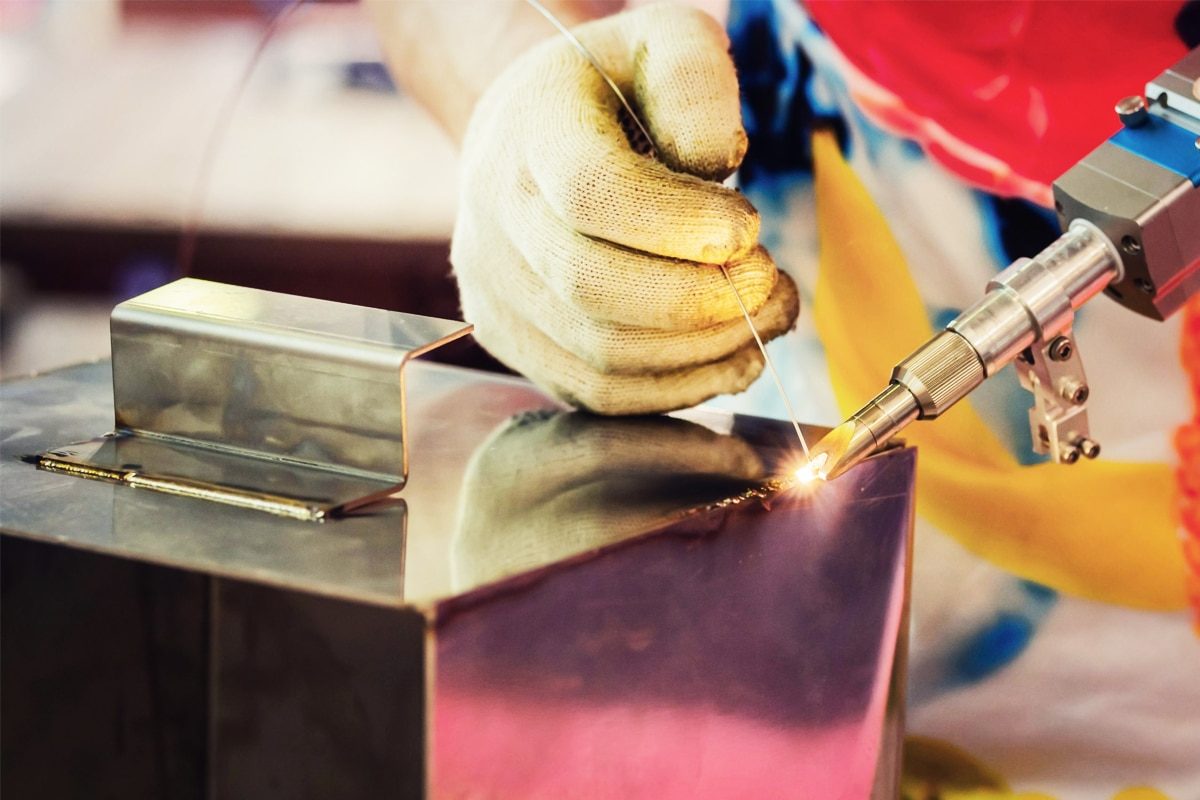
Overview of Laser Welding Machines
How Laser Welding Works
Main Types of Laser Welding Machines
Laser welding machines are available in several configurations, each suited for different industrial applications:
- Handheld Laser Welding Machines: These portable systems allow welders to hold the welding gun manually. They are popular for metal fabrication, repair, stainless steel furniture, railings, door panels, chassis components, and small production workshops. They offer flexibility, high speed, and minimal training requirements, but require regular maintenance of optics, protective lenses, and cooling systems due to their exposure to outdoor or dusty environments.
- Robotic and CNC Laser Welding Systems: These systems integrate the laser head with robotic arms or motion platforms. They are used in automotive manufacturing, aerospace fabrication, battery production, and industrial automation, where consistent weld quality, high throughput, and repeatability are essential. Their maintenance involves additional elements such as servo systems, sensors, automation software, and calibration routines.
- Wire-Fed Laser Welding Machines: These machines incorporate automatic wire feeding to fill gaps or reinforce welds. Wire feeder maintenance is critical because feeding issues directly impact weld seams, bead uniformity, and penetration stability.
- Laser Welding Workstations with Galvanometer Scanners: Some systems use scanning optics (galvo heads) to weld at extremely high speeds or to process complex shapes. Maintenance focuses heavily on lens clarity, galvo calibration, and thermal management.
Core Components of Laser Welding Machines
Laser Source (Fiber Laser Generator)
Beam Delivery System (Fiber Cable or Optical Path)
Welding Head / Optics Assembly
This includes:
- Collimating lenses
- Focusing lenses
- Protective lenses
- Nozzles
- Sensors or vision modules
- Beam alignment components
Cooling System (Water Chiller)
Electrical & Control System
Assist Gas System
Wire Feeder (for Wire-Fed Welding)
Why Component Knowledge Matters for Maintenance
Each subsystem has its own potential failure modes. For example:
- If optics are dirty → the beam burns the protective lens, reducing power.
- If coolant is contaminated → the laser source overheats and loses efficiency.
- If fiber cables are bent → power output becomes unstable or drops sharply.
- If gas pressure fluctuates → weld discoloration or porosity occurs.
- If the wire feeder is worn → the weld bead becomes inconsistent.
Daily Maintenance
Inspect the Working Environment
Check for:
- Dust accumulation on and around the machine
- Flammable materials near the welding zone
- Nearby equipment producing vibration or electromagnetic interference
- Loose cables, hoses, or other obstacles that may be caught during operation
- Adequate ventilation and fume extraction
- Stable ambient temperature
Check the Power Supply and Grounding
Before powering on the machine:
- Ensure the machine’s main power switch is intact
- Inspect power cables for damage, cuts, or loose connections
- Confirm that the machine is properly grounded
- Ensure electrical components are dry and not exposed to moisture
Inspect the Fiber Cable for Bending or Damage
Daily checks include:
- Making sure the cable is not twisted
- Ensuring the fiber cable is free of sharp bends
- Avoiding contact with hot workpieces or surfaces
- Checking for abrasion or pressure points
- Verifying both ends are clean and securely connected
Clean and Inspect the Protective Lens
Every day, check the lens for:
- Dust particles
- Metal spatter
- Oil droplets
- Burn marks
- Discoloration
- Scratches
- Fogging due to humidity
When cleaning lenses:
- Use high-purity isopropyl alcohol or lens-cleaning solution.
- Use lint-free optical tissues or dust-free swabs.
- Gently wipe in a single direction; never scrub back and forth.
- Replace the protective lens if cleaning does not restore clarity.
Inspect the Welding Gun or Welding Head
Check the following:
- Ensure the nozzle is clean
- Remove spatter buildup from the nozzle edges
- Inspect the copper nozzle for deformation or damage
- Verify the focusing module is intact
- Check internal sensors (if equipped)
- Ensure the welding trigger or buttons function properly
Confirm Assist Gas Pressure and Flow Stability
Assist gas influences weld quality, penetration depth, oxidation, and spatter reduction. Before daily operation:
- Check the gas cylinder pressure
- Inspect pipeline leaks using soapy water (if needed)
- Confirm the regulator delivers stable gas pressure
- Ensure the air compressor (if used) is drained of water
- Verify gas filters and dryers are functioning
Inspect the Water Chiller
The water chiller is essential for cooling both the laser source and the welding head. Before starting the machine:
- Check the water level and ensure it is within the safe range
- Verify temperature settings are correct (typically 25–28℃ for fiber lasers)
- Inspect coolant hoses for leaks or blockages
- Ensure the chiller vents are free of dust
- Confirm the chiller pump is running smoothly
Clean the Machine Exterior
Check the Wire Feeder (For Wire-Fed Welding)
If using a wire-fed system:
- Ensure the wire roller is clean
- Confirm the wire feeding path is smooth
- Inspect the wire for oxidation or contamination
- Ensure that the wire reel rotates freely
- Clean the wire outlet nozzle
Run a Short Test Weld
Before starting full production:
- Make a short test weld on a scrap piece
- Observe beam stability, weld color, gas protection, and spatter behavior
- Confirm weld penetration is consistent
- Listen for unusual noise from the laser source or cooling system
Check Safety Systems and Interlocks
Daily safety checks prevent accidents:
- Ensure emergency-stop buttons work
- Verify machine covers and doors trigger the safety interlocks
- Confirm that warning lights and alarms function properly
- Make sure personal protective equipment is available
Weekly Maintenance
Deep Clean of the Welding Head and Nozzle
While daily cleaning removes surface dust and spatter, weekly cleaning involves thorough disassembly and inspection of the welding head:
- Remove the copper nozzle
- Inspect internal threads for metal buildup
- Clean the gas channel to remove carbonized residue
- Ensure the nozzle is free from deformation, dents, or heat distortion
- Inspect O-rings and seals for cracks or wear
Inspect and Clean Internal Optics (If User-Serviceable)
Some laser welding heads allow access to:
- Collimating lens
- Focusing lens
- Beam splitter modules
- Wobble mirrors
These optics accumulate microscopic contaminants over time. Even a thin film of oil vapor or dust can reduce beam transmission and create hot spots that burn lens coatings. Weekly inspection involves:
- Using an LED inspection flashlight to detect contamination
- Checking for burn marks, coating damage, or scratches
- Cleaning gently with optical wipes (only if recommended by the manufacturer)
- Replacing damaged lenses immediately
Inspect the Fiber Cable Connectors
The QBH or QCS fiber connectors require careful handling. Weekly checks help prevent serious failures:
- Remove the connector dust cap and inspect the fiber interface
- Ensure there is no dust, oil, or fingerprints
- Check for signs of burning, dark spots, or uneven reflections
- Evaluate whether the connector temperature has been normal during operation
- Reapply anti-static or anti-dust measures when reconnecting
Inspect Cooling System Efficiency
The cooling system operates constantly and is critical to extending the lifespan of the laser source. Weekly maintenance includes:
- Checking the coolant tank for sediment or cloudiness
- Inspecting tubing for algae growth
- Cleaning air filters on the chiller
- Ensuring all fans rotate freely
- Inspecting condensate drainage to avoid water leakage
- Verifying the temperature sensors display accurate readings
Inspect Gas Supply System and Filter Units
Gas flow systems degrade more slowly, so weekly inspection is sufficient:
- Inspect all gas hose connections
- Tighten loose fittings or clamps
- Check gas filters, dryers, or moisture traps for signs of saturation
- Drain accumulated water from the air compressors
- Ensure consistent gas pressure under load
Examine Wire Feeding System (For Wire-Fed Welding)
Wire-feed consistency strongly affects welding quality. Weekly inspection includes:
- Opening the wire feeder housing and cleaning the metal dust
- Inspecting rollers for wear
- Checking roller pressure adjustment
- Ensuring wire guides and conduits are clean
- Verifying the wire spool rotates smoothly
- Removing old or rusty wire from the system
Inspect Mechanical Connections and Fasteners
Mechanical vibration gradually loosens fasteners over time. Weekly checks include:
- Tightening screws on the welding head
- Confirming the fiber cable clamp is secure
- Checking the welding gun trigger mechanism
- Inspecting robotic-arm mounting points (if applicable)
- Checking the wobble head’s motor mounts
Check Software Logs and Error History
Laser welding machines store operational logs that track:
- Overheating events
- Power fluctuations
- Gas-pressure alarms
- Chiller faults
- Laser-source warnings
- Fiber-reflection errors
Weekly review helps you identify patterns such as:
- Gradual temperature rise indicating coolant degradation
- Repeated minor alarms that could predict a major failure
- Beam instability caused by lens wear
Run a Weld Quality Evaluation
At least once per week, perform a structured weld test:
- Weld a standard test seam using fixed parameters
- Inspect for spatter, porosity, and color variation
- Check penetration depth consistency
- Evaluate the smoothness of the weld bead
- Compare the test weld to previous records stored in your SOP
Clean the Control Cabinet and Electrical Panels (Surface Only)
Dust settling on control cabinets can be drawn inside the system. Weekly maintenance includes:
- Removing dust with a dry cloth
- Ensuring ventilation grids are not blocked
- Checking for unusual odors or heat buildup
- Ensuring electrical connectors remain firmly seated
Review Safety Equipment and PPE Condition
Weekly safety inspection includes:
- Checking welding gloves and protective jackets for damage
- Inspecting laser-safety goggles for scratches or reduced visibility
- Ensuring fume extraction filters are not clogged
- Testing emergency-stop buttons (if not tested daily)
- Reviewing the welding area for compliance with safety signage
Monthly / Periodic Maintenance
Replace or Refresh the Coolant
Monthly coolant checks should include:
- Inspecting coolant clarity and color
- Checking for floating debris or sediment
- Ensuring no odor or bacterial growth is present
- Verifying coolant conductivity is within acceptable limits
- Checking corrosion inhibitors (if using specialized coolant types)
Depending on the machine manufacturer’s recommendations, coolant should be:
- Replaced every 1–3 months for heavy-use environments
- Replaced every 6 months for moderate use
- Always replaced immediately if signs of contamination appear
Flush the Cooling System (If Needed)
Flushing involves:
- Emptying the entire coolant tank
- Running distilled water or a cleaning solution through the system
- Removing internal sludge from tubing
- Cleaning external filters and strainers
- Refilling with fresh coolant
Inspect Internal Filters and Air Ducts
Laser welding machines often have:
- Air filters for electrical cabinets
- Dust screens for fans
- Gas filter units
- Internal ventilation channels
Monthly maintenance includes:
- Removing and washing reusable filters
- Replacing disposable filters
- Cleaning accumulated dust from air intakes
- Checking fan speed and performance
- Ensuring that electrical components are not overheating due to blocked airflow
Check and Tighten All Internal Electrical Connections
Thermal cycling and vibration can loosen electrical connections inside the machine. Loose terminals can cause:
- Power fluctuations
- Intermittent errors
- Increased electrical resistance
- Overheating and arcing
- Component failure
Monthly tasks include:
- Opening the control cabinet (if allowed by the manufacturer)
- Inspecting terminals, connectors, and grounding points
- Tightening screws that have loosened over time
- Checking cables for discoloration or heat damage
- Inspecting DC and AC power lines for wear
Conduct a Full Optical System Review
Checklist includes:
- Removing the welding head for internal inspection
- Checking the alignment of the collimation and focusing modules
- Inspecting lenses for coating damage
- Evaluating wobble-mirror clarity and reflectivity
- Inspecting mirror mounts and brackets for loosening
- Checking for carbonization around the beam path
Evaluate Fiber Connector Heat History
Monthly maintenance includes:
- Reviewing the connector temperature logs
- Checking for discoloration or burn traces
- Cleaning connector surfaces with specialized cleaners
- Ensuring the fastening mechanism is secure and evenly tightened
- Replace protective caps when not in use
Inspect Motion Systems (Robotic or Automated Units)
For robotic or CNC-type laser welding systems:
- Inspect servo motors and drive belts
- Check the lubrication status of the linear guide rails
- Confirm that motion paths remain smooth
- Test the repeatability of robot movements
- Review calibration of position sensors
- Inspect cable carriers for wear or cracking
Perform Full System Calibration
Periodic calibration ensures that:
- The laser output power matches the software setting
- The wobble pattern is centered and symmetrical
- The scanning system (if used) maintains alignment
- The wire feeder (if equipped) feeds at the correct rate
- The focal length remains accurate
Inspect Safety Systems and Replace Aging Components
Monthly safety checks should include:
- Testing all emergency stops
- Verifying safety interlocks still respond correctly
- Checking the signal lights, warning lamps, and alarms
- Inspecting laser safety curtains or partitions
- Checking grounding resistance
- Replacing worn PPE (gloves, goggles, masks)
Evaluate Machine Performance Trends
Monthly performance evaluations include reviewing:
- Laser power stability trends
- Cooling system temperature graphs
- Gas consumption history
- Welding defect patterns
- Operator feedback
- Software error logs
Component-Specific Maintenance
Laser Source (Fiber Laser Generator)
The laser source is the heart of the machine. It determines beam quality, penetration, stability, and operational reliability. A fiber laser can last over 100,000 hours, but only when maintained properly.
- Key Maintenance Principles
- Maintain Stable Cooling: Overheating is the primary cause of premature laser-source degradation. Coolant must be clean, conductive-free, and replaced regularly.
- Protect Against Back-Reflection: Welding reflective materials (aluminum, brass, copper) can send energy back toward the source, damaging internal optics. Use monitoring systems and approved welding heads for reflective materials.
- Ensure Power Supply Stability: Voltage fluctuations stress internal electronics. A dedicated power line or UPS is recommended.
- Specific Maintenance Tasks
- Keep coolant temperature stable (usually 25–28℃).
- Regularly inspect the water chiller connection ports.
- Clean dust from laser-source ventilation areas.
- Review the internal alarm logs weekly or monthly.
- Inspect the fiber connector (QBH/QCS) for dust, fingerprints, or burn marks.
- Common Failure Signs
- Sudden drop in laser power
- Output instability after long operation
- Alarms related to back-reflection
- Overheat alarms despite cool ambient temperature
Beam Delivery System (Optical Fiber Cable or Optical Path)
The beam delivery system transmits laser energy from the laser source to the welding head. It must remain physically and optically flawless.
- Maintenance Principles
- Never bend the fiber cable beyond the minimum radius.
- Do not let the cable drag across rough floors.
- Prevent impact, pressure, or vibration.
- Always cap fiber connectors when not in use.
- Specific Tasks
- Daily inspection of cable routing to avoid pinching or bending.
- Weekly inspection for abrasion, dents, or compression marks.
- Monthly inspection of connector surfaces using a fiber-end inspection tool.
- Cleaning connectors only with manufacturer-approved tools.
- Failure Signs
- Unstable power during welding
- Connector overheating
- Visible dark spots on the fiber face
- Laser-source error messages
Optics System (Collimating Lens, Focusing Lens, Protective Lens)
Optics are the most frequently contaminated and replaced components in a laser welding system. Dust, fumes, oil, and spatter can easily degrade lens surfaces.
- Maintenance Principles
- Protective lenses should be replaced before they burn.
- Only use approved lens-cleaning methods.
- Work in a clean, static-free environment.
- Specific Tasks
- Daily cleaning or inspection of the protective lens.
- Weekly inspection of internal lenses (if user-serviceable).
- Monthly full optical-path review.
- Replace worn O-rings, seals, or copper nozzles.
- Signs of Lens Problems
- Increased spatter sticking to the lens
- Discoloration or smoke marks
- Reduced penetration despite the same power
- Oversized spot or blurry beam
- More sparks than usual
Welding Head / Welding Gun Assembly
Whether handheld or robotic, the welding head withstands high heat, fumes, and mechanical stress.
- Maintenance Principles
- Keep nozzles, lenses, and gas channels clean.
- Avoid dropping or striking the welding gun.
- Ensure wobble mechanisms stay calibrated.
- Specific Tasks
- Clean nozzle interior weekly.
- Remove spatter from nozzle edges daily.
- Check the wobble motor and bearings monthly.
- Inspect sensor modules, wire-feed paths, or auto-focus systems.
- Replace worn gas diffusers or sealing rings.
- Failure Signs
- Inconsistent weld bead
- Excessive spatter
- Gas turbulence or discoloration
- Irregular wobble pattern
- Visible wobble-shift or misalignment
Cooling System (Water Chiller)
The cooling system is a critical part of the machine, directly affecting the laser source and welding-head temperature.
- Maintenance Principles
- Always use factory-recommended coolant.
- Prevent algae, bacteria, and sediment buildup.
- Keep the temperature stable.
- Specific Tasks
- Daily check: water level, hose leaks, and pump operation.
- Weekly check: filter screens, air vents, and fans.
- Monthly replacement or refresh of coolant (or as required).
- Regular calibration of the temperature-sensor system.
- Failure Signs
- Frequent overheating alarms
- Rapid temperature fluctuations
- Cloudy or discolored coolant
- Slow coolant circulation
- Foam or bubbles in the tank
Assist Gas System
Assist gas affects weld penetration, molten-pool dynamics, oxidation control, and post-weld appearance.
- Maintenance Principles
- Keep gas lines clean and moisture-free.
- Use stable pressure and quality gas.
- Check fittings regularly for leaks.
- Specific Tasks
- Drain water from air compressors daily.
- Inspect pipeline leaks weekly.
- Replace gas filters monthly.
- Test pressure regulators and flow meters.
- Failure Signs
- Weld discoloration (brown/blue/black)
- Porosity or bubbles in the weld
- Spatter increases
- Noisy or turbulent gas flow
- Inconsistent penetration depth
Wire Feeder (for Wire-Fed Laser Welding Machines)
Wire-fed welding requires precise feeding behavior. Any obstruction or inconsistency will result in severe weld defects.
- Maintenance Principles
- Keep rollers clean and properly tensioned.
- Use clean welding wire.
- Maintain a smooth conduit path.
- Specific Tasks
- Daily cleaning of the wire outlet.
- Weekly inspection of rollers and wire guides.
- Monthly lubrication (if recommended).
- Replace bent or contaminated wire conduits.
- Failure Signs
- Irregular weld bead thickness
- Wire burn-back
- Inconsistent weld penetration
- Wire slipping or stopping
- Excessive spatter
Electrical System and Control Cabinet
Laser welding machines rely on stable and clean electrical systems for safe operation.
- Maintenance Principles
- Ensure grounding is secure.
- Keep electrical components dust-free.
- Avoid moisture inside the cabinet.
- Specific Tasks
- Weekly cabinet surface cleaning.
- Monthly inspection of terminals and wiring.
- Verify internal temperatures remain within normal range.
- Inspect relays, sensors, and connectors.
- Failure Signs
- Frequent error codes
- Inconsistent power output
- Overheating without cause
- Burnt smell or discoloration
- Machine restarts or random shutdowns
Software & Control System
Modern laser welding machines rely on software for monitoring temperature, power output, beam characteristics, safety systems, and motion control.
- Maintenance Principles
- Keep firmware updated.
- Maintain stable settings and log files.
- Use official software tools only.
- Specific Tasks
- Weekly check for system errors.
- Monthly review of alarm history.
- Regular calibration of power output.
- Backup of machine parameters.
- Apply firmware updates as approved by the manufacturer.
- Failure Signs
- Delayed command responses
- Incorrect wobble pattern
- Misalignment of parameter display
- Repeated alarm messages
- Parameter drift during long operations
Fume Extraction and Safety Systems
Fume extraction and safety systems protect both equipment and operators.
- Maintenance Principles
- Ensure smooth airflow and filtration.
- Maintain safety interlocks.
- Replace PPE regularly.
- Specific Tasks
- Clean or replace extractor filters weekly or monthly.
- Inspect fan blades and housings.
- Verify laser safety curtains are intact.
- Test emergency stops and alarms regularly.
- Failure Signs
- Smoke accumulation during welding
- Strong odors near the welding head
- Weak extraction airflow
- Frequent safety-interlock warnings
Common Problems Caused by Poor Maintenance
Inconsistent Laser Power Output
One of the most common indicators of poor maintenance is unstable or reduced power output during welding.
- Symptoms include:
- The laser arc seems weak or fades during long welds
- Penetration depth varies even with stable parameters
- Weld beads appear inconsistent or underfilled
- Common causes include:
- Contaminated protective lens or internal lenses
- Overheating due to poor cooling water quality
- Fiber connector contamination or slight corrosion
- Gas turbulence is affecting the molten pool
- Air bubbles in the coolant system
- Voltage fluctuations from an unstable electrical supply
Excessive Spatter and Weld Contamination
A clean laser beam and proper gas flow should minimize spatter. However, poor maintenance often results in excessive molten-metal ejection.
- Signs include:
- Large spatter droplets around the weld
- Spatter sticking to the nozzle or lens
- Irregular weld surfaces
- Causes include:
- Dirty protective lens causing beam distortion
- Worn nozzles are disturbing the gas flow
- Moisture or oil in gas lines
- Oxidized or contaminated wire (in wire-fed welding)
- Unbalanced wobble head due to dust or mechanical wear
Burned or Cracked Protective Lens
A protective lens is designed to take the damage that would otherwise reach the focusing lens. Poor maintenance accelerates lens wear.
- Signs of lens damage include:
- Brown or rainbow-colored burn marks
- Stars, black dots, or cracks on the lens
- Sudden reduction in beam transmission
- Frequent need to increase power to achieve the same penetration
- Root causes include:
- Failure to replace lenses in time
- Using dirty or oily cleaning cloths
- Gas-line contamination is causing backflow residue
- Spatter buildup on the nozzle is altering the beam focus
- Incorrect installation of the lens or O-ring
Overheating and Temperature Instability
Cooling problems quickly escalate, affecting both the welding head and laser source. Overheating reduces lifespan and causes immediate production issues.
- Signs include:
- Frequent cooling alarms
- Water temperature rising above the setpoint
- Laser power dropping after long welds
- Hot welding head exterior
- Causes include:
- Coolant contamination (algae, debris, sediment)
- Insufficient coolant level
- Blocked chiller filters or vents
- Failed pump or poor circulation
- Incorrect coolant-water ratio
- The ambient temperature is too high
Poor Weld Appearance (Discoloration, Porosity, Oxidation)
Visual weld defects are often a direct result of inadequate maintenance.
- Symptoms:
- Welds are turning brown, blue, or black
- Porous weld bead
- Weak mechanical strength
- Surface contamination
- Causes:
- Low or unstable gas pressure
- Moisture in the gas supply
- Nozzle deformation disrupting shielding patterns
- Dirty optics affecting weld penetration
- Improper distance between the nozzle and the workpiece due to debris
Wire Feeding Problems in Wire-Fed Welding
Wire-fed laser welding requires extremely smooth wire feeding. Poor maintenance creates multiple issues:
- Signs of wire-feeding trouble:
- Irregular bead shape
- Burn-back of wire
- Gaps between weld segments
- Sudden stopping of the wire feed
- Excessive spatter
- Primary causes:
- Worn or dirty rollers
- Clogged conduits
- Rusty or contaminated welding wire
- Misaligned wire feed path
- Incorrect roller pressure
Wobble-Head Malfunction or Misalignment
Wobble-head modules improve weld quality for gap filling and wide seams. However, wobble mechanisms are sensitive to contamination and vibration.
- Signs include:
- Irregular wobble patterns
- Asymmetric weld shape
- Excessive wobble noise
- Vibrating or shaking beam trace
- Root causes:
- Dust or debris inside the wobble-head lens system
- Loose internal components
- Motor or bearing wear
- Incorrect calibration
Gas Leakage or Pressure Inconsistency
Gas system issues often lead to weld oxidation and weak fusion.
- Signs include:
- Audible gas leaks
- Sudden pressure drops
- Unstable flowmeter indications
- Uneven weld coloration
- Causes:
- Cracked hoses or aging tubing
- Loose fittings or clamps
- Saturated moisture filters
- Water accumulation in air compressors
Electrical Faults and Unstable Operation
Poor electrical-system maintenance can have severe consequences.
- Symptoms:
- Random machine restarts
- Frequent error messages
- Abnormal noises from the control cabinet
- Flickering indicator lights
- Unresponsive control panel
- Causes:
- Loose internal terminals
- Dust accumulation is causing short circuits
- Improper grounding
- Reactive humidity affecting cabinet components
Premature Failure of Expensive Components
Examples include:
- Laser source failure due to overheating
- Fiber damage from incorrect handling
- Burned focusing lens from spatter accumulation
- Chiller pump failure from contaminated coolant
- Nozzle or gas diffuser deformation
Safety Risks for Operators
Poor maintenance increases risks such as:
- Laser radiation exposure from damaged beam delivery
- Electrical shock from faulty grounding
- Fire hazards caused by dust accumulation
- Fume inhalation due to clogged extractors
Best Practices and Long-Term Maintenance Strategy
Establish a Formal Preventive Maintenance Schedule
A strong preventive maintenance plan includes:
- Daily, weekly, and monthly checklists are stored physically or digitally
- Logs for lens replacement, coolant changes, and filter updates
- Scheduled inspections by trained technicians
- Automated reminders from software or ERP systems
- Records of past failures to identify patterns
Assign Trained Personnel for Maintenance Tasks
Best practice includes:
- Designating specific technicians as “laser maintenance specialists”
- Ensuring operators understand basic cleaning, but avoid deep repairs
- Providing training for lens cleaning, fiber safety, and gas system handling
- Partnering with the manufacturer for annual servicing
Implement Strict Cleanliness Protocols
Best practices include:
- Keeping a cleanroom-like environment around the optics station
- Wearing gloves when handling lenses or fiber connectors
- Storing optics in sealed containers
- Using dust-free wipes and high-grade isopropyl alcohol
- Keeping the workshop floor free of grinding dust or metal chips
- Installing fume extraction for heavy welding operations
Maintain Stable Cooling Conditions
To ensure cooling efficiency:
- Keep coolant between 25℃ and 28℃
- Use only factory-recommended coolant mixtures
- Replace coolant before signs of contamination appear
- Clean filters regularly
- Prevent algae by using anti-corrosion & anti-bacterial coolant additives
- Ensure proper ambient temperature and ventilation
Handle Fiber Cables With Extreme Care
General principles include:
- Never bend the fiber cable tightly
- Keep the cable suspended and supported
- Avoid stepping on the cable
- Never twist, pull, or crush it with tools or fixtures
- Use protective sleeves for harsh environments
- Always cap the connectors when disconnected
Protect the Optics System at All Times
Best practices include:
- Recording lens replacement frequency to predict wear patterns
- Keeping at least 5–10 spare protective lenses in stock
- Cleaning lenses only in dust-free areas
- Flagging repeated contamination for root-cause analysis
- Ensuring nozzle alignment is correct to protect lens life
Maintain Consistent Gas Quality and Pressure
Best practices include:
- Using high-purity nitrogen or argon for sensitive welds
- Installing dryers to remove moisture from compressed air
- Draining water from air compressors daily
- Using stainless-steel gas lines for corrosive environments
- Testing gas pressure under load—not only at idle
- Replacing gas filters regularly
Create Documentation for Parameters and Weld Standards
Documentation includes:
- Standard parameter sets for each material and thickness
- Wobble settings for different joint types
- Gas pressure and standoff distance guidelines
- Wire-feeding speed standards (if applicable)
- Weld-quality checkpoints (color, penetration, bead shape)
- Photos or micrographs of ideal welds
Monitor Performance Trends Over Time
You should monitor:
- Average connector temperature
- Peak chiller temperature
- Number of lens replacements per month
- Rate of power fluctuation during long weld cycles
- Frequency of gas-pressure alarms
- Wire-feeding load percentages
Use Genuine Replacement Parts and Consumables
Reasons to use genuine parts:
- Optical coatings match the laser wavelength
- Thermal properties are tested for high-power welding
- Mechanical tolerances align with factory standards
- Coolant formulations prevent corrosion and algae
- Gas nozzles have optimized flow patterns
Conduct Annual Professional Servicing
Annual servicing typically includes:
- Electrical inspection with diagnostic tools
- Deep optical-path alignment tests
- Laser-source internal review (logs, back-reflection history, diode health)
- Scanning system calibration (if applicable)
- Pump and cooling-system performance tests
- Preventive parts replacement
Build a Strong Maintenance Culture
A strong maintenance culture includes:
- Operators who take responsibility for basic care
- Managers who prioritize equipment lifespan and quality
- Technicians who specialize in laser maintenance
- Clear SOPs that guide every maintenance action
- Continuous improvement through feedback and data
Safety Considerations for Maintaining Laser Welding Machines
Laser Radiation Safety During Maintenance
Key safety rules:
- Always shut down the laser source before opening any optical or electrical compartment
- Use lockout/tagout (LOTO) procedures to prevent accidental activation
- Never look directly into the fiber connector or beam path—even if the machine is off
- Use laser safety goggles rated for the correct wavelength (commonly 1064–1080 nm for fiber lasers)
- Keep warning signs visible and ensure restricted access to the maintenance area
Electrical Safety Precautions
Safety guidelines include:
- Disconnect the main power before electrical maintenance
- Wait for capacitors to discharge before touching internal components
- Wear insulated gloves when handling wiring
- Do not work in humid or wet conditions
- Never bypass safety interlocks
- Verify grounding continuity regularly
Handling Optics Safely
Important precautions:
- Wear anti-static gloves to prevent fingerprints and moisture
- Use only approved optical wipes and cleaning chemicals
- Avoid over-tightening lens holders to prevent cracking
- Store spare lenses in dustproof containers
- Keep cleaning tools separate from general workshop tools
Safe Handling of Fiber Cables
Safety measures include:
- Never bend fiber cables beyond the minimum radius
- Avoid dropping connectors or placing them on dusty surfaces
- Use protective caps immediately after disconnection
- Keep cables away from welding sparks, sharp objects, and hot surfaces
- Do not stretch or pull the cable during maintenance
Pressurized Gas Safety
Safe handling requires:
- Checking hoses for wear or leaks before use
- Securing gas cylinders with chains or brackets
- Using pressure regulators rated for the gas type
- Avoiding exposure to rapid decompression
- Ensuring proper ventilation to prevent oxygen displacement
Safe Maintenance of Cooling Systems
Safety precautions include:
- Wearing protective gloves and glasses when handling coolant
- Avoiding skin or eye contact with chemicals
- Properly disposing of old coolant according to regulations
- Preventing spills around electrical areas
- Ensuring chiller power is off before cleaning or draining
Fire and Fume Safety
Ensure:
- The work area is free of flammable materials
- Fume extraction units are functioning properly
- Fire extinguishers are accessible and regularly inspected
- Operators wear proper masks or respirators
- Maintenance areas have adequate ventilation
General Workshop Safety Practices
Good workshop discipline prevents many accidents:
- Keep floors clean and dry to avoid slips
- Ensure adequate lighting during maintenance
- Wear appropriate PPE, including gloves, goggles, and protective clothing
- Maintain a tidy workspace to prevent tripping over cables or hoses
- Train all personnel on emergency procedures