
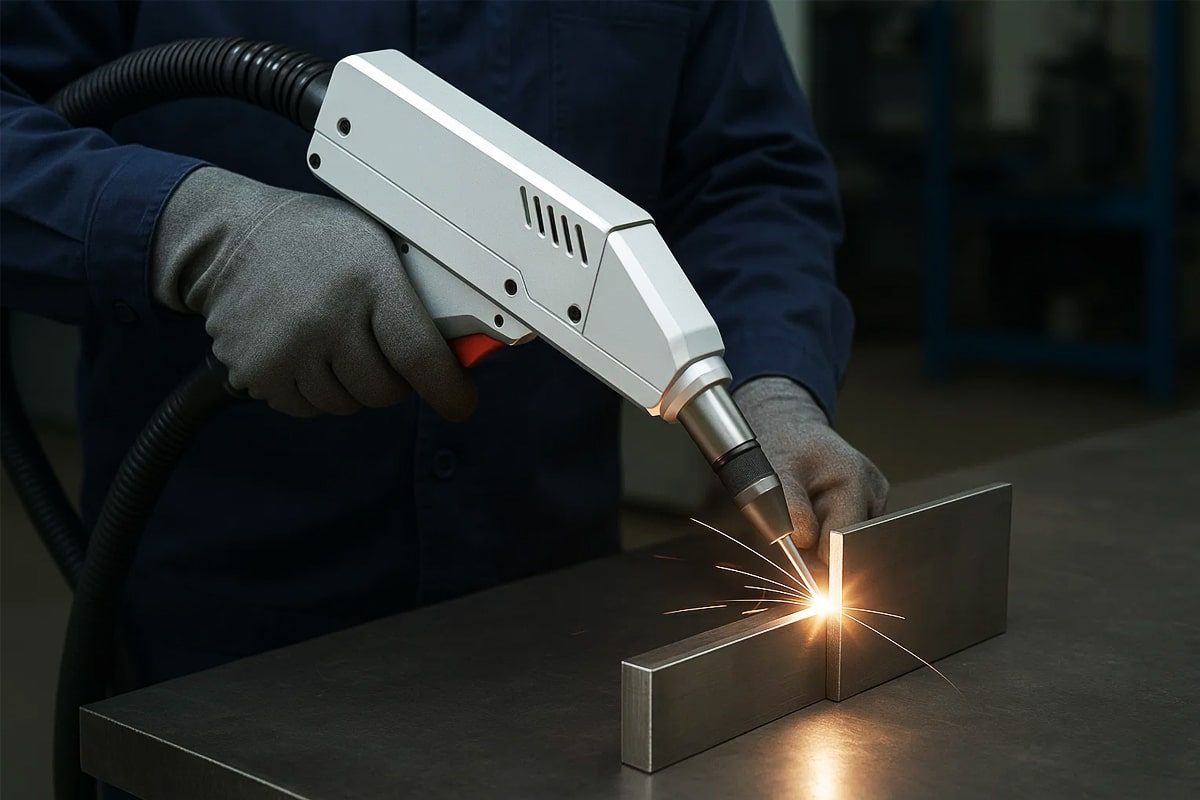
How Does Laser Welding Achieve Deep Melting of Materials?
Laser welding has evolved into one of the most advanced joining technologies in modern manufacturing, capable of producing exceptionally deep, narrow welds with minimal heat input. The mechanism that allows a laser beam—essentially concentrated electromagnetic radiation—to melt and penetrate metals to impressive depths is known as deep penetration welding, often referred to as keyhole welding. Unlike conduction-mode welding, where heat diffuses from the surface into the material, deep melting relies on the formation of a vapor-filled cavity (the keyhole) that channels laser energy deep below the surface, creating welds with extremely high depth-to-width ratios.
Understanding how laser welding achieves deep melting requires examining the interaction between the laser beam and material, the transition from surface melting to deep penetration, the dynamics inside the keyhole, and the metallurgical transformations that occur during the process. This comprehensive article examines the physics, thermodynamics, fluid dynamics, and technological parameters underlying deep penetration laser welding, as well as its industrial applications and future development trends.
Table of Contents
Fundamentals of Laser–Material Interaction
Absorptivity and Reflectivity
At the heart of deep melting is the balance between how much laser energy the material absorbs and how much it reflects. Metals exhibit high reflectivity at room temperature—particularly aluminum, copper, and other light-colored alloys—making initial energy coupling challenging. As the surface heats, absorptivity increases, reducing reflectivity. This positive feedback loop accelerates melting once the surface temperature rises. Surface conditions such as roughness, oxide layers, and coatings also influence absorption.
The Importance of Power Density
Deep melting requires extremely high power densities—typically above 10⁶ W/cm²—sufficient to raise the surface temperature beyond melting and eventually to vaporization. The concentrated energy density of fiber lasers and CO2 lasers makes it possible to deliver this intensity to a very small spot, enabling rapid thermal input.
A tightly focused beam ensures the threshold for vaporization is reached quickly. When vaporization begins, recoil pressure initiates the transition to keyhole formation, the defining feature of deep penetration.
Material Heating and Melting Dynamics
Laser heating begins with surface absorption. Energy diffuses inward by conduction until melting occurs. The molten layer deepens as the heat flux continues. However, the formation of vapor is what ultimately allows the process to escape the limitations of conduction-mode heating. The dynamic interplay between conduction, convection in the molten pool and vaporization-driven forces sets the stage for deep melting.
From Surface Melting to Deep Penetration: The Transition Mechanism
Surface Melting
Laser irradiation initially produces a thin molten layer at the material surface. This melt layer grows in thickness as energy continues to flow inward by conduction. At this stage, the welding mode is categorized as conduction-mode welding, producing shallow, wide welds.
Local Vaporization and Recoil Pressure
When the local temperature exceeds the boiling point, metal begins to evaporate. The evaporating vapor expands violently, exerting recoil pressure on the molten surface. This pressure depresses the melt surface downward, pushing liquid metal aside.
Recoil pressure is the primary mechanism driving the formation of the keyhole.
Formation of the Keyhole
As vaporization intensifies, the depressed surface becomes a deep, narrow cavity. This cavity, filled with metal vapor, is called the keyhole. The keyhole is essential because:
- It allows the laser beam to penetrate deeply into the material.
- It reduces reflection losses by trapping the beam inside.
- It provides an efficient pathway for heat to reach deep layers.
Propagation of the Keyhole
Once formed, the keyhole grows deeper as vapor pressure continues to push downward and the laser beam is guided into the cavity. The internal reflections of the laser beam along the keyhole walls further enhance heating efficiency.
Steady-State Keyhole Welding
During steady-state operation, the keyhole maintains a relatively constant shape and depth. The molten metal flows around the cavity, forming the weld pool. As the laser beam advances, the molten metal fills the collapsing portion of the keyhole, solidifying to form a deep, narrow weld. This stable state produces the characteristic high aspect ratio welds of deep penetration laser welding.
Advantages and Disadvantages of Deep Melting Laser Welding
Advantages
Deep penetration laser welding offers several key benefits:
- Exceptional depth-to-width ratios, sometimes exceeding 10:1, enabling welding of thick sections.
- High welding speed improves productivity in mass-production environments.
- Narrow heat-affected zones, reducing distortion and residual stress.
- Lower heat input, improving metallurgical properties, and limiting thermal degradation.
- Precise control, allowing for welding in microelectronics, aerospace components, and battery manufacturing.
- Minimal filler material, reducing cost and simplifying metallurgical compatibility.
Disadvantages
Despite its strengths, deep melting also has limitations:
- Risk of porosity, particularly in materials that outgas or have high vapor pressure.
- Keyhole instability, which can lead to humping, spatter, and defects.
- Demanding alignment, requiring highly precise fixturing and joint preparation.
- High equipment cost, especially for high-power fiber lasers.
- Reflective materials, such as copper and aluminum, require additional parameter control.
- Safety hazards, due to intense laser radiation, fumes, and plasma formation.
The Keyhole: The Core Structure of Deep Melting
Keyhole Geometry
The keyhole is typically a tapered cavity, narrow at the bottom and wider near the top, shaped by the balance of vapor pressure, hydrostatic pressure, and surface tension. Its shape is continuously evolving due to thermal gradients and flow dynamics.
Multiple Internal Reflections
Laser beams entering the keyhole are reflected many times along the cavity walls. Each reflection deposits additional energy, dramatically increasing absorption beyond simple surface heating. This multiplication effect enables the laser beam to effectively “drill” deep into the material.
The Role of Metal Vapor and Plasma
Metal vapor expands upward from the keyhole, sometimes forming a plasma plume depending on laser intensity and wavelength. While plasma can absorb or scatter the laser beam, properly selected shielding gases suppress plasma formation, ensuring efficient energy delivery to the keyhole.
Keyhole Stability and Oscillations
Keyhole stability depends on a delicate balance of vapor pressure, molten pool flow, and laser energy input. Oscillations may occur at high speeds or with parameter mismatch, leading to defects such as porosity or collapse. Stable welding requires controlling pressure fluctuations and maintaining consistent energy density.
Heat Flow and Molten Pool Dynamics
Heat Flow Characteristics in Laser Welding
Heat flows inward from the keyhole into the surrounding metal, creating steep thermal gradients. Conduction dominates near the keyhole walls, while convection influences the molten pool. The intense and localized heat flow results in a deep, narrow fusion zone.
Melt Pool Shape and Flow Patterns
The molten pool forms around the keyhole and is driven by:
- Marangoni convection (surface tension gradients)
- Hydrodynamic pressure from vapor recoil
- Gravity and buoyancy forces
- Solidification shrinkage
These flows shape the weld pool geometry and affect bead quality.
Solidification Dynamics
As the molten metal cools behind the moving keyhole, solidification occurs rapidly. Cooling rates in laser welding are extremely high, often exceeding 10⁴–10⁶ ℃/s, leading to fine-grain structures. The solidification front becomes the final weld seam.
Energy Density and Process Parameters Enabling Deep Melting
Laser Power and Power Density
Higher laser power increases energy delivery, but deep melting is governed more by power density, which determines whether vaporization occurs. High-brightness fiber lasers excel in providing the required energy concentration.
Beam Focus and Spot Size
A smaller spot size increases power density but reduces tolerance to alignment errors. Precise focusing is necessary to initiate and maintain deep penetration.
Welding Speed
High speed reduces heat input and narrows the weld pool. However, excessively high speed destabilizes the keyhole. Optimal speed balances keyhole stability with penetration depth.
Shielding Gas Selection
Shielding gas prevents oxidation, stabilizes the plume, and can influence penetration. For example:
- Helium suppresses plasma formation.
- Argon stabilizes the melt pool but can increase plasma density.
- Nitrogen may be used on certain steels for deeper penetration.
Material-Specific Factors Affecting Deep Melting
Aluminum and Its Alloys
Aluminum’s high reflectivity and thermal conductivity demand higher power density. Vaporization can cause severe porosity unless parameters are carefully controlled.
Carbon Steel and Stainless Steel
Carbon steels absorb laser energy efficiently once heated. Stainless steel benefits particularly from deep penetration welding, producing clean welds with narrow HAZ.
Copper and Copper Alloys
Copper’s high reflectivity requires high-brightness lasers and precise focusing. Once absorptivity rises during heating, penetration increases rapidly.
Titanium and Reactive Metals
Titanium welds well using deep penetration but requires strict shielding to prevent contamination from oxygen or nitrogen.
Keyhole Physics: The Core of Deep Penetration
Vapor Pressure and Recoil Forces
Vaporization at the keyhole front generates immense recoil pressure, which maintains the cavity shape. The magnitude of this pressure depends on temperature, laser intensity, and material vaporization properties.
Pressure Balances
Keyhole formation is a competition between:
Vapor pressure pushing downward
Hydrostatic pressure resisting cavity formation
Surface tension is attempting to close the cavity
Deep melting occurs when vapor pressure outweighs the opposing forces.
Plasma Formation and Absorption
High intensities may ionize metal vapor into plasma. Plasma affects laser penetration depending on the wavelength. Fiber lasers (near-infrared) are less prone to plasma shielding effects than CO2 lasers.
Keyhole Stability Across Welding Speeds
Low speeds allow excessive heat buildup, enlarging the keyhole and causing instability. High speeds risk insufficient heat and keyhole collapse. The stability window depends on power, focus, and material.
Metallurgical Transformations During Deep Melting
- Grain Structure Development: Rapid cooling produces fine-grained microstructures, improving strength in many alloys. However, excessive cooling may also result in columnar grains prone to cracking.
- Alloying Element Behavior: Vaporization can cause elemental loss in volatile alloys such as zinc-containing steels or aluminum-magnesium alloys. Keyhole dynamics influence segregation, mixing, and diffusion.
- Solidification Cracking: High thermal gradients, shrinkage stresses, and segregation can cause cracking. Control of composition and cooling conditions reduces risk.
Process Variants for Achieving Deep Melting
- High-Power Fiber Laser Welding: Fiber lasers deliver superior beam quality and high-power density, making them ideal for deep penetration welds. They outperform older CO2 and Nd:YAG lasers in most applications.
- Laser Hybrid Welding: Combining a laser with MIG or TIG welding dramatically improves gap tolerance and enables even deeper penetration. Hybrid welding is common in shipbuilding and automotive manufacturing.
- Laser Beam Oscillation Welding: Beam oscillation distributes heat and stabilizes the keyhole, enhancing depth and reducing porosity.
- Pulsed Laser Deep Welding: High-peak-power pulses melt and vaporize metal rapidly. Pulsed operation allows control of heat input and penetration, useful for thin materials or sensitive components.
Defects and Instabilities in Deep Melting
- Porosity: Gas entrapment occurs when the keyhole collapses or vapor is trapped during solidification. Porosity is common in aluminum and zinc-rich alloys.
- Spatter Formation: High recoil pressure or unstable vapor jets can eject molten droplets from the weld pool. Spatter reduces weld quality and cleanliness.
- Undercut and Lack of Fusion: Incorrect energy density, improper speed, or poor focus can lead to insufficient sidewall fusion or removal of material along the weld edge.
Monitoring and Controlling Deep Melting Processes
Real-Time Monitoring
Modern systems use:
- Optical sensors
- Acoustic emission sensors
- Keyhole imaging
- Thermal cameras
These tools detect instability, porosity formation, and keyhole collapse.
Closed-Loop Control Systems
Feedback systems dynamically adjust power, focus, or speed to stabilize the keyhole. Advanced AI-driven control is becoming increasingly common, especially in automotive and battery manufacturing.
Industrial Applications of Deep Penetration Laser Welding
- Automotive Industry: Laser welding is used extensively in battery tabs, hairpins, gear components, body structures, EV motor housings, and thick-section welds.
- Aerospace and Aviation: Deep penetration welding enables joining of titanium structures, engine components, and fuel system parts with high reliability and minimal weight.
- Electronics and Precision Manufacturing: Micro-welding in sensors, connectors, micro-batteries, and hermetically sealed housings relies heavily on deep penetration mechanisms.
- Energy Storage and Battery Manufacturing: Laser welding is central to pouch cells, cylindrical cells, prismatic cells, busbars, and tab-to-busbar connections requiring high conductivity and extreme precision.
- Heavy Industry and Tooling: Laser welding provides deep, strong welds for thick steel plates, hydraulic components, molds, and industrial machinery.
Future Trends in Deep Penetration Laser Welding
Future developments include:
- Higher-brightness lasers for even deeper penetration.
- Adaptive beam shaping and programmable intensity profiles.
- Machine learning optimization for defect-free welding.
- Hybrid additive–welding processes.
- Expanded use in large-scale automated manufacturing (e.g., gigafactories).
- Real-time digital twins for process prediction and control.
Summary
Deep penetration laser welding achieves exceptional melting depth through the formation and stabilization of a keyhole—a vapor-filled cavity created by intense laser energy and sustained by recoil pressure and multiple internal reflections. The interaction between laser radiation and metallic materials transforms surface melting into a highly efficient drilling-like process that channels energy deep into the workpiece. Heat flow, molten pool dynamics, energy density, and process parameters all contribute to keyhole stability and weld quality.
Material properties, from absorptivity to thermal conductivity, further influence penetration behavior. When managed correctly, deep melting provides high-speed, high-strength welds with minimal thermal distortion, making it indispensable in automotive manufacturing, aerospace engineering, electronics production, and energy storage assembly. With advances in laser technology, process monitoring, and intelligent control, deep penetration laser welding will continue to evolve, enabling more precise, efficient, and reliable welding solutions across increasingly demanding industrial applications.
Get Laser Welding Solutions
Achieving stable, reliable deep penetration during laser welding requires not only a strong understanding of keyhole physics and process parameters, but also the right equipment engineered for high power density, optical precision, and long-term operational stability. As a professional manufacturer of intelligent laser equipment, Maxcool CNC provides comprehensive laser welding solutions designed specifically for industries that demand deep melting performance—such as automotive manufacturing, battery production, aerospace structures, and high-precision metal fabrication.
Maxcool CNC’s high-power fiber laser welding systems deliver the beam quality, focusability, and energy density required to maintain keyhole stability even in challenging materials like aluminum, copper, stainless steel, and titanium. Advanced motion platforms, high-speed scanning heads, and intelligent process controllers ensure consistent penetration depth, reduced porosity, and excellent weld morphology. Integrated monitoring modules—including real-time keyhole imaging, weld seam tracking, and adaptive power control—actively maintain process stability and minimize defects.
Whether your application involves thick-section structural welding, high-speed battery tab joining, or micro-precision component assembly, Maxcool CNC provides customized solutions optimized for your production requirements. Contact our technical team to discuss your project, request sample testing, or design a turnkey welding system tailored for deep-melting applications.