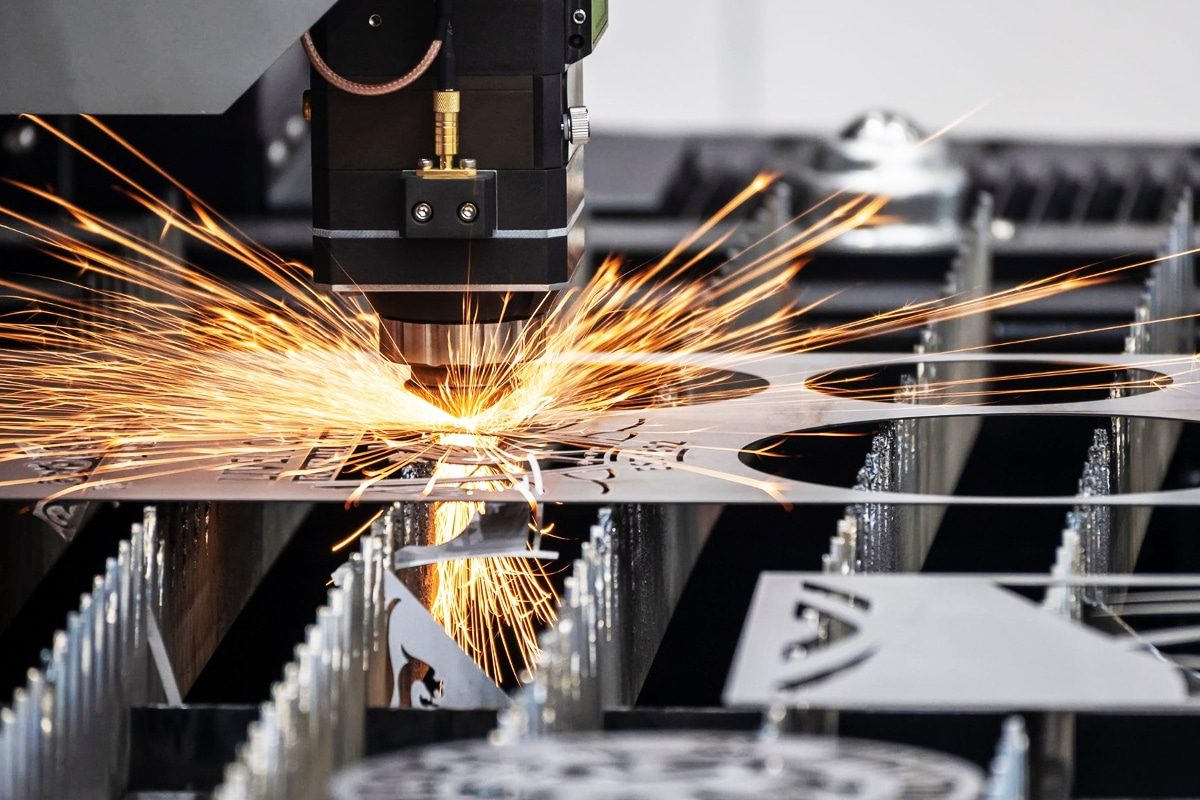
Laser cutting technology has become one of the most precise and efficient manufacturing methods used across industries today. From automotive and aerospace engineering to jewelry design and electronics, this advanced process enables manufacturers to cut, engrave, and shape materials with remarkable accuracy. To understand how laser cutting machines handle reflective materials, it’s essential first to explore the fundamentals of how laser cutting works, how the technology has evolved, and why different material types significantly influence performance.
Laser cutting is a thermal-based fabrication process that uses a highly focused beam of light—known as a laser—to cut or engrave materials. The word “laser” stands for Light Amplification by Stimulated Emission of Radiation, which describes how the beam is generated and amplified into a concentrated, high-energy stream.
At its core, laser cutting works by directing this intense beam onto a material’s surface. The energy from the laser heats the material to the point of melting, burning, or vaporization. A high-pressure assist gas—such as oxygen, nitrogen, or air—is often used alongside the laser to blow away molten material, leaving behind a clean and precise cut.
The precision of laser cutting comes from its ability to concentrate energy into an extremely small spot, often less than a millimeter in diameter. This allows for intricate designs, minimal material waste, and high repeatability.
Laser cutting technology has undergone significant advancements since its introduction in the 1960s. Early systems primarily used CO2 lasers, which were well-suited for cutting non-metallic materials such as wood, plastics, and fabrics. While effective, these systems had limitations in terms of efficiency and their ability to handle highly reflective metals like aluminum and copper.
The introduction of fiber laser technology marked a major turning point. Fiber lasers use optical fibers doped with rare-earth elements to generate and amplify the laser beam. Compared to CO2 lasers, fiber lasers offer higher energy efficiency, lower maintenance requirements, and improved cutting capabilities for metals.
Modern laser cutting machines are now equipped with sensors and adaptive control systems that can adjust parameters in real time. These advancements are particularly important when dealing with challenging materials, such as reflective metals, which can interfere with the laser beam and potentially damage the equipment.
Not all materials respond to laser cutting in the same way. The interaction between the laser beam and a material depends on several key properties, including reflectivity, thermal conductivity, thickness, and composition.
Reflective materials—such as copper, brass, and aluminum—pose unique challenges. These materials can reflect a significant portion of the laser energy away from the surface, reducing cutting efficiency and potentially sending the beam back into the machine. This back-reflection can damage sensitive components, especially in older or less advanced systems.
In contrast, materials like mild steel or wood absorb laser energy more effectively, making them easier to cut. The difference lies in how much of the laser’s energy is absorbed versus reflected or dissipated.
Material thickness also plays a critical role. Thicker materials require more energy to cut through, while thinner materials may be prone to warping or overheating if not properly controlled. Additionally, coatings, surface finishes, and impurities can further influence how a material interacts with the laser.
Modern laser cutting systems are designed with these variables in mind, allowing operators to tailor settings for specific materials and achieve optimal results.
Laser cutting technology is a sophisticated and highly adaptable manufacturing process built on the principles of focused light energy and thermal interaction. Over the decades, it has evolved from basic CO2 laser cutting systems to advanced fiber laser cutting machines capable of handling a wide range of materials with exceptional precision. However, the effectiveness of laser cutting is deeply influenced by the type of material being processed. Factors such as reflectivity, thermal properties, and thickness determine how well a material absorbs laser energy and how efficiently it can be cut. This understanding lays the groundwork for addressing more complex challenges—such as cutting reflective materials—where specialized techniques and technologies are required to ensure both safety and performance.
Understanding reflective materials is essential when discussing how laser cutting machines handle them. These materials behave differently under laser exposure compared to non-reflective surfaces, often creating technical challenges that require specialized solutions. In this section, we’ll explore what reflectivity means, identify common reflective metals, and examine the physical and optical behavior that influences how these materials interact with laser cutting systems.
Reflectivity refers to a material’s ability to reflect incident light or electromagnetic radiation rather than absorb it. In the context of laser cutting, reflectivity plays a critical role because lasers rely on energy absorption to heat, melt, or vaporize a material. When a material reflects a large portion of the laser beam, less energy is absorbed, making the cutting process less efficient.
Reflectivity is typically expressed as a percentage. For example, a material with 90% reflectivity reflects most of the incoming laser energy and absorbs only a small fraction. Metals, especially those with smooth and polished surfaces, tend to have high reflectivity, particularly at certain wavelengths.
In laser cutting applications, high reflectivity can lead to reduced cutting efficiency and increased risk of back-reflection, where the laser beam bounces back toward the machine’s internal components.
Several metals are known for their high reflectivity, making them more challenging to process with laser cutting machines. These metals are widely used in industrial applications due to their excellent electrical conductivity, corrosion resistance, and lightweight properties.
Each of these metals presents unique challenges due to their combination of reflectivity and thermal conductivity, which can quickly dissipate heat away from the cutting zone.
The behavior of reflective materials under laser exposure is governed by both physical and optical properties. These properties determine how the material interacts with the laser beam and ultimately affect cutting quality and efficiency.
These combined behaviors mean that standard laser cutting parameters often need adjustment when working with reflective materials. Advanced systems may incorporate sensors, adaptive optics, or protective components to manage these effects and maintain cutting performance.
Reflective materials are defined by their ability to reflect a significant portion of incident laser energy, which directly impacts the efficiency and safety of laser cutting processes. Metals such as aluminum, copper, brass, and precious metals are among the most common examples, each presenting unique challenges due to their high reflectivity and thermal conductivity. Their physical and optical behaviors—such as specular reflection, low absorption, and rapid heat dissipation—make them more difficult to process compared to non-reflective materials. A clear understanding of these characteristics is crucial for optimizing laser cutting techniques and developing technologies capable of handling reflective surfaces effectively.
Reflective materials introduce a unique set of difficulties in laser cutting processes that go beyond standard operational adjustments. While laser cutting is known for its precision and efficiency, these advantages can be compromised when working with metals that reflect a large portion of the laser energy. The challenges stem from how these materials interact with the laser beam, often leading to safety risks, equipment damage, and inconsistent results. In this section, we explore the primary reasons why reflective materials are difficult to cut, focusing on reflection and backscatter risks, potential damage to laser components, and the impact on cutting quality.
One of the most significant challenges when cutting reflective materials is the risk of reflection and backscatter. Unlike materials that absorb laser energy efficiently, reflective metals such as aluminum and copper can bounce a substantial portion of the laser beam away from the surface.
This reflected energy doesn’t simply disappear—it can travel back along the optical path of the machine, a phenomenon known as back-reflection or backscatter. When this occurs, the laser beam may re-enter the cutting head or travel back toward the laser source itself. This is particularly dangerous in high-power laser cutting systems, where even a small percentage of reflected energy can be intense enough to cause internal disruptions.
The risk is especially high when the material has a smooth, polished surface or when the laser beam strikes at certain angles that favor direct reflection. Without proper safeguards, this reflected energy can interfere with the machine’s normal operation and compromise the entire cutting process.
Closely related to reflection risks is the potential for physical damage to the laser cutting system. Modern laser cutting machines rely on sensitive optical components, including lenses, mirrors, and fiber optics, to guide and focus the laser beam with precision. These components are designed to transmit energy in a controlled direction—not to handle incoming reflected energy.
To mitigate these risks, advanced laser cutting systems often include protective features such as optical isolators, back-reflection sensors, and specialized coatings. However, older or less sophisticated machines may lack these safeguards, making them more vulnerable when processing reflective materials.
Another major challenge associated with reflective materials is the difficulty in achieving consistent cutting quality. Since laser cutting relies on the absorption of energy to generate heat, any variation in how much energy is absorbed can directly affect the outcome.
In addition, the high thermal conductivity of reflective metals will quickly carry heat away from the cutting area, making it more difficult to maintain the temperature required for cutting, which will lead to fluctuations in cutting results and finished product quality.
Reflective materials pose significant challenges in laser cutting due to their tendency to reflect rather than absorb laser energy. This behavior introduces risks such as backscatter, where the laser beam is reflected into the machine, potentially causing instability and safety concerns. The reflected energy can also damage sensitive optical components, reducing the lifespan of the equipment and increasing maintenance requirements. Furthermore, the inconsistent absorption of energy leads to uneven cutting performance, resulting in poor edge quality, incomplete cuts, and frequent adjustments during operation. Understanding these challenges is crucial for developing effective strategies and technologies that enable safe and efficient laser cutting of reflective materials.
Laser cutting machines rely on different types of laser technologies, each designed with unique characteristics that influence how effectively they process various materials—including highly reflective metals. Choosing the right laser type is critical because not all lasers interact with materials in the same way. Factors such as wavelength, beam quality, efficiency, and absorption rate determine how well a laser can cut through reflective surfaces like aluminum or copper. In this section, we will explore the three primary types of laser technologies used in modern cutting systems: CO2 lasers, fiber lasers, and disk lasers.
CO2 lasers are one of the earliest and most widely used laser technologies in industrial cutting applications. They generate laser beams by electrically stimulating a gas mixture—primarily carbon dioxide—contained within a sealed tube. The resulting beam typically has a wavelength of around 10.6 micrometers, which is well-suited for cutting non-metallic materials such as wood, plastics, glass, and textiles.
When it comes to metals, CO2 lasers can cut materials like mild steel effectively, especially when combined with oxygen assist gas. However, they face significant limitations with reflective materials. Metals such as aluminum and copper tend to reflect the CO2 laser’s wavelength rather than absorb it. This not only reduces cutting efficiency but also increases the risk of back-reflection, which can damage internal optical components like mirrors and lenses.
Another limitation of CO2 lasers is their relatively lower energy efficiency compared to newer technologies. They also require more maintenance due to the presence of moving optical parts and gas systems. Despite these drawbacks, CO2 lasers are still widely used for applications where reflective metals are not the primary focus, thanks to their versatility and ability to produce smooth edge finishes on non-metals.
Fiber lasers represent a major advancement in laser cutting technology and are now the preferred choice for cutting metals, including reflective ones. Instead of using gas, fiber lasers generate the laser beam through optical fibers doped with rare-earth elements such as ytterbium. The beam is then transmitted through flexible fiber optics directly to the cutting head.
One of the key advantages of fiber lasers is their shorter wavelength—typically around 1.06 micrometers. This wavelength is more readily absorbed by metals, including highly reflective ones like copper, brass, and aluminum. As a result, fiber lasers can cut these materials more efficiently and with greater precision than CO2 lasers.
Disk lasers are another advanced solid-state laser technology that shares some similarities with fiber lasers but uses a different design. In disk lasers, the laser beam is generated using a thin disk of laser-active material, typically ytterbium-doped crystal, which is pumped by diode lasers. The disk shape allows for efficient cooling and high power output.
Like fiber lasers, disk lasers operate at a shorter wavelength that is well absorbed by metals, including reflective ones. This makes them highly effective for cutting materials such as aluminum and copper. Disk lasers are known for their excellent beam quality and stability, which contribute to precise and consistent cutting results.
Although disk lasers are less common than fiber lasers in general industrial use, they are highly valued in specialized applications where precision and power are critical. Their ability to handle reflective materials with reduced risk of back-reflection makes them a strong alternative in high-performance environments.
Different laser technologies play a crucial role in determining how effectively reflective materials can be processed. CO2 lasers, while versatile and widely used, struggle with reflective metals due to their longer wavelength and higher susceptibility to back-reflection. In contrast, fiber lasers have become the industry standard for cutting metals, offering better absorption, higher efficiency, and built-in safety features that make them well-suited for reflective materials. Disk lasers provide another high-performance option, combining excellent beam quality with strong thermal stability for precise and consistent cutting. Understanding these technologies helps manufacturers choose the most appropriate system for safely and efficiently handling reflective materials in laser cutting applications.
Fiber lasers have emerged as the leading technology for cutting reflective metals, offering a combination of efficiency, precision, and safety that older systems struggle to match. As industries increasingly rely on materials like aluminum, copper, and brass, the need for laser cutting systems that can handle high reflectivity without compromising performance has become essential. Fiber lasers meet this demand through their unique wavelength properties, superior energy absorption, and enhanced system stability. In this section, we’ll explore why fiber lasers outperform other technologies when working with reflective metals.
One of the most important reasons fiber lasers excel with reflective materials is their shorter wavelength, typically around 1.06 micrometers. This is significantly shorter than the wavelength of CO2 lasers, which operate at approximately 10.6 micrometers. The difference in wavelength has a direct impact on how the laser beam interacts with metal surfaces.
Reflective metals tend to absorb shorter wavelengths more effectively. This means that when a fiber laser beam strikes a surface like copper or aluminum, a greater portion of the energy is absorbed rather than reflected. As a result, the laser can initiate the cutting process more quickly and maintain a stable interaction with the material.
These wavelength advantages not only improve cutting efficiency but also reduce the likelihood of harmful back-reflection, making fiber lasers inherently safer for processing reflective metals.
Closely tied to wavelength is the concept of energy absorption. Fiber lasers achieve higher absorption rates in reflective metals compared to other laser types, which is critical for effective cutting.
In reflective materials, where energy loss due to reflection is a major concern, higher absorption rates make a significant difference. Fiber lasers are particularly effective because their beam is well-matched to the optical properties of metals. Even materials that are traditionally difficult to process, such as brass or polished aluminum, can be cut more reliably.
Another advantage is consistency. Because fiber lasers maintain a stable absorption rate across different surface conditions, they produce more uniform results—even when the material has minor variations in finish or composition.
Modern fiber laser cutting systems are designed with advanced features that enhance operational stability, especially when dealing with reflective materials. Stability is crucial because any fluctuation in the laser beam or cutting process can lead to poor results or even equipment damage.
These features help protect sensitive components and ensure continuous, reliable operation.
Furthermore, advanced control software allows operators to fine-tune cutting parameters dynamically. This adaptability is especially valuable when working with reflective metals, where conditions can change rapidly during the cutting process.
Fiber lasers excel at cutting reflective metals due to their shorter wavelength, which enhances energy absorption and reduces reflection-related issues. Their ability to deliver higher absorption rates results in faster, cleaner, and more efficient cutting, even for materials that are traditionally difficult to process. In addition, modern fiber laser cutting systems incorporate advanced stability features, such as back-reflection protection and real-time monitoring, ensuring safe and consistent operation. Together, these advantages make fiber lasers the preferred choice for handling reflective materials in today’s laser cutting applications.
To fully understand how laser cutting machines handle reflective materials, it’s important to explore the physics behind how laser energy interacts with different materials. Laser cutting is not just a mechanical process—it is governed by complex physical principles involving energy transfer, heat flow, and material transformation. These interactions determine how efficiently a laser can cut through a material, especially when dealing with reflective metals that resist energy absorption. In this section, we will examine the key physical aspects of laser-material interaction, including energy absorption mechanisms, thermal conductivity effects, and phase changes during cutting.
At the heart of laser cutting lies the process of energy absorption. When a laser beam strikes a material, part of its energy is absorbed, part is reflected, and in some cases, a small portion may be transmitted through the material. For cutting to occur, sufficient energy must be absorbed to raise the material’s temperature to its melting or vaporization point.
In reflective materials, the challenge lies in the low absorption rate. Initially, a large portion of the laser energy is reflected away. However, as the surface begins to heat and melt, its optical properties can change, allowing it to absorb more energy. This dynamic shift is crucial for initiating and sustaining the cutting process.
Another important concept is coupling efficiency, which refers to how effectively the laser energy is transferred into the material. High coupling efficiency leads to faster and more stable cutting, while low efficiency can result in delays and inconsistent performance.
Once energy is absorbed, it is converted into heat, which spreads through the material. This is where thermal conductivity becomes a key factor. Thermal conductivity is a measure of how quickly heat can travel through a material.
In contrast, materials with lower thermal conductivity, such as stainless steel, retain heat more effectively in the cutting zone, making them easier to process.
Thermal conductivity also influences the size of the heat-affected zone (HAZ)—the area surrounding the cut that experiences changes in microstructure due to heat exposure. In high-conductivity materials, the HAZ may be wider but less intense, while in low-conductivity materials, it may be narrower but more concentrated.
Managing heat flow is essential for achieving clean cuts. Modern laser systems often adjust parameters like power, speed, and assist gas flow to maintain a stable thermal balance during cutting.
Laser cutting involves rapid phase changes in the material as it transitions from solid to liquid and, in some cases, directly to vapor. These transformations are central to how the material is removed during the cutting process.
In reflective materials, initiating these phase changes can be more difficult due to low initial energy absorption. However, once melting begins, the surface becomes less reflective and more absorbent, allowing the process to stabilize.
Controlling these variables ensures that the material transitions smoothly between phases, resulting in a clean and precise cut.
Laser-material interaction physics plays a crucial role in determining how effectively reflective materials can be cut. The process begins with energy absorption, which is often limited in reflective metals but improves as the material heats up. Thermal conductivity further complicates the process by dispersing heat away from the cutting zone, requiring careful control of laser parameters. Finally, phase changes—from solid to liquid or gas—enable material removal but depend heavily on consistent energy input and heat management. Together, these physical principles explain why reflective materials are more challenging to process and highlight the importance of advanced laser technologies in overcoming these obstacles.
When working with reflective materials, one of the most critical technical challenges in laser cutting is managing back reflection. As discussed earlier, reflective metals such as aluminum, copper, and brass can bounce laser energy back toward the cutting head or even the laser source itself. If not properly controlled, this reflected energy can damage sensitive components, disrupt cutting performance, and pose safety risks. Modern laser cutting systems address this issue through a combination of optical isolation systems, intelligent sensors, and built-in fail-safe mechanisms. In this section, we’ll explore how these technologies work together to ensure safe and efficient operation.
Optical isolation systems are one of the primary defenses against back-reflected laser energy. These systems are designed to allow the laser beam to travel in one direction—toward the material—while preventing any reflected light from traveling back into the laser source.
In fiber laser cutting systems, optical isolators are commonly used. These devices act like one-way valves for light. They use specialized optical components, such as polarizers and Faraday rotators, to redirect or block reflected beams. When back-reflected light attempts to return through the system, the isolator diverts it away from critical components, often directing it into a safe beam dump or absorber.
These systems are especially important in high-power applications, where even a small amount of reflected energy can have significant consequences. By ensuring that the laser beam remains properly directed, optical isolators help maintain both safety and cutting efficiency.
In addition to passive protection systems, modern laser cutting machines are equipped with active monitoring tools known as back reflection sensors. These sensors continuously detect the presence and intensity of reflected laser energy during operation.
When a reflective material causes an abnormal increase in back-reflected light, the sensors immediately send signals to the machine’s control system. This allows the system to respond in real time by adjusting cutting parameters or temporarily pausing the process.
These sensors play a crucial role in maintaining consistent cutting performance. By identifying potential issues early, they help prevent damage and reduce the likelihood of defects in the final product.
In advanced systems, sensor data may also be integrated with smart software algorithms that optimize cutting strategies based on material behavior. This adds an extra layer of intelligence to the process, making it more adaptive and reliable.
Fail-safe mechanisms are built-in safety features designed to protect both the machine and the operator in the event of excessive back reflection or system malfunction. These mechanisms act as a last line of defense when other protective systems are not sufficient.
These mechanisms are often integrated with the machine’s central control system, allowing for rapid and coordinated responses. For example, if a back reflection sensor detects a critical level of reflected energy, the system may simultaneously reduce power, pause the cutting process, and notify the operator.
Fail-safe systems are essential for preventing costly damage and ensuring safe operation, especially when working with highly reflective materials that can behave unpredictably.
Managing back reflection is a vital aspect of laser cutting when dealing with reflective materials. Optical isolation systems provide a first layer of protection by preventing reflected light from reaching sensitive components, while back reflection sensors actively monitor and respond to changes in real time. Fail-safe mechanisms add a level of security by shutting down or adjusting the system during critical situations. Together, these technologies create a comprehensive safety framework that allows laser cutting machines to handle reflective materials effectively, minimizing risks while maintaining high performance and precision.
Laser power and intensity play a decisive role in determining how effectively reflective materials can be cut. Unlike non-reflective materials that readily absorb energy, reflective metals require carefully controlled power levels to initiate and sustain the cutting process. Too little power leads to poor penetration, while excessive intensity can cause overheating, distortion, or even damage to the equipment. Achieving the right balance is essential for maintaining precision, efficiency, and safety. In this section, we will explore how power density works, how it must be adjusted based on material thickness, and how proper control helps avoid thermal distortion.
Power density refers to the amount of laser energy delivered per unit area, typically measured in watts per square millimeter. It is one of the most critical parameters in laser cutting because it determines whether the material will melt, vaporize, or remain unaffected.
A laser beam is focused into a very small point, creating extremely high power density at the contact area. This concentrated energy allows the material to reach its melting or vaporization point quickly and enables precise cutting.
For reflective materials, achieving sufficient power density is particularly important because a portion of the laser energy is reflected away. To compensate for this loss, the laser must deliver enough energy to ensure that the remaining absorbed energy is still adequate for cutting.
However, simply increasing power is not always the solution. Excessive power density can lead to uncontrolled melting, wider cut widths, and damage to surrounding areas. Therefore, precise control of focus and intensity is essential for optimal results.
Material thickness significantly affects how laser power and intensity should be applied. Thicker materials require more energy to cut through because the laser must penetrate deeper and maintain sufficient heat throughout the process.
In thinner materials, the opposite approach is needed. Lower power and higher speeds are typically used to prevent excessive heating and maintain clean edges.
Balancing these adjustments is critical. If the power is too low for a given thickness, the laser may fail to fully penetrate the material, resulting in incomplete cuts. If the power is too high, it can cause excessive heat buildup, leading to poor quality and material deformation.
Modern laser cutting systems often include automated settings that adjust power and speed based on material thickness and type, helping operators achieve consistent results with minimal manual intervention.
Thermal distortion is a common issue in laser cutting, especially when working with reflective metals. It occurs when uneven heating causes the material to expand, warp, or change shape. This not only affects the accuracy of the cut but can also compromise the structural integrity of the final product.
Reflective materials are particularly prone to thermal distortion due to their high thermal conductivity. Heat spreads quickly beyond the cutting zone, creating uneven temperature distribution.
Another effective strategy is the proper nesting and sequencing of cuts. By planning the cutting path strategically, operators can distribute heat more evenly across the material and reduce localized stress.
Advanced systems may also use real-time monitoring and adaptive control to adjust power dynamically during the cutting process. This helps maintain a stable temperature profile and prevents sudden temperature spikes that could lead to distortion.
Laser power and intensity are fundamental to successfully cutting reflective materials. Power density determines whether the material can absorb enough energy to melt or vaporize, while careful adjustments are needed to accommodate different material thicknesses. At the same time, controlling power levels is essential to avoid thermal distortion, which can compromise both precision and material integrity. By balancing these factors and using advanced control systems, modern laser cutting machines can achieve efficient, high-quality results even when working with challenging reflective metals.
Wavelength optimization is a critical factor in determining how effectively laser cutting machines process reflective materials. The wavelength of a laser defines how its energy interacts with different materials, particularly metals that tend to reflect a significant portion of incoming energy. Selecting the appropriate wavelength can dramatically improve absorption, reduce reflection-related risks, and enhance overall cutting efficiency. In this section, we will explore the differences between short and long wavelengths, how metals respond to various wavelengths, and how these factors influence cutting performance.
Laser cutting systems operate at different wavelengths depending on their design and technology. The two most common categories in industrial laser cutting are short wavelengths (used in fiber and disk lasers) and long wavelengths (used in CO2 lasers).
Short-wavelength lasers, typically around 1.06 micrometers, are more easily absorbed by metals. This allows them to transfer energy more efficiently into the material, which is especially important when working with reflective surfaces. Because more energy is absorbed rather than reflected, the cutting process becomes more stable and requires less overall power.
In contrast, long-wavelength lasers, such as CO2 lasers operating at approximately 10.6 micrometers, are less effectively absorbed by many metals. Reflective materials tend to bounce back a larger portion of this energy, reducing cutting efficiency and increasing the risk of back-reflection.
These distinctions make short-wavelength lasers the preferred choice for cutting reflective materials.
Different metals exhibit unique absorption characteristics depending on the wavelength of the laser. This behavior is influenced by the material’s electronic structure, surface condition, and temperature.
Reflective metals like copper, aluminum, and brass have high reflectivity at longer wavelengths, meaning they absorb very little energy from CO2 lasers. However, these same metals show significantly improved absorption when exposed to shorter wavelengths produced by fiber or disk lasers.
This dynamic behavior is particularly important in laser cutting. Initially, it may be difficult to deliver enough energy to start the cut, but once the process begins, absorption improves and stabilizes.
Additionally, the angle of incidence and surface finish can influence how much energy is absorbed. Rough or treated surfaces tend to absorb more energy than smooth, polished ones, which can act like mirrors.
Understanding these absorption characteristics allows operators to select the appropriate laser type and optimize cutting parameters for different metals.
Wavelength optimization has a direct impact on the overall efficiency of the laser cutting process. Efficiency, in this context, refers to how effectively the laser converts input energy into useful cutting action.
For reflective materials, using a short-wavelength laser significantly enhances efficiency because it minimizes energy loss due to reflection. This allows the machine to operate at lower power levels while still achieving high performance.
Modern laser cutting systems are designed with wavelength optimization in mind, often incorporating technologies that maximize absorption and minimize reflection. This ensures that even challenging materials can be processed effectively.
Wavelength optimization is essential for successfully cutting reflective materials with laser technology. Short-wavelength lasers, such as those used in fiber and disk systems, offer superior absorption and reduced reflection compared to long-wavelength CO2 lasers. Different metals respond uniquely to various wavelengths, with absorption improving as the material heats and undergoes physical changes. By selecting the appropriate wavelength, manufacturers can significantly enhance cutting efficiency, reduce energy waste, and achieve higher-quality results. This makes wavelength optimization a key factor in overcoming the challenges associated with reflective materials in laser cutting.
Assist gases play a vital role in laser cutting, especially when working with reflective materials. While the laser provides the energy needed to heat and melt the material, assist gases enhance the cutting process by removing molten material, controlling heat distribution, and improving edge quality. The choice of gas—whether oxygen, nitrogen, or compressed air—can significantly influence cutting efficiency, speed, and final results. For reflective metals, where energy absorption is already a challenge, the proper use of assist gases becomes even more critical. In this section, we’ll explore how different assist gases function and their impact on laser cutting performance.
Oxygen is commonly used as an assist gas in laser cutting, particularly for carbon steel and thicker materials. Its primary advantage lies in its ability to support an exothermic reaction during the cutting process.
When oxygen interacts with heated metal, it triggers a chemical reaction (oxidation) that releases additional heat. This extra heat energy helps sustain the cutting process and allows the laser to cut through thicker materials more efficiently. In essence, oxygen acts as both an assist gas and a secondary energy source.
Despite these limitations, oxygen remains a valuable option in specific applications where speed and thickness are priorities.
Nitrogen is widely used as an assist gas when high-quality, clean cuts are required. Unlike oxygen, nitrogen is an inert gas, meaning it does not react chemically with the material during cutting.
Nitrogen is particularly effective for cutting reflective metals such as stainless steel, aluminum, and brass. Because it does not introduce additional heat through chemical reactions, it allows for better control over the cutting process and minimizes thermal distortion.
The main drawback of nitrogen is that it typically requires higher pressure and greater laser power compared to oxygen cutting. This can increase operational costs, but the improved quality often justifies the investment.
Compressed air is an increasingly popular alternative to traditional assist gases, offering a cost-effective solution for many laser cutting applications. Air is a mixture of gases, primarily nitrogen and oxygen, and can be used to support the cutting process without the need for separate gas supplies.
Air is particularly useful for cutting thinner materials and for applications where ultra-high edge quality is not critical. It offers a balance between performance and affordability, making it attractive for general manufacturing tasks.
Despite these limitations, advancements in compressor technology and filtration systems have made air assist a viable option for many modern laser cutting operations.
Assist gases are essential for enhancing the performance of laser cutting machines, particularly when processing reflective materials. Oxygen cutting provides additional heat through chemical reactions, making it suitable for thicker materials but less ideal for achieving clean edges. Nitrogen cutting offers superior precision and oxidation-free results, making it the preferred choice for reflective metals despite higher costs. Air assist techniques provide a cost-effective alternative, balancing performance and affordability for less demanding applications. By selecting the appropriate assist gas, manufacturers can optimize cutting efficiency, improve quality, and overcome many of the challenges associated with reflective materials.
Surface preparation is a key factor in successfully laser cutting reflective materials. Because metals like aluminum, copper, and brass tend to reflect a large portion of laser energy, the cutting process can become inefficient or unstable if the surface is not properly treated. By modifying the surface before cutting, manufacturers can improve energy absorption, reduce reflection, and create more consistent cutting conditions. Effective surface preparation not only enhances cutting performance but also minimizes risks such as back reflection and uneven quality. In this section, we will explore three important strategies: anti-reflective coatings, surface roughening, and preheating techniques.
Anti-reflective coatings are one of the most effective ways to improve laser cutting performance on reflective materials. These coatings are applied to the surface of the metal before cutting to reduce its natural tendency to reflect laser energy.
Common types of anti-reflective coatings include specialized paints, chemical treatments, or temporary films designed to interact with the laser wavelength. These coatings are typically thin and can either burn off during the cutting process or be easily removed afterward.
One of the key advantages of anti-reflective coatings is that they help the laser initiate the cut more quickly. Since reflective materials often struggle to absorb enough energy at the beginning, the coating provides a more absorbent surface layer that allows the process to begin smoothly.
However, applying coatings adds an extra step to the workflow and may increase preparation time and cost. Despite this, the improvement in cutting reliability and safety often makes it worthwhile, especially for high-precision or high-value applications.
Surface roughening is another widely used technique to reduce reflectivity and improve laser-material interaction. By altering the texture of the material’s surface, this method reduces its mirror-like properties and enhances energy absorption.
A roughened surface scatters incoming laser light instead of reflecting it directly away. This increases the likelihood that more energy will be absorbed by the material, making the cutting process more efficient.
Additionally, roughening can help create a more uniform response across the material surface, which is especially useful when dealing with variations in finish or coatings.
However, the degree of roughness must be carefully controlled. Excessive roughening can lead to uneven cuts or affect the final appearance of the material. Therefore, this technique is often optimized based on the specific application and material type.
Preheating is a thermal preparation method that involves raising the temperature of the material before laser cutting begins. This approach is particularly useful for reflective metals, which tend to dissipate heat quickly and resist initial energy absorption.
Preheating can be achieved through external heat sources, such as induction heaters or controlled environmental heating systems. In some cases, the laser itself may be used at lower power to gradually warm the material before full power cutting begins.
This technique is especially beneficial for materials with high thermal conductivity, such as copper and aluminum. By bringing the material closer to its melting point, less additional energy is required to complete the cutting process.
However, preheating must be carefully managed to avoid overheating or distortion. Proper temperature control ensures that the benefits of preheating are realized without compromising material integrity.
Surface preparation strategies are essential for improving the laser cutting of reflective materials. Anti-reflective coatings enhance energy absorption and reduce back-reflection, making it easier to initiate and maintain the cutting process. Surface roughening modifies the material texture to scatter light and improve laser interaction, leading to more consistent results. Preheating techniques reduce initial reflectivity and stabilize thermal conditions, allowing for smoother and more efficient cutting. Together, these methods help overcome the inherent challenges of reflective materials, enabling laser cutting systems to achieve higher precision, efficiency, and reliability.
The ability of laser cutting machines to handle reflective materials is not determined by laser power alone—it is also deeply influenced by machine design. Modern laser cutting systems are engineered with specialized components that enhance beam control, protect sensitive equipment, and ensure stable performance even when dealing with highly reflective metals. These design features work together to minimize risks such as back reflection, overheating, and inconsistent cutting. In this section, we will explore the key machine design elements that make cutting reflective materials safer and more efficient, including beam delivery systems, cutting head design, and cooling and protection systems.
The beam delivery system is responsible for transmitting the laser beam from its source to the cutting head. Its design plays a crucial role in maintaining beam quality, stability, and safety—especially when working with reflective materials.
Fiber delivery systems are also enclosed, which helps shield the beam from environmental factors such as dust or vibration. This ensures that the laser maintains its focus and intensity throughout the cutting process.
In contrast, older CO2 laser cutting systems rely on a series of mirrors to guide the beam. While effective for certain applications, these systems are more sensitive to alignment issues and can be more vulnerable to damage from reflected energy.
Advanced beam delivery systems provide the stability and precision needed to handle reflective materials effectively.
The cutting head is where the laser beam is focused onto the material, making it one of the most critical components in the entire system. Its design directly influences cutting precision, efficiency, and safety.
These innovations help maintain consistent cutting performance and reduce the risk of damage caused by back reflection.
Another important aspect is the alignment between the laser beam and the assist gas flow. A well-designed cutting head ensures that both are precisely coordinated, allowing for efficient material removal and improved edge quality.
Handling reflective materials can generate significant heat and expose machine components to intense energy. This makes cooling and protection systems essential for maintaining performance and extending equipment lifespan.
Effective cooling prevents overheating, which can lead to reduced performance, poor cut quality, or even system failure.
These systems work together to create a safe operating environment, ensuring that the machine can handle reflective materials without compromising reliability.
Machine design features play a critical role in enabling laser cutting systems to process reflective materials effectively. Advanced beam delivery systems ensure stable and efficient transmission of the laser energy, while modern cutting head designs provide precision, protection, and adaptability. Cooling and protection systems further enhance performance by managing heat and safeguarding sensitive components from damage. Together, these design elements form a robust framework that allows laser cutting machines to overcome the challenges posed by reflective materials, delivering consistent, high-quality results with improved safety and efficiency.
In modern laser cutting systems, software and automation play a crucial role in handling reflective materials efficiently and safely. While hardware components such as lasers and cutting heads provide the physical capability, it is advanced software that enables precision, adaptability, and intelligent decision-making during operation. Reflective materials present unpredictable behavior due to fluctuating absorption and heat distribution, making real-time control essential. Through smart monitoring systems, AI-based optimization, and adaptive cutting controls, today’s laser cutting machines can respond dynamically to changing conditions and maintain consistent performance. In this section, we will explore how software-driven technologies enhance the cutting of reflective materials.
Smart monitoring systems are designed to continuously observe and analyze the laser cutting process in real time. These systems use sensors and data acquisition tools to track key parameters such as laser power, temperature, reflection levels, and cutting speed.
For reflective materials, monitoring is especially important because conditions can change rapidly during cutting. For example, as the material heats up, its reflectivity may decrease, altering how it interacts with the laser. Smart systems detect these changes and provide immediate feedback to the machine.
Advanced monitoring systems may also include cameras or optical sensors that visually inspect the cutting process. This allows for precise detection of defects such as incomplete cuts or poor edge quality.
By maintaining constant oversight, smart monitoring systems help prevent damage, reduce waste, and improve overall efficiency when working with reflective materials.
Artificial intelligence (AI) is transforming laser cutting by enabling machines to learn from data and optimize their performance over time. AI-based optimization systems analyze large amounts of operational data to identify patterns and determine the best cutting parameters for different materials and conditions.
For example, if the system detects that a certain type of aluminum reflects more energy at the start of the process, it can automatically increase power or adjust focus to compensate. Over time, the system becomes more accurate and efficient, reducing the need for manual adjustments.
AI also helps in minimizing trial-and-error processes, saving time and reducing material waste. This is particularly valuable in industrial environments where precision and productivity are critical.
Adaptive cutting controls are systems that automatically adjust laser parameters in real time based on feedback from sensors and monitoring tools. Unlike static settings, adaptive controls allow the machine to respond instantly to changing conditions during the cutting process.
These adjustments help ensure that the cutting process remains stable and efficient, even when dealing with challenging materials.
In addition, adaptive controls can reduce the risk of defects by maintaining consistent conditions throughout the cut. This leads to improved edge quality, fewer interruptions, and higher overall productivity.
Software and automation are essential for managing the complexities of laser cutting reflective materials. Smart monitoring systems provide real-time insights into the cutting process, enabling quick detection of issues and maintaining stability. AI-based optimization enhances efficiency by learning from data and automatically selecting the best cutting parameters. Adaptive cutting controls ensure that the machine can respond dynamically to changing conditions, maintaining precision and consistency throughout the process. Together, these technologies transform laser cutting into an intelligent, highly responsive system capable of overcoming the challenges posed by reflective materials.
Laser cutting of reflective materials is not just a technical achievement—it is a critical capability that supports a wide range of modern industries. As manufacturing demands continue to grow in complexity and precision, the ability to process reflective metals such as aluminum, copper, and brass has become increasingly important. Industries rely on laser cutting for its accuracy, speed, and flexibility, especially when working with materials that require tight tolerances and high-quality standards. In this section, we will explore how laser cutting of reflective materials is applied in key sectors, including aerospace, automotive, and electronics.
The aerospace industry demands extreme precision, reliability, and material performance. Reflective metals such as aluminum alloys are widely used in aircraft structures due to their lightweight properties and strength-to-weight ratio. Laser cutting plays a vital role in shaping these materials into complex components.
Because safety is paramount in aerospace, every cut must meet strict quality standards. Laser cutting provides the precision and repeatability needed to ensure that each component performs reliably under extreme conditions.
Handling reflective materials in this industry requires advanced laser cutting systems, such as fiber lasers, which can efficiently cut aluminum and other reflective alloys without compromising quality. Additionally, the ability to minimize heat-affected zones helps preserve the material’s structural integrity.
The automotive industry is another major user of laser cutting technology, particularly for reflective metals like aluminum and coated steels. As manufacturers strive to improve fuel efficiency and reduce emissions, lightweight materials have become increasingly important.
Reflective materials are especially relevant in electric vehicles, where copper is used extensively for electrical connections and battery systems. Cutting these materials efficiently is crucial for maintaining production speed and quality.
With the integration of automation and robotics, laser cutting systems can operate continuously, ensuring consistent output and high productivity.
The electronics industry relies heavily on the precise cutting of reflective metals, particularly copper and its alloys, which are essential for electrical conductivity. Laser cutting enables the production of intricate and small-scale components that are difficult to achieve with traditional methods.
Reflective materials in electronics present unique challenges due to their small size and high demand for accuracy. Laser cutting systems must deliver exceptional precision while avoiding thermal damage that could affect performance.
Fiber lasers are particularly well-suited for these applications, as they provide the control and efficiency needed to process thin, reflective materials. The ability to produce clean edges and maintain tight tolerances is essential for ensuring reliable electrical performance.
Laser cutting of reflective materials plays a vital role across multiple industries, enabling the production of high-precision components from metals like aluminum and copper. In aerospace, it supports the creation of lightweight, high-strength components that meet strict safety standards. In the automotive sector, it enables efficient manufacturing of body structures and advanced components, particularly for electric vehicles. In electronics, it allows for the precise fabrication of conductive parts and micro-scale components. Across all these industries, advanced laser technologies make it possible to overcome the challenges of reflectivity, delivering consistent, high-quality results that meet the demands of modern manufacturing.
Safety is a critical aspect of laser cutting, especially when working with reflective materials. Metals like aluminum, copper, and brass can reflect laser energy unpredictably, increasing the risk of hazards for both operators and equipment. Without proper safeguards, reflected beams, high temperatures, and intense light exposure can lead to accidents, equipment damage, and costly downtime. To ensure safe and reliable operation, laser cutting systems incorporate strict safety protocols, protective features, and regular maintenance practices. In this section, we will explore key safety considerations, including operator safety, equipment protection, and maintenance practices.
Protecting operators is the top priority in any laser cutting environment. Reflective materials introduce additional risks because the laser beam can bounce off the surface and travel in unintended directions.
Modern laser cutting systems often include interlock mechanisms that prevent the machine from operating if safety doors are open. Emergency stop buttons and warning systems further enhance operator protection.
By combining proper equipment, training, and awareness, workplaces can significantly reduce the risks associated with laser cutting reflective materials.
Reflective materials pose a serious threat to the internal components of laser cutting machines. Back-reflected laser energy can travel back into the system, potentially damaging sensitive optical elements and the laser source itself.
Proper alignment and calibration of the machine are also essential. Misaligned components can increase the likelihood of reflected energy causing damage.
In addition, maintaining stable operating conditions—such as consistent power levels and proper cooling—helps prevent stress on machine components. These measures not only enhance safety but also extend the lifespan of the equipment.
Regular maintenance is essential for ensuring both safety and performance in laser cutting systems. Reflective materials can accelerate wear on certain components, making routine inspections even more important.
Preventive maintenance helps identify potential issues before they become serious problems. For example, a damaged lens or misaligned beam can increase reflection risks and compromise cutting quality.
Operators should also follow manufacturer guidelines for maintenance schedules and component replacement. Keeping detailed maintenance records can further improve reliability and safety over time.
Safety considerations are essential when laser cutting reflective materials due to the increased risks of back reflection, heat, and unpredictable beam behavior. Operator safety is ensured through protective equipment, proper training, and enclosed systems that minimize exposure to hazards. Equipment protection relies on advanced technologies such as back-reflection safeguards, sensors, and protective components that prevent damage to sensitive components. Regular maintenance practices further enhance safety by keeping the system in optimal condition and reducing the likelihood of failures. Together, these measures create a safe and controlled environment, allowing laser cutting machines to handle reflective materials effectively while protecting both people and equipment.
Even with advanced laser cutting technology, working with reflective materials can present challenges if best practices are not followed. Mistakes in setup, handling, or maintenance can lead to poor cutting quality, increased equipment wear, and safety risks. Reflective metals require precise control and careful preparation, making it essential for operators to understand common pitfalls and how to avoid them. In this section, we will explore the most frequent mistakes—incorrect parameters, poor material handling, and neglecting maintenance—and provide practical solutions to address them.
One of the most common mistakes in laser cutting reflective materials is using incorrect cutting parameters. Because reflective metals absorb less energy initially, improper settings can prevent the laser from achieving consistent and effective cuts.
These problems often arise when operators use default settings that are not optimized for reflective materials or specific thickness ranges.
Modern laser cutting systems often include preset libraries or AI-assisted settings that can help reduce guesswork and improve consistency.
Improper handling of materials before and during cutting can significantly affect performance and quality. Reflective materials are especially sensitive to surface conditions and positioning.
These issues can result in defects such as incomplete cuts, rough edges, or even equipment damage due to unstable processing conditions.
Good handling practices create a stable cutting environment, which is essential for achieving high-quality results.
Neglecting regular maintenance is another critical mistake that can lead to reduced performance and increased safety risks. Reflective materials can accelerate wear on optical components due to back reflection and heat exposure.
Over time, these issues can degrade cutting accuracy, increase operational costs, and even cause equipment failure.
Following a structured maintenance schedule helps prevent unexpected downtime and ensures consistent cutting performance.
Common mistakes in laser cutting reflective materials often stem from incorrect parameter settings, poor material handling, and inadequate maintenance. Using improper cutting parameters can lead to inefficient energy use and inconsistent results, while poor handling practices can introduce instability and defects. Neglecting maintenance further compounds these issues by reducing system performance and increasing the risk of equipment damage. By carefully optimizing parameters, maintaining proper material handling procedures, and following regular maintenance routines, operators can overcome these challenges and achieve reliable, high-quality cutting results when working with reflective materials.
Laser cutting reflective materials presents a unique set of challenges that require a combination of advanced technology, precise control, and proper operational practices. Unlike non-reflective materials, metals such as aluminum, copper, and brass reflect a significant portion of laser energy, making it more difficult to initiate and maintain a stable cutting process. To overcome these challenges, modern laser cutting systems integrate multiple innovations across hardware, software, and process optimization.
One of the most important factors is the use of appropriate laser technology, particularly fiber lasers, which operate at shorter wavelengths and offer higher absorption rates for reflective metals. This improves efficiency, reduces energy loss, and minimizes the risks associated with back reflection. In addition, machine design features such as optical isolation systems, advanced cutting heads, and robust cooling mechanisms help protect sensitive components and ensure consistent performance.
Equally important is the understanding of laser-material interaction physics. Factors such as energy absorption, thermal conductivity, and phase changes directly influence how reflective materials respond during cutting. Proper control of laser power, intensity, and wavelength further enhances cutting quality while preventing issues like thermal distortion.
Supporting processes also play a critical role. The use of assist gases—such as nitrogen for clean cuts or oxygen for increased cutting speed—helps remove molten material and stabilize the process. Surface preparation techniques, including anti-reflective coatings, roughening, and preheating, improve energy absorption and reduce reflectivity at the start of the cut.
Automation and software advancements have added another layer of precision and adaptability. Smart monitoring systems, AI-based optimization, and adaptive controls allow machines to respond in real time to changing conditions, ensuring consistent and efficient operation.
Finally, safety considerations, proper maintenance, and avoiding common mistakes are essential for long-term success. By combining the right technology, techniques, and best practices, laser cutting machines can effectively handle reflective materials, delivering high-quality, precise results across a wide range of industrial applications.
If you are looking to improve your laser cutting capabilities and handle reflective materials with confidence, Maxcool CNC provides the expertise and technology you need. Investing in the right solution will not only enhance cutting performance but also ensure long-term operational success in today’s competitive manufacturing environment.