
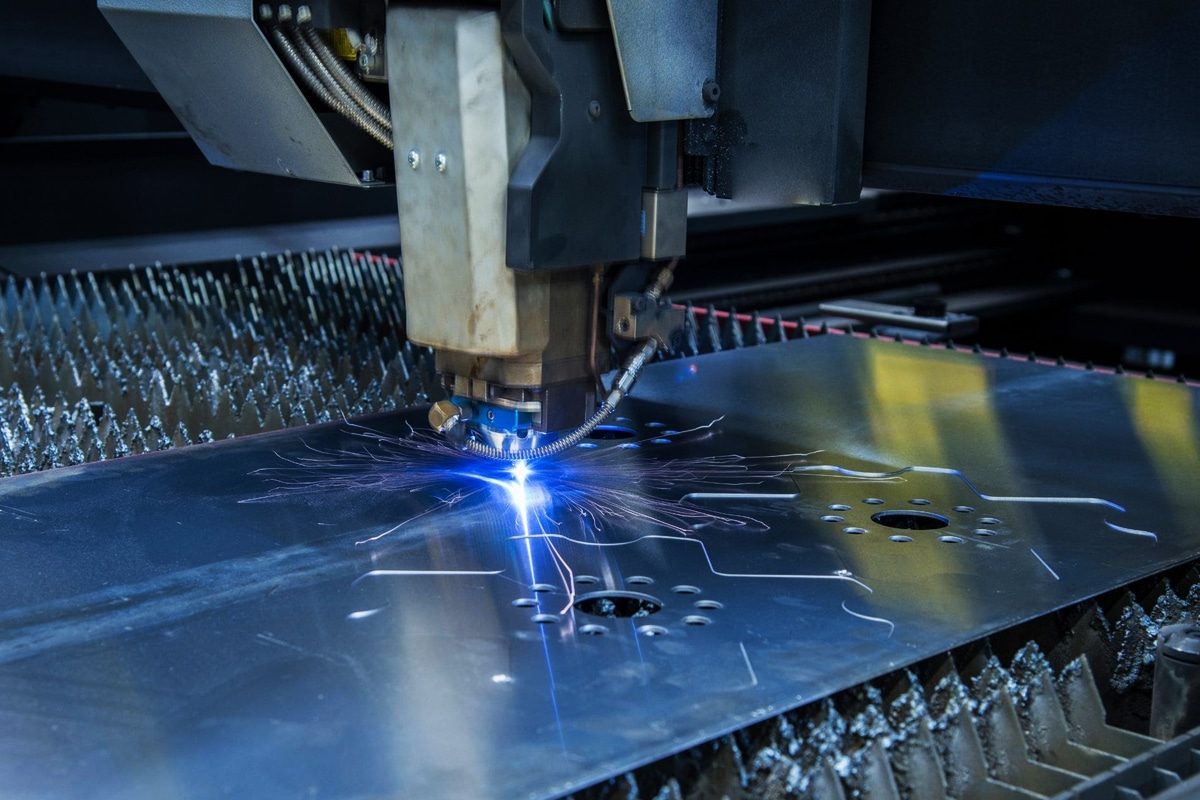
Are Cheap Laser Cutting Machines Worth It?
Laser cutting technology has become increasingly accessible to small businesses, workshops, startups, schools, and individual fabricators. While industrial laser cutting machines once required a substantial investment, the market now includes many low-cost models that promise impressive cutting capabilities at a fraction of the price of premium equipment. For buyers working with limited budgets, these machines can be highly attractive. However, a low purchase price does not always mean a low total cost of ownership, and the real value of cheap laser cutting machines depends on much more than their initial price tag.
Cheap laser cutting machines vary widely in quality, configuration, laser power, cutting accuracy, component reliability, software capability, safety features, and after-sales support. Some affordable machines can perform very well for light-duty production, prototyping, hobby projects, and businesses with relatively simple cutting requirements. Others may suffer from unstable performance, limited cutting capacity, frequent maintenance, poor component quality, inadequate technical support, or unexpectedly high operating costs. A machine that appears inexpensive at the time of purchase can therefore become costly if downtime, repairs, replacement parts, consumables, or production losses begin to accumulate.
Determining whether cheap laser cutting machines are worth buying requires evaluating the machine according to the materials you plan to cut, required thickness and accuracy, expected production volume, component quality, safety, operating costs, service availability, and long-term business needs. The cheapest option is rarely the best choice simply because of price, but an affordable machine can still provide excellent value when its capabilities match the intended application.
This article explores the advantages, limitations, hidden costs, performance considerations, and purchasing risks of cheap laser cutting machines to help you determine when a budget machine makes sense—and when investing in higher-quality equipment may deliver better long-term value.
Table of Contents
What Are Considered Cheap Laser Cutting Machines?
The term “cheap laser cutting machine” does not refer to a single machine type or a fixed price range. Instead, it generally describes equipment that is priced significantly below mainstream industrial laser cutting systems in the same application category. A machine may be considered inexpensive because it has lower laser power, a smaller working area, simpler mechanical construction, fewer automated functions, lower-cost components, limited safety systems, or reduced after-sales support.
Price must therefore be considered together with machine capability. A compact diode laser used for hobby projects may cost only a small fraction of an industrial fiber laser cutting machine, but the two machines are designed for completely different tasks. Similarly, a low-cost fiber laser may look almost identical to a premium industrial model while using different laser sources, cutting heads, servo systems, beds, control systems, electrical components, and safety configurations.
Understanding what makes laser cutting machines “cheap” is the first step toward determining whether their lower price represents genuine value or simply reflects compromises that may affect productivity, reliability, cutting quality, and long-term operating costs.
Entry-Level Versus Industrial Laser Cutting Machines
Entry-level laser cutting machines are generally designed for light-duty cutting, small workshops, startups, prototyping, education, personalized products, or businesses with relatively low production volumes. Manufacturers often reduce costs by simplifying the mechanical structure, automation system, enclosure, material-handling equipment, and control functions.
Industrial laser cutting machines are designed for continuous or high-volume production. They normally feature heavier and more rigid machine beds, higher-performance motion systems, industrial laser sources, advanced cutting heads, more sophisticated CNC control systems, stronger electrical systems, better dust extraction, and more comprehensive safety protection.
The difference becomes especially important with fiber laser cutting machines. Two machines may both be advertised as 3000W fiber laser cutting machines, for example, but one may be intended for intermittent light production while another is engineered to operate for multiple shifts every day.
An entry-level machine is not necessarily a poor machine. If its capabilities match the workload, it can offer excellent value. Problems arise when buyers choose entry-level equipment for production conditions that really require an industrial system.
Typical Price Differences Between Machine Categories
Laser cutting machine prices vary enormously depending on technology, power, size, configuration, automation, and manufacturing quality.
Small desktop diode laser machines can be available for hundreds or a few thousand dollars, while enclosed desktop or small-format CO2 systems generally cost more. Larger professional CO2 laser cutting machines can move into considerably higher price ranges depending on laser power and working area.
Fiber laser cutting machines represent another level of investment. Small-format or entry-level fiber laser cutting machines can sometimes be purchased for tens of thousands of dollars or less depending on their specifications and origin, while full-size industrial sheet-metal cutting systems may cost tens or hundreds of thousands of dollars.
High-power systems equipped with automatic loading and unloading, exchange tables, tube-cutting capabilities, storage towers, robotic handling, bevel cutting, or intelligent production-management systems can require much larger investments.
This is why the word “cheap” must always be considered within the correct category. $20,000 fiber laser cutting machines may be considered inexpensive compared with an industrial system costing several times as much, while the same amount would be extremely expensive for hobby diode laser cutting machines.
Fiber Laser, CO2 Laser, and Diode Laser Cutting Machines
Laser technology strongly influences what should be considered inexpensive.
Fiber laser cutting machines are primarily used for cutting metals such as carbon steel, stainless steel, aluminum, brass, and other compatible materials. Industrial fiber lasers require relatively sophisticated laser sources, cutting heads, chillers, CNC systems, servo drives, and precision motion structures. Consequently, even budget fiber laser cutting machines normally cost considerably more than small CO2 or diode laser cutting systems.
CO2 laser cutting machines are widely used for non-metal materials such as acrylic, wood, leather, textiles, paper, rubber, and certain plastics. Entry-level CO2 machines can be relatively inexpensive, especially when equipped with glass laser tubes, basic controllers, and smaller working tables. Professional systems using more advanced laser sources and motion systems can cost substantially more.
Diode laser cutting machines usually occupy the lowest end of the market. Many are designed for hobbyists, makers, engraving businesses, and very light cutting applications. Their relatively low purchase prices can make laser processing accessible to beginners, but their cutting speed, material compatibility, power, productivity, and industrial durability are generally much more limited.
Comparing prices across these technologies without considering their capabilities can therefore be misleading.
New Low-Cost Machines Versus Used Industrial Machines
Buyers working with limited budgets often face another choice: purchase a new low-cost machine or buy used industrial laser cutting machines.
A new inexpensive machine offers several potential advantages. Components have not experienced previous operating wear, the machine may include a warranty, replacement parts should theoretically be easier to obtain, and newer control technologies may be available. Buyers also know the machine’s operating history from the beginning.
A used industrial machine may provide a much stronger mechanical structure, higher-quality components, better cutting stability, and greater production capability for a similar purchase price. However, its condition can vary significantly.
The laser source may already have accumulated thousands of operating hours. Cutting heads, servo motors, guides, gears, bearings, chillers, electrical components, and extraction systems may require maintenance or replacement. Older machines may also use discontinued software or components that are expensive or difficult to source.
Transportation, installation, calibration, refurbishment, and technician costs should also be considered.
Therefore, neither option is automatically better. A carefully inspected used industrial machine can be an excellent investment, while a poorly maintained one can quickly become more expensive than purchasing new equipment.
Domestic Machines Versus Imported Machines
Machine origin can also significantly affect price.
In some markets, locally manufactured laser cutting machines may be cheaper because they avoid international freight, import duties, customs charges, and overseas service costs. Local manufacturers may also provide faster installation, training, maintenance, and spare-parts delivery.
In other markets, imported machines—particularly machines manufactured in regions with large laser-equipment supply chains—may actually offer lower equipment prices despite transportation costs. Large-scale manufacturing, established component supply networks, and intense competition can reduce production costs substantially.
However, buyers should avoid assuming that domestic automatically means expensive or imported automatically means cheap. Both categories contain machines ranging from basic low-cost equipment to premium industrial systems.
The more important questions concern manufacturing quality, component brands, technical documentation, certification, warranty conditions, service response, spare-parts availability, and the manufacturer’s long-term ability to support the machine.
A low purchase price becomes much less attractive if overseas technical support is difficult to obtain or critical replacement parts require long delivery times.
Why Similar-Looking Machines Can Have Very Different Prices
One of the most confusing aspects of buying laser cutting equipment is that two machines can appear almost identical in photographs while having dramatically different prices.
External appearance reveals relatively little about the machine’s actual engineering.
For fiber laser cutting machines, major cost differences can come from the laser source, cutting head, CNC controller, servo motors, reducers, guide rails, rack-and-pinion systems, electrical components, chiller, gas-control system, lubrication system, and machine bed.
Machine-bed construction is particularly important. A properly designed, stress-relieved, precision-machined bed can provide better long-term dimensional stability than a lighter and less carefully manufactured structure.
The same principle applies to motion components. Higher-quality servo motors, guides, gears, and reducers can improve positioning accuracy, acceleration, repeatability, cutting speed, and service life.
Safety systems also affect machine cost. Fully enclosed housings, interlocked doors, observation windows with appropriate laser protection, smoke extraction, electrical protection, emergency stops, and compliance with relevant safety standards add manufacturing expense.
Software capability, automatic focusing, collision protection, edge finding, nesting functions, remote diagnostics, automatic gas control, monitoring systems, exchange tables, and intelligent automation can further increase the price.
Quality control represents another less visible difference. Better manufacturers may perform machine-bed inspection, axis calibration, laser alignment, cutting tests, electrical testing, parameter optimization, and final acceptance testing before shipment.
After-sales support is also built into the price. A supplier offering installation assistance, training, remote diagnostics, readily available spare parts, warranty support, and experienced technicians generally has higher operating costs than a seller providing little support after delivery.
This explains why comparing laser cutting machines purely by appearance, laser power, and working area can produce misleading conclusions.
Cheap laser cutting machines are best understood as machines priced at the lower end of their respective technology and application categories rather than equipment below one universal price threshold. A low-cost diode laser, entry-level CO2 laser, and budget fiber laser may all be described as cheap, even though their prices and capabilities differ dramatically.
The key distinction is between low price and good value. Entry-level equipment can be perfectly suitable for hobby use, prototyping, small businesses, light production, or operations with predictable workloads. However, industrial production generally places much greater demands on cutting speed, accuracy, machine rigidity, component durability, automation, safety, uptime, and technical support.
Buyers should therefore compare machines within the same technology, laser power, working area, and production class. They should also investigate the components and services that are not immediately visible, including the laser source, cutting head, motion system, machine bed, electrical components, cooling system, control software, safety design, quality-control procedures, warranty, and after-sales support.
A machine should not be considered a bargain simply because its purchase price is low. The most useful definition of cheap laser cutting machines is one that achieves a lower price by reducing certain capabilities, components, services, or features. Whether those compromises matter depends entirely on what the buyer expects the machine to do.
Why Are Some Laser Cutting Machines So Cheap?
Laser cutting machines can vary dramatically in price even when their advertised laser power, working area, and external appearance seem similar. In many cases, the difference is not caused by one component alone. Manufacturers can reduce the selling price by lowering costs across the laser source, cutting head, machine frame, motion system, control system, cooling system, safety equipment, quality inspection, and after-sales service.
Some cost-saving measures are reasonable and may have little impact on users with light-duty applications. Others can directly affect cutting accuracy, reliability, service life, safety, productivity, and operating costs. A lower-priced machine is therefore not automatically a poor choice, but buyers should understand exactly where the manufacturer has reduced costs.
The most important question is not simply why a machine is cheap, but whether the areas where costs have been reduced are acceptable for the intended production requirements.
Lower-Cost Laser Sources
The laser source is one of the most expensive components in many laser cutting machines, especially fiber laser cutting systems. Using a lower-cost laser source can therefore reduce the total machine price significantly.
Lower-priced machines may use economical laser-source brands, basic product series, older-generation technology, or laser sources with fewer monitoring and communication functions. Some manufacturers may also select components based primarily on purchase price rather than long-term performance under intensive production conditions.
The nominal laser power alone does not tell the whole story. Two 3000W laser sources may differ in beam quality, power stability, electrical efficiency, operating temperature range, communication capability, protection systems, expected service life, warranty conditions, and service availability.
For light or intermittent cutting, an economical laser source may perform adequately. For continuous industrial production, however, stable power output and reliable technical support can become much more important.
Simplified Machine Frames and Structures
The machine frame provides the structural foundation for the cutting system. High-performance machines normally require sufficient rigidity to maintain positioning accuracy during rapid acceleration, deceleration, and direction changes.
Manufacturers can reduce costs by using less steel, thinner structural sections, simpler welding designs, smaller gantries, or less complex stress-relief and machining processes.
A lightweight structure is not necessarily unsuitable for every application. Compact machines operating at moderate speeds may not require the same structural strength as large, high-acceleration industrial systems.
However, excessive cost reduction in the machine frame can increase vibration, reduce long-term dimensional stability, and affect cutting accuracy. Thermal deformation and residual welding stress may also become more important over years of operation.
Higher-quality manufacturers usually invest in welding procedures, stress relief, precision machining, dimensional inspection, and assembly control. These processes increase manufacturing cost but help maintain machine accuracy over a longer service life.
Lower-Cost Cutting Heads
The cutting head is another critical component that directly influences cutting performance.
Budget machines may use more economical cutting heads with simpler optical systems, lower-cost sensors, fewer monitoring functions, or more basic autofocus mechanisms. They may provide satisfactory performance for common cutting applications but offer fewer advanced capabilities.
Premium cutting heads may include more sophisticated capacitive height control, automatic focusing, collision protection, internal sensor monitoring, contamination detection, temperature monitoring, and integration with intelligent CNC systems.
Component quality also affects the life of protective lenses, focusing assemblies, seals, connectors, and internal optical components.
For low-power or moderate-duty applications, a simpler cutting head may be sufficient. High-power cutting, thick-plate processing, piercing-intensive production, and continuous multi-shift operation place much greater demands on cutting-head reliability.
Economical Motion Systems
The motion system determines how accurately and smoothly the cutting head moves across the workpiece.
Manufacturers can reduce machine cost by selecting economical guide rails, racks, pinions, gears, reducers, bearings, couplings, and other transmission components. They may also use less expensive lubrication systems or simplified mechanical assemblies.
These choices can work well when the machine operates at moderate speeds and acceleration levels. However, component quality becomes increasingly important as production speed rises.
Lower-quality transmission components may develop backlash, vibration, uneven motion, or accelerated wear. Over time, this can affect positioning accuracy, contour quality, corner performance, and repeatability.
Industrial machines designed for high-speed operation usually use carefully matched motion components because the entire system must maintain accuracy while repeatedly accelerating and changing direction.
Lower-Grade Motors and Drives
Servo motors and drives are responsible for converting control commands into precise axis movement.
Cheap laser cutting machines may use economical servo systems with lower torque reserves, less sophisticated feedback, fewer diagnostic functions, or less extensive international service support.
For relatively simple cutting requirements, these systems may provide acceptable performance. The difference becomes more apparent when the machine must achieve high acceleration, rapid positioning, complex contour cutting, or continuous production.
Higher-performance motors and drives can offer better dynamic response, positioning stability, synchronization, fault monitoring, and overload capability.
The issue is not simply whether the machine can move from one point to another. The motion system must also maintain controlled movement while following complex cutting paths at high speed.
Simplified CNC Control Systems
The CNC controller coordinates laser output, axis movement, gas control, height control, piercing, cutting parameters, alarms, and many other machine functions.
Lower-cost machines often use simplified control systems with essential cutting functions but fewer advanced capabilities. This can reduce hardware costs, software licensing expenses, integration work, and training requirements.
Basic controllers may be perfectly adequate for simple 2D cutting applications. However, more advanced systems can provide automatic nesting, edge detection, fly cutting, automatic parameter adjustment, intelligent piercing, process monitoring, remnant cutting, production statistics, remote diagnostics, and integration with factory management systems.
Software quality also affects usability. A well-developed control system can reduce setup time, simplify operator training, improve troubleshooting, and help inexperienced operators achieve more consistent results.
Therefore, a cheaper CNC system may reduce the initial investment while increasing the amount of manual adjustment required during daily production.
Reduced Safety Enclosures and Protection
Safety equipment can represent a substantial part of the manufacturing cost of laser cutting machines.
Fully enclosed industrial laser cutting machines may include protective housings, certified viewing windows, interlocked doors, emergency-stop circuits, warning systems, smoke containment, electrical protection, and multiple safety sensors.
Open-frame machines can be considerably cheaper because much of this equipment is eliminated.
This difference is particularly important with high-power fiber lasers because reflected or scattered laser radiation can present serious hazards. A lower-cost open design may require additional protective measures within the workshop.
Manufacturers may also reduce costs through simpler electrical cabinets, fewer interlocks, more basic guarding, or reduced compliance testing.
Safety should never be treated as an optional cosmetic feature. Buyers need to evaluate whether the machine design complies with applicable workplace regulations and whether additional guarding, extraction, or controlled-access measures will be required after installation.
Lower-Capacity Cooling and Extraction Systems
Laser cutting machines generate significant heat and fumes, making cooling and extraction important parts of the overall system.
A budget machine may use a smaller-capacity chiller designed to meet minimum cooling requirements under normal operating conditions. This can work adequately in moderate climates and intermittent production.
Continuous high-load operation, high ambient temperatures, or poor workshop ventilation can place greater demands on the cooling system. An undersized or low-quality chiller may experience temperature fluctuations that can affect laser-source and cutting-head performance.
The same principle applies to fume extraction.
Lower-priced systems may include smaller fans, simpler ducting, reduced airflow capacity, or no integrated filtration system. The customer may be expected to provide external extraction equipment separately.
This reduces the advertised machine price, but the additional equipment should still be included when calculating the total installation cost.
Limited Quality Control and Factory Testing
Quality control is largely invisible when buyers compare machine photographs or online specifications, but it can significantly affect manufacturing cost.
Thorough factory testing requires skilled technicians, measurement equipment, test materials, electricity, assist gas, laser operating time, and additional production time.
Manufacturers focused heavily on low prices may shorten some inspection procedures or rely primarily on basic functional testing.
More comprehensive quality-control programs can include frame dimensional inspection, guide alignment, axis calibration, laser-path inspection, electrical testing, grounding checks, cutting tests, parameter verification, accuracy measurements, and final acceptance testing.
The difference may not be obvious when the machine first arrives. It often appears during installation, commissioning, or long-term operation.
A machine that requires substantial recalibration, adjustment, or troubleshooting after delivery can create costs that offset part of the initial purchase-price advantage.
Reduced Technical Support and After-Sales Service
One of the easiest ways for a supplier to lower machine prices is to reduce service expenses.
Some low-cost suppliers provide mainly remote support through messaging applications, email, or video calls. On-site installation, operator training, preventive maintenance, and local technician support may be limited or charged separately.
Premium suppliers often maintain engineering teams, service centers, spare-parts inventories, training programs, technical documentation, and remote diagnostic systems. Maintaining this service infrastructure increases operating costs, which are reflected in machine prices.
For experienced users who already understand laser cutting equipment, limited support may be acceptable.
For first-time buyers, however, inadequate technical support can create serious difficulties. Even relatively small problems involving parameters, gas pressure, focus position, optical contamination, servo alarms, or software settings can stop production.
Service capability should therefore be considered part of the machine’s value rather than an optional extra.
Lower Labor and Manufacturing Costs
Manufacturing location has a major influence on laser cutting machine prices.
Regions with lower labor costs, large industrial supply chains, efficient component sourcing, and high production volumes can manufacture machines more economically.
Lower manufacturing costs do not automatically indicate poor quality. In fact, a mature industrial supply chain can allow manufacturers to achieve competitive prices while still using reliable components.
The important distinction is between legitimate manufacturing efficiency and excessive cost-cutting.
A manufacturer that produces large numbers of machines may benefit from bulk purchasing, standardized designs, specialized production lines, and efficient logistics. These advantages can reduce prices without necessarily reducing performance.
On the other hand, extremely low prices may sometimes result from reduced engineering, inspection, assembly quality, or worker training.
Buyers should therefore evaluate the manufacturer’s production capability rather than judging equipment purely by the country in which it was manufactured.
Direct-Sale and Online-Only Business Models
Not every low machine price results from cheaper hardware. Some manufacturers simply use a lower-cost sales model.
Traditional industrial equipment distribution can involve regional distributors, sales representatives, showrooms, demonstration centers, local inventory, application engineers, and service teams. Each layer adds cost.
Direct-sale manufacturers can eliminate some distributor margins by selling directly from the factory to end users.
Online-only suppliers can reduce costs even further by operating without large showrooms, extensive sales networks, or local offices. They may rely on websites, online marketplaces, video demonstrations, and remote communication.
This business model can produce genuine savings for buyers, particularly those who already understand the equipment they need.
However, the lower price may come with trade-offs. Buyers may have fewer opportunities to conduct physical machine demonstrations, receive application testing, access local technicians, or obtain immediate spare parts.
Therefore, a direct-sale price should be evaluated together with delivery terms, installation responsibilities, warranty procedures, spare-parts availability, and technical-support arrangements.
Laser cutting machines can be inexpensive for many different reasons, and not all of those reasons indicate poor quality. Manufacturers may achieve lower prices through efficient production, lower labor costs, standardized designs, bulk component purchasing, direct sales, or reduced distributor margins. These cost advantages can allow buyers to obtain capable equipment at attractive prices.
At the same time, some low prices are achieved by reducing component quality, structural rigidity, safety equipment, cooling capacity, extraction performance, software capability, factory testing, or after-sales service. These compromises can affect cutting stability, accuracy, productivity, service life, workplace safety, and long-term maintenance costs.
The key is to identify where the savings come from. Buyers should look beyond laser power and working area and examine the laser source, cutting head, machine frame, motion components, servo system, CNC controller, cooling system, extraction equipment, safety design, factory testing procedures, warranty, and technical support.
A cheaper machine can be a sensible investment when the cost reductions occur in areas that are unnecessary for the intended application. For example, a small workshop may not need advanced automation or multi-shift industrial durability. However, cutting costs in critical areas such as safety, structural stability, essential components, or technical support may create much greater expenses later.
Ultimately, the best low-cost laser cutting machine is not simply the one with the lowest purchase price. It is the one that reduces unnecessary costs while preserving the performance, reliability, safety, and support required for the buyer’s actual production needs.
Advantages of Buying Cheap Laser Cutting Machines
Cheap laser cutting machines are often discussed mainly in terms of their limitations, but they can also offer meaningful advantages when they are selected for the right application. Not every workshop needs a high-power industrial system with advanced automation, premium components, and multi-shift production capability. For users with modest cutting requirements, a lower-cost machine may provide enough functionality to complete the required work without tying up excessive capital.
The value of cheap laser cutting machines depends largely on how closely their capabilities match the buyer’s real production needs. Small businesses, startups, schools, prototype developers, and low-volume manufacturers may benefit from lower purchase costs, simpler operation, and reduced financial exposure. In these situations, paying for capabilities that will rarely be used may not make economic sense.
The main advantage of a low-cost machine is therefore not simply that it is cheaper. It is that it can provide an accessible and financially manageable way to introduce laser cutting into a business or production process.
Lower Initial Investment
The most obvious advantage of cheap laser cutting machines is the lower initial purchase cost.
Industrial laser cutting systems can require substantial capital investment, especially when the machine includes high laser power, a large cutting area, exchange tables, automation, loading and unloading systems, advanced software, and comprehensive safety equipment. For smaller businesses, this investment can place significant pressure on cash flow.
A lower-cost machine reduces the amount of money that must be committed at the beginning. The remaining capital can be used for other important expenses such as raw materials, workshop improvements, compressed-air systems, assist-gas equipment, extraction systems, employee training, marketing, or inventory.
This can be particularly valuable for small companies that need to balance equipment purchases with many other startup or expansion costs.
However, buyers should still calculate the complete installation cost. Shipping, taxes, electrical upgrades, gas supply, cooling, extraction, software, training, and consumables may not always be included in the advertised machine price.
Reduced Financial Risk for New Businesses
New businesses often operate with uncertain production volumes and unpredictable customer demand.
Investing heavily in expensive industrial equipment before the business model has been validated can create considerable financial risk. Loan repayments, depreciation, financing costs, insurance, and maintenance expenses may continue even when the machine is underutilized.
Cheaper laser cutting machines allow a company to enter the market with less capital at risk.
For example, a new metal fabrication shop may initially receive only occasional laser cutting orders. Purchasing a large high-power automated system for this workload could result in low equipment utilization. Entry-level fiber laser cutting machines may provide enough capability to handle early orders while allowing the company to learn about customer requirements and production patterns.
If demand later increases, the company can make a larger investment based on actual production data rather than assumptions.
This staged approach can be especially useful for entrepreneurs entering laser processing for the first time.
Faster Return on Investment for Suitable Applications
A lower purchase price can shorten the time required to recover the initial equipment investment.
Return on investment depends on several factors, including machine cost, production volume, operating expenses, labor savings, outsourcing costs, product margins, and machine utilization.
When cheap laser cutting machines can reliably perform the required work, their lower capital cost can make the financial payback period relatively short.
Consider a small workshop that currently outsources simple cutting jobs. Bringing those jobs in-house may eliminate subcontracting costs, reduce transportation expenses, and shorten production lead times. If the cutting requirements are modest, an affordable machine may recover its purchase cost relatively quickly.
The important condition is that the machine must be suitable for the application. A cheap machine that frequently breaks down or cannot achieve the necessary cutting quality may reduce productivity rather than improve return on investment.
Therefore, the fastest ROI does not necessarily come from the cheapest machine, but from the lowest-cost machine that can reliably meet production requirements.
Affordable Entry into Laser Cutting
For many small companies, laser cutting technology can appear financially inaccessible.
Low-cost machines reduce this barrier and make laser processing available to a much wider range of users. Small fabrication shops, sign manufacturers, furniture manufacturers, advertising companies, educational institutions, craft businesses, and individual entrepreneurs can introduce laser technology without purchasing a full industrial production system.
This provides an opportunity to learn important aspects of laser processing, including material behavior, cutting parameters, focus adjustment, assist-gas selection, nesting, maintenance, and troubleshooting.
Hands-on experience can be extremely valuable when a company later decides to purchase more advanced equipment.
An affordable entry-level machine can therefore function as both a production tool and a learning platform.
It can also allow businesses to test whether laser cutting fits their operations before committing to significantly more expensive equipment.
Suitable for Low-Volume Production
High-volume industrial production requires equipment that can maintain high speed, accuracy, and reliability over long operating periods. Low-volume production has very different requirements.
If a machine operates only several hours per day or produces relatively small numbers of parts, the advantages of a premium industrial system may not justify its additional cost.
Cheap laser cutting machines can be highly practical for job shops, repair workshops, maintenance departments, custom fabrication companies, and businesses that manufacture short production runs.
In these environments, flexibility may be more important than maximum productivity.
For example, a workshop producing customized brackets, signs, machine covers, decorative components, or occasional replacement parts may not need continuous automated production. Economical laser cutting machines capable of producing acceptable parts at a moderate speed can provide sufficient value.
The important consideration is duty cycle. Buyers should verify that the machine is designed for the number of operating hours and production intensity expected in their workshop.
Useful for Prototyping and Product Development
Laser cutting is widely used during product development because it allows designers and engineers to produce components quickly without expensive tooling.
Cheap laser cutting machines can be particularly useful for prototyping.
During early development stages, engineers may need to test several versions of a component before finalizing its dimensions. Producing these parts internally can significantly reduce development time compared with outsourcing every prototype.
Design changes can be made in CAD software and transferred directly to the laser cutting system. This allows rapid iteration of brackets, panels, enclosures, structural components, decorative elements, and other parts.
The machine does not necessarily need the productivity of a high-end industrial system because prototype quantities are typically small.
In-house laser cutting can also protect sensitive product designs by reducing the need to send drawings to external suppliers during early development.
For companies that frequently modify products, this flexibility can be more valuable than maximum cutting speed.
Appropriate for Educational and Training Applications
Educational institutions often have very different requirements from commercial production facilities.
Schools, technical colleges, universities, training centers, makerspaces, and research laboratories may use laser cutting primarily for instruction, experimentation, design projects, and limited prototype production.
In these environments, purchasing a high-output industrial machine may not be economically justified.
A lower-cost system can provide students with practical experience in CAD/CAM software, machine setup, material processing, parameter optimization, equipment maintenance, and manufacturing workflows.
Training on smaller machines can also help students understand fundamental laser processing principles before they work with more powerful industrial equipment.
However, safety remains extremely important in educational environments. A cheap machine should not be selected simply because of price if it lacks appropriate guarding, interlocks, extraction, ventilation, emergency controls, or laser protection.
For educational applications, an affordable but properly enclosed and safety-compliant system is usually more appropriate than the absolute cheapest option available.
Possibility of Expanding Production Gradually
Cheap laser cutting machines can support gradual business growth.
Instead of purchasing large production systems immediately, a company can begin with a smaller machine and expand as customer demand increases.
The first machine can be used to establish production processes, train operators, develop cutting parameters, build a customer base, and understand actual capacity requirements.
Later, the company may add more powerful fiber laser cutting machines, larger working tables, automatic loading systems, tube laser cutting machines, or other complementary equipment.
The original low-cost machine may remain useful after expansion. It can handle small orders, prototypes, thin materials, urgent jobs, or backup production while larger machines process high-volume work.
This gradual approach can improve capital efficiency because equipment investment grows together with revenue rather than significantly ahead of it.
It can also reduce the risk of purchasing a machine whose size, power, or configuration does not match the company’s eventual production requirements.
When Basic Features Are Enough
Many buyers are attracted to advanced machine features, but not every production environment actually needs them.
Automatic loading and unloading, intelligent nesting, real-time process monitoring, automatic nozzle changing, bevel cutting, advanced piercing strategies, production management software, and remote monitoring can greatly improve productivity in demanding industrial applications.
However, these functions also increase machine cost.
If a workshop cuts relatively simple parts, operates one shift, processes a limited range of materials, and has an experienced operator, basic machine functions may be entirely adequate.
For example, a company that mainly cuts thin carbon steel sheets into straightforward shapes may not need sophisticated automation or high-speed production capabilities. A simpler machine with stable cutting performance may provide the required results at a much lower cost.
This is one of the situations where cheap laser cutting machines can provide especially good value. The buyer avoids paying for features that would rarely be used.
The important principle is to distinguish between features that are genuinely unnecessary and capabilities that are essential for reliable production. Cutting quality, machine stability, safety, and basic serviceability should not be sacrificed simply to eliminate advanced functions.
Cheap laser cutting machines can offer several important advantages when their capabilities are properly matched to the intended application. Their lower initial investment reduces pressure on capital and can make laser cutting accessible to startups, small workshops, schools, prototype developers, and businesses with limited production volumes.
For suitable applications, a lower purchase price can also support a faster return on investment. Companies can bring outsourced cutting work in-house, reduce lead times, gain practical laser-processing experience, and develop new products without immediately purchasing expensive industrial equipment.
Affordable machines are particularly attractive for prototyping, training, occasional cutting, low-volume manufacturing, and businesses that plan to expand production gradually. They can also provide excellent value when basic cutting functions are sufficient and advanced automation would add little practical benefit.
However, these advantages exist only when the machine can reliably perform the required work. A low price should not justify unacceptable compromises in cutting quality, machine stability, safety, component reliability, or essential technical support.
The strongest case for buying cheap laser cutting machines is therefore not simply a limited budget. It is a situation in which the buyer has clearly defined production requirements and can select an economical machine that meets those requirements without paying for unnecessary industrial capabilities. When that balance is achieved, low-cost laser cutting machines can be a practical, flexible, and financially efficient investment.
Potential Disadvantages and Risks
Cheap laser cutting machines can reduce the barrier to entry, but the lower purchase price may come with compromises that affect production quality, reliability, safety, and long-term operating costs. These disadvantages are not present in every low-cost machine, and some economical systems perform very well within their intended range. However, buyers should understand the most common risks before making a purchasing decision.
Many problems appear only after the machine enters regular production. A machine may produce acceptable samples during an initial demonstration but struggle to maintain the same results during long operating periods, higher production volumes, or more demanding cutting conditions. Lower-cost components, simplified mechanical designs, limited testing, weaker technical support, and reduced safety provisions can all contribute to performance differences.
The key issue is whether these limitations are acceptable for the intended application. A low-cost machine that performs adequately for occasional cutting may become unsuitable when used for precision work, continuous production, thick materials, or demanding customer orders.
Inconsistent Cutting Quality
One of the most common concerns with cheap laser cutting machines is inconsistent cutting quality.
Laser cutting quality depends on the interaction between laser power, focus position, cutting speed, assist-gas pressure, nozzle condition, material quality, motion accuracy, and machine stability. If any of these factors fluctuate, cut quality can change.
Lower-cost machines may have less stable laser output, less precise height control, more basic cutting heads, or motion components that do not maintain consistent performance over time. As a result, operators may experience variations in kerf width, dross formation, edge roughness, heat-affected zones, or penetration.
The machine may cut one sheet successfully but produce inferior results on another sheet using the same parameters.
Inconsistent performance increases setup time because operators must frequently adjust cutting speed, focus, power, or gas settings. It can also increase scrap rates and make it more difficult to meet customer quality standards.
For businesses producing simple parts with generous tolerances, minor variation may be acceptable. For precision fabrication, however, consistent cutting quality is essential.
Lower Cutting Accuracy
Cutting accuracy depends heavily on machine-frame rigidity, guide quality, servo control, transmission accuracy, calibration, and CNC performance.
Cheap machines may use lighter machine beds, economical guide rails, lower-grade racks and pinions, or less precise assembly methods. These choices can reduce manufacturing cost but may also reduce positioning accuracy.
Accuracy problems become especially noticeable when cutting small holes, narrow slots, detailed contours, mating components, or parts requiring tight dimensional tolerances.
Thermal expansion can also influence accuracy during long production cycles. A machine that performs well when cold may show greater dimensional variation after several hours of continuous operation if its structure or motion system is not sufficiently stable.
For decorative work or rough fabrication, this may not be critical. For aerospace, automotive, machinery, electronics, or precision sheet-metal applications, small dimensional errors can create assembly problems and rejected parts.
Reduced Repeatability
Accuracy describes how closely the machine reaches the intended position, while repeatability describes how consistently it can return to that position.
Low-cost laser cutting machines may produce one accurate part but fail to reproduce the same dimensions over hundreds or thousands of cycles.
Reduced repeatability can result from mechanical backlash, servo instability, guide wear, structural vibration, thermal changes, or inconsistent height control.
This can become a serious problem in batch production. Parts manufactured earlier in the day may differ slightly from parts produced later, even when the same program and material are used.
Good repeatability is particularly important when multiple components must fit together or when replacement parts need to remain interchangeable.
A machine intended primarily for prototypes may tolerate some variation, but a production machine must deliver consistent dimensions over repeated cycles.
Slower Cutting Speeds
Cheap machines may achieve acceptable cutting quality but operate at lower speeds than higher-end industrial systems.
Cutting speed is influenced by laser power, beam quality, cutting-head performance, acceleration, servo response, CNC processing, and machine rigidity.
A budget machine may use conservative acceleration settings to reduce vibration or compensate for lighter mechanical construction. It may also have slower piercing cycles, less sophisticated path optimization, or basic control algorithms.
For occasional cutting, the difference in speed may not matter.
For high-volume production, however, even a small difference in cycle time can have a major effect on daily output. If one machine takes 20% longer to produce each sheet, that difference can become substantial over hundreds of production hours.
Lower cutting speed can also increase labor cost per part and reduce the number of orders that can be completed within a given period.
Limited Material and Thickness Capability
Low-cost machines may have narrower processing capabilities than their specifications initially suggest.
A manufacturer may advertise that a machine can cut a certain maximum thickness, but maximum cutting capability does not necessarily represent efficient production capability.
A machine may technically penetrate thick steel while producing slow cutting speeds, heavy dross, poor edge quality, or unstable results.
Budget systems may also be less capable when processing highly reflective materials, thin precision parts, thick plate, coated metals, or materials requiring advanced process control.
Laser power is only one factor. The cutting head, assist-gas system, nozzle control, focus range, CNC parameters, and machine stability also determine practical capability.
Buyers should therefore distinguish between the maximum thickness a machine can occasionally cut and the thickness it can process reliably and economically every day.
Lower Machine Stability
Machine stability affects nearly every aspect of laser cutting performance.
A rigid machine frame helps maintain alignment and reduces vibration during rapid motion. Lower-cost machines may use lighter frames, thinner structural materials, simplified welding designs, or less extensive stress-relief treatment.
These choices can be acceptable for smaller machines or lower acceleration levels, but they may become problematic in demanding applications.
Vibration can affect cut edges, small features, corners, and high-speed contouring. Structural deformation can gradually influence alignment and accuracy.
Stability also includes electrical and thermal performance. Less robust wiring, lower-quality connectors, inadequate grounding, or poor heat management can contribute to intermittent faults.
A machine that appears stable during short demonstrations may behave differently after months of intensive operation.
Higher Failure Rates
Lower-priced components can increase the probability of equipment failures.
Potential trouble areas include sensors, relays, servo drives, motors, cutting-head components, pneumatic valves, switches, power supplies, chillers, and electrical connections.
Not every economical component is unreliable, but suppliers focused heavily on minimizing production cost may have less margin for component selection, quality control, and redundancy.
Even minor failures can stop production.
A failed sensor costing relatively little may cause several hours or days of downtime if the correct replacement is unavailable.
The economic impact of machine failure therefore extends beyond repair cost. Lost production, delayed deliveries, emergency outsourcing, technician fees, and customer dissatisfaction can be much more expensive than the failed component itself.
Shorter Component Lifespan
Some budget machines use components that meet basic operating requirements but may not be designed for intensive long-term use.
Guide rails, bearings, reducers, racks, motors, electrical components, chillers, cutting-head parts, and laser-source components can all have different expected service lives depending on quality and operating conditions.
A machine used only a few hours per week may operate successfully for many years even with economical components.
The same machine may experience accelerated wear if operated continuously in a high-volume production environment.
Shorter component life means replacement costs occur earlier. It can also create more downtime and greater dependence on spare-parts availability.
This is why machine usage intensity should always be considered when comparing low-cost and premium equipment.
More Frequent Maintenance
Cheap laser cutting machines may require more frequent adjustment, cleaning, calibration, and component replacement.
Operators may need to check guide lubrication, rack alignment, nozzle condition, protective lenses, cutting-head calibration, electrical connections, gas systems, and cooling performance more regularly.
Some maintenance is normal for every laser cutting machine, regardless of price.
The difference is that lower-cost systems may be less tolerant of wear or misalignment. Small mechanical changes may have a larger influence on cutting performance.
Frequent maintenance can reduce the apparent savings created by the low purchase price, particularly if skilled technicians are required.
Companies should therefore consider maintenance labor, replacement parts, consumables, and downtime when calculating the total cost of ownership.
Difficulties Obtaining Spare Parts
Spare-parts availability is a major concern with some inexpensive machines.
Low-cost suppliers may use components from small manufacturers, frequently change component brands, or provide limited long-term inventory support.
If the machine uses uncommon motors, drives, control boards, sensors, or cutting-head parts, finding replacements several years later may become difficult.
International buyers may face additional challenges. A replacement component may need to be shipped from another country, creating delays due to transportation, customs, or local import procedures.
In contrast, machines using widely available industrial components are generally easier to maintain.
Before purchasing, buyers should ask which components are proprietary and which can be sourced independently. They should also confirm expected spare-parts availability and delivery times.
For businesses that depend heavily on production uptime, this can be more important than the original machine price.
Limited Software and Control Functions
Budget laser cutting machines often use simplified CNC systems.
These systems may provide basic drawing import, nesting, parameter control, and cutting functions but lack advanced productivity features.
Possible limitations include fewer automated piercing strategies, limited edge detection, weaker nesting optimization, fewer diagnostic tools, no automated nozzle management, limited production statistics, or reduced integration with factory systems.
Basic software may be perfectly adequate for straightforward cutting tasks.
However, advanced software can significantly reduce setup time, material waste, operator intervention, and production errors.
Limited control functions may also become a problem as the business expands. A company that initially performs simple work may later need more complex automation or production-management capabilities.
Software upgrade options should therefore be considered before purchasing.
Weak Technical Documentation
Documentation is often overlooked during machine selection.
A low-cost supplier may provide only a basic user manual, short installation instructions, or incomplete electrical diagrams.
Weak documentation makes troubleshooting much more difficult.
Operators and maintenance personnel may need detailed information about electrical circuits, alarm codes, lubrication procedures, calibration, parameter settings, replacement parts, and maintenance intervals.
Poor translation can create additional problems for international customers.
High-quality documentation reduces dependence on the supplier because technicians can diagnose many problems independently.
Before purchasing a machine, buyers should ask to see sample manuals, wiring diagrams, maintenance instructions, and parts catalogs. The quality of these materials often provides useful insight into the supplier’s overall professionalism.
Insufficient Training
Operator training can strongly influence laser cutting performance.
A cheap machine may include little or no formal training. The supplier may provide only a short video, basic remote demonstration, or brief introduction during installation.
Inexperienced operators may then struggle with focus adjustment, cutting parameters, nozzle selection, gas pressure, nesting, maintenance, troubleshooting, and safety procedures.
Poor training can lead to damaged optics, excessive consumable use, poor cutting quality, unnecessary machine alarms, and increased scrap.
The machine itself may be capable of acceptable performance, but users may never achieve that performance without proper instruction.
Training should therefore be considered part of the equipment investment rather than an optional service.
Poor After-Sales Support
After-sales service is one of the areas where low machine prices can create the greatest long-term risk.
Some suppliers focus heavily on generating sales but maintain only small technical-support teams.
Response times may be slow, especially when customers are in different time zones. Communication may depend on messaging applications rather than structured service systems.
Remote assistance can solve many software and parameter problems, but mechanical, electrical, or optical failures may require experienced technicians.
If local service is unavailable, the customer may need to diagnose and repair the machine independently.
Before buying, companies should investigate warranty procedures, service response times, available technicians, spare-parts inventories, remote diagnostics, and local service partners.
A slightly more expensive machine with dependable support may ultimately cost less than a cheaper machine that remains idle for days whenever a fault occurs.
Safety and Compliance Risks
Safety is one of the most serious potential disadvantages of extremely cheap laser cutting machines.
Manufacturers may reduce costs by using open-frame designs, simplified guarding, basic electrical protection, limited interlocks, or inadequate extraction systems.
High-power lasers can cause severe eye and skin injuries. Reflected laser radiation can be dangerous even when the operator is not directly in the beam path.
Laser cutting also generates fumes, smoke, hot particles, sparks, and potentially combustible dust.
Machines should therefore include appropriate guarding, emergency stops, interlocks, electrical protection, warning systems, ventilation, and fume extraction.
Regulatory compliance is another consideration. Equipment used commercially may need to satisfy applicable electrical, machinery, laser-safety, electromagnetic compatibility, and workplace requirements in the destination market.
Some inexpensive machines may carry incomplete documentation or questionable certification.
Buyers should verify actual compliance rather than relying solely on logos shown in sales materials.
Saving money on automation or cosmetic features can be reasonable. Saving money by eliminating essential safety protection is not.
Cheap laser cutting machines can provide good value in suitable applications, but their lower purchase price may introduce important risks. Potential disadvantages include inconsistent cutting quality, reduced accuracy and repeatability, slower production, limited material capability, lower structural stability, higher failure rates, shorter component life, and more frequent maintenance.
The risks extend beyond hardware. Difficult spare-parts sourcing, simplified software, weak documentation, insufficient operator training, and poor after-sales support can make even relatively minor technical problems difficult and expensive to resolve. Safety and regulatory compliance deserve particular attention because inadequate enclosures, electrical protection, ventilation, or laser-safety measures can create consequences far more serious than reduced productivity.
None of these disadvantages means that every cheap laser cutting machine should be avoided. The real issue is whether the compromises are compatible with the buyer’s production requirements. A machine used for occasional prototypes or simple low-volume work can tolerate limitations that would be unacceptable in continuous industrial production.
Buyers should therefore evaluate low-cost equipment based on expected workload, required accuracy, material range, cutting thickness, uptime requirements, maintenance resources, spare-parts availability, technical support, and safety compliance. The purchase price should be considered together with downtime, maintenance, consumables, repairs, scrap, and lost production.
A cheap machine becomes a poor investment when its limitations prevent it from performing the work it was purchased to do. When the risks are understood, carefully evaluated, and matched to realistic production needs, however, an economical machine can still provide acceptable performance without the cost of a premium industrial system.
Key Components That Determine Whether Cheap Machines Are Worth Buying
The value of a cheap laser cutting machine depends much more on its internal components and engineering quality than on its appearance or advertised laser power. Two machines with the same working area and nominal power can perform very differently because of differences in the laser source, cutting head, machine structure, motion system, control system, cooling equipment, electrical components, gas system, extraction equipment, and safety design.
For buyers considering low-cost equipment, these components should be examined carefully because they determine cutting quality, accuracy, reliability, maintenance requirements, operating costs, and expected service life. Some inexpensive machines achieve lower prices by eliminating unnecessary automation or using efficient manufacturing methods, while others reduce costs in areas that directly affect production performance.
A cheap machine can still be worth buying if its critical components are reliable and appropriately matched to the intended workload. The following areas deserve particular attention before making a purchase.
Laser Source
The laser source is one of the most important and expensive components of laser cutting machines. Its quality directly affects cutting capability, power stability, operating efficiency, reliability, and long-term maintenance costs.
For fiber laser cutting machines in particular, buyers should not evaluate the laser source only by its advertised wattage. Brand reputation, actual output stability, service support, operating history, and compatibility with the cutting system are equally important.
Brand and Manufacturer
The brand and manufacturer of the laser source can provide useful information about expected reliability and after-sales support.
Established laser-source manufacturers generally have more mature production processes, quality-control systems, technical documentation, spare-parts networks, and service capabilities. They are also more likely to provide stable communication protocols and compatibility with widely used CNC systems and cutting heads.
Unknown or very low-cost brands may still perform adequately, but buyers should investigate their warranty conditions, service network, replacement availability, and technical reputation.
It is also important to confirm that the laser source installed in the machine matches the specification provided in the quotation. Buyers should request photographs of identification plates, serial numbers, and factory documentation when appropriate.
Rated Power
Rated laser power determines a large part of the machine’s potential cutting capacity.
However, buyers should distinguish between nominal power and practical continuous-output capability. A machine advertised as 3000W should be capable of delivering stable output appropriate for its rated power under normal operating conditions.
Higher rated power generally increases cutting capability and can improve productivity, especially for thicker materials. However, excessive power is unnecessary if the application involves only thin sheet.
Choosing the correct power level can therefore reduce investment costs without affecting production requirements.
A well-designed 1500W or 3000W machine may offer better value than a poorly configured higher-power system if the lower-power machine is sufficient for the intended materials and thicknesses.
Power Stability
Stable laser output is essential for maintaining consistent cutting quality.
If laser power fluctuates, operators may experience incomplete cuts, inconsistent kerf width, increased dross, unstable piercing, or variations in edge quality.
Power stability becomes particularly important during continuous production, where the machine must maintain similar performance over many hours.
Cheap machines should therefore be evaluated not only according to whether they can reach the advertised power but also according to how consistently they maintain that output.
Cutting demonstrations should ideally include prolonged operation rather than only a few short sample cuts.
Expected Service Life
The expected service life of the laser source affects the total cost of ownership.
Modern industrial laser sources are generally designed for long operating lives, but actual service life depends on component quality, operating conditions, cooling quality, electrical stability, maintenance, and workload.
Lower-cost laser sources that require major repairs or replacement significantly earlier may eliminate much of the initial purchase-price advantage.
Buyers should ask about expected operating life, warranty coverage, repair procedures, replacement costs, and whether local service is available.
The laser source should also be matched with an appropriate cooling system because excessive operating temperatures can reduce reliability and service life.
Cutting Head
The cutting head focuses the laser beam onto the material and controls the distance between the nozzle and workpiece. Its performance directly influences piercing, edge quality, cutting stability, and productivity.
Cheap machines may use basic cutting heads that are suitable for simple work. However, buyers should confirm whether the head provides the functions required for their intended materials, thicknesses, and production volumes.
Manual-Focus Versus Autofocus Heads
Manual-focus cutting heads require the operator to adjust the focal position physically when cutting conditions change.
They are relatively simple and inexpensive, making them suitable for some low-power or light-duty applications.
However, frequent material or thickness changes can make manual focusing time-consuming and increase the possibility of operator error.
Autofocus cutting heads allow the CNC system to adjust focus automatically according to the selected cutting parameters. This improves convenience and can reduce setup time when processing different materials or thicknesses.
For businesses with varied production, an autofocus head can provide substantial productivity benefits even if it increases the initial machine price.
Capacitive Height Control
Capacitive height control maintains the correct distance between the cutting nozzle and material surface.
This is important because sheet metal is rarely perfectly flat. If the cutting head remains at a fixed height, variations in sheet position can affect focus, gas flow, and cutting quality.
A reliable capacitive height-control system continuously measures the distance and adjusts the Z-axis position as the head moves across the sheet.
Cheap machines with unstable or slow height control may struggle with warped materials, thin sheets, or high-speed cutting.
Buyers should observe how smoothly the head follows uneven material during demonstrations.
Protective Lens Design
Protective lenses prevent smoke, molten particles, and contamination from reaching expensive internal optics.
The design of the protective-lens system affects maintenance frequency, consumable costs, and cutting-head reliability.
A good design should make lenses easy to inspect and replace while maintaining effective sealing against contamination.
Low-quality lens holders or seals may allow dust to enter the optical path, increasing the risk of damaged focusing or collimating lenses.
Buyers should check the price and availability of protective lenses because they are regular consumables.
Using a common cutting-head model can make replacements easier to source.
Crash Protection
Collisions between the cutting head and raised material can cause expensive damage.
This can occur when previously cut parts tilt upward, sheets become distorted, or programming errors cause unexpected movement.
Some cutting heads and machine systems include collision detection or mechanical crash-protection mechanisms that reduce the risk of severe damage.
Cheap machines without effective protection may expose the cutting head to greater repair costs.
For production environments with frequent cutting of thin sheets or small parts, crash protection can be particularly valuable.
Machine Bed and Frame
The machine bed determines the structural foundation of the entire cutting system.
Laser cutting machines may have excellent optical and control components, but they cannot maintain high accuracy if the frame flexes, vibrates, or gradually deforms.
Cheap machines should therefore be examined carefully for structural quality.
Structural Rigidity
Structural rigidity allows the machine to resist forces created by rapid acceleration, deceleration, and gantry movement.
A rigid bed helps maintain the relationship between the guide rails, gantry, cutting head, and workpiece.
If the frame is too light or insufficiently reinforced, vibration may increase at higher speeds. This can reduce contour accuracy and produce rougher edges around corners or small features.
A lightweight structure may still be suitable for low-speed or compact equipment, but it should be designed appropriately for the machine’s maximum acceleration and working area.
Welding and Stress Relief
Many industrial laser cutting machine beds are fabricated from welded steel.
Welding introduces internal stresses into the structure. If these stresses are not adequately relieved, the bed may gradually distort over time.
Manufacturers may use heat treatment, vibration stress relief, natural aging, or other processes to improve structural stability.
These processes add cost and production time, so extremely cheap machines may use simpler treatment methods.
Buyers should ask how the machine bed is welded, stress relieved, machined, and inspected.
Long-term accuracy depends significantly on these manufacturing processes.
Resistance to Thermal Deformation
Laser cutting machines operate in environments where temperature can change during the day or during prolonged production.
Heat generated by motors, cutting processes, and surrounding equipment can contribute to thermal expansion.
A properly designed frame should minimize changes that affect axis alignment and cutting accuracy.
Machines used for high-power or continuous production require particularly good thermal stability.
For low-volume work, small thermal variations may not be significant, but manufacturers should still design the bed to remain dimensionally stable under normal workshop conditions.
Gantry and Beam
The gantry carries the cutting head across the machine and must combine rigidity with low moving mass.
If it is too heavy, the motors require more effort to accelerate and decelerate it. If it is too light or poorly designed, it may flex or vibrate.
Weight
A lightweight gantry can improve acceleration and reduce the load on servo motors.
Many modern machines use aluminum or specially designed lightweight beams to improve dynamic performance.
However, low weight alone does not indicate quality.
A poorly designed lightweight beam may lack sufficient stiffness, while an overly heavy steel structure may limit acceleration.
The goal is an appropriate balance between mass and strength.
Rigidity
Gantry rigidity is essential for maintaining accurate cutting-head positioning across the working width.
Deflection or vibration can affect cutting quality, especially when processing detailed contours at high speed.
Buyers should evaluate how the beam is manufactured, machined, and connected to the motion system.
For large-format machines, gantry rigidity becomes increasingly important because the beam spans a greater distance.
Dynamic Performance
Dynamic performance describes how well the gantry responds during acceleration, deceleration, and rapid direction changes.
Good dynamic performance improves productivity and contour accuracy.
This is especially important when cutting parts containing many small holes, corners, slots, or intricate shapes.
A cheap machine may have sufficient maximum travel speed but poor acceleration. In practical production, acceleration can matter more than maximum speed because the machine rarely reaches full travel speed when cutting complex parts.
Motion System
The motion system converts CNC commands into precise physical movement.
Its quality strongly influences positioning accuracy, repeatability, cutting speed, smoothness, and maintenance requirements.
The main components include servo motors, servo drives, racks, guide rails, and reducers.
Servo Motors
Servo motors control movement along the machine axes.
Reliable servo motors should provide sufficient torque, accurate feedback, stable operation, and appropriate acceleration capability.
Low-cost motors may be acceptable for moderate-speed operation, but buyers should confirm that they are properly sized for the gantry mass and expected acceleration.
Undersized motors may operate near their limits, increasing heat and reducing performance.
Using established servo brands can also make future maintenance and replacement easier.
Servo Drives
Servo drives manage power delivery and motion commands to the motors.
Higher-quality drives generally provide better diagnostics, tuning options, alarm reporting, and communication with the CNC controller.
Reliable servo drives contribute to smooth axis movement and accurate positioning.
Cheap machines may use basic systems that work adequately but provide fewer diagnostic tools when problems occur.
Compatibility between the drive, motor, and CNC system should also be considered.
Gear Racks
Rack-and-pinion systems are commonly used for the X and Y axes of large laser cutting machines.
The precision of the rack, pinion, mounting, and lubrication affects backlash and motion smoothness.
Poor-quality racks may wear more quickly or produce positioning errors.
Precision-ground or high-quality helical racks generally provide smoother engagement and better performance than basic transmission components, although they also cost more.
For a low-cost machine, the important question is whether the rack quality is sufficient for the required accuracy and production intensity.
Guide Rails
Linear guide rails support and guide axis movement.
They must remain straight, properly aligned, lubricated, and capable of handling machine loads.
Low-quality guide rails can develop wear, play, vibration, or uneven movement over time.
Guide installation is just as important as the brand. Even high-quality guides will perform poorly if the mounting surfaces are not machined accurately.
Buyers should therefore evaluate both component quality and manufacturing precision.
Reducers
Reducers may be used between servo motors and the rack-and-pinion system to provide the required torque and speed ratio.
High-quality reducers minimize backlash and maintain accurate motion over long periods.
Excessive reducer backlash can affect contour precision and repeatability.
In budget machines, buyers should ask about reducer brands, backlash specifications, and replacement availability.
CNC Control System
The CNC control system coordinates motion, laser output, focus, gas supply, piercing, height control, and cutting sequences.
A capable control system can make even a relatively simple machine easier and more productive to operate.
Cutting Functions
Buyers should confirm that the CNC system includes the cutting functions required for their applications.
These may include lead-in and lead-out control, common-line cutting, fly cutting, edge finding, micro-joints, advanced piercing, automatic focus adjustment, remnant cutting, and collision avoidance.
A basic controller may be sufficient for simple parts, while complex production can benefit significantly from advanced functions.
Nesting Capability
Nesting software arranges parts efficiently on a sheet to minimize material waste.
Material cost often represents a significant portion of laser cutting expenses, so effective nesting can create substantial savings over time.
Some cheap machines include only basic nesting functions, while more advanced systems can automatically optimize layouts according to part geometry, cutting sequence, common edges, and material utilization.
Buyers should determine whether nesting software is included, licensed separately, or requires recurring fees.
Ease of Operation
User-friendly software can reduce training time and operator mistakes.
The interface should allow operators to import drawings, assign cutting parameters, generate paths, preview jobs, and identify alarms without unnecessary complexity.
A low-cost machine with intuitive software may provide better practical value than a technically sophisticated system that is difficult to operate.
Language support should also be checked, particularly for imported equipment.
Software Updates and Support
Control software may require updates to fix bugs, improve compatibility, or add new functions.
Buyers should confirm whether updates are available, whether they are free or paid, and how long the supplier supports the control system.
A machine using unsupported or outdated software may become difficult to maintain several years after purchase.
Technical support for software problems is therefore an important part of the machine’s long-term value.
Water Chiller
The water chiller maintains appropriate operating temperatures for the laser source and, depending on the configuration, the cutting head.
Cooling performance directly affects reliability.
The chiller must have sufficient cooling capacity for the selected laser power and local environmental conditions.
An undersized system may struggle during continuous production or hot weather, causing temperature alarms or unstable operation.
Buyers should check chiller capacity, temperature-control accuracy, pump performance, alarm functions, filtration requirements, and availability of replacement parts.
For higher-power systems, the difference between an adequate chiller and a marginally sized one can significantly affect uptime.
The cooling system should never be treated as a minor accessory.
Electrical Components
Electrical components influence machine reliability, safety, and troubleshooting.
Important components include circuit breakers, contactors, relays, power supplies, transformers, switches, terminals, cables, sensors, and protective devices.
Cheap machines may reduce costs by using economical electrical brands.
This is not necessarily a problem if the components meet appropriate specifications and are installed correctly. However, low-quality electrical parts can increase the risk of intermittent faults and premature failures.
Electrical cabinet layout also matters.
Proper cable routing, labeling, grounding, ventilation, terminal organization, and documentation make maintenance significantly easier.
Buyers should examine the electrical cabinet during machine inspections rather than focusing only on the exterior.
A clean, organized cabinet often indicates better manufacturing discipline.
Gas-Control System
Assist gas plays a critical role in laser cutting.
Oxygen, nitrogen, compressed air, or other appropriate gases may be used depending on the material and required edge quality.
The gas-control system must regulate pressure and flow consistently.
Low-cost machines may use basic manual valves or simplified pressure regulation. These systems can work for limited applications but may require more operator intervention.
More advanced machines may automatically switch between gases and adjust pressure according to cutting parameters.
Stable gas control improves repeatability and can reduce unnecessary gas consumption.
Leaks, inaccurate pressure regulation, or undersized valves can increase operating costs and reduce cutting performance.
Buyers planning to use high-pressure nitrogen or compressed air should verify that the entire gas system is rated for the required pressure.
Dust and Fume Extraction System
Laser cutting generates smoke, fumes, fine particles, and molten material.
An effective extraction system protects operators, reduces contamination inside the machine, and improves workshop conditions.
Cheap machines may use smaller extraction fans or may not include a complete filtration system.
Buyers should examine airflow capacity, extraction zoning, duct design, filtration, and compatibility with the materials being processed.
Large cutting tables often benefit from sectional or zoned extraction because suction is concentrated near the active cutting area.
Poor extraction allows fumes to spread through the enclosure and workshop. It can also contaminate guide rails, electrical components, optical equipment, and machine surfaces.
If an external dust collector is required, its cost should be included in the total machine investment rather than ignored when comparing purchase prices.
Safety Protection System
Safety should be one of the highest priorities when evaluating any laser cutting machine, including inexpensive models.
The appropriate level of protection depends on laser power, machine design, operating environment, and applicable regulations.
Important features may include a full protective enclosure, laser-safe observation windows, door interlocks, emergency-stop buttons, warning lights, electrical protection, grounding, fume containment, gas-system protection, and appropriate control of moving components.
Open laser cutting systems may require additional restricted-access areas or protective measures in the workshop.
Buyers should not assume that a machine is compliant simply because a certification mark appears on sales materials. Technical documentation, safety design, applicable standards, and certification should be verified where required.
Reducing costs by eliminating unnecessary automation may be reasonable. Reducing costs by eliminating essential safety systems can create unacceptable risk.
Determining whether a cheap laser cutting machine is worth buying requires looking far beyond its advertised laser power, working area, and selling price. The most important question is whether the machine’s critical components are capable of delivering the required performance consistently and safely over the expected service life.
The laser source and cutting head determine much of the machine’s actual cutting capability, while the machine bed, gantry, servo system, guide rails, racks, and reducers determine how accurately and repeatedly that capability can be applied. The CNC controller influences productivity and usability, while the chiller, electrical system, and gas-control system support stable daily operation.
Dust extraction and safety protection are equally important. These systems may not increase cutting speed, but inadequate ventilation, guarding, interlocks, or electrical protection can create serious operational and regulatory risks.
Buyers should therefore evaluate component brands, specifications, manufacturing quality, compatibility, spare-parts availability, service support, and actual cutting demonstrations before making a decision. Expensive components are not automatically necessary for every application, and economical components are not automatically unreliable. What matters is whether the entire machine has been designed as a balanced system.
Cheap laser cutting machines are most likely to be worth buying when cost savings come from simpler automation, standardized designs, or functions that the buyer does not need—while the essential laser, mechanical, motion, cooling, electrical, extraction, and safety systems remain reliable. When critical components have been compromised purely to achieve the lowest possible selling price, the initial savings can quickly be outweighed by downtime, maintenance, poor cutting quality, and premature replacement.
Cutting Performance: Cheap Versus Higher-End Machines
Cutting performance is one of the most important factors when deciding whether cheap laser cutting machines are worth buying. Low-cost and higher-end machines may have the same nominal laser power and working area, yet their actual production capabilities can differ significantly. The difference often comes from the quality of the laser source, cutting head, motion system, machine frame, CNC controller, gas-control system, cooling system, and overall integration.
Cheap machines can often produce acceptable results in simple, low-volume applications, especially when cutting thin materials at moderate speeds. Higher-end machines are generally better at maintaining speed, accuracy, edge quality, and process stability across a wider range of materials, thicknesses, and production conditions.
The key is to evaluate practical cutting performance rather than relying only on advertised specifications. Maximum thickness, for example, is much less important than the thickness the machine can cut efficiently and repeatedly in real production.
Maximum Cutting Thickness
Maximum cutting thickness is one of the most heavily promoted specifications in laser cutting machine sales.
A low-cost machine and a premium machine with the same rated laser power may advertise similar maximum cutting thicknesses. However, this does not necessarily mean they will perform equally well.
Maximum thickness usually refers to the thickest material the machine can successfully penetrate and separate under favorable conditions. It does not always indicate stable, economical production.
A cheap machine may be able to cut a thick plate slowly, with heavy dross, rough edges, or frequent interruptions. A higher-end machine with better beam quality, cutting-head control, gas regulation, and process optimization may achieve cleaner and more reliable results at the same thickness.
Buyers should therefore treat maximum thickness as a capability limit rather than a recommended everyday production thickness.
Effective Production Thickness
Effective production thickness is often more important than maximum cutting thickness.
This refers to the material thickness range the machine can process efficiently, consistently, and economically during routine production.
For example, a machine may advertise the ability to cut 20 mm carbon steel, but its most efficient production range may be considerably lower. At the upper limit, cutting speed may drop sharply, piercing time may increase, and edge quality may deteriorate.
Higher-end machines generally maintain stronger performance closer to their rated limits because they use better cutting heads, more stable laser sources, optimized control software, and more precise gas systems.
Cheap machines may still perform very well within a narrower thickness range.
Buyers should therefore identify the materials and thicknesses they expect to cut most frequently and evaluate machine performance within that range rather than focusing on occasional maximum capability.
Cutting Speed
Cutting speed directly affects production capacity and cost per part.
Higher-end machines usually achieve better cutting speeds because the entire system is optimized for high dynamic performance. Laser power, beam quality, autofocus control, servo response, acceleration, gas delivery, and CNC algorithms all contribute.
Cheap machines may achieve similar straight-line cutting speeds under ideal conditions but lose more time during acceleration, corners, piercing, or short movements.
This difference becomes especially important when cutting complex parts.
A machine that reaches high speed on long straight lines may still be significantly slower overall if it accelerates slowly or spends more time piercing.
In low-volume production, the speed difference may have little financial impact. In continuous manufacturing, however, even a 10–20% difference in cycle time can substantially affect annual output.
Cutting Accuracy
Cutting accuracy describes how closely the finished part matches the intended dimensions.
Higher-end machines generally provide better accuracy because of stronger frames, better motion components, more precise calibration, and more sophisticated control systems.
Cheap machines may still provide sufficient accuracy for general fabrication, signage, decorative work, brackets, and other applications with moderate tolerances.
Problems become more noticeable when cutting precision assemblies, small features, narrow slots, or components that must fit closely together.
Accuracy can also change as the machine ages. Lower-cost guide rails, racks, reducers, and servo systems may develop wear or backlash earlier.
Buyers should compare actual cut samples and dimensional measurements rather than relying only on catalog claims.
Positioning Accuracy
Positioning accuracy refers to how closely the machine reaches a commanded position.
This depends on servo motors, drives, guide rails, racks, reducers, machine alignment, and CNC calibration.
Higher-end systems generally use tighter-tolerance motion components and more precise assembly methods.
Cheap machines may have acceptable positioning accuracy when new but may not maintain it as consistently under high-speed operation or long-term wear.
Positioning accuracy is particularly important for features such as holes, slots, cutouts, and repeatable reference points.
If the application requires only simple large shapes, small differences may not matter. For precision fabrication, however, positioning capability should be verified carefully.
Repeat Positioning Accuracy
Repeat positioning accuracy measures how consistently the machine can return to the same location.
This is critical in batch production.
A machine may be relatively accurate on a single part but produce gradual dimensional variation over hundreds of cycles.
Higher-end machines usually provide stronger repeatability because of better servo feedback, lower mechanical backlash, more rigid structures, and more stable thermal behavior.
Cheap machines may experience slightly greater variation, particularly after long operating periods or temperature changes.
For prototyping or occasional production, this may be acceptable. For high-volume manufacturing, repeatability is often more important than single-part accuracy.
Buyers should therefore ask for repeatability specifications and, where possible, test multiple identical parts rather than evaluating only one sample.
Edge Quality
Edge quality is one of the clearest indicators of laser cutting performance.
A good cut should have a relatively smooth, consistent surface with minimal striation, oxidation, burr, or attached dross.
Higher-end machines generally produce more consistent edge quality because they maintain better focus control, gas pressure, height control, laser stability, and motion precision.
Cheap machines can often achieve good edges on thin materials and common applications, especially when parameters are carefully optimized.
The difference becomes more apparent when cutting thicker materials, reflective metals, complex contours, or operating at high speed.
Poor edge quality may require grinding, deburring, or other secondary finishing operations.
These additional processes can reduce or eliminate the cost advantage of a cheap machine.
Kerf Width
Kerf width is the width of material removed by the laser beam during cutting.
Consistent kerf width is important for dimensional accuracy, nesting, slot fitting, and fine-feature cutting.
Kerf is influenced by beam quality, focal position, nozzle condition, gas flow, cutting speed, and material thickness.
Higher-end machines typically maintain more stable kerf dimensions because of better optical and motion control.
Cheap machines may show greater variation if focus control, height sensing, or laser output is less stable.
For large parts with generous tolerances, minor kerf variation may not be noticeable.
For precision components, small slots, or closely nested shapes, kerf consistency can become much more important.
Burr and Dross Formation
Burr and dross are common indicators of poor or unstable cutting conditions.
Dross forms when molten material is not fully expelled from the kerf and remains attached to the lower edge.
Cheap machines may experience more dross when cutting near their maximum thickness or when gas flow, focus, or motion control is less precise.
Higher-end machines generally provide better process control, which helps maintain cleaner cuts over a wider operating range.
However, machine quality is not the only factor. Incorrect parameters, worn nozzles, contaminated lenses, low gas pressure, and poor material quality can also cause dross.
The practical difference is that premium systems are often more forgiving and maintain a wider process window.
If frequent deburring is required, labor and finishing costs should be included when evaluating the machine’s real productivity.
Piercing Performance
Piercing is the process of creating the initial opening through the material before contour cutting begins.
Piercing performance becomes increasingly important as material thickness increases.
Higher-end machines often use advanced piercing strategies that control laser power, focus position, gas pressure, and timing more precisely.
This can reduce piercing time, improve hole quality, and decrease the risk of molten material splashing onto the nozzle or protective lens.
Cheap machines may use simpler piercing routines.
For thin material, the difference may be minor. For thick plate, however, slower or less controlled piercing can significantly increase cycle time.
Frequent piercing also places greater stress on consumables, so efficient piercing can help reduce nozzle and lens replacement costs.
Small-Hole Cutting
Small-hole cutting is a demanding test of laser cutting performance.
Producing holes with diameters close to the material thickness requires stable focus, accurate motion, precise height control, and well-optimized parameters.
Higher-end machines generally perform better because their motion systems and cutting heads can maintain greater precision during rapid circular movement.
Cheap machines may experience problems such as oversized holes, tapered walls, incomplete cuts, excessive heat accumulation, or irregular shapes.
These problems become more noticeable when cutting thick plate or large numbers of small holes.
For applications involving electrical panels, precision enclosures, mechanical parts, or perforated components, small-hole capability should be tested before purchase.
Complex Contour Cutting
Complex contours require rapid changes in direction and constant coordination between the X and Y axes.
Examples include intricate decorative patterns, gears, small mechanical components, irregular shapes, and detailed internal cutouts.
Higher-end machines typically perform better because they can maintain higher acceleration while controlling vibration and position accurately.
Cheap machines may need to reduce cutting speed through corners and small features to maintain acceptable quality.
This can greatly increase total processing time for complicated parts.
Dynamic performance is therefore more important than maximum straight-line speed when evaluating machines for complex work.
Buyers who mainly cut simple rectangles may not benefit much from premium dynamics, while businesses producing intricate parts may see a major difference.
Long-Term Performance Stability
A machine’s performance when new does not always indicate how it will perform several years later.
Long-term stability depends on machine-bed construction, guide quality, rack wear, servo systems, electrical components, laser-source reliability, and maintenance.
Higher-end machines are generally designed to maintain accuracy and cutting quality over longer production periods.
Cheap machines may experience earlier wear, alignment changes, or performance drift if lower-grade components are used.
Regular maintenance can reduce these problems, but excessive adjustment requirements can increase operating costs.
Buyers should consider how long they expect to keep the machine and how intensively it will be used.
For occasional use, modest long-term performance changes may be acceptable. For continuous industrial production, long-term stability becomes a major economic factor.
Performance During Continuous Production
Continuous production places much greater stress on laser cutting machines than short demonstrations or occasional jobs.
A machine that performs well for 30 minutes may behave differently after operating for eight, sixteen, or twenty-four hours.
Higher-end machines are generally better equipped for sustained operation because they use stronger cooling systems, more durable motion components, stable electrical systems, better extraction, and components designed for higher duty cycles.
Cheap machines may be more suitable for intermittent operation.
Potential problems during long production periods include rising temperatures, chiller alarms, cutting-head contamination, servo overheating, increased vibration, reduced cutting consistency, or accelerated consumable wear.
This does not mean that every inexpensive machine cannot run continuously. Some low-cost systems are designed well enough for demanding production.
However, buyers planning multi-shift operation should request evidence of sustained production performance rather than relying only on short cutting demonstrations.
The cutting-performance difference between cheap and higher-end laser cutting machines is rarely explained by laser power alone. Machines with similar nominal specifications can perform very differently because of differences in mechanical rigidity, cutting-head technology, motion control, software, cooling, gas delivery, and system integration.
Cheap machines can often provide satisfactory results when cutting thin materials, simple geometries, and low-to-moderate production volumes. In these applications, slightly slower speeds or less advanced process control may not significantly affect profitability.
Higher-end machines become more valuable as production demands increase. They generally maintain better cutting speed, accuracy, repeatability, edge quality, piercing performance, small-hole capability, and complex-contour performance. They are also more likely to maintain these characteristics during continuous operation and over a longer service life.
Buyers should therefore avoid comparing machines only by maximum thickness and rated power. Effective production thickness, cycle time, dimensional accuracy, repeatability, edge quality, dross levels, piercing speed, and long-term stability provide a much more realistic picture of performance.
A cheap machine can be worth buying when its actual production capability comfortably exceeds the buyer’s everyday requirements. However, if it must operate continuously near its maximum limits to meet production targets, the apparent savings may quickly disappear through slower output, additional finishing, higher scrap, maintenance, and downtime.
The Hidden Costs of Cheap Laser Cutting Machines
The advertised purchase price of a cheap laser cutting machine is only one part of the total investment. In many cases, buyers focus heavily on the machine quotation and overlook the additional expenses required to transport, install, operate, maintain, and support the equipment. These hidden costs can significantly reduce the financial advantage of choosing a lower-priced machine.
Some expenses, such as shipping, electrical installation, assist gas, cooling, extraction, and consumables, apply to almost every laser cutting machine. Others become more important with low-cost equipment because certain accessories, services, software functions, or infrastructure may not be included in the base price. Cheap machines can also create higher indirect costs if they cause more downtime, scrap, maintenance, or productivity losses.
For this reason, buyers should evaluate the total cost of ownership, not just the initial purchase price. A machine that costs less at the beginning may still become more expensive over several years if operating and support costs are significantly higher.
Installation Costs
Installation is often treated as a minor expense, but it can add substantially to the final machine investment.
Depending on the machine, installation may involve unloading, positioning, leveling, electrical connection, gas connection, chiller setup, extraction installation, laser alignment, software configuration, parameter testing, and operator instruction.
Some premium suppliers include installation and commissioning in the machine package. Low-cost suppliers may provide only remote guidance, leaving the buyer responsible for local installation.
If an overseas technician is required, the buyer may need to pay airfare, accommodation, local transportation, visa expenses, and daily service charges.
Poor installation can also create long-term problems. Incorrect leveling, poor grounding, unstable power supply, improper gas connections, or inadequate extraction can affect cutting performance and equipment reliability.
Buyers should therefore confirm exactly which installation services are included before comparing machine prices.
Shipping and Import Costs
Large laser cutting machines are expensive to transport.
International shipping costs depend on machine size, weight, packaging, shipping method, departure port, destination, fuel prices, and freight-market conditions.
Full-size sheet-metal laser cutting machines may require one or more containers. Large machines may require open-top containers, flat racks, or special handling.
Additional expenses can include wooden packaging, waterproof protection, container loading, port handling, inland transportation, cargo insurance, unloading, crane rental, and forklift services.
Low-cost machines purchased directly from overseas manufacturers may appear highly competitive at the factory price but become considerably more expensive once logistics are included.
Buyers should clarify whether quotations are EXW, FOB, CIF, DAP, or another Incoterm because this determines which transportation costs are included and which remain the buyer’s responsibility.
Taxes, Duties, and Customs Charges
Imported laser cutting machines may be subject to customs duties, import taxes, value-added tax, sales tax, customs brokerage fees, and other charges.
These costs vary significantly by country and machine classification.
A low factory price does not necessarily mean a low landed cost.
Buyers should confirm the correct HS classification, applicable tariff rate, import documentation requirements, and any special regulations before purchasing.
Customs delays can also create indirect costs. If documentation is incomplete or the declared classification is questioned, the machine may remain at the port while storage or demurrage charges accumulate.
Working with an experienced freight forwarder or customs broker can reduce these risks.
Electrical Infrastructure
Laser cutting machines require a stable electrical supply, and workshop electrical upgrades can become a significant hidden expense.
The machine may require three-phase power, a specific voltage, sufficient transformer capacity, dedicated circuit protection, grounding, voltage stabilization, or an industrial electrical cabinet.
If the available factory power does not match the machine requirements, transformers or other conversion equipment may be necessary.
Higher-power fiber lasers also require substantial electrical capacity for the laser source, chiller, servo system, dust collector, and air compressor.
Electrical installation costs can include cables, breakers, transformers, distribution panels, grounding systems, electrical labor, and inspections.
A cheap machine does not reduce these infrastructure requirements. In some cases, inadequate electrical protection supplied with low-cost equipment may make additional local upgrades even more important.
Gas Supply
Assist gas is a major operating cost for laser cutting.
Depending on the application, oxygen, nitrogen, compressed air, or another suitable gas may be required.
Gas expenses depend on material type, thickness, nozzle diameter, pressure, flow rate, cutting speed, and production hours.
Nitrogen can be particularly expensive when used at high pressure for oxidation-free cutting of stainless steel or aluminum.
Gas supply infrastructure may also require cylinders, bundles, bulk storage tanks, pressure regulators, vaporizers, manifolds, piping, valves, and safety equipment.
Some buyers compare machine prices without considering how much gas the machine will consume during daily production.
A low-cost machine with poor gas control or slower cutting speeds may use more gas per finished part, increasing long-term operating costs.
Air Compressor Requirements
Compressed air can be used as an assist gas for certain laser cutting applications, especially when cutting thinner carbon steel, stainless steel, or aluminum where the required edge quality permits it.
However, laser cutting requires much more than an ordinary workshop compressor.
The system may need high pressure, sufficient continuous airflow, low dew point, clean air, and effective oil and moisture removal.
The complete compressed-air system can include the compressor, receiver tank, refrigerated or adsorption dryer, filters, oil separator, piping, and pressure-control equipment.
If the existing workshop compressor cannot meet the required pressure and flow, a dedicated unit may be necessary.
Cheap laser cutting machines purchased without considering compressed-air infrastructure can therefore create a substantial additional investment.
Cooling Equipment
Fiber laser sources and cutting heads require effective temperature control.
Many machines include a water chiller, but buyers should confirm whether it is included in the quoted price and whether its capacity is sufficient.
An undersized or low-quality chiller may struggle during hot weather or continuous production, leading to temperature alarms or reduced reliability.
Replacement or upgrading can become expensive.
Operating costs also include electricity, coolant or deionized water as specified by the manufacturer, filters, maintenance, and occasional pump or compressor repairs.
Cooling should therefore be evaluated as part of the complete system rather than as a minor accessory.
Dust and Fume Extraction
Laser cutting produces smoke, fine particles, metal fumes, and other contaminants that must be controlled.
Some cheap machines include only a basic exhaust fan, while others require the buyer to purchase a separate industrial dust collector.
A complete extraction system may include fans, ducting, filters, cartridges, spark control, extraction zones, and exhaust piping.
The required system depends on machine size, material type, production volume, and local environmental or occupational regulations.
Filter replacements and dust disposal also create ongoing expenses.
Poor extraction can increase contamination inside the machine, reduce working conditions, and potentially shorten the life of electrical and mechanical components.
The cost of proper extraction should always be added when calculating the real machine investment.
Consumables
Laser cutting machines use consumables continuously.
Typical consumables include nozzles, ceramic rings, protective lenses, seals, filters, lubricants, and other cutting-head components.
Consumable usage depends on cutting conditions and operator practices.
Poor piercing parameters, dirty gas, contaminated optics, frequent collisions, or unstable machine settings can increase consumption dramatically.
Cheap machines may sometimes use less standardized components that are more difficult or expensive to obtain.
The initial price of consumables is only part of the issue. Availability and delivery time are equally important.
A low-cost nozzle or lens becomes expensive if production stops for several days because replacements are unavailable.
Replacement Parts
All machines eventually require replacement components.
Potential replacement parts include sensors, contactors, relays, servo drives, motors, guide blocks, reducers, pumps, valves, control boards, cutting-head components, chiller parts, and laser-source modules.
Cheap machines may create additional risk if they use uncommon or frequently changing component brands.
A manufacturer may switch suppliers to reduce costs, making it difficult to obtain an identical replacement several years later.
Proprietary parts can create another problem because the buyer becomes dependent on the original supplier.
Before purchasing, buyers should ask whether critical components can be sourced independently and whether spare parts will remain available over the expected service life of the machine.
Maintenance Costs
Maintenance costs include both scheduled maintenance and unexpected repairs.
Routine tasks may involve lubrication, cleaning, optical inspection, nozzle replacement, lens replacement, filter servicing, chiller maintenance, guide inspection, gas-system checks, and calibration.
Low-cost machines may require more frequent adjustment if mechanical components wear faster or alignment is less stable.
Labor is another important cost.
If maintenance requires outside technicians, travel and service charges can quickly become significant.
Even when maintenance is performed internally, technician time has a cost because employees are not producing parts while servicing the machine.
A low purchase price should therefore be compared with expected maintenance requirements over several years.
Software and Upgrade Costs
Software expenses are often overlooked when buying laser cutting equipment.
Some machines include basic CNC and nesting software, while advanced functions require separate licenses.
Potential costs can include nesting modules, CAD/CAM software, remote monitoring, production-management software, advanced cutting functions, updates, maintenance agreements, or annual subscriptions.
Cheap machines may initially include only limited software capability.
As production requirements increase, users may need to purchase additional features.
Older or obscure control systems can also create upgrade problems. If the software becomes unsupported, replacing the controller may become necessary.
Buyers should verify what software is included, whether licenses are permanent, and whether future updates require additional payment.
Operator Training
Training influences productivity, cut quality, consumable life, maintenance, and safety.
A low-cost supplier may provide only basic remote instructions rather than comprehensive training.
If operators are inexperienced, the company may need to pay for independent training or technician support.
Training should cover machine startup and shutdown, software operation, parameter selection, focus control, nozzle inspection, gas selection, maintenance, troubleshooting, and safety procedures.
Poorly trained operators can create high hidden costs through incorrect settings, damaged optics, unnecessary consumable replacement, poor nesting, scrap, and machine collisions.
The cost of proper training is generally much lower than the cost of repeated production errors.
Downtime Costs
Downtime is one of the most important hidden costs of laser cutting equipment.
When a machine stops unexpectedly, the company loses more than the cost of the repair.
Operators may remain idle, production schedules may be disrupted, deliveries may be delayed, and urgent work may need to be outsourced.
If the machine is a critical part of the production process, downtime can affect downstream bending, welding, painting, assembly, and shipping operations.
Cheap machines can become particularly expensive if technical support is slow or spare parts require international shipping.
The financial impact of one major breakdown can sometimes exceed the savings achieved by choosing the lowest-priced machine.
Companies with high production volumes should therefore assign significant value to reliability and service response.
Scrap and Rework Costs
Inconsistent cutting performance can increase scrap and rework.
Parts may be rejected because of poor dimensions, incomplete cuts, excessive dross, rough edges, damaged surfaces, or incorrect holes.
Some parts can be repaired through grinding, drilling, machining, or recutting, but this requires additional labor.
Others must be discarded completely.
Material costs can be substantial, particularly for stainless steel, aluminum, brass, copper, or thick plate.
Even a small increase in scrap percentage can create significant annual losses in a high-volume workshop.
A cheaper machine that wastes more material may therefore cost more over time than a more expensive system with better process stability.
Productivity Losses
Machine productivity involves more than maximum cutting speed.
Time is also consumed by piercing, acceleration, deceleration, loading, unloading, parameter adjustment, nesting, focus changes, alarm recovery, and maintenance.
A cheap machine may have slower dynamic performance or require more manual intervention.
For low-volume production, these differences may not matter much.
For high-volume production, they can significantly reduce the number of parts produced per shift.
Lower output increases labor cost per part and can limit the number of customer orders the company can accept.
The lost production opportunity should therefore be considered when comparing cheap and higher-end equipment.
Technical-Service Costs
Technical service can become expensive when problems cannot be solved internally.
Suppliers may charge for remote troubleshooting after the warranty period, on-site technician visits, travel, accommodation, diagnostics, labor, or replacement-part installation.
International service can be particularly costly.
If the machine supplier has no local technical team, the buyer may need to hire an independent technician who is unfamiliar with the specific machine.
This can increase diagnostic time and repair costs.
A machine supported by a strong local service network may have a higher purchase price but lower long-term service expenses.
Before buying, companies should understand warranty duration, covered items, service rates, response times, and technician availability.
Total Cost of Ownership
Total cost of ownership provides the most realistic way to compare laser cutting machines.
It includes the purchase price plus all costs incurred throughout the machine’s useful life.
These can include shipping, import duties, installation, electrical infrastructure, gas, compressed air, cooling, extraction, consumables, spare parts, software, maintenance, training, repairs, labor, electricity, downtime, scrap, and eventual disposal or replacement.
A cheap machine may have a strong economic advantage if its operating costs remain reasonable and it reliably meets production needs.
However, a low purchase price can become misleading if the machine requires frequent repairs, consumes excessive gas or consumables, produces more scrap, or limits production capacity.
The correct comparison is therefore not simply cheap machine versus expensive machine, but total cost per useful part produced over the machine’s service life.
The low purchase price of cheap laser cutting machines can be attractive, but it should never be considered in isolation. Installation, shipping, taxes, electrical upgrades, gas systems, air compressors, cooling equipment, extraction systems, consumables, replacement parts, software, training, and technical service can add significantly to the initial investment.
Indirect costs can be even more important. Downtime, scrap, rework, slower production, and lost orders may eventually exceed the difference in purchase price between a cheap machine and a more reliable higher-end system.
This does not mean that low-cost laser cutting machines are always poor investments. If the machine is reliable, properly configured, supported with readily available parts, and matched to a moderate workload, its lower capital cost can provide excellent financial value.
Buyers should therefore calculate the total cost of ownership over several years rather than comparing quotations only by the machine price. They should estimate installation expenses, annual consumable and maintenance costs, expected production hours, likely downtime, software requirements, gas and electricity consumption, and service availability.
The cheapest machine to purchase is not necessarily the cheapest machine to own. Laser cutting machines become genuinely economical when they can produce acceptable parts reliably, safely, and efficiently at a competitive total cost throughout their useful life.
Reliability, Maintenance, and Machine Lifespan
Reliability and machine lifespan are critical considerations when evaluating whether a cheap laser cutting machine is worth buying. A low purchase price can be attractive, but the real value of the machine depends on how consistently it performs over time, how often it requires maintenance, how easily failures can be repaired, and how long its major components remain serviceable.
Low-cost machines are not necessarily unreliable. Some use proven components, standardized designs, and efficient manufacturing methods that allow manufacturers to reduce prices without significantly compromising durability. However, extremely low-cost systems may use lighter structures, lower-grade electrical parts, economical motion components, or less comprehensive quality control. These choices can increase maintenance requirements and shorten the service life of individual components.
For buyers, the most important question is not simply how long the machine can technically operate, but how long it can continue producing acceptable parts with reasonable maintenance and downtime. Reliability should therefore be evaluated together with component quality, preventive maintenance, spare-parts availability, technical support, and the economic impact of production interruptions.
Expected Service Life of Low-Cost Machines
The service life of low-cost laser cutting machines depends heavily on their design, workload, maintenance quality, operating environment, and component selection.
A machine used only several hours per week for light-duty work may remain useful for many years, even if it uses economical components. The same machine may experience much faster wear if it operates continuously for multiple shifts every day.
The machine frame itself can often remain serviceable for a long period if it has adequate rigidity and has been properly welded, stress-relieved, and machined. However, other components such as guide blocks, racks, reducers, servo motors, electrical devices, chillers, and cutting-head parts may require replacement during the machine’s life.
Cheap machines should therefore be evaluated according to expected duty cycle rather than age alone. A buyer planning intermittent production may accept a shorter industrial duty life in exchange for lower capital cost. A company depending on the machine for continuous production should place much greater emphasis on long-term durability.
The practical service life also depends on whether replacement components and technical support remain available. A mechanically usable machine can become economically obsolete if critical parts or control software can no longer be obtained.
Component Quality and Reliability
Component quality has a direct influence on machine reliability.
The laser source, cutting head, servo motors, drives, racks, guide rails, reducers, sensors, electrical components, gas valves, chiller, and CNC controller all contribute to the overall reliability of the system.
A cheap machine built with widely used, proven components can sometimes provide better long-term value than a more expensive machine using proprietary parts that are difficult to service.
The problem arises when cost reduction affects too many critical components at the same time. Lower-quality bearings, electrical relays, guide systems, or sensors may each appear inexpensive individually, but multiple small failures can create substantial cumulative downtime.
Component matching also matters. Good reliability requires more than recognizable brand names. Motors must be correctly sized, the chiller must match laser power, the electrical system must support peak loads, and the cutting head must be suitable for the intended power and materials.
Buyers should therefore evaluate the machine as an integrated system rather than judging reliability from one premium component.
Preventive Maintenance Requirements
Preventive maintenance is essential for every laser cutting machine, regardless of price.
Regular maintenance can reduce unexpected failures, improve cutting consistency, extend component life, and reduce operating costs.
Typical preventive maintenance includes cleaning the machine, checking protective lenses, inspecting nozzles, maintaining lubrication, cleaning filters, inspecting guide rails and racks, monitoring chiller performance, checking gas lines, examining electrical connections, and verifying machine calibration.
Cheap machines may require more frequent inspections if components are less tolerant of wear or contamination.
A well-structured maintenance schedule is particularly important because small problems can quickly develop into expensive failures. A dirty protective lens can damage internal optics. Poor lubrication can accelerate rack and guide wear. An obstructed chiller filter can cause overheating.
Maintenance requirements should therefore be considered before purchase. Buyers should ask whether the supplier provides clear maintenance schedules, lubrication specifications, troubleshooting instructions, and spare-parts recommendations.
A cheap machine becomes much easier to own when routine maintenance is simple, clearly documented, and supported by readily available consumables.
Common Failure Points
Certain parts of laser cutting machines are more likely to experience wear, contamination, or operational stress.
Common failure points can include protective lenses, ceramic rings, nozzles, height sensors, cutting-head cables, pneumatic valves, relays, contactors, limit switches, servo alarms, lubrication systems, guide blocks, chiller pumps, and filters.
Some failures are minor and inexpensive to repair, while others can stop production completely.
Cheap machines may experience more problems if they use low-quality sensors, poorly protected wiring, inadequate connectors, or undersized cooling and electrical components.
Environmental conditions also matter. Dust, high humidity, unstable voltage, excessive heat, and poor workshop cleanliness can increase failure rates even on premium machines.
Buyers should ask suppliers which components most commonly require replacement and whether recommended spare parts are supplied with the machine.
Keeping a small inventory of critical low-cost spares can significantly reduce downtime.
Laser Source Maintenance
The laser source is one of the most valuable components in fiber laser cutting machines.
Modern fiber laser sources generally require less routine maintenance than older laser technologies, but they still depend on proper cooling, clean operating conditions, stable electrical power, and correct system integration.
Operators should monitor laser-source temperature, chiller condition, alarm history, electrical supply, and cooling-water quality according to the manufacturer’s instructions.
Poor cooling can cause overheating and reduce component life. Unstable voltage or poor grounding can also increase the risk of faults.
The laser source itself should not normally be opened or repaired by unqualified personnel. Internal repairs generally require specialized technicians.
Buyers should therefore confirm whether the laser-source manufacturer provides local or regional service, what the warranty covers, and how repairs are handled after the warranty period.
Cheaper laser sources may still be a good choice if service support is strong and replacement costs are reasonable.
Cutting Head Maintenance
The cutting head is exposed directly to the cutting environment and therefore requires frequent attention.
Protective lenses can become contaminated by smoke, dust, or molten particles. Nozzles can become damaged or misaligned. Ceramic rings can crack, and seals can deteriorate.
Contaminated optical components can reduce cutting power at the workpiece and may eventually damage more expensive internal optics.
Routine cutting-head maintenance should include inspecting protective lenses, cleaning the nozzle, checking centering, verifying height-control performance, and monitoring autofocus movement where applicable.
Operators should also respond quickly after cutting-head collisions. Even if the head appears undamaged externally, alignment or sensing performance may have changed.
Cheap cutting heads can be economical to operate if consumables are common and easy to replace. Problems arise when proprietary lenses, nozzles, or internal parts are difficult to obtain.
The quality of cutting-head maintenance has a major influence on both cut quality and long-term reliability.
Guide Rail and Rack Maintenance
Guide rails and racks are essential parts of the machine’s motion system.
They must remain clean, properly lubricated, correctly aligned, and free from excessive wear.
Metal dust and debris can contaminate moving components if extraction and cleaning are inadequate. Poor lubrication increases friction and can accelerate wear of guide blocks, racks, and pinions.
Maintenance should include checking automatic lubrication systems, cleaning exposed components where required, inspecting for abnormal noise, and monitoring backlash or movement irregularities.
If wear develops, positioning accuracy and repeatability may gradually decline.
Cheap machines may use more economical racks and guide components, making preventive maintenance especially important.
Proper maintenance can significantly extend service life. In contrast, neglecting lubrication or allowing heavy contamination to accumulate can damage even high-quality motion components.
Chiller Maintenance
The water chiller protects the laser source and other temperature-sensitive components from overheating.
Chiller maintenance is therefore directly connected to machine reliability.
Operators should monitor water level, coolant quality, temperature, filters, pump operation, condenser cleanliness, and alarm conditions.
The cooling medium should be replaced according to manufacturer recommendations. Contaminated or unsuitable water can cause deposits, corrosion, biological growth, or blocked channels.
Air-cooled chillers also require adequate ventilation and periodic condenser cleaning.
A low-cost chiller operating close to its capacity may be more sensitive to high ambient temperatures or poor maintenance.
If cooling performance deteriorates, the machine may experience temperature alarms, unstable cutting, or unexpected shutdowns.
For this reason, the chiller should be treated as a critical machine component rather than a secondary accessory.
Electrical-System Reliability
Electrical reliability affects machine uptime, safety, and troubleshooting.
Laser cutting systems contain contactors, circuit breakers, relays, power supplies, transformers, drives, sensors, terminals, cables, and communication devices.
Low-quality electrical components can create intermittent faults that are difficult to diagnose.
Loose terminals, poor grounding, inadequate cable shielding, or insufficient cabinet cooling can also cause problems.
A well-designed electrical cabinet should have clear labeling, organized wiring, adequate ventilation, proper grounding, and sufficient protection against overcurrent and electrical faults.
Buyers should inspect the electrical system carefully when evaluating cheap machines.
Using recognized industrial electrical components can make future replacement easier because equivalent parts may be available locally.
The quality of the electrical system may not be obvious from external machine photographs, but it can have a significant influence on long-term reliability.
Availability of Replacement Parts
Replacement-part availability can determine whether a machine remains useful over its full expected life.
Wear components such as nozzles, lenses, filters, seals, and ceramic rings should be easy to obtain.
Critical components such as servo drives, motors, sensors, control boards, chiller parts, and cutting-head assemblies should also have clear sourcing options.
Cheap machines can create problems when suppliers use obscure or frequently changing component brands.
If a component fails several years after purchase, the original model may no longer be available.
Machines built with standardized industrial parts usually provide more flexibility because replacements can sometimes be purchased from multiple sources.
Buyers should ask how long the manufacturer plans to support the model and whether common spare parts are stocked.
It can also be useful to purchase a recommended spare-parts kit with the machine.
The ability to obtain the correct part quickly can make the difference between a short maintenance stop and several days of lost production.
Importance of Remote Diagnostics
Remote diagnostics have become increasingly valuable for laser cutting machines, especially when the supplier is located far from the customer.
Many machine problems involve software settings, CNC alarms, parameter errors, servo faults, sensor signals, or communication problems that can potentially be diagnosed without an on-site visit.
Remote-access tools, machine logs, alarm histories, photos, videos, and live communication can help technicians identify faults quickly.
For cheap imported machines, strong remote support can partially compensate for the absence of a local service team.
However, remote diagnostics are only effective when the supplier has experienced technicians and the control system provides useful diagnostic information.
Buyers should therefore ask how remote service works, when technicians are available, and whether language or time-zone differences may delay support.
A low-cost machine with responsive remote diagnostics may provide better practical reliability than a technically better machine with poor service communication.
How Downtime Affects Production Economics
Downtime is one of the most important factors in determining whether a cheap machine remains economically attractive.
When the laser cutting machine stops, the financial impact can extend far beyond the repair bill.
Operators may remain idle, scheduled jobs may be delayed, downstream bending or welding operations may lack parts, and urgent orders may need to be outsourced.
Customer deliveries can also be affected.
The economic impact depends on machine utilization. A workshop using the laser only occasionally may tolerate several hours of downtime with little consequence. A company operating near full capacity can lose significant revenue from the same interruption.
Downtime costs also increase when spare parts must be imported, or technicians are unavailable.
This is why production-critical users often justify paying more for stronger reliability, faster service response, and local parts inventories.
The correct economic question is not simply how much the repair costs, but how much profit and production capacity are lost while the machine is unavailable.
Reliability, maintenance, and machine lifespan are central to determining whether cheap laser cutting machines represent good value. Low-cost equipment can operate successfully for many years when it uses appropriate components, receives proper preventive maintenance, and is matched to a reasonable workload.
The biggest risks usually come from weak component quality, poor integration, inadequate maintenance, difficult spare-parts sourcing, and limited technical support. Cutting heads, motion components, chillers, electrical systems, sensors, and consumables all require regular attention, while the laser source depends on stable cooling and electrical conditions.
Preventive maintenance can significantly extend machine life and reduce unexpected failures. Clean optics, proper lubrication, effective cooling, regular inspections, and good workshop conditions are often more important than small differences in purchase price.
Spare-parts availability and remote diagnostics are equally important. A relatively inexpensive failure can cause major financial losses if the required replacement part takes days to arrive or technical support cannot identify the problem quickly.
Ultimately, machine lifespan should not be judged only by the number of years before replacement. A more useful measure is how long the machine can continue producing acceptable parts with predictable maintenance, reasonable repair costs, and limited downtime.
For light-duty or low-volume production, a well-selected cheap machine can provide excellent value. For continuous industrial manufacturing, however, reliability and uptime have a much larger economic impact, and paying more for stronger components, better support, and longer-term stability can be financially justified.
Safety, Certification, and Compliance
Safety should be one of the highest priorities when evaluating whether cheap laser cutting machines are worth buying. Laser cutting machines combine several hazards in a single system, including high-energy laser radiation, electrical power, moving mechanical components, compressed gases, hot metal, sparks, smoke, fumes, and potentially combustible dust. A machine that reduces costs by simplifying nonessential automation may still be a sensible purchase, but one that cuts costs by removing essential safety features can create serious risks for operators and businesses.
The required safety measures depend on laser type, laser power, machine design, materials being processed, installation environment, and applicable local regulations. Open-frame hobby machines, enclosed CO2 laser cutting systems, and high-power industrial fiber laser cutting machines should not be evaluated according to the same safety criteria.
Buyers should also distinguish between genuine regulatory compliance and marketing claims. Certification logos, labels, or statements in a quotation do not automatically prove that a machine has been properly designed, tested, or documented. Before purchasing a very low-cost machine, it is important to investigate its physical safety systems, technical documentation, and certification status.
Laser Radiation Hazards
Laser radiation is one of the most serious hazards associated with laser cutting machines.
The laser beam can cause severe eye and skin injuries. Depending on the wavelength, power, and exposure conditions, direct exposure may cause immediate damage. Reflected radiation can also be dangerous, particularly when processing reflective metals.
High-power fiber lasers deserve particular attention because their near-infrared radiation is invisible to the human eye. An operator cannot rely on brightness or visual discomfort as a warning that hazardous radiation is present.
Safety therefore requires more than simply avoiding the direct cutting beam. Machine design should control both direct and reflected radiation during normal operation and reasonably foreseeable abnormal conditions.
Enclosures, protective viewing windows, interlocks, controlled-access areas, warning systems, operating procedures, and appropriate personal protective equipment may all form part of the safety strategy.
Extremely inexpensive machines should be examined carefully to determine whether adequate laser-risk controls have been incorporated into the design.
Open-Type Versus Enclosed Machines
Laser cutting machines are commonly available in open-type and fully enclosed designs.
Open-type machines are generally cheaper because they require less structural material, fewer panels, fewer doors, and simpler safety systems. They also provide easy access for loading and unloading.
However, open construction provides less physical separation between operators and the laser-processing area.
For high-power laser cutting, reflected radiation, sparks, hot particles, and fumes can spread more easily into the surrounding workspace if additional protective measures are not provided.
Fully enclosed machines isolate the cutting area more effectively. They can incorporate interlocked access doors, laser-safe viewing windows, contained extraction, and controlled access during operation.
This does not automatically mean that every enclosed machine is safe or that every open machine is unacceptable. Suitability depends on laser classification, power, installation, risk assessment, and local requirements.
Buyers choosing open machines should determine what additional guarding, restricted-access areas, signage, barriers, or protective procedures will be required in their workshop.
Protective Windows and Enclosures
Protective enclosures and viewing windows are not merely cosmetic features. They are part of the machine’s laser-safety system.
The enclosure should be designed to prevent hazardous laser radiation from escaping during normal operation. Panels, joints, doors, openings, and ventilation paths should all be considered.
Viewing windows require particular attention.
A transparent window that allows operators to observe cutting is not automatically suitable for laser protection. The material must provide appropriate attenuation for the relevant laser wavelength and exposure level.
Improvised transparent panels or ordinary plastic sheets should not be assumed to provide adequate protection.
Windows can also degrade through contamination, heat, physical damage, or prolonged exposure. They should therefore be inspected periodically and replaced when necessary.
When evaluating a cheap machine, buyers should ask what material is used for the protective windows, what laser wavelength it is designed for, and whether supporting technical documentation is available.
Emergency Stops and Safety Interlocks
Emergency-stop devices allow operators to stop hazardous machine functions rapidly when an abnormal situation occurs.
Emergency-stop buttons should be clearly visible, easily accessible, and positioned where operators may need them. Large machines may require multiple emergency-stop locations.
Safety interlocks provide another layer of protection.
On enclosed machines, door interlocks should prevent hazardous laser operation when access doors are opened. Depending on the machine design, interlocks may also monitor panels, maintenance covers, or other access points.
Low-cost machines sometimes reduce complexity by using fewer interlocks or relying mainly on software commands.
However, safety functions should not depend solely on an operator remembering to follow the correct procedure.
Buyers should test emergency stops and interlocks during inspection or commissioning. They should also verify what happens when sensors fail, a door is opened unexpectedly, or electrical power is interrupted.
A proper safety system should be designed around predictable failure conditions, not only normal operation.
Electrical Safety
Laser cutting machines contain high-power electrical systems that can create shock, fire, and equipment-damage risks if poorly designed or installed.
Electrical safety includes appropriate circuit protection, grounding, cable sizing, insulation, cabinet design, emergency isolation, terminal protection, and separation of power and control circuits.
Cheap machines may reduce costs through lower-grade electrical components, simplified cabinets, poor labeling, or inadequate cable management.
These shortcomings can make maintenance more difficult and increase the risk of loose connections, overheating, short circuits, or unexpected faults.
The machine should also be compatible with the electrical supply available at the installation site.
Voltage, frequency, phase configuration, grounding system, transformer requirements, and available current capacity should be confirmed before delivery.
Local electrical codes may require installation or inspection by qualified personnel.
Buyers should inspect the electrical cabinet and technical diagrams rather than relying only on exterior appearance.
Fume and Dust Hazards
Laser cutting generates fumes, smoke, fine particles, and gases that may be harmful if inhaled.
The specific hazards depend heavily on the material being cut, its coating, thickness, and cutting process.
Metal cutting can generate fine particulate matter and metal oxides. Coated, painted, galvanized, or contaminated materials may release additional hazardous substances.
Some non-metal materials can generate particularly harmful decomposition products and should not be laser cut without confirming their suitability.
A low-cost machine with weak extraction can allow contaminants to accumulate around the operator and throughout the workshop.
Effective local exhaust ventilation should capture contaminants close to the cutting zone and prevent unnecessary recirculation.
Filters, ducting, fan capacity, extraction zones, and maintenance procedures should be appropriate for the process.
Buyers should also consult material safety information and applicable occupational exposure requirements when necessary.
Fire Risks
Laser cutting involves intense localized heat, molten material, sparks, and hot particles, so fire is an inherent process hazard.
Combustible materials can ignite if they are left near the cutting zone. Scrap, paper, packaging, oil, dust, or other debris beneath the cutting table can also increase fire risk.
Certain cutting conditions can produce sustained sparks or hot slag capable of traveling beyond the immediate cutting area.
Poor housekeeping makes these risks worse.
Machines should therefore be installed in suitable environments with appropriate fire precautions. Operators should monitor cutting processes, particularly when processing unfamiliar materials or thick plate.
Extraction systems must also be considered. Hot particles can enter ducting or dust collectors, where accumulated combustible material may create additional hazards.
Depending on the application, spark-control measures or other protective systems may be required.
Extremely cheap machines sometimes include very basic extraction arrangements, making it even more important to evaluate the complete fire-risk control strategy.
CE and Other Applicable Certifications
Certification requirements depend on where the machine will be sold, installed, and operated.
In markets where CE marking is applicable, the machine may need to satisfy relevant European requirements related to machinery safety, electrical safety, electromagnetic compatibility, and other applicable legislation.
Other countries and regions may use different standards, certification systems, electrical approvals, workplace regulations, or import requirements.
Buyers should avoid assuming that one certificate makes the machine compliant everywhere.
Certification also involves more than placing a mark on the machine. Genuine compliance normally requires appropriate design, risk assessment, technical documentation, testing where required, labeling, instructions, and a valid declaration from the responsible manufacturer or supplier.
Industrial buyers should identify applicable requirements before ordering, especially when importing equipment directly.
If the machine must later pass a factory safety audit or government inspection, missing documentation can become expensive to correct.
Local Workplace Safety Requirements
Machine certification does not remove the employer’s responsibility to provide a safe workplace.
Local occupational-safety requirements may govern machine guarding, laser use, electrical installation, ventilation, fire protection, employee training, hazardous substances, compressed gases, and personal protective equipment.
A machine that can legally be imported may still require modifications before it can be safely operated in a particular facility.
For example, a workplace may require controlled laser areas, warning signs, designated safety responsibilities, additional barriers, exposure monitoring, documented training, or specific ventilation performance.
Companies should therefore perform a site-specific risk assessment rather than relying entirely on the supplier’s general documentation.
This is especially important when buying a low-cost machine directly from another country, because the manufacturer may not be familiar with the buyer’s local workplace regulations.
The cost of required safety upgrades should be included in the total investment.
Verifying Whether Certifications Are Genuine
Buyers should verify certification claims rather than accepting them at face value.
A supplier should be able to provide relevant declarations, test reports where applicable, machine identification information, standards referenced, and details of the responsible manufacturer.
Documents should correspond to the actual model being purchased rather than a different machine or generic product series.
Buyers should also check whether the company named on the certificate or declaration matches the manufacturer or responsible economic operator.
When third-party testing or certification is claimed, the issuing organization should be identifiable, and the document details should be verifiable where possible.
Obvious warning signs can include inconsistent model numbers, incomplete documents, missing signatures, incorrect company information, altered certificates, or certification marks displayed without supporting documentation.
For high-value industrial purchases, asking an independent compliance specialist to review documentation can be worthwhile.
Certification verification is particularly important when a machine is priced far below competing systems.
Why Extremely Low Prices May Indicate Safety Compromises
Not every cheap machine is unsafe. Efficient manufacturing, lower labor costs, direct sales, standardized designs, and reduced distributor margins can all produce legitimate savings.
However, safety systems cost money.
A full enclosure requires structural materials and manufacturing labor. Laser-safe windows cost more than ordinary transparent panels. Safety interlocks, emergency circuits, extraction equipment, electrical protection, documentation, testing, and compliance work all add to production cost.
When a machine is dramatically cheaper than comparable equipment, buyers should ask where those savings come from.
If the price reduction comes from simpler automation, fewer convenience features, or a smaller working area, the trade-off may be perfectly reasonable.
If the savings come from inadequate guarding, weak electrical systems, missing interlocks, insufficient fume extraction, questionable certification, or absent safety documentation, the lower price may create unacceptable risk.
Safety problems can also generate financial consequences through accidents, production shutdowns, regulatory penalties, insurance issues, retrofit expenses, or rejected workplace inspections.
The lowest purchase price therefore has little value if significant safety upgrades are required before the machine can be operated responsibly.
Safety, certification, and compliance are essential factors when deciding whether a cheap laser cutting machine is worth buying. Laser cutting involves hazards from laser radiation, electricity, moving equipment, fumes, dust, hot particles, compressed gases, and fire, so safety systems should be treated as core machine requirements rather than optional accessories.
Buyers should carefully evaluate whether the machine uses suitable guarding, protective viewing windows, emergency stops, safety interlocks, electrical protection, fume extraction, and fire-risk controls. Open-type machines may require additional workplace controls, while enclosed machines should be checked to ensure that their enclosure and interlock systems genuinely provide the intended protection.
Certification claims also require verification. CE marking or other certification labels should be supported by documentation that applies to the actual machine model, and buyers should understand that requirements vary between countries and regions. Local workplace rules may impose additional obligations even when the machine itself carries applicable certification.
Extremely low prices deserve additional scrutiny because safety engineering, documentation, testing, enclosures, extraction, and protective components all have real manufacturing costs. A low-cost machine can still represent good value when savings come from efficient manufacturing or unnecessary features being removed. It becomes far less attractive when essential safety systems have been reduced simply to achieve the lowest selling price.
Ultimately, a cheap laser cutting machine is only worth buying if it can perform the required work while meeting an acceptable level of safety and applicable compliance requirements throughout its operating life.
When Cheap Laser Cutting Machines Can Be Worth It
Cheap laser cutting machines can be a practical investment when the buyer’s production requirements are limited, clearly defined, and compatible with the machine’s actual capabilities. The key is not whether the machine is inexpensive, but whether it can complete the required work reliably enough without forcing the buyer to pay for capacity, automation, precision, or duty-cycle performance that will rarely be used.
For some businesses, premium industrial laser cutting systems would be unnecessarily expensive and underutilized. A lower-cost machine may provide sufficient cutting speed, quality, accuracy, and reliability while allowing the company to preserve capital for other priorities. This is especially true for startups, small workshops, prototype development, educational use, low-volume production, and businesses that process mainly thin materials.
Cheap machines are most likely to provide good value when the buyer understands their limitations and does not expect entry-level equipment to perform like a high-end industrial system. The following situations are where lower-cost laser cutting machines can make the most economic sense.
Startups with Limited Capital
Startups often need to control capital expenditure carefully. Purchasing an expensive industrial laser cutting machine before customer demand is fully established can create unnecessary financial pressure.
A cheap machine allows a new business to introduce laser cutting with a smaller initial investment. The company can use the remaining capital for raw materials, workshop rent, marketing, employee salaries, electrical upgrades, gas systems, or other production equipment.
This approach also reduces the financial consequences if production volumes develop more slowly than expected.
For example, a startup metal fabrication business may initially receive only a limited number of laser cutting orders. Instead of investing immediately in a high-power automated system, it may begin with entry-level fiber laser cutting machines capable of processing the most common materials and thicknesses requested by customers.
As demand grows, the business can use actual production data to determine whether a larger, faster, or more automated machine is justified.
The important point is that the entry-level machine should still have adequate safety, reliable components, and sufficient technical support. Limited capital is a reason to avoid unnecessary features, not essential quality.
Small Fabrication Workshops
Small fabrication workshops often operate very differently from large industrial factories.
They may process custom orders, repair parts, small batches, brackets, panels, enclosures, signs, or one-off components rather than thousands of identical parts.
In this environment, maximum cutting speed and advanced automation may be less important than flexibility and affordability.
Cheap laser cutting machines can allow a small workshop to bring cutting operations in-house instead of relying on subcontractors. This can reduce lead times, improve control over production schedules, and make it easier to respond to urgent customer requests.
In-house cutting also allows the workshop to experiment with new products without paying external suppliers for every prototype.
If the machine is only used several hours each day, paying significantly more for multi-shift industrial durability may not provide a strong return.
A well-selected economical system can therefore be a good match for the operating pattern of a small fabrication business.
Low-Volume Production
Low-volume production is one of the strongest applications for affordable laser cutting equipment.
When only small batches are required, machine utilization may remain relatively low. In this situation, the productivity advantages of an expensive industrial system may not generate enough additional revenue to justify the higher purchase price.
For example, if a business produces several dozen customized sheet-metal components per day, a moderate-speed machine may already provide more than enough capacity.
The difference between completing a batch in 45 minutes and 30 minutes may have little practical value if the machine is idle for much of the remaining shift.
Cheap machines can therefore provide a strong return when production volume is limited and predictable.
However, buyers should still consider peak demand. A machine that is adequate for normal production but completely overwhelmed during busy periods may eventually become a bottleneck.
The ideal low-cost system should provide some spare capacity beyond the average workload.
Occasional Cutting Requirements
Some businesses need laser cutting only occasionally.
Maintenance departments, research facilities, repair companies, custom manufacturers, and general fabrication workshops may require laser-cut components several times per week rather than continuously.
For these users, investing in a premium industrial system designed for continuous production can be difficult to justify.
A lower-cost machine can provide convenient in-house capability without requiring a large capital commitment.
The machine may be used to produce replacement covers, mounting plates, brackets, fixtures, guards, panels, or other parts when needed.
The economic benefit is not necessarily based on high hourly productivity. Instead, value comes from availability and convenience.
Being able to manufacture a required part immediately can reduce waiting time and eliminate dependence on outside suppliers.
In these applications, modest cutting speed and limited automation may be perfectly acceptable.
Prototyping
Cheap laser cutting machines can be particularly useful for prototyping and product development.
Prototype work typically involves low quantities, frequent design changes, and short production runs. High throughput is rarely the primary requirement.
In-house laser cutting machines allow engineers and designers to convert CAD files into physical parts quickly. If a component does not fit or perform as expected, the drawing can be modified, and another version can be cut immediately.
This can shorten development cycles considerably compared with outsourcing every revision.
A lower-cost machine may therefore provide substantial value even if it cuts more slowly than a premium industrial system.
Prototyping also allows businesses to test new product concepts without committing to expensive tooling or large minimum order quantities.
For this application, flexibility, reasonable accuracy, and ease of operation are generally more important than extreme production speed.
Educational Applications
Schools, universities, technical colleges, training centers, and makerspaces can also benefit from affordable laser cutting machines.
Educational facilities typically use machines to teach design, manufacturing principles, CAD/CAM workflows, material processing, machine operation, and maintenance.
Production volume is usually limited, so the machine does not need to operate at maximum industrial speed for multiple shifts.
A lower-cost system can give students valuable hands-on experience while allowing the institution to stay within budget.
However, educational use requires particularly careful attention to safety.
Students may have limited experience and may make operating mistakes. Appropriate enclosures, interlocks, emergency stops, fume extraction, supervision, and training are therefore essential.
For schools and training centers, the best cheap machine is not the least expensive model available, but one that combines affordable pricing with simple operation and appropriate safety protection.
Internal Maintenance and Repair Work
Manufacturing companies sometimes need laser cutting primarily to support internal maintenance rather than external production.
Maintenance teams may need replacement brackets, machine guards, covers, mounting plates, shims, repair patches, or custom components.
Traditionally, these parts may be outsourced, creating delays when equipment is already out of service.
Affordable laser cutting machines can allow maintenance departments to manufacture simple components internally.
In this situation, cutting speed is usually less important than immediate availability.
If a replacement part can be produced within an hour instead of waiting several days for an external supplier, the machine may create substantial value by reducing maintenance-related downtime.
Because these parts are often produced in small quantities, an entry-level machine can be sufficient.
The buyer should focus on material capability and reliability rather than high-volume productivity.
Businesses Cutting Mainly Thin Materials
Cheap laser cutting machines are more likely to provide satisfactory performance when the business mainly processes thin materials.
Thin sheets generally require less laser power and place lower demands on piercing performance, gas flow, cutting-head capability, and thermal management.
A lower-power fiber laser can often cut thin carbon steel, stainless steel, or aluminum efficiently without requiring the higher capital cost associated with high-power equipment.
If 90% of a company’s work involves thin sheet, purchasing a very powerful machine mainly to handle occasional thick plates may be economically inefficient.
Those rare thick-material jobs can sometimes be outsourced instead.
This allows the company to purchase a machine optimized for its everyday workload rather than its most extreme occasional requirement.
However, buyers should still consider required cutting speed. High-volume thin-sheet production can place very high demands on acceleration and automation, even when laser power requirements are modest.
Applications with Moderate Accuracy Requirements
Not every laser-cut component requires extremely tight tolerances.
Decorative panels, signs, general brackets, structural covers, simple enclosures, agricultural components, and many fabricated parts may have relatively moderate dimensional requirements.
In these applications, the small accuracy advantage of a premium machine may have little practical effect on the finished product.
A cheaper machine can therefore be perfectly adequate if it consistently remains within the required tolerance range.
The important point is to define acceptable accuracy before purchasing.
If a business needs parts within relatively generous fabrication tolerances, there is little economic benefit in paying significantly more for precision that the application does not require.
Conversely, businesses producing precision mechanical assemblies, electronic components, or closely fitting parts should be more cautious.
The machine should always be selected according to actual tolerance requirements rather than assuming that greater precision is automatically necessary.
Buyers with In-House Technical Expertise
Low-cost machines can be especially attractive to businesses that already have experienced technicians.
A company with employees who understand CNC systems, servo drives, electrical systems, laser parameters, mechanical alignment, and preventive maintenance may be able to handle many issues internally.
This reduces dependence on the machine supplier.
For example, an experienced technician may be able to diagnose a faulty sensor, replace a relay, adjust a rack, clean optics, troubleshoot a servo alarm, or configure software without waiting for an external service engineer.
This makes limited after-sales support less problematic.
Technically capable buyers can also evaluate machine components more effectively before purchase and may be comfortable sourcing standardized replacement parts independently.
However, in-house expertise should not be used as an excuse to accept unsafe or poorly engineered equipment.
Even experienced technicians cannot fully compensate for a structurally unstable machine, inaccessible proprietary software, or critical parts that are impossible to obtain.
Businesses That Can Tolerate Occasional Downtime
The economic impact of downtime differs dramatically between businesses.
For a high-volume factory operating close to full capacity, several hours of machine downtime can disrupt production, delay downstream operations, and create significant financial losses.
For a small workshop that uses the machine only occasionally, the same interruption may have a relatively minor effect.
Cheap machines can therefore make more sense when the business can tolerate occasional maintenance or repair interruptions.
A company may also have alternative production options, such as another machine, an outsourcing partner, or sufficient production scheduling flexibility.
In these situations, paying substantially more for maximum uptime may not produce a meaningful financial return.
Buyers should still evaluate likely failure rates and spare-parts availability, but the acceptable level of reliability can be different from that required in continuous industrial manufacturing.
The key is understanding the financial consequence of downtime before deciding how much to invest in reliability.
Cheap laser cutting machines can be worth buying when their limitations align with the buyer’s real production requirements. They are particularly suitable for startups, small fabrication workshops, low-volume manufacturing, occasional cutting, prototyping, education, and internal maintenance work.
They can also provide good value for businesses that mainly process thin materials or manufacture parts with moderate accuracy requirements. In these applications, the additional speed, precision, automation, and heavy-duty construction of a premium industrial system may not generate enough economic benefit to justify its higher price.
The business itself also matters. Buyers with in-house technical expertise may be better able to maintain economical equipment, while companies that can tolerate occasional downtime may not need to pay a premium for maximum uptime.
The strongest case for purchasing cheap laser cutting machines exists when the machine will operate comfortably within its capabilities rather than continuously at its limits. Its typical workload, material thickness, required accuracy, production volume, and duty cycle should all fall well within the machine’s practical operating range.
A cheap machine becomes much less attractive when production depends on extremely high throughput, tight tolerances, thick-material cutting, uninterrupted multi-shift operation, or immediate technical support.
Ultimately, low-cost equipment is worth considering when it eliminates unnecessary investment without compromising the capabilities that genuinely matter. The goal should not be to buy the cheapest possible laser cutting machine, but to buy the least expensive machine that can safely, reliably, and economically perform the required work.
When You Should Avoid the Cheapest Machines
Cheap laser cutting machines can provide good value in light-duty or moderate-production environments, but there are situations where choosing the lowest-priced option creates too much operational risk. As production requirements become more demanding, weaknesses in machine rigidity, motion accuracy, laser stability, cooling capacity, control systems, component durability, safety systems, and technical support become much more important.
The cheapest machine is especially risky when production depends on high throughput, tight tolerances, thick-material capability, uninterrupted operation, or strict delivery schedules. In these situations, small differences in cutting speed or reliability can produce large differences in annual productivity and cost.
Buyers should also remember that industrial laser cutting is a system-level process. A machine may advertise sufficient laser power, but if the cutting head, servo system, frame, chiller, gas system, software, or service network cannot support demanding production, the practical result may still be disappointing.
When production interruptions, rejected parts, or safety problems would have serious financial consequences, it is usually better to prioritize reliability and system quality over the lowest initial purchase price.
High-Volume Manufacturing
High-volume manufacturing places continuous pressure on every part of laser cutting machines.
The machine must repeatedly accelerate, pierce, cut, reposition, and process large quantities of material while maintaining consistent quality. In this environment, even small reductions in speed or uptime can have a significant effect on total output.
The cheapest machines may use lighter frames, more economical servo systems, simpler cutting heads, or lower-cost motion components. These systems may work adequately for modest workloads but can become bottlenecks when production volume increases.
Frequent maintenance or minor faults can also create larger financial losses in high-volume manufacturing because the machine is expected to remain productive for most of the working day.
For this reason, manufacturers producing large quantities of parts should generally invest in equipment with proven industrial durability, stable cutting performance, strong service support, and readily available spare parts.
24/7 Production
Continuous 24-hour production is one of the most demanding operating conditions for laser cutting equipment.
A machine running around the clock experiences much greater thermal, mechanical, and electrical stress than one operating for only several hours per day.
Cooling systems must maintain stable temperatures continuously. Servo motors and drives must operate reliably under repeated acceleration. Extraction systems must handle constant fumes and dust, while electrical components must tolerate prolonged load.
Low-cost machines designed primarily for intermittent use may struggle under these conditions.
Problems such as chiller alarms, overheating, cutting-head contamination, servo faults, lubrication issues, or component wear may become more frequent.
For a 24/7 operation, machine availability is extremely important. Paying more for industrial-grade components, better cooling, stronger frames, redundancy, diagnostics, and technical support can often be justified by reduced downtime.
High-Precision Components
Businesses producing high-precision components should be cautious about selecting the cheapest laser cutting machine.
Precision depends on frame rigidity, thermal stability, guide alignment, servo performance, rack quality, reducer backlash, calibration, and CNC control.
Low-cost machines may provide sufficient accuracy for general fabrication but may have greater variation when cutting small features or components with tight dimensional tolerances.
High-precision production also requires repeatability. Producing one accurate sample is not enough if dimensions gradually change across a production batch.
Applications involving closely fitting assemblies, precision enclosures, machine components, or parts requiring minimal secondary machining may benefit significantly from higher-end motion systems and better mechanical construction.
If rejected parts are expensive, the additional investment in a more stable and accurate machine can be financially worthwhile.
Thick-Metal Cutting
Thick-metal cutting places greater demands on laser power, beam quality, piercing performance, gas delivery, cutting-head stability, and cooling.
A cheap machine may technically be capable of cutting a certain maximum thickness, but performance close to that limit may be slow or inconsistent.
Thick plate often requires sophisticated piercing, stable focus control, accurate nozzle positioning, sufficient assist-gas pressure, and reliable thermal management.
Low-cost systems may produce more dross, rougher edges, incomplete cuts, or excessive piercing times when processing thick material.
Consumable wear may also increase.
Businesses that frequently cut thick carbon steel, stainless steel, or aluminum should evaluate effective production thickness rather than advertised maximum thickness.
If thick plate represents a major part of daily work, a stronger industrial system is usually a safer investment.
High-Speed Production
High-speed laser cutting requires much more than a powerful laser source.
The gantry must accelerate rapidly without excessive vibration. Servo motors and drives must respond accurately, the CNC system must process complex motion efficiently, and the cutting head must maintain correct height and focus.
The cheapest machines may achieve impressive maximum travel-speed specifications but provide lower acceleration or less stable contour performance.
This matters because many production parts contain short lines, corners, holes, and direction changes where acceleration is more important than maximum straight-line speed.
Higher-end machines are generally designed to maintain accuracy while operating at aggressive acceleration levels.
For businesses where seconds per part matter, differences in dynamic performance can translate into substantial annual production differences.
Automotive and Aerospace Applications
Automotive and aerospace manufacturing often involves strict quality-control requirements, traceability, repeatability, and documented process consistency.
Parts may also need to comply with customer-specific standards or formal quality systems.
In these environments, equipment reliability and process stability are particularly important.
A cheap machine with inconsistent cutting quality or limited documentation can make validation and quality assurance more difficult.
Aerospace applications may involve expensive materials and tightly controlled tolerances, making scrap particularly costly.
Automotive production can involve large batch quantities where small cycle-time differences significantly affect productivity.
These industries may also require strong technical documentation, calibration records, service support, and safety compliance.
For such applications, machine purchase decisions should generally prioritize proven performance and process consistency rather than minimum purchase price.
Contract Cutting Businesses
Contract cutting companies depend directly on their laser cutting machines for revenue.
Unlike a manufacturer using a laser only for internal parts, a job shop may receive orders involving different materials, thicknesses, quantities, and quality requirements every day.
This creates a need for flexibility.
A contract cutter may need to switch quickly between carbon steel, stainless steel, aluminum, and different plate thicknesses. It may also need to process simple parts in one job and precision components in the next.
The cheapest machine may have too narrow a practical operating range or require excessive manual adjustment.
Downtime is especially damaging because every hour the machine is unavailable can mean lost billable production.
For contract cutting companies, dependable technical support, strong nesting software, fast setup, good cutting-head capability, and broad material performance can justify a higher machine price.
Production with Strict Delivery Deadlines
When customers expect guaranteed delivery dates, machine reliability becomes critical.
A cheap machine that occasionally requires several hours or days of troubleshooting can create serious scheduling problems.
Late deliveries may lead to penalties, lost customers, emergency outsourcing, overtime, or damage to the company’s reputation.
Businesses operating under strict deadlines should therefore evaluate service response, spare-parts availability, remote diagnostics, and machine reliability before purchase.
A machine with a higher purchase price but predictable uptime may create less financial risk than a cheaper system with uncertain support.
It is also worth considering whether the supplier maintains critical parts locally or whether replacements must be shipped internationally.
When delivery performance is part of the company’s competitive advantage, the lowest initial equipment cost should rarely be the main selection criterion.
Applications Requiring Consistent Batch Quality
Many production environments require every part in a batch to meet similar dimensional and visual standards.
Consistent batch quality depends on stable laser power, focus, gas pressure, motion accuracy, height control, thermal behavior, and machine calibration.
The cheapest machines may produce acceptable samples but show greater variation during long production runs.
This can result in differences in dimensions, kerf width, edge roughness, hole quality, or dross formation.
For general fabrication, some variation may be acceptable.
For applications requiring interchangeable parts or strict customer inspection, it can become a major problem.
Companies should evaluate repeated samples over an extended cutting period rather than relying on a single demonstration part.
If batch consistency is essential, machine stability should be given greater weight than purchase price.
Businesses Without Maintenance Expertise
Cheap machines often make the most sense for technically capable buyers who can perform troubleshooting and maintenance internally.
Businesses without this expertise should be more cautious.
If operators cannot diagnose servo alarms, electrical faults, cutting-head problems, software issues, or alignment changes, they will depend heavily on the supplier.
This becomes risky if the machine has limited after-sales service.
A minor issue that an experienced technician could solve in an hour may stop production for days if the buyer must wait for remote assistance.
Companies without internal maintenance staff may therefore benefit from purchasing equipment with better local service, clearer documentation, stronger remote diagnostics, and standardized components.
Paying more for support can sometimes reduce total ownership cost significantly.
Situations Where Downtime Is Extremely Expensive
The cost of downtime varies greatly between businesses.
If laser cutting machines support only occasional internal work, several hours of downtime may have little financial effect.
If the laser is the first step in a tightly integrated production line, the consequences can be much larger.
A stopped laser can leave bending machines, welders, painters, assembly workers, and shipping departments without parts.
Urgent work may need to be subcontracted at higher cost.
Businesses may also pay overtime to recover lost production after the machine is repaired.
When downtime costs thousands of dollars per hour or threatens major contracts, saving a relatively small amount on the purchase price is rarely worthwhile.
In these situations, buyers should focus on demonstrated uptime, component reliability, preventive maintenance support, remote diagnostics, local technicians, and spare-parts availability.
Applications Requiring Strict Safety Certification
The cheapest machines should also be avoided when the installation requires strict safety certification or regulatory approval.
Industrial workplaces may be subject to machinery safety, laser safety, electrical, electromagnetic compatibility, fire protection, ventilation, and occupational exposure requirements.
Machines used in large corporations, government facilities, educational institutions, or regulated industries may undergo formal safety audits before operation.
Low-cost machines with incomplete documentation, questionable certification, open designs, inadequate interlocks, or weak electrical protection may fail these evaluations.
Retrofitting a machine after delivery can become expensive.
Adding enclosures, laser-safe windows, safety relays, extraction systems, emergency controls, or electrical upgrades may eliminate the original price advantage.
Buyers should therefore confirm compliance requirements before ordering.
When strict certification is mandatory, selecting a machine with properly documented safety engineering is usually more economical than buying the cheapest option and attempting to correct deficiencies later.
The cheapest laser cutting machines are most risky when the production environment places a high value on speed, precision, consistency, uptime, or regulatory compliance. High-volume manufacturing, 24/7 operation, high-speed processing, thick-metal cutting, and precision component production all place demands on the machine that basic low-cost systems may struggle to meet consistently.
Businesses in automotive, aerospace, and contract cutting should be particularly careful because equipment performance directly influences customer quality, delivery reliability, and profitability. The same applies to companies operating under strict deadlines or producing large batches that must remain dimensionally consistent.
Maintenance capability is another important factor. Low-cost equipment can be easier to justify when experienced technicians are available internally, but businesses without maintenance expertise may face extended downtime if after-sales support is weak.
The economics become even clearer when downtime is extremely expensive. In production-critical environments, the cost of one serious breakdown can exceed the savings achieved by purchasing the cheapest machine.
Strict safety and certification requirements provide another strong reason to avoid equipment selected primarily by price. Retrofitting inadequate guarding, electrical protection, extraction, or safety controls can be both expensive and disruptive.
Ultimately, buyers should avoid the cheapest machine whenever production success depends on the equipment performing reliably near its limits. In these situations, investing more in stronger components, better engineering, proven reliability, comprehensive safety systems, and dependable technical support usually provides better long-term value.
How to Evaluate Cheap Laser Cutting Machines Before Buying
Evaluating cheap laser cutting machines requires much more than comparing price, laser power, and working area. Two machines with similar advertised specifications can differ greatly in cutting performance, reliability, safety, maintenance requirements, software capability, and long-term operating costs.
The most effective way to judge whether a low-cost machine is worth buying is to compare it directly with your real production requirements. Buyers should define what materials they need to process, how thick those materials are, what level of accuracy is required, how many hours the machine will operate, and how much downtime the business can tolerate. They should then verify whether the machine’s components, structure, control system, service support, and safety features are suitable for those requirements.
A low purchase price can provide excellent value when the machine is properly matched to the application. However, buying based primarily on the lowest quotation can create hidden costs through slow production, poor cut quality, frequent maintenance, limited spare parts, or inadequate technical support.
Define Your Actual Cutting Requirements
The first step is to define exactly what the machine must do. Without clear requirements, buyers may purchase too little capability and experience production problems or purchase unnecessary features that increase investment without providing useful value.
Material Types
Identify all materials the machine will process regularly.
For metal fabrication, these may include carbon steel, stainless steel, galvanized steel, aluminum, brass, copper, or other alloys. Different materials have different laser absorption characteristics, assist-gas requirements, and cutting challenges.
A machine that performs well on carbon steel may not provide the same results on reflective materials such as aluminum, brass, or copper.
Buyers should focus primarily on the materials that represent the majority of daily production rather than rare applications.
Maximum Thickness
Maximum thickness is useful for determining the upper limit of the machine’s capability, but it should not dominate the purchasing decision.
If the thickest plate processed only once every few months exceeds the normal machine range, outsourcing those occasional jobs may be more economical than purchasing a much more powerful system.
The selected machine should comfortably handle the maximum thickness that must realistically be produced in-house.
Typical Production Thickness
Typical production thickness is usually more important than absolute maximum thickness.
A company that mainly cuts 1–6 mm sheet has very different requirements from one processing 15–25 mm plate every day.
The machine should operate efficiently within the thickness range that represents most production hours. Cutting speed, edge quality, gas consumption, and piercing performance should all be evaluated within this range.
A machine that can technically cut the required thickness but operates near its maximum capability every day may not provide good long-term value.
Sheet or Tube Dimensions
The working area must match the dimensions of the raw material and finished parts.
For sheet cutting, common considerations include sheet length, width, loading method, exchange-table configuration, and whether oversized material will ever be processed.
For tube cutting, buyers should consider maximum tube length, diameter, profile shape, chuck capacity, minimum tailing length, and whether round, square, rectangular, or structural profiles are required.
Purchasing a machine that is too small creates immediate limitations, while an unnecessarily large machine increases purchase price, floor-space requirements, extraction requirements, and operating costs.
Required Accuracy
Determine the dimensional tolerance actually required by the products.
General fabrication parts may tolerate larger dimensional variation, while precision components may require significantly tighter accuracy and repeatability.
Buyers should specify realistic tolerances rather than simply requesting the highest possible precision.
If the application requires tight-fitting assemblies, small holes, narrow slots, or precision positioning, machine rigidity, motion-system quality, calibration, and thermal stability become increasingly important.
Required Production Volume
Production volume determines how much emphasis should be placed on speed, automation, durability, and uptime.
A machine cutting a few sheets per week can tolerate slower acceleration and more manual operation. A machine processing hundreds of sheets per month may require exchange tables, stronger motion systems, automation, faster piercing, and more reliable components.
Buyers should estimate average daily operating hours, peak production periods, number of shifts, and expected future growth.
The cheapest machine may be suitable for today’s workload but become a bottleneck quickly if demand increases.
Verify the Main Component Brands
Buyers should request a detailed component list rather than accepting descriptions such as “high-quality laser source” or “premium servo system.”
Important components include the laser source, cutting head, servo motors, servo drives, CNC controller, guide rails, racks, reducers, chiller, electrical components, and pneumatic valves.
Brand recognition alone does not guarantee quality, but established manufacturers generally provide better documentation, service networks, spare-parts availability, and predictable performance.
The exact model is also important. Different product series from the same manufacturer can have very different capabilities.
Buyers should confirm that the quoted component models match the actual machine before shipment.
Photographs of nameplates, serial numbers, and assembly records can help prevent substitution.
Compare Machine Structures
Machine structure has a major influence on long-term accuracy and stability.
Buyers should compare frame weight, steel thickness, reinforcement design, welding methods, stress-relief procedures, machining processes, and gantry construction.
A heavier machine is not automatically better, but excessive cost reduction through a lightweight frame can increase vibration and deformation.
Ask how the bed is stress-relieved after welding and how the guide mounting surfaces are machined.
The gantry should also provide an appropriate balance between low mass and sufficient rigidity.
If possible, inspect the machine in person and observe its behavior during rapid acceleration and direction changes.
Visible vibration, excessive noise, or movement of the frame can indicate structural weaknesses.
Request Real Cutting Samples
Suppliers should be willing to provide actual cutting samples produced by the machine model being considered.
Samples should match your intended materials and thicknesses as closely as possible.
Do not rely only on highly polished demonstration pieces or promotional photographs.
Ask for parts containing features that challenge the machine, such as small holes, narrow slots, sharp corners, circles, detailed contours, and varying cut lengths.
Inspect the upper and lower edges, dross, striation patterns, heat effects, hole roundness, and consistency across the part.
It is also useful to request samples produced at normal production speed rather than artificially slow settings chosen only to achieve the best possible appearance.
Perform Cutting Tests Using Your Own Materials
The most reliable evaluation is to test the machine using your own material.
Send representative samples of the materials, grades, thicknesses, and surface conditions used in normal production.
This reduces uncertainty because differences in material composition, coating, flatness, and surface condition can affect cutting performance.
If possible, provide actual CAD drawings of typical production parts.
Testing your own parts allows you to evaluate not only whether the machine can cut the material but whether it can meet your required tolerances, speed, edge quality, and feature complexity.
For an important equipment purchase, a successful test using your own production material is far more meaningful than a generic factory demonstration.
Evaluate Cutting Speed and Edge Quality
Cutting speed should be evaluated together with quality.
A machine may cut extremely fast but produce excessive dross, rough edges, or dimensional errors. Conversely, a machine may create excellent samples only because the supplier uses unusually slow cutting parameters.
Ask the supplier to document cutting speed for representative materials and thicknesses.
Observe the complete cycle, including piercing, acceleration, cornering, and repositioning rather than focusing only on straight-line cutting speed.
Inspect whether the edge quality remains consistent across different areas of the sheet.
A practical machine should achieve acceptable quality at commercially useful production speeds.
Check Machine Accuracy and Repeatability
Accuracy claims should be verified rather than accepted from brochures.
Ask how positioning accuracy and repeat positioning accuracy are measured and what standard or measurement method is used.
Cut multiple identical parts and measure critical dimensions using appropriate inspection equipment.
Testing only one part does not demonstrate repeatability.
The same dimensions should remain consistent across different positions on the cutting table and across repeated cycles.
For applications requiring tight tolerances, it can also be useful to test the machine after it has been running for several hours to determine whether thermal effects influence accuracy.
Inspect Wiring and Electrical Components
The electrical cabinet reveals a great deal about overall manufacturing quality.
Look for organized cable routing, proper labeling, secure terminals, adequate ventilation, protective devices, grounding, and separation between power and signal wiring.
Check the brands and models of circuit breakers, contactors, relays, power supplies, servo drives, transformers, and safety components.
Poorly arranged wiring may make future maintenance difficult and can indicate rushed assembly.
Loose connections, inadequate cable sizing, poor grounding, or low-quality electrical components can also increase failure risk.
Ask for electrical schematics and verify whether documentation corresponds to the actual machine.
Evaluate Safety Features
Safety should be evaluated as carefully as cutting performance.
Check for emergency stops, door interlocks, protective enclosures, laser-safe viewing windows, warning lights, electrical protection, grounding, gas-system safety, moving-part protection, and appropriate fume containment.
For open-type machines, determine what additional protective measures will be required in your facility.
Do not assume that a machine is safe because it displays a certification mark.
Ask how the safety circuit works and what happens if an interlock, sensor, or door switch is activated.
During demonstrations, test basic safety functions where appropriate.
The cost of correcting inadequate safety design after installation can be substantial.
Check Software Capabilities
Software affects daily productivity more than many buyers expect.
Confirm which CNC control and nesting software are included in the quotation.
Evaluate whether the system supports the file formats you use and provides the necessary cutting functions.
Important features may include automatic nesting, common-line cutting, fly cutting, edge finding, micro-joints, automatic focus control, remnant cutting, layer management, piercing control, parameter libraries, and collision avoidance.
Check whether advanced functions require additional licenses.
It is also important to understand whether software updates are available and how long the supplier intends to support the system.
A cheap machine with outdated or poorly supported software can become difficult to use and maintain.
Evaluate Ease of Operation
A machine that is difficult to operate can reduce productivity even if its hardware is capable.
Observe how operators import drawings, create nests, select materials, set cutting parameters, start production, respond to alarms, and recover from interruptions.
The interface should be clear and available in a language your operators understand.
Frequently used functions should not require unnecessarily complicated procedures.
If your workforce has limited laser-cutting experience, intuitive software and automatic parameter libraries can reduce training requirements.
Ask an operator who is unfamiliar with the machine to perform basic tasks during the demonstration if possible. This can reveal usability problems that experienced factory technicians may make look easy.
Verify Spare-Parts Availability
Before buying, identify which components are consumable, which are wear parts, and which are critical replacement items.
Ask how quickly nozzles, protective lenses, ceramic rings, filters, sensors, motors, drives, valves, control boards, and cutting-head components can be supplied.
Determine whether critical parts are stocked locally or must be shipped internationally.
Also ask whether standard industrial equivalents can be used if the original part becomes unavailable.
Machines built with widely available components are generally easier to maintain over the long term.
Consider purchasing a starter spare-parts kit containing common consumables and high-risk low-cost components.
Investigate Manufacturer Experience
The manufacturer’s history can provide useful information about the likelihood of long-term support.
Ask how long the company has produced laser cutting machines, how many machines it manufactures annually, which markets it serves, and whether it specializes in laser equipment or simply assembles machines from purchased components.
Experience with your required power level and application is especially important.
A manufacturer that has produced thousands of low-power systems may not automatically have the same expertise with very high-power industrial machines.
Evaluate the factory’s engineering, assembly, testing, quality-control, and service capabilities.
An established manufacturer is also more likely to remain available for spare parts and technical support several years after the purchase.
Review Customer References
Customer references can help verify whether the machine performs reliably outside the manufacturer’s showroom.
Ask for customers using similar machines in comparable applications.
The most useful references are businesses operating the same laser power, processing similar materials, and running similar production volumes.
Ask about actual cutting performance, installation experience, machine uptime, spare-parts delivery, technical-support response, and maintenance requirements.
Long-term users can provide particularly valuable information because some weaknesses become apparent only after one or two years of operation.
Online reviews can also be useful, but they should be interpreted carefully because they may not always be verified or representative.
Direct conversations with existing users usually provide more practical information.
Evaluate Warranty Terms
A warranty should be examined in detail rather than judged only by its duration.
Determine which components are covered and which are considered consumables.
The laser source, cutting head, chiller, servo system, CNC controller, and electrical components may have different warranty periods.
Ask who pays shipping for replacement parts and whether labor is included.
Also determine what happens if a major component must be returned to the manufacturer.
Some warranties cover parts but leave international freight, customs charges, technician travel, and installation costs to the buyer.
Warranty exclusions should also be reviewed carefully.
A long warranty has limited value if the claims process is slow or difficult.
Confirm Installation and Training Services
Clarify exactly what happens after the machine arrives.
Determine whether installation is performed by a technician, guided remotely, or entirely the buyer’s responsibility.
Installation services may include machine leveling, electrical connection, gas setup, chiller commissioning, software configuration, calibration, cutting tests, and acceptance.
Training should cover daily operation, parameter adjustment, maintenance, software, troubleshooting, consumable replacement, and safety.
Ask how many training days are included and whether additional training is available later.
If the supplier is overseas, confirm who pays technician airfare, accommodation, visas, and local transportation.
These costs should be included when comparing quotations.
Assess Technical Support
Technical support can determine how quickly the machine returns to production after a fault.
Ask how support is delivered and during which hours technicians are available.
Common channels may include telephone, messaging applications, email, video calls, remote desktop access, and on-site service.
Find out whether the supplier has technicians who specialize in mechanical, electrical, software, and laser-process problems.
Response time matters as much as availability.
A supplier that replies immediately but lacks the expertise to solve the problem may provide little practical value.
Ask existing customers how long typical service issues take to resolve.
For overseas purchases, consider time-zone differences and whether support is available during your production hours.
Calculate Total Cost of Ownership
The final decision should be based on total cost of ownership rather than purchase price alone.
Begin with the complete delivered machine cost, including shipping, taxes, duties, installation, and commissioning.
Then include required infrastructure such as electrical upgrades, transformers, gas systems, compressors, chillers, extraction equipment, and safety modifications.
Estimate ongoing costs for electricity, assist gas, compressed air, consumables, filters, lubrication, software, maintenance, spare parts, and technical service.
Indirect costs are equally important.
Estimate potential downtime, scrap, rework, operator labor, slower cycle times, and lost production capacity.
A machine that costs $10,000 less initially may not be a better investment if it creates substantially higher operating costs over five years.
The most meaningful metric is often the total cost per acceptable part produced rather than the purchase price of the equipment.
Evaluating cheap laser cutting machines before purchase requires a structured comparison of production requirements, machine capability, component quality, service support, and long-term cost.
The process should begin with your actual workload: materials, typical and maximum thicknesses, sheet or tube sizes, required accuracy, production volume, and expected operating hours. These requirements provide the benchmark against which every machine should be judged.
Buyers should then verify major component brands, compare machine structures, inspect electrical systems, review software, evaluate safety features, and confirm spare-parts availability. Real cutting tests using your own materials and production drawings are particularly valuable because they reveal whether advertised specifications translate into acceptable speed, accuracy, repeatability, and edge quality.
The manufacturer should also be evaluated. Experience, customer references, warranty terms, installation services, training, technical-support capability, and long-term spare-parts support all influence whether the machine will remain productive after delivery.
Finally, compare machines using total cost of ownership. Include installation, infrastructure, consumables, maintenance, software, downtime, scrap, and productivity—not just the initial quotation.
Cheap laser cutting machines are most likely to be worth buying when their lower price comes from features you do not need rather than weaknesses in essential components, safety, reliability, or support. Careful evaluation before purchase can separate a genuinely economical machine from one that only appears inexpensive at first.
How to Choose the Best-Value Laser Cutting Machine
Choosing the best-value laser cutting machine is not the same as choosing the cheapest machine. The goal is to find the configuration that delivers the required cutting performance, reliability, safety, and productivity at the lowest reasonable total cost. In many cases, paying slightly more for stronger components, better service, or higher production stability can reduce long-term operating expenses and improve return on investment.
The selection process should begin with actual production requirements rather than advertised specifications. Buyers should consider material type, thickness range, working area, required accuracy, daily production volume, expected operating hours, automation needs, and future expansion. These factors determine which features are essential and which would simply increase the price without producing meaningful benefits.
A best-value machine usually sits between two extremes: an underpowered low-cost system that struggles with daily production and an overconfigured premium system whose capabilities are rarely used. Finding this balance requires comparing complete machine configurations, evaluating long-term ownership costs, and estimating how efficiently each option can produce saleable parts.
Set a Realistic Budget
A realistic budget should include more than the machine purchase price.
Buyers need to account for shipping, duties, installation, electrical upgrades, assist-gas infrastructure, air compressors, dust extraction, cooling systems, software, training, consumables, and initial spare parts.
If the entire available budget is spent on the machine itself, there may be insufficient funds to install and operate it properly.
It is also important to leave some financial margin for unexpected expenses during commissioning and early production.
A realistic budget should therefore be based on the total installed cost of the system rather than the supplier’s headline quotation.
Financing costs should also be considered if the equipment is purchased through a loan or leasing arrangement. A more expensive machine may provide better productivity, but its monthly financial burden must still be sustainable.
The objective is to select equipment that improves production without placing unnecessary pressure on company cash flow.
Choose the Right Laser Power
Laser power should be selected according to the materials and thicknesses processed most frequently.
A lower-power machine can be highly economical when cutting mainly thin sheet, while thicker materials generally require more power for acceptable cutting speed and quality.
For example, a company cutting mostly thin carbon steel may not need the same power level as a business regularly processing thick stainless steel or aluminum.
Higher laser power can increase cutting capacity and speed, but it also increases machine price, electrical consumption, cooling requirements, and sometimes gas-system requirements.
The best-value power level is therefore the one that comfortably covers typical production thicknesses while providing enough reserve capacity for occasional heavier work.
Buyers should ask suppliers for realistic production cutting data across their most common materials rather than selecting power based only on maximum-thickness claims.
Avoid Paying for Unnecessary Power
More laser power is not automatically better value.
Manufacturers often promote increasingly powerful systems because headline wattage is easy to compare. However, extra power produces limited economic benefit if the machine mainly cuts thin materials at moderate production volumes.
A significantly higher-power machine may cost more to purchase and may require larger electrical infrastructure, stronger cooling, higher gas capacity, and more expensive supporting equipment.
If the additional power saves only a few minutes per day, the payback period may be extremely long.
Buyers should therefore calculate how often the additional power will actually be used.
If thick-material work represents only a small percentage of orders, outsourcing those occasional jobs may be more economical than purchasing a much more powerful machine.
The correct power level should be determined by production economics rather than by the desire to purchase the highest specification available.
Prioritize Critical Components
When working within a limited budget, spending should be concentrated on components that directly affect reliability and cutting performance.
The laser source, cutting head, machine bed, servo system, guide rails, racks, reducers, CNC controller, chiller, and electrical components deserve particular attention.
It may be reasonable to reduce costs by eliminating advanced automation, decorative enclosures, or optional software functions that are not required.
It is generally less advisable to reduce costs by selecting an unstable laser source, weak machine frame, poorly supported controller, or undersized chiller.
Buyers should identify which components are critical for their application and protect those areas of the budget.
A basic machine built around reliable core components can often provide better value than a feature-rich machine assembled from low-quality hardware.
Balance Purchase Price and Reliability
The lowest purchase price often involves higher operational risk.
A more reliable machine may cost more initially but reduce downtime, maintenance, scrap, and emergency service expenses.
The correct balance depends on how important the machine is to production.
A workshop using the laser only a few hours each week may accept occasional downtime because the economic impact is limited.
A business running two or three shifts per day should place a much higher value on reliability.
The financial effect of one day of lost production can sometimes exceed the price difference between two machine options.
Buyers should therefore estimate the cost of downtime and use that figure when deciding how much additional investment in reliability is justified.
Reliability should be viewed as an economic feature, not simply a technical advantage.
Match Machine Configuration to Production Needs
The machine configuration should reflect how production is actually organized.
A company processing occasional small batches may need only a basic fixed-table machine. A high-volume sheet-metal manufacturer may benefit from exchange tables, automatic loading, unloading systems, or material storage.
Tube cutting, bevel cutting, automatic nozzle changing, autofocus systems, and intelligent monitoring can all add value in the right application.
However, these features increase purchase price and complexity.
Buyers should ask what problem each option solves.
If an automatic loading system saves substantial labor and allows unattended production, it may provide excellent value. If the machine processes only a few sheets per day, the same system may remain largely unused.
Every major configuration option should therefore be justified by measurable production requirements.
Consider Future Production Growth
A machine should meet current needs while providing some room for growth.
Buying equipment that exactly matches today’s maximum workload can create capacity problems if production increases.
At the same time, purchasing a system designed for hypothetical future demand that may never occur can waste capital.
A practical approach is to estimate production requirements over the next several years and identify likely growth areas.
This may influence laser power, working area, automation readiness, software capability, and electrical infrastructure.
Some machines can be integrated later with loading systems, storage towers, or additional automation. Others have limited upgrade potential.
Buyers planning gradual expansion should therefore investigate whether the machine can support future changes.
A small amount of additional capacity can be valuable, but excessive oversizing usually reduces return on investment.
Compare Multiple Manufacturers
Comparing several manufacturers helps buyers understand realistic market pricing and configuration differences.
A quotation that appears extremely cheap may be missing important equipment or services. Conversely, a higher quotation may include installation, training, extraction, software, spare parts, or stronger components.
Request detailed technical proposals from multiple suppliers using the same production requirements.
Ask each supplier to specify component brands, models, working area, laser power, cutting head, controller, servo system, chiller, safety configuration, included software, warranty, installation, and training.
Comparing several manufacturers can also reveal which suppliers ask detailed application questions and which simply recommend a standard machine.
A manufacturer that takes time to understand the application may be more likely to provide a properly matched system.
Compare Complete Configurations Rather Than Headline Prices
Headline prices can be misleading.
One quotation may include a chiller, voltage stabilizer, air compressor, dust collector, nesting software, installation, spare parts, and training. Another may include only the basic machine.
The second quotation may appear much cheaper until all missing items are added.
Buyers should therefore compare complete delivered and installed configurations.
Pay particular attention to components that are sometimes presented as optional, such as autofocus cutting heads, exchange tables, protective enclosures, extraction systems, transformers, voltage regulators, and software licenses.
Also compare shipping terms carefully.
An EXW price cannot be compared directly with a CIF or DAP quotation without calculating transportation and import expenses.
A meaningful price comparison requires each supplier’s offer to be evaluated on an equivalent basis.
Evaluate Warranty and Service as Part of the Price
Warranty and after-sales service have financial value.
A cheaper machine with weak support may become costly when a fault stops production.
Buyers should evaluate warranty duration, covered components, response procedures, replacement-part policies, remote diagnostics, local technician availability, and service costs after the warranty expires.
It is also important to determine who pays freight for warranty parts and whether technician travel is covered.
A supplier with a stronger service network may justify a somewhat higher purchase price, particularly for businesses without in-house maintenance expertise.
Fast technical support can reduce downtime significantly.
The value of service increases with machine utilization. A lightly used machine may not justify paying a large service premium, while a production-critical machine often does.
Warranty and support should therefore be treated as part of the equipment package rather than as free extras.
Calculate Cost per Part
Cost per part is one of the most useful ways to compare laser cutting machines.
The calculation should include electricity, assist gas, compressed air, consumables, labor, maintenance, depreciation, and other relevant operating costs.
Machine productivity must also be included.
A more expensive machine may have a lower cost per part if it cuts faster, uses less gas, requires less manual intervention, produces less scrap, or has higher uptime.
For example, a machine that costs 20% more but produces 30% more acceptable parts per shift may provide better value.
Cost per part is especially important for high-volume production because small savings are multiplied across thousands of components.
Buyers should calculate costs using representative production parts rather than theoretical maximum cutting speeds.
This creates a much more realistic basis for comparison.
Estimate Payback Period
Payback period measures how long it takes for the financial benefits generated by the machine to recover the initial investment.
These benefits may come from reduced outsourcing, increased production capacity, lower labor costs, faster delivery, new customer orders, or reduced material waste.
A cheaper machine may have a shorter payback period because less capital is required.
However, this is only true if its productivity and reliability are sufficient.
A machine with frequent downtime or limited cutting capability may generate less revenue and actually take longer to repay its cost.
Buyers should estimate realistic monthly production, profit contribution, operating costs, and financing expenses.
Different scenarios can be calculated for low, expected, and high production demand.
This helps identify whether purchasing a more capable machine provides enough additional economic benefit to justify the higher investment.
Compare New Budget Machines with Used Premium Machines
Buyers with limited budgets may need to choose between a new low-cost machine and a used premium industrial system.
A used premium machine may provide a heavier frame, better motion components, stronger automation, and higher production capability for a similar purchase price.
However, condition is critical.
The laser source may have significant operating hours, mechanical components may be worn, and control systems may be outdated.
Older machines can also create problems if replacement parts or software support are no longer available.
A new budget machine offers unused components, newer software, and usually some warranty coverage.
The best option depends on the condition of the used equipment and the quality of the new machine.
Used machines should ideally be inspected under power, tested with real materials, and reviewed for maintenance history, operating hours, alarm history, and component availability.
The purchase price should also include refurbishment, transportation, installation, and potential early repairs.
Avoid Choosing Solely on the Lowest Quotation
Choosing solely on the lowest quotation is one of the most common purchasing mistakes.
A very low price may result from efficient manufacturing and direct sales, but it may also reflect weaker components, limited testing, missing accessories, poor support, or inadequate safety systems.
Price differences should always be explained.
Ask suppliers why their machine costs more or less than competing systems.
The answer may reveal differences in laser sources, cutting heads, servo systems, frame construction, controllers, safety enclosures, warranty, or service.
If the supplier cannot clearly explain the configuration, buyers should be cautious.
An apparently cheap purchase can become expensive through downtime, repairs, poor cutting quality, and lost productivity.
The lowest quotation should therefore be treated as one data point rather than the final decision criterion.
Identify the Best Price-to-Performance Point
The best-value machine is usually found at the point where additional spending begins to produce diminishing practical benefits.
At the low end, spending slightly more may dramatically improve component quality, reliability, cutting-head capability, or technical support.
At the high end, additional investment may buy features, speed, or automation that the business cannot use enough to justify the cost.
The ideal price-to-performance point depends on the application.
For a small fabrication workshop, it may be a simple mid-range fiber laser with reliable core components. For a contract cutting company, it may be a higher-performance machine with strong automation and service support.
Buyers should identify the configuration that meets all essential requirements, provides reasonable growth capacity, and achieves an acceptable cost per part and payback period.
Once these requirements are satisfied, additional features should be judged according to measurable economic benefits.
Choosing the best-value laser cutting machine requires balancing purchase price, performance, reliability, service, and long-term operating costs. The best machine is rarely the cheapest available option or the most expensive system with the highest specifications.
Buyers should begin by setting a realistic total budget and selecting laser power according to normal production requirements. Unnecessary power and automation should be avoided, while critical components such as the laser source, cutting head, motion system, machine structure, controller, cooling system, and electrical equipment deserve greater investment.
Machine configuration should match current production while allowing reasonable room for future growth. Comparing several manufacturers and complete configurations can reveal important differences that headline prices hide. Warranty, training, installation, spare parts, and technical support should also be treated as part of the equipment’s real value.
Financial analysis provides the final perspective. Cost per part, expected uptime, operating expenses, production capacity, and payback period can show whether a more expensive machine is actually more economical over its service life. Buyers should also compare new budget systems with carefully inspected used premium equipment when appropriate.
Ultimately, the best-value laser cutting machine is the one located at the right price-to-performance point for the business. It should provide the required cutting capability, quality, reliability, safety, and support without forcing the buyer to pay for capacity or features that will not generate a meaningful return.
Are Cheap Laser Cutting Machines Worth It?
Whether cheap laser cutting machines are worth buying depends on far more than the purchase price. A low-cost machine can be a practical and profitable investment when its capabilities match the buyer’s actual cutting requirements, production volume, accuracy expectations, and available technical resources. On the other hand, an extremely inexpensive machine can become costly if it causes frequent downtime, poor cutting quality, high consumable usage, difficult maintenance, or safety and compliance problems.
The right way to evaluate cheap laser cutting machines is therefore to look at the complete value it provides over its working life. Buyers should consider cutting performance, reliability, component quality, maintenance requirements, software, spare-parts availability, safety, technical support, and total cost of ownership.
In many cases, the best choice is neither the cheapest machine nor the most expensive one. The strongest investment is usually a machine that provides the required performance and reliability without adding expensive capabilities that the business does not actually need.
There Is No Universal Answer
There is no universal answer to whether cheap laser cutting machines are worth buying because every user has different production requirements.
A small workshop cutting a few sheets per week has very different needs from a factory running three shifts every day. A prototype developer does not require the same production speed and durability as a contract cutting company. Similarly, a business processing mainly thin carbon steel does not need the same machine configuration as one cutting thick stainless steel or aluminum continuously.
For low-volume or occasional work, an inexpensive machine may provide more than enough capability. Paying substantially more for high acceleration, advanced automation, or 24/7 production durability may provide little financial benefit.
In contrast, a low-cost machine may be unsuitable for high-volume manufacturing, precision applications, strict delivery schedules, or production where downtime is extremely expensive.
The answer therefore depends on how the machine will actually be used. The more demanding the production environment becomes, the more important reliability, structural quality, cutting stability, service support, and automation become.
Cheap Does Not Automatically Mean Poor Quality
A low price should not automatically be interpreted as poor quality.
Laser cutting machine prices are influenced by many factors besides component quality. Manufacturers located in regions with efficient industrial supply chains, lower labor costs, high production volumes, and strong component sourcing networks may be able to offer competitive prices without sacrificing essential performance.
Direct-sale business models can also reduce prices by eliminating distributor margins, showrooms, or multiple sales channels.
Some manufacturers use standardized designs and widely available components to reduce engineering and inventory costs. This can create genuine savings while still providing reliable equipment.
A basic machine may also be cheaper simply because it does not include expensive automation, large enclosures, automatic loading systems, storage towers, advanced software, or other features that some users do not need.
For this reason, buyers should investigate why a machine is inexpensive.
If the lower price comes from efficient manufacturing, simpler configuration, or reduced unnecessary features, it may represent excellent value. If it comes from weak structures, poor components, inadequate testing, limited safety systems, or nonexistent technical support, the risks are much greater.
Extremely Cheap Machines Require Greater Caution
While low prices can be legitimate, extremely low prices deserve additional scrutiny.
Every laser cutting machine has unavoidable production costs. The laser source, cutting head, servo system, guide rails, machine frame, chiller, CNC controller, electrical components, extraction equipment, and safety systems all cost money.
When one machine is dramatically cheaper than comparable systems with similar advertised specifications, buyers should identify where the manufacturer has reduced costs.
The savings may come from lower-grade components, lighter structures, limited stress relief, basic wiring, simplified cooling systems, weak extraction, minimal safety protection, reduced factory testing, or limited warranty support.
The machine may still function, but the buyer needs to understand the compromises.
Extremely cheap machines can also create greater risk when technical documentation is incomplete, component brands are unknown, or certification claims cannot be verified.
A price that appears unusually attractive should therefore trigger more investigation rather than an immediate purchase decision.
When Low Initial Cost Creates Genuine Value
A low initial cost creates genuine value when the machine can reliably perform the required work without unnecessary capabilities.
This often applies to startups, small workshops, prototype developers, schools, maintenance departments, and low-volume manufacturers.
For example, a business that mainly cuts thin sheet for several hours per day may not need a high-power industrial machine with automatic loading and unloading. Simpler fiber laser cutting machines may produce the same required parts at a much lower capital cost.
Lower investment can also improve cash flow and shorten the payback period.
Instead of tying up large amounts of capital in equipment, businesses can use funds for raw materials, additional employees, marketing, workshop expansion, or other machinery.
A budget machine can also allow a company to test a new market before making a larger investment.
The key condition is that the machine should operate comfortably within its capabilities. If daily production constantly pushes it close to its maximum thickness, speed, or duty cycle, the apparent value may disappear quickly.
When Hidden Costs Eliminate the Initial Savings
The biggest danger of a cheap machine is that the low purchase price may not translate into a low total cost of ownership.
Hidden costs can include shipping, import duties, installation, electrical upgrades, air compressors, gas systems, cooling equipment, extraction systems, software licenses, consumables, spare parts, maintenance, and operator training.
Indirect costs can be even more significant.
If a machine cuts more slowly, requires frequent parameter adjustment, produces more dross, or causes more scrap, the cost per finished part can increase.
Downtime is another major factor.
A relatively inexpensive sensor or drive failure can become extremely costly if the correct replacement part takes several days to arrive. During that time, operators may remain idle, orders may be delayed, and work may need to be outsourced.
Technical-service expenses can also accumulate if the supplier has limited support.
A machine that saves $10,000 at purchase but creates $15,000 in additional downtime, repairs, and productivity losses is not actually cheaper.
This is why initial price should always be evaluated together with long-term operating economics.
Matching the Machine to the Application Is More Important Than Price
The most important purchasing principle is to match the machine to the application.
Buyers should begin by defining material types, typical thicknesses, maximum thicknesses, sheet or tube dimensions, accuracy requirements, production volume, operating hours, and expected growth.
These requirements determine the correct laser power, working area, cutting-head configuration, motion system, automation level, and supporting equipment.
A machine that is too small or underpowered can create bottlenecks and quality problems.
A machine that is unnecessarily large or powerful can waste capital and increase operating costs.
The best-value machine should comfortably handle the majority of daily work while maintaining some reserve capacity.
Occasional extreme jobs do not always determine machine selection. If a business cuts thick plate only a few times per year, outsourcing those jobs may be more economical than purchasing a much more powerful system.
The right machine is therefore the one designed around normal production rather than the highest specification the buyer can afford.
Balancing Price, Performance, Reliability, Safety, and Support
A good laser cutting machine requires balancing several factors simultaneously.
Price matters because equipment must fit within the company’s financial capacity.
Performance matters because the machine must cut the required materials at acceptable speed and quality.
Reliability matters because downtime directly affects production economics.
Safety matters because inadequate guarding, electrical protection, ventilation, or laser protection can create serious operational and regulatory risks.
Support matters because even good machines eventually require troubleshooting, maintenance, and replacement parts.
These factors should not be evaluated separately.
For example, a very reliable machine may still be a poor investment if it is unnecessarily expensive for a light workload. A very cheap machine may still be unacceptable if it cannot meet safety requirements.
The best-value machine usually provides a balanced configuration. Its critical components should be reliable, its safety systems should be appropriate, and its performance should exceed normal production requirements without excessive overcapacity.
Final Buying Recommendation
Buyers considering a cheap laser cutting machine should not begin by asking, “What is the cheapest machine available?”
A better question is, “What is the least expensive machine that can reliably, safely, and economically meet my production requirements?”
Start by defining actual materials, thicknesses, dimensions, accuracy, production volume, operating hours, and future growth expectations.
Then compare complete machine configurations rather than advertised power and headline prices alone.
Verify the laser source, cutting head, machine bed, motion system, CNC controller, chiller, electrical components, gas-control system, extraction system, and safety features.
Request real cutting tests using your own materials and production drawings whenever possible. Measure cutting speed, edge quality, accuracy, and repeatability instead of relying only on supplier claims.
Investigate the manufacturer’s experience, warranty, spare-parts availability, installation services, training, and technical-support response.
Finally, calculate total cost of ownership and cost per part.
A slightly more expensive machine may provide better value if it increases output, reduces scrap, lowers downtime, or lasts longer. Conversely, a basic low-cost machine may be the smarter investment when advanced industrial capabilities would remain unused.
Cheap laser cutting machines can absolutely be worth buying, but only under the right conditions. Low price alone does not determine whether a machine is a good or bad investment.
Affordable equipment can provide excellent value for startups, small workshops, prototyping, low-volume production, educational use, internal maintenance, and businesses processing relatively simple parts. Efficient manufacturing and direct sales can also allow some manufacturers to offer capable machines at genuinely competitive prices.
However, extremely cheap machines require more careful evaluation. Weak components, poor structural design, inadequate testing, limited safety systems, difficult spare-parts sourcing, and poor technical support can quickly turn initial savings into long-term expenses.
The most important factor is application fit. The machine should be selected according to actual materials, thicknesses, accuracy, production volume, duty cycle, and business priorities.
Price should therefore be balanced against performance, reliability, safety, service, and total cost of ownership.
For most buyers, the best decision is not to purchase the cheapest laser cutting machine available. It is to identify the lowest-priced machine that provides sufficient performance, dependable core components, appropriate safety protection, and adequate long-term support. When these factors are balanced correctly, budget laser cutting machines can deliver strong value and a competitive return on investment.
Summary
Cheap laser cutting machines can be worth buying, but their value depends on much more than the initial purchase price. For startups, small workshops, schools, prototype developers, maintenance departments, and businesses with low-to-moderate production volumes, an affordable machine can provide a practical way to introduce laser cutting without committing excessive capital. When the machine is used mainly for thin materials, simple parts, moderate accuracy requirements, or occasional production, paying for high-power industrial capability and advanced automation may not be necessary.
However, low price can also come with compromises. Cheaper machines may use more economical laser sources, cutting heads, motion components, electrical systems, cooling equipment, and control systems. They may also provide less comprehensive factory testing, weaker technical documentation, limited training, reduced spare-parts support, and fewer safety features. These differences can affect cutting speed, accuracy, repeatability, edge quality, reliability, maintenance frequency, and machine lifespan.
For this reason, buyers should evaluate the complete machine rather than focusing only on laser power and working area. Important factors include the laser source, cutting head, machine bed, gantry, servo system, CNC controller, chiller, electrical components, gas system, extraction system, safety protection, software, warranty, and after-sales service.
The total cost of ownership is equally important. Shipping, installation, electrical infrastructure, assist gas, compressed air, consumables, replacement parts, maintenance, software, training, downtime, scrap, and productivity losses can reduce or even eliminate the savings from a very low purchase price.
Ultimately, the best choice is not necessarily the cheapest machine or the most expensive one. The goal should be to select the least expensive laser cutting machine that can reliably, safely, and consistently meet your actual production requirements. When price, performance, reliability, safety, service, and long-term operating costs are properly balanced, budget laser cutting machines can deliver excellent value and a strong return on investment.
Get Laser Cutting Solutions
Choosing the right laser cutting machine requires more than finding the lowest price. The machine must match your materials, thickness range, production volume, accuracy requirements, available workshop infrastructure, and long-term business plans. A properly selected system can improve cutting efficiency, reduce operating costs, maintain stable quality, and provide a faster return on investment, while an unsuitable machine may create unnecessary downtime, maintenance, and production limitations.
As a professional manufacturer of intelligent laser equipment, Maxcool CNC provides laser cutting solutions for a wide range of metal-processing applications. Whether you are a startup purchasing your first machine, a small fabrication workshop expanding in-house capabilities, or an industrial manufacturer looking for higher productivity and automation, the equipment configuration should be selected according to your actual production needs rather than simply choosing the highest laser power or the cheapest quotation.
Maxcool CNC can help evaluate important factors such as material type, typical and maximum cutting thickness, sheet or tube dimensions, required production speed, cutting accuracy, working area, assist-gas requirements, automation level, and available factory space. Based on these requirements, an appropriate laser source, cutting head, CNC system, motion system, cooling equipment, extraction configuration, and supporting accessories can be selected.
For buyers concerned about budget, the goal should be to achieve the best balance between price, performance, reliability, safety, and long-term operating cost. Removing unnecessary options can reduce investment, but critical components and essential safety systems should not be compromised simply to achieve a lower price.
Maxcool CNC also provides technical consultation, machine configuration support, cutting-process guidance, installation assistance, operator training, and after-sales service to help customers use their equipment efficiently throughout its service life.
If you are considering laser cutting machines and are unsure whether a budget model, standard industrial system, or higher-performance configuration is the better choice, contact Maxcool CNC. By sharing your materials, thicknesses, production requirements, and budget, you can receive laser cutting solutions designed around your actual application and long-term production goals.