
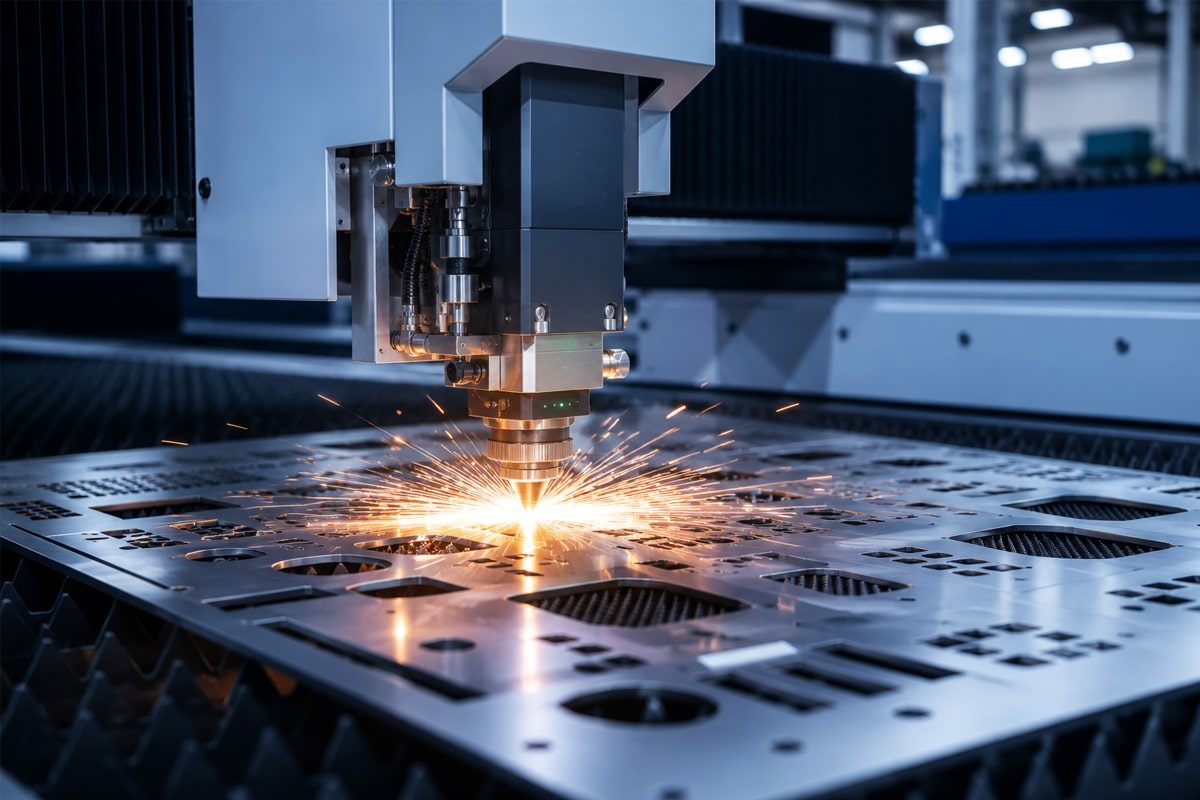
How To Choose The Power Of Laser Cutting Machines?
Choosing the right power for laser cutting machines is one of the most important decisions when investing in laser processing equipment. Laser power directly affects cutting speed, material thickness capability, edge quality, production efficiency, and overall operating costs. A machine with insufficient power may struggle to cut thicker materials, reduce productivity, and create poor-quality edges. On the other hand, selecting a machine with excessive power can increase equipment costs, energy consumption, and maintenance requirements without providing meaningful benefits for the actual application.
Laser cutting machine power is usually measured in watts or kilowatts (W/kW), representing the output energy of the laser source. Common industrial laser cutting machines range from low-power models of several hundred watts to high-power systems exceeding 30 kW. However, higher power does not always mean better performance. The ideal laser power depends on multiple factors, including the type of material being processed, material thickness, required cutting speed, production volume, desired edge quality, and future expansion needs.
Different applications require different power levels. For example, low-power fiber laser cutting machines are suitable for thin metal sheets, precision parts, and small-batch production, while medium-power machines are widely used for general metal fabrication. High-power laser cutting machines are designed for heavy industrial applications where thick carbon steel, stainless steel, aluminum, or other challenging materials must be processed quickly and efficiently.
When selecting laser power, manufacturers should carefully evaluate their current production requirements rather than simply choosing the highest available option. The correct power level should provide a balance between cutting capability, productivity, investment cost, and long-term return on investment. Factors such as laser source efficiency, auxiliary gas requirements, machine structure, automation level, and operating environment should also be considered to ensure reliable performance.
This article will explain how to choose the appropriate power of laser cutting machines by analyzing material requirements, production goals, cutting performance, cost considerations, and future development plans. Understanding these factors will help businesses select equipment that delivers efficient, stable, and cost-effective laser cutting solutions.
Table of Contents
Understanding Laser Cutting Machine Power
Laser power is one of the most important specifications when selecting laser cutting machines because it determines the machine’s cutting capability, processing efficiency, and suitable application range. However, choosing the correct power level requires more than simply selecting the highest available option. Different industries, materials, thicknesses, and production requirements require different laser power configurations. Understanding what laser power means and how it influences cutting performance helps manufacturers make a more practical and cost-effective equipment decision.
In laser cutting systems, power determines how much laser energy is delivered to the material during the cutting process. A higher-power laser can generally provide more energy concentration, allowing it to cut thicker materials, achieve higher cutting speeds, and improve productivity in heavy-duty applications. However, laser power works together with other factors, such as laser wavelength, beam quality, cutting head design, auxiliary gas pressure, material properties, and machine motion performance. Therefore, power should be considered as one part of the entire cutting system rather than an independent performance indicator.
When choosing laser cutting machines, users should evaluate their typical production workload, the materials they process most frequently, and their future manufacturing needs. Selecting an appropriate power level ensures that the machine can meet current requirements while avoiding unnecessary investment in excessive capacity.
What Does Laser Power Mean
Laser power refers to the output energy generated by the laser source, usually measured in watts (W) or kilowatts (kW). It represents the amount of laser energy available for processing materials within a specific period. For example, a 1 kW laser source produces less energy output than a 6 kW laser source, meaning the higher-power system can deliver more energy to the cutting area when operating under suitable conditions.
In laser cutting machines, the laser source converts electrical energy into a concentrated laser beam. This beam is guided through the optical system and focused onto the material surface, where the high energy density melts, vaporizes, or removes the material. The laser power determines how much energy is available to create and maintain this cutting process.
Laser cutting machines are available with a wide range of power levels, from low-power systems designed for thin materials and precision processing to high-power industrial machines capable of cutting thick metal plates at high speeds. Fiber laser cutting machines, which are widely used in modern metal fabrication, commonly range from around 1 kW to more than 30 kW depending on the application.
It is important to understand that laser power does not directly represent cutting quality. A higher-power machine does not automatically produce better results. Proper matching between laser power, material type, thickness, cutting parameters, and machine design is essential for achieving stable cutting performance.
How Laser Power Affects Cutting Performance
Laser power has a direct impact on several key aspects of cutting performance, including cutting speed, maximum material thickness, edge quality, and production efficiency. When the laser power increases, more energy can be delivered to the cutting area, allowing the machine to process materials faster and handle thicker workpieces.
One of the most significant effects of higher laser power is increased cutting speed. For thin and medium-thickness materials, a higher-power laser can maintain faster movement speeds while providing sufficient energy to complete the cut. This can significantly improve production efficiency, especially in applications involving large quantities of parts or continuous manufacturing.
Laser power also determines the maximum thickness that a machine can effectively cut. Low-power laser cutting machines are suitable for thin sheets, while higher-power systems are required for thick carbon steel, stainless steel, aluminum, and other metals. When the laser power is too low for a specific material thickness, the machine may experience slow cutting speeds, incomplete penetration, excessive dross, or poor edge quality.
However, increasing laser power has limitations. Excessive power for thin materials may cause unnecessary heat input, resulting in deformation, discoloration, wider heat-affected zones, or increased operating costs. Higher-power machines also require stronger mechanical structures, more powerful cooling systems, and higher-capacity electrical systems.
Therefore, the goal is not to choose the maximum available power but to select the power level that provides the best balance between processing capability, cutting quality, operating cost, and production requirements.
Common Laser Cutting Machine Power Ranges
Laser cutting machine power levels are generally divided according to their typical applications and processing capabilities. Low-power machines, usually ranging from several hundred watts to around 1.5 kW, are commonly used for thin metal sheets, precision components, small workshops, and applications where cutting speed requirements are moderate. These machines provide lower investment costs and are suitable for businesses with limited production demands.
Medium-power laser cutting machines, typically ranging from approximately 2 kW to 6 kW, are among the most widely used industrial solutions. They provide a good balance between cutting speed, material thickness capability, and operating cost. Many metal fabrication companies choose this power range because it can handle common materials such as carbon steel, stainless steel, and aluminum while maintaining high production efficiency.
High-power laser cutting machines, generally above 12 kW, are designed for heavy industrial applications requiring high productivity and thick material processing. These machines are often used in industries such as shipbuilding, construction machinery, steel fabrication, and large-scale manufacturing. With advanced laser sources and optimized cutting technology, high-power systems can significantly reduce processing time for thick plates.
Ultra-high-power laser cutting machines, including systems exceeding 20 kW, are used for specialized applications where maximum cutting capacity and production efficiency are required. These machines are typically installed in large manufacturing facilities with high-volume production requirements and strong infrastructure support.
Understanding laser cutting machine power is essential for selecting equipment that matches actual production needs. Laser power affects cutting capability, speed, and material range, but it must be evaluated together with application requirements and total operating costs. The right power level is the one that provides sufficient performance without unnecessary investment or energy consumption.
Evaluate Your Cutting Material Requirements
Before selecting the power of laser cutting machines, it is essential to evaluate the materials that will be processed and understand their specific cutting requirements. Different materials respond differently to laser energy because of variations in reflectivity, thermal conductivity, melting point, thickness, and chemical composition. Laser cutting machines that perform well on thin stainless steel may not provide the same results when processing thick aluminum or carbon steel. Therefore, choosing laser power based only on general machine specifications can lead to inefficient processing, poor cutting quality, or unnecessary equipment costs.
Material requirements are one of the most important factors determining the appropriate laser power level. Manufacturers should analyze not only the materials they currently process but also potential future applications. Understanding the full range of materials and thicknesses involved helps ensure that the selected machine can provide stable performance throughout its service life.
A proper material evaluation should include identifying the types of materials to be cut, determining the maximum and average thickness requirements, and analyzing the overall thickness range of daily production. This approach allows businesses to select laser cutting machines with sufficient capacity while avoiding the disadvantages of underpowered or oversized equipment.
Identify the Materials You Need to Cut
The first step in choosing laser cutting machine power is identifying the materials that will be processed. Common laser-cutting materials include carbon steel, stainless steel, aluminum, copper, brass, titanium, and various alloys. Each material has unique physical properties that influence how much laser energy is required for effective cutting.
Carbon steel is one of the most commonly processed materials because it absorbs laser energy relatively well and can be cut efficiently across a wide thickness range. Stainless steel requires careful power selection because its higher reflectivity and lower thermal conductivity can affect cutting performance. Aluminum and copper are more challenging because they reflect a significant amount of laser energy and conduct heat quickly, often requiring higher power levels and optimized cutting parameters.
Material surface conditions should also be considered. Coated, painted, oxidized, or highly polished surfaces may behave differently during laser processing compared with untreated materials. For example, reflective metals may require specific laser technologies, higher power levels, or adjusted parameters to achieve stable cutting results.
If a business processes multiple materials, the selected laser power should be based on the most demanding material requirements rather than the easiest material to cut. However, manufacturers should also avoid choosing excessive power simply for occasional special applications, as this may increase investment and operating costs without improving daily production efficiency.
Consider Material Thickness
Material thickness is one of the most direct factors affecting laser power selection. As thickness increases, the laser must deliver more energy to melt or vaporize the material throughout the entire cutting depth. A machine that efficiently cuts thin sheets may struggle with thicker plates if the laser power is insufficient.
For thin materials, lower-power laser cutting machines can usually provide excellent cutting quality and sufficient production speed. They are often suitable for applications such as sheet metal fabrication, electrical enclosures, decorative components, and precision parts. Using a high-power machine for very thin materials may not provide significant advantages and can result in higher equipment costs.
For medium and thick materials, higher laser power becomes increasingly important. More powerful laser sources allow faster cutting speeds, deeper penetration, and more stable processing. They also reduce the risk of incomplete cuts, excessive dross, and poor edge quality when working with thick metal plates.
However, maximum cutting thickness should not be the only consideration. Manufacturers should also evaluate the thickness they process most frequently. A machine selected only for occasional maximum thickness requirements may operate inefficiently during normal production. The ideal power level should match the company’s typical workload while maintaining enough capacity for occasional thicker materials.
Analyze Your Material Thickness Range
In addition to identifying the thickest material to be cut, manufacturers should analyze the complete thickness range involved in daily production. Many businesses process materials with varying thicknesses, and selecting laser power based only on one thickness value may result in an unsuitable machine configuration.
The typical production thickness should be considered the primary reference point. For example, if most production involves cutting 3–8 mm metal sheets but occasionally requires processing 20 mm plates, selecting an extremely high-power machine only for the occasional job may not be the most economical choice. Instead, businesses should evaluate whether the occasional thick-material processing justifies the additional investment or whether outsourcing those jobs is more practical.
The thickness range also influences productivity expectations. If a company frequently switches between thin and thick materials, a machine with a wider processing capability may provide greater flexibility. Higher-power laser cutting machines can often process a broader range of thicknesses while maintaining stable quality, making them suitable for manufacturers with diverse product requirements.
Future production plans should also be included in this evaluation. If a company expects to expand into thicker materials, larger components, or higher-volume manufacturing, selecting slightly higher laser power may provide valuable flexibility and extend the useful life of the equipment.
Evaluating cutting material requirements is a critical step in selecting the right laser cutting machine power. Manufacturers should consider the materials they process, the physical characteristics of those materials, their common thicknesses, and the overall thickness range required for production. By matching laser power with actual material demands, businesses can achieve better cutting performance, higher efficiency, and a stronger return on investment while avoiding unnecessary equipment costs.
Match Laser Power With Cutting Thickness
Matching laser power with cutting thickness is one of the most important steps when selecting laser cutting machines. The thickness of the material directly affects the amount of energy required to complete a stable cut. If the laser power is too low, the machine may experience slow cutting speeds, incomplete penetration, excessive dross, or poor edge quality. If the power is significantly higher than necessary, the additional investment and operating costs may not provide proportional benefits.
Different laser power levels are designed for different processing requirements. Low-power laser cutting machines are generally suitable for thin materials and precision applications, medium-power machines provide a balance between versatility and productivity, and high-power systems are designed for thick materials and high-volume industrial production. However, the relationship between power and thickness is not fixed because cutting performance is also influenced by material type, laser source efficiency, cutting gas, machine structure, and optimized parameters.
When selecting laser power, manufacturers should consider both current production requirements and future development plans. The ideal machine should efficiently handle the materials and thicknesses processed most frequently while providing sufficient flexibility for occasional increases in workload. Understanding the capabilities of different power ranges helps businesses choose equipment that delivers reliable performance and long-term value.
Low-Power Laser Cutting Machines
Low-power laser cutting machines are typically designed for thin materials and applications that require precision rather than maximum cutting speed. These machines commonly use laser sources ranging from several hundred watts to around 1.5 kW and are widely used for small workshops, prototyping, customized fabrication, and industries processing thin metal sheets.
For materials such as thin carbon steel, stainless steel, aluminum sheets, and other lightweight metals, low-power lasers can provide clean and accurate cuts while maintaining relatively low equipment and operating costs. They are especially suitable for applications where material thickness is limited, and production volumes are moderate.
The main advantage of low-power laser cutting machines is their cost efficiency. They require less electrical power, smaller cooling systems, and lower initial investment compared with higher-power models. For manufacturers mainly processing thin sheets, choosing a higher-power machine may not significantly improve productivity because the cutting speed may already be limited by factors such as machine movement, loading time, or part complexity.
However, low-power machines have limitations when processing thicker materials. As thickness increases, insufficient laser energy can reduce cutting speed and affect edge quality. Therefore, businesses should carefully evaluate their maximum required thickness before selecting a low-power system.
Medium-Power Laser Cutting Machines
Medium-power laser cutting machines are among the most popular choices for general industrial manufacturing because they provide a strong balance between cutting capability, productivity, and investment cost. These machines typically range from approximately 2 kW to 6 kW and can handle a wide variety of metal fabrication applications.
Medium-power systems are suitable for manufacturers that process common thickness ranges of carbon steel, stainless steel, and aluminum. They can efficiently cut thin sheets while also providing enough energy for medium-thickness plates. This flexibility makes them widely used in industries such as machinery manufacturing, automotive components, electrical equipment, metal furniture, and general fabrication.
One of the key advantages of medium-power lasers is their versatility. Many businesses need to process different materials and thicknesses within the same production environment. A medium-power machine can provide sufficient cutting performance for daily operations without the higher purchase price and operating requirements associated with high-power equipment.
For manufacturers looking to upgrade from traditional cutting methods or expand production capacity, medium-power laser cutting machines often provide an ideal combination of speed, quality, and cost control. However, users should still evaluate their future needs carefully. If production involves frequent cutting of very thick plates, a higher-power solution may provide better long-term efficiency.
High-Power Laser Cutting Machines
High-power laser cutting machines are designed for heavy-duty applications that require fast processing speeds and the ability to cut thick materials. These systems usually include laser sources above 8 kW and are increasingly used in industries where productivity and large-scale manufacturing are critical.
The primary advantage of high-power laser cutting machines is their ability to process thick metal plates efficiently. They provide higher energy density, allowing faster cutting speeds, deeper penetration, and improved productivity for materials such as thick carbon steel, stainless steel, aluminum, and other alloys.
High-power systems are commonly used in industries including shipbuilding, construction equipment, steel structures, energy equipment, and large machinery manufacturing. In these applications, reducing cutting time and improving production efficiency can significantly affect overall manufacturing costs.
Although high-power laser cutting machines offer impressive performance, they are not always the best choice for every business. They require higher initial investment, increased electrical capacity, more advanced cooling systems, and potentially higher maintenance costs. If a company mainly processes thin materials, the additional power capacity may remain unused and reduce the return on investment.
Therefore, high-power laser cutting machines should be selected when thick-material processing, high production volume, or future expansion clearly justifies the additional capability. The correct choice depends on balancing cutting thickness requirements with productivity goals and total ownership costs.
Matching laser power with cutting thickness ensures that the selected machine can deliver efficient and stable performance. Low-power machines are suitable for thin materials and cost-sensitive applications, medium-power machines offer excellent versatility for general manufacturing, and high-power machines provide the capacity needed for thick materials and large-scale production. By selecting a power level that matches actual thickness requirements, manufacturers can achieve better cutting quality, higher productivity, and improved long-term investment value.
Consider Your Production Requirements
Production requirements play a crucial role in determining the appropriate power of laser cutting machines. While material type and thickness define the basic cutting capability needed, production volume, processing speed, and operating conditions determine how much laser capacity is required for efficient manufacturing. A machine that meets the cutting requirements of a small workshop may not be suitable for a large-scale production environment where high throughput and continuous operation are necessary.
Choosing laser power based on production needs helps businesses avoid two common problems: selecting an underpowered machine that cannot meet production targets and investing in excessive power that increases costs without delivering meaningful benefits. Higher laser power can improve processing efficiency, but the actual productivity improvement depends on how frequently the machine operates, how much material is processed, and how the equipment fits into the overall production workflow.
Manufacturers should evaluate their current workload, expected production growth, required cutting speed, and operating schedule before making a decision. A properly selected laser power level ensures that the machine can maintain stable performance, reduce production bottlenecks, and provide a better return on investment throughout its service life.
Production Volume and Workload
Production volume is one of the most important factors when selecting laser cutting machine power. Businesses with low production volumes and occasional cutting tasks may not require a high-power system because processing speed and maximum throughput are not their primary concerns. In these cases, a lower-power machine can often provide sufficient cutting capability while keeping equipment costs and operating expenses under control.
For manufacturers with medium or high production volumes, laser power becomes increasingly important. Higher-power laser cutting machines can complete more work within the same period by increasing cutting speeds and reducing processing time per part. This is especially valuable in industries where large quantities of components must be produced consistently, such as automotive parts, machinery components, sheet metal fabrication, and industrial equipment manufacturing.
Workload analysis should include not only the current production schedule but also future business expansion. If production demand is expected to increase, selecting a machine with slightly higher power capacity may prevent the need for early equipment replacement. However, businesses should avoid choosing power levels based only on potential future needs that may never occur, as unused capacity can lead to unnecessary investment costs.
A practical approach is to evaluate the average daily workload, peak production periods, material consumption, and the number of shifts the machine will operate. These factors provide a clearer understanding of the laser power required to maintain efficient production.
Required Cutting Speed
Cutting speed is directly related to laser power and has a significant impact on manufacturing efficiency. Higher-power laser cutting machines can generally process materials faster because they deliver more energy to the cutting zone, allowing the material to be melted or removed more quickly. This advantage becomes especially noticeable when cutting thicker materials or handling large production orders.
For manufacturers focused on improving productivity, selecting sufficient laser power can reduce cycle times and increase output. Faster cutting speeds allow more parts to be produced within the same working hours, improving machine utilization and overall production efficiency. In competitive manufacturing environments, these time savings can have a significant impact on profitability.
However, cutting speed should not be considered separately from cutting quality. Operating a machine at maximum speed without sufficient power or proper parameter adjustment may result in incomplete cuts, rough edges, or increased post-processing requirements. The ideal laser power should provide a balance between fast processing and consistent cutting quality.
Manufacturers should also consider the complexity of their parts. Simple straight cuts may benefit greatly from higher power, while intricate designs with many corners, small features, or frequent direction changes may be limited by machine movement and programming rather than laser output alone.
Continuous Operation Requirements
Continuous operation requirements are another important consideration when selecting laser cutting machine power. In production environments where machines operate for long hours or multiple shifts, equipment stability, reliability, and efficiency become more important than short-term cutting capability.
High-power laser cutting machines are often designed for demanding industrial environments where continuous production is required. They typically include advanced cooling systems, stronger machine structures, and more durable components to maintain stable performance during extended operation. This makes them suitable for manufacturers that need consistent output and minimal downtime.
For businesses operating machines only occasionally or for short production runs, a lower-power system may be more appropriate. A high-power machine may not provide significant advantages if the equipment remains idle for long periods, and the additional purchase and maintenance costs may not be justified.
Continuous operation also requires consideration of supporting systems, including electrical supply, cooling capacity, auxiliary gas consumption, automation equipment, and maintenance requirements. Laser cutting machines must be properly matched with the entire production environment to ensure reliable long-term operation.
Production requirements are essential when choosing the power of laser cutting machines. Production volume determines the necessary processing capacity, cutting speed requirements influence productivity goals, and continuous operation needs affect equipment stability and reliability. By evaluating workload, efficiency targets, and operating conditions together, manufacturers can select laser power levels that support current production while providing sustainable value for future growth.
Balance Cutting Quality And Laser Power
Selecting the right laser power is not only about achieving maximum cutting capacity or the highest possible processing speed. A properly balanced laser power level should provide the required cutting quality while maintaining reasonable equipment costs and operating efficiency. Choosing a laser that is too weak can lead to unstable cutting performance, while selecting excessive power may increase investment and energy consumption without improving actual production results.
Laser cutting quality depends on the interaction between laser power and many other factors, including material properties, thickness, cutting speed, focus position, auxiliary gas, nozzle condition, and machine accuracy. Although laser power provides the energy required for cutting, simply increasing power does not always guarantee better results. The goal is to select enough power to achieve clean edges, stable penetration, and efficient processing without creating unnecessary costs.
Manufacturers should evaluate their quality requirements before determining laser power. Applications requiring precise dimensions, smooth edges, minimal heat-affected zones, or reduced post-processing may require different power considerations compared with applications where only basic cutting capability is needed. A balanced approach ensures that the laser cutting machine delivers reliable quality while maximizing the value of the investment.
Avoid Choosing Insufficient Laser Power
Choosing insufficient laser power is one of the most common mistakes when selecting laser cutting machines. When the available laser energy is not enough for the material and thickness being processed, the machine may struggle to achieve stable cutting results. This can lead to slow cutting speeds, incomplete penetration, excessive slag or dross, rough edges, and inconsistent production quality.
Low laser power forces operators to reduce cutting speed to allow enough time for the laser beam to transfer energy into the material. While this may sometimes enable the machine to cut thicker materials, it significantly reduces productivity and increases processing time. In high-volume manufacturing environments, this limitation can create production bottlenecks and increase labor costs.
Insufficient power can also negatively affect cutting consistency. During long production runs, small changes in material conditions, surface quality, or machine settings may cause cutting failures because the system has limited energy capacity. This reduces reliability and may require additional adjustments or secondary processing to correct defects.
To avoid underpowered equipment, manufacturers should select laser power based on their most common materials and thicknesses rather than only the minimum requirements. The machine should have enough power capacity to maintain stable cutting performance under normal production conditions while allowing reasonable flexibility for occasional increases in material thickness.
Avoid Choosing Excessive Laser Power
While insufficient power can limit performance, excessive laser power can also create disadvantages. Many manufacturers assume that higher-power laser cutting machines will always provide better productivity and quality. However, if the additional power is not required for the actual application, it may result in unnecessary investment and higher operating costs.
High-power laser cutting machines usually require greater initial investment, stronger electrical infrastructure, more advanced cooling systems, and increased maintenance expenses. For businesses primarily processing thin materials, these additional costs may not provide a meaningful improvement in production efficiency.
Excessive power can also introduce challenges when processing delicate or thin materials. Too much energy input may increase heat accumulation, causing deformation, discoloration, wider heat-affected zones, or reduced edge quality. In precision applications, proper parameter control is often more important than simply increasing laser output.
Another consideration is equipment utilization. A high-power machine that operates below its intended capacity for most of the time may not achieve an acceptable return on investment. Businesses should evaluate their actual workload and avoid purchasing additional power capacity that remains unused.
The best choice is not the most powerful machine available but the machine that provides sufficient power for the required applications with the highest overall efficiency.
Choose Power With the Required Cutting Quality
Cutting quality requirements should be a key factor when determining laser power. Different applications have different expectations regarding edge smoothness, dimensional accuracy, cutting speed, surface appearance, and post-processing requirements. The required quality standard helps determine how much laser power is necessary.
For applications that require high-quality finished parts, selecting adequate laser power allows the machine to operate within an optimal parameter range. Instead of running at the limits of its capability, the laser can maintain stable cutting conditions, resulting in cleaner edges and more consistent results.
For example, manufacturers producing precision components may prioritize cutting accuracy and surface quality over maximum speed. In such cases, a properly matched power level combined with suitable cutting parameters can provide better results than using excessive power. On the other hand, industries focused on heavy fabrication and high-volume production may prioritize speed and thickness capability, making higher-power systems more suitable.
Laser power should also be evaluated together with the complete machine configuration. A powerful laser source cannot compensate for poor beam quality, inaccurate motion systems, weak machine structures, or unsuitable cutting parameters. The best cutting results come from matching laser power with the entire processing system.
Balancing cutting quality and laser power is essential for selecting the right laser cutting machine. Insufficient power can reduce efficiency and create quality problems, while excessive power can increase costs without delivering proportional benefits. By choosing laser power according to actual cutting requirements, quality expectations, and production goals, manufacturers can achieve stable performance, improved efficiency, and a stronger return on investment.
Consider Different Laser Cutting Machine Types
When choosing the power of laser cutting machines, it is important to consider the type of laser technology being used. Different laser cutting machine types have different energy conversion efficiencies, material compatibility, cutting capabilities, and suitable power ranges. The same laser power rating does not always produce identical cutting performance across different machine types because laser sources operate at different wavelengths and interact differently with various materials.
The three main types of laser cutting machines used in industrial applications are fiber laser cutting machines, CO2 laser cutting machines, and mixed laser cutting systems. Each type has unique advantages and limitations that influence how much laser power is required for a specific application. Understanding these differences helps manufacturers avoid selecting an unsuitable power configuration and ensures better cutting quality, productivity, and cost efficiency.
The ideal laser power should be determined by combining machine type, material requirements, production volume, and desired cutting performance. A fiber laser with moderate power may outperform a higher-power CO2 laser when processing certain metals, while CO2 lasers may still provide advantages for specific non-metal materials. Therefore, evaluating laser technology before selecting power is an important step in equipment investment decisions.
Fiber laser cutting machines are currently one of the most widely used solutions for industrial metal cutting applications. They use fiber laser sources that generate a highly concentrated beam with excellent energy transmission efficiency. Because of their high electrical efficiency, strong beam quality, and low maintenance requirements, fiber lasers have become the preferred choice for many manufacturers processing metals.
Fiber laser cutting machines are available across a wide range of power levels, from low-power systems for thin sheet processing to high-power machines designed for thick metal plates and heavy industrial production. Their power selection mainly depends on the material type, thickness, cutting speed requirements, and production volume.
For thin and medium-thickness metals, lower and medium-power fiber lasers can provide excellent cutting speed and edge quality while maintaining reasonable operating costs. For thicker carbon steel, stainless steel, aluminum, and other alloys, higher-power fiber lasers can significantly improve cutting efficiency by delivering more energy to the cutting area.
One major advantage of fiber laser technology is its ability to cut reflective metals more effectively than traditional laser technologies. Materials such as aluminum, brass, and copper can be processed more efficiently with fiber lasers due to their shorter wavelength and better absorption characteristics. This makes fiber laser cutting machines suitable for industries including automotive manufacturing, sheet metal fabrication, aerospace components, and industrial equipment production.
When selecting fiber laser power, manufacturers should avoid choosing based only on maximum cutting thickness. A machine should be matched with the materials and thicknesses most frequently processed to ensure the best balance between productivity, quality, and investment cost.
CO2 laser cutting machines use carbon dioxide gas as the laser medium and have been widely used for decades in industrial cutting applications. They produce a longer wavelength compared with fiber lasers, making them particularly suitable for certain non-metal materials and some specialized cutting applications.
CO2 lasers can effectively process materials such as wood, acrylic, plastics, textiles, leather, rubber, glass, and some composite materials. They are also capable of cutting metals under appropriate conditions, although they generally require more maintenance and energy consumption compared with modern fiber laser cutting systems for metal processing.
The power requirements of CO2 laser cutting machines depend heavily on the material being processed. For thin non-metal materials, lower-power CO2 lasers may provide sufficient cutting capability. For thicker materials or applications requiring deeper cutting, higher-power CO2 laser cutting systems may be necessary.
Although fiber lasers have replaced many CO2 systems in metal fabrication, CO2 lasers remain valuable in industries where their wavelength provides advantages. For example, applications involving organic materials, signage production, packaging, and decorative manufacturing may benefit from CO2 laser technology.
When selecting CO2 laser power, manufacturers should focus on material compatibility and cutting quality requirements rather than comparing power ratings directly with fiber laser cutting machines. A lower-power CO2 laser may be more suitable for certain applications than a higher-power fiber laser if the material absorbs the laser wavelength more effectively.
Mixed laser cutting machines combine different laser technologies or provide flexible processing capabilities for multiple material types. These systems are designed for manufacturers that require greater versatility and need to process a wider range of materials within the same production environment.
The power selection for mixed laser cutting machines requires careful evaluation because different materials may require different energy levels and cutting strategies. A configuration suitable for metal cutting may not provide the best results for non-metal materials, and vice versa. Manufacturers must determine which materials represent the majority of their workload and select power capacity accordingly.
Mixed laser cutting systems can be beneficial for businesses with diverse production needs, such as manufacturers producing both metal components and non-metal parts. They reduce the need for multiple separate machines and can improve production flexibility. However, their complexity may require more careful parameter adjustment and operator expertise.
When considering power for mixed laser cutting machines, businesses should analyze their material portfolio, production frequency, and quality expectations. Selecting power based on the most demanding application can provide sufficient capacity, but selecting excessive power for rarely processed materials may increase unnecessary costs.
Considering laser cutting machine type is essential when choosing the appropriate power level. Fiber laser cutting machines are ideal for efficient metal processing and offer a wide range of power options; CO2 laser cutting machines remain valuable for non-metal and specialized applications, and mixed laser cutting systems provide flexibility for diverse manufacturing requirements. By matching laser power with the characteristics of the chosen laser technology, manufacturers can achieve better cutting performance, improved efficiency, and optimized equipment investment.
Evaluate Laser Source And Machine Configuration
When selecting the power of laser cutting machines, evaluating the laser source and overall machine configuration is just as important as considering material requirements and production goals. Laser power represents the available energy output, but the actual cutting performance depends on how efficiently that energy is generated, transmitted, focused, and applied to the material. A high-power laser source cannot achieve optimal results if other machine components cannot fully utilize its capability.
The laser source, cutting head, motion system, and machine structure work together as an integrated system. Their quality directly affects cutting speed, precision, stability, edge quality, and long-term reliability. Therefore, manufacturers should not select equipment based only on the advertised laser power. Instead, they should evaluate whether the complete machine configuration can support the selected power level and deliver consistent performance during real production.
A properly matched laser source and machine configuration ensures that the available power is converted into effective cutting performance. By examining the quality of the laser source, the capability of the cutting head, and the strength of the mechanical system, businesses can make a more informed decision and select a laser cutting machine that provides reliable value over its service life.
Laser Source Quality
The laser source is the core component that determines the energy output and overall cutting capability of a laser cutting machine. When selecting laser power, manufacturers should consider not only the rated power but also the quality, stability, efficiency, and reliability of the laser source.
A high-quality laser source can provide stable beam output, consistent energy delivery, and better long-term performance. Stable laser power helps maintain uniform cutting results, especially during continuous operation or when processing large quantities of parts. In contrast, an unstable laser source may cause inconsistent cutting depth, fluctuating edge quality, and increased production downtime.
Beam quality is another important factor related to laser source performance. A high-quality beam can be focused into a smaller and more concentrated spot, increasing energy density and improving cutting efficiency. This allows the machine to achieve better cutting results without requiring unnecessarily high power levels.
Energy efficiency should also be considered. Modern fiber laser sources typically provide high electrical efficiency, reducing energy consumption compared with older laser technologies. A more efficient laser source can lower operating costs while maintaining strong cutting performance.
When choosing laser power, manufacturers should select a laser source from a reliable supplier with proven performance in industrial applications. A well-designed laser source ensures that the selected power level can be effectively converted into practical production advantages.
Cutting Head Capability
The cutting head is another critical component that determines how effectively laser power is delivered to the material. Even a powerful laser source cannot achieve optimal results if the cutting head cannot properly focus the beam, maintain the correct distance, or control the cutting process.
A high-quality cutting head improves cutting accuracy by providing precise beam focusing and stable operation. Features such as automatic focus adjustment, height sensing, and optimized optical components allow the machine to adapt to different materials and thicknesses more effectively.
The cutting head must also be matched with the selected laser power. Higher-power laser cutting systems generate greater energy density and require cutting heads designed to handle increased thermal loads. Using a cutting head that is not suitable for the laser power level may result in reduced performance, faster component wear, or even damage to optical parts.
Nozzle design, gas control, and piercing capability also influence cutting quality. Proper coordination between the laser beam, cutting gas, and nozzle helps remove molten material efficiently, improving edge quality and reducing defects such as dross or incomplete cuts.
Therefore, when selecting laser power, manufacturers should ensure that the cutting head configuration is capable of supporting the intended power level and processing requirements. A well-matched cutting head allows the machine to fully utilize the available laser energy.
Machine Structure And Motion System
The mechanical structure and motion system of laser cutting machines play an essential role in determining how effectively laser power can be converted into productivity and precision. As laser power increases, cutting speeds often increase as well, placing greater demands on the machine frame, gantry, drive system, and control technology.
A rigid machine structure helps maintain accuracy during high-speed cutting. Heavy-duty frames reduce vibration and deformation, allowing the cutting head to follow programmed paths more precisely. Without sufficient structural strength, even a high-power laser may produce inaccurate cuts, inconsistent dimensions, or poor edge quality.
The motion system is equally important. High-performance guide rails, motors, drives, and control systems enable smooth acceleration, fast movement, and precise positioning. This is especially important for high-power laser cutting machines because their productivity advantages depend not only on cutting capability but also on the ability to move quickly and accurately between cutting paths.
Acceleration performance, positioning accuracy, and long-term stability should all be evaluated when choosing a machine. For applications involving complex parts, small features, or high-volume production, a strong motion system can significantly improve efficiency and reduce processing errors.
The machine structure should also match the selected laser power. A high-power laser source installed on a weak mechanical platform may not deliver expected performance. The entire system must be designed as a balanced solution where the laser source, cutting head, and motion components work together effectively.
Evaluating laser source and machine configuration is essential when choosing the power of laser cutting machines. The laser source determines energy output and beam quality, the cutting head ensures efficient energy delivery and cutting control, and the machine structure provides the stability needed for accurate high-speed processing. By selecting a machine with components that are properly matched to the laser power, manufacturers can achieve better cutting quality, higher productivity, and more reliable long-term operation.
Calculate Total Cost Of Ownership
When choosing the power of laser cutting machines, evaluating the total cost of ownership (TCO) is essential. The purchase price of the equipment is only one part of the overall investment. Higher-power laser cutting machines may provide faster processing speeds and greater cutting capacity, but it also usually requires a higher initial investment, increased energy consumption, and potentially higher maintenance costs. On the other hand, selecting a machine with insufficient power may reduce productivity and increase long-term operating expenses.
A comprehensive cost evaluation helps manufacturers determine whether a specific laser power level can deliver sufficient value throughout the machine’s service life. Instead of focusing only on the initial purchase price, businesses should consider all costs associated with ownership, including equipment investment, energy consumption, consumables, maintenance, labor efficiency, and production benefits.
The right laser power should provide the best balance between performance and cost. A properly selected machine can improve productivity, reduce processing time, lower operating costs per part, and generate a stronger return on investment. By analyzing total ownership costs before purchasing, manufacturers can make a more practical decision and avoid choosing equipment based solely on short-term price differences.
Initial Equipment Investment
The initial investment is one of the most visible costs when purchasing laser cutting machines. Generally, machines equipped with higher-power laser sources have higher purchase prices because they require more advanced laser generators, stronger mechanical structures, upgraded cooling systems, and more capable electrical components.
However, the relationship between laser power and equipment cost should be carefully evaluated. A higher-power machine may require a larger upfront investment, but it can provide significant productivity advantages in applications where faster cutting speeds and thicker material capability are valuable. For manufacturers with high production volumes, the additional investment may be recovered through increased output and reduced processing time.
At the same time, purchasing excessive laser power can negatively affect investment efficiency. If a company mainly processes thin materials and does not frequently require high cutting speeds or thick-material capability, a high-power machine may create unnecessary capital costs. The unused capacity may not generate sufficient additional revenue to justify the investment.
When evaluating initial equipment costs, manufacturers should consider the complete machine configuration rather than only the laser source power. Factors such as automation features, cutting area, machine accuracy, software functions, and component quality also influence the total investment value.
Operating Costs
Operating costs are a major factor in determining the long-term economic performance of laser cutting machines. These costs include electricity consumption, auxiliary gas usage, consumables, maintenance, replacement parts, and labor requirements.
Higher-power laser cutting machines generally consume more electrical energy because they require stronger laser output and supporting systems. However, they may also reduce processing time by cutting materials faster, which can lower the energy cost per completed part. Therefore, energy efficiency should be evaluated together with productivity rather than considered separately.
Auxiliary gas consumption is another important operating expense. Cutting gases such as oxygen, nitrogen, and compressed air affect cutting speed, edge quality, and operating costs. Higher-power machines may require higher gas flow rates, especially when processing thick materials, so manufacturers should consider these expenses during equipment selection.
Maintenance and consumable costs should also be included in the evaluation. Components such as nozzles, protective lenses, filters, and cutting head parts require periodic replacement. A reliable machine configuration and proper power selection can help reduce unnecessary wear and improve equipment availability.
Labor efficiency is another important consideration. A machine with appropriate laser power can complete jobs faster and reduce manual intervention, improving overall production efficiency. In automated manufacturing environments, selecting the right power level can contribute to better equipment utilization and lower labor costs.
Return On Investment Analysis
Return on investment (ROI) analysis helps manufacturers determine whether the selected laser power level can generate sufficient economic benefits over time. Laser cutting machines should not only meet technical requirements but also provide measurable improvements in production efficiency and profitability.
A higher-power machine may have a higher purchase cost, but it can deliver faster cutting speeds, increased production capacity, and reduced processing time. For businesses with large workloads, these advantages may significantly shorten the payback period and improve long-term profitability.
However, ROI depends on actual production conditions. A company processing only a small number of parts may not benefit from investing in a high-power machine, even if the machine offers greater technical capability. In contrast, manufacturers with continuous production schedules and high material throughput may achieve faster returns from a more powerful system.
When analyzing ROI, businesses should consider factors such as expected production volume, average processing time reduction, material savings, labor efficiency, maintenance requirements, and future market demand. The goal is to select a laser power level that supports profitable production rather than simply maximizing technical specifications.
Calculating total cost of ownership provides a more accurate way to choose the power of a laser cutting machine. Initial equipment investment determines the upfront financial commitment, operating costs affect long-term expenses, and ROI analysis evaluates the overall economic benefits. By considering all these factors together, manufacturers can select laser power that delivers the right balance of performance, cost efficiency, and long-term business value.
Practical Steps To Select The Right Laser Power
Selecting the right laser power for a cutting machine requires a systematic evaluation process rather than simply choosing the highest available power rating. A suitable laser power level should match the actual production requirements, provide sufficient cutting capacity, and deliver reliable performance without creating unnecessary costs. By following a structured selection process, manufacturers can reduce the risk of purchasing equipment that is either underpowered or unnecessarily expensive.
The selection process should begin with a clear understanding of current manufacturing conditions, including materials, thickness ranges, production volume, and quality requirements. After identifying these needs, businesses can evaluate different power options, compare their advantages, and verify performance through practical testing. This approach ensures that the selected laser cutting machine can support both current operations and future development.
A careful power selection process also helps manufacturers achieve better productivity and long-term value. Instead of focusing only on technical specifications, companies should consider how the laser machine will perform in their actual production environment. The following steps provide a practical method for choosing the most suitable laser power.
Define Your Current Production Needs
The first step in selecting laser power is to clearly define current production requirements. Manufacturers should analyze the materials they process, the thicknesses they cut most frequently, the quantity of parts produced, and the quality standards required for finished products.
Material type is a key consideration because different materials absorb and transfer laser energy differently. Carbon steel, stainless steel, aluminum, copper, and other alloys may require different power levels to achieve stable cutting performance. Businesses should identify the materials that represent the majority of their workload and use them as the primary reference for power selection.
Production volume should also be evaluated. A company producing small batches or customized parts may not require the same laser power as a factory running continuous mass production. Understanding daily workload, operating hours, and future growth expectations helps determine whether a lower, medium, or higher-power machine is more appropriate.
Manufacturers should also define their cutting quality requirements. Applications requiring smooth edges, high precision, minimal deformation, or reduced post-processing may require sufficient power capacity to maintain stable cutting conditions. A clear understanding of production needs provides a reliable foundation for selecting the right laser power.
Determine Required Cutting Capacity
After defining production requirements, the next step is determining the required cutting capacity of the machine. This involves evaluating the maximum material thickness, typical thickness range, cutting speed expectations, and required processing efficiency.
The maximum thickness requirement should be considered carefully, but it should not be the only deciding factor. Some manufacturers may occasionally process thick materials but spend most of their time cutting thinner sheets. Selecting a machine based only on rare maximum-thickness applications may result in unnecessary investment.
The typical production thickness range is often a more practical reference. The selected laser power should allow the machine to process the most common materials efficiently while maintaining flexibility for occasional changes in workload.
Cutting speed requirements are also important. If production deadlines are strict or large quantities of parts must be completed quickly, higher laser power may provide significant advantages by reducing processing time. However, businesses should evaluate whether the increased speed will generate enough economic benefits to justify the additional investment.
Determining cutting capacity requires balancing material capability, productivity goals, and operating efficiency. The ideal laser power should provide enough performance for actual production without exceeding practical needs.
Compare Different Power Options
Once the required cutting capacity has been identified, manufacturers should compare different laser power options based on performance, cost, and application suitability. Instead of selecting a power level immediately, businesses should evaluate how different configurations affect cutting speed, material range, energy consumption, and long-term operating costs.
Lower-power machines may provide excellent value for businesses processing thin materials with moderate production requirements. They usually require less investment and have lower operating costs while still delivering reliable cutting performance for suitable applications.
Medium-power machines often provide the best balance between versatility and cost. They can handle a wide range of materials and thicknesses, making them a common choice for general manufacturing environments. For many businesses, this power range provides enough flexibility for current needs while allowing future expansion.
High-power machines offer advantages in heavy industrial applications where thick materials and high production volumes are common. They can significantly improve productivity but require higher investment and supporting infrastructure.
When comparing power options, manufacturers should consider total ownership costs rather than purchase price alone. A more expensive machine may provide better value if it improves production efficiency and reduces long-term costs.
Test Before Purchasing
Testing before purchasing is one of the most effective ways to confirm whether a selected laser power level meets actual production requirements. Technical specifications provide useful information, but real cutting performance depends on the combination of material properties, machine configuration, and processing parameters.
Manufacturers should request cutting tests using their own materials and representative workpieces whenever possible. These tests can reveal important details such as cutting speed, edge quality, heat effects, dross formation, and overall machine stability.
During testing, businesses should evaluate whether the machine can achieve the required quality at practical production speeds. A machine that can technically cut a certain thickness may not be the best choice if it requires extremely slow speeds or frequent parameter adjustments.
Testing also provides an opportunity to evaluate the manufacturer’s technical support, machine reliability, and parameter optimization capabilities. A professional supplier should be able to recommend suitable power configurations and demonstrate how the equipment performs under real operating conditions.
Selecting the right laser power requires a practical and step-by-step approach. Manufacturers should first define their production needs, determine the required cutting capacity, compare different power options, and verify performance through testing. By following these steps, businesses can choose laser cutting machines that deliver the right balance of cutting capability, efficiency, cost control, and long-term reliability.
Common Mistakes When Choosing Laser Cutting Machine Power
Choosing laser cutting machine power requires balancing cutting capability, productivity, quality, operating costs, and future production needs. However, buyers sometimes focus on a single specification—such as maximum cutting thickness, rated laser power, or purchase price—and overlook how the machine will perform during everyday production. This can result in an underpowered machine that limits productivity or an oversized system whose additional capacity rarely generates economic value.
Laser power should therefore be evaluated as part of the complete production system. Material type and thickness, typical workload, required cutting speed, edge-quality standards, machine configuration, automation, operating costs, and expected business growth should all influence the final decision. Avoiding the following common mistakes can help manufacturers select a more appropriate power level and achieve better long-term value from their laser cutting equipment.
Choosing Power Based Only On Maximum Thickness
Maximum cutting thickness is an important specification, but it should not be the sole basis for selecting laser power. The maximum thickness listed for a machine generally indicates its upper processing capability under particular materials, gases, parameters, and cutting conditions. It does not necessarily represent the most economical thickness for continuous production.
For example, laser cutting machines may technically be capable of cutting a certain thick plate, but processing near its maximum capacity can require slower speeds and carefully optimized parameters. If these thick plates represent only a small percentage of production, purchasing substantially more laser power specifically for them may not be economical.
Manufacturers should instead analyze the thickness distribution of their actual workload. The materials and thicknesses processed every day are usually more important than an occasional maximum-thickness job. Laser power should allow these common materials to be cut efficiently while providing an appropriate reserve for less frequent requirements.
Maximum thickness should therefore be treated as one selection criterion rather than the final decision. Evaluating typical thickness, maximum thickness, production frequency, and required speed together provides a much more realistic basis for power selection.
Selecting The Highest Available Power
Another common mistake is assuming that the highest available laser power automatically provides the best solution. Modern fiber laser cutting systems are available with increasingly high output powers, offering impressive cutting speeds and thick-plate capabilities. However, those capabilities are valuable only when they match the manufacturer’s production requirements.
A high-power machine generally requires a larger initial investment. Depending on its configuration and application, it can also require greater electrical capacity, more demanding cooling, suitable high-power cutting heads, and supporting systems capable of handling its productivity.
For a manufacturer primarily cutting thin sheet, extremely high power may provide diminishing returns. Once cutting becomes sufficiently fast, overall production can be constrained by acceleration, part geometry, piercing, loading and unloading, material handling, or downstream processes rather than laser output.
The better approach is to determine how much additional productivity each increase in power can actually provide for the company’s typical workload. Higher power is worthwhile when its additional throughput or processing capability creates measurable production and financial benefits.
Ignoring Future Production Changes
Selecting laser cutting machines exclusively around today’s requirements can create limitations later. Laser equipment is normally a long-term manufacturing investment, during which a company may introduce new products, process different materials, accept thicker workpieces, or increase production volume.
If the selected laser power provides almost no additional capacity beyond current requirements, future changes may push the machine close to its practical limits. Cutting speeds may become inadequate, thicker materials may be difficult to process economically, and production capacity may become a bottleneck.
Manufacturers should therefore consider realistic growth when determining laser power. If there is a strong expectation that material thickness or production volume will increase, selecting some additional power capacity can provide useful flexibility and delay the need for another machine.
However, planning for future growth does not mean purchasing excessive power based on uncertain possibilities. The objective is to establish a reasonable performance reserve based on realistic business plans, expected customer demand, and likely changes in the product mix.
Focusing Only On Machine Price
Purchase price is an important consideration, but choosing laser power based primarily on the lowest equipment price can result in higher costs over the machine’s operating life. A lower-priced, lower-power machine may initially appear attractive, but insufficient productivity can increase processing time and limit production capacity.
The opposite problem can also occur. Purchasing an expensive high-power machine does not automatically create a better investment. If the additional cutting capability is rarely used, the business pays for capacity that generates little additional revenue.
Power selection should therefore be based on total cost of ownership and expected return on investment rather than initial price alone. Manufacturers should consider electricity, auxiliary gases, consumables, maintenance, labor, processing time, equipment utilization, and expected production output.
Machine quality should also be considered alongside price. The laser source, cutting head, control system, cooling equipment, frame, drive system, and technical support all influence long-term reliability and productivity. A well-configured machine with appropriately matched laser power may ultimately be more economical than a cheaper system with inadequate performance or an expensive system with unnecessary capacity.
Avoiding common power-selection mistakes can significantly improve the value of laser cutting machine investments. Buyers should not select power based solely on maximum cutting thickness, assume that the highest power is automatically the best, ignore realistic future production changes, or focus exclusively on purchase price. Instead, laser power should be matched to typical materials and thicknesses, required throughput, quality standards, expected growth, and total ownership costs. This balanced approach helps manufacturers obtain sufficient cutting capacity without paying unnecessarily for unused performance.
How Reliable Manufacturers Help Choose The Right Laser Power
Selecting the right laser power can be difficult because the decision depends on much more than material thickness alone. Material type, cutting speed, production volume, quality requirements, machine configuration, operating costs, and future expansion plans all affect the appropriate power level. For this reason, working with reliable laser cutting machine manufacturers can significantly reduce the risk of choosing an unsuitable machine.
Experienced manufacturers do more than provide equipment specifications. They analyze the customer’s real production requirements, compare different power configurations, conduct cutting tests when necessary, and recommend a machine that balances performance and cost. This professional guidance is especially valuable for buyers who process multiple materials or expect their production needs to change over time.
A trustworthy manufacturer should also consider the complete machine rather than focusing only on laser-source power. The cutting head, machine bed, motion system, control system, cooling system, auxiliary gas system, and automation configuration must all be matched to the selected laser power. By combining application analysis, customized recommendations, and long-term technical support, reliable manufacturers help customers achieve better productivity and a stronger return on investment.
Professional Application Analysis
Professional application analysis is the foundation of accurate laser-power selection. Before recommending a machine, an experienced manufacturer should first understand what the customer actually needs to cut and how the equipment will be used in daily production.
This analysis typically begins with material type and thickness. Carbon steel, stainless steel, aluminum, copper, brass, and other materials have different cutting characteristics, so the same thickness may require different processing conditions. Manufacturers should also identify the customer’s typical thickness range rather than focusing only on the maximum thickness.
Production volume and required cutting speed are equally important. A workshop handling occasional custom jobs may have very different power requirements from a factory operating multiple shifts and processing large quantities of sheet metal. By understanding workload, cycle-time expectations, and production targets, the manufacturer can determine whether lower, medium, or higher laser power provides the best balance.
Professional application analysis should also consider required edge quality, dimensional accuracy, piercing performance, auxiliary gas preferences, and possible future production changes. This comprehensive evaluation helps prevent both underpowered and unnecessarily oversized equipment.
Customized Machine Recommendations
After understanding the application, a reliable manufacturer can provide machine recommendations based on the customer’s specific production conditions. Rather than simply promoting the highest-power model, the supplier should explain the advantages and limitations of several suitable power options.
Customized recommendations may include the appropriate laser source, cutting head, working area, motion system, control system, cooling system, and automation configuration. For example, a high-power laser source should be paired with a cutting head and machine structure capable of handling the increased thermal and mechanical demands. Similarly, a manufacturer focused on high-volume production may benefit from automatic loading and unloading systems in addition to higher laser power.
A good supplier can also conduct sample cutting tests using the customer’s own materials. By comparing cutting speed, edge quality, piercing time, dross, and overall stability at different power levels, the customer can see how each configuration performs under realistic conditions.
This customized approach makes the purchasing decision more objective. Instead of choosing power according to marketing claims or specifications alone, businesses can select equipment based on demonstrated performance and actual production requirements.
After-Sales Support And Long-Term Performance
Choosing the right laser power is only the beginning. Long-term machine performance also depends on installation, parameter optimization, operator training, maintenance, and technical support. Reliable manufacturers provide after-sales services that help customers fully utilize the selected power level throughout the equipment’s service life.
Professional installation and commissioning ensure that the laser source, cutting head, cooling system, motion system, and control system operate correctly together. Parameter optimization is particularly important because even properly selected laser power can produce poor results if cutting speed, focus position, gas pressure, nozzle size, or other settings are incorrect.
Operator training can further improve productivity and reduce unnecessary consumable use. Experienced technicians can help users understand how to select suitable parameters for different materials and thicknesses, troubleshoot common cutting problems, and maintain critical components.
Long-term technical support is also valuable when production requirements change. If a manufacturer begins processing new materials or thicker plates, the equipment supplier can help determine whether parameter adjustments, component upgrades, automation improvements, or higher-power equipment are necessary.
Reliable manufacturers play an important role in helping customers choose the right laser power. Professional application analysis ensures that the decision is based on real production requirements, customized machine recommendations match power with the complete equipment configuration, and strong after-sales support helps maintain long-term performance. By working with an experienced and dependable supplier, manufacturers can reduce purchasing risks, improve cutting efficiency, and achieve greater value from their laser cutting equipment.
Summary
Choosing the right power for laser cutting machines is a critical decision that directly affects cutting performance, production efficiency, operating costs, and long-term equipment value. The ideal laser power is not always the highest available option but the one that best matches the specific requirements of the application. A properly selected power level allows manufacturers to achieve stable cutting quality, maintain high productivity, and avoid unnecessary investment.
When selecting laser power, businesses should first evaluate their cutting material requirements, including material type, thickness, and overall processing range. Different materials have different laser absorption characteristics and energy requirements, meaning that the same power level may produce different results on carbon steel, stainless steel, aluminum, copper, or other alloys. Understanding the typical and maximum thickness requirements helps determine whether a low-power, medium-power, or high-power laser cutting machine is appropriate.
Production requirements should also play an important role in the decision-making process. Factors such as production volume, required cutting speed, continuous operation needs, and future expansion plans determine how much processing capacity is necessary. A machine with insufficient power may reduce productivity and create quality issues, while excessive power may increase equipment costs and operating expenses without providing meaningful benefits.
In addition, manufacturers should consider the complete laser cutting system rather than focusing only on laser output. The quality of the laser source, cutting head capability, machine structure, motion system, and overall configuration all influence how effectively laser power is converted into cutting performance. Total cost of ownership, including initial investment, energy consumption, maintenance, consumables, and return on investment, should also be carefully evaluated.
Avoiding common selection mistakes is equally important. Manufacturers should not choose power only based on maximum cutting thickness, automatically select the highest-power machine, ignore future production changes, or focus only on purchase price. Instead, the decision should be based on a balanced evaluation of technical requirements and business goals.
Finally, working with reliable laser cutting machine manufacturers can simplify the selection process. Professional suppliers can analyze applications, recommend suitable configurations, provide cutting tests, and offer long-term technical support. By combining production needs, machine capabilities, and total ownership considerations, businesses can select the right laser power to achieve efficient, reliable, and cost-effective laser cutting performance.
Get Laser Cutting Solutions
Selecting the right power for laser cutting machines requires a comprehensive understanding of materials, production requirements, cutting performance, and long-term operating costs. As a professional manufacturer of intelligent laser equipment, Maxcool CNC provides customized laser cutting solutions designed to help businesses choose the most suitable machine configuration for their specific applications.
Maxcool CNC understands that every manufacturing environment has different requirements. Whether you need to process thin metal sheets, medium-thickness plates, or heavy industrial materials, our technical team can evaluate your application needs, including material type, thickness range, production volume, cutting speed expectations, and required edge quality. Based on these factors, we help customers select the appropriate laser power to achieve the best balance between productivity, precision, and investment value.
With advanced laser technology and intelligent equipment design, Maxcool CNC offers laser cutting machines with optimized configurations, including reliable laser sources, high-performance cutting heads, precise motion systems, and user-friendly control systems. Each component is carefully matched to ensure that the selected laser power can deliver stable cutting performance, excellent accuracy, and long-term operational reliability.
Before purchasing equipment, customers can work with Maxcool CNC to analyze real production requirements and test cutting performance. Through professional technical guidance and application support, we help identify the most suitable power range while avoiding the common problems of choosing insufficient power or investing in unnecessary capacity. This ensures that every machine provides practical benefits throughout its service life.
Maxcool CNC also provides comprehensive after-sales support, including installation, operator training, maintenance guidance, and technical assistance. Our goal is not only to supply laser cutting equipment but also to help customers maximize production efficiency and achieve sustainable growth.
If you are looking for reliable laser cutting solutions and need professional advice on choosing the right machine power, Maxcool CNC can provide customized recommendations based on your materials, production goals, and industry requirements. Contact Maxcool CNC today to explore intelligent laser cutting solutions that match your business needs.