
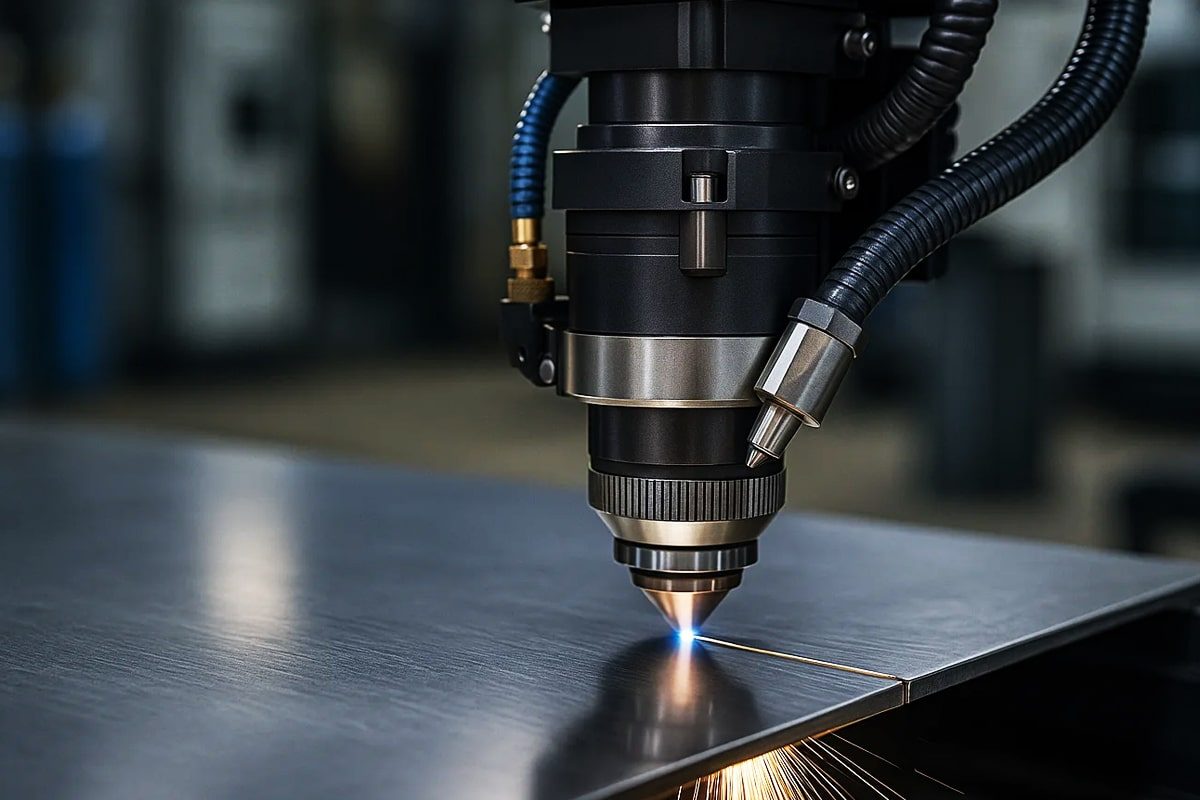
Why Does Laser Cutting Help Improve Productivity and Efficiency?
In modern manufacturing, productivity and efficiency are essential for maintaining competitiveness, controlling costs, and meeting increasingly demanding customer expectations. Manufacturers must produce high-quality components faster while minimizing material waste, labor requirements, production interruptions, and operating expenses. Laser cutting has become one of the most effective technologies for achieving these goals because it combines high cutting speed, exceptional accuracy, flexible processing capabilities, and advanced automation.
Laser cutting uses a concentrated beam of light to melt, burn, or vaporize material along a programmed cutting path. Because the process is controlled by a computer numerical control system, complex shapes, small holes, detailed contours, and precise dimensions can be produced consistently. Unlike many conventional cutting methods, laser cutting requires little or no direct contact between the cutting tool and the workpiece. This reduces mechanical wear, limits workpiece deformation, and helps maintain stable cutting quality over long production runs.
The productivity advantages of laser cutting extend far beyond cutting speed alone. Modern laser cutting machines can integrate automatic loading and unloading systems, intelligent nesting software, automatic nozzle changing, real-time process monitoring, and centralized production management. These features reduce manual intervention, shorten setup times, improve material utilization, and allow manufacturers to operate continuously with fewer interruptions. Rapid switching between different designs also makes laser cutting suitable for prototypes, customized components, small batches, and large-scale production.
In addition, the narrow cutting kerf, small heat-affected zone, and smooth cut edges often reduce the need for secondary processing such as grinding, trimming, or finishing. As a result, manufacturers can shorten overall production cycles rather than simply accelerating one cutting operation.
By improving speed, accuracy, repeatability, automation, and material utilization at the same time, laser cutting helps create a more streamlined and predictable manufacturing process. Understanding these advantages allows manufacturers to evaluate how laser cutting can increase output, reduce production costs, improve product quality, and strengthen overall operational efficiency.
Table of Contents
Understanding Productivity and Efficiency in Laser Cutting
Productivity and efficiency are two of the most important performance indicators in modern manufacturing. Although the terms are often used interchangeably, they describe different aspects of production performance. Productivity focuses on how much output can be produced within a given period, while efficiency focuses on how effectively resources are used to achieve that output. In laser cutting operations, both factors directly influence production capacity, operating costs, delivery times, material utilization, and overall profitability.
Laser cutting technology has transformed sheet processing by combining high cutting speeds, precise computer control, flexible programming, and extensive automation. Compared with many conventional cutting methods, laser cutting can complete complex parts with fewer processing stages and less manual intervention. However, simply purchasing a fast laser cutting machine does not automatically guarantee high productivity or efficiency. Manufacturers must also consider machine utilization, nesting methods, programming, material handling, maintenance, energy consumption, quality control, and workflow organization.
Understanding the difference between productivity and efficiency helps manufacturers evaluate laser cutting performance more accurately. It also allows them to identify whether production problems are caused by insufficient output, excessive resource consumption, poor machine utilization, unnecessary downtime, or inefficient process planning.
What Is Productivity?
Productivity refers to the amount of useful output produced in relation to a specific input, usually time, labor, or production capacity. In laser cutting, productivity is commonly measured by the number of parts, sheets, or meters of material processed during a shift, day, or production cycle.
For example, if one laser cutting machine produces 500 acceptable parts during an eight-hour shift while another produces 350 similar parts, the first machine demonstrates higher productivity under comparable conditions. However, meaningful productivity measurement must consider the complexity, thickness, size, and quality requirements of the parts. Cutting 500 small, simple components is not directly comparable to cutting 500 large parts with complex contours and numerous internal holes.
Several factors influence laser cutting productivity. Cutting speed is one of the most obvious. A high-power fiber laser can process suitable materials more quickly, reducing the time required to complete each part. Acceleration, positioning speed, piercing time, and the responsiveness of the motion system also affect total production time. In many applications, productivity depends not only on the speed of straight-line cutting but also on how quickly the machine moves between contours, pierces the material, and changes cutting parameters.
Productivity is also influenced by non-cutting activities. Loading sheets, unloading finished parts, removing scrap, changing nozzles, adjusting focus, and waiting for production instructions can consume a significant portion of a shift. A machine may have an extremely high cutting speed but still achieve low daily output if it remains idle for long periods.
Automation can improve productivity by reducing these interruptions. Automatic loading and unloading systems, material storage towers, conveyor systems, and robotic handling equipment allow production to continue with less manual intervention. They can also support unattended or lightly supervised operation during evenings and weekends, increasing the total number of productive machine hours.
Programming and nesting software are equally important. Efficient programming establishes suitable cutting paths, parameters, lead-ins, lead-outs, and processing sequences. Intelligent nesting arranges parts closely on the sheet while maintaining safe cutting distances. Good nesting can reduce unnecessary machine movement and increase the number of finished parts produced from each sheet.
Quality must also be included in productivity calculations. Output should be measured in acceptable parts rather than total parts. Producing a large number of components does not create real productivity if many parts require rework or must be scrapped. Stable cutting quality, accurate dimensions, clean edges, and consistent repeatability help ensure that the machine’s output contributes directly to downstream production.
Therefore, laser cutting productivity is best understood as the rate at which a system produces usable, specification-compliant parts. It reflects the combined performance of the machine, software, operators, automation equipment, material flow, and production management.
What Is Efficiency?
Efficiency refers to how effectively a laser cutting operation converts resources into valuable output. These resources may include raw materials, electrical energy, assist gases, labor, machine time, consumables, factory space, and capital investment. An efficient operation minimizes waste while still meeting production and quality requirements.
Material efficiency is a major consideration because sheet material often represents a large portion of the total manufacturing cost. Advanced nesting software can position parts to reduce unused spaces and maximize sheet utilization. Common-line cutting, part rotation, remnant management, and mixed-part nesting can further reduce material waste. Higher material utilization means that more saleable parts can be obtained from the same amount of raw material.
Time efficiency is another important area. Every minute during which a machine is available but not producing acceptable parts represents lost capacity. Efficient laser cutting operations minimize setup time, waiting time, unnecessary movement, parameter adjustment, and unplanned downtime. Features such as automatic focus adjustment, nozzle cleaning, nozzle replacement, edge detection, and process monitoring can reduce the need for manual intervention.
Energy efficiency evaluates how much electrical power is required to produce each acceptable part. Modern fiber laser cutting systems generally convert electrical energy into laser energy more effectively than older laser technologies. However, actual energy efficiency also depends on machine power selection, cutting parameters, standby management, auxiliary equipment, and production scheduling. Operating an oversized machine inefficiently or leaving auxiliary systems running during extended idle periods can increase energy consumption without increasing useful output.
Assist-gas efficiency is particularly important when nitrogen, oxygen, or compressed air is used during cutting. Incorrect pressure settings, leaking supply lines, unsuitable nozzle sizes, or unnecessarily high gas flow can increase operating costs. Selecting the appropriate assist gas and optimizing pressure for the material and thickness can reduce consumption while maintaining the required edge quality.
Labor efficiency measures how effectively employees contribute to production. CNC control, automated parameter selection, remote monitoring, and material handling systems allow one operator to supervise more equipment or focus on higher-value tasks. This does not necessarily mean eliminating labor. Instead, it means reducing repetitive manual activities and using skilled employees for programming, planning, quality improvement, maintenance, and process optimization.
Maintenance also affects efficiency. Dirty protective lenses, worn nozzles, incorrect alignment, contaminated optics, and poorly maintained motion components can reduce cutting quality and increase resource consumption. Preventive maintenance helps the machine operate consistently, reduces unexpected breakdowns, and extends the service life of critical components.
An efficient laser cutting process therefore produces the required quality at the lowest practical consumption of time, material, energy, labor, gas, and consumables. Efficiency is not simply about lowering costs. It is about eliminating activities and resource use that do not add value to the finished product.
The Relationship Between Productivity and Efficiency
Productivity and efficiency are closely connected, but improving one does not always improve the other. A manufacturer may increase productivity by operating the machine at maximum speed, but if the faster settings cause poor edge quality, dimensional errors, or excessive scrap, overall efficiency may decline. Similarly, a company may reduce energy or gas consumption by using slower parameters, but the lower production rate could reduce productivity and create delivery delays.
The objective is to establish the best balance between output and resource utilization. A productive and efficient laser cutting operation produces a high volume of acceptable parts while controlling material waste, operating costs, energy use, labor requirements, and downtime.
This relationship can be understood in terms of cost per acceptable part. If automation increases the number of parts produced per shift while reducing manual handling, both productivity and labor efficiency improve. If intelligent nesting produces more parts per sheet, material efficiency increases, and fewer sheets are needed to achieve the same production target. If process monitoring prevents cutting defects, productivity improves because more parts are accepted, while efficiency improves because less material, machine time, and energy are wasted.
Workflow coordination is essential for maintaining this balance. Increasing the output of the laser cutting machine may create bottlenecks in bending, welding, finishing, or inspection. In this situation, cutting productivity has increased, but overall factory efficiency may not improve because work-in-progress inventory accumulates between processes. Manufacturers should therefore evaluate laser cutting as part of the complete production system rather than as an isolated operation.
Production planning also connects productivity and efficiency. Similar materials and thicknesses can be grouped to reduce parameter changes and setup time. Urgent orders can be scheduled without creating excessive interruptions. Remnants can be recorded and reused for smaller orders. Preventive maintenance can be arranged during planned production gaps instead of causing unexpected downtime during peak periods.
Continuous monitoring helps manufacturers identify the best improvement opportunities. Useful indicators include machine utilization, cutting time, idle time, setup time, parts per hour, sheet utilization, scrap rate, energy consumption, gas consumption, rework rate, and cost per part. Examining these indicators together provides a more accurate view than focusing only on cutting speed.
Productivity and efficiency represent different but complementary aspects of laser cutting performance. Productivity measures how many acceptable parts are produced within a given amount of time or capacity. Efficiency measures how effectively materials, energy, labor, machine time, assist gases, consumables, and other resources are converted into useful output.
High cutting speed can support greater productivity, but sustainable improvement also depends on programming, automation, material handling, maintenance, quality stability, and production planning. Efficiency requires manufacturers to reduce waste, unnecessary movement, downtime, excessive energy use, gas consumption, rework, and scrap.
The strongest laser cutting operations do not pursue maximum speed at any cost. Instead, they seek the highest practical output while maintaining quality and controlling resource consumption. By balancing productivity with efficiency, manufacturers can shorten lead times, increase production capacity, lower the cost per part, improve delivery reliability, and achieve more profitable manufacturing operations.
How the Laser Cutting Process Supports Higher Performance
Laser cutting supports higher manufacturing performance through a combination of concentrated energy, non-contact material removal, computerized control, and highly flexible processing. Unlike conventional cutting methods that rely on physical blades, punches, saws, or dedicated dies, laser cutting uses a focused beam to heat, melt, burn, or vaporize material along a programmed path. Assist gas then removes molten material from the cutting zone and helps produce a clean, controlled cut.
This process enables manufacturers to achieve high cutting speeds, narrow kerfs, precise dimensions, and consistent edge quality across a wide range of component designs. Because the cutting action is digitally controlled and does not depend on physical contact between a tool and the workpiece, laser cutting can reduce setup time, tool wear, maintenance requirements, and the risk of material deformation.
The performance advantages of laser cutting come from more than cutting speed alone. High-density energy allows material to be processed rapidly within a very small area. Non-contact processing reduces mechanical forces and eliminates many tool-related limitations. CNC and digital control provide repeatability, automation, and rapid program changes. Flexible tooling enables manufacturers to move between different parts without producing or installing dedicated cutting tools.
Together, these characteristics help laser cutting systems produce more acceptable parts within less time while using labor, materials, equipment, and factory capacity more effectively.
High-Density Energy
Laser cutting is based on directing a highly concentrated beam of energy onto a small area of the workpiece. The laser beam is focused through the cutting head, creating a high energy density at the material surface. This concentrated energy rapidly raises the temperature of the cutting zone until the material melts, burns, or vaporizes.
Because the energy is concentrated within a narrow area, the laser can cut material without heating the entire workpiece. This allows the cutting process to proceed quickly while limiting the amount of energy applied to surrounding areas. A narrow heat-affected zone helps reduce thermal distortion, discoloration, and changes to the material outside the immediate cutting path.
High energy density contributes directly to productivity. The beam can move rapidly along programmed contours, particularly when processing suitable thin and medium-thickness materials. Higher laser power can support faster cutting, quicker piercing, or the processing of thicker material, depending on the machine configuration and application.
Piercing performance is especially important when a component contains many internal holes or separate contours. Every contour may require the laser to pierce the material before cutting begins. Faster, more stable piercing reduces the time spent waiting between cutting operations. Across a sheet containing hundreds of features, small reductions in piercing time can create a substantial improvement in total cycle time.
The concentrated nature of the beam also supports a narrow kerf. A narrow kerf allows parts to be nested more closely on the sheet, provided that suitable spacing and thermal conditions are maintained. Closer nesting can improve material utilization and increase the number of parts produced from each sheet. This reduces material cost per part and decreases the frequency of sheet loading.
High-density energy also makes it possible to create complex contours, small holes, sharp transitions, and detailed features without using separate tools for each geometry. The same beam can cut external profiles, internal openings, slots, and irregular shapes within a single programmed cycle.
However, high energy density must be properly controlled. Excessive heat, unsuitable focus position, incorrect cutting speed, or inappropriate assist-gas settings can produce dross, rough edges, excessive burning, or dimensional errors. Modern laser cutting systems use optimized parameters to balance speed, quality, and energy input. When these variables are properly matched, concentrated laser energy supports fast processing, stable quality, and lower production costs.
Non-Contact Processing
Laser cutting is a non-contact process because the cutting head does not physically press against the workpiece. The focused beam performs the cutting action while the nozzle remains at a controlled distance above the material surface.
This lack of physical contact provides several productivity and efficiency advantages. Conventional cutting tools can create mechanical forces that cause vibration, movement, bending, or deformation. These forces may require heavy clamping, rigid fixtures, and additional support. Laser cutting applies minimal mechanical force to the material, which reduces the need for complex workholding in many sheet-processing applications.
Non-contact cutting is particularly useful for thin sheets, delicate components, narrow profiles, and parts with detailed features. Since no blade or cutting edge pushes against the material, there is less risk of dragging, tearing, or mechanically distorting the workpiece. This helps manufacturers maintain dimensional accuracy and reduces the need for corrective processing.
The absence of physical contact also eliminates cutting-edge wear. Mechanical tools gradually become dull and may need sharpening, replacement, or adjustment. Tool wear can change cutting dimensions, edge quality, and process stability over time. A laser beam does not become dull in the same way, allowing the system to maintain consistent cutting performance without frequent physical tool replacement.
Laser cutting machines still contain consumable and maintenance items, including nozzles, protective lenses, filters, and assist-gas components. However, the cutting process avoids many interruptions associated with replacing worn blades, punches, dies, or milling tools. This can reduce downtime and simplify production planning.
Non-contact processing also supports higher operating speeds because the cutting head can move between features without dealing with resistance from the material. After completing one contour, the machine can rapidly reposition to the next cutting location. High acceleration and fast traverse movement reduce non-cutting time, especially on sheets containing many small parts.
Surface contact damage is also reduced. A physical cutting tool may scratch or mark the workpiece if it drags across the surface or if chips become trapped between the tool and material. In laser cutting, suitable machine setup and material handling can help protect finished surfaces and reduce rejection rates.
By minimizing mechanical force, tool wear, complicated clamping, and direct surface contact, the non-contact process helps improve repeatability, reduce maintenance interruptions, and increase the percentage of parts that meet specifications on the first attempt.
CNC and Digital Control
Modern laser cutting machines are controlled through CNC systems that convert digital design data into precise machine movements. A part drawing created in CAD software can be processed by CAM software, nested on a sheet, and converted into a cutting program. The CNC system then controls the cutting path, motion speed, laser output, focus position, assist-gas settings, and other process parameters.
Digital control improves productivity by reducing the manual work required to create and reproduce components. Once a program has been prepared and verified, it can be stored and reused for future orders. Repeat jobs can be launched without recreating the entire process, reducing preparation time and supporting consistent production.
CNC control also provides high repeatability. The machine follows the same programmed path for every part, helping maintain consistent dimensions across small batches and large production runs. Reliable repeatability reduces variation, inspection problems, rework, and scrap.
Programming software can optimize the cutting sequence to reduce unnecessary movement. It may determine the order of contours, select suitable lead-in positions, control piercing locations, avoid collisions, and shorten travel distances between parts. More efficient toolpaths reduce cycle time without requiring changes to the component design.
Nesting software further improves performance by arranging multiple parts on a sheet. Parts can be rotated, grouped, or positioned to improve material utilization and reduce waste. Different component designs can often be combined within the same nest, allowing manufacturers to process mixed orders efficiently.
Digital control also enables rapid parameter changes. The system can apply different cutting speeds, power levels, focus positions, and gas settings to different materials or thicknesses. Stored parameter libraries reduce operator guesswork and make it easier to establish repeatable processes.
Advanced systems may include automatic edge detection, height control, focus adjustment, nozzle inspection, process monitoring, production tracking, and remote diagnostics. These functions help reduce manual intervention and identify cutting problems before they affect a large number of parts.
CNC and digital connectivity also make laser cutting easier to integrate into automated production environments. Machines can communicate with loading systems, storage towers, production management software, and monitoring platforms. This improves scheduling, machine utilization, material flow, and production visibility.
Flexible Tooling
One of the most important advantages of laser cutting is that the laser beam acts as a flexible cutting tool. Manufacturers do not need to produce a dedicated die, blade, punch, or mold for every new component geometry. In many cases, changing from one part to another mainly requires loading a different digital program and confirming the correct material and cutting parameters.
This flexibility dramatically reduces setup time, especially in high-mix, low-volume production. A factory may process prototypes, replacement parts, customized products, and standard production components on the same machine. Different designs can also be nested together on one sheet, helping manufacturers respond to changing order quantities and urgent customer requirements.
Flexible tooling supports rapid product development. Engineers can modify a CAD drawing, update the cutting program, and produce a revised part without waiting for new physical tooling. This shortens the time required for prototyping, testing, and design improvement.
The process is also valuable for customized manufacturing. Individual parts can have different dimensions, hole patterns, markings, or contour shapes without requiring a separate tool for each variation. This makes small-batch and personalized production more practical.
Flexible tooling reduces tooling inventory and storage requirements. Conventional processes may require companies to purchase, label, maintain, and store large numbers of dies and cutting tools. Digital programs require far less physical space and can be retrieved quickly when a repeat order arrives.
The absence of dedicated tooling also reduces the cost and delay associated with engineering changes. When a customer changes a hole position or external profile, the manufacturer can often update the digital file rather than modifying or replacing expensive tooling.
Although nozzle selection, assist gas, focus, and cutting parameters may still need adjustment, these changes are generally faster than a complete physical tooling change. Automatic parameter selection and cutting-head functions can further shorten the transition between jobs.
The laser cutting process supports higher performance through four fundamental characteristics: high-density energy, non-contact processing, CNC and digital control, and flexible tooling.
High-density energy enables rapid material removal, narrow kerfs, detailed contours, and shorter cutting cycles. Non-contact processing reduces mechanical deformation, tool wear, complex clamping, and maintenance interruptions. CNC and digital control improve repeatability, programming efficiency, nesting, automation, and process consistency. Flexible tooling allows manufacturers to switch quickly between designs, produce customized parts, and respond to engineering changes without investing in dedicated cutting tools.
These advantages work together to reduce setup time, cutting time, material waste, labor requirements, rework, and downtime. As a result, laser cutting can help manufacturers produce a wider variety of high-quality parts while improving capacity, responsiveness, resource utilization, and cost efficiency.
How Laser Cutting Improves Productivity
Laser cutting improves productivity by increasing the number of acceptable parts that can be produced within a given period. Its productivity advantages come not only from rapid cutting but also from shorter preparation times, faster job changes, automated programming, consistent quality, and the ability to complete complex features in a single operation.
In conventional production, a significant amount of time may be spent selecting tools, installing dies, measuring workpieces, marking cutting lines, adjusting fixtures, and moving components between different machines. Laser cutting replaces many of these manual or tool-dependent activities with a digitally controlled process. Once the part drawing, nesting layout, and cutting parameters have been prepared, the machine can follow the programmed path automatically.
Modern laser cutting systems can also be integrated with loading equipment, unloading systems, material storage towers, conveyors, and production management software. This allows the machine to operate for longer periods with fewer interruptions. Higher productivity therefore results from the combined effect of fast processing, reduced non-cutting time, simplified workflows, reliable repeatability, and increased machine utilization.
Faster Cutting Speeds
Cutting speed is one of the most direct ways in which laser cutting improves productivity. A focused laser beam delivers concentrated energy to a small cutting area, allowing the material to be melted, burned, or vaporized rapidly. Assist gas removes molten material from the kerf so the cutting head can continue moving along the programmed contour.
Modern fiber laser cutting machines can achieve particularly high speeds when processing suitable thin and medium-thickness materials. Increasing laser power may further improve cutting performance, especially when the additional power is properly matched to the material type, thickness, assist gas, and required edge quality.
Faster cutting reduces the cycle time for each component. When hundreds or thousands of parts are produced, even a small reduction in cutting time per part can create a substantial increase in total daily output.
Productivity also depends on acceleration, deceleration, and rapid positioning. Parts containing many short lines, corners, holes, and small contours may not allow the cutting head to remain at maximum speed for long periods. A responsive motion system can move quickly between these features while maintaining accuracy. The combination of high cutting speed and dynamic machine movement enables more parts to be completed during each shift.
Rapid Piercing
Before cutting an enclosed contour, such as an internal hole or slot, the laser often needs to pierce through the material. Piercing time can represent a significant portion of the total cycle, particularly when a part contains many separate internal features.
Rapid piercing technologies shorten the time required to establish the initial opening. Modern systems can automatically control laser power, pulse frequency, focus position, gas pressure, and piercing height according to the material and thickness. These functions help create a stable pierce while reducing spatter, excessive heating, and damage around the entry point.
The productivity benefit becomes especially noticeable on sheets containing hundreds of holes. Saving only a fraction of a second on each pierce can reduce the overall processing time by several minutes across a complete sheet.
Stable piercing also reduces failed starts. An incomplete or unstable pierce may interrupt the cutting sequence, damage the nozzle, contaminate the protective lens, or require operator intervention. By improving piercing speed and reliability, laser cutting systems can complete complex nests with fewer interruptions and a higher number of acceptable parts.
Shorter Setup Times
Conventional cutting processes may require blades, punches, dies, fixtures, or other dedicated tools to be selected and installed before production begins. Tool alignment and test cutting may also be necessary before acceptable parts can be produced.
Laser cutting requires much less physical setup because the laser beam acts as the cutting tool. Operators generally prepare the machine by loading the material, selecting the correct cutting program, confirming the nozzle and assist gas, and checking the relevant parameters.
Digital parameter libraries can further reduce preparation time. Established settings for common materials and thicknesses can be stored in the control system and recalled when needed. Automatic focus adjustment, nozzle inspection, edge detection, and height control can also replace or simplify manual setup activities.
Shorter setup times are particularly valuable for small and medium production batches. When quantities are limited, lengthy preparation can represent a large percentage of the total production time. Laser cutting allows manufacturers to begin producing acceptable parts more quickly, making short-run production more economical and improving responsiveness to urgent orders.
Faster Product Changeovers
Manufacturers frequently need to switch between different products, customer orders, materials, thicknesses, and batch sizes. Long changeovers reduce available cutting time and limit the number of jobs that can be completed during a shift.
Laser cutting supports faster product changeovers because part geometry is defined by a digital program rather than by dedicated physical tooling. Moving from one product to another may require only a new material sheet, an updated nesting file, and the correct cutting parameters.
Programs can be stored, organized, and retrieved for repeat orders. This eliminates the need to recreate the manufacturing process each time a product returns to production. Revised drawings can also be imported quickly when dimensions or features change.
Automated functions make changeovers even faster. Systems may automatically adjust focus, select process parameters, inspect the nozzle, and position the cutting head. Production management software can send the next job directly to the machine, helping reduce delays between orders.
Rapid changeovers allow manufacturers to process a greater variety of work without sacrificing large amounts of production time. This is especially useful in high-mix manufacturing environments where batch sizes are small, and schedules change frequently.
Multiple Parts in a Single Operation
Laser cutting machines can produce many different parts from one sheet during a single programmed operation. Nesting software arranges the required components within the available sheet area and generates an efficient cutting sequence.
A single nest may contain multiple quantities of the same part or a combination of different parts for several assemblies or customer orders. This eliminates the need to process each component separately and reduces repeated setup, loading, and alignment activities.
Mixed-part nesting also improves workflow coordination. Components required for the same final product can be cut together, making it easier to organize downstream processes such as bending, welding, and assembly.
Advanced nesting software can rotate and reposition parts to improve material utilization while considering cutting quality and process stability. Common-line cutting may also be used in suitable applications, allowing adjacent parts to share a cutting path and reducing the total cutting distance.
By producing multiple components in one continuous operation, laser cutting increases output per sheet, reduces material handling, and allows the machine to remain productive for longer uninterrupted periods.
Reduced Secondary Processing
Secondary processing can add substantial time and labor to manufacturing. Parts cut by conventional methods may require deburring, grinding, trimming, drilling, edge correction, or dimensional rework before they can move to the next production stage.
Laser cutting can produce narrow kerfs, accurate dimensions, and relatively clean edges when the machine is correctly configured. Suitable process parameters help minimize dross, roughness, oxidation, and thermal distortion. As a result, many parts can proceed directly to bending, welding, coating, or assembly with little additional preparation.
The ability to cut holes, slots, notches, and complex external profiles during one operation also reduces the need for separate drilling, punching, or machining stages. Eliminating these steps shortens the total manufacturing route and reduces the number of times a component must be transported, positioned, and inspected.
Reduced secondary processing improves productivity beyond the laser cutting department. It frees employees and other machines to complete higher-value tasks, decreases work-in-progress inventory, and shortens the total lead time from raw material to finished product.
High Repeatability
High repeatability means that a laser cutting machine can produce the same geometry consistently over repeated cycles. CNC control directs the machine along a programmed path, helping maintain stable dimensions and feature locations across an entire batch.
Consistent production reduces the time required for manual correction, sorting, and rework. When parts fit together as expected, downstream bending, welding, and assembly operations can proceed more smoothly.
Repeatability is particularly important in large production runs. Small dimensional variations can create major problems when hundreds or thousands of components must be assembled. Stable cutting accuracy reduces the risk of mismatched holes, incorrect edges, or inconsistent gaps between joined parts.
It also benefits repeat orders. Once a program and its cutting parameters have been validated, they can be stored and used again. Manufacturers can reproduce the same component months later without relying entirely on manual measurements or operator memory.
High repeatability therefore increases the percentage of acceptable parts produced the first time. Productivity improves because machine hours, materials, labor, and energy are used to create usable output rather than defective components.
Production of Complex Geometry
Laser cutting can follow detailed digital contours without requiring a separate physical tool for each shape. It can produce curves, sharp transitions, internal openings, narrow slots, detailed patterns, and irregular profiles within the limitations of the machine and material.
Complex parts that might require multiple conventional operations can often be completed in a single laser cutting cycle. The machine can move from external contours to holes, slots, notches, and other features without transferring the workpiece to another machine.
This capability simplifies production planning and shortens processing routes. Manufacturers do not need to design and manufacture special dies for every complex geometry. They can also avoid dividing one component into several simpler pieces that must later be joined.
Digital flexibility makes engineering changes easier. When a hole position, slot dimension, or external contour needs to be modified, the design file and cutting program can be updated without replacing dedicated tooling.
By producing complex geometry directly from digital drawings, laser cutting reduces preparation, handling, and assembly requirements while enabling more sophisticated parts to be manufactured efficiently.
Reduced Manual Marking and Measurement
Manual cutting methods frequently require operators to measure the workpiece, calculate dimensions, and mark cutting lines before processing begins. These activities consume time and introduce opportunities for human error.
Laser cutting uses digital design data to determine the exact cutting path. Once the sheet has been positioned and the program has been loaded, the CNC system controls the dimensions and feature locations automatically.
This reduces the need for repeated manual marking, template placement, and line checking. It also improves consistency because every part is produced from the same digital geometry.
Automatic sheet-edge detection and coordinate correction can further simplify positioning. The machine can identify the orientation of the sheet and adjust the cutting layout within permitted limits, reducing the need for precise manual alignment.
Laser marking functions may also be used to add reference lines, part numbers, assembly symbols, or bending locations. These markings can help downstream employees identify and process components more quickly.
By replacing manual layout activities with digital control, laser cutting reduces preparation time, minimizes measurement mistakes, and allows skilled operators to focus on programming, quality control, and process improvement.
Extended and Unattended Production
A laser cutting machine can support extended production when it is combined with reliable process control and automated material handling. Automatic loading systems can place new sheets on the cutting table, while unloading systems remove finished parts or processed sheets.
Storage towers can supply different materials and receive completed sheets according to the production schedule. Conveyors, exchange tables, robotic systems, and sorting equipment can further reduce manual handling.
These technologies allow laser cutting machines to operate during breaks, shift changes, evenings, or overnight periods with limited supervision. Unattended production increases the number of available manufacturing hours without requiring a proportional increase in labor.
Remote monitoring and alarm systems help supervisors track machine status, production progress, and operating conditions. Process monitoring can identify failed cuts, piercing problems, collisions, or other abnormalities and stop the machine when necessary.
Successful unattended production depends on careful planning. Materials, programs, nozzles, gases, consumables, and unloading capacity must all be prepared correctly. Preventive maintenance and stable cutting parameters are also essential.
When properly implemented, extended production improves machine utilization and increases daily or weekly output. The machine creates value for more hours, helping manufacturers handle larger workloads and shorten delivery times.
Laser cutting improves productivity by increasing processing speed while reducing the time spent on setup, changeovers, handling, measurement, and secondary operations. Faster cutting and rapid piercing shorten individual production cycles, while CNC control allows jobs to be prepared, stored, and repeated efficiently.
Digital programming and flexible processing make it possible to switch between products quickly, produce multiple part designs from one sheet, and manufacture complex geometry without dedicated tooling. Accurate, repeatable cutting reduces defects and helps components move through downstream operations with less rework.
Laser cutting also removes many manual marking and measurement activities. When combined with automated loading, unloading, material storage, and monitoring systems, it can support extended or unattended production.
These advantages increase the number of acceptable parts produced during each shift and make better use of machine capacity. As a result, manufacturers can respond to orders more quickly, manage a wider range of products, shorten lead times, and achieve higher overall production output.
How Laser Cutting Improves Operational Efficiency
Operational efficiency refers to a manufacturer’s ability to produce acceptable parts while using labor, materials, equipment, energy, factory space, and working capital as effectively as possible. It is not determined solely by how fast a machine cuts. A truly efficient process also minimizes scrap, rework, setup activities, material handling, tooling expenses, internal transportation, and unnecessary inventory.
Laser cutting improves operational efficiency by combining digital programming, precise material processing, flexible production, and extensive automation. A single machine can produce numerous part geometries without dedicated cutting dies or frequent physical tool changes. CNC control allows cutting paths and process parameters to be repeated accurately, while nesting software helps manufacturers obtain more finished parts from each sheet.
The process can also consolidate several production activities into one operation. Holes, slots, notches, external profiles, and identification marks can often be completed during the same cutting cycle. This reduces the need to move parts between multiple workstations and limits the accumulation of unfinished components.
When properly integrated into the wider manufacturing system, laser cutting can lower the cost per acceptable part, simplify production planning, shorten lead times, and make operating expenses more predictable. Its main efficiency benefits include reduced labor requirements, improved material utilization, lower tooling expenses, less work-in-process inventory, more compact production layouts, and better energy use per finished component.
Lower Labor Requirements
Laser cutting reduces labor requirements by automating many activities that would otherwise depend on manual measurement, marking, positioning, tool handling, and cutting. Once the material, cutting program, and process parameters have been prepared, the CNC system automatically guides the cutting head along the required geometry.
Operators do not need to follow marked lines or manually control the cutting path. Digital programs determine the dimensions, hole locations, contour shapes, and cutting sequence. This reduces repetitive manual work and allows employees to focus on production planning, programming, quality control, maintenance, and process improvement.
Automatic loading and unloading systems can further reduce labor requirements. A loading system places sheets onto the cutting table, while an unloading system removes processed material after the cutting cycle. Material storage towers, conveyors, exchange tables, robotic handling systems, and automated sorting equipment can reduce the need for employees to move heavy sheets and finished parts manually.
Automation may allow one operator to supervise multiple machines or production cells, depending on the facility layout and process requirements. Remote monitoring and alarm systems can also provide information about machine status without requiring an operator to remain beside the equipment continuously.
Lower labor requirements do not necessarily mean eliminating skilled positions. Instead, laser cutting helps manufacturers use labor more effectively. Employees can spend less time on repetitive handling and more time on tasks that improve quality, reliability, and production performance.
Better Material Utilization
Raw material is often one of the highest costs in sheet processing. Improving the number of acceptable parts obtained from each sheet can therefore have a significant effect on operational efficiency.
Laser cutting produces a narrow kerf compared with many conventional cutting methods. The narrow cutting width allows parts to be positioned closer together, provided that safe spacing, thermal conditions, and cutting stability are maintained. This helps reduce the amount of unused material between components.
Nesting software further improves material utilization by automatically arranging parts across the available sheet area. Components can be rotated, repositioned, and grouped to create a more compact layout. Mixed-part nesting allows different products or orders to be placed on the same sheet, helping manufacturers fill spaces that might otherwise remain unused.
Common-line cutting may be used in suitable applications so that adjacent components share a cutting path. This can reduce both material spacing and total cutting distance. Remnant management systems can also record the size, material type, thickness, and location of reusable sheet sections. These remnants can later be selected for prototypes, replacement parts, or small orders.
Better material utilization means that fewer sheets are required to produce a given number of parts. It reduces material purchasing costs, scrap disposal, storage requirements, and the environmental impact associated with wasted raw material.
Reduced Scrap and Rework
Scrap and rework consume material, labor, machine capacity, assist gas, electricity, and production time without creating additional saleable output. Laser cutting helps reduce these losses through precise CNC movement, consistent process parameters, and stable repeatability.
Once a cutting program has been tested and approved, the machine can reproduce the same geometry across an entire batch. Accurate positioning helps maintain hole locations, dimensions, and contour profiles. This reduces the risk of parts failing inspection or creating problems during bending, welding, and assembly.
Digital programming also eliminates many errors associated with manual measurement and marking. The machine follows the geometry contained in the production file rather than relying on an operator to transfer dimensions onto each workpiece.
Stored parameter libraries can provide established cutting settings for common materials and thicknesses. Automatic focus control, height sensing, process monitoring, nozzle inspection, and collision protection can further improve cutting stability. These features help prevent incomplete cuts, excessive dross, poor edge quality, and dimensional variation.
Laser cutting does not eliminate scrap. Incorrect drawings, unsuitable parameters, damaged materials, poor maintenance, or programming mistakes can still cause defective parts. However, when the process is properly controlled, a higher percentage of parts can meet specifications the first time. This lowers the cost per acceptable component and reduces delays caused by replacement production.
Reduced Tooling Costs
Many conventional cutting processes depend on physical tools such as blades, punches, dies, saws, templates, or specialized fixtures. These tools must be purchased, manufactured, installed, maintained, sharpened, and eventually replaced.
Laser cutting uses a focused beam as the primary cutting tool. The beam can follow different programmed geometries without requiring a dedicated die or cutting tool for every component. Switching from one part design to another generally involves changing the digital program rather than manufacturing new physical tooling.
This flexibility is especially valuable for prototypes, custom products, replacement components, short production runs, and frequently revised designs. The cost of creating dedicated tooling may be difficult to justify when only a limited number of parts are required. Laser cutting allows small batches to be produced without spreading a large tooling investment across a low production quantity.
Manufacturers can also reduce the space and administrative work required to store, identify, inspect, and manage physical tools. Design revisions are easier because engineers can update the CAD file and cutting program instead of modifying or replacing a die.
The laser cutting system still uses consumable components, including nozzles, protective lenses, ceramic rings, filters, and assist gases. However, these costs are generally more flexible than maintaining a large inventory of product-specific cutting tools.
Lower Work-in-Process Inventory
Work-in-process inventory consists of components that have entered production but have not yet become finished products. Excessive work-in-process ties up capital, occupies factory space, complicates production control, and increases the risk of parts being damaged, misplaced, or produced to an outdated design.
Laser cutting can reduce work-in-process inventory by shortening production cycles and consolidating multiple features into a single operation. External profiles, internal holes, slots, notches, and other details can often be cut without moving the workpiece to separate drilling, punching, or trimming stations.
Faster setup and changeover times also allow production to respond more closely to actual demand. Manufacturers can produce smaller batches more economically instead of creating large quantities simply to justify lengthy setup activities. Smaller batches reduce the number of unfinished components waiting between operations.
High repeatability and clean cutting quality can help parts move directly to bending, welding, coating, or assembly with less rework and inspection delay. Improved scheduling and digital production management can coordinate laser cutting output with downstream capacity, reducing the risk of creating large queues.
Lower work-in-process inventory improves cash flow, production visibility, and responsiveness. It also makes it easier to identify bottlenecks because fewer excess parts are stored between production stages.
Reduced Internal Transportation
Every time a workpiece is moved between machines, storage areas, inspection stations, or production departments, time and labor are consumed without directly changing the product. Excessive internal transportation also increases the risk of scratches, deformation, part loss, incorrect sorting, and production delays.
Laser cutting reduces transportation by completing numerous features during one machine cycle. A part that would otherwise require sawing, drilling, punching, trimming, and marking may be processed largely on a single laser cutting system.
Because fewer separate operations are required, components need to travel to fewer workstations. This reduces forklift movements, manual carrying, pallet handling, loading activities, and temporary storage between processes.
Automatic material handling provides additional benefits. Storage towers can deliver the correct sheet to the cutting machine, while unloading systems can transfer processed sheets or parts to designated areas. Conveyors and robotic systems can connect laser cutting with sorting, bending, or other downstream operations.
Reducing internal transportation shortens lead times and simplifies material flow. It can also improve safety by limiting the manual movement of large, heavy, or sharp-edged sheets and components.
More Efficient Use of Floor Space
Factory floor space represents a high operating cost. Inefficient production layouts require larger buildings, longer material routes, and more areas for tooling, work-in-process inventory, and temporary storage.
Laser cutting supports more efficient floor-space utilization by combining multiple cutting functions within one machine. The same system can produce different profiles, holes, slots, and complex contours without requiring a separate machine for each feature.
Reduced tooling requirements also lower the need for die racks, blade storage, tool maintenance stations, and dedicated setup areas. When laser cutting reduces work-in-process inventory, less floor space is needed for pallets, bins, and unfinished parts waiting between operations.
Compact loading and unloading systems can organize material flow around the machine. Vertical storage towers make use of building height rather than occupying large horizontal storage areas. Automated production cells can place cutting, sorting, and downstream processes closer together, reducing travel distances.
The space saved can be used for additional production equipment, improved material flow, safer aisles, or future expansion. Efficient floor-space use therefore contributes both to lower facility costs and greater production capacity.
Predictable Production Costs
Predictable costs are essential for accurate quotations, production planning, budgeting, and profitability analysis. Laser cutting provides a high level of process consistency, making it easier to estimate how much time and how many resources a part will require.
CAM software can calculate cutting distance, piercing quantities, estimated cycle time, and material utilization before production begins. Manufacturers can use this information to estimate machine time, labor, material consumption, assist-gas use, and overhead costs.
Once a cutting process has been validated, stored programs and parameters help produce consistent results during repeat orders. Reduced variation in setup time, part quality, and cycle time makes actual production costs more closely match planned costs.
Lower tooling requirements also simplify cost estimation. Manufacturers do not need to allocate the design, manufacture, maintenance, and storage cost of dedicated tooling to every new part. This is particularly helpful when quoting small or customized orders.
Unexpected costs can still occur because of equipment failure, material variation, consumable damage, or incorrect programming. Preventive maintenance, process monitoring, and accurate production records are therefore important. Nevertheless, laser cutting provides detailed digital information that allows companies to track costs more precisely and continuously improve quotation accuracy.
Efficient Energy Use Per Part
A laser cutting machine may require substantial electrical power, especially when operating at high output levels. However, energy efficiency should be evaluated according to the amount of energy used per acceptable part rather than the machine’s instantaneous power consumption alone.
Fast cutting speeds and short cycle times allow more components to be produced within each operating hour. When output increases faster than energy consumption, the amount of electricity used per part decreases.
Modern fiber laser cutting systems can offer efficient conversion of electrical power into usable laser energy. They generally require fewer optical components and may have lower operating energy requirements than some older laser technologies. However, actual efficiency depends on machine design, laser power, material type, thickness, cutting parameters, and production scheduling.
Efficient nesting helps reduce the energy required per part by increasing the number of components produced from each sheet and reducing unnecessary cutting movement. Optimized toolpaths, rapid piercing, automatic standby functions, and effective job scheduling also reduce wasted operating time.
Auxiliary systems must be considered as well. Chillers, extraction units, compressors, dust collectors, loading equipment, and gas supply systems all consume energy. Keeping the machine productive and avoiding extended idle periods while auxiliary equipment remains active can significantly improve total energy efficiency.
The most efficient approach is not always to use the lowest laser power or slowest operating settings. A higher-power machine may use more electricity per hour but complete a job much faster. The correct measurement is the total energy required to produce each acceptable component at the required quality.
Laser cutting improves operational efficiency by reducing the resources and non-value-added activities required to produce acceptable parts. CNC control, automation, flexible programming, and precise processing allow manufacturers to lower labor requirements while improving production consistency.
Advanced nesting, narrow kerfs, common-line cutting, and remnant management help obtain more parts from each sheet. Accurate cutting and stable repeatability reduce scrap, rework, and the consumption of material, machine time, energy, and assist gas.
Because the laser beam can process different geometries without dedicated physical tools, manufacturers can reduce tooling expenses, simplify engineering changes, and produce smaller batches economically. The ability to complete multiple features in one operation reduces work-in-process inventory and internal transportation.
Laser cutting can also support more compact factory layouts by reducing the number of separate machines, tooling storage areas, and unfinished-part buffers required. Digital production data makes cycle times and operating costs more predictable, while fast processing improves energy efficiency per acceptable part.
Together, these advantages help manufacturers lower production costs, simplify workflows, improve resource utilization, and respond more effectively to changing customer demand.
The Role of Automation in Productivity and Efficiency
Automation expands the productivity and efficiency advantages of laser cutting by reducing the amount of manual work required before, during, and after the cutting cycle. A standalone laser cutting machine may cut parts quickly, but its total output can still be limited by sheet loading, material unloading, job preparation, nozzle changes, parameter adjustments, part sorting, and operator availability. Automated systems address these interruptions and help keep the machine producing acceptable parts for a larger percentage of each shift.
Modern laser cutting automation can cover nearly every stage of the workflow. Automatic loading equipment transfers raw sheets to the cutting table, while unloading systems remove processed sheets and finished parts. Exchange tables shorten the gap between cutting cycles, and automated storage systems organize and supply different materials according to the production schedule.
Automation also improves process control. Automatic nozzle changing, focus adjustment, parameter selection, and real-time monitoring reduce the need for repeated operator intervention. After cutting, automated sorting systems can separate parts by job, assembly, or downstream process.
These technologies do more than reduce labor. They improve machine utilization, process consistency, material flow, scheduling accuracy, and production visibility. When properly integrated, automation allows laser cutting systems to operate for longer periods, handle a wider variety of orders, and produce more acceptable parts with fewer interruptions and less waste.
Automatic Sheet Loading
Automatic sheet loading systems transfer raw material from a storage location, pallet, or material tower onto the laser cutting machine. Depending on the system design, suction cups, lifting frames, forks, or other handling mechanisms may be used to pick up and position the sheet.
Manual sheet loading can consume a significant amount of production time, especially when large or heavy sheets are involved. Operators may need to use forklifts, overhead cranes, or vacuum lifters to move the material safely. The cutting machine remains idle while these activities are completed.
Automatic loading reduces this idle time by preparing and positioning the next sheet with limited manual intervention. Material can often be staged while the machine is still processing the current sheet. Once the cutting table becomes available, the new material can be transferred quickly.
Automated loading also improves consistency. Sheets are placed in a controlled position, reducing the risk of incorrect alignment, surface damage, or handling delays. Sensors can confirm whether a sheet has been picked up successfully and help detect double-sheet loading.
By reducing manual handling, automatic sheet loading improves safety and allows employees to focus on production supervision, programming, quality inspection, and maintenance. It is especially valuable in high-volume operations and during extended or unattended shifts.
Automatic Unloading
Automatic unloading systems remove processed sheets, finished parts, skeletons, or scrap from the cutting area after a cycle is complete. They prevent the laser cutting machine from remaining idle while employees manually clear the table.
Manual unloading can take longer than expected, particularly when a sheet contains many small parts. Components may need to be separated, identified, stacked, and transferred to downstream operations. Sharp edges, heavy sheets, and unstable skeletons can also create handling risks.
Automated unloading equipment can lift or transfer the complete processed sheet to a designated unloading station. More advanced systems may separate finished parts from the surrounding skeleton or move different materials to specific pallets.
Faster unloading shortens the interval between completed jobs and allows the next sheet to enter production sooner. It also creates a more consistent workflow because machine availability is less dependent on operator timing.
Automatic unloading reduces repetitive physical work and minimizes the risk of parts being scratched, dropped, mixed, or incorrectly stacked. When connected to sorting and storage systems, it can support a continuous flow from cutting to bending, welding, finishing, or assembly.
Exchange Tables
An exchange table system generally includes two cutting pallets or worktables. While one table is inside the machine for laser processing, the other remains outside the cutting area for loading, unloading, or part removal.
When cutting is complete, the two tables exchange positions. The processed sheet moves out of the machine, while the prepared sheet moves into the cutting area. This overlapping of cutting and handling activities greatly reduces machine waiting time.
Without an exchange table, the laser cutting machine may remain inactive while the operator removes finished components, clears the skeleton, and positions a new sheet. With two tables, much of this work can be completed while cutting continues on the other pallet.
Exchange tables are particularly valuable when cutting times are relatively short. If a machine completes a sheet quickly but requires several minutes for manual unloading and reloading, the handling delay may significantly reduce hourly output. A fast exchange mechanism helps preserve the productivity benefit of high cutting speed.
The system also supports better workflow organization. Operators or automated handling equipment can prepare the next job without entering the active cutting area. This improves safety and allows production to continue with fewer interruptions.
Automated Material Storage
Automated material storage systems organize raw sheets, remnants, and sometimes processed materials within a controlled storage structure. Vertical towers are commonly used because they store multiple pallets in a relatively small floor area.
The system can record the material type, thickness, sheet size, quantity, and storage location. When a production order is released, the correct material pallet can be retrieved and delivered to the loading system automatically.
This reduces the time spent searching for sheets and transporting them through the factory. It also lowers the risk of selecting the wrong material or thickness. Accurate inventory data helps production planners understand which materials are available and when new stock must be ordered.
Vertical storage improves floor-space utilization by using the height of the building rather than spreading pallets across large storage areas. It can also protect sheets from unnecessary handling, contamination, or damage.
When integrated with production management software, an automated storage system can supply materials according to job priority and return unused sheets or remnants to the correct location. This creates a more efficient connection between inventory management and laser cutting.
Automated storage is especially important for mixed production environments where numerous material types and thicknesses must be processed each day. It allows the laser cutting machine to move between jobs more quickly and supports unattended production during periods when warehouse employees are unavailable.
Automatic Nozzle Changing
Different laser cutting applications may require different nozzle types and diameters. The correct nozzle depends on factors such as material type, thickness, assist gas, laser power, and cutting quality requirements.
Manual nozzle changes interrupt production and require an operator to identify, remove, inspect, and install the appropriate nozzle. If the wrong nozzle is fitted or the nozzle is installed incorrectly, cutting quality and process stability may be affected.
An automatic nozzle-changing system stores multiple nozzles in a dedicated station. The cutting head moves to the station, removes the current nozzle, and installs the required replacement according to the production program.
The system may also include nozzle inspection, centering, and cleaning functions. These features help confirm that the nozzle is in suitable condition before cutting begins. A damaged, contaminated, or poorly centered nozzle can cause unstable gas flow, rough edges, incomplete cuts, or collisions.
Automatic nozzle changing is particularly useful when a production schedule includes different materials and thicknesses. The machine can move from one job to another without waiting for an operator to perform the change manually. This reduces setup time and makes extended or unattended operation more practical.
Automatic Focus Control
The focus position determines where the laser beam reaches its smallest and most concentrated point relative to the material surface. The correct position varies according to the material type, thickness, cutting method, and piercing requirements.
Manual focus adjustment can be time-consuming and may introduce variation between operators. Incorrect focus settings can reduce cutting speed, increase dross, create rough edges, or prevent the beam from cutting completely through the material.
Automatic focus control uses a motorized cutting head to adjust the position of the focusing lens according to the programmed parameters. The machine can select one focus position for piercing and another for continuous cutting when necessary.
This allows the system to respond quickly when changing between material types, thicknesses, or processing stages. It reduces setup time and improves consistency because the focus position is established digitally rather than through repeated manual adjustment.
Automatic focus control also supports process optimization. Stored settings can be tested, refined, and reused during repeat orders. When combined with height control and process monitoring, it helps maintain stable energy delivery and cutting quality throughout the production cycle.
By improving both speed and reliability, automatic focus adjustment reduces operator workload, defective parts, and delays between different jobs.
Automatic Parameter Selection
Laser cutting performance depends on numerous variables, including laser power, cutting speed, pulse settings, assist-gas type, gas pressure, focus position, nozzle size, piercing method, and cutting height. Selecting all these settings manually for every job would require considerable experience and preparation time.
Automatic parameter selection uses stored process libraries to apply suitable settings based on the selected material, thickness, laser source, and required operation. When the operator loads a production program, the control system can retrieve the relevant cutting and piercing parameters.
This reduces setup time and limits the risk of incorrect manual entries. It also makes production less dependent on the knowledge of a single experienced operator. Standardized parameters help different shifts and employees achieve more consistent results.
Parameter libraries can be updated as manufacturers gain production experience. Adjustments may be made to improve speed, edge quality, gas consumption, or piercing stability. Once validated, the optimized settings can be used for future jobs.
Automatic selection is especially valuable in high-mix production, where the machine may process several materials and thicknesses during one shift. Rapid digital adjustment allows the laser cutting system to move between jobs efficiently while maintaining consistent process control.
Real-Time Process Monitoring
Real-time process monitoring collects information about the machine and cutting process while production is taking place. Depending on the system, it may track laser output, cutting-head position, piercing status, gas pressure, nozzle condition, lens contamination, cutting quality, temperature, machine alarms, and production progress.
Monitoring helps identify problems before they affect an entire sheet or batch. For example, the system may detect an incomplete pierce, loss of cut, nozzle collision, abnormal reflection, or contamination in the optical path. The machine can warn the operator, adjust the process, repeat an operation, or stop production to prevent further damage.
This reduces the amount of scrap created when a problem continues unnoticed. It can also protect expensive components such as the cutting head, protective lens, and nozzle.
Real-time production data improves management visibility. Supervisors can review machine utilization, completed jobs, cycle times, downtime, alarms, and remaining production quantities. Remote access may allow authorized employees to monitor the system without remaining beside the machine.
Process monitoring is essential for unattended production. A machine operating overnight must be able to recognize abnormal conditions and respond safely. Reliable monitoring reduces the risk of producing large quantities of defective parts when no operator is immediately present.
The collected data can also support continuous improvement. Manufacturers can analyze recurring alarms, parameter performance, downtime causes, and quality problems to identify opportunities for maintenance or process optimization.
Automated Part Sorting
After a sheet has been cut, finished parts must be separated from the skeleton, identified, grouped, and delivered to the correct downstream operation. Manual sorting can become a major bottleneck, especially when a nest contains many small components or parts from several customer orders.
Automated part-sorting systems use robotic arms, suction devices, grippers, conveyors, sensors, or vision systems to identify and move finished parts. Components can be placed on pallets, racks, conveyors, or containers according to the production plan.
Sorting instructions may be linked directly to the nesting file. This allows the system to recognize each component and group it by job, customer, material, assembly, or next manufacturing stage.
Automated sorting reduces the risk of similar-looking parts being mixed. It also improves traceability because components can remain associated with their digital production information. Labels or laser markings may be used to support identification.
Removing parts automatically reduces manual lifting and handling, helping improve workplace safety. It also prevents the cutting area from becoming congested with completed material.
By moving parts quickly into organized downstream flows, automated sorting reduces work-in-process delays and helps bending, welding, finishing, and assembly departments receive the correct components at the correct time.
Automation improves laser cutting productivity and efficiency by reducing the interruptions and manual activities surrounding the actual cutting process. Automatic loading and unloading systems shorten material-handling time, while exchange tables allow preparation and cutting to occur at the same time.
Automated material storage organizes inventory, saves floor space, and delivers the correct sheets according to the production schedule. Automatic nozzle changing, focus control, and parameter selection reduce setup time and help maintain consistent cutting conditions when moving between different jobs.
Real-time process monitoring improves reliability by detecting abnormalities, protecting equipment, and reducing the risk of producing defective parts. Automated part sorting extends efficiency beyond the cutting machine by organizing finished components and delivering them more quickly to downstream operations.
Together, these technologies increase machine utilization, reduce labor requirements, stabilize production quality, and make extended or unattended manufacturing more practical. Automation therefore turns laser cutting from a fast standalone process into a coordinated production system capable of delivering higher output, shorter lead times, and more efficient use of materials, labor, equipment, and factory space.
Software and Digital Workflow Advantages
Software is a central part of modern laser cutting productivity and efficiency. Although the laser source, cutting head, motion system, and machine structure perform the physical processing, software determines how designs are prepared, parts are arranged, cutting paths are generated, jobs are scheduled, and production information is recorded.
A connected digital workflow allows part data to move directly from product design to manufacturing. CAD drawings can be imported into CAM software, converted into machine-ready cutting programs, and arranged on sheets through automatic nesting. The completed programs can then be scheduled according to material availability, machine capacity, delivery priorities, and downstream production requirements.
Digital integration also connects laser cutting with wider factory systems. Enterprise resource planning and manufacturing execution systems can coordinate customer orders, inventory, production schedules, machine status, and quality records. Operators and managers can monitor job progress, review operating data, and identify production delays without relying entirely on handwritten records or verbal communication.
These capabilities reduce programming time, manual data entry, material waste, machine idle time, and production errors. They also improve repeatability, traceability, cost estimation, and decision-making. By connecting design, planning, cutting, monitoring, and reporting, software turns the laser cutting machine into part of a coordinated digital manufacturing system.
CAD Integration
Computer-aided design software is used to create the geometry and dimensions of components before production begins. CAD integration allows these digital designs to be transferred directly into the laser cutting workflow without manually redrawing or marking the parts.
Common two-dimensional drawing formats can usually be imported into laser cutting software. Three-dimensional models may also be converted into flat patterns when sheet components must later be bent or formed. This direct transfer reduces the time required to prepare production files and limits the risk of errors caused by manually copying dimensions.
Design changes can also be implemented quickly. When an engineer modifies a hole location, slot size, external contour, or other feature, the updated drawing can be imported into the programming system. Manufacturers do not need to replace dedicated cutting tools or create new physical templates for every revision.
CAD integration supports design validation before cutting begins. Software can identify open contours, duplicate lines, overlapping geometry, excessively small features, or other drawing problems that may interfere with processing. Correcting these issues digitally prevents defective parts and wasted material.
The connection between design and production is especially valuable for prototypes, customized products, and frequently revised components. It allows manufacturers to move from an approved drawing to a cut part with fewer manual steps, shortening the time between product development and production.
CAM Programming
Computer-aided manufacturing software converts CAD geometry into instructions that the laser cutting machine can follow. CAM programming defines the cutting paths, processing sequence, piercing locations, lead-ins, lead-outs, cutting direction, speed, laser power, gas settings, focus position, and other process parameters.
Without CAM software, operators would need to prepare much of this information manually. Automated programming reduces preparation time and helps standardize how different parts are processed.
CAM software can optimize the sequence in which contours are cut. Internal features are generally processed before external profiles so that parts remain stable on the sheet. The software can also reduce unnecessary movement between contours and select suitable starting positions to shorten cycle time.
Stored process libraries allow validated parameters to be applied according to material type and thickness. This reduces dependence on operator memory and helps different shifts produce consistent results. Once a program has been tested successfully, it can be stored and reused for future orders.
Simulation functions may be used to review the program before it reaches the machine. Programmers can check cutting paths, detect possible collisions, confirm processing sequences, and estimate cycle times. Identifying problems virtually is less expensive than discovering them after material has been loaded.
CAM programming therefore improves productivity by shortening preparation and optimizing toolpaths. It improves efficiency by reducing programming errors, machine movement, scrap, and the resources required to produce acceptable parts.
Automatic Nesting
Automatic nesting software arranges parts on a sheet to obtain the greatest practical material utilization while maintaining suitable spacing and cutting stability. The software evaluates part dimensions, quantities, geometry, material type, sheet size, and rotation restrictions before creating the layout.
Manual nesting can be time-consuming, particularly when a production order contains many different components. Automatic nesting can evaluate numerous possible arrangements much more quickly and often identify material-saving layouts that would be difficult to create manually.
Parts may be rotated and positioned to fill irregular spaces. Smaller components can be placed between larger parts, while mixed-order nesting can combine products from several jobs on one sheet. This helps reduce unused areas and increases the number of acceptable parts obtained from each sheet.
Automatic nesting can also consider grain direction, surface requirements, thermal concentration, minimum part spacing, and unloading needs. These restrictions are important because the most tightly packed layout is not always the most stable or practical cutting arrangement.
Remnant management can be integrated into the nesting system. Reusable sheet sections can be recorded with their dimensions, material type, thickness, and storage location. The software can then determine whether a remnant is suitable for a future job before selecting a new full sheet.
By reducing programming time and material waste, automatic nesting lowers material cost per part, decreases scrap volume, and helps manufacturers respond more quickly to changing production requirements.
Common-Line Cutting
Common-line cutting is a programming technique in which two adjacent parts share the same cutting path. Instead of cutting two separate edges with a gap between them, the laser completes one line that forms the boundary of both components.
This technique can reduce the total cutting distance and eliminate some of the material spacing normally required between parts. As a result, more components may fit on the same sheet, and the machine may complete the nest in less time.
The productivity benefit can be significant when large quantities of rectangular or regularly shaped parts are produced. Reducing repeated cutting paths shortens cycle time and may also reduce assist gas and energy consumption.
Common-line cutting must be applied carefully. Parts need suitable geometry and compatible quality requirements. The cutting sequence must prevent movement, tipping, excessive heat accumulation, or dimensional changes. Programmers must also consider whether the shared edge will meet the required finish and tolerance for both components.
CAM software can automatically identify suitable edges and generate common-line toolpaths. This reduces the effort required to create the program manually and ensures that the technique is applied consistently.
When used in suitable applications, common-line cutting combines shorter cutting paths with improved sheet utilization. It therefore contributes to both higher machine output and lower material consumption.
Production Scheduling
Production scheduling software determines which jobs should be processed, when they should begin, and which resources are required. In laser cutting, an effective schedule considers delivery dates, material availability, sheet thickness, assist-gas requirements, machine capacity, setup time, and downstream production needs.
Poor scheduling can leave a fast laser cutting machine waiting for materials, programs, operators, or production instructions. It can also create excessive changeovers or produce components faster than bending, welding, and assembly departments can process them.
Digital scheduling helps group compatible jobs. Orders using the same material and thickness can be processed consecutively to reduce material changes, nozzle changes, and parameter adjustments. Smaller orders may be combined into mixed nests to improve sheet utilization.
The schedule can also prioritize urgent orders while maintaining efficient use of available capacity. If a machine becomes unavailable, production planners can revise the sequence and transfer suitable jobs to another compatible machine.
Accurate cycle-time estimates from CAM software allow planners to predict when each job will be completed. This improves delivery planning and helps coordinate cutting output with downstream operations.
By keeping machines supplied with prepared jobs and suitable materials, production scheduling reduces idle time, unnecessary changeovers, and work-in-process inventory. It helps manufacturers increase output without simply increasing machine speed.
ERP and MES Integration
Enterprise resource planning systems manage business information such as customer orders, purchasing, inventory, costing, and delivery requirements. Manufacturing execution systems manage shop-floor activities such as job release, machine status, production progress, quality data, downtime, and completed quantities.
Integrating laser cutting software with ERP and MES platforms allows production information to move between business planning and manufacturing operations. A confirmed customer order can generate material requirements, production quantities, delivery priorities, and job instructions without repeated manual data entry.
Inventory information can help determine whether the required sheet material is available. The production system can reserve the material, generate a cutting order, send the job to the appropriate machine, and update inventory after the sheet has been processed.
Machine data can be returned to the MES or ERP system. Completed quantities, cutting time, downtime, material consumption, scrap, and operating status can be recorded automatically. This gives managers a more accurate view of actual production performance.
Integration also improves costing. Estimated cycle times and material usage can be compared with actual results, helping manufacturers refine quotations and identify unprofitable processes.
By connecting orders, inventory, programming, scheduling, and production reporting, ERP and MES integration reduces administrative work, improves data accuracy, and supports faster decisions across the organization.
Digital Traceability
Digital traceability provides a record of how, when, and under what conditions a component was produced. Each job can be linked to information such as the drawing revision, material specification, batch number, operator, machine, cutting program, process parameters, production date, and inspection results.
This information is valuable when manufacturers need to investigate a quality problem. Instead of relying on handwritten notes or employee memory, they can review the digital production history and determine which materials, programs, or machine conditions were involved.
Traceability also reduces the risk of producing parts from an outdated drawing. Revision-controlled files help ensure that operators use the latest approved design and process instructions. When a drawing changes, the system can prevent an older version from being released accidentally.
Parts can be identified through laser markings, labels, barcodes, QR codes, or linked production documents. Identification allows components to remain associated with the correct customer order, assembly, or downstream operation.
Digital traceability is particularly important in industries with strict quality, safety, or documentation requirements. It can support customer audits, certification processes, warranty investigations, and continuous improvement.
By creating an accurate production history, traceability improves quality control while reducing the time required to locate records, investigate defects, and confirm process compliance.
Remote Monitoring
Remote monitoring allows authorized employees to view laser cutting machine status and production progress from computers, tablets, or mobile devices. The system may display the active job, completed quantities, remaining cutting time, machine utilization, alarms, downtime, material status, and maintenance information.
Supervisors do not need to remain beside the machine to determine whether production is progressing normally. They can monitor multiple machines or production cells from a central location and respond more quickly when attention is required.
Remote monitoring is especially useful during extended, lightly supervised, or unattended production. If a machine stops because of an alarm, a responsible employee can receive a notification and review the cause. This reduces the risk of discovering several hours later that production stopped shortly after an unattended shift began.
Historical data can also be analyzed to identify recurring downtime, long setup periods, low machine utilization, or differences between planned and actual cycle times. These insights help managers improve scheduling, maintenance, training, and process parameters.
Remote monitoring does not replace safety systems or all operator responsibilities. However, it improves production visibility and enables employees to supervise equipment more effectively.
By shortening response times and making machine information continuously available, remote monitoring helps reduce downtime, improve equipment utilization, and support reliable extended production.
Software and digital workflows improve laser cutting performance by connecting design, programming, material planning, machine operation, monitoring, and production management.
CAD integration transfers accurate component geometry directly into manufacturing, while CAM software converts that geometry into optimized cutting instructions. Automatic nesting improves material utilization, and common-line cutting can reduce both cutting distance and sheet consumption in suitable applications.
Production scheduling keeps machines supplied with prepared jobs and coordinates laser cutting output with material availability and downstream capacity. ERP and MES integration connect customer orders, inventory, costing, production progress, and machine data, reducing manual entry and improving decision-making.
Digital traceability records the drawings, materials, programs, parameters, and production conditions associated with each job. Remote monitoring gives operators and managers immediate visibility into machine status, alarms, job progress, and equipment utilization.
Together, these digital capabilities reduce programming time, material waste, production errors, idle time, administrative work, and quality risks. They also improve repeatability, scheduling accuracy, cost control, and responsiveness, allowing laser cutting equipment to operate as part of an efficient and fully connected manufacturing workflow.
How Different Laser Technologies Affect Productivity
The productivity of a laser cutting operation depends partly on the type of laser source used. Different laser technologies produce beams with different wavelengths, power levels, beam qualities, operating efficiencies, and material-absorption characteristics. These factors influence cutting speed, piercing time, edge quality, material compatibility, maintenance requirements, energy consumption, and the overall cost per acceptable part.
A laser technology that delivers excellent productivity in one application may be inefficient in another. Fiber lasers are widely used for high-speed sheet cutting because of their strong beam quality, high electrical efficiency, and low maintenance requirements. CO2 lasers remain highly effective for many nonmetallic materials and can produce excellent cut edges in applications such as acrylic processing. Nd lasers are generally used for precision processing, pulsed cutting, drilling, and specialized applications. Diode lasers offer compact construction and efficient energy conversion, although their cutting performance depends greatly on beam quality and material absorption.
Manufacturers should therefore evaluate laser technologies according to the complete production requirement rather than focusing only on rated power. Material type, thickness, part geometry, batch size, quality expectations, automation needs, and operating costs must all be considered. Selecting the right laser technology can shorten processing cycles, reduce secondary work, improve machine utilization, and lower the cost of each finished component.
Fiber Laser Cutting
Fiber laser cutting is widely used in modern sheet-processing operations because it combines high cutting speed, good beam quality, efficient power use, and relatively low maintenance requirements. The laser beam is generated and amplified within an optical fiber before being delivered through a fiber-optic cable to the cutting head.
The short wavelength of a fiber laser is absorbed effectively by many metallic materials. This allows energy to be transferred rapidly into the cutting zone, producing high power density and fast material penetration. The technology is especially productive when cutting thin and medium-thickness sheets, where the cutting head can move at high speeds while maintaining a narrow kerf and accurate geometry.
High-power fiber laser cutting systems have also improved productivity in thicker-material applications. Additional power can support faster cutting, shorter piercing cycles, or more stable processing, provided that the machine structure, cutting head, assist-gas system, and process parameters are properly matched to the application.
Fiber lasers also offer strong productivity when processing materials with different reflective characteristics. Their beam-delivery design and wavelength allow a single machine to handle a broad range of production orders, reducing the need to maintain separate cutting systems for different sheet types.
Another important advantage is low maintenance. The beam travels through an enclosed optical fiber rather than a long external path containing multiple mirrors. Fewer beam-delivery components need to be cleaned, aligned, or replaced. Reduced maintenance increases machine availability and helps keep production schedules predictable.
Fiber lasers are also electrically efficient. A larger percentage of the electrical input can be converted into useful laser output compared with some older laser technologies. Lower power consumption and reduced cooling requirements can decrease the operating cost per part, especially in facilities running multiple shifts.
Automation further increases fiber laser productivity. The technology can be integrated with automatic sheet loading, unloading, material storage towers, nozzle changers, focus control, production scheduling, and part-sorting systems. These features allow the machine to operate for extended periods with limited manual intervention.
However, high cutting speed does not automatically guarantee maximum factory productivity. A very fast fiber laser may produce parts more quickly than employees or downstream processes can remove, bend, weld, or assemble them. Manufacturers must coordinate material handling and downstream capacity to take full advantage of the laser’s output.
CO2 Laser Cutting
CO2 lasers generate the beam through an electrically excited gas mixture containing carbon dioxide and other gases. They produce a longer wavelength than fiber and most neodymium-based lasers. This wavelength interacts effectively with many organic and nonmetallic materials.
CO2 laser cutting is widely used for acrylic, wood, paper, cardboard, textiles, leather, rubber, foam, and suitable plastics. In these applications, it may provide higher practical productivity than a fiber laser because the material absorbs the CO2 wavelength more effectively.
Acrylic cutting is a clear example of how quality affects productivity. A properly configured CO2 laser can create a smooth, polished-looking cut edge. This may eliminate or greatly reduce sanding, flame polishing, or other finishing operations. Even when the cutting speed is not the highest possible, removing secondary processing can shorten the complete production cycle.
CO2 lasers can also cut detailed patterns, internal openings, curves, and complex shapes without physical tooling. Different products can be processed by changing the digital program rather than manufacturing a dedicated cutting die. This makes the technology productive for custom signs, displays, packaging, decorative components, garments, and small production batches.
Industrial CO2 laser cutting systems have also been used extensively for sheet cutting. They can provide stable edge quality across a range of thicknesses and may remain suitable for manufacturers with established processes, experienced operators, and existing support infrastructure.
However, CO2 systems generally have more complex beam delivery than fiber lasers. Mirrors are commonly used to direct the beam from the laser source to the cutting head. These components must remain clean and correctly aligned. Contamination or misalignment can reduce beam quality, cutting speed, and process reliability.
CO2 lasers also tend to have lower electrical conversion efficiency. They may require more power for the laser source, cooling system, gas circulation, and supporting equipment. Higher energy consumption can increase the cost per part, especially in continuous high-volume production.
The best productivity results occur when CO2 technology is matched to materials that respond well to its wavelength. For many nonmetallic applications, its strong material compatibility and high-quality cut edges can outweigh its maintenance and energy disadvantages.
Nd Lasers
Nd lasers are solid-state lasers that use neodymium as the active laser element. Common examples include Nd and Nd lasers. These systems generally produce a wavelength close to that of fiber lasers, although their internal structure, beam generation method, power delivery, and typical applications differ.
Nd lasers can operate in continuous or pulsed modes. Pulsed systems are particularly useful because they can deliver high peak power over a very short period. This allows a concentrated amount of energy to be applied to a small processing area without continuously heating the surrounding material.
The high peak power of pulsed Nd lasers can support rapid piercing, fine drilling, micro-cutting, trimming, engraving, and the creation of detailed features. These capabilities make the technology productive for precision components, electronic parts, medical devices, aerospace components, and applications requiring small holes or narrow geometries.
Controlled pulses can reduce total heat input and limit the heat-affected zone. Lower thermal influence may prevent deformation or damage to small and delicate components. When less post-processing or corrective work is required, total productivity improves even if the machine’s average cutting power is lower than that of a large continuous-wave system.
Nd laser beams can often be delivered through optical fibers. Flexible beam delivery makes it easier to integrate the laser into robotic cells, multi-axis systems, and specialized processing stations. The laser source can remain in a protected position while the processing head moves around the component.
Traditional lamp-pumped Nd lasers have several productivity limitations. Flash lamps gradually degrade and need replacement, while the system may require substantial cooling and maintenance. Their electrical efficiency is usually lower than that of modern fiber lasers.
Diode-pumped Nd lasers offer improved efficiency, stability, and service life. Even so, fiber lasers have replaced many Nd systems in general sheet-cutting applications because they can provide higher continuous power, lower maintenance, and better operating efficiency.
Nd lasers remain productive when the application requires precision pulsed processing rather than high-speed cutting of large sheets. Their performance should therefore be evaluated according to pulse duration, peak power, spot size, feature dimensions, and thermal requirements instead of average laser power alone.
Diode Lasers
Diode lasers generate light directly from semiconductor components. Individual laser diodes can be combined into modules, bars, stacks, or fiber-coupled systems to produce different power levels and beam characteristics.
One of the main advantages of diode lasers is high electrical efficiency. They can convert a relatively large proportion of input electricity into laser output, reducing energy loss and cooling requirements. This can lower operating expenses and improve energy consumption per processed part.
Diode lasers are also compact. Their small laser sources can simplify equipment design, reduce installation space, and make integration into automated production lines easier. The limited number of complex optical components may also contribute to lower maintenance requirements and high system availability.
Another advantage is wavelength flexibility. Diode lasers can be designed to operate at wavelengths selected for particular materials. When the wavelength is absorbed efficiently by the workpiece, the required energy and processing time may be reduced.
Diode lasers can be suitable for cutting thin polymers, films, fabrics, foils, composite layers, and other specialized materials. They may also be used in applications where the cutting system must be lightweight, compact, or integrated into a small automated cell.
However, beam quality can limit diode laser cutting productivity. Many direct diode systems produce a beam that cannot be focused as tightly as a high-quality fiber or Nd laser beam. A larger focused spot reduces power density, potentially leading to a wider kerf, slower cutting, or less precise features.
For this reason, high-power diode lasers are often used for welding, brazing, cladding, heat treatment, and surface processing, where a broader beam can be beneficial. In these applications, the ability to distribute energy across a larger area improves process speed and stability.
Advances in beam combining, optics, semiconductor design, and cooling continue to improve diode laser power and beam quality. These developments may expand their role in precision cutting. At present, their productivity is generally strongest in specialized applications where energy efficiency, compactness, wavelength selection, and low maintenance are more important than achieving the smallest possible cutting spot.
Different laser technologies affect productivity through their beam wavelength, power density, beam quality, material absorption, electrical efficiency, maintenance requirements, and ability to integrate with automation.
Fiber laser cutting provides high processing speeds, rapid piercing, efficient energy use, low maintenance, and strong compatibility with automated sheet-production systems. It is particularly productive for high-volume and high-mix manufacturing where fast cycle times and reliable machine availability are essential.
CO2 laser cutting remains highly productive for many organic and nonmetallic materials. Its wavelength interacts effectively with materials such as acrylic, wood, textiles, and paper. High-quality cut edges can also reduce or eliminate secondary finishing, improving total workflow productivity.
Nd lasers are valuable for pulsed processing, micro-cutting, drilling, and specialized precision applications. Their high peak power and controlled heat input make them suitable for detailed components, although they are generally less economical than fiber lasers for continuous large-sheet cutting.
Diode lasers offer high electrical efficiency, compact construction, wavelength flexibility, and relatively simple maintenance. Their productivity in cutting depends on beam quality and material compatibility, while broader-beam systems are often more effective in welding, cladding, and heat-treatment processes.
The most productive laser is therefore the technology that best matches the workpiece and manufacturing objective. Manufacturers should consider not only cutting speed but also edge quality, maintenance, secondary processing, energy use, automation potential, and the total cost per acceptable part.
Comparison with Traditional Cutting Methods
Laser cutting improves productivity and efficiency not because it is automatically superior to every other cutting process, but because it combines high speed, digital flexibility, precise control, and limited physical tooling in a single system. Traditional methods such as mechanical sawing, punching, plasma cutting, oxy-fuel cutting, waterjet cutting, and milling remain valuable in modern manufacturing. Each process has applications in which it may provide better speed, lower initial cost, greater thickness capacity, or a more suitable finished surface.
The most appropriate comparison must consider the complete production workflow rather than cutting speed alone. Important factors include setup time, material thickness, part geometry, batch size, edge quality, dimensional tolerance, tooling requirements, secondary finishing, labor input, energy use, and the cost per acceptable part.
Laser cutting is particularly productive when manufacturers need to process varied part designs, complex contours, short or medium production runs, and frequently changing orders. CNC programming allows the same machine to move between different components without dedicated physical cutting tools. Narrow kerfs and advanced nesting can improve sheet utilization, while high repeatability reduces scrap and rework.
Traditional cutting processes may still be preferable for simple straight cuts, extremely thick materials, very large production volumes using stable designs, or applications that must avoid thermal effects. Understanding the differences helps manufacturers choose the process that provides the best balance of output, quality, flexibility, and operating cost.
Laser Cutting and Mechanical Sawing
Mechanical sawing uses a toothed blade to remove material along a cutting path. Band saws, circular saws, and other sawing systems are commonly used to divide sheets, bars, tubes, profiles, and structural sections into smaller pieces.
Sawing can be highly productive for simple straight cuts. When a manufacturer needs to cut long bars or profiles to length, a saw may offer a lower equipment cost and a straightforward operating process. Multiple pieces may also be bundled and cut together, increasing output in repetitive length-cutting applications.
Laser cutting offers greater productivity when parts require more than simple separation. A laser can create external profiles, curves, holes, slots, notches, and detailed internal features within one programmed operation. A saw generally cuts along a straight or limited path, so additional machines may be required to complete holes or complex geometry.
Mechanical blades physically contact the workpiece and gradually wear. Blade condition affects cutting speed, dimensional accuracy, surface finish, and process stability. Worn blades must be replaced or sharpened, creating maintenance costs and production interruptions. The laser beam does not become dull in the same way, although laser cutting systems still require nozzle, lens, filter, and cutting-head maintenance.
Sawing also creates mechanical force, vibration, chips, and a relatively wide material loss based on blade thickness. Workpieces may require rigid clamping to prevent movement. Laser cutting applies minimal mechanical force and creates a narrow kerf, which can improve material utilization and reduce the risk of deformation in thin parts.
A saw may produce less thermal influence because it removes material mechanically. Laser cutting creates a heat-affected zone, although the concentrated beam and rapid processing normally limit heating to a relatively narrow area. The significance of this thermal effect depends on the material and quality requirements.
For simple straight cuts in bars, profiles, or thick sections, sawing may remain more economical. For sheet components containing multiple features or frequently changing geometries, laser cutting usually provides a shorter overall production route and greater flexibility.
Laser Cutting and Punching
Punching uses a punch and die to shear features from sheet material. CNC turret punch presses can produce holes, slots, louvers, forms, and external contours through repeated tool strokes.
Punching can achieve very high productivity when producing large quantities of parts with repeated features. A standard punch can create a hole almost instantly, allowing a turret punch press to complete numerous identical features rapidly. The process may therefore be faster than laser cutting for high-volume parts containing many standard-sized holes.
Punching can also create formed features that laser cutting cannot produce directly. Louvers, embossments, countersinks, knockouts, and other three-dimensional sheet features may be completed on a punch press without transferring the part to a separate forming operation.
However, punching depends on physical tooling. Different hole shapes and dimensions may require separate punches and dies. Tools must be purchased, stored, installed, maintained, sharpened, and replaced. When part designs change frequently, tooling requirements can increase setup time and cost.
Laser cutting uses digital geometry instead of dedicated shape-specific tools. A hole diameter, slot length, or external profile can usually be changed by modifying the program. This gives laser cutting a major advantage for prototypes, customized products, small batches, and high-mix production.
Punching may also leave burrs, rollover, distortion, or witness marks, especially when tools become worn or clearances are incorrect. Parts may require deburring or flattening. Laser cutting can produce clean and accurate contours when suitable parameters are used, reducing secondary processing in many applications.
The punching process applies substantial mechanical force. Thin sections, narrow webs, or closely spaced features may deform during repeated punching. Laser cutting is non-contact and can produce detailed geometries with less mechanical distortion.
Combination machines integrate punching and laser cutting in one system. The punch can rapidly produce standard holes and formed features, while the laser completes complex contours without dedicated tooling. This approach can provide high productivity when components require both repeated punched features and flexible laser-cut geometry.
Laser Cutting and Plasma Cutting
Plasma cutting uses an electrically conductive gas to create a high-temperature plasma arc that melts material. The molten material is then expelled from the kerf. Plasma systems are widely used for cutting electrically conductive materials and can provide high processing speeds at a relatively moderate equipment cost.
Plasma cutting can be highly productive for medium and thick materials where extremely tight tolerances or fine details are not required. High-definition plasma systems can achieve strong cutting performance, and the process may provide faster or more economical separation than lower-powered laser cutting systems in certain thickness ranges.
Laser cutting generally provides a narrower kerf, smaller heat-affected zone, and greater dimensional precision. It can produce smaller holes, narrower slots, sharper contours, and more detailed geometry. These capabilities are valuable when parts must fit accurately into downstream bending, welding, or assembly operations.
Plasma cutting often creates a wider kerf, greater bevel, more dross, and a larger heat-affected zone. Edge quality depends on material thickness, gas selection, torch condition, cutting direction, and process settings. Parts may require grinding, slag removal, edge correction, or machining before further processing.
Laser-cut parts can often move directly to downstream operations with less finishing. Although the laser may not always cut faster in every thickness range, eliminating secondary work can make the total production process more efficient.
Plasma systems are normally less expensive to purchase and may tolerate dirty or scaled material better than laser cutting equipment. Their consumables and maintenance requirements differ, but plasma torches use electrodes, nozzles, shields, and other components that wear during processing.
Laser cutting offers stronger flexibility for high-mix precision production, while plasma cutting can be more economical for large parts, thicker conductive material, and applications with moderate tolerance requirements. The correct choice depends on whether the priority is cutting cost, thickness capacity, detail, edge quality, or downstream processing efficiency.
Laser Cutting and Oxy-Fuel Cutting
Oxy-fuel cutting uses a fuel gas and oxygen flame to heat the material, followed by a high-pressure oxygen stream that supports oxidation and removes the reaction products from the cut. It is a long-established process for cutting suitable ferrous materials.
One of the main advantages of oxy-fuel cutting is its ability to process very thick material. It can cut thicknesses that may be impractical or uneconomical for many laser cutting machines. The equipment is also relatively simple and can be used manually or integrated into CNC cutting tables.
For very thick sections with moderate accuracy requirements, oxy-fuel cutting may provide a lower-cost solution. Multiple torches can sometimes operate simultaneously, allowing several identical profiles or parallel cuts to be completed at once.
Laser cutting is generally much faster on thin and medium-thickness materials. Oxy-fuel cutting requires preheating before the cutting reaction becomes stable, and its travel speed is relatively slow. Long piercing times and slow contour movement can significantly reduce output when parts contain many holes or internal features.
Oxy-fuel cutting also creates a wide kerf and a substantial heat-affected zone. High heat input can cause distortion, scale, slag, and changes near the cut edge. Parts often require grinding, slag removal, straightening, or machining before they are ready for downstream operations.
Laser cutting delivers concentrated energy to a much smaller area. This supports narrow kerfs, higher accuracy, faster piercing, and more detailed contours. It also reduces the amount of material affected by heat, helping improve dimensional stability.
Material compatibility is another important difference. Oxy-fuel cutting depends on a controlled oxidation reaction and is mainly suitable for certain ferrous materials. Laser cutting can process a wider variety of sheet materials when the correct laser source and parameters are selected.
Oxy-fuel remains productive for extremely thick, large, or relatively simple parts where low equipment cost is more important than speed or precision. Laser cutting is usually more efficient for thinner material, complex geometry, high part counts, and production requiring limited secondary finishing.
Laser Cutting and Waterjet Cutting
Waterjet cutting uses a high-pressure stream of water, often mixed with abrasive particles, to erode and separate material. It can cut a very broad range of materials, including those that are sensitive to heat.
The major advantage of waterjet cutting is that it is a cold-cutting process. It does not create a conventional heat-affected zone, making it suitable for materials that could distort, harden, discolor, melt, or release unwanted fumes when exposed to high temperatures.
Waterjets can also process thick materials and layered structures. They may be used for metals, stone, glass, ceramics, composites, rubber, plastics, and other materials that cannot always be cut effectively with one laser technology.
Laser cutting is normally faster when processing suitable thin sheets. The laser beam can move rapidly along programmed contours and pierce many materials in a short time. Waterjet cutting is generally slower because the erosion process depends on pressure, abrasive flow, nozzle condition, and material resistance.
Laser cutting also tends to create a narrower kerf and can produce very small features with high repeatability. Waterjet kerf width and taper must be managed carefully, particularly in thick materials. Advanced systems can compensate for taper, but this may reduce cutting speed.
Waterjet systems consume significant quantities of water and abrasive material. Used abrasive and removed material collect in the cutting tank and must be managed or disposed of. Pumps, seals, orifices, focusing tubes, and high-pressure components require regular maintenance.
Laser cutting uses electrical energy and assist gas instead of abrasive media. It may offer lower operating costs and cleaner material handling for suitable applications. However, laser cutting creates heat, fumes, and dust that require extraction and filtration.
Waterjet cutting may provide superior total efficiency when thermal effects are unacceptable or when a wide range of thick and difficult materials must be processed. Laser cutting is usually more productive for high-speed sheet work, detailed parts, and applications in which thermal influence can be controlled.
Laser Cutting and Milling
Milling is a subtractive machining process in which a rotating cutting tool removes material from a stationary or moving workpiece. CNC milling machines can produce flat surfaces, pockets, slots, contours, threads, holes, and complex three-dimensional features.
Laser cutting and milling are not always direct alternatives. Laser cutting primarily separates material along a two-dimensional contour, while milling can remove material to controlled depths and create three-dimensional surfaces. Components that require pockets, precision bores, threads, chamfers, or complex machined surfaces generally require milling or another machining operation.
For cutting flat profiles from sheet material, laser cutting is usually much faster. A laser can move directly around the required geometry without gradually removing material through multiple tool passes. Several parts can be nested on one sheet and processed continuously.
Milling requires workholding, tool selection, spindle setup, cutting parameters, and often multiple tool changes. Cutting tools wear over time and must be monitored or replaced. Chips and coolant must also be managed. These factors can increase setup time and operating cost.
Laser cutting requires minimal clamping for many sheet applications because it applies little mechanical force. The same beam can create different contour shapes without changing physical tools. This makes it highly efficient for high-mix production and rapid design changes.
Milling generally provides greater dimensional control for critical machined features. It can achieve precise surface finishes, perpendicular edges, and depth-controlled geometry that laser cutting cannot produce. It is also not affected by a laser-generated heat-affected zone.
Laser cutting may be used as the first stage of a combined workflow. It can rapidly cut near-net-shape blanks, external profiles, and noncritical holes. Milling can then finish only the features requiring very tight tolerances, special surfaces, threads, or controlled depths. This reduces the amount of material that must be removed on the milling machine and frees machining capacity.
The most efficient choice therefore depends on the part design. Laser cutting is generally better for fast two-dimensional profiling, while milling is necessary for precision three-dimensional features and machined surfaces. Combining the two processes can provide greater productivity than attempting to make the complete component with either method alone.
Laser cutting offers significant productivity and efficiency advantages over many traditional cutting methods, particularly when manufacturers require complex geometry, short setup times, digital flexibility, high repeatability, and limited secondary processing.
Compared with mechanical sawing, laser cutting can complete holes, slots, curves, and external profiles within one programmed operation. Sawing remains economical for simple straight cuts and cutting bars or profiles to length.
Punching can be extremely fast for repeated standard features and can create formed sheet elements. Laser cutting provides greater design flexibility because it does not require dedicated punches and dies for every geometry.
Plasma cutting offers strong speed and cost performance on conductive materials, particularly in medium and heavy thicknesses. Laser cutting generally provides finer detail, narrower kerfs, and cleaner edges that reduce downstream finishing.
Oxy-fuel cutting remains valuable for extremely thick ferrous material, but laser cutting is much faster and more precise on thin and medium-thickness sheets. Waterjet cutting avoids thermal effects and can process a wider variety of thick or heat-sensitive materials, while laser cutting normally provides greater speed for suitable sheet applications.
Milling can produce depth-controlled and three-dimensional features that laser cutting cannot create. However, laser cutting is generally much more productive for two-dimensional profiling and can prepare blanks before precision milling.
The best process should be selected according to the complete manufacturing requirement. Cutting speed, material type, thickness, geometry, tolerance, edge quality, tooling, setup, secondary operations, and total cost per acceptable part must all be considered. In many high-mix sheet-processing environments, laser cutting provides the strongest balance of speed, precision, flexibility, and operational efficiency.
Material and Design Factors That Influence Productivity
Laser cutting productivity is influenced not only by machine power, cutting speed, automation, and software, but also by the characteristics of the material and the way the component is designed. Two parts processed on the same machine can require very different cycle times because of differences in material type, thickness, surface condition, geometry, feature density, and nesting arrangement.
Material properties determine how effectively the laser energy is absorbed and how easily molten material can be removed from the kerf. Thickness affects cutting speed, piercing time, assist-gas requirements, and the amount of heat introduced into the sheet. Surface condition can influence beam absorption, cutting stability, and the consistency of the finished edge.
Part design also has a major effect on productivity. A component containing many small holes, narrow slots, sharp corners, and closely spaced contours usually takes longer to cut than a simple profile of similar overall size. Poor spacing may reduce material utilization or create thermal instability, while an unsuitable cutting sequence can cause parts to shift, tip, or deform.
Design for laser cutting helps engineers create components that can be processed quickly, consistently, and economically. By considering material selection, minimum feature sizes, corner geometry, hole dimensions, part spacing, thermal behavior, and downstream requirements during the design stage, manufacturers can reduce cutting time, scrap, rework, and secondary processing.
Material Type
Different materials respond differently to laser energy. Their reflectivity, thermal conductivity, melting point, chemical composition, and ability to absorb the laser wavelength all affect cutting speed and process stability.
A material that absorbs the laser beam efficiently can be heated and cut more quickly. Poor absorption may require higher power, slower cutting speeds, or more carefully controlled parameters. The suitability of the laser source is therefore important. Fiber, CO2, Nd, and diode lasers operate at different wavelengths and may perform differently on the same material.
Thermal conductivity also influences productivity. Materials that conduct heat away from the cutting zone rapidly may require more energy to maintain a stable cut. Heat can spread into surrounding areas instead of remaining concentrated at the kerf. This may reduce cutting speed and make piercing more difficult.
The melting characteristics of the material determine how easily assist gas can remove molten material. A stable melt flow supports clean edges and faster cutting. If molten material becomes highly viscous or difficult to eject, dross may form on the lower edge. The machine may need to operate more slowly to maintain acceptable quality.
Material composition can create additional variation. Two sheets with the same general material designation may cut differently because of differences in alloying elements, manufacturing methods, hardness, coatings, or batch consistency. Stable material specifications make it easier to use standardized parameters and achieve predictable cycle times.
Some materials generate smoke, dust, vapors, or chemical by-products that require effective extraction and filtration. Inadequate extraction can contaminate lenses, reduce visibility, affect cutting stability, and increase maintenance requirements. Materials that produce sticky residues may also require more frequent cleaning of the machine and surrounding components.
Manufacturers can improve productivity by matching the laser technology and process parameters to the material. They should also maintain clear material identification, reliable supplier specifications, and separate parameter libraries for materials that respond differently during cutting.
Material Thickness
Material thickness has one of the most direct effects on laser cutting productivity. Thicker material generally requires more energy, longer piercing times, slower cutting speeds, and higher assist-gas flow.
Thin sheets can often be processed rapidly because the laser needs to melt or vaporize only a small volume of material. The cutting head can travel at high speed, and piercing may be completed almost instantly. In these applications, acceleration, contour length, and material handling may have a greater influence on total cycle time than the maximum cutting speed.
As thickness increases, the laser must deliver sufficient energy through the full depth of the material. The cutting speed is reduced so that the beam can maintain a continuous kerf. Assist gas must remove a larger amount of molten material, and the process becomes more sensitive to nozzle condition, focus position, gas pressure, and beam alignment.
Piercing time also increases with thickness. A part containing many internal holes may require a separate pierce for every enclosed contour. On thick material, the accumulated piercing time can become a major portion of the complete production cycle.
Thick-material cutting may require specialized piercing strategies. Controlled pulsing, staged focus adjustment, or gradual penetration can help prevent excessive spatter and damage to the cutting head. These methods improve reliability but may extend processing time.
Material thickness also influences edge quality. If the machine moves too quickly, incomplete penetration, heavy dross, or rough striations may occur. If it moves too slowly, excessive heat input, edge burning, or a wider kerf may result. The most productive setting is therefore the fastest speed that consistently produces acceptable parts.
Manufacturers should avoid evaluating productivity only by the machine’s maximum thickness capacity. A system may be capable of cutting a particular thickness but may not do so at an economical production rate. Machine selection should be based on the thicknesses processed most frequently rather than occasional maximum requirements.
Surface Quality
The surface condition of the sheet affects how the laser beam interacts with the material and how consistently the cutting process can be controlled. Rust, scale, oil, paint, protective film, oxidation, dirt, and surface coatings can alter beam absorption or interfere with the assist gas.
A clean, flat, and consistent surface generally provides the most predictable cutting performance. The laser can establish a stable pierce, and the cutting head can maintain a controlled distance from the sheet.
Rust and heavy scale may create irregular absorption and molten material behavior. These conditions can result in unstable piercing, excessive spatter, rough edges, or incomplete cuts. Operators may need to lower the cutting speed or clean the material before processing.
Oil, grease, or contamination may produce smoke and residue. These by-products can increase lens contamination and extraction requirements. Frequent cleaning interrupts production and raises maintenance costs.
Protective films can help prevent scratches during storage, cutting, and handling. However, not every film is suitable for laser processing. Some films may melt, burn, produce residue, or interfere with edge quality. Laser-compatible films and validated parameters should be used when the sheet must remain protected.
The flatness of the material is also part of surface quality. Warped or uneven sheets make it more difficult for the cutting head to maintain a stable nozzle-to-workpiece distance. Height-control systems can compensate for limited variation, but severe distortion increases the risk of collisions, focus errors, and unstable gas flow.
The required surface finish of the completed component also affects productivity. Parts intended for visible applications may require minimal discoloration, oxidation, or scratching. Manufacturers may need to select different assist gases, protective methods, and handling procedures to achieve the desired appearance. These choices can increase gas consumption or reduce cutting speed, but they may eliminate later cleaning or finishing.
Part Geometry
Part geometry strongly influences laser cutting cycle time. A simple external profile with long straight lines can usually be cut faster than a component containing many small holes, narrow slots, sharp corners, and short contour segments.
The total cutting distance is an obvious factor. Longer contours require more machine time. However, the number and type of features can be equally important. Each enclosed hole or slot may require a separate pierce, and the cutting head must reposition between contours.
Parts with many short lines and directional changes prevent the machine from maintaining its maximum programmed speed. The motion system must repeatedly accelerate, decelerate, and change direction. Even if the nominal cutting speed is high, the average speed across a detailed part may be much lower.
Very small holes can be difficult to produce accurately, especially when the hole diameter approaches the material thickness or laser kerf width. The machine may need reduced speed, pulsed cutting, special lead-ins, or alternative processing methods. In some cases, drilling or machining after laser cutting may be more efficient.
Sharp internal corners can concentrate heat and require the machine to slow down to maintain accuracy. Slightly increasing the corner radius can allow smoother motion and reduce localized thermal effects. Rounded transitions are often faster and more stable than abrupt changes in direction.
Narrow slots and thin webs may also create heat accumulation or deformation. If several nearby features are cut consecutively, the remaining material may become unstable or warp. The cutting sequence may need to be adjusted, increasing head movement and cycle time.
Designers can improve productivity by minimizing unnecessary contour complexity. Decorative or functional features should provide real value rather than adding cutting time without improving product performance. Where possible, repeated holes, slots, and corner details should use consistent dimensions that can be processed with validated parameters.
Part Spacing
Part spacing affects material utilization, cutting stability, thermal behavior, and unloading efficiency. Placing parts close together can increase the number of components obtained from each sheet, but spacing that is too narrow may create quality and handling problems.
A minimum distance is required between neighboring contours so that heat from one cut does not damage the edge of the adjacent part. Closely spaced parts may experience thermal distortion, edge burning, or insufficient support as surrounding material is removed.
Part spacing must also account for the laser kerf and dimensional tolerance. If the gap is too small, the cutting paths may overlap or leave an unstable strip of material between parts.
Larger spacing improves process stability but reduces material utilization. The goal is to establish the narrowest practical spacing that still supports reliable cutting and unloading.
Common-line cutting can reduce spacing by allowing adjacent components to share one cut. This technique can shorten cutting distance and improve sheet utilization, but it is suitable only for compatible geometries and quality requirements. The cutting sequence must also prevent parts from moving when the shared edge is completed.
Spacing around small components requires special attention. Small parts may tip through the machine slats or move because of assist-gas pressure. Micro-joints or tabs may be used to hold them in place, but these connections must later be removed. The size and position of the tabs should minimize secondary work while preventing part movement.
Automated unloading and sorting systems may require more space between parts than manual removal. Suction cups, grippers, or robotic tools need sufficient access to identify and lift each component safely. A nest optimized only for material utilization may not be suitable for automated handling.
Effective spacing therefore balances sheet yield, cutting quality, part stability, and downstream handling. Nesting software should consider all these factors rather than simply placing parts as close together as possible.
Heat Management
Laser cutting is a thermal process, so heat management is essential for maintaining speed, dimensional accuracy, and part quality. Although the beam concentrates energy within a narrow area, repeated cutting can cause heat to accumulate across the sheet.
Heat buildup is especially common when many small parts or closely spaced features are processed in one area. If the machine completes neighboring contours consecutively, the local temperature may rise faster than the sheet can dissipate the heat.
Excessive heat can cause warping, edge discoloration, changes in kerf width, dross formation, or loss of dimensional accuracy. Thin sheets and narrow components are particularly sensitive because they have limited stiffness and thermal mass.
The cutting sequence can distribute heat more evenly. Instead of completing all features in one corner of the sheet, the machine can move between separated areas. This allows previously cut regions to cool before nearby contours are processed. However, additional movement may increase non-cutting time, so the sequence must balance thermal stability with cycle efficiency.
Internal features are generally cut before external profiles. This keeps the part supported by the surrounding sheet while holes and slots are processed. Once the external contour is completed, the part may shift, tip, or become less capable of dissipating heat.
Lead-in positions can be placed away from critical edges to reduce visible marks and local thermal damage. Corner controls can adjust power or speed where the cutting head slows down. Pulse settings may also be used to reduce heat input during delicate features.
Assist gas contributes to heat management by removing molten material and cooling the cutting zone. The correct gas type, pressure, and nozzle configuration help stabilize the process. Incorrect gas flow may leave excessive heat and molten residue near the cut edge.
Good heat management allows the machine to operate at a consistently productive speed without creating defects that require rework or scrap.
Design for Laser Cutting
Design for laser cutting means developing components with the capabilities and limitations of the laser process in mind. Decisions made during product design can have a major effect on cutting time, material utilization, edge quality, and downstream processing.
Designers should begin by selecting an appropriate material and thickness. Using a sheet that is thicker than necessary increases cutting time, material cost, part weight, energy consumption, and piercing requirements. The selected thickness should meet structural and functional needs without adding unnecessary processing difficulty.
Feature sizes should also match the material thickness and available kerf. Extremely small holes, narrow slots, thin webs, and sharp internal corners may be difficult to produce consistently. Increasing feature size or adding a small radius can improve cutting stability and reduce the need for slower parameters.
The number of pierces should be minimized where practical. Multiple nearby holes may sometimes be replaced with a slot or another feature that achieves the same function with fewer cutting starts. Continuous contours generally process more efficiently than many separate enclosed shapes.
Designers should consider how parts will be nested. Components that can be rotated or arranged closely may achieve better sheet utilization. Matching edges can support common-line cutting where quality requirements allow it. Standardizing material thickness across several components can also make mixed nesting and production scheduling more efficient.
Bending and assembly requirements should be considered at the same time. Tabs, slots, self-locating joints, and reference features can simplify downstream positioning. Laser-marked bend lines, part numbers, or assembly symbols can reduce manual measurement and identification.
However, additional locating features should not make the design unnecessarily complex. Every cut adds processing time. Features should be included only when they reduce a larger amount of labor, setup, or assembly effort later in production.
Part identification and sorting should also be considered. Similar-looking components may need laser markings or unique features to prevent mixing. Large assemblies may benefit from consistent numbering that links each part to the digital production record.
Effective design for laser cutting considers the entire manufacturing route. The objective is not merely to make the part easy to cut, but to reduce total material consumption, cutting time, handling, bending, welding, inspection, and assembly work.
Material and design factors determine how quickly and consistently a laser cutting machine can convert a sheet into acceptable parts. Material type influences energy absorption, heat transfer, melt behavior, assist-gas requirements, and the suitability of the laser wavelength. Material thickness affects cutting speed, piercing time, energy use, and edge quality.
Surface condition also influences productivity. Clean, flat, and consistent sheets support stable cutting, while rust, scale, contamination, unsuitable films, and distortion may require slower parameters or additional preparation.
Part geometry determines total cutting distance, piercing quantities, motion behavior, and heat concentration. Complex contours, small holes, narrow slots, and sharp corners generally require more time than simple profiles. Appropriate part spacing improves sheet utilization while preserving edge quality, thermal stability, and safe unloading.
Heat management is necessary to prevent distortion, dross, discoloration, and dimensional errors. Optimized cutting sequences, assist-gas settings, lead-ins, and power controls distribute thermal input and maintain consistent quality.
Design for laser cutting brings these factors together during product development. Selecting suitable materials, avoiding unnecessarily difficult features, reducing pierces, standardizing dimensions, and planning for nesting and downstream assembly can substantially improve total production performance.
By treating material selection and part design as part of the laser cutting process, manufacturers can achieve faster cycles, better sheet utilization, fewer defects, reduced secondary work, and a lower cost per acceptable component.
Quality Improvements and Their Effect on Efficiency
Quality and operational efficiency are closely connected in laser cutting. A process cannot be considered efficient simply because it produces parts quickly. The components must also meet dimensional, surface, and assembly requirements without creating excessive scrap, rework, inspection, or secondary finishing.
Laser cutting improves quality through precise CNC motion, a concentrated energy source, narrow cutting widths, non-contact processing, and repeatable digital control. When the machine, material, cutting parameters, and assist-gas system are properly matched, the process can produce components with accurate dimensions, clean contours, limited burr formation, and consistent edge characteristics.
These quality improvements affect the complete manufacturing workflow. Accurate parts require fewer corrections, while narrow kerfs support detailed geometry and efficient material use. Reduced mechanical distortion helps components maintain their intended shape, and consistent edges can decrease grinding, deburring, or machining. Better dimensional control also allows parts to fit together more reliably during bending, welding, fastening, and assembly.
As a result, laser cutting quality contributes directly to lower labor requirements, shorter lead times, reduced material waste, smoother downstream operations, and a lower cost per acceptable part. Quality is therefore not separate from productivity and efficiency; it is one of the main conditions required to achieve them.
Dimensional Accuracy
Dimensional accuracy describes how closely a finished component matches the dimensions specified in its digital design. In laser cutting, accuracy depends on the machine structure, motion system, beam quality, focus position, cutting parameters, material condition, temperature stability, and calibration of the cutting head.
Modern laser cutting machines use CNC control to guide the cutting head along programmed coordinates. Servo motors, precision guides, encoders, and control algorithms help the machine maintain accurate movement across straight lines, curves, corners, holes, and internal contours.
High dimensional accuracy improves efficiency by reducing rejected parts. When holes, slots, edges, and external profiles remain within tolerance, the component is more likely to pass inspection and proceed directly to the next manufacturing stage. Less material, machine time, assist gas, and labor are lost to remanufacturing.
Accurate parts also simplify downstream processing. Hole locations must align with fasteners, slots must fit connecting tabs, and external dimensions must match bending or assembly fixtures. Inconsistent dimensions can force employees to drill, grind, trim, or manually adjust parts before they can be used.
Repeat orders benefit from digital accuracy as well. Once the cutting program and process parameters have been validated, the same geometry can be reproduced without relying on repeated manual measurement or operator interpretation. This makes production outcomes more predictable and simplifies quality planning.
Thermal effects must still be controlled. Excessive heat can change the shape of thin parts or narrow features, while unsuitable cutting speeds may affect kerf width and contour accuracy. Proper nesting, cutting sequences, focus settings, and parameter selection help maintain dimensional stability.
By consistently producing parts close to the intended design, laser cutting reduces inspection failures, corrective work, production delays, and uncertainty in downstream operations.
Narrow Kerf Width
The kerf is the width of material removed by the cutting process. Laser cutting generally produces a relatively narrow kerf because the beam can be focused into a small spot with high energy density.
A narrow kerf supports efficiency in several ways. First, it allows parts to be positioned closer together on the sheet. Reduced spacing can improve nesting density and increase the number of components obtained from each piece of raw material. Better sheet utilization lowers material cost per part and reduces the amount of scrap that must be handled or recycled.
A narrow kerf also makes it possible to produce small holes, narrow slots, detailed patterns, and closely spaced features. Components that might otherwise require several manufacturing operations can often be completed during one laser cutting cycle.
Dimensional compensation is more predictable when the kerf remains narrow and stable. CAM software can offset the cutting path so that the finished contour matches the required dimensions. A consistent kerf allows these compensation values to be reused across repeat production.
Less material removal can also reduce total heat input and assist-gas demand along the cutting path. However, kerf width depends on laser power, focus position, material thickness, beam quality, cutting speed, and gas flow. An unstable process may create a kerf that varies from the top to the bottom of the sheet or changes along the contour.
The smallest possible kerf is not always the best objective. The opening must remain wide enough for molten material to be expelled reliably. If it becomes too narrow, dross, incomplete cutting, or unstable gas flow may occur. The goal is a controlled kerf that supports accuracy, process stability, and efficient nesting.
When properly managed, narrow kerf width allows manufacturers to produce more detailed parts from less material while maintaining consistent dimensions and reducing downstream correction.
Reduced Mechanical Distortion
Laser cutting is a non-contact process. The cutting head does not press a blade, punch, or rotating tool against the workpiece. As a result, the material experiences very little mechanical cutting force.
Traditional processes can introduce vibration, bending, stretching, or local deformation. Punching applies a rapid shearing force, while sawing and milling create continuous mechanical loads. Thin sheets, narrow profiles, delicate features, and poorly supported areas may distort under these forces.
Laser cutting avoids many of these problems. The sheet does not require the same level of rigid clamping needed for processes that generate strong cutting resistance. Parts can be cut without being pushed sideways or compressed by a physical tool.
Reduced mechanical distortion improves dimensional consistency. Holes remain closer to their programmed positions, narrow webs are less likely to bend, and detailed contours can be produced without tool pressure changing the part geometry.
This also lowers the need for flattening, straightening, reshaping, or corrective machining. Employees can spend less time repairing components before bending, welding, or assembly. Fixtures and downstream machines can also operate more reliably because the incoming parts have more consistent shapes.
Laser cutting can still cause thermal distortion because heat is introduced into the material. Thin sheets, narrow parts, and densely nested features may warp if heat accumulates in one area. However, thermal effects can be managed through suitable cutting sequences, optimized power, appropriate speeds, assist gas, and balanced nesting.
By removing mechanical tool pressure from the process, laser cutting reduces one major source of deformation. This improves first-pass quality and makes delicate or detailed sheet components easier to manufacture consistently.
Consistent Edge Quality
Edge quality affects whether a laser-cut component can move directly to the next operation or requires additional finishing. Important edge characteristics include roughness, striation pattern, squareness, oxidation, discoloration, dross, and consistency along the full contour.
Laser cutting can produce stable edge quality because the machine controls laser power, cutting speed, focus position, assist-gas pressure, nozzle height, and motion along the programmed path. Once suitable parameters have been established, they can be stored and reused for repeat jobs.
Consistent edges reduce secondary processing. Components may be able to proceed directly to bending, welding, coating, fastening, or assembly without grinding or machining. Eliminating even a short finishing operation can save substantial labor when thousands of parts are produced.
Stable edge quality also improves production planning. If some components require grinding while others do not, the time and labor needed for an order become difficult to predict. A consistent laser process makes downstream workloads and completion times easier to estimate.
Edge consistency is particularly important for visible components and joined surfaces. Irregular edges may create uneven weld gaps, poor contact between parts, or visible defects after coating. Clean, repeatable edges allow downstream employees to use standardized fixtures, settings, and procedures.
Material condition and process maintenance remain important. Contaminated protective lenses, damaged nozzles, incorrect focus settings, unstable gas pressure, or poor-quality sheets can reduce edge consistency. Preventive maintenance and real-time process monitoring help detect these conditions before they affect a large batch.
The most efficient cutting settings are not necessarily those that create the smoothest possible edge. Achieving an unnecessarily high finish may require slower speeds or more expensive assist gas. Manufacturers should define the edge quality actually required by the application and optimize the process around that standard.
Reduced Burr Formation
Burrs are unwanted projections or rough material remaining along a cut edge. They can interfere with assembly, create safety risks, reduce appearance quality, and prevent parts from meeting dimensional requirements.
Mechanical cutting processes may create burrs as a blade, punch, or rotating tool shears and deforms the material. Tool wear and incorrect clearances can increase burr size over time. These burrs may need to be removed through grinding, tumbling, brushing, filing, or machining.
Laser cutting does not use a physical cutting edge, so it avoids burrs caused by tool deformation and wear. When cutting parameters are properly optimized, molten material is expelled through the kerf by the assist gas, leaving a relatively clean lower edge.
Reduced burr formation can eliminate or shorten deburring operations. This lowers labor requirements, decreases machine handling, and prevents components from waiting at a separate finishing station. It also reduces the need for deburring equipment, abrasives, replacement brushes, and dust collection.
Clean edges improve workplace safety because employees are less likely to handle parts with sharp, irregular projections. Components can also be stacked and transported with a lower risk of burrs scratching adjacent surfaces.
Laser cutting may still create dross or adhered molten material if settings are unsuitable. Common causes include incorrect focus, excessive or insufficient cutting speed, poor nozzle condition, unsuitable gas pressure, improper stand-off distance, or inconsistent material quality.
The efficiency advantage therefore depends on stable process control. When dross occurs regularly, the manufacturer loses part of the productivity benefit because manual cleanup becomes necessary. Parameter optimization, nozzle inspection, clean optics, and suitable assist-gas selection help maintain burr-free or low-burr cutting.
Improved Assembly Fit
Assembly efficiency depends heavily on the dimensional consistency and edge quality of individual components. Even small cutting errors can create misaligned holes, inconsistent gaps, incorrect joint positions, or difficulty placing parts into fixtures.
Laser cutting improves assembly fit by producing external profiles, holes, slots, tabs, and locating features directly from the same digital design. Because these features are created within one coordinated program, their positions remain accurately related to one another.
Tab-and-slot connections are a common example. Properly designed laser-cut tabs can locate one component relative to another, reducing the need for manual measurement during welding or fastening. Slots can control angle, spacing, and orientation, helping employees assemble products more quickly and consistently.
Accurate hole positions make bolts, screws, rivets, and other fasteners easier to install. Employees spend less time enlarging holes, forcing parts into position, or correcting alignment problems. Fixtures may also be simpler because the parts contain their own locating features.
Consistent edges improve contact between joined surfaces. Stable gaps support predictable welding parameters, while accurately cut joints can reduce filler material, clamping effort, and weld distortion. In products assembled through bending, precise notches and relief features can help formed sections meet correctly.
Improved fit also reduces inspection and troubleshooting. When components consistently assemble as intended, quality personnel can focus on process verification rather than repeatedly identifying and correcting dimensional mismatches.
Design decisions remain important. Tolerances must account for kerf width, coating thickness, bending variation, welding requirements, and the assembly method. A slot designed to exactly match the nominal width of a tab may be too tight after coating or forming. Appropriate clearance should therefore be included in the CAD model.
By improving how components locate, align, and join, laser cutting reduces assembly labor, fixture complexity, rework, and production delays. The efficiency benefit extends well beyond the cutting machine into welding, fastening, finishing, and final product construction.
Laser cutting quality improvements contribute directly to manufacturing efficiency. Dimensional accuracy increases the percentage of components that meet specifications and reduces the need for trimming, drilling, or remanufacturing. Narrow kerf width supports detailed geometry, stable dimensional compensation, and closer nesting for improved material utilization.
Because laser cutting is non-contact, it produces little mechanical force and reduces deformation caused by blades, punches, or rotating tools. Stable process parameters and CNC control also help maintain consistent edge quality across complete production batches.
Reduced burr formation limits the need for grinding, brushing, tumbling, and other secondary finishing operations. Clean and accurate components can move more quickly into bending, welding, coating, and assembly.
Improved assembly fit creates additional efficiency gains. Precisely located holes, slots, tabs, notches, and external profiles reduce alignment work, fixture requirements, welding corrections, and fastening difficulties.
These benefits reduce scrap, rework, labor, inspection, secondary processing, and production uncertainty. By producing a higher percentage of usable components that fit together correctly the first time, laser cutting improves not only part quality but also total workflow productivity and cost efficiency.
The Economic Impact of Laser Cutting Productivity
The productivity advantages of laser cutting have economic effects that extend far beyond the cutting department. Faster processing, shorter setup times, high repeatability, efficient nesting, and reduced secondary work can influence the total cost of manufacturing, the speed of order fulfillment, and a company’s ability to compete for new business.
A productive laser cutting system generates more acceptable parts during each available operating hour. However, its economic value does not come from cutting speed alone. Savings may also result from reduced labor, lower material waste, fewer tooling requirements, less rework, shorter production routes, and more predictable manufacturing times. When these improvements occur together, the cost of producing each component can decrease significantly.
Digital programming and flexible tooling also allow manufacturers to process prototypes, small batches, customized products, and large production runs on the same equipment. This flexibility reduces the financial risk associated with minimum order quantities and dedicated tooling investments. Companies can respond more closely to actual customer demand instead of producing large inventories in advance.
Laser cutting can therefore improve profitability through lower costs, increased capacity, faster deliveries, and more competitive quotations. It can also help manufacturers introduce new products more quickly and accept a wider range of order sizes. The full economic impact depends on how effectively the machine is integrated with programming, automation, material handling, scheduling, and downstream production.
Lower Cost Per Part
Cost per part is one of the clearest measures of the economic impact of laser cutting productivity. It includes the material, labor, machine time, energy, assist gas, consumables, tooling, maintenance, secondary processing, and overhead required to produce an acceptable component.
Faster cutting speeds reduce the amount of machine time allocated to each part. When more components are completed during one operating hour, fixed expenses such as equipment depreciation, factory rent, supervision, and certain overhead costs are distributed across a larger number of finished parts.
Shorter setup times create additional savings. Conventional processes may require the installation of dies, blades, punches, fixtures, or templates before cutting begins. Laser cutting relies primarily on digital programs, allowing production to start with fewer physical preparation activities. This is especially important for small batches, where setup costs would otherwise represent a large portion of the unit price.
Material utilization also affects cost per part. Automatic nesting, narrow kerfs, part rotation, common-line cutting, and remnant reuse can increase the number of components obtained from each sheet. Because raw material often represents a major manufacturing expense, even a modest improvement in sheet yield can produce substantial savings over time.
High dimensional accuracy and repeatability reduce scrap and rework. Material, labor, electricity, gas, and machine capacity are not wasted replacing defective parts. Clean edges and accurate features can also eliminate grinding, drilling, trimming, or corrective machining.
Labor cost per part may decrease through CNC control and automation. One operator may supervise several machines or production cells, while automatic loading and unloading reduce repetitive handling. These improvements lower the labor content of each component without necessarily reducing total employment, as workers can be reassigned to programming, inspection, maintenance, and other higher-value activities.
The lowest cost per part is achieved when cutting speed, quality, material utilization, automation, and machine utilization are optimized together. Operating at maximum speed is not economical if it causes excessive defects or downtime.
Shorter Lead Times
Lead time is the period between receiving an order and delivering the finished product. Short lead times improve customer satisfaction, increase responsiveness, and allow manufacturers to compete for time-sensitive business.
Laser cutting shortens lead times by reducing several stages of the production process. Digital drawings can be imported into CAM software, nested, programmed, and sent to the machine without preparing physical templates or dedicated cutting tools. This allows manufacturing to begin soon after the design and material become available.
Fast cutting and rapid piercing shorten the processing time for each sheet. Automatic loading, unloading, and exchange tables reduce delays between cutting cycles. When several features can be completed during the same operation, parts spend less time moving between separate sawing, drilling, punching, trimming, and marking stations.
Reliable cutting quality also prevents lead-time disruptions. Defective parts may require investigation, reprogramming, replacement material, and another cutting cycle. High first-pass yield keeps orders moving through the factory according to schedule.
Digital scheduling provides greater control over job priorities. Urgent orders can be inserted into the production plan, while jobs using the same material and thickness can be grouped to reduce changeovers. Accurate cycle-time estimates help planners coordinate cutting with bending, welding, coating, and assembly.
Shorter lead times can become an important commercial advantage. Customers may be willing to choose a supplier that delivers quickly and reliably even when several competitors offer similar prices. Faster fulfillment can also reduce the risk of penalties, expedited shipping costs, and lost repeat business caused by late delivery.
Increased Production Capacity
Production capacity describes the amount of acceptable output a factory can generate within a specified period. Laser cutting can increase capacity without necessarily requiring a proportional increase in labor, floor space, or operating hours.
Higher cutting speeds and faster piercing allow more sheets to be completed during each shift. Short setup and changeover times increase the percentage of available time spent producing parts instead of preparing the machine.
Automation can expand capacity further. Automatic loading and unloading systems reduce interruptions, while material towers supply sheets without repeated forklift or crane movements. Exchange tables allow material handling and laser cutting to occur at the same time. These technologies help the machine remain productive for a greater percentage of the day.
Extended and unattended production can add usable operating hours during evenings, overnight periods, weekends, and employee breaks. The factory can increase weekly output without adding a fully staffed shift for every additional machine hour.
Greater laser cutting capacity can also relieve pressure on other manufacturing resources. Complex profiles and holes that would otherwise occupy saws, drills, punch presses, or milling machines may be completed on the laser. Those machines become available for work that genuinely requires their capabilities.
However, increased cutting capacity must be coordinated with downstream operations. If bending, welding, finishing, or assembly cannot process the additional output, work-in-process inventory will grow, and total factory performance may not improve. Manufacturers should evaluate the capacity of the complete value stream rather than the laser cutting machine alone.
When production flow is balanced, additional capacity allows a company to accept more orders, respond to seasonal demand, and increase revenue without immediately expanding its entire facility.
Greater Flexibility in Order Size
Traditional manufacturing methods often become economical only when order quantities are large enough to justify tooling and setup costs. Laser cutting reduces this dependency because part geometry is controlled digitally rather than through dedicated dies, molds, or cutting templates.
A manufacturer can produce a single prototype, a small replacement batch, a customized order, or thousands of repeated components using the same machine. Changing the production quantity does not normally require a different physical cutting tool.
This flexibility allows companies to accept jobs that might be unprofitable with conventional processes. Small batches can be nested with other orders using the same material and thickness, improving sheet utilization and reducing the material cost allocated to each customer.
Large orders also benefit from laser cutting. Stored programs, automated material handling, and consistent process parameters support repeatable production over extended runs. The manufacturer can scale output without changing to an entirely different cutting process.
Flexible order quantities help companies serve a broader customer base. They can support product development teams that need prototypes, maintenance departments seeking replacement components, and original equipment manufacturers requiring regular production volumes.
The ability to produce smaller quantities economically also reduces customer risk. Buyers do not need to commit to large orders simply to offset tooling costs. This can make it easier to win new customers and support products with uncertain or variable demand.
For the manufacturer, flexibility improves machine utilization because the production schedule can include a mix of small, medium, and large jobs rather than relying only on a limited number of high-volume contracts.
Reduced Inventory Costs
Inventory ties up cash and requires space, handling, tracking, insurance, and management. Excessive inventory also creates the risk that products will become damaged, obsolete, or incompatible with updated designs.
Laser cutting supports smaller-batch and demand-driven production. Because setup and changeover times are relatively short, manufacturers do not need to produce extremely large quantities simply to distribute tooling and preparation costs across more parts.
Components can be produced closer to the time they are needed. This reduces finished-goods inventory and the number of unfinished parts waiting between cutting, bending, welding, and assembly.
Shorter lead times also allow manufacturers to replenish stock more frequently. Instead of holding several months of inventory, a company may be able to maintain lower safety-stock levels because replacement components can be produced quickly.
Digital storage provides another advantage. Part designs and production programs can be stored electronically rather than keeping large quantities of physical components for possible future demand. When a replacement order arrives, the validated file can be retrieved and produced again.
Improved nesting and remnant management reduce raw-material inventory costs as well. The software can identify suitable remnants before a new full sheet is selected. Accurate material records help purchasing departments avoid unnecessary orders and reduce slow-moving stock.
Lower inventory releases working capital that can be used for equipment, product development, marketing, or other business priorities. It also reduces the floor space required for pallets, racks, bins, and unfinished goods.
Faster New Product Introduction
New product introduction includes the design, prototyping, testing, revision, and preparation required before a product enters regular production. Long introduction cycles can delay revenue and allow competitors to reach the market first.
Laser cutting accelerates this process because it works directly from digital design data. Engineers can create a CAD drawing, transfer it to CAM software, generate a cutting program, and produce a physical component without waiting for dedicated cutting tools.
Prototypes can be manufactured quickly for fit checks, functional testing, customer evaluation, and design validation. When a problem is identified, the CAD file can be modified, and a revised version can be cut soon afterward.
This rapid design-change capability supports iterative development. Engineers can evaluate multiple versions without incurring the cost and delay of modifying dies or templates after every revision. Product decisions can be based on physical test results rather than relying only on simulations or drawings.
Laser cutting can also create locating tabs, slots, assembly features, and identification marks during the prototype stage. This allows the entire manufacturing and assembly concept to be evaluated before full-scale production begins.
Once the design is approved, the same digital workflow can support initial production batches. The company does not need to transfer the component to a completely different cutting method unless order volume or other requirements justify that change.
Faster product introduction shortens the period before a company can begin generating sales. It also reduces development expenses, improves communication between engineering and manufacturing, and makes it easier to respond to customer requests for customized products.
Improved Quotation Competitiveness
Manufacturers must provide quotations that are both attractive to customers and profitable for the business. Laser cutting improves quotation competitiveness by reducing production costs and making those costs easier to estimate.
CAM software can calculate cutting length, piercing quantities, estimated processing time, and sheet utilization before production begins. These figures help estimators determine machine cost, material consumption, assist-gas requirements, and likely labor input.
Automatic nesting provides a more accurate picture of how many sheets will be required. Without an optimized nest, a quotation may include too much material and become uncompetitive, or too little material and become unprofitable.
Lower tooling costs make laser cutting especially competitive for prototypes, short runs, and customized parts. The quotation does not need to include the full cost of designing and manufacturing a dedicated die or template. Customers can place smaller orders without facing a high initial tooling charge.
Shorter lead times can strengthen a quotation even when the price is not the absolute lowest. Customers often consider delivery reliability, responsiveness, quality, and the ability to handle design revisions alongside unit cost.
Accurate production data improves future estimates. Manufacturers can compare quoted cutting times, material usage, and labor requirements with actual results. This feedback helps refine costing models and reduce the risk of underpricing or adding unnecessary safety margins.
Flexible capacity also allows companies to quote a wider range of order quantities. They can provide prices for prototypes, pilot batches, and full production without requiring the customer to change suppliers as demand grows.
Competitive quotations do not depend only on offering the lowest price. Laser cutting allows manufacturers to present a stronger combination of price, quality, delivery speed, flexibility, and technical capability.
The economic value of laser cutting productivity appears throughout the manufacturing business. Faster cutting, reduced setup, better material utilization, automation, and high first-pass quality lower the cost of each acceptable component.
Shorter production cycles and simplified workflows reduce lead times, helping manufacturers respond more quickly to urgent orders and improve delivery reliability. Greater machine utilization and extended operation increase production capacity, allowing companies to accept more work without a proportional increase in labor or factory space.
Digital tooling gives manufacturers greater flexibility in order size. Prototypes, customized parts, small batches, and large production runs can be processed on the same equipment. This flexibility supports demand-driven manufacturing and reduces the need to maintain excessive finished-goods or work-in-process inventory.
Direct CAD-to-production workflows accelerate new product introduction by allowing prototypes and design revisions to be manufactured without waiting for dedicated tools. Companies can test products sooner, make changes quickly, and begin generating revenue earlier.
Accurate cycle-time calculations, automated nesting, and recorded production data also improve quotation competitiveness. Manufacturers can offer more reliable pricing while controlling the risk of underestimated costs.
Together, these benefits improve cash flow, profitability, customer service, and market responsiveness. Laser cutting productivity is therefore not merely a technical improvement in processing speed; it is an economic advantage that can strengthen the performance and competitiveness of the entire manufacturing operation.
Factors That Can Limit Productivity
Laser cutting can deliver high speed, precision, flexibility, and automation, but these advantages do not guarantee maximum productivity. Actual production performance depends on how effectively the machine, software, materials, operators, maintenance practices, and downstream processes work together.
A powerful laser cutting machine may still produce fewer acceptable parts than expected if programs are inefficient, cutting parameters are unsuitable, or materials vary from batch to batch. Machine output can also be restricted by slow loading and unloading, poor maintenance, insufficient operator knowledge, or frequent equipment interruptions.
Productivity must therefore be evaluated across the entire manufacturing workflow. The objective is not simply to make the cutting head move faster. Manufacturers must minimize non-cutting time, maintain stable quality, prevent avoidable downtime, and ensure that downstream departments can process the parts produced by the laser.
Many productivity limitations are interconnected. Poor programming can increase cutting time and heat accumulation. Incorrect parameters may cause defective parts and additional maintenance. Inadequate material handling can leave the machine idle, while downstream bottlenecks can cause completed parts to accumulate around the cutting area.
Recognizing these limiting factors allows manufacturers to identify the true causes of low output and make targeted improvements. Better programming, standardized parameters, reliable materials, organized handling, preventive maintenance, operator training, balanced production capacity, and downtime analysis are all essential for achieving the full productivity potential of laser cutting.
Poor Programming
The quality of the cutting program has a direct effect on cycle time, material utilization, cutting stability, and finished-part quality. Even a high-performance laser cutting machine will operate inefficiently if the programmed cutting paths contain unnecessary movement, unsuitable cutting sequences, or poorly positioned lead-ins.
One common problem is excessive non-cutting travel. After completing one contour, the cutting head must move to the next starting point. If contours are processed in an inefficient order, the machine may travel repeatedly across the sheet without cutting. These movements may appear short individually, but they can add substantial time when a nest contains hundreds of parts.
Poor contour sequencing can also create thermal problems. Cutting many nearby features consecutively may cause heat to accumulate in one area of the sheet. This can lead to deformation, edge-quality variation, or dimensional errors. A well-designed program distributes heat while avoiding unnecessary travel.
Piercing strategy is another important consideration. Every enclosed contour generally requires a pierce before cutting begins. Poorly positioned pierces may damage visible edges, increase cutting distance, or create excessive spatter. Using an unnecessarily slow piercing method can significantly increase cycle time on parts containing many holes.
Incorrect lead-ins and lead-outs may leave marks on critical surfaces or interfere with dimensional accuracy. They may also increase the total cutting distance without providing a quality benefit. Programmers should select lead-in geometry according to material thickness, contour size, and edge-quality requirements.
Inefficient nesting can waste material and reduce the number of components produced from each sheet. Excessive spacing, poor part rotation, and failure to use available remnants increase material cost and sheet-change frequency.
Programming errors may also cause collisions, incomplete contours, double-cut lines, or parts that tip during processing. These problems interrupt production and may damage the cutting head.
Manufacturers can reduce programming limitations by using validated CAM strategies, automatic nesting, simulation, standardized programming rules, and regular reviews of actual cycle times. Comparing estimated and real production results helps identify unnecessary movement and recurring program inefficiencies.
Incorrect Cutting Parameters
Laser cutting depends on a coordinated set of process parameters. These may include laser power, cutting speed, focus position, assist-gas type, gas pressure, nozzle diameter, nozzle height, pulse settings, piercing method, and corner control.
If these parameters are incorrect, the machine may produce rough edges, heavy dross, incomplete cuts, excessive oxidation, wide kerfs, or dimensional variation. Defective parts must be repaired, recut, or scrapped, reducing the number of acceptable components produced during each shift.
Cutting too quickly may prevent the beam from penetrating through the full material thickness. The result may be incomplete separation or heavy deposits on the lower edge. Cutting too slowly can introduce excessive heat, increase edge roughness, enlarge the kerf, and cause distortion.
Incorrect focus position reduces power density at the required depth. This can make piercing unstable and prevent molten material from being removed effectively. A small focus error may significantly affect quality when processing thick or reflective materials.
Assist-gas pressure must also be carefully controlled. Insufficient pressure may fail to eject molten material from the kerf, while unnecessarily high pressure can increase gas consumption, disturb small parts, or reduce process stability. Nozzle size and alignment must match the selected gas and material thickness.
Corner and small-feature settings are important because the cutting head slows during changes in direction. If laser power is not adjusted, excessive heat may accumulate at corners and narrow details.
Stored parameter libraries can reduce variation, but they should not be treated as permanently correct. Material quality, machine condition, lens contamination, nozzle wear, and environmental conditions may change process behavior.
Manufacturers should validate parameter sets under actual production conditions and record the settings that consistently produce acceptable quality. The fastest parameter is not always the most productive. A slightly slower, stable process may produce more usable parts by preventing stops, defects, and rework.
Inconsistent Material
Material consistency affects laser absorption, heat transfer, melting behavior, piercing stability, and edge quality. Sheets that share the same nominal grade and thickness may still perform differently because of variations in chemical composition, hardness, surface condition, flatness, coating, or manufacturing process.
Thickness variation is a common source of inconsistency. Parameters optimized for one sheet may not cut another reliably if the actual thickness differs significantly from the specified value. The machine may produce incomplete cuts in thicker areas or excessive heat in thinner areas.
Surface contamination also causes problems. Rust, scale, oil, dirt, paint, or unsuitable protective film can interfere with piercing and beam absorption. Contamination may generate excessive smoke or residue, increasing the risk of protective-lens damage and nozzle contamination.
Poor sheet flatness affects the distance between the nozzle and the material. Automatic height control can compensate for moderate variation, but heavily warped sheets may cause focus errors or collisions with the cutting head.
Internal material properties can influence the way molten material flows through the kerf. Variations in alloy composition or coating thickness may result in unstable dross formation and inconsistent edge appearance.
Inconsistent materials force operators to reduce speed or make frequent adjustments. Production may stop while parameters are tested, parts are inspected, or defective sheets are removed. This lowers machine utilization and makes cycle times difficult to predict.
Reliable suppliers, incoming-material inspection, traceable material batches, and clear storage practices help reduce these problems. Manufacturers should verify thickness, flatness, surface condition, and material identity before production begins.
Separate cutting parameters may be required for different suppliers or material batches. Recording actual cutting performance helps programmers and operators identify which materials require adjusted settings.
Consistent material quality allows the laser cutting process to operate closer to its optimized speed while maintaining stable results.
Insufficient Material Handling
A laser cutting machine cannot remain productive if raw sheets are not delivered on time or completed parts are not removed quickly. In many facilities, material handling becomes a greater limitation than the cutting speed itself.
Manual loading may require forklifts, overhead cranes, or vacuum lifters. Operators must locate the correct material, transport it to the machine, remove packaging, and position the sheet on the cutting table. The machine may remain idle throughout this process.
Unloading can create an even larger delay. A processed sheet may contain many small parts that must be separated, identified, stacked, and transferred to downstream operations. Skeletons and scrap also need to be removed before the next sheet can be loaded.
As laser cutting speeds increase, these handling delays represent a larger percentage of the total production cycle. A machine may complete a sheet in only a few minutes but then wait longer for unloading and reloading.
Poor organization adds further inefficiency. Materials may be stored far from the machine, sheet locations may not be recorded accurately, or the wrong material may be delivered. Completed parts can become mixed when unloading areas are congested.
Exchange tables, automatic loading and unloading systems, storage towers, conveyors, and robotic sorting can reduce handling delays. However, automation must be matched to production volume, sheet size, part mix, and available floor space.
Facilities without full automation can still improve performance through staging. The next sheet, program, nozzle, and production documents should be prepared before the current cycle ends. Clear unloading zones and labeled containers can prevent completed parts from blocking the machine.
The laser should not be forced to wait for forklifts, cranes, operators, or storage space. Coordinated material flow is essential for converting high cutting speed into higher daily output.
Inadequate Maintenance
Laser cutting machines require regular maintenance to preserve cutting quality, reliability, and accuracy. Neglected maintenance may cause gradual performance loss or sudden equipment failure.
Protective lenses are especially important because they prevent smoke, spatter, and contamination from reaching more expensive optical components. A dirty or damaged protective lens can reduce the amount of laser energy reaching the workpiece. Operators may respond by reducing speed or increasing power without recognizing the underlying problem.
Nozzles can become damaged, contaminated, or misaligned. An unsuitable nozzle affects assist-gas flow and may cause dross, poor edge quality, unstable piercing, or incomplete cutting. Ceramic rings, seals, and cutting-head components must also remain in good condition.
The motion system requires inspection and lubrication. Contaminated guideways, worn transmission components, or poorly adjusted drives can affect positioning accuracy and machine responsiveness. Extraction systems, filters, chillers, gas supplies, and air compressors also require scheduled service.
Poor maintenance increases both planned and unplanned interruptions. Operators may spend additional time adjusting parameters to compensate for deteriorating machine condition. Cutting quality becomes less predictable, leading to more inspection and rework.
Preventive maintenance should be based on operating hours, cutting conditions, material types, and manufacturer recommendations. Daily cleaning and inspection routines help identify small problems before they cause long production stops.
Maintenance records are valuable for tracking consumable life, repeated alarms, lens failures, nozzle damage, and other recurring issues. Predictive monitoring may also identify changes in temperature, pressure, vibration, or optical condition before a failure occurs.
Delaying maintenance to keep the machine running may appear to increase output temporarily, but it often creates greater losses later. Planned maintenance performed during scheduled production gaps is generally less disruptive than emergency repair during an urgent order.
Operator Skill Gaps
Modern laser cutting machines contain extensive automation, but skilled employees are still necessary for stable and efficient production. Operator skill gaps can lead to incorrect setups, slow problem-solving, unnecessary downtime, and repeated quality problems.
Operators must understand materials, nozzles, assist gases, focus settings, piercing methods, and the relationship between cutting speed and edge quality. Without this knowledge, they may rely on trial and error whenever conditions change.
Inexperienced operators may respond to a defect by changing several parameters at once. This makes it difficult to determine which adjustment solved or worsened the problem. They may also run the machine far below its productive capability because they are concerned about creating defects.
Programming skills are equally important. CAM software may automate nesting and toolpath generation, but programmers must still evaluate part stability, heat concentration, lead-in positions, micro-joints, common-line opportunities, and unloading requirements.
Maintenance knowledge helps employees identify early signs of nozzle damage, lens contamination, gas leakage, or cooling-system problems. Operators who do not recognize these conditions may continue cutting until the machine produces a large number of defective parts or stops completely.
Skill gaps can also reduce the value of automation. Automatic loading, parameter selection, and monitoring systems must be configured and supervised correctly. Employees need to understand alarms and know when manual intervention is required.
Structured training should include machine operation, process fundamentals, software, quality inspection, maintenance, and troubleshooting. Standard operating procedures and visual work instructions can reduce differences between shifts.
Cross-training is also important. If only one employee can operate or program the machine effectively, production becomes vulnerable to absence or turnover. Building a broader skills base makes machine performance more consistent and reduces dependence on individual experience.
Downstream Bottlenecks
Increasing laser cutting output does not necessarily increase total factory productivity. If bending, welding, machining, coating, inspection, or assembly cannot process the additional parts, work-in-process inventory will accumulate.
A high-speed laser may produce several hours of downstream work within a short cutting period. Completed parts then wait on pallets, racks, or the floor. This consumes space, ties up working capital, and increases the risk of parts being mixed, damaged, or lost.
Downstream bottlenecks can also feed back into the cutting department. Unloading areas become full, pallets are unavailable, and operators delay new jobs because there is nowhere to place the completed parts. The laser machine may then remain idle despite having sufficient raw material and programmed work.
Poor production sequencing can worsen the problem. The laser may cut large quantities of one component while other parts required for the same assembly are delayed. Downstream workers cannot complete the product even though substantial inventory has been produced.
Manufacturers should schedule laser cutting according to the capacity and priorities of the entire production system. Cutting output should be coordinated with bending tools, welding fixtures, operator availability, coating schedules, and assembly requirements.
Smaller production batches may reduce queues and allow parts to move through the factory more quickly. Mixed nests can produce complete sets of components for an assembly rather than large quantities of only one item.
Automation should also be evaluated across the workflow. Adding an automatic loading system may increase cutting output, but the economic benefit will be limited if unloading, sorting, or bending remains heavily constrained.
The objective is balanced production flow, not maximum performance from one isolated machine. A slightly lower cutting rate may improve total efficiency if it keeps downstream operations supplied without creating excessive inventory.
Excessive Unplanned Downtime
Unplanned downtime occurs when the laser cutting machine stops unexpectedly because of equipment faults, process problems, missing materials, software errors, utility failures, or operator-related issues.
These interruptions are particularly costly because they occur outside the production plan. Urgent jobs may be delayed, operators may remain idle, and downstream departments may run out of parts.
Equipment-related downtime may result from cutting-head collisions, damaged optics, laser-source faults, chiller alarms, motion-system problems, gas-pressure loss, or extraction-system failures. Process-related stops may be caused by incomplete cuts, unstable piercing, tipped parts, or nozzle contamination.
External services can also interrupt production. Inconsistent electrical supply, insufficient gas capacity, compressor failure, network problems, or unavailable replacement consumables may prevent the machine from operating even when the laser itself is functional.
Frequent short stops can be as damaging as a single long failure. Operators may restart the machine repeatedly, reposition sheets, inspect parts, and determine where the cutting program stopped. These activities reduce effective machine utilization.
Downtime should be recorded by cause rather than grouped into a general category. Manufacturers need to know whether lost time is caused mainly by machine faults, programming, material handling, maintenance, staffing, or downstream congestion.
Overall equipment effectiveness metrics can help distinguish availability, performance, and quality losses. However, data collection must lead to corrective action. Repeated alarms should be investigated, critical spare parts should be stocked, and recurring process failures should be addressed through parameter or program improvements.
Preventive maintenance, remote diagnostics, operator training, backup utility planning, and organized consumable inventory can reduce unplanned stops. A clear response procedure also shortens recovery when a failure occurs.
High productivity requires not only fast cutting but also consistent availability. A slightly slower machine that operates reliably may produce more acceptable parts over a week than a faster system affected by frequent interruptions.
Laser cutting productivity can be limited by problems in programming, process control, materials, handling, maintenance, employee capability, production flow, and equipment reliability.
Poor programming increases non-cutting movement, piercing time, thermal concentration, and material waste. Incorrect cutting parameters cause unstable quality, scrap, rework, and unnecessary consumable use. Inconsistent materials make validated settings less reliable and force operators to reduce speed or interrupt production.
Insufficient loading and unloading capacity can leave a fast machine waiting between sheets. Inadequate maintenance reduces beam delivery, motion accuracy, gas performance, and overall machine availability. Operator skill gaps slow setup, troubleshooting, programming, and process optimization.
Downstream bottlenecks prevent higher cutting output from becoming higher factory output. Parts accumulate between operations, unloading areas become congested, and working capital is tied up in unfinished inventory. Excessive unplanned downtime further reduces available production hours and disrupts delivery schedules.
Manufacturers can overcome these limitations through standardized programming, validated parameter libraries, reliable material control, coordinated handling, preventive maintenance, structured training, balanced production planning, and detailed downtime analysis.
The most productive laser cutting operation is not simply the one with the fastest machine. It is the one in which software, materials, equipment, employees, automation, and downstream processes work together to produce a high number of acceptable parts with minimal interruption and waste.
How to Maximize Laser Cutting Productivity and Efficiency
Maximizing laser cutting productivity and efficiency requires more than purchasing a high-power machine or increasing cutting speed. The performance of a laser cutting operation depends on how well the equipment, software, materials, operators, maintenance practices, and downstream processes work together. A fast machine can still produce disappointing results if it frequently waits for material, uses inefficient programs, experiences avoidable downtime, or creates more parts than the rest of the factory can process.
Manufacturers should evaluate the complete production workflow, beginning with order preparation and continuing through programming, material supply, cutting, unloading, sorting, bending, welding, finishing, and assembly. Improvements at one stage should support the performance of the entire system rather than transferring delays to another department.
The correct machine configuration establishes the foundation for productive cutting, while standardized parameters and effective nesting support stable quality and material utilization. Preventive maintenance protects machine availability, and operator training ensures that equipment and software capabilities are used correctly. Key performance indicators help manufacturers identify losses that may otherwise remain hidden.
Practical production preparation is equally important. Programs, materials, nozzles, gases, consumables, and downstream resources should be ready before a job reaches the machine. By coordinating these elements, manufacturers can increase the number of acceptable parts produced, reduce operating costs, shorten lead times, and obtain greater value from their laser cutting investment.
Select the Correct Machine Configuration
Productivity begins with selecting a laser cutting machine that matches the manufacturer’s actual production requirements. A machine should not be chosen only according to maximum laser power or the thickest material it can cut. The correct configuration depends on the materials, thicknesses, sheet sizes, part geometries, batch quantities, quality requirements, and expected production volume.
Laser power strongly influences cutting speed and thickness capacity. Higher power may provide faster cutting and piercing, but it also increases equipment cost, electrical demand, cooling requirements, and assist-gas capacity. An oversized system may operate below its potential if most work consists of low-volume jobs or if material handling cannot keep pace.
The machine’s working area should match commonly purchased sheet sizes and typical part dimensions. A bed that is too small may require additional sheet preparation or prevent efficient nesting. A much larger working area may consume unnecessary floor space and increase investment without providing a meaningful productivity benefit.
Motion performance is also important. Parts with many small holes, short contours, and directional changes depend heavily on acceleration, deceleration, and positioning speed. A machine with high maximum cutting speed but slow dynamic response may not deliver the expected cycle-time advantage on detailed components.
The cutting head, focus-control system, assist-gas supply, extraction equipment, chiller, and control software must also support the intended application. Automation options such as exchange tables, automatic loading, unloading, material towers, nozzle changers, and sorting systems should be selected according to workload and staffing requirements.
Manufacturers should calculate expected output and cost per part for their most common jobs. The best machine is the one that delivers reliable production at the required quality while avoiding unnecessary capacity, operating cost, and complexity.
Optimize the Complete Workflow
Laser cutting should be optimized as part of a complete manufacturing workflow rather than as an isolated process. Increasing cutting speed creates limited value if jobs are delayed by engineering approval, programming, material retrieval, unloading, or downstream production.
Workflow optimization begins with mapping every activity required to complete an order. This includes receiving the design, checking drawings, creating programs, allocating material, loading sheets, cutting parts, unloading, sorting, inspecting, and delivering components to the next operation. Waiting, repeated handling, duplicated data entry, and unnecessary transportation should be identified and reduced.
Digital connections between CAD, CAM, nesting, scheduling, inventory, and production-management systems can shorten preparation time and reduce errors. Approved drawings should move into programming without being manually recreated. Material availability should be confirmed before the job is released, and completed programs should be available before the machine becomes free.
Physical material flow should also be organized. Raw sheets, reusable remnants, finished parts, skeletons, and scrap need clearly defined locations. The machine should not wait for a forklift because material is stored far away or because the required pallet cannot be located.
Loading and unloading capacity should match cutting capacity. A high-speed laser may complete a sheet in less time than employees need to clear and reload the table. Exchange tables or automated handling may be necessary to prevent the cutting machine from becoming limited by manual operations.
Workflow optimization also involves reducing queues between departments. Smaller batches, mixed nests, and synchronized schedules can help complete full assemblies rather than producing large quantities of one component that must wait for matching parts.
Standardize Cutting Parameters
Standardized cutting parameters help manufacturers achieve repeatable quality without repeatedly relying on operator trial and error. These parameters may include laser power, cutting speed, assist-gas type, gas pressure, nozzle diameter, focus position, piercing method, cutting height, pulse frequency, and corner-control settings.
A validated parameter library should be developed for common material types, grades, thicknesses, surface conditions, and quality requirements. Operators can then select an established process rather than creating new settings for every job.
Standardization reduces setup time and variation between operators or shifts. A job processed during the night shift should produce results similar to those achieved during the day shift. Consistent settings also make cycle times, gas use, energy consumption, and quotations more predictable.
Parameter libraries should be based on actual production results rather than machine capability charts alone. Recommended settings provide a useful starting point, but material quality, laser condition, nozzle design, gas purity, and environmental conditions may affect performance.
Manufacturers should record why a parameter set was changed and what result the adjustment produced. Uncontrolled changes can lead to several slightly different versions of the same process, making it difficult to determine which one is reliable.
Standardization does not mean that parameters should never change. The library should be reviewed as new materials, technologies, nozzles, gases, or production requirements are introduced. The objective is to maintain the fastest stable process that consistently produces acceptable parts, not simply the highest possible cutting speed.
Improve Nesting Practices
Nesting determines how parts are arranged on a sheet and has a major effect on material utilization, cutting distance, cycle time, heat distribution, and unloading efficiency. A well-designed nest can lower the cost per part without requiring any change to the laser cutting machine.
Automatic nesting software can evaluate many layouts quickly, but its results should still be reviewed against practical production requirements. The most tightly packed arrangement is not always the most efficient if it causes heat concentration, unstable parts, difficult unloading, or excessive head movement.
Parts should be rotated and positioned to fill unused spaces where material direction and surface requirements allow. Smaller components can be placed between larger ones, and mixed-order nesting can combine compatible jobs using the same material and thickness.
Common-line cutting may reduce both material spacing and cutting distance when adjacent parts share a suitable edge. However, it should be used only when dimensional tolerances, edge quality, part stability, and cutting sequence permit it.
Remnant management should be included in nesting practices. Reusable sheet sections should be recorded with their dimensions, material type, thickness, and storage location. The software can then check available remnants before allocating a full sheet to a small order.
Part spacing must balance material yield with cutting stability. Excessively wide gaps waste material, while gaps that are too narrow may cause thermal damage, distortion, or overlapping kerfs. Small components may require micro-joints to prevent tipping, but these connections should be minimized to reduce later removal work.
Nests should also support efficient unloading and sorting. Parts that belong to the same assembly or production order can be grouped where practical. Automated grippers and suction devices may require additional clearance, so their needs should be considered during layout preparation.
Use Preventive Maintenance
Preventive maintenance protects machine availability, process stability, cutting quality, and equipment life. Waiting until the laser cutting machine fails usually creates longer and more expensive interruptions than maintaining it according to a planned schedule.
Daily maintenance may include cleaning the work area, inspecting the nozzle, checking the protective lens, removing slag, monitoring gas pressure, and confirming that extraction and cooling systems operate correctly. Small problems discovered during routine checks can often be corrected before they interrupt production.
Protective optics require particular attention. Contamination reduces the amount and quality of laser energy reaching the material. Operators may unknowingly compensate by slowing the machine or increasing power, which hides the problem while reducing productivity.
Nozzles must remain clean, round, correctly centered, and free from collision damage. Poor nozzle condition disrupts assist-gas flow and can lead to dross, rough edges, incomplete cutting, or unstable piercing.
Mechanical components such as guideways, drives, racks, bearings, lubrication systems, and exchange tables should be inspected according to the equipment manufacturer’s recommendations. Chillers, compressors, filters, dust collectors, and gas systems must also be included because their failure can stop the laser even when the machine itself is functioning correctly.
Maintenance should be scheduled during planned production gaps whenever possible. Records of alarms, consumable life, lens contamination, collisions, and replaced components help identify recurring failure patterns.
Predictive monitoring can further improve maintenance by detecting changes in temperature, pressure, vibration, optics, or machine performance. The objective is to replace or service components based on condition and risk rather than after an unexpected breakdown occurs.
Train Operators and Programmers
Advanced equipment and software cannot deliver their full value without employees who understand how to use them. Operators and programmers need both practical machine skills and a basic understanding of laser cutting principles.
Operators should understand the relationship between material type, thickness, laser power, cutting speed, assist gas, focus position, nozzle condition, and edge quality. This knowledge allows them to recognize the likely cause of a defect instead of changing parameters randomly.
Training should include setup, material identification, nozzle selection, lens inspection, program loading, quality checks, alarm response, routine maintenance, and safe operation. Employees should also know when to stop the machine and request technical support rather than continuing to produce defective parts.
Programmers need training in CAD data preparation, CAM programming, nesting, lead-in placement, cutting sequences, common-line cutting, micro-joints, thermal management, and automated unloading requirements. A program that looks efficient on a computer screen may perform poorly if part movement, heat buildup, or unloading is not considered.
Standard operating procedures help preserve knowledge and reduce differences between shifts. Visual instructions, troubleshooting guides, parameter records, and approved programming rules make good practices easier to repeat.
Cross-training prevents production from depending on one highly experienced employee. More than one person should be capable of operating, programming, inspecting, and performing basic maintenance on the system.
Training should continue after initial machine installation. New materials, software updates, automation functions, and production requirements create ongoing learning needs. Reviewing actual defects, downtime incidents, and successful process improvements can turn everyday production experience into structured knowledge.
Monitor Key Performance Indicators
Key performance indicators provide an objective view of how effectively the laser cutting operation is performing. Without reliable data, manufacturers may focus on visible issues while missing larger losses in setup, waiting, quality, or downtime.
Machine utilization measures the percentage of available time during which the system is producing. Cutting time should be separated from setup, loading, unloading, waiting, maintenance, and alarm time so that the causes of low utilization can be identified.
Overall equipment effectiveness combines availability, performance, and quality. It can reveal whether output is limited mainly by downtime, reduced operating speed, or defective parts. However, the value of this measurement depends on accurate data and corrective action.
Other useful indicators include parts per hour, sheets per shift, piercing time, setup time, changeover time, sheet utilization, scrap rate, rework rate, gas consumption, energy use, consumable cost, unplanned downtime, and cost per acceptable part.
Planned cycle times should be compared with actual results. A repeated difference may indicate inefficient programs, worn consumables, poor material quality, slower-than-expected handling, or operators running below validated speeds.
Downtime should be categorized by cause. General entries such as “machine stopped” provide little value. More specific categories such as nozzle collision, gas-pressure loss, missing material, programming error, loading delay, or downstream congestion support targeted improvement.
Performance data should be reviewed regularly by operators, programmers, maintenance personnel, and production managers. The objective is not to blame individuals but to identify recurring losses and verify whether improvement actions have delivered results.
Prepare Jobs in Advance
A laser cutting machine should not remain idle while employees search for drawings, create programs, locate sheets, or determine which nozzle is required. Preparing jobs before they reach the machine reduces waiting and allows production to move smoothly from one order to the next.
Job preparation should begin with confirming that the latest approved design revision is available. Drawings should be checked for open contours, duplicated lines, unsuitable features, missing quantities, and inconsistent dimensions before programming begins.
CAM programs and nests should be completed, simulated, and approved in advance. Cutting parameters, lead-ins, micro-joints, common-line paths, and unloading requirements should be confirmed before the job is released.
The correct material should be identified and staged near the machine or scheduled for automatic retrieval. Material grade, thickness, sheet size, surface condition, and quantity should match the production order. Reusable remnants should be located before a new sheet is allocated.
Nozzles, assist gases, lenses, pallets, labels, and unloading containers should also be prepared. When a job requires a different gas or nozzle, the change can be planned rather than discovered after the previous order ends.
Downstream readiness should be confirmed as well. If bending tools, welding fixtures, or inspection gauges are unavailable, producing the parts immediately may only create additional work-in-process inventory.
Digital scheduling can create a queue of fully prepared jobs. If one order is delayed by missing material or engineering approval, another ready job can be released without leaving the machine idle.
Maintain Reliable Consumable Supplies
Laser cutting productivity can be interrupted by inexpensive components that are unavailable when needed. Nozzles, protective lenses, ceramic rings, filters, seals, lubricants, and other consumables should be managed as critical production supplies.
Consumable inventory should be based on usage rate, supplier lead time, machine quantity, failure risk, and the consequences of running out. Components that can stop production immediately require an appropriate safety stock.
Nozzle inventories should include the types and diameters required for common materials and gases. Protective lenses should be stored in clean, sealed conditions to prevent contamination before installation. Parts from unverified suppliers may have inconsistent dimensions, coatings, or optical quality, leading to unstable cutting or equipment damage.
Assist-gas supply must also be reliable. Insufficient nitrogen, oxygen, compressed air, or gas pressure can reduce cutting quality or stop production completely. Manufacturers should monitor gas consumption and arrange deliveries before storage levels become critical.
Compressed-air systems, bulk tanks, cylinders, vaporizers, pipelines, regulators, and filtration equipment should be sized for peak demand. A high-power machine may require substantial gas flow, especially when several systems operate simultaneously.
Inventory records should track consumption and trigger replenishment automatically where possible. Emergency purchasing usually costs more and may still fail to prevent downtime.
Maintaining supplies does not mean storing excessive quantities indefinitely. Consumables should be rotated, protected from contamination, and inspected before use. The goal is a controlled inventory that supports uninterrupted production without tying up unnecessary capital.
Coordinate Cutting with Downstream Operations
Laser cutting productivity should support the entire factory rather than overwhelm it. If the laser produces parts faster than bending, welding, machining, coating, or assembly can use them, inventory accumulates without improving customer delivery.
Production schedules should therefore consider downstream capacity, tooling, labor, fixtures, and priorities. Cutting jobs should be released in a sequence that provides the right components at the right time.
Producing complete component sets can be more efficient than cutting a large quantity of one part. Mixed nests may include several items required for the same assembly, allowing downstream employees to complete products without waiting for missing components.
Batch sizes should be selected according to production flow rather than laser setup economics alone. Because laser cutting has relatively short changeovers, smaller batches can often be produced efficiently. These batches reduce queues and make it easier to respond to changing priorities.
Part identification and sorting are also important. Laser markings, labels, barcodes, job numbers, and organized pallets help downstream departments receive and recognize the correct components. Similar-looking parts should not be allowed to mix during unloading.
Bending programs, tooling, welding fixtures, inspection equipment, and work instructions should be ready before parts arrive. Otherwise, the faster cutting process simply creates a new waiting point.
Communication between cutting, planning, maintenance, and downstream teams helps prevent local optimization. Performance should be measured according to completed products and delivery results, not only the number of sheets cut.
Balanced production flow may occasionally require the laser to operate below its maximum output. This can still be the more efficient choice if it reduces work-in-process inventory, handling, congestion, and delivery delays.
Maximizing laser cutting productivity and efficiency requires coordinated improvement across equipment selection, programming, material flow, maintenance, employee capability, inventory management, and downstream production.
The correct machine configuration should match common materials, thicknesses, sheet sizes, part geometries, and production volumes. Workflow optimization ensures that design data, programs, materials, and handling systems are ready when required. Standardized cutting parameters improve repeatability and reduce setup time, while effective nesting increases material utilization and controls cutting distance.
Preventive maintenance protects cutting quality and machine availability. Skilled operators and programmers can identify problems quickly, optimize programs, and use automation correctly. Key performance indicators reveal losses in availability, speed, quality, material use, and operating cost.
Preparing jobs in advance prevents the machine from waiting for drawings, programs, sheets, consumables, or instructions. Reliable inventories of nozzles, lenses, gases, and other critical supplies reduce avoidable interruptions.
Finally, laser cutting output must be coordinated with bending, welding, finishing, inspection, and assembly. Higher cutting speed creates real value only when the entire production system can convert that output into completed products.
By managing these factors together, manufacturers can increase machine utilization, produce more acceptable parts, reduce waste and downtime, shorten lead times, and lower the total cost of production.
Environmental and Workplace Efficiency
Laser cutting can improve environmental and workplace efficiency by reducing material waste, limiting the use of disposable cutting tools, simplifying production areas, and decreasing the amount of manual handling required around the machine. These improvements can help manufacturers use resources more responsibly while creating a cleaner, safer, and more organized working environment.
Environmental efficiency should not be confused with zero environmental impact. Laser cutting machines consume electricity, use assist gases, and generate fumes, dust, molten residue, and scrap. The type and quantity of these outputs depend on the laser technology, material, thickness, cutting parameters, extraction system, and production volume. Some materials may also release hazardous fumes and should not be laser cut unless the process has been specifically evaluated and controlled.
However, laser cutting can reduce the total resources required to produce an acceptable component. Accurate CNC processing, narrow kerfs, optimized nesting, and high repeatability help manufacturers obtain more usable parts from each sheet. Non-contact cutting avoids the regular disposal of worn blades, punches, and other physical cutting tools. Automated material handling reduces repeated lifting and transportation, while enclosed machines and properly designed extraction systems help contain fumes and residues.
Laser cutting may also create less operational noise than certain mechanical cutting processes, particularly those involving repeated impact, high tool pressure, or continuous blade contact. Actual workplace conditions still depend on the machine enclosure, extraction equipment, compressors, material handling systems, and surrounding production activities.
When equipment selection, programming, extraction, maintenance, and workplace organization are managed effectively, laser cutting can support both productive manufacturing and more efficient use of materials, consumables, labor, and factory resources.
Reduced Material Waste
Material waste has both economic and environmental consequences. Unused sheet areas, defective components, excessive kerf loss, and damaged remnants increase raw-material consumption and create additional scrap that must be sorted, transported, recycled, or disposed of.
Laser cutting helps reduce this waste through precise digital control and a relatively narrow kerf. Because the beam removes only a small width of material along the programmed path, components can often be positioned closer together than they could be with processes that use wider blades or cutting gaps.
Automatic nesting software improves material utilization by arranging parts across the available sheet area. It can rotate components, place smaller parts between larger profiles, and combine compatible orders within the same nest. The goal is to produce the required quantities while minimizing unused spaces.
Common-line cutting can create additional savings in suitable applications. When two neighboring components share an edge, the laser may cut that boundary only once. This reduces both the amount of material required between the parts and the total cutting distance. Common-line cutting must be applied carefully because it can affect part stability, tolerances, edge quality, and unloading.
Remnant management also contributes to waste reduction. After a job has been completed, a remaining section of sheet may still be large enough for prototypes, replacement components, or smaller orders. Digital inventory systems can record the remnant’s material, thickness, dimensions, and storage location so that it can be considered during future nesting.
High dimensional accuracy and repeatability further reduce material waste by increasing first-pass yield. When components are cut the first time correctly, manufacturers do not need to consume additional sheets to replace defective parts. Stable edge quality can also prevent parts from being rejected because of heavy dross, incomplete cuts, excessive distortion, or dimensional errors.
Design decisions affect the amount of waste generated as well. Engineers can select standard sheet thicknesses, simplify unnecessary geometry, and design components that nest efficiently. Parts that can be rotated freely or arranged with matching edges may use less material than highly irregular designs with strict orientation requirements.
Scrap cannot be eliminated. Every cutting operation produces kerf loss, skeletons, slugs, and unusable sheet sections. However, laser cutting allows manufacturers to control and reduce these losses. Cleanly separated scrap can also be sorted by material type, improving recycling efficiency and reducing contamination between different waste streams.
By obtaining more acceptable components from every sheet, laser cutting reduces raw-material consumption per part and lowers the amount of scrap generated for the same production output.
Reduced Consumable Tool Waste
Mechanical cutting processes rely on physical tools that experience friction, impact, pressure, and gradual wear. Saw blades, punches, dies, milling cutters, drill bits, and abrasive discs must eventually be sharpened, refurbished, or discarded.
Laser cutting is a non-contact process, so it does not use a physical cutting edge that becomes dull during every contour. The same laser beam can process different part geometries without requiring a dedicated blade, punch, or die for each shape. This reduces the quantity of worn cutting tools entering the waste stream.
The benefit is particularly important in high-mix manufacturing. A conventional process may require many shape-specific punches, dies, templates, or fixtures to produce a diverse range of components. These tools must be manufactured from raw materials, transported, stored, maintained, and eventually replaced. If a product is redesigned or discontinued, dedicated tools may become obsolete before the end of their physical life.
Laser cutting replaces much of this physical tooling with digital files. A change to a hole, slot, contour, or part dimension can generally be made in the CAD and CAM program without producing a replacement cutting tool. This reduces both consumable waste and the resources required to manufacture, package, and store tooling.
Laser cutting is not consumable-free. Nozzles, protective lenses, ceramic rings, filters, seals, lubricants, and extraction components require periodic replacement. Assist gases are also consumed during operation. Poor cutting conditions, nozzle collisions, contaminated optics, and inadequate maintenance can shorten the service life of these items.
Proper process control helps minimize consumable use. Correct nozzle selection, stable gas pressure, clean optics, accurate focus settings, and collision prevention reduce premature damage. Preventive maintenance allows components to be replaced according to condition or planned service intervals rather than because of avoidable failures.
Consumables should also be stored correctly. Protective lenses exposed to dust or moisture may become unusable before installation, while poorly handled nozzles can be damaged or contaminated. Organized inventory management prevents unnecessary disposal and avoids excessive stock that may become obsolete.
The environmental advantage of reduced tool waste depends on the complete process. Energy consumption, assist-gas use, filtration requirements, and equipment maintenance must still be considered. Nevertheless, eliminating large quantities of worn or product-specific physical tooling can reduce material use and simplify waste management.
Cleaner Production Areas
Laser cutting can support cleaner production areas when the machine is enclosed and connected to a properly designed extraction and filtration system. Fumes, dust, sparks, and small particles generated during cutting can be captured close to the processing zone rather than spreading throughout the workshop.
Many modern laser cutting machines use enclosed cutting areas or protective covers. These enclosures improve laser safety while helping contain smoke and residue. Zoned extraction systems may remove emissions from the specific area beneath the active cutting head, increasing collection effectiveness.
Compared with mechanical machining, laser cutting does not normally produce large volumes of chips mixed with coolant. Milling, drilling, and sawing may create swarf that spreads around the machine, collects in fixtures, or becomes contaminated with cutting fluids. Managing this waste can require chip conveyors, coolant separation, floor cleaning, and additional disposal procedures.
Laser cutting does produce slag, dust, small particles, and sheet skeletons. Molten residue can accumulate beneath the cutting table and around support slats. Without regular cleaning, this buildup can increase fire risk, reduce extraction performance, affect part support, and make maintenance more difficult.
A clean laser cutting area therefore depends on disciplined housekeeping. Scrap drawers, slag-collection zones, filters, ductwork, and cutting-table components should be inspected and cleaned according to the workload and materials being processed. Dust collectors must be emptied safely, and filters should be maintained before airflow declines.
The type of material is especially important. Certain coatings, plastics, and composite materials may produce corrosive, toxic, or difficult-to-filter emissions. Materials that release highly hazardous gases should not be processed simply because the laser can physically cut them. Manufacturers must evaluate material safety data and use suitable ventilation, filtration, and disposal practices.
Automation can improve cleanliness by organizing how raw sheets, completed parts, skeletons, and scrap move through the production area. Defined loading and unloading zones prevent materials from accumulating around the machine. Automated sorting can separate usable components from waste and reduce the number of loose parts left on tables or floors.
Cleaner production areas improve more than appearance. They support safer movement, easier inspection, more reliable maintenance, and reduced contamination of optical and mechanical components. Employees can identify leaks, damage, and abnormal buildup more quickly when the area is organized.
A cleaner workplace can therefore increase efficiency by reducing cleaning interruptions, preventing equipment problems, and improving the flow of people and materials around the cutting system.
Reduced Manual Handling
Raw sheets and finished components can be large, heavy, sharp, or difficult to control. Manual handling may expose employees to strains, cuts, pinching hazards, dropped loads, and repetitive physical work. It also consumes production time without directly adding value to the component.
Laser cutting systems can be combined with exchange tables, automatic sheet loaders, unloading equipment, material towers, conveyors, robotic arms, and part-sorting systems. These technologies reduce the number of times employees must manually lift, reposition, or transport material.
Automatic loading systems retrieve a sheet and place it on the cutting table. This reduces dependence on overhead cranes, forklifts, or manual vacuum lifters for every cycle. Sensors may confirm sheet presence, alignment, and successful pickup, making material transfer more consistent.
Automatic unloading systems remove processed sheets, skeletons, or completed components from the cutting area. The next sheet can be loaded sooner, improving machine utilization while reducing the physical effort required to clear the table.
Exchange tables allow loading and unloading to take place outside the active cutting enclosure. Employees do not need to enter the processing area, and the machine can cut on one table while the other is being prepared. This separates people from the active laser process and reduces machine idle time.
Automated material towers further reduce transportation by storing several material pallets close to the cutting machine. The correct sheet can be retrieved according to the production schedule without repeated travel between warehouse and cutting areas.
Part-sorting automation can separate finished components from the skeleton and group them by order, assembly, or downstream process. This reduces repetitive lifting of small parts and helps prevent employees from handling sharp edges unnecessarily.
Reducing manual handling also lowers the risk of material damage. Sheets may be scratched, bent, or contaminated when moved repeatedly. Finished components may be dropped, mixed, or stacked incorrectly. Controlled automated movement improves consistency and protects surface quality.
Automation does not eliminate every handling risk. Employees still need safe procedures for loading material supplies, clearing scrap, maintaining equipment, and responding to faults. Robotic and automated systems introduce their own hazards and require guarding, sensors, interlocks, and training.
Even without full automation, manufacturers can improve handling efficiency through staged materials, suitable lifting equipment, defined transport routes, organized pallets, and ergonomic unloading stations. The objective is to minimize unnecessary contact and movement while keeping employees safely separated from heavy and sharp materials.
Lower Noise in Certain Operations
Laser cutting can operate with lower process noise than some traditional cutting methods because the laser beam removes material without repeated physical impact or continuous contact between a cutting tool and the workpiece.
Punch presses, for example, generate sharp impact noise each time the punch enters the die. Mechanical sawing and milling create sound through blade contact, tool vibration, spindle rotation, and chip formation. Grinding and abrasive finishing can also produce high and continuous noise levels.
The laser beam itself does not create the same type of mechanical cutting noise. This can make the immediate cutting process less disruptive, especially when the machine is fully enclosed. The enclosure can help reduce the amount of operational sound reaching the surrounding workspace.
Lower cutting noise can improve communication, concentration, and comfort in the production area. It may also reduce employee exposure to repeated impact sounds associated with conventional punching or cutting processes.
However, a laser cutting installation is not silent. Extraction fans, chillers, compressors, assist-gas flow, motion systems, exchange tables, material towers, and loading equipment all generate noise. Cutting thick material at high gas pressure may also create substantial sound, while parts falling onto pallets or scrap bins can produce sudden impacts.
The total workplace noise level therefore depends on the complete production cell rather than the laser beam alone. A poorly maintained fan, compressor, bearing, or material-handling system may produce more noise than the cutting process itself.
Machine enclosures, acoustic insulation, vibration control, equipment placement, and regular maintenance can help manage noise. Compressors and extraction units may be placed in separate service areas where practical. Employees should still use appropriate hearing protection whenever workplace measurements indicate that exposure exceeds applicable safety limits.
Noise conditions should be evaluated through actual measurements instead of assumptions. Laser cutting may be quieter than punching, sawing, grinding, or other mechanical processes in comparable applications, but this advantage varies with equipment design and operating conditions.
When properly enclosed and maintained, laser cutting can contribute to a less noisy and more comfortable work environment in certain manufacturing operations.
Laser cutting can improve environmental and workplace efficiency by reducing the materials, physical tools, handling activities, and production-space problems associated with manufacturing acceptable components.
Narrow kerfs, optimized nesting, common-line cutting, remnant reuse, and high first-pass yield help manufacturers obtain more parts from each sheet. This reduces raw-material consumption and lowers the volume of scrap created for a given production output.
Because laser cutting is non-contact, it does not require large inventories of blades, punches, dies, or other shape-specific tools that wear out or become obsolete. Although laser cutting systems still use nozzles, protective lenses, filters, gases, and other consumables, good maintenance and process control can extend their service life and prevent unnecessary waste.
Enclosed machines and effective extraction systems help contain fumes, dust, sparks, and residues. Organized scrap removal and regular cleaning support safer movement, easier maintenance, and more reliable equipment performance.
Automatic loading, unloading, material storage, and part sorting reduce the manual movement of heavy sheets and sharp components. This improves ergonomics, lowers handling risks, protects material surfaces, and allows employees to focus on higher-value production tasks.
Laser cutting may also create lower process noise than operations based on repeated mechanical impact, rotating tools, or blade contact. However, extraction units, compressors, gas flow, and material-handling equipment still contribute to workplace noise and must be managed appropriately.
Laser cutting is not an impact-free process, but it can help manufacturers produce more acceptable parts with less material loss, lower physical tool consumption, reduced manual handling, and better-controlled production areas. These improvements support a more resource-efficient, organized, and productive manufacturing environment.
Summary
Laser cutting improves productivity and efficiency by combining high processing speed, precision, digital control, flexible tooling, and automation within a single manufacturing process. Its high-density energy enables rapid cutting and piercing, while non-contact processing reduces tool wear, mechanical distortion, and complicated workholding requirements. CNC control allows complex components to be produced directly from digital drawings with consistent accuracy and repeatability.
Productivity gains come from faster cutting cycles, shorter setup and changeover times, reduced manual marking, and the ability to complete multiple features in one operation. Holes, slots, notches, external profiles, and complex contours can often be produced without transferring parts between several machines. Automated loading, unloading, material storage, nozzle changing, monitoring, and sorting further increase machine utilization and support extended or unattended production.
Laser cutting also improves operational efficiency by reducing labor requirements, material waste, tooling costs, rework, internal transportation, and work-in-process inventory. CAD/CAM integration, automatic nesting, production scheduling, ERP and MES connectivity, digital traceability, and remote monitoring create a coordinated workflow from design and quotation to cutting and delivery.
However, productivity depends on more than the laser cutting machine itself. Material type, thickness, surface condition, part geometry, spacing, heat management, programming quality, cutting parameters, maintenance, operator skills, and downstream capacity all influence actual performance. Poor coordination in any of these areas can create downtime, defects, handling delays, or production bottlenecks.
To maximize results, manufacturers should select the correct machine configuration, standardize validated cutting parameters, improve nesting, prepare jobs in advance, maintain reliable consumable supplies, train employees, monitor key performance indicators, and coordinate cutting with downstream operations.
When these elements are managed effectively, laser cutting can produce more acceptable parts in less time, reduce the cost per component, shorten lead times, expand production capacity, and improve manufacturing flexibility. It therefore provides not only a faster cutting method but also a foundation for more connected, economical, and responsive production.
Get Laser Cutting Solutions
Improving productivity and efficiency requires more than choosing a laser cutting machine with a high power rating. The equipment must match your materials, thickness range, part dimensions, production volume, quality requirements, available floor space, and future automation plans. A properly configured system can shorten cutting cycles, reduce setup time, improve material utilization, limit secondary processing, and lower the cost per acceptable part.
AccTek Group is a professional manufacturer of intelligent laser equipment, providing laser cutting solutions for manufacturers with different production requirements. Whether your business needs flexible small-batch processing, high-volume sheet production, tube cutting, automated material handling, or a complete intelligent manufacturing system, AccTek Group can help evaluate your application and recommend a suitable equipment configuration.
A complete solution may include the laser source, cutting head, CNC control system, assist-gas equipment, dust extraction, exchange tables, automatic loading and unloading, material storage, and production monitoring software. By coordinating these components, manufacturers can reduce non-cutting time and maintain a more stable workflow from raw-material preparation to finished-part handling.
AccTek Group also considers practical factors such as common material grades, maximum and frequently processed thicknesses, sheet or tube dimensions, required edge quality, workshop conditions, labor availability, and downstream capacity. This application-based approach helps customers avoid both insufficient performance and unnecessary investment in features that do not support their actual production goals.
Technical support, operator training, installation guidance, maintenance planning, and reliable consumable supply are equally important to long-term productivity. With appropriate equipment and process support, manufacturers can maintain stable cutting quality, reduce unplanned downtime, and achieve a faster return on investment.
Contact AccTek Group to discuss your materials, part drawings, production targets, and automation requirements. Our team will help you develop a laser cutting solution designed to increase capacity, shorten lead times, control operating costs, and support the future growth of your manufacturing business.