
Do Laser Generators Lose Power Over Time?
Laser generators are the core power source of many modern laser systems, including laser cutting machines, laser welding machines, laser cleaning equipment, laser marking machines, and other industrial laser processing tools. They are responsible for producing the laser beam that performs the actual cutting, welding, engraving, surface treatment, or material processing. Because laser power directly affects processing speed, cutting thickness, weld penetration, cleaning efficiency, and overall machine performance, many users naturally ask an important question: Do laser generators lose power over time?
The answer is yes, laser generators can gradually lose output power after long-term use. However, this process is not always sudden or obvious. In most cases, power loss happens slowly as internal components age, optical parts become contaminated, cooling efficiency decreases, or operating conditions remain poor for extended periods. For fiber laser generators, the rate of power decline is usually much slower than that of older laser technologies, but it can still occur if the equipment is not properly maintained or if it works continuously under harsh industrial conditions.
Understanding laser power attenuation is important because even a small reduction in output power can affect production quality. A laser cutting machine may cut more slowly, leave burrs, or fail to cut thick materials cleanly. A laser welding machine may produce shallower welds or inconsistent joints. A laser cleaning machine may require more passes to remove rust, paint, or oxide layers. These changes can increase processing time, reduce product quality, and raise operating costs.
This article explains why laser generators lose power over time, what factors accelerate power degradation, how to identify signs of reduced laser output, and what maintenance measures can help extend the service life of the laser generator. By understanding these issues, users can operate their laser equipment more effectively, maintain stable performance, and avoid unnecessary downtime or expensive repairs.
Table of Contents
What Laser Power Loss Really Means
Laser power loss does not simply mean that a laser generator suddenly becomes weak or stops working. In industrial laser equipment, power loss usually refers to a measurable reduction in the laser energy that can be effectively delivered and used for processing. This reduction may occur inside the laser generator itself, along the optical transmission path, or at the final processing point where the beam reaches the material. Because laser processing depends not only on raw wattage but also on beam stability, beam quality, focusing accuracy, cooling performance, and optical cleanliness, power loss should be understood as a broader performance issue rather than just a number on a specification label.
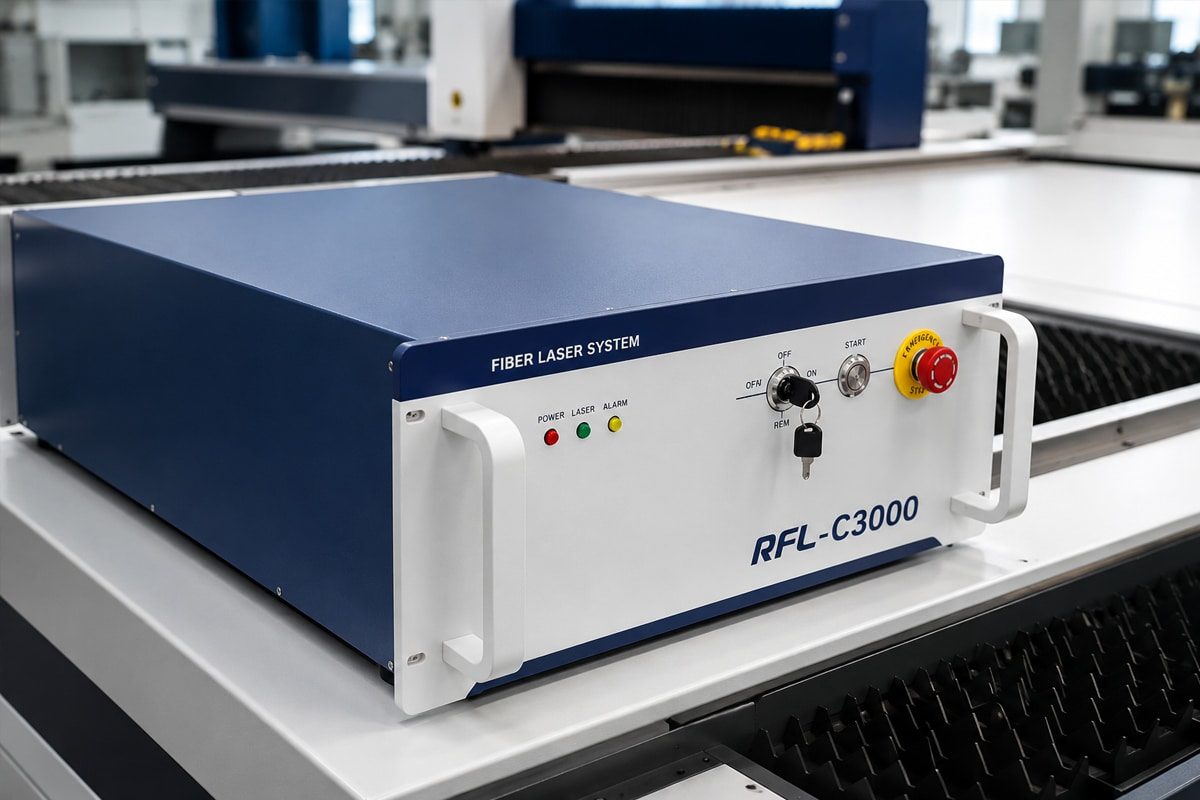
For example, a fiber laser generator rated at 3000W may still display normal operating status on the control system, but the actual power reaching the cutting head may be lower due to aging components, contaminated protective lenses, poor fiber transmission, or unstable cooling. In other cases, the generator may still produce close to its rated output power, but the beam quality may decline, causing wider kerfs, reduced cutting precision, more spatter during welding, or uneven cleaning results. This is why evaluating laser power loss requires looking at both measured output power and real processing performance.
Understanding what laser power loss really means helps users avoid misdiagnosis. Not every cutting problem is caused by generator aging, and not every power issue means the generator must be replaced. Sometimes the problem is optical contamination, poor focus, gas pressure instability, parameter mismatch, or machine maintenance neglect. A correct understanding of power loss makes it easier to identify the true cause and take the right corrective action.
Rated Power Is Not Always the Same as Actual Output Power
Rated power refers to the nominal power level specified by the laser generator manufacturer. For example, a laser source may be labeled as 1000W, 1500W, 3000W, 6000W, or higher. This rating indicates the designed output capacity of the laser generator under proper operating conditions. However, rated power is not always identical to the actual output power during daily production.
In real operation, actual output power can be affected by many factors, including the age of the laser source, operating temperature, cooling system condition, power supply stability, working environment, and maintenance quality. A new and well-maintained laser generator may produce power very close to its rated value. Some laser generators may even have a small power margin when new. But after years of use, the actual measured output may gradually fall below the rated value.
This does not necessarily mean the laser generator has failed. A small deviation between rated power and measured power can be normal, especially after long-term operation. However, when the difference becomes large enough to affect cutting speed, welding depth, cleaning efficiency, or marking consistency, it becomes a production problem. For example, if a 3000W laser generator can no longer cut the material thickness or speed it handled before under the same parameters, actual output power may have declined.
Another important point is that control software power settings are not the same as the measured laser output. Setting the machine to 80% or 100% power does not automatically guarantee that the corresponding laser energy is being produced or delivered. The setting is only a command. The real output still depends on whether the generator, cooling system, fiber transmission, optics, and cutting head are all functioning correctly.
Therefore, users should not judge laser power only by the rated label or the percentage shown on the machine interface. Actual power should be verified through proper testing, such as using a laser power meter, checking processing results under standard conditions, and comparing current performance with the machine’s original cutting or welding capability.
Generator Power VS Power at the Workpiece
When discussing laser power loss, it is important to distinguish between generator output power and power at the workpiece. Generator power refers to the laser energy produced by the laser source itself. Power at the workpiece refers to the laser energy that finally reaches the material surface after passing through the fiber cable, collimating lens, focusing lens, protective window, cutting head, and other optical components.
These two values are not always the same. Even if the laser generator is producing normal output power, some energy may be lost before the beam reaches the workpiece. This is especially common when optical components are dirty, damaged, misaligned, or overheated. A contaminated protective lens, for example, can absorb or scatter part of the laser beam. This reduces the effective energy reaching the material and may also cause the lens to heat up, deform, or crack.
In fiber laser cutting and welding systems, the beam usually travels through a fiber optic cable before entering the processing head. If the fiber connector is contaminated, damaged, or improperly installed, transmission efficiency can decline. Similarly, if the cutting head optics are not clean or properly aligned, the beam may not focus correctly on the material. The operator may feel that the laser generator has lost power, but the real problem may be somewhere in the optical path.
Power at the workpiece is what actually determines processing performance. In cutting, it affects penetration, cutting speed, edge quality, and the ability to process thick materials. In welding, it affects weld depth, molten pool stability, and joint strength. In cleaning, it affects removal speed and surface treatment efficiency. For this reason, a machine can show normal generator status while still performing poorly if the delivered power at the workpiece is reduced.
This distinction is very important for troubleshooting. If the generator output is normal but processing performance has declined, users should inspect the full beam delivery path before assuming that the laser source is aging. Protective lenses, focusing lenses, collimating lenses, fiber connectors, nozzle condition, focus position, assist gas flow, and head alignment should all be checked. In many cases, restoring optical cleanliness and alignment can recover much of the lost processing performance without replacing the laser generator.
Output Power VS Beam Quality
Laser output power is only one part of laser performance. Beam quality is equally important. Output power describes the amount of laser energy produced, usually measured in watts. Beam quality describes how well the energy is concentrated, transmitted, and focused. A laser beam with good quality can be focused into a small, stable, high-energy-density spot. A beam with poor quality may spread out, become uneven, or fail to focus properly, even if the measured output power still appears acceptable.
This means a laser generator can seem powerful on paper but still deliver poor processing results if the beam quality has degraded. In cutting applications, poor beam quality may cause wider kerfs, rougher edges, incomplete cutting, increased dross, unstable piercing, or reduced cutting accuracy. In welding, it may cause inconsistent penetration, spatter, porosity, undercut, or unstable weld seams. In laser cleaning, poor beam quality may result in uneven removal, slower processing, or excessive heat input in some areas.
Beam quality can be affected by internal generator conditions, optical component contamination, thermal lensing, fiber damage, misalignment, or poor maintenance. For example, if a lens absorbs heat due to contamination, it may slightly change shape and affect focus. This can reduce energy density at the focal point even though the generator itself still emits laser power. As a result, the machine may require slower speeds or higher power settings to achieve the same result.
This is why users should not evaluate laser power loss only by wattage. A laser power meter can show whether the output power is within range, but it does not always reveal the full condition of the beam. Real-world processing performance, focus stability, spot shape, cutting-edge quality, welding consistency, and cleaning uniformity are also important indicators.
In industrial production, usable laser power is not just about how many watts are available. It is about how effectively those watts are concentrated and applied to the material. A lower-power laser with excellent beam quality may perform better than a higher-power laser with poor focus or unstable beam distribution. Therefore, when diagnosing suspected power loss, beam quality should always be considered together with output power.
Continuous Power Loss VS Intermittent Power Instability
Laser power problems can appear in different ways. Some are continuous and gradual, while others are intermittent and unstable. Understanding the difference between continuous power loss and intermittent power instability helps users identify the likely cause more accurately.
Continuous power loss usually develops slowly over time. The machine may still operate normally, but cutting speed becomes slower, welding depth becomes shallower, or cleaning efficiency gradually decreases. Operators may need to increase power settings, reduce speed, or make more repeated passes to achieve the same result. This type of power decline is often related to natural aging of the laser generator, reduced pump diode efficiency, long-term thermal stress, optical contamination, or accumulated wear in the beam delivery system.
Intermittent power instability is different. Instead of a steady decline, the laser output may fluctuate during operation. The machine may cut well for a while and then suddenly produce incomplete cuts. A weld may be stable in one section and weak in another. A cleaning process may appear uneven even under the same settings. This type of problem often points to unstable electrical supply, cooling system fluctuations, loose connections, control signal problems, fiber transmission issues, overheating, or contamination that changes behavior under heat.
Continuous power loss usually shows a consistent pattern. For example, the machine may always struggle with materials that were previously easy to cut. Intermittent instability is more irregular. The problem may appear after the machine has been running for a period of time, during high-power operation, or under certain environmental conditions. This makes intermittent problems harder to diagnose because they may not appear during a short inspection.
Cooling is one of the most common factors behind intermittent power instability. If the water chiller cannot maintain the correct temperature, the laser generator or optical components may experience thermal changes that affect output stability. Electrical issues can also cause unstable operation, especially if the voltage fluctuates or the power supply is overloaded. In some cases, the laser generator may temporarily reduce output to protect itself from overheating or abnormal operating conditions.
For troubleshooting, continuous power loss and intermittent instability should be approached differently. Continuous decline often requires long-term performance comparison, power measurement, and inspection for aging or contamination. Intermittent instability requires monitoring operating conditions during production, including temperature, alarm records, voltage stability, cooling performance, control signals, and the timing of performance changes.
Laser power loss is not just a simple decrease in the number of watts produced by the laser generator. It can involve the difference between rated power and actual output power, the loss of energy between the generator and the workpiece, the decline of beam quality, or unstable power delivery during operation. Because laser processing depends on both energy and stability, a machine may show reduced performance even when the generator itself is not completely damaged.
The most important point is that laser power should be evaluated from the entire system, not from the laser source alone. A rated 3000W or 6000W generator does not guarantee that the same amount of effective power is reaching the material. Optical contamination, poor focus, damaged lenses, cooling problems, fiber transmission loss, and beam quality degradation can all reduce the usable laser energy at the workpiece. In many cases, what appears to be generator power loss may actually be a problem in the optical path or processing head.
Users should also distinguish between gradual power decline and intermittent power instability. Gradual decline is often linked to aging, wear, or long-term contamination, while intermittent instability is more likely connected to cooling, electrical supply, signal control, overheating, or connection problems. By understanding these differences, users can avoid unnecessary replacement of expensive laser generators and instead focus on accurate testing, proper maintenance, and systematic troubleshooting.
In short, laser power loss should be understood as a complete performance issue involving output power, beam delivery, beam quality, and operating stability. Only by checking all of these factors together can users accurately determine whether the laser generator is truly losing power or whether another part of the laser system is reducing the final processing effect.
Why Laser Generators Lose Power Over Time
Laser generators lose power over time because they are not static components. They contain electrical, optical, thermal, and sometimes gas or crystal-based systems that operate under high energy density for long periods. Even when a laser generator is well designed, internal components gradually experience aging, heat accumulation, contamination, and efficiency loss. In industrial production, this process is usually slow, but it can become much faster if the machine operates in a poor environment, uses unstable cooling, processes highly reflective materials, or lacks regular maintenance.
Power loss does not always come from one single cause. A fiber laser may lose efficiency because pump diodes age, optical fibers become damaged, or back reflection harms sensitive internal components. A CO2 laser may lose power because the gas mixture degrades or the resonator optics become contaminated. A solid-state laser may suffer from crystal degradation, thermal lensing, or nonlinear optical damage. In many cases, the generator may still run, but its output becomes weaker, less stable, or less efficient than before.
Understanding the causes of power loss helps users distinguish between normal long-term attenuation and preventable damage. Some aging is unavoidable, but many power-loss problems are accelerated by overheating, dirty optics, improper cutting parameters, poor grounding, unstable voltage, or lack of inspection. By knowing where power loss comes from, users can maintain the laser system more effectively and extend the useful service life of the generator.
Pump Diode Aging
Pump diode aging is one of the most common reasons fiber laser generators and many solid-state laser systems gradually lose power. In a fiber laser, pump diodes provide the energy needed to excite the gain medium inside the laser source. These diodes convert electrical energy into optical energy, which is then amplified and converted into the final laser beam. Because pump diodes operate for thousands of hours under high electrical and thermal load, their efficiency naturally decreases over time.
As pump diodes age, they may produce less optical power from the same electrical input. This means the laser generator has to work harder to maintain the same output level. At first, the control system may compensate for this loss by increasing drive current or adjusting internal operating conditions. The user may not notice any obvious change in performance. However, as aging continues, the generator may no longer be able to maintain its rated power, especially at high output settings.
The rate of pump diode aging depends heavily on operating conditions. High temperature, poor cooling, dust, unstable voltage, long continuous operation, and frequent operation near maximum power can all accelerate diode degradation. A laser generator that is often used at 90-100% power for long production shifts will usually experience more stress than one used within a moderate power range. Similarly, a generator installed in a hot, dusty, or poorly ventilated workshop may age faster than one used in a clean, temperature-controlled environment.
Pump diode aging usually appears as a gradual decline rather than a sudden failure. The machine may still start normally and produce a beam, but cutting speed decreases, welding penetration becomes weaker, or cleaning efficiency drops. Operators may need to increase power settings to achieve the same results that were previously possible at lower settings. Eventually, if the diodes degrade too much, the generator may show alarms, unstable output, or an inability to reach full rated power.
Thermal Stress and Cooling Problems
Heat is one of the biggest enemies of laser generator stability. During operation, laser generators convert electrical energy into laser energy, but not all input energy becomes useful output. A portion becomes heat. This heat must be removed quickly and consistently by the cooling system. If cooling is insufficient, unstable, or poorly maintained, internal components may experience thermal stress, which can lead to power loss, reduced beam quality, and shortened service life.
Thermal stress affects laser generators in several ways. Excessive heat can reduce the efficiency of pump diodes, change the optical properties of internal components, affect electrical circuits, and cause slight expansion or deformation of optical structures. In some systems, heat can also create thermal lensing, where optical components change their focusing behavior due to temperature differences. Even small thermal changes can affect beam stability and output consistency.
Cooling problems are often related to water chillers, coolant quality, clogged filters, poor water flow, incorrect temperature settings, dirty heat exchangers, or blocked ventilation. If the water chiller cannot maintain the correct temperature range, the laser source may operate under unstable thermal conditions. This may cause output power to fluctuate during production. In severe cases, the generator may automatically reduce power or stop working to protect itself.
Poor cooling does not always cause immediate failure. More often, it slowly accelerates internal aging. A laser generator that repeatedly runs slightly above its ideal temperature may continue operating for months or years, but its internal components may degrade faster than expected. This is why cooling system maintenance is not just about preventing alarms; it is also about protecting long-term laser power stability.
Operators should pay attention to water temperature, water flow, chiller alarms, condensation risk, coolant cleanliness, and the condition of cooling pipes. Using the wrong coolant, ignoring filter replacement, or allowing dust to build up around the chiller can all contribute to thermal instability. In high-power laser systems, even a small cooling problem can have a noticeable impact on output power and beam quality.
Optical Contamination
Optical contamination is another major cause of apparent or actual laser power loss. Laser systems depend on clean optical surfaces to transmit, reflect, focus, or guide the beam. When dust, oil mist, smoke, metal vapor, spatter, moisture, or other contaminants build up on optical components, part of the laser energy may be absorbed, scattered, or reflected incorrectly. This reduces the amount of usable power reaching the workpiece and may also damage the optical parts themselves.
In many laser machines, contamination first appears on external or replaceable optics, such as protective lenses, focusing lenses, collimating lenses, mirrors, or protective windows. For example, in a fiber laser cutting head, the protective lens is designed to shield the internal optics from dust and spatter. If this lens becomes dirty, the laser beam may lose energy before reaching the material. The operator may think the laser generator has lost power, but the real problem may be a contaminated protective lens.
Contaminated optics can also create a dangerous feedback cycle. When a dirty lens absorbs more laser energy, it heats up. As it heats, it may deform, crack, burn, or create thermal lensing. This further reduces beam quality and focusing accuracy. In severe cases, a damaged optical component can reflect energy into the laser source or damage the cutting head.
Optical contamination is especially common in cutting, welding, and cleaning applications because these processes generate fumes, dust, vapor, and particles. Poor extraction, weak assist gas flow, incorrect nozzle distance, low-quality protective windows, or careless lens replacement can all increase the risk. Even fingerprints on optics can absorb laser energy and lead to local heating.
Regular inspection and replacement of optical components are essential. Users should not wait until cutting quality becomes poor or a lens burns before checking the optical path. Clean optics help maintain stable transmission efficiency, good beam quality, and consistent processing results. In many cases, replacing a dirty protective lens can restore performance that appears to have been lost due to generator aging.
Back Reflection Damage
Back reflection damage is a serious risk, especially for fiber lasers used to process highly reflective materials such as aluminum, copper, brass, silver, gold, and polished stainless steel. Back reflection occurs when part of the laser beam reflects from the workpiece surface and travels back through the optical path toward the laser source. If this reflected energy is strong enough, it can damage internal components of the laser generator or cause unstable output.
Fiber lasers are powerful and efficient, but their optical structure can be sensitive to reflected light. Modern laser generators often include protection systems to detect and reduce the risk of back reflection. However, these protections are not unlimited. Improper parameters, poor focus, incorrect material angle, unstable piercing, damaged cutting head optics, or processing highly reflective materials at high power can still create harmful reflected energy.
Back reflection may cause immediate alarms, sudden power instability, or long-term degradation. In mild cases, the laser may temporarily reduce power or stop output to protect itself. In more severe cases, back reflection can damage pump combiners, isolators, fiber connectors, or other internal optical components. Once internal damage occurs, the laser generator may lose output power, become unstable, or require professional repair.
The risk of back reflection is higher during piercing, welding start points, processing mirror-like surfaces, and cutting thick reflective metals. A poor initial pierce can create a strong reflection because the material has not yet absorbed enough energy. Similarly, if the beam is not properly focused or the process is unstable, more energy may reflect instead of being absorbed by the material.
To reduce back reflection damage, users should use correct process parameters, suitable piercing methods, proper focus position, clean optics, and laser generators designed for reflective materials when necessary. Some applications require special high-reflection protection technology. Operators should also pay attention to alarms related to reflected light, abnormal output, or sudden cutting failure. Ignoring these warnings can turn a preventable issue into expensive generator damage.
Damage to the Delivery Fiber
The delivery fiber is responsible for transmitting laser energy from the generator to the processing head. In fiber laser systems, this component is critical because it carries high-power laser energy through a relatively small optical core. Any damage, contamination, excessive bending, poor connection, or misalignment in the delivery fiber can reduce transmission efficiency and cause power loss.
Delivery fiber damage may occur for several reasons. The fiber cable may be bent beyond its allowed radius, crushed by external force, pulled during machine movement, or exposed to vibration and mechanical stress. The fiber connector may become contaminated during installation or maintenance. Dust, oil, or tiny particles at the fiber end face can absorb laser energy, causing local heating and permanent damage.
Even small defects in the delivery fiber can create serious problems because the laser energy density is extremely high. A contaminated or damaged fiber end face may burn, crack, or degrade. This can reduce the power transmitted to the cutting or welding head. In severe cases, it may cause sudden output failure or damage to connected optical components.
Delivery fiber problems can sometimes be mistaken for generator power loss. The laser source may still produce normal output internally, but the energy reaching the workpiece is reduced or unstable. Symptoms may include weaker cutting ability, inconsistent welding, abnormal heating near the fiber connector, frequent alarms, or unstable beam delivery.
Proper handling of the delivery fiber is extremely important. The cable should not be bent sharply, twisted, stepped on, pulled, or clamped under heavy objects. Fiber connectors should only be opened in a clean environment and should be inspected carefully before installation. The protective caps should remain in place when the fiber is disconnected. For high-power lasers, fiber inspection and cleaning should be performed by trained personnel because improper handling can cause permanent damage.
Electrical and Control System Aging
Laser generators rely not only on optical components but also on electrical and control systems. Power supplies, circuit boards, capacitors, drivers, sensors, connectors, control modules, and communication systems all play a role in maintaining stable laser output. As these components age, the generator may experience reduced power stability, slower response, control errors, or output fluctuations.
Electrical aging often happens gradually. Capacitors may lose capacity, connectors may oxidize, solder joints may weaken, insulation may degrade, and electronic components may become less stable under heat. Power supplies may no longer deliver current as smoothly as before. Sensors may drift, causing inaccurate temperature, current, or power feedback. These problems can affect how accurately the laser generator controls output power.
Unstable input power can also accelerate electrical aging. Voltage fluctuation, poor grounding, electrical noise, overload, and frequent power interruptions may stress the generator’s internal electronics. In industrial workshops with heavy machinery, compressors, welding equipment, or unstable grid conditions, power quality can be a real concern. Without proper electrical protection, the laser generator may suffer from repeated stress that shortens component life.
Control system aging may not always reduce maximum output power directly, but it can affect power accuracy and stability. For example, the machine may respond slowly to power commands, fail to maintain consistent output during high-speed processing, or produce unstable pulse behavior. In cutting and welding applications, this can lead to inconsistent processing quality even if the laser source still has enough theoretical power.
Regular electrical inspection, stable grounding, proper voltage regulation, clean electrical cabinets, and good ventilation help reduce these risks. Users should take warning signs seriously, such as frequent communication errors, unexplained alarms, unstable power readings, abnormal fan noise, overheated cabinets, or repeated failures during high-power operation. Electrical and control issues may be less visible than dirty lenses, but they can still contribute significantly to long-term laser power problems.
Gas Depletion in CO2 Lasers
In CO2 laser generators, power loss can occur because of changes in the laser gas mixture. Unlike fiber lasers, CO2 lasers rely on a gas medium, typically containing carbon dioxide, nitrogen, helium, and sometimes other gases, to generate the laser beam. Over time, the gas mixture can degrade, become contaminated, leak, or lose the proper balance needed for efficient laser generation.
Gas depletion is especially relevant in sealed CO2 laser tubes and older gas laser systems. As the gas mixture ages, the laser’s ability to produce stable output decreases. The laser may require more current to produce the same power, or it may fail to reach its original rated output. Eventually, the tube may need to be refilled or replaced, depending on the laser design.
In sealed glass CO2 laser tubes, gas degradation is a normal part of service life. The tube may gradually lose power even if the machine is not used heavily. This is because the gas composition and internal discharge conditions change over time. In metal RF CO2 lasers, service life is usually longer, but gas condition, resonator cleanliness, and internal components still affect output stability.
Symptoms of CO2 laser gas-related power loss include weaker cutting ability, difficulty engraving at previous speeds, unstable beam output, reduced peak power, and the need for higher current settings. If the operator continues increasing current to compensate for declining gas efficiency, the tube may age even faster.
CO2 laser users should understand that gas-related power loss is different from fiber laser diode aging. Maintenance and replacement strategies are also different. For sealed tubes, replacement may be the most practical solution once power drops below usable levels. For serviceable industrial CO2 lasers, professional gas refill, resonator maintenance, or optical alignment may restore performance.
Crystal and Nonlinear Optics Degradation
Some laser generators, especially solid-state lasers, UV lasers, green lasers, and frequency-converted laser systems, use crystals and nonlinear optical components. These components help generate, amplify, or convert laser energy into specific wavelengths. Over time, they may degrade due to high optical intensity, heat, contamination, mechanical stress, or photochemical effects.
Laser crystals can experience thermal stress, micro-defects, coating damage, or reduced transmission efficiency. Nonlinear crystals used for frequency conversion, such as converting infrared light into green or ultraviolet light, can be particularly sensitive. UV laser systems are often more vulnerable to optical degradation because ultraviolet light has higher photon energy and can damage coatings or optical materials more easily.
When crystals or nonlinear optics degrade, the laser generator may lose output power, conversion efficiency, beam quality, or wavelength stability. For example, a UV laser may gradually produce weaker output even though the pump source is still functioning. A green laser may show reduced conversion efficiency or unstable output. A solid-state laser may suffer from thermal lensing, poor beam shape, or inconsistent pulse energy.
Crystal degradation may also be accelerated by poor cooling, contamination, excessive power density, or operation outside recommended parameters. In precision marking, micromachining, semiconductor, medical device, and electronics applications, even small changes in beam quality or pulse stability can affect processing results.
These types of degradation are often more complex to diagnose than simple optical contamination. They may require professional testing, beam analysis, wavelength measurement, internal inspection, or replacement of optical modules. Users should avoid opening sealed laser modules without proper training because contamination or misalignment can make the problem worse.
Laser generators lose power over time because their internal and external components are exposed to high energy, heat, electrical load, optical stress, and environmental contamination. In fiber and solid-state lasers, pump diode aging is one of the most important long-term causes of power decline. As the diodes become less efficient, the laser generator may gradually struggle to maintain its rated output. Thermal stress, poor cooling, and unstable operating conditions can accelerate this process and reduce both output power and beam stability.
Not all power loss comes from inside the laser source. Optical contamination, delivery fiber damage, and back reflection can reduce the amount of usable power reaching the workpiece or directly damage sensitive components. Dirty lenses, damaged fiber connectors, or reflected energy from highly reflective metals can make a machine behave as if the generator is weak, even when the root cause is in the beam delivery path or processing conditions.
Different laser technologies also have different aging mechanisms. CO2 lasers may lose power because the gas mixture depletes or becomes contaminated, while UV, green, and other solid-state lasers may suffer from crystal or nonlinear optics degradation. Electrical and control system aging can also cause unstable output, inaccurate power control, or intermittent performance problems.
In short, laser power loss is usually the result of accumulated stress across the entire laser system. Some aging is unavoidable, but many causes can be slowed or prevented through proper cooling, clean optics, stable power supply, careful fiber handling, suitable processing parameters, and regular maintenance. By understanding why laser generators lose power, users can identify problems earlier, reduce downtime, and extend the useful life of their laser equipment.
Power Loss in Different Types of Laser Generators
Power loss does not happen in the same way for every type of laser generator. Different laser technologies use different gain media, optical structures, cooling methods, and beam delivery systems, so their aging patterns and common failure points are also different. A fiber laser may maintain stable output for many years but gradually lose efficiency because of pump diode aging or back reflection damage. A CO2 laser may lose power because its gas mixture degrades or its resonator optics become contaminated. A diode laser may decline due to chip aging and heat stress, while UV and ultrafast lasers can be more sensitive because they rely on delicate nonlinear optics, precise pulse control, and high beam quality.
Understanding these differences is important because users often describe all performance decline as “laser power loss,” even though the real cause may vary greatly from one laser type to another. In some systems, power loss is mainly a normal aging process. In others, it may be caused by poor maintenance, contamination, unstable cooling, improper operation, or processing materials that create high back reflection. The correct solution also depends on the laser type. A fiber laser may require optical inspection and power testing, a CO2 laser may need tube replacement or gas servicing, and a UV laser may require professional evaluation of internal crystals and optics.
Fiber Laser Generators
Fiber laser generators are widely used in metal cutting, welding, cleaning, marking, and surface treatment because they are efficient, compact, stable, and relatively low-maintenance. Compared with many older laser technologies, fiber lasers generally have excellent long-term power stability. Their laser energy is generated and amplified inside an optical fiber, which reduces the need for complex mirror alignment and makes the system less sensitive to vibration and external contamination.
However, “stable” does not mean “never loses power.” A fiber laser generator can still experience gradual power attenuation over long-term use, especially in high-power industrial applications. Power loss may come from internal pump diode aging, thermal stress, delivery fiber damage, optical contamination, back reflection from reflective metals, or problems in the control and cooling systems.
Why Fiber Lasers Are Generally Stable
Fiber lasers are generally stable because their beam generation and amplification take place inside a protected fiber structure. Unlike traditional CO2 or lamp-pumped solid-state lasers, fiber lasers do not usually require frequent resonator mirror adjustment. The optical path inside the generator is relatively sealed, compact, and less exposed to the outside environment. This helps maintain consistent beam delivery and reduces the chance of alignment-related power loss.
Another reason fiber lasers are stable is their high electrical-to-optical conversion efficiency. Because they convert input energy into laser output more efficiently than many older technologies, they usually generate less waste heat for the same output level. Lower heat load helps reduce thermal stress and supports long-term output stability.
Fiber lasers also use semiconductor pump diodes, which are designed for long service life when operated under proper conditions. With clean cooling water, stable voltage, suitable operating temperature, and correct use, fiber lasers can maintain reliable output for a long time. This is why they are often preferred for continuous industrial production.
Still, fiber laser stability depends heavily on proper operating conditions. Poor cooling, dust, moisture, unstable power supply, high back reflection, and careless handling of the delivery fiber can all shorten the life of the laser generator or reduce usable power.
Common Fiber Laser Power Loss Causes
The most common long-term cause of fiber laser power loss is pump diode aging. Pump diodes provide the energy that excites the gain fiber. Over thousands of operating hours, these diodes gradually become less efficient. At first, the laser system may compensate automatically, but after enough aging, the generator may no longer reach its original rated output.
Thermal problems are another major factor. If the water chiller cannot maintain a stable temperature, or if the cooling water is dirty, blocked, or incorrectly set, internal components may operate under excessive heat. This can accelerate pump diode aging and cause unstable output.
Back reflection is especially important in fiber lasers. When cutting or welding highly reflective metals such as aluminum, copper, brass, silver, or polished stainless steel, part of the beam may reflect toward the laser source. Modern fiber lasers usually include protection against reflected light, but repeated or severe back reflection can still damage internal optical components.
Delivery fiber problems can also reduce power. If the fiber cable is bent too sharply, pulled, crushed, contaminated at the connector, or damaged internally, transmission efficiency may decline. The generator may still produce laser energy, but less power reaches the cutting head or welding head.
External optics are another common source of apparent power loss. Dirty protective lenses, damaged focusing lenses, contaminated collimating lenses, or poor head alignment can make the machine behave as if the generator is weak. In many cases, replacing or cleaning optics restores much of the lost processing performance.
How Fiber Laser Power Loss Usually Appears
Fiber laser power loss usually appears gradually. In laser cutting, operators may notice slower cutting speed, more burrs, incomplete cutting, rougher edges, difficulty piercing thick plates, or the need to increase power settings. Materials that were previously easy to cut may suddenly require slower speeds or more careful parameter adjustment.
In laser welding, power loss may appear as shallower penetration, unstable molten pool behavior, weaker joints, more spatter, or inconsistent weld seams. In laser cleaning, the machine may require more passes to remove rust, paint, oxide, or coating layers.
Sometimes the problem is not a steady decline but intermittent instability. The machine may work normally at the beginning of a shift and then lose performance after running for a while. This may indicate thermal problems, unstable cooling, poor electrical supply, or optics that heat up during operation.
Because fiber laser power loss can be caused by either the generator or the beam delivery path, diagnosis should include power measurement, optical inspection, cooling system checks, alarm history review, and comparison with original process parameters.
CO2 Laser Generators
CO2 laser generators use a gas medium to produce laser energy. They are commonly used for cutting, engraving, marking, and processing non-metal materials such as wood, acrylic, leather, paper, fabric, rubber, glass, and some plastics. Industrial CO2 lasers can also be used for certain metal and packaging applications.
Unlike fiber lasers, CO2 lasers depend on gas conditions, discharge stability, resonator optics, mirrors, and alignment. Because of this, their power loss behavior is different. A CO2 laser may lose power because the gas mixture degrades, the tube ages, mirrors become contaminated, electrodes deteriorate, or optical alignment shifts.
Why CO2 Lasers Lose Power
The gas mixture inside a CO2 laser is central to its performance. Over time, the gas can degrade, leak, become contaminated, or lose the proper balance needed for efficient laser generation. When this happens, the laser may produce less output even if the electrical system still appears to operate normally.
In sealed glass CO2 laser tubes, power decline is often part of the normal tube aging process. The tube may gradually lose output as the gas mixture changes and internal discharge conditions become less efficient. This can happen even if the laser is not used heavily, because sealed tubes have a limited shelf life and service life.
CO2 lasers also rely on mirrors and lenses to form and deliver the beam. If these optics become dirty, scratched, misaligned, or damaged, output power at the workpiece will decline. Because CO2 laser beams are usually transmitted through free-space optics rather than a sealed fiber path, alignment and mirror cleanliness are especially important.
Symptoms of CO2 laser power loss include weaker cutting ability, reduced engraving depth, uneven engraving, difficulty cutting materials that were previously easy to process, slower processing speed, or the need to increase current or power settings. In some cases, the beam may become unstable, or the machine may fail to maintain consistent output over long jobs.
RF CO2 Lasers VS Glass CO2 Tubes
CO2 lasers are commonly divided into RF CO2 lasers and glass CO2 laser tubes. Both use CO2 gas as the laser medium, but their structure, performance, service life, and maintenance requirements are different.
Glass CO2 tubes are widely used in lower-cost laser engraving and cutting machines. They are usually DC-excited and sealed. Their advantages include lower purchase cost, simple structure, and easy replacement. However, they generally have a more limited service life. As the gas mixture ages and the internal tube condition declines, output power gradually drops. Once power falls too much, replacing the tube is usually the most practical solution.
RF CO2 lasers are more commonly used in higher-end industrial systems. They are usually metal or ceramic sealed, RF-excited, and designed for better beam quality, longer service life, faster pulse response, and higher stability. RF CO2 lasers usually maintain power better than ordinary glass tubes, but they are not immune to aging. Over time, gas condition, internal optics, electrodes, seals, and RF power components can still affect output.
The main difference is that RF CO2 lasers are typically more durable and stable, while glass CO2 tubes are more consumable. For users, this means power loss in a glass tube often leads to replacement, while power loss in an RF CO2 laser may require professional service, gas refill, resonator repair, or internal inspection.
Diode Laser Generators
Diode laser generators use semiconductor laser chips to produce laser light directly. They are common in laser marking, engraving, plastic welding, medical devices, electronics, small cutting systems, and as pump sources for fiber and solid-state lasers. Diode lasers are compact, efficient, and relatively simple in structure, but they are highly sensitive to heat and electrical stress.
Power loss in diode lasers is mainly related to semiconductor aging. As the diode chip operates, heat, current density, and optical stress gradually reduce its efficiency. The laser may require more current to produce the same output, or it may no longer reach its original power level. If the diode is operated beyond its recommended current or temperature range, degradation can accelerate significantly.
Cooling is especially important for diode lasers. Even small increases in operating temperature can reduce output efficiency and shorten lifetime. Poor heat dissipation, blocked cooling channels, weak fans, dirty heat sinks, or unstable temperature control can cause faster power decline.
Diode lasers may also suffer from facet damage, where the emitting surface of the semiconductor chip is damaged by high optical intensity, contamination, or overheating. Once this occurs, output power can drop quickly and may not recover.
Power loss in diode lasers often appears as reduced brightness, weaker cutting or engraving ability, unstable output, increased threshold current, or reduced beam consistency. In systems that combine many diode modules, failure or aging of individual diodes may cause uneven output or lower total system power.
Solid-State Lasers
Solid-state lasers use a solid gain medium, such as Nd, Nd, or other doped crystals, to generate laser energy. They may be lamp-pumped or diode-pumped, and they are used in marking, drilling, welding, micromachining, medical applications, and precision material processing.
Power loss in solid-state lasers can come from several sources. In lamp-pumped systems, flash lamps age over time and gradually produce less effective pump energy. As the lamp weakens, the laser output decreases. In diode-pumped systems, pump diode aging plays a similar role.
The gain crystal itself can also degrade or become less efficient. High thermal load can create thermal lensing, stress, microcracks, coating damage, or reduced beam quality. If cooling is poor or the laser is operated at excessive power, the crystal may experience permanent damage.
Optical coatings, mirrors, Q-switches, and resonator components also affect solid-state laser power. Contamination or coating damage can reduce transmission, increase absorption, and destabilize the beam. In pulsed solid-state lasers, aging of the Q-switch or control electronics may affect pulse energy and peak power, even if average power seems acceptable.
Power loss in solid-state lasers may appear as lower pulse energy, weaker marking or drilling performance, unstable beam shape, reduced welding depth, poor repeatability, or the need for frequent optical alignment. Compared with fiber lasers, some solid-state systems require more careful alignment, cooling, and optical maintenance.
UV and Ultrafast Laser Generators
UV and ultrafast laser generators are often used for precision applications, including electronics manufacturing, semiconductor processing, glass cutting, medical device manufacturing, fine marking, micro-drilling, thin-film processing, and high-precision material removal. These lasers are valued for their ability to process materials with small heat-affected zones and high accuracy, but they are also more sensitive to optical degradation, contamination, and environmental changes.
Why UV Lasers Are More Sensitive
UV lasers are more sensitive because ultraviolet light has higher photon energy than infrared or visible light. This high photon energy allows UV lasers to process delicate materials effectively, but it also places greater stress on optical coatings, crystals, windows, and internal components.
Many UV lasers are produced by frequency conversion. For example, an infrared laser may be converted into green light and then into ultraviolet light using nonlinear crystals. This conversion process depends on crystal quality, temperature control, alignment, beam quality, and optical cleanliness. If any part of the conversion path degrades, UV output power can decline.
UV optics are also more vulnerable to contamination. Dust, organic residue, moisture, or coating defects can absorb UV energy and cause local damage. Over time, this may reduce transmission and lower output power. Because UV laser processing often requires high precision, even a small decline in power or beam quality can noticeably affect marking contrast, edge quality, or processing consistency.
UV laser power loss may appear as weaker marking, reduced processing depth, inconsistent color change, larger heat-affected areas, unstable pulse energy, or reduced processing speed. In many cases, the generator may require professional maintenance because internal UV optics and nonlinear crystals are delicate and difficult to service without proper tools.
Ultrafast Laser Considerations
Ultrafast lasers, including picosecond and femtosecond lasers, produce extremely short pulses with very high peak power. They are used for precision micromachining, glass processing, ceramics, thin films, medical components, and high-value manufacturing applications. Their power loss behavior is different from ordinary continuous-wave lasers because pulse duration, pulse energy, repetition rate, beam quality, and peak power all matter.
In ultrafast lasers, a reduction in average power is only one possible issue. The laser may also experience lower pulse energy, unstable pulse timing, pulse broadening, reduced beam quality, or changes in peak intensity. These changes can affect processing even if the average power reading does not seem dramatically lower.
Ultrafast systems often contain complex optical components, including seed lasers, amplifiers, pulse compressors, gratings, mirrors, nonlinear crystals, isolators, and precision control electronics. Any degradation, contamination, misalignment, or thermal drift in these components can affect performance. Because ultrafast pulses have very high peak intensities, optical coatings and components must remain extremely clean and precisely aligned.
Cooling and environmental stability are especially important. Temperature changes, vibration, dust, humidity, and unstable power supply can affect pulse stability and beam pointing. For high-precision work, small changes in output can create visible processing differences.
Power loss in ultrafast lasers should therefore be evaluated more broadly than simple wattage decline. Users should consider pulse energy, beam profile, pulse width, repetition stability, pointing stability, and processing results. These systems usually require professional service and regular calibration to maintain long-term performance.
Power loss varies significantly across different types of laser generators because each laser technology has its own structure and aging mechanisms. Fiber lasers are generally the most stable choice for many industrial applications because their optical path is compact, efficient, and less dependent on frequent alignment. However, they can still lose power due to pump diode aging, back reflection, delivery fiber damage, poor cooling, and optical contamination.
CO2 lasers lose power in a different way. Their performance depends heavily on gas condition, discharge stability, mirrors, lenses, and resonator alignment. Glass CO2 tubes usually behave more like consumable components, gradually losing power until replacement is needed. RF CO2 lasers are more durable and stable, but they can still require professional maintenance as internal components and gas conditions change.
Diode lasers and solid-state lasers have their own power-loss patterns. Diode lasers are strongly affected by semiconductor aging and heat stress, while solid-state lasers may lose power due to pump source aging, crystal stress, thermal lensing, coating damage, and resonator instability. UV and ultrafast lasers are even more sensitive because they rely on precise optical conversion, delicate coatings, high beam quality, and stable pulse characteristics.
In short, laser power loss should always be judged according to the type of laser generator being used. The same symptom, such as weaker cutting, slower engraving, shallower welding, or unstable marking, may have very different causes depending on whether the system uses fiber, CO2, diode, solid-state, UV, or ultrafast laser technology. Understanding these differences helps users diagnose problems more accurately, choose the right maintenance strategy, and avoid unnecessary replacement of expensive laser components.
Main Signs That Laser Generators May Be Losing Power
Laser generator power loss is not always obvious at the beginning. In many cases, the machine does not stop working immediately, and the control system may still show normal operation. However, the actual processing result gradually becomes worse. The machine may need slower speeds, higher power settings, repeated processing, or more frequent parameter adjustments to achieve the same results as before. This is why operators often notice power loss through changes in cutting quality, welding depth, marking contrast, cleaning efficiency, or system alarms before they confirm it with a laser power meter.
It is important to remember that these signs do not always mean the laser generator itself is damaged. Similar symptoms can also be caused by dirty optics, poor focus, unstable assist gas, incorrect parameters, cooling problems, damaged fiber cables, contaminated protective lenses, or material changes. However, when these problems appear repeatedly under the same working conditions, and normal maintenance does not restore performance, laser power loss becomes a possible cause that should be checked carefully.
The following signs can help users recognize when a laser generator may be losing power or when the effective laser energy reaching the workpiece has declined.
Reduced Cutting Ability
One of the most common signs of laser power loss is reduced cutting ability. In laser cutting, power directly affects the machine’s ability to pierce the material, maintain cutting speed, and cut through a given thickness cleanly. When effective laser power decreases, the machine may no longer cut at the same speed or quality as before.
Operators may first notice that materials that were previously easy to cut now require slower cutting speeds. For example, a fiber laser cutting machine that once cut carbon steel, stainless steel, or aluminum smoothly at a certain parameter setting may begin to leave uncut areas, rough edges, or excessive burrs. Thick plates may become harder to pierce, and the machine may need a longer piercing time before it can start the cut. In severe cases, the laser may fail to cut through the material completely, especially at corners, small contours, or during high-speed movement.
Another sign is the need to increase the power percentage in the cutting software. If the machine previously achieved good results at 70% or 80% power but now requires 90% or 100% power for the same material and thickness, it may indicate that the actual delivered power has decreased. However, this should be judged carefully, because worn nozzles, dirty lenses, poor focus position, gas pressure problems, and material surface conditions can produce similar symptoms.
Reduced cutting ability may also appear as a decline in edge quality. The cut edge may become rougher, darker, more oxidized, or more uneven. Stainless steel may show more dross on the bottom edge. Carbon steel may produce wider kerfs or unstable cutting lines. Aluminum and brass may become more difficult to process because these reflective materials already require stable power and good beam quality.
If cutting performance declines gradually across different materials and thicknesses, especially after the machine has accumulated many working hours, the laser generator should be tested. A power meter can help determine whether the generator output has fallen below its normal range. At the same time, the optical path, protective lens, focusing lens, collimating lens, delivery fiber, cutting head, nozzle, assist gas, and cooling system should also be inspected before concluding that the generator itself is losing power.
Lower Welding Penetration
In laser welding, sufficient power is required to melt the material deeply enough and form a strong, stable weld. When laser power decreases, one of the clearest signs is lower welding penetration. The weld may look acceptable on the surface, but the actual fusion depth may be shallower than required. This can weaken the joint and reduce structural reliability.
Lower welding penetration may appear in several ways. The weld seam may become narrower or flatter than usual. The molten pool may look smaller or less active. Materials that previously formed a deep and stable weld may now show incomplete fusion, weak bonding, or inconsistent penetration. In production, this can lead to cracks, poor strength, leakage, or failure during mechanical testing.
Operators may also notice that the same welding speed no longer produces the same result. To compensate, they may need to reduce the welding speed, increase the power setting, adjust the focus, or repeat the weld. If these changes are necessary even though the material, joint design, shielding gas, and welding parameters have not changed, reduced laser output may be one possible explanation.
Power loss can be especially noticeable when welding thicker materials or high-conductivity metals. Aluminum, copper, and brass require stable energy input because they conduct heat quickly and can reflect part of the laser beam. If the laser generator has weakened or if the beam reaching the workpiece is reduced by optical contamination or fiber transmission loss, welding penetration may become unstable.
Lower welding penetration may also be related to beam quality, not only output power. If the beam cannot focus into a small, high-energy-density spot, the weld may become wider but shallower. This means that a laser generator may still produce measurable power, but the actual welding effect may decline because the beam is no longer concentrated properly.
Before assuming that the generator is losing power, users should check the focus position, shielding gas, wire feeding condition, welding head optics, protective lens, workpiece fit-up, material surface cleanliness, and cooling stability. If all of these conditions are normal and penetration remains lower than before, the laser generator output and beam quality should be tested professionally.
Lighter Marking or Lower Contrast
For laser marking systems, power loss often appears as lighter marking, lower contrast, or inconsistent marking depth. Laser marking depends on controlled interaction between the laser beam and the material surface. If the laser energy is reduced, the mark may no longer reach the desired darkness, brightness, color change, engraving depth, or surface texture.
On metals, reduced power may cause markings to appear lighter, thinner, or less sharp. Black marking on stainless steel may become gray or uneven. Engraved marks may become shallower. Annealed marks may lose contrast. On plastics, the color change may become weaker, less uniform, or harder to read. For barcodes, QR codes, serial numbers, and logos, lower contrast can directly affect readability and product traceability.
A common sign is that operators need to slow down the marking speed, increase the power setting, increase the number of passes, or adjust frequency and pulse width to achieve the same marking effect. If the same file, material, and parameters previously produced a clear mark but now produce a pale or incomplete result, the effective laser output may have declined.
However, marking performance is sensitive to many factors besides generator power. Lens contamination, incorrect focus distance, dirty material surfaces, changes in material coating, unstable fixture height, and incorrect marking parameters can all affect contrast. For fiber marking machines, the field lens and protective window should be checked first. For UV marking machines, optical cleanliness and internal conversion stability are especially important because UV output is more sensitive to optical degradation.
Lower marking contrast may also indicate pulse energy instability. In pulsed lasers, average power alone does not tell the full story. The marking effect depends on pulse energy, pulse duration, repetition rate, peak power, and beam quality. If the laser generator produces unstable pulses, the mark may become uneven even if the average power seems acceptable.
For quality-sensitive applications such as medical devices, electronics, automotive parts, tools, and packaging, lighter marking should not be ignored. A small power decline may cause poor readability, failed inspection, or inconsistent branding. If cleaning the optics and correcting the focus do not restore marking quality, the generator’s actual output and pulse stability should be evaluated.
Slower Cleaning Efficiency
Laser cleaning uses laser energy to remove rust, paint, oxide layers, oil, coating, or other surface contaminants. When the laser generator loses power, cleaning efficiency usually drops. The machine may still remove material, but it may require more time, slower movement, higher power settings, or repeated passes to reach the same cleaning standard.
One of the first signs is reduced removal speed. A laser cleaning machine that previously removed rust or paint in one pass may now need two or more passes. Operators may need to move the cleaning head more slowly, narrow the scanning width, or increase the overlap between passes. This reduces productivity and increases labor time.
Slower cleaning efficiency may also appear as incomplete removal. Rust, oxide, coating, or residue may remain on the surface even after normal processing. The cleaned area may look uneven, with patches of untreated material or inconsistent color. For applications such as mold cleaning, weld preparation, surface restoration, and coating removal, this can affect downstream quality.
Power loss in laser cleaning can be especially noticeable on thick rust, heavy paint, or stubborn oxide layers. These applications require sufficient energy density to break the bond between the contaminant and the substrate. If output power declines or beam quality becomes poor, the cleaning effect becomes weaker and less uniform.
However, cleaning efficiency is not determined by power alone. Scanning speed, pulse frequency, pulse width, spot size, focus distance, cleaning pattern, material type, coating thickness, and surface condition all influence the result. Dirty lenses, damaged protective windows, poor focus, or unstable cooling can reduce cleaning performance even when the generator itself is still healthy.
For this reason, users should compare current cleaning performance with previous results under the same parameters and material conditions. If the machine consistently cleans more slowly than before and optical inspection does not reveal obvious contamination or damage, laser power testing may be necessary.
Frequent Alarms or Output Limiting
Frequent alarms or automatic output limiting can also indicate that a laser generator is experiencing power-related problems. Modern laser generators include protection systems that monitor temperature, current, voltage, reflected light, water flow, communication signals, internal module status, and output stability. When abnormal conditions are detected, the system may reduce output power, stop laser emission, or trigger alarms to protect internal components.
Output limiting does not always mean the generator has lost power permanently. Sometimes the laser source intentionally reduces output because it detects unsafe or unstable conditions. For example, if the cooling water temperature is too high, water flow is insufficient, or the internal temperature rises beyond the allowed range, the generator may limit power to prevent overheating. If a strong back reflection is detected while cutting or welding reflective materials, the generator may reduce or interrupt output to protect sensitive optical components.
Frequent alarms may point to cooling problems, electrical instability, internal module aging, fiber connection issues, back reflection, control signal errors, or power supply problems. If these alarms occur repeatedly during high-power operation, long production runs, or when processing certain materials, they should be investigated carefully.
Another warning sign is that the machine cannot maintain full power for long periods. It may start normally, but after several minutes or hours of operation, performance drops or alarms appear. This pattern often suggests thermal instability, chiller problems, overheating optics, or aging components that become unstable under load.
Operators should not simply reset alarms and continue production without identifying the cause. Repeatedly ignoring alarms can turn a minor maintenance issue into serious generator damage. For example, continuing to process reflective materials after back-reflection warnings may damage internal optical components. Running the generator with poor cooling may accelerate diode aging or cause sudden failure.
When frequent alarms or output limiting occur, users should check the alarm records, cooling system, water temperature, water flow, electrical supply, grounding, fiber connections, optical cleanliness, and processing parameters. If the same alarms continue after basic maintenance, the laser generator should be inspected by qualified technicians.
The main signs of laser generator power loss usually appear first in real processing results. A laser cutting machine may cut more slowly, leave more burrs, or struggle with materials it could previously process easily. A laser welding machine may produce shallower penetration, weaker joints, or unstable weld seams. A laser marking machine may create lighter marks, lower contrast, or inconsistent engraving depth. A laser cleaning machine may require more passes and longer processing time to remove the same surface contamination.
Frequent alarms and automatic output limiting are also important warning signs. They may indicate that the generator is protecting itself from overheating, unstable cooling, electrical problems, back reflection, or internal module issues. These problems may not always mean permanent power loss, but they do show that the laser system is not operating under ideal conditions.
At the same time, these symptoms should not be judged too quickly. Reduced cutting ability, weak welding penetration, poor marking contrast, and slow cleaning efficiency can also be caused by dirty optics, wrong focus, unstable gas pressure, worn nozzles, damaged lenses, poor cooling, or incorrect parameters. Therefore, users should inspect the entire laser system before deciding that the generator itself is losing power.
In short, laser power loss should be suspected when performance declines consistently under the same working conditions, and normal adjustments no longer restore the original results. The best approach is to compare current performance with historical production data, check the optical path and cooling system, review alarm records, and measure actual laser output with proper testing equipment. This helps users identify whether the laser generator is truly losing power or whether another part of the machine is reducing processing efficiency.
How to Confirm Whether the Laser Generator Has Really Lost Power
When a laser machine begins to cut more slowly, weld less deeply, mark with lower contrast, or clean less efficiently, it is easy to assume that the laser generator has lost power. However, this conclusion should not be made too quickly. In many cases, the generator itself may still be producing normal output, while another part of the laser system is reducing the energy that reaches the workpiece. Dirty protective lenses, poor focus, unstable cooling, incorrect parameters, damaged nozzles, weak assist gas, fiber transmission problems, or unsuitable material conditions can all create symptoms that look like generator power loss.
Confirming real power loss requires a systematic testing process. The goal is to separate actual laser source degradation from external processing problems. This means measuring laser output with proper equipment, checking the correct test location, comparing results with reliable baseline data, inspecting the optical path, reviewing cooling and environmental conditions, and confirming that operating parameters have not changed. Only after these steps can users accurately determine whether the laser generator has truly lost power or whether the problem is caused by the wider laser system.
This process is especially important because laser generators are expensive components. Replacing or repairing a laser source without proper diagnosis can lead to unnecessary cost and downtime. A careful inspection may show that the problem is only a contaminated protective lens, an unstable chiller, an incorrect focus position, or a parameter mismatch. On the other hand, if testing confirms that the generator output has fallen significantly below its rated or historical level, users can take action earlier before production quality becomes worse.
Use a Laser Power Meter
The most direct way to confirm laser power loss is to use a laser power meter. A laser power meter measures the actual laser energy output and provides a numerical result, usually in watts. Compared with judging by cutting, welding, marking, or cleaning results alone, power measurement is much more objective. It helps users determine whether the laser generator is producing the expected output or whether its actual power has declined.
A proper power test should be performed with a meter suitable for the laser type, wavelength, and power range. For example, a high-power fiber laser cutting system requires a power meter that can safely measure kilowatt-level laser output. A low-power marking laser or UV laser requires a different sensor designed for lower power and specific wavelengths. Using the wrong meter can produce inaccurate results or damage the measuring equipment.
During testing, the laser should be operated under controlled conditions. The power setting, output duration, cooling status, and measurement distance should follow the recommendations of the laser generator or power meter manufacturer. For high-power lasers, safety protection is extremely important. Direct or reflected laser radiation can cause severe eye or skin injury, so power testing should be performed by trained personnel using proper protective equipment and safe procedures.
A laser power meter can show whether the generator reaches its expected output at different power levels. For example, users may test the laser at 30%, 50%, 80%, and 100% output to see whether the measured power increases proportionally. If the measured power is consistently lower than expected, or if the laser cannot reach full power, this may indicate generator degradation, output limiting, pump diode aging, internal optical loss, or control problems.
However, one measurement is not always enough. Power output should be tested more than once to confirm consistency. If the reading changes significantly between tests, the issue may be power instability rather than simple gradual power loss. In that case, cooling conditions, electrical supply, control signals, and alarm records should also be reviewed.
Measure at the Correct Location
Where the power is measured matters just as much as how it is measured. Laser power can be checked at different points in the system, and each location tells a different story. Measuring directly at the generator output shows whether the laser source itself is producing normal power. Measuring near the processing head or after the focusing optics shows how much power is actually being delivered to the workpiece.
This distinction is important because power can be lost between the generator and the material. In a fiber laser system, the laser beam may pass through the delivery fiber, fiber connector, collimating lens, focusing lens, protective window, and cutting or welding head before reaching the workpiece. If any of these parts are contaminated, damaged, misaligned, or overheating, the power at the workpiece may be lower even when the generator output is normal.
For troubleshooting, users should understand what question they are trying to answer. If the goal is to know whether the laser source itself has degraded, the test should be performed as close to the generator output as safely and practically possible, following the manufacturer’s instructions. If the goal is to understand why cutting or welding performance has declined, measuring the delivered power after the beam delivery path may be more useful.
In many situations, comparing both locations provides the clearest result. If the generator output is normal but the power near the processing head is low, the problem is likely in the delivery fiber, optical path, cutting head, protective lens, or alignment. If both the generator output and delivered power are low, the laser source itself may be losing power or may be limited by cooling, electrical, or control conditions.
For CO2 lasers, measurement location is also important because mirrors and lenses play a major role in beam delivery. A CO2 laser tube or RF CO2 source may produce acceptable output, but dirty mirrors, misalignment, or lens contamination can reduce the power reaching the material. For UV and ultrafast lasers, internal optical conversion and beam delivery are more sensitive, so measurements should usually be done according to professional service procedures.
Compare with Baseline Data
Power measurement is most useful when it can be compared with reliable baseline data. Baseline data refers to the normal performance record of the laser system when it was new, recently installed, or known to be working properly. Without a baseline, it can be difficult to judge whether the current output is truly abnormal.
Useful baseline data may include factory test reports, installation acceptance records, original power meter readings, standard cutting parameters, welding penetration records, marking samples, cleaning efficiency records, and maintenance logs. For example, if a 3000W fiber laser measured 3050W during installation and now measures only 2550W under the same test conditions, this is a meaningful decline. But if there is no original record, users may only be comparing the result with the rated label, which may not tell the full story.
Baseline comparison should be done under similar conditions. The same power setting, measurement method, cooling temperature, output duration, optical configuration, and machine status should be used whenever possible. If the original data was measured at the generator output, the current test should also be measured at the generator output. If the original cutting test used a specific material thickness, gas type, nozzle size, focus position, and speed, the comparison should use the same conditions.
Processing results can also serve as practical baseline data. If the machine used to cut a certain thickness of stainless steel at a specific speed with clean edges, but now cannot achieve the same result after optics and parameters are checked, this may indicate a real decline in effective laser power. For welding, old penetration test samples or sectioned weld records are useful references. For marking, original marking samples can show changes in contrast, depth, or line sharpness.
The best approach is to build a regular performance record over the life of the machine. Periodic power measurements and standard test cuts or marks can reveal a gradual decline before it becomes a serious production issue. This prevents users from discovering power loss only after quality problems or customer complaints occur.
Inspect Optics Before Judging the Source
Before concluding that the laser generator has lost power, the optical components should be inspected carefully. Optical contamination is one of the most common reasons for reduced laser performance. A dirty or damaged lens can absorb, scatter, or distort the laser beam, making the machine behave as if the generator is weak.
In fiber laser cutting and welding systems, the protective lens is often the first part to check. It is exposed to dust, smoke, metal vapor, spatter, and fumes from the processing area. If the protective lens becomes contaminated, burned, cracked, or coated with residue, less energy reaches the workpiece. The beam may also become distorted, causing poor focus and reduced energy density. In many cases, replacing the protective lens can restore cutting or welding performance quickly.
Other optics should also be checked, including focusing lenses, collimating lenses, protective windows, mirrors, beam expanders, field lenses, and fiber connectors. For CO2 lasers, mirror cleanliness and alignment are especially important. Dirty or misaligned mirrors can reduce delivered power even if the laser tube or RF source is still healthy. For marking machines, the field lens and protective glass should be inspected if the marking becomes lighter or uneven.
Optical inspection should be done carefully because improper cleaning can damage coatings or introduce new contamination. Operators should use recommended cleaning tools and procedures, and avoid touching optical surfaces with bare hands. Fingerprints, oil, dust, and cleaning residue can absorb laser energy and cause local heating. For high-power laser systems, contaminated optics can burn quickly and may damage nearby components.
It is also important to inspect optics not only visually but functionally. Some contamination or thermal damage may not be obvious at first glance. If a lens heats abnormally during operation, causes focus drift, or produces unstable results after several minutes of use, it may be damaged even if it does not look severely dirty. Replacing suspected optics with known good parts can help confirm whether the issue is in the optical path or the generator.
Check Cooling and Environmental Conditions
Laser generators need stable cooling and suitable environmental conditions to maintain normal output. If the cooling system is not working properly, the laser may reduce output, become unstable, trigger alarms, or age faster over time. Therefore, the cooling and environment should always be checked before judging that the generator itself has permanently lost power.
The water chiller is especially important for high-power fiber lasers, CO2 lasers, solid-state lasers, UV lasers, and ultrafast lasers. Users should check whether the water temperature is within the recommended range, whether water flow is sufficient, whether filters are blocked, whether the coolant is clean, and whether the chiller has any alarms. Dirty water, incorrect coolant, clogged pipelines, low water flow, or unstable temperature control can all affect laser output.
Cooling problems may cause intermittent symptoms. The laser may work normally at startup, but lose performance after running for a period of time. This often happens when heat builds up gradually. The generator may automatically limit output to protect internal components, or optical parts may experience thermal lensing, changing the focus and reducing processing quality. If the machine performs well when cold but poorly after continuous operation, cooling should be investigated carefully.
Environmental conditions also matter. High temperature, dust, humidity, oil mist, vibration, and poor ventilation can all affect laser stability. Dust can enter electrical cabinets, contaminate optics, or block cooling fans. High humidity can increase the risk of condensation, especially if the cooling water temperature is set too low. Condensation near optical or electrical components can cause serious damage.
The electrical environment should also be considered. Unstable voltage, poor grounding, electrical noise, and overloaded power lines can affect the generator’s ability to maintain a stable output. If alarms occur when other large equipment starts or stops, the issue may be related to power supply quality rather than laser source aging.
A clean, temperature-controlled, well-ventilated workshop helps maintain long-term laser performance. Even if the generator has not yet lost power permanently, poor cooling and environmental conditions can accelerate aging and create output instability.
Review Operating Parameters
Operating parameters should be reviewed before deciding that the laser generator has lost power. Sometimes performance declines because the machine is no longer using the same settings as before, or because the original parameters are no longer suitable for the current material or process. A small change in power, speed, focus, frequency, duty cycle, gas pressure, pulse width, or scanning pattern can significantly affect processing results.
In laser cutting, users should check cutting speed, power percentage, focus position, nozzle type, nozzle height, assist gas type, gas pressure, piercing parameters, cutting path, and material thickness. A worn nozzle, wrong focus, low gas pressure, or incorrect piercing setting can look like power loss. If the material batch has changed, surface coating, flatness, reflectivity, or composition may also affect cutting quality.
In laser welding, parameters such as power, speed, focus position, wobble width, wire feeding speed, shielding gas flow, spot size, and joint gap should be reviewed. Poor fit-up or surface contamination can reduce weld penetration even when the laser output is normal. If welding penetration is lower than before, the process should be checked before blaming the generator.
In laser marking, speed, power, frequency, pulse width, hatch spacing, focal distance, lens size, and marking mode all influence contrast and depth. A changed marking file, incorrect focal height, or different material coating can cause lighter marks. For UV and ultrafast lasers, pulse energy and repetition rate are especially important because average power alone may not explain the final result.
In laser cleaning, scanning speed, pulse frequency, pulse width, spot overlap, cleaning width, focus position, and number of passes all affect efficiency. If the cleaning head is moved faster than before or the spot is out of focus, the removal efficiency will decrease even if the generator is normal.
Reviewing parameters also means checking whether the machine is actually receiving the commanded power. Control signal problems, software limits, incorrect mode selection, safety interlocks, or output restrictions may prevent the generator from delivering full power. If the interface shows a high power setting but the generator is limited by an alarm, safety condition, or control error, the actual output may be lower than expected.
Confirming whether a laser generator has really lost power requires more than observing poor processing results. Reduced cutting ability, weaker welding penetration, lighter marking, and slower cleaning can all suggest lower laser output, but they can also be caused by optics, focus, cooling, gas supply, material changes, or incorrect parameters. A reliable diagnosis must separate actual generator degradation from problems in the wider laser system.
The most direct confirmation method is to use a suitable laser power meter and measure output under controlled conditions. The measurement should be taken at the correct location, depending on whether the goal is to test the generator itself or the power delivered to the workpiece. Comparing current readings with baseline data from installation, factory testing, or previous maintenance records makes the result much more meaningful.
Before judging the laser source, users should inspect the optical path, check cooling and environmental conditions, and review all operating parameters. Dirty lenses, damaged fiber connectors, poor chiller performance, unstable voltage, wrong focus, or changed process settings can all make a healthy generator appear weak. In many cases, correcting these issues can restore performance without replacing the laser generator.
In short, true laser generator power loss should be confirmed through systematic testing, not assumption. When power measurements, historical comparisons, optical inspections, cooling checks, and parameter reviews all point to reduced source output, users can be more confident that the generator has genuinely lost power and can then decide whether maintenance, repair, recalibration, or replacement is necessary.
Factors That Accelerate Laser Power Loss
Laser power loss is partly a natural result of long-term use, but the speed of that loss depends heavily on how the laser generator is operated and maintained. A high-quality laser source can remain stable for many years under proper working conditions, while the same type of generator may lose power much faster if it is exposed to overheating, contamination, unstable operation, reflective materials, or mechanical damage. In other words, laser power loss is not only related to time; it is also related to stress.
Most laser generators are designed to operate within a specific range of temperature, humidity, power load, cooling performance, electrical stability, and optical cleanliness. When these conditions are controlled, internal components such as pump diodes, optical fibers, crystals, power supplies, and control modules can work efficiently. When these conditions are poor, the generator must operate under additional stress, which accelerates aging and increases the risk of sudden failure.
For industrial users, understanding the factors that accelerate laser power loss is very important. It helps prevent avoidable damage, reduce downtime, maintain stable processing quality, and extend the service life of the laser generator. Many power-loss problems do not happen overnight. They build up slowly through repeated high-load operation, dirty optics, poor cooling habits, careless fiber handling, or incorrect startup and shutdown routines. By controlling these risk factors, users can keep the laser system closer to its original performance for a longer time.
Running at Maximum Power Continuously
Running a laser generator at maximum power for long periods is one of the most common factors that can accelerate power loss. Although laser generators are designed to reach their rated power, continuous operation at or near 100% output places greater stress on internal components. The pump diodes, power supply, cooling system, optical modules, and control circuits all work harder when the laser is operated at full load for extended production shifts.
In fiber lasers and diode-pumped solid-state lasers, pump diodes are especially affected by high-load operation. These diodes provide the energy needed to generate or amplify the laser beam. When they are driven continuously at high current, they produce more heat and experience greater electrical stress. Over time, this can reduce their efficiency and shorten their useful life. At first, the system may compensate automatically, but as diode aging progresses, the generator may gradually become unable to maintain its original output power.
Continuous maximum-power operation also increases the thermal load on the entire laser system. More heat must be removed by the cooling system, and any weakness in the chiller, water flow, coolant quality, or heat exchanger becomes more serious. If the cooling system cannot keep up, the generator may experience thermal drift, output instability, or automatic power limiting.
In real production, using maximum power is sometimes necessary, especially when cutting thick plates, welding deep joints, or cleaning heavy rust and coatings. However, it should not become the default operating habit for every job. If a process can be completed effectively at 70-85% power with suitable speed, focus, gas pressure, and beam settings, it is usually better for long-term stability than always running at 100%.
A good practice is to optimize the process instead of relying only on higher power. Correct focus position, clean optics, proper assist gas, suitable nozzle size, appropriate welding speed, and correct scanning parameters can often improve results without forcing the generator to operate at maximum load all the time.
Poor Cooling Maintenance
Poor cooling maintenance is another major factor that accelerates laser power loss. Laser generators produce heat during operation, and this heat must be removed efficiently to keep internal components within a safe temperature range. If cooling is unstable or insufficient, the generator may experience thermal stress, reduced efficiency, output fluctuation, or accelerated component aging.
The water chiller plays a critical role in many laser systems, especially high-power fiber lasers, CO2 lasers, solid-state lasers, UV lasers, and ultrafast lasers. If the cooling water is dirty, filters are clogged, water flow is too low, temperature settings are incorrect, or the chiller is poorly ventilated, heat removal becomes less effective. This may not cause immediate failure, but it can gradually damage the laser source over time.
Poor cooling affects pump diodes, optical modules, electrical components, and resonator structures. High temperature can reduce diode efficiency, change optical alignment, create thermal lensing, and cause unstable laser output. In some cases, the laser generator may automatically reduce output power to protect itself. Operators may then notice weaker cutting, lower welding penetration, lighter marking, or slower cleaning after the machine has been running for a while.
Cooling water quality is also important. Impurities, scale, algae, corrosion, or incorrect coolant can block cooling channels and reduce heat exchange efficiency. In areas with hard water, mineral buildup can become a serious problem if untreated water is used. For some laser sources, using the wrong coolant may also damage internal components or void warranty protection.
Condensation is another cooling-related risk. If the cooling water temperature is set too low in a humid environment, moisture may condense on optical or electrical components. This can lead to contamination, short circuits, corrosion, or optical damage. Therefore, chiller temperature should be set according to manufacturer recommendations and local humidity conditions.
Regular cooling maintenance should include checking water temperature, water flow, filter condition, coolant cleanliness, chiller ventilation, alarms, pipe connections, and water replacement intervals. Good cooling maintenance does not just prevent overheating; it directly protects long-term laser power stability.
Contaminated Working Environment
A contaminated working environment can greatly accelerate apparent and actual laser power loss. Industrial laser equipment often operates in workshops with metal dust, oil mist, smoke, fumes, spatter, humidity, and airborne particles. If these contaminants enter the optical path, electrical cabinet, cooling system, or processing head, they can reduce laser performance and increase the risk of component damage.
Optical contamination is one of the most common problems. Dust, smoke, oil, and metal vapor can settle on protective lenses, focusing lenses, collimating lenses, mirrors, field lenses, and protective windows. Once an optical surface becomes dirty, it may absorb or scatter part of the laser beam. This reduces the effective power reaching the workpiece and can also cause the optical component to heat up. A contaminated lens may burn, crack, deform, or create thermal lensing, further reducing beam quality.
In cutting and welding applications, spatter and fumes are especially harmful. If the protective lens is not inspected regularly, residue can build up until processing quality declines. The operator may assume the generator has lost power, but the actual issue may be a dirty or damaged lens. If the contaminated optic continues to absorb high laser energy, it may eventually damage the cutting head or reflect energy toward the laser source.
Contamination can also affect the delivery fiber and connectors. Fiber connectors must remain extremely clean because even tiny particles can absorb high-power laser energy and cause local burning. Opening a fiber connector in a dusty environment or touching optical surfaces with bare hands can create permanent damage.
Electrical cabinets are also vulnerable. Dust and metal particles can settle on circuit boards, fans, connectors, and power modules, reducing heat dissipation and increasing the risk of electrical faults. Oil mist and humidity can make contamination more adhesive and harder to remove.
To reduce environmental contamination, workshops should use proper dust extraction, fume removal, air filtration, clean compressed air when required, sealed electrical cabinets, and regular cleaning routines. Operators should also keep optical components covered during maintenance and avoid opening sensitive parts in dirty areas. A cleaner environment helps preserve both laser power and beam quality.
Incorrect Shutdown and Startup Habits
Incorrect shutdown and startup habits can also accelerate laser generator aging and instability. Laser systems are not ordinary electrical devices that should be switched on and off carelessly. They often require a proper sequence for powering the chiller, laser source, control system, assist gas, exhaust system, and motion system. If this sequence is ignored, the generator may experience unnecessary thermal, electrical, or optical stress.
One common mistake is starting the laser before the cooling system is ready. If the chiller has not reached the correct temperature or the water flow is not stable, the laser generator may operate under poor thermal conditions from the beginning. This can increase internal temperature quickly and affect output stability. In some cases, the system may trigger alarms or limit output.
Another problem is shutting down the cooling system too soon after high-power operation. After a laser generator has been running at high load, internal components may still be hot. If cooling stops immediately, residual heat may remain inside the system and create thermal stress. Some machines require a short cooling period before full shutdown. Ignoring this habit repeatedly may contribute to long-term component aging.
Frequent hard power-offs can also be harmful. Turning off the main power suddenly while the laser system is operating may interrupt normal control processes, cooling cycles, communication signals, or protective routines. It may also stress power supplies and electronic components. Although an emergency shutdown is necessary in dangerous situations, it should not be used as a normal shutdown method.
Startup habits also affect humidity and condensation risk. In humid environments, turning on chilled water too early or setting water temperature too low before the machine reaches thermal balance can cause condensation. Moisture near optics, fiber connectors, or electrical parts can lead to serious damage.
Good operating practice means following the manufacturer’s recommended startup and shutdown sequence. Operators should allow the chiller to stabilize, confirm water flow and temperature, check alarms, warm up the laser when required, and shut down the system in the correct order. These habits may seem small, but over the years of operation, they can make a real difference in laser generator reliability.
Back Reflection from Reflective Materials
Back reflection is a major factor that can accelerate laser power loss, especially in fiber laser cutting and welding. It occurs when part of the laser beam reflects from the workpiece and travels back through the optical path toward the laser source. Highly reflective materials such as aluminum, copper, brass, silver, gold, and polished stainless steel are more likely to create this problem.
When reflected laser energy returns to the laser generator, it can disturb output stability or damage sensitive optical components. Modern fiber lasers often include back-reflection protection, but protection systems have limits. If the reflected energy is too strong, repeated too often, or combined with poor process settings, it can still cause internal damage.
Back reflection is especially risky during piercing, welding starts, and processing smooth or mirror-like surfaces. At the beginning of the process, the material may not absorb the beam efficiently, so more energy can reflect backward. Incorrect focus position, poor nozzle condition, unstable gas flow, unsuitable piercing parameters, or an improper cutting angle can make the problem worse.
The result may be intermittent alarms, sudden output interruption, unstable cutting, reduced laser power, or permanent damage to components such as isolators, pump combiners, fiber connectors, or internal optical modules. In some cases, the laser generator may still work but no longer maintain the rated output. In more severe cases, the source may require professional repair.
To reduce back reflection risk, users should use proper parameters for reflective materials, choose suitable piercing strategies, keep optics clean, maintain correct focus, and follow the laser manufacturer’s recommendations for high-reflection materials. For frequent processing of copper, brass, aluminum, or other reflective metals, it is important to use a laser generator and cutting head configuration designed for this application.
Operators should never ignore reflected-light alarms or repeated output interruptions. These warnings are not just minor production disturbances; they may indicate that the generator is being exposed to harmful reflected energy. Prompt adjustment can prevent expensive damage.
Mechanical Shock and Fiber Handling Damage
Mechanical shock and poor fiber handling can also accelerate laser power loss, especially in fiber laser systems. The delivery fiber carries high-power laser energy from the generator to the cutting head, welding head, cleaning head, or marking head. Although the fiber cable may look strong from the outside, it contains delicate optical structures that can be damaged by bending, pulling, crushing, twisting, or impact.
One of the most common problems is bending the delivery fiber beyond its minimum bend radius. If the fiber is bent too sharply, transmission efficiency can decrease, and internal stress may develop. Repeated bending during machine movement can also create long-term fatigue. In severe cases, the fiber may suffer internal cracks or damage that causes unstable beam delivery or sudden failure.
Pulling or twisting the fiber cable is also dangerous. During machine installation, head replacement, maintenance, or relocation, careless handling can stress the fiber connector or internal fiber structure. If the connector is misaligned or contaminated, part of the laser energy may be absorbed at the connection point, causing heat buildup and permanent damage.
Mechanical shock can affect more than the delivery fiber. Strong vibration, impact during transportation, collision of the cutting head, or accidental dropping of optical components can disturb alignment, damage lenses, loosen connectors, or affect internal modules. A machine that has suffered a head crash or transport shock should be inspected carefully before returning to full-power operation.
Fiber connector cleanliness is especially critical. If the fiber end face is exposed to dust or touched during handling, tiny particles can burn when high-power laser energy passes through. This can reduce transmission efficiency and may damage both the fiber and connected optical components. For this reason, fiber connectors should only be opened in a clean environment and should always be protected with clean caps when disconnected.
Proper fiber management includes keeping the cable away from sharp bends, moving parts, heavy objects, hot surfaces, and areas where operators may step on it. Cable routing should allow smooth motion without pulling or compression. During maintenance, only trained personnel should disconnect or inspect the fiber. Careful handling helps maintain stable power delivery and prevents avoidable damage.
Laser power loss can happen naturally over time, but poor operating habits and harsh working conditions can make it happen much faster. Continuous operation at maximum power increases electrical and thermal stress on pump diodes, power modules, cooling systems, and optical components. Poor cooling maintenance makes this worse by allowing heat to build up, which can reduce efficiency, trigger output limiting, and accelerate internal aging.
A dirty working environment is another major risk. Dust, fumes, oil mist, metal vapor, and spatter can contaminate optics, fiber connectors, electrical cabinets, and cooling systems. Once optical components absorb or scatter laser energy, the machine may lose effective power at the workpiece even if the generator itself is still functioning. If the contamination is ignored, it can lead to lens damage, beam distortion, or more serious optical failure.
Incorrect startup and shutdown habits, back reflection from reflective materials, and mechanical damage to the delivery fiber can also shorten the life of the laser generator. Starting the laser before cooling is stable, stopping cooling too soon after high-power work, ignoring reflected-light alarms, bending the fiber too sharply, or exposing fiber connectors to dust can all create stress that accumulates over time.
In short, the speed of laser power loss depends strongly on how the machine is used and maintained. Proper cooling, clean optics, stable operating habits, suitable parameters for reflective materials, and careful fiber handling can greatly slow power attenuation. By controlling these factors, users can maintain stronger output, better beam quality, and more reliable processing performance throughout the service life of the laser generator.
How to Reduce Laser Generator Power Loss
Laser generator power loss cannot be completely avoided because all high-energy components experience some level of aging over time. Pump diodes, optical components, electrical modules, cooling systems, and beam delivery parts all have service lives. However, the rate of power loss can be greatly reduced through proper operation, regular maintenance, and a stable working environment. In many cases, what users call “laser generator power loss” is not caused by the laser source alone, but by poor cooling, dirty optics, incorrect parameters, unstable workshop conditions, or careless operation.
The purpose of reducing laser power loss is not only to protect the generator itself. It is also necessary to maintain stable cutting quality, welding penetration, marking contrast, cleaning efficiency, and production repeatability. A laser machine that keeps a stable output over time is easier to operate, easier to troubleshoot, and less likely to cause unexpected downtime. Good maintenance habits can also prevent small problems from developing into expensive failures.
Reducing power loss requires a full-system approach. Users should not focus only on the laser source while ignoring the chiller, lenses, fiber cable, processing head, electrical supply, workshop cleanliness, and operator habits. The following measures can help slow laser generator aging and maintain more consistent output power throughout the machine’s service life.
Maintain the Cooling System
The cooling system is one of the most important factors in preserving laser generator power. During operation, a laser generator produces heat, and that heat must be removed efficiently. If the cooling system is unstable, dirty, undersized, or poorly maintained, internal components may operate at higher temperatures than recommended. This can accelerate pump diode aging, reduce output stability, damage optical components, and trigger power limiting or alarms.
Users should regularly check the water chiller, water temperature, water flow, coolant level, filters, pipes, and heat exchangers. The cooling water should be clean and replaced according to the manufacturer’s maintenance schedule. Dirty water, scale, algae, rust, or impurities can block cooling channels and reduce heat transfer efficiency. Once cooling efficiency drops, the laser generator may still work, but internal stress increases and long-term power stability declines.
Temperature settings should also be correct. If the water temperature is too high, the generator cannot dissipate heat effectively. If it is too low, especially in a humid workshop, condensation may form on optical or electrical components. Condensation can cause corrosion, short circuits, optical contamination, or serious internal damage. Therefore, chiller temperature should be set according to the laser manufacturer’s recommendations and adjusted carefully when workshop temperature and humidity change.
The chiller itself also needs proper ventilation. If the chiller is placed too close to a wall, exposed to dust, or located in a hot area, its cooling capacity may decrease. Operators should clean dust screens, inspect fans, confirm that air outlets are not blocked, and respond to chiller alarms immediately. Ignoring cooling alarms or repeatedly restarting the machine without solving the cause can shorten the life of the laser generator.
Good cooling maintenance helps the laser generator operate within a stable thermal range. This reduces thermal stress, prevents output fluctuation, and slows the natural aging of internal components.
Keep Optics Clean and Protected
Clean optics are essential for maintaining effective laser power. Even if the laser generator is producing normal output, dirty or damaged optical components can reduce the amount of power reaching the workpiece. Dust, oil mist, smoke, metal vapor, spatter, fingerprints, and moisture can absorb or scatter laser energy, lowering transmission efficiency and damaging beam quality.
In laser cutting and welding systems, the protective lens should be inspected frequently because it is closest to the processing area and is exposed to fumes and spatter. A contaminated protective lens can cause weak cutting, unstable welding, poor focus, excessive heat, or burned spots. If the lens continues to absorb high laser energy, it may crack or damage other parts of the cutting or welding head.
Other optical components should also be protected, including focusing lenses, collimating lenses, mirrors, field lenses, protective windows, beam expanders, and fiber connectors. For CO2 lasers, mirror cleanliness and alignment are especially important because the beam travels through free-space optics. For fiber lasers, the fiber connector must remain extremely clean because even a tiny particle on the end face can burn under high-power laser energy.
Optics should only be cleaned with recommended tools, materials, and procedures. Operators should avoid touching optical surfaces directly, using unsuitable cloth, blowing dirty compressed air onto lenses, or opening sensitive optical parts in a dusty environment. Improper cleaning can scratch coatings, leave residue, or introduce more contamination.
It is also important to replace consumable optics before they become severely damaged. A protective lens is much cheaper than a cutting head, delivery fiber, or laser generator. Regular inspection and timely replacement can prevent small contamination problems from becoming serious optical damage.
Keeping optics clean does not increase the rated power of the generator, but it helps preserve the usable power delivered to the material. This is often the difference between stable processing and the false impression that the laser source has lost power.
Use Proper Process Parameters
Proper process parameters help reduce unnecessary stress on the laser generator and the optical system. Running the machine with unsuitable settings can increase heat load, cause back reflection, damage optics, reduce beam stability, and accelerate long-term power loss. Good parameters allow the laser to process materials efficiently without forcing the generator to operate harder than necessary.
For laser cutting, users should optimize power, speed, focus position, nozzle size, nozzle height, assist gas type, gas pressure, piercing method, and cutting path. Using too much power with poor focus or weak assist gas does not always improve cutting quality. Instead, it may create more spatter, more reflected light, more heat, and faster lens contamination. A balanced parameter set is usually better than simply increasing power to compensate for poor cutting conditions.
For laser welding, parameters such as power, welding speed, spot size, focus position, wobble width, shielding gas flow, wire feeding, and joint fit-up should be adjusted carefully. Excessive power, incorrect focus, or poor shielding can create spatter, unstable molten pools, overheating, and unnecessary optical stress. Proper parameters help achieve penetration while reducing the risk of lens contamination and reflected energy.
For laser marking, users should control power, speed, frequency, pulse width, line spacing, focal distance, and number of passes. A mark that can be completed with optimized pulse settings should not automatically be processed at maximum power. For UV and ultrafast lasers, correct pulse energy and repetition rate are especially important because these systems are more sensitive to optical degradation.
For laser cleaning, scanning speed, pulse frequency, pulse width, cleaning width, overlap, focus position, and number of passes should be selected according to the material and contamination layer. Using excessive power on thin coatings or delicate substrates may create unnecessary thermal load, while using poor focus may reduce efficiency and encourage operators to overuse power.
Proper parameters reduce stress on the generator, optics, cooling system, and workpiece. They also help prevent back reflection, overheating, and repeated operation at maximum output. Over time, this helps slow power attenuation and maintain more consistent processing results.
Control the Workshop Environment
The workshop environment has a major influence on laser generator life and power stability. Laser systems work best in clean, dry, temperature-controlled, and well-ventilated spaces. Poor environmental conditions can accelerate contamination, cooling problems, electrical faults, and optical degradation.
Dust is one of the most common environmental risks. Metal dust, abrasive particles, wood dust, and general workshop dirt can settle on optics, fans, electrical cabinets, and cooling equipment. Once dust enters the optical path or fiber connector, it may absorb laser energy and cause damage. If dust accumulates in electrical cabinets or air filters, heat dissipation becomes worse, and electronic components may age faster.
Humidity is another important factor. High humidity increases the risk of condensation, especially when the cooling water temperature is set too low. Moisture near optics, circuit boards, fiber connectors, or power modules can cause corrosion, short circuits, contamination, and unstable operation. In humid regions, users should pay close attention to dew point control and avoid aggressive low-temperature chiller settings.
Temperature control also matters. High workshop temperature makes it harder for the chiller and electrical cabinet cooling systems to work efficiently. Large temperature swings can create thermal expansion, condensation risk, and output instability. Keeping the laser system within the recommended ambient temperature range helps protect both the generator and the beam delivery system.
Fumes and oil mist should be controlled through proper extraction and ventilation. Cutting, welding, and cleaning processes can generate smoke, vapor, and particles that settle on lenses and machine parts. Good fume extraction reduces optical contamination and improves the overall stability of the laser system.
The electrical environment should not be ignored. Stable voltage, proper grounding, suitable cable sizing, surge protection, and separation from heavy electrical interference help protect the laser generator’s control and power systems. In workshops with large motors, compressors, welding equipment, or unstable grid supply, additional electrical protection may be necessary.
A controlled workshop environment reduces hidden stress on the laser system and helps keep output power stable for longer.
Monitor Power and Process Quality Regularly
Regular monitoring helps users detect power loss early instead of discovering it only after production problems appear. Laser power loss often develops gradually, so operators may slowly adjust speed, power, or passes without realizing that the machine’s performance is declining. A regular monitoring routine makes these changes visible.
The most direct method is periodic laser power measurement using a suitable laser power meter. Measurements should be taken under consistent conditions, such as the same power setting, output duration, measurement position, and cooling status. Results should be recorded and compared over time. If the measured output gradually declines, users can investigate the cause before the problem becomes severe.
Process quality should also be monitored. For laser cutting, users can keep standard test cuts for common materials and thicknesses. Changes in burrs, edge roughness, piercing time, kerf width, or incomplete cutting can indicate reduced effective power or beam quality. For laser welding, penetration tests, cross-sections, tensile tests, or visual weld records can reveal changes in weld performance. For marking, contrast, depth, barcode readability, and line sharpness should be checked. For cleaning, removal speed, and surface consistency can be used as practical indicators.
Maintenance records are valuable. Users should record lens replacement dates, chiller maintenance, coolant changes, alarms, power measurements, parameter changes, and repairs. These records make troubleshooting much easier. For example, if power decline begins after a head collision, lens burn, fiber reconnection, or chiller alarm, the likely cause becomes easier to identify.
Monitoring should include both the generator and the whole laser system. Sometimes measured generator power remains normal, but processing quality declines because of dirty optics, poor focus, fiber transmission loss, or cooling instability. Regular checks help separate source aging from external system problems.
A good monitoring routine reduces downtime, improves maintenance planning, and helps users decide whether the laser generator needs adjustment, repair, or replacement.
Train Operators Properly
Operator training is one of the most effective ways to reduce laser generator power loss. Even the best laser source can be damaged by careless operation, poor maintenance habits, or incorrect troubleshooting. Trained operators understand not only how to run the machine, but also how to protect the laser generator, optics, cooling system, and delivery fiber.
Operators should know the correct startup and shutdown procedures. They should understand when to start the chiller, how to confirm water flow and temperature, how to check for alarms, and why cooling should not be stopped immediately after high-power operation if the manufacturer recommends a cooling period. Correct routines reduce thermal shock and prevent unnecessary stress.
Training should also cover optical maintenance. Operators need to know how to inspect protective lenses, recognize contamination or burns, replace lenses correctly, and avoid touching optical surfaces. They should understand that a dirty lens can reduce effective power and may damage more expensive components if ignored.
Fiber handling is another key training area. The delivery fiber should not be bent sharply, pulled, twisted, stepped on, or crushed. Fiber connectors should not be opened casually, especially in dirty environments. Operators should understand that fiber damage may not be visible from the outside but can seriously affect power delivery.
Process training is equally important. Operators should know how to choose appropriate parameters for different materials, especially reflective metals such as aluminum, copper, and brass. They should recognize when poor cutting or welding is caused by focus, gas pressure, nozzle condition, material surface, or lens contamination rather than immediately increasing power to 100%.
Operators should also be trained to respond correctly to alarms. Repeatedly resetting alarms without checking the cause can lead to serious damage. Reflected-light alarms, cooling alarms, temperature alarms, communication errors, and output instability warnings should be recorded and investigated.
Good training creates consistent habits across shifts and operators. This reduces random mistakes, prevents avoidable damage, and helps the laser system maintain stable power for a longer period.
Reducing laser generator power loss requires more than simply buying a high-quality laser source. Long-term power stability depends on cooling maintenance, optical cleanliness, proper parameters, workshop conditions, regular monitoring, and operator behavior. When these factors are controlled, the laser generator can operate within a safer and more stable range, which slows aging and protects processing quality.
The cooling system should be maintained carefully because excessive heat is one of the main causes of accelerated laser aging. Optics should be kept clean and protected because contaminated lenses or fiber connectors can reduce usable power and damage beam quality. Process parameters should be optimized so the generator does not run at maximum load unnecessarily or suffer from avoidable back reflection and overheating.
A clean, dry, temperature-controlled workshop also helps prevent contamination, condensation, and electrical instability. Regular power measurement and process quality checks allow users to detect changes early, while proper operator training ensures that daily habits do not shorten the life of the laser generator.
In short, laser power loss can be slowed significantly through disciplined maintenance and correct operation. Although no laser generator can maintain perfect output forever, users who control heat, contamination, parameters, environment, monitoring, and training can extend the generator’s service life, reduce downtime, and maintain more stable cutting, welding, marking, or cleaning performance over time.
Troubleshooting Laser Power Loss Step by Step
When a laser machine shows weaker cutting, shallower welding, lighter marking, or slower cleaning, the laser generator is often the first component suspected. However, real laser power loss should not be diagnosed by guesswork. Many problems that look like laser source degradation are actually caused by dirty optics, incorrect focus, unstable cooling, worn nozzles, poor gas supply, changed parameters, contaminated materials, or electrical instability. Replacing or repairing a laser generator before checking these basic factors can lead to unnecessary cost and downtime.
A step-by-step troubleshooting process helps users identify the real cause more accurately. The goal is to move from simple and visible checks to deeper technical inspection. Start by confirming the symptom, then check external causes, cooling, electrical supply, alarm history, and actual output power. If the problem remains unresolved or testing confirms source degradation, the manufacturer or service provider should be contacted for professional diagnosis.
This approach is especially important for high-power fiber lasers, CO2 lasers, UV lasers, and ultrafast lasers, where the generator, optics, cooling system, control system, and processing head work together as one complete system. A problem in any part of the system can reduce the final energy reaching the workpiece. Careful troubleshooting prevents misdiagnosis and helps protect expensive components from further damage.
Confirm the Symptom
The first step is to confirm what kind of power-loss symptom is actually happening. “The laser is weak” is too general for accurate troubleshooting. Operators should describe the problem as specifically as possible. For example, is the machine failing to cut through the material? Is the cutting edge rougher than before? Is welding penetration lower? Are marks becoming lighter? Does cleaning require more passes? Does the problem appear immediately after startup or only after the machine runs for a while?
The timing and consistency of the symptom are very important. A gradual decline over months may suggest aging, contamination, or accumulated wear. A sudden drop may indicate lens damage, fiber connection problems, parameter changes, electrical faults, or back reflection damage. If the machine works normally at low power but fails at high power, the problem may be related to cooling, power supply, internal module load, or thermal instability.
Users should also compare the current result with previous performance under the same conditions. The same material type, thickness, surface condition, gas type, focus position, nozzle size, speed, and power setting should be used for comparison. If the machine previously cut 6 mm stainless steel cleanly at a certain speed but now leaves heavy dross or incomplete cuts under the same settings, the decline is meaningful. If the material batch, coating, or thickness has changed, the issue may not be generator power loss.
Photos, sample parts, parameter records, and operator notes are useful during this step. A clear record of the symptom makes later troubleshooting easier and helps the service provider understand the issue if technical support is needed.
Check Simple External Causes First
Before testing the laser generator itself, simple external causes should be checked first. These are often the easiest to inspect and the most common sources of apparent power loss. In many cases, the laser source is still healthy, but the beam cannot reach the workpiece effectively because something outside the generator is affecting the process.
For laser cutting, users should inspect the protective lens, focusing lens, collimating lens, nozzle, ceramic ring, nozzle height, focus position, assist gas pressure, gas purity, and material surface. A dirty protective lens, worn nozzle, wrong focus, or low gas pressure can cause incomplete cutting even when the generator output is normal. Burrs, rough edges, and failed piercing are often related to these external factors.
For laser welding, check the protective lens, welding head, shielding gas, wire feeding system, focus position, joint gap, workpiece cleanliness, and fixture stability. Poor fit-up or contaminated material can reduce weld penetration and make the weld appear weak. Spatter buildup on the protective lens can also reduce effective power quickly.
For laser marking, check the field lens, focal distance, marking file, speed, frequency, pulse width, and material surface condition. A slight focus error or a changed surface coating can cause lower contrast. For laser cleaning, check the focus distance, scanning width, pulse settings, cleaning speed, lens condition, and contamination layer thickness.
External checks should also include the delivery fiber and cable routing in fiber laser systems. Make sure the fiber is not sharply bent, twisted, pulled, crushed, or exposed to mechanical stress. If the machine recently experienced a head collision, maintenance operation, relocation, or fiber disconnection, the beam delivery path should be inspected carefully.
The key point is to eliminate simple and common problems before assuming generator failure. A low-cost protective lens or parameter correction may restore performance without any repair to the laser source.
Check Cooling and Electrical Supply
After simple external causes are checked, the cooling system and electrical supply should be reviewed. Laser generators depend on stable cooling and stable power to maintain normal output. Problems in either area can cause output reduction, instability, alarms, or automatic power limiting.
Start with the cooling system. Check whether the water chiller is running normally, whether the water temperature is within the recommended range, and whether there are any flow or temperature alarms. Inspect the coolant level, water quality, filters, pipes, valves, and heat exchanger condition. Dirty coolant, clogged filters, blocked pipes, weak water flow, or incorrect temperature settings can reduce cooling efficiency and cause thermal stress.
Cooling-related power problems often appear after the machine has been running for a while. The laser may perform well at the beginning of production but gradually lose power as internal temperature rises. If cutting, welding, marking, or cleaning becomes worse after continuous operation, cooling instability should be considered. The generator may also reduce output automatically to protect itself from overheating.
Electrical supply should also be checked. Unstable voltage, poor grounding, overloaded circuits, loose terminals, electrical noise, or insufficient power capacity can affect laser output. Large equipment, such as compressors, welding machines, motors, or other high-power devices, may cause voltage fluctuation when starting or stopping. If laser instability happens at the same time as other equipment operation, the electrical environment may be involved.
Operators should inspect power cables, grounding, connectors, circuit breakers, and cabinet ventilation. Dust buildup in electrical cabinets can reduce heat dissipation and increase the risk of faults. Frequent communication errors, sudden shutdowns, unstable output, or repeated alarms may be related to electrical or control system issues rather than direct laser source aging.
Review Alarm History
Modern laser generators and laser machines record alarm information that can provide valuable clues. Reviewing alarm history is an important troubleshooting step because the system may have already detected abnormal conditions before processing quality declined. These records can help identify cooling problems, reflected light issues, module faults, communication errors, overtemperature, overcurrent, voltage abnormalities, water flow problems, or output limiting.
Users should not only look at the latest alarm. It is more useful to check repeated alarm patterns. For example, if reflected-light alarms appear whenever cutting brass or aluminum, back reflection may be stressing the laser generator. If water temperature or flow alarms appear during long production runs, the chiller may be unable to maintain stable cooling. If communication errors or voltage alarms appear randomly, the problem may be related to the electrical supply or control connections.
Alarm timing is also important. If alarms occur immediately at startup, the issue may be related to initialization, water flow, interlocks, communication, or safety circuits. If alarms occur only at high power, the problem may be related to thermal load, internal module aging, power supply capacity, or back reflection. If alarms appear after several hours, cooling efficiency, cabinet temperature, or environmental conditions should be checked.
Operators should record alarm codes, alarm descriptions, time of occurrence, process conditions, material type, power setting, and what the machine was doing when the alarm occurred. This information is extremely useful for service engineers. Simply clearing alarms and restarting the machine without investigation may hide the problem temporarily, but can increase the risk of serious damage.
Alarm history should be treated as diagnostic evidence. It helps determine whether the problem is likely to be external, thermal, electrical, optical, or internal to the laser generator.
Measure Output Power
If basic inspections do not solve the problem, the next step is to measure the actual laser output power. A laser power meter provides objective data and helps confirm whether the generator has truly lost power. Without measurement, troubleshooting remains partly based on observation and assumption.
The power meter must be suitable for the laser type, wavelength, and power range. A kilowatt-level fiber laser cutting machine requires different measurement equipment than a low-power marking laser, CO2 laser, UV laser, or ultrafast laser. Using the wrong sensor can produce inaccurate readings or damage the instrument. Power testing should also be performed with proper laser safety protection because direct and reflected laser radiation can be dangerous.
Measurement location should be chosen carefully. Measuring close to the laser source helps determine whether the generator itself is producing normal power. Measuring after the cutting head, welding head, or optical path shows how much power is being delivered closer to the workpiece. If the source output is normal but the delivered power is low, the problem is likely in the beam delivery path, optics, fiber, or processing head. If the source output is also low, the generator or its support systems may be the cause.
Power should be tested under controlled and repeatable conditions. Users can measure output at several power levels, such as 30%, 50%, 80%, and 100%, to see whether output increases normally. If the measured power is consistently lower than expected, or if it becomes unstable during continuous output, this may indicate real power loss, thermal instability, output limiting, or internal component aging.
The test results should be compared with baseline data whenever possible. Factory test reports, installation records, previous maintenance measurements, and standard process samples can all help determine whether the current output has declined significantly. A measured value is much more meaningful when it can be compared with the machine’s known normal condition.
Contact the Manufacturer or Service Provider
If troubleshooting confirms that the generator output is low, unstable, or repeatedly limited, or if the cause cannot be found through basic checks, the manufacturer or service provider should be contacted. Laser generators are complex devices, and internal inspection or repair should not be attempted by untrained personnel. Opening sealed modules, touching internal optics, or adjusting internal components without proper tools can make the problem worse and may void warranty coverage.
Before contacting support, users should prepare complete information. This should include the machine model, laser generator brand and model, rated power, serial number, operating hours, alarm history, recent maintenance records, power measurement results, photos of processing defects, parameter settings, material information, cooling system status, and any recent events such as head collision, lens burn, fiber disconnection, chiller alarm, voltage problem, or processing of reflective materials.
The manufacturer or service provider may guide users through additional tests, such as checking internal module status, reading diagnostic data, verifying control signals, inspecting the fiber connector, measuring output at a specific location, checking back-reflection records, or updating software. In some cases, remote diagnosis may be enough. In other cases, on-site service, generator return, optical module repair, pump diode replacement, gas refill, or recalibration may be required.
For fiber lasers, service may involve checking pump diode modules, internal optical components, delivery fiber condition, output coupler, isolator, or back-reflection damage. For CO2 lasers, service may involve tube replacement, gas refill, mirror alignment, RF power supply inspection, or resonator maintenance. For UV and ultrafast lasers, professional service is especially important because internal optics, crystals, and pulse systems are highly sensitive.
Contacting the service provider early can prevent further damage. Continuing to operate a laser generator with repeated alarms, unstable output, poor cooling, or suspected back-reflection damage may turn a repairable problem into a much more expensive failure.
Troubleshooting laser power loss should follow a clear sequence instead of jumping directly to the conclusion that the laser generator is damaged. The first step is to confirm the symptom carefully and compare current performance with previous results under the same conditions. This helps determine whether the problem is gradual, sudden, continuous, or intermittent.
Simple external causes should always be checked first. Dirty lenses, worn nozzles, wrong focus, poor gas pressure, changed parameters, damaged fiber routing, material differences, or contaminated workpieces can all create symptoms that look like generator power loss. Cooling and electrical supply should also be reviewed because unstable temperature, poor water flow, voltage fluctuation, or poor grounding can reduce output stability or trigger automatic power limiting.
Alarm history and power measurement provide stronger evidence. Alarm records can reveal reflected light, overheating, water flow, module, voltage, or communication problems. A suitable laser power meter can confirm whether the generator output has actually declined and whether the loss occurs at the source or along the beam delivery path.
If the problem remains unresolved or if measurements show real output decline, the manufacturer or service provider should be contacted with complete diagnostic information. A systematic troubleshooting process saves time, avoids unnecessary generator replacement, reduces repair costs, and helps protect the laser system from further damage.
When Power Loss Is Normal and When It Is Not
Laser generators do lose power over time, but not every power change should be treated the same way. Some power decline is a normal result of long-term use, while some power loss indicates abnormal damage, poor maintenance, incorrect operation, or a problem in the beam delivery system. Understanding the difference between normal and abnormal power loss helps users avoid unnecessary panic, but it also prevents them from ignoring early warning signs.
In normal conditions, laser power attenuation usually develops slowly. The machine may still operate reliably, but after many working hours, its maximum output or processing efficiency may be slightly lower than when it was new. This is common for many types of laser generators because pump diodes, gas mixtures, optical coatings, crystals, electrical components, and cooling parts all age with use. However, when power drops suddenly, declines rapidly, appears after maintenance, or only happens with specific materials, the issue should be investigated carefully.
The key is to look at the pattern of the power loss. A slow and predictable decline over the years is very different from a sudden loss after a lens replacement, fiber reconnection, head collision, chiller alarm, or reflective material processing. By identifying the pattern, users can decide whether the situation is part of normal aging or a sign of a deeper problem that requires immediate troubleshooting.
Normal Gradual Aging
Normal gradual aging is the most common and expected form of laser power loss. Like other industrial equipment, laser generators contain components that slowly lose efficiency after long-term operation. In fiber lasers, pump diodes may gradually become less efficient. In CO2 lasers, the gas mixture or tube condition may decline. In solid-state, UV, and ultrafast lasers, crystals, coatings, and nonlinear optical components may slowly degrade. Electrical parts and cooling components can also age over time.
This type of power loss usually happens slowly and consistently. The machine does not suddenly fail. Instead, operators may notice that cutting speeds need to be slightly reduced, welding parameters need minor adjustment, marking contrast becomes a little weaker, or cleaning requires slightly more overlap than before. These changes may occur after thousands of operating hours, depending on the laser type, operating load, working environment, and maintenance quality.
Normal gradual aging is usually not a serious problem as long as the laser output remains within an acceptable working range. Many laser systems can continue to operate productively even after some power attenuation, especially if the application does not require the full rated power. For example, a 3000W fiber laser that has slightly reduced output may still cut thin and medium-thickness materials effectively, but it may become less capable when processing near its maximum thickness range.
The best way to manage normal aging is to monitor it. Regular power measurements, standard test cuts, weld penetration checks, marking samples, and cleaning performance records can help users understand whether the decline is slow and stable. If power loss follows a gradual pattern and no serious alarms or quality failures occur, it may simply be part of the generator’s natural service life.
However, normal aging should not be ignored completely. As the generator ages, users may need to adjust process parameters, replace consumable optics more carefully, maintain the cooling system more frequently, and plan for future service or replacement. The goal is not to stop aging entirely, but to keep it controlled, predictable, and manageable.
Abnormal Rapid Power Loss
Abnormal rapid power loss is very different from normal gradual aging. It means the laser output or processing ability drops noticeably over a short period of time. This may happen within days, weeks, or even during a single production shift. Rapid power loss is usually a warning sign that something is wrong and should be checked immediately.
One common cause is optical damage. A burned protective lens, a cracked focusing lens, a contaminated collimating lens, a damaged mirror, or a dirty fiber connector can quickly reduce the usable power reaching the workpiece. Because contaminated optics absorb laser energy, they may heat up and deteriorate rapidly. What begins as a small spot of contamination can become a serious lens burn or head damage if the machine continues running at high power.
Cooling problems can also cause rapid power loss. If the chiller fails, water flow decreases, filters become blocked, or the water temperature rises above the recommended range, the laser generator may reduce output automatically to protect itself. In some cases, the machine may seem normal at startup but lose performance after several minutes or hours of operation. This type of power loss is not normal aging; it is often thermal instability.
Back reflection damage is another serious cause of sudden or rapid power decline, especially in fiber lasers processing aluminum, copper, brass, silver, or polished stainless steel. If reflected energy returns into the laser source, it may trigger alarms, cause output instability, or damage internal optical components. Once internal damage occurs, the generator may no longer maintain rated power.
Electrical faults, unstable voltage, poor grounding, control signal problems, and internal module failures can also create rapid output changes. The machine may cut or weld normally one day and perform poorly the next. Frequent alarms, sudden shutdowns, unstable power readings, or repeated output limiting should be treated as abnormal.
Rapid power loss should never be solved simply by increasing the power setting. Raising the power may temporarily improve processing results, but it can worsen the underlying problem if the cause is contamination, cooling failure, back reflection, or internal damage. The correct response is to stop and inspect the system step by step before continuing production.
Power Loss After Maintenance
Power loss that appears immediately after maintenance is usually not normal aging. If the machine performed well before service but becomes weaker after lens replacement, fiber reconnection, cutting head cleaning, nozzle replacement, chiller maintenance, software adjustment, or generator inspection, the maintenance process itself may have introduced a problem.
One common cause is the incorrect installation of optical components. A protective lens, focusing lens, collimating lens, mirror, or field lens may be installed in the wrong direction, not seated properly, contaminated during handling, or damaged during cleaning. Even a small fingerprint, dust particle, or cleaning residue on an optical surface can absorb laser energy and reduce transmission.
Fiber connection issues are especially important in fiber laser systems. If the fiber connector is opened in a dusty environment, not cleaned properly, misaligned, or installed incorrectly, transmission efficiency may drop. In severe cases, the connector or fiber end face may burn when the laser is turned on. This can cause sudden power loss and may require professional repair.
Maintenance-related power loss can also come from parameter changes. After service, the machine may use different focus settings, calibration values, control limits, power mapping, gas settings, or software parameters. If old cutting or welding parameters are used with a changed optical setup, the result may appear weaker even though the generator output is normal.
Cooling maintenance can also create problems if the wrong coolant is used, air remains trapped in the system, water flow is reduced, filters are installed incorrectly, or temperature settings are changed. In this case, the laser may experience output limiting or thermal instability after service.
When power loss appears after maintenance, users should review exactly what was changed. The troubleshooting should focus on the parts that were touched, replaced, cleaned, disconnected, or adjusted. This includes checking optics, connectors, cables, cooling lines, software settings, calibration data, and alarm records. A careful review often reveals the cause faster than assuming the generator suddenly aged.
Power Loss Only on Certain Materials
If power loss appears only on certain materials, the laser generator may not actually be losing power. Different materials absorb and reflect laser energy differently, so the same laser output can produce very different results depending on material type, surface condition, thickness, coating, and thermal conductivity.
Reflective metals are a common example. Aluminum, copper, brass, silver, and polished stainless steel can reflect more laser energy than carbon steel or ordinary stainless steel. When processing these materials, cutting or welding may feel weaker, piercing may become unstable, and the machine may require more careful parameter control. This does not always mean the generator has lost power. It may simply mean that the material is more difficult to absorb laser energy efficiently.
High thermal conductivity materials can also make the laser seem weaker. Copper and aluminum conduct heat away from the processing area quickly, so more energy may be needed to achieve the same cutting or welding effect. If parameters are not optimized, the process may show incomplete cutting, shallow welding, or unstable melting even when the laser source is healthy.
Surface condition matters as well. Oxidized, coated, oily, polished, painted, laminated, or uneven materials may respond differently to the laser beam. A new batch of material may require parameter changes even if it has the same nominal thickness and grade. If the machine only struggles with one batch or one surface finish, material variation should be checked before blaming the laser generator.
For CO2 lasers, material absorption is also important. Some plastics, acrylics, wood products, fabrics, rubber, and coated materials respond differently depending on composition, moisture content, additives, and surface finish. Reduced cutting or engraving quality on only one material may be related to the material itself rather than power loss.
Power loss that appears only on certain materials should be investigated by comparing performance across several known materials. If the machine still cuts, welds, marks, or cleans standard reference materials normally, the generator is probably not suffering from general power loss. Instead, users should optimize parameters for the difficult material, check focus, adjust gas, modify speed, clean the surface, or use a more suitable laser process.
Not all laser power loss is abnormal. A slow and gradual decline after long-term use is usually part of normal laser generator aging. Pump diodes, gas tubes, crystals, coatings, electrical parts, and cooling components all have service lives, so a small reduction in output over time can be expected. When this decline is gradual, stable, and manageable, users can usually compensate through proper maintenance, parameter optimization, and regular monitoring.
Abnormal power loss is different. A rapid drop in cutting ability, welding penetration, marking contrast, or cleaning efficiency should be treated as a warning sign. Sudden power loss may be caused by damaged optics, cooling failure, electrical instability, back reflection, fiber damage, or internal generator faults. In these cases, continuing to run the machine at higher power may increase the risk of more serious damage.
Power loss after maintenance also deserves special attention. If performance changes immediately after replacing lenses, reconnecting fiber, cleaning the cutting head, adjusting software, or servicing the chiller, the cause may be incorrect installation, contamination, misalignment, changed parameters, or cooling issues. The parts that were recently touched should be checked first.
Power loss that appears only on certain materials may not be true generator aging at all. Reflective metals, high-conductivity materials, coated surfaces, and different material batches can all make the laser process seem weaker. Comparing performance with standard reference materials helps determine whether the generator has really lost power or whether the process simply needs different parameters.
In short, the difference between normal and abnormal laser power loss depends on the pattern, speed, timing, and material conditions. Gradual decline over long service life is expected, while sudden, rapid, maintenance-related, or material-specific performance loss should be investigated carefully. Understanding this distinction helps users respond correctly, protect the laser generator, and avoid unnecessary repairs or replacements.
Repair, Refurbishment, or Replacement
When a laser generator shows signs of power loss, the next question is whether it can be restored through maintenance, repaired by replacing components, refurbished by the manufacturer, or fully replaced. The right choice depends on the cause of the power loss, the age of the generator, the cost of repair, the availability of parts, and the production requirements of the machine. Not every power decline means the laser source has reached the end of its life. In many cases, the problem is caused by external components such as dirty optics, poor cooling, damaged protective lenses, unstable power supply, or incorrect parameters. These issues can often be corrected without replacing the generator.
However, if testing confirms that the laser generator itself can no longer maintain stable output, deeper repair may be required. Fiber lasers may need pump diode modules, optical components, isolators, power modules, or control boards replaced. CO2 lasers may need a new tube, gas refill, RF power supply repair, mirror alignment, or resonator service. UV, green, and ultrafast lasers may require professional replacement or adjustment of crystals, coatings, pulse modules, or internal optical assemblies.
The decision should be based on measured data rather than guesswork. Users should consider actual output power, beam quality, alarm history, operating hours, repair cost, downtime, warranty status, and whether the repaired generator can still meet future production needs. A low-cost repair may be enough for a machine used occasionally, while a busy production line may benefit more from replacing an old and unstable generator with a newer, more reliable source.
When Maintenance Is Enough
Maintenance is enough when the laser generator itself is still producing normal output and the power loss is caused by external or easily correctable factors. This is the best-case situation because the machine’s performance can often be restored without expensive repairs. Before assuming the generator is damaged, users should always inspect the full laser system, including optics, cooling, power supply, gas supply, parameters, and the beam delivery path.
One of the most common examples is optical contamination. A dirty protective lens, focusing lens, collimating lens, mirror, or field lens can reduce the effective power reaching the workpiece. The laser source may still be healthy, but the machine may cut poorly, weld shallowly, mark lightly, or clean slowly because the beam is being absorbed or scattered before it reaches the material. Replacing a protective lens or cleaning the optical path may quickly restore performance.
Cooling maintenance can also solve many apparent power-loss problems. If the water chiller is dirty, filters are blocked, coolant is old, water flow is weak, or temperature settings are incorrect, the generator may become unstable or limit output. Restoring proper cooling can improve stability and prevent further aging. In these cases, the generator may not need repair; it simply needs a stable thermal environment.
Parameter correction is another maintenance-level solution. If the focus position, cutting speed, gas pressure, welding speed, pulse frequency, marking speed, or cleaning width has changed, the machine may seem weaker even though the generator output is normal. Returning to correct process parameters or creating new parameters for the current material can solve the issue.
Maintenance is usually enough when power measurements are within normal range, alarms are minor or external, beam quality returns after optical cleaning, and performance improves after correcting cooling, optics, or process settings. This is why systematic troubleshooting is important. It prevents users from replacing an expensive laser generator when the real problem is a consumable lens, chiller issue, gas problem, or setup error.
When Component Replacement Is Needed
Component replacement is needed when specific parts inside or around the laser generator have degraded, failed, or been damaged, but the entire generator does not need to be replaced. This is common when the main structure of the laser source is still usable, but one or more modules can no longer support stable output.
In fiber laser generators, component replacement may involve pump diode modules, power supply modules, control boards, internal optical modules, isolators, fiber connectors, or output components. Pump diode aging is one of the most common long-term reasons for reduced output. When the diodes can no longer provide enough pump energy, the generator may fail to reach rated power. If the generator design allows module-level service, replacing the affected pump modules may restore much of the lost output.
Back reflection damage may also require component replacement. If reflected energy has damaged an isolator, combiner, output fiber, or internal optical component, the generator may become unstable or lose power suddenly. In this case, normal maintenance will not be enough. Professional diagnosis is required to identify the damaged part and determine whether repair is practical.
For CO2 lasers, component replacement may mean replacing a sealed glass tube, repairing an RF power supply, replacing mirrors, changing lenses, servicing electrodes, or refilling the gas in serviceable systems. Glass CO2 tubes are often treated as consumable components. When the tube loses power because the gas mixture has degraded, replacement is usually more practical than repair. RF CO2 lasers, on the other hand, may be repairable through professional service if the resonator or power supply is still in good condition.
For solid-state, UV, and ultrafast lasers, component replacement can be more complex. These systems may require replacement of pump diodes, crystals, nonlinear optics, Q-switches, mirrors, coatings, seed sources, amplifiers, or pulse control modules. Because alignment and cleanliness are critical, this type of repair should usually be handled by the manufacturer or a qualified service provider.
Component replacement is most suitable when the failed part can be clearly identified, replacement parts are available, the repair cost is reasonable, and the repaired generator can still meet production requirements. It is also more attractive when the laser source is not too old, and the rest of the machine is still in good condition.
When the Generator Should Be Replaced
A laser generator should be replaced when repair is no longer economical, reliable, or technically practical. This does not always mean the generator has completely stopped working. In many cases, the generator can still produce some power, but its output is too low, unstable, expensive to repair, or unreliable for production.
Replacement should be considered when the generator can no longer reach the power required for the user’s main applications. For example, if a fiber laser cutting machine was purchased to cut thick metal plates, but the source can no longer maintain sufficient power for those materials, continued use may reduce productivity and quality. If the machine must run at maximum power all the time just to complete ordinary jobs, the generator may no longer be suitable for the workload.
Frequent failures are another reason to replace the generator. If the source repeatedly triggers alarms, loses output after repair, suffers from module failures, or requires frequent downtime, replacement may be more cost-effective than continuous repair. Production interruptions can be more expensive than the repair itself, especially in factories with tight delivery schedules.
Replacement is also worth considering when the generator is old, and parts are difficult to obtain. Some older laser models may have limited spare parts, discontinued modules, or long service lead times. Even if repair is possible, the repaired source may still have other aged components that could fail later. In this situation, replacing the generator with a newer model may improve reliability and reduce future maintenance risk.
For CO2 glass tube systems, replacement is often straightforward when the tube reaches the end of its service life. For high-power fiber lasers, replacement is a larger decision because the generator is more expensive and must match the machine’s control system, cutting head, cooling system, and electrical configuration. For UV and ultrafast lasers, replacement may be preferred if internal optical degradation is severe or repair cost approaches the cost of a new source.
Generator replacement may also be an opportunity to upgrade. A newer laser source may offer higher efficiency, better back-reflection protection, improved beam quality, better monitoring functions, lower maintenance requirements, or higher output power. If production needs have grown, replacing the source may provide both repair and performance improvement.
Cost Considerations
The cost decision should include more than the price of the repair or replacement part. Users should consider the total cost of downtime, labor, shipping, diagnosis, spare parts, production loss, future reliability, warranty coverage, and process performance. A cheaper repair is not always the best choice if the generator remains unstable afterward.
Maintenance is usually the lowest-cost option. Replacing protective lenses, cleaning optics, servicing the chiller, correcting parameters, replacing filters, or improving the workshop environment usually costs much less than generator repair. This is why maintenance checks should always come first.
Component replacement is more expensive but may still be worthwhile if the generator is relatively new and the failure is limited to a specific module. For example, replacing a pump module, control board, RF power supply, or optical component can be more economical than buying a new generator. However, users should ask whether the repair comes with a warranty, whether the repaired output can be verified, and whether other aged components are likely to fail soon.
Full generator replacement has the highest upfront cost, but it may reduce long-term risk when the old source is unreliable or underpowered. A new generator can restore rated performance, reduce downtime, improve energy efficiency, and provide a new warranty. For production lines where machine availability is critical, replacement may be financially reasonable even if repair appears cheaper on paper.
Users should also consider production value. If the laser machine is used occasionally for light-duty work, a partial repair may be enough. If the machine is used in continuous production, unstable laser output can cause rejected parts, delayed orders, extra labor, and customer complaints. In this case, reliability may be more important than minimizing immediate repair cost.
Compatibility costs should also be included. Replacing a generator may require changes to the cooling system, electrical supply, control interface, software settings, fiber connection, cutting head, or machine parameters. These additional costs should be discussed with the machine supplier before making a decision.
The best approach is to compare several scenarios: maintenance only, component repair, refurbished source, and new generator replacement. The decision should be based on expected service life, total cost, downtime, warranty, and whether the machine can still meet current and future production needs.
When a laser generator appears to lose power, the first step is not to replace it immediately. Many power-loss symptoms can be solved through maintenance, especially when the cause is dirty optics, poor cooling, incorrect parameters, unstable gas supply, or environmental contamination. If measured generator output remains normal, maintenance may be enough to restore cutting, welding, marking, or cleaning performance.
Component replacement becomes necessary when a specific part has aged or failed. Pump diode modules, power supplies, control boards, fiber connectors, isolators, CO2 tubes, RF components, mirrors, crystals, or nonlinear optics may need replacement depending on the laser type. This option is suitable when the damaged component can be identified clearly, and the repaired generator can still provide reliable performance.
Full replacement should be considered when the generator is old, unstable, severely underpowered, difficult to repair, or no longer suitable for production requirements. If repair costs are high, parts are hard to obtain, failures are frequent, or downtime is affecting production, a new generator may be the better long-term investment.
In short, the choice between maintenance, repair, refurbishment, and replacement should be based on diagnosis, cost, reliability, and production needs. A well-maintained system may only need simple service, a partially degraded source may be restored through component replacement, and a severely aged or unreliable generator may be best replaced. Careful evaluation helps users avoid unnecessary spending while keeping the laser machine productive and stable.
How to Choose a Laser Generator with Better Long-Term Stability
Choosing a laser generator is not only about selecting the highest power or the lowest price. Long-term stability is just as important as initial performance, especially for industrial users who rely on laser cutting, welding, marking, cleaning, or precision processing every day. A stable laser generator can maintain consistent output, beam quality, and processing results over many years, while an unsuitable or poorly supported generator may lose power faster, trigger more alarms, and create higher maintenance costs.
Long-term stability depends on several factors, including the selected power level, laser source brand, internal design, cooling requirements, protection features, spare parts availability, and the quality of the complete laser system. A good laser generator should not be judged only by its rated wattage. Users should also consider whether the generator is suitable for the real workload, whether it has enough protection against overheating and back reflection, whether service support is available, and whether the machine’s cutting head, cooling system, control system, and electrical configuration can support stable operation.
A laser generator with better long-term stability helps reduce power attenuation, maintain processing quality, lower downtime, and improve return on investment. The following points can help users make a more reliable purchasing decision.
Choose the Right Power Level
Choosing the right power level is one of the most important decisions for long-term laser stability. Many users think that buying the highest possible power is always the best choice, but the correct power should match the actual materials, thicknesses, production speed, and processing requirements. Too little power forces the generator to run near its maximum output too often, while excessive power may increase purchase cost, cooling demand, energy consumption, and maintenance requirements without providing real production benefits.
If a laser generator is undersized, it may need to operate at 90-100% power for long periods. Continuous maximum-power operation increases thermal load and electrical stress, which can accelerate pump diode aging and reduce long-term output stability. For example, if a factory frequently cuts thick metal plates, choosing a generator that barely meets the thickness requirement may result in slower cutting, unstable piercing, and faster wear. A more suitable power level with some performance margin can reduce stress and improve service life.
At the same time, oversizing should also be considered carefully. A very high-power laser may not be necessary for thin materials or light-duty work. Higher power usually requires a stronger chiller, better optics, more careful safety protection, and more expensive maintenance. If the machine structure, cutting head, control system, or operator skill level cannot fully support the higher power, the advantage may not be fully used.
The best choice is usually a laser generator that can handle the main production workload efficiently without always operating at its limit. Users should consider common material types, maximum and average thickness, required cutting or welding speed, duty cycle, future capacity needs, and process quality requirements. A reasonable power reserve helps the generator run more comfortably, improves consistency, and reduces the risk of accelerated power loss.
Consider Brand, Service, and Spare Parts
Brand reputation, technical support, and spare parts availability have a major impact on long-term stability. A laser generator is a high-value component, and even a well-designed source may eventually need maintenance, calibration, module replacement, or troubleshooting. Choosing a brand with reliable service support can reduce downtime and make future repairs much easier.
A reputable laser generator brand usually has more mature product design, better quality control, more stable output performance, and clearer technical documentation. It may also provide better protection systems, diagnostic functions, software support, and maintenance guidance. These factors are important because long-term stability is not only determined by hardware quality but also by how easily problems can be detected and solved.
Service capability is equally important. Users should check whether local or regional technical support is available, whether remote diagnosis is possible, how fast spare parts can be supplied, and whether technicians are trained to service that specific laser source. If a generator fails but spare parts must be imported with a long lead time, the production loss may be much higher than the repair cost itself.
Warranty terms should also be reviewed carefully. A longer warranty is useful, but users should understand what is covered, what conditions may void the warranty, and how repairs are handled. Some failures caused by poor cooling, contamination, back reflection, incorrect operation, or unauthorized disassembly may not be covered. Clear warranty and service policies help users manage risk.
Spare parts availability is especially important for older or less common laser models. If pump modules, control boards, optical components, RF power supplies, CO2 tubes, or specialty crystals are hard to obtain, future repair may become expensive or impractical. For production-oriented users, choosing a widely supported laser generator can be safer than choosing a cheaper but poorly supported option.
Check Protection Features
Protection features help prevent small problems from becoming serious damage. A laser generator with good monitoring and protection systems can detect abnormal conditions early and reduce output or stop operation before internal components are harmed. This is especially important for high-power fiber lasers, CO2 lasers, UV lasers, and ultrafast lasers, where overheating, back reflection, electrical instability, and optical damage can lead to costly repairs.
Thermal protection is essential. The generator should monitor internal temperature, cooling water temperature, and water flow. If cooling becomes unstable, the system should issue alarms or limit output to prevent overheating. This helps protect pump diodes, optical modules, crystals, power supplies, and control boards from thermal damage.
Back-reflection protection is very important for fiber lasers used to process reflective materials such as aluminum, copper, brass, silver, or polished stainless steel. Reflected light can travel back toward the laser source and damage sensitive internal optics. A laser generator with strong reflected-light monitoring and protection can reduce this risk, especially during piercing, welding starts, or high-power processing.
Electrical protection is also necessary. The generator should have protection against overcurrent, overvoltage, undervoltage, communication errors, power supply faults, and abnormal control signals. In industrial workshops, voltage fluctuations and electrical interference are common, so good electrical protection helps maintain stable operation.
Diagnostic functions are another valuable feature. A generator that records alarm history, module status, operating hours, output data, temperature trends, and fault codes is much easier to troubleshoot. These records help users and service engineers identify whether a problem comes from cooling, optics, electrical supply, back reflection, control signals, or internal aging.
Protection features do not mean the laser generator can be used carelessly. They are safety and reliability tools, not substitutes for proper operation. However, a generator with better monitoring and protection is more likely to maintain stable performance and avoid severe damage during long-term industrial use.
Evaluate the Whole Laser System
A laser generator does not work alone. Its long-term stability depends on the whole laser system, including the machine structure, cooling system, cutting or welding head, optical path, delivery fiber, control software, electrical cabinet, gas supply, exhaust system, and operator maintenance habits. Even the best laser generator may lose effective performance if the rest of the machine is poorly matched or poorly maintained.
The cooling system must be correctly sized for the generator. A high-power laser requires a chiller with enough cooling capacity, stable temperature control, proper water flow, clean coolant, and good ventilation. If the chiller is too small or unreliable, the generator may experience thermal stress and output instability.
The processing head and optics must also match the laser power. A cutting head, welding head, or cleaning head designed for lower power may not handle higher power safely or efficiently. Lenses, protective windows, nozzles, connectors, and fiber components must be suitable for the selected wattage. Otherwise, optical contamination, overheating, lens burning, and beam distortion may occur more easily.
The control system should communicate properly with the laser generator and provide accurate power control. Poor signal matching, unstable communication, incorrect power mapping, or limited software compatibility can affect output accuracy and process stability. For pulsed lasers, UV lasers, and ultrafast lasers, control precision is even more important because pulse energy, frequency, timing, and beam behavior directly affect processing results.
The machine structure also matters. Vibration, poor motion accuracy, unstable focus height, weak fixtures, or poor gas delivery can make the laser process inconsistent. Users may mistakenly blame the laser generator when the real issue is mechanical or process-related. A stable machine platform helps the generator’s output translate into reliable cutting, welding, marking, or cleaning results.
Finally, users should evaluate the supplier’s integration capability. A good supplier should not only provide a laser generator, but also match it with the right head, chiller, controller, optics, gas system, safety protection, and process parameters. Proper system integration is one of the best ways to protect long-term laser performance.
Choosing a laser generator with better long-term stability requires looking beyond rated power. The right generator should match the user’s real production needs, provide enough power reserve, and avoid being forced to run at maximum output all the time. A properly selected power level can reduce thermal and electrical stress, slow component aging, and maintain more consistent processing performance.
Brand, service, and spare parts support are also critical. A reliable laser source with strong technical support, available spare parts, clear warranty terms, and good diagnostic functions is easier to maintain throughout its service life. Even if the initial purchase price is higher, better serviceability can reduce downtime and long-term operating costs.
Protection features should be carefully checked, especially cooling protection, back-reflection protection, electrical protection, alarm records, and output monitoring. These functions help detect abnormal conditions before they cause serious damage. They are particularly important for high-power fiber lasers and systems that process reflective materials.
Most importantly, the laser generator should be evaluated as part of the complete laser system. The chiller, processing head, optics, delivery fiber, controller, machine structure, gas supply, and operating environment all affect long-term power stability. A good generator installed in a poorly matched system may still perform poorly, while a well-integrated system can help the generator maintain stable output for many years.
In short, better long-term stability comes from the right power selection, reliable brand support, strong protection features, and complete system matching. Users who consider these factors before purchase are more likely to reduce power loss, avoid unnecessary downtime, and achieve stable laser processing performance over the full life of the machine.
Common Misunderstandings About Laser Power Loss
Laser power loss is a common concern for users of laser cutting machines, laser welding machines, laser marking machines, and laser cleaning equipment. However, many users misunderstand what power loss really means and how it should be diagnosed. When processing quality becomes worse, it is easy to blame the laser generator immediately. In reality, laser performance depends on the whole system, including the generator, optics, cooling system, delivery fiber, cutting or welding head, gas supply, focus position, control parameters, workshop environment, and operator habits.
Some misunderstandings can lead to unnecessary costs. For example, replacing a laser generator when the real problem is a dirty protective lens wastes money and causes avoidable downtime. Other misunderstandings can lead to equipment damage, such as repeatedly increasing power to compensate for poor focus, contaminated optics, or back reflection from reflective materials. A laser generator is a high-value component, so it should be evaluated carefully and objectively before repair or replacement is considered.
Understanding these common misunderstandings helps users troubleshoot more accurately, maintain equipment properly, and protect the laser system from avoidable damage. It also helps operators distinguish between true laser generator aging and temporary performance problems caused by external conditions.
If Cutting Is Weak, the Generator Must Be Bad
One of the most common misunderstandings is that weak cutting automatically means the laser generator is faulty. In fact, poor cutting performance can be caused by many factors outside the generator. A laser cutting machine may fail to cut through material, produce heavy burrs, create rough edges, or pierce poorly, even when the laser source itself is still producing normal power.
Dirty or damaged optics are among the most common causes. If the protective lens, focusing lens, collimating lens, or fiber connector is contaminated, part of the laser energy may be absorbed or scattered before reaching the material. The result looks like a power loss, but the real problem is reduced beam transmission. Replacing a contaminated protective lens may restore cutting performance without touching the generator.
Focus position is another major factor. If the focus is too high or too low, the laser energy will not be concentrated correctly at the cutting point. The machine may seem weak because the energy density is too low, even though the generator is outputting normal power. Nozzle condition, nozzle height, assist gas pressure, gas purity, material flatness, and cutting speed can also strongly affect cutting ability.
Material differences can also mislead operators. A new batch of stainless steel, aluminum, or carbon steel may have different surface quality, coating, composition, or reflectivity. Reflective materials such as aluminum, copper, and brass are naturally harder to process and may require different parameters. If the machine only cuts poorly on one material or one batch, the generator may not be the problem.
Therefore, weak cutting should be treated as a symptom, not a final diagnosis. Users should inspect optics, focus, nozzles, gas supply, material condition, cooling, and parameters before concluding that the laser generator is bad. Only proper output measurement and systematic troubleshooting can confirm true generator power loss.
Increasing Power Always Solves the Problem
Another common misunderstanding is that increasing the power setting will always solve weak cutting, shallow welding, light marking, or slow cleaning. While higher power can sometimes improve processing results, it is not a universal solution. In many cases, increasing power only hides the real problem temporarily and may even make the situation worse.
If the issue is dirty optics, higher power can cause more damage. A contaminated lens absorbs laser energy and heats up. When the operator increases power, the lens may absorb even more energy, leading to burning, cracking, coating damage, or thermal lensing. Instead of improving performance, the higher power setting may reduce beam quality further and damage the processing head.
If the problem is incorrect focus, increasing power may not produce a clean result. The beam still fails to concentrate properly, so the machine may continue to cut poorly or weld inconsistently. A correct focus position may improve processing more effectively than simply raising power.
In laser cutting, excessive power can increase dross, widen the kerf, overheat the material, damage corners, create rough edges, or increase back reflection. In laser welding, too much power can cause burn-through, spatter, porosity, undercut, or excessive heat input. In laser marking, excessive power can burn the surface, reduce detail, or damage coatings. In laser cleaning, too much power can harm the substrate or create unwanted surface roughness.
Increasing power also places more stress on the laser generator, cooling system, optics, and beam delivery path. If the machine is already experiencing cooling instability, optical contamination, or reflected-light problems, higher power can accelerate damage.
The better approach is to optimize the process. Users should check focus, speed, gas pressure, nozzle size, lens condition, material condition, scanning settings, pulse parameters, and cooling stability. Power should be adjusted as part of a balanced parameter set, not used as the only solution.
A Fiber Laser Does Not Need Maintenance
Fiber lasers are known for high stability, high efficiency, and relatively low maintenance compared with many older laser technologies. However, “low maintenance” does not mean “no maintenance.” This misunderstanding can cause serious long-term problems because users may ignore cooling, optics, fiber handling, environmental cleanliness, and alarm records until performance declines.
A fiber laser generator may have a sealed internal structure, but the complete fiber laser machine still includes many parts that require regular attention. The water chiller must be maintained, the coolant must remain clean, filters must be checked, and water temperature must stay within the recommended range. Poor cooling can accelerate pump diode aging and cause output instability.
The optical path also requires maintenance. Protective lenses, focusing lenses, collimating lenses, cutting heads, welding heads, and fiber connectors can become contaminated or damaged. In cutting and welding environments, smoke, spatter, metal vapor, oil mist, and dust can quickly reduce optical transmission. Even if the generator is healthy, dirty optics can make the machine seem weak.
Fiber handling is another important issue. The delivery fiber should not be sharply bent, twisted, pulled, crushed, or exposed to mechanical shock. A damaged fiber or contaminated connector can reduce power delivery and may require expensive repair.
Fiber lasers also need proper operating habits. Operators should follow correct startup and shutdown procedures, respond to alarms, avoid unnecessary maximum-power operation, and use suitable parameters for reflective materials. Back reflection from aluminum, copper, brass, and polished metals can still damage fiber laser systems if ignored.
So, while fiber lasers are generally more stable and easier to maintain than some other laser types, they are not maintenance-free. Regular maintenance is one of the main reasons a fiber laser can maintain stable power over many years.
Rated Power Means the Machine Always Outputs That Power
Many users assume that a laser generator rated at 1000W, 3000W, 6000W, or 12000W always outputs that exact power whenever the machine is running. This is not accurate. Rated power refers to the designed nominal output capacity of the generator under proper conditions. It does not mean the machine continuously outputs that power at all times or that the same power always reaches the workpiece.
First, the actual output depends on the control setting. If the machine is set to 50% power, the generator is not expected to output full-rated power. In pulsed systems, the relationship between power percentage, pulse energy, frequency, duty cycle, and actual processing effect can be more complex than a simple wattage number.
Second, the generator may not reach rated power if operating conditions are poor. High temperature, unstable cooling, voltage fluctuation, internal alarms, reflected-light protection, or output limiting can reduce actual output. The control interface may show a high power setting, but the generator may be limiting output to protect itself.
Third, generator output power is not always the same as the power at the workpiece. The beam may pass through fiber cables, connectors, lenses, mirrors, protective windows, cutting heads, welding heads, or marking optics. If these components are dirty, damaged, misaligned, or overheated, the final usable power reaching the material may be lower than the generator output.
Rated power also does not fully describe beam quality. A generator may produce power close to its rated value, but if the beam is poorly focused, unstable, or distorted by optical contamination, the processing result may still be poor. For cutting, welding, marking, and cleaning, usable energy density at the material is more important than the label on the laser source.
This is why users should not judge performance only by rated power or software percentage. Actual output should be verified with proper testing, and real processing quality should be evaluated together with optics, focus, cooling, and machine condition.
Power Loss Is Always Permanent
Another misunderstanding is that once a laser machine shows weaker performance, the power loss must be permanent. In many cases, the apparent power loss is temporary or reversible because the generator itself has not actually degraded. The problem may be caused by external conditions that can be corrected.
For example, a dirty protective lens can reduce cutting ability dramatically. After replacing the lens, the machine may return to normal performance. Poor focus can make welding penetration shallow, but adjusting focus can restore the weld. Old coolant, clogged chiller filters, or unstable water temperature can cause output limiting, but proper cooling maintenance may solve the issue.
Incorrect parameters can also create temporary power-loss symptoms. If the cutting speed is too high, the gas pressure is too low, the marking frequency is wrong, or the cleaning overlap is insufficient, the result may appear weak. Once the parameters are corrected, performance may recover.
Power instability caused by environmental factors may also be reversible. High workshop temperature, humidity, dust, poor ventilation, voltage fluctuation, or air contamination can affect laser performance. Improving the environment may restore more stable output and prevent further decline.
However, some power loss is permanent. Pump diode aging, CO2 gas depletion, burned fiber connectors, damaged internal optics, back-reflection damage, crystal degradation, and aged electrical modules may require repair or replacement. The important point is that users should not assume all power loss is permanent before troubleshooting.
A careful diagnosis helps distinguish reversible performance loss from true generator aging. If cleaning optics, correcting focus, servicing the chiller, stabilizing the power supply, and reviewing parameters restore performance, the generator may still be healthy. If measured output remains low after these checks, then permanent degradation or internal damage becomes more likely.
Many misunderstandings about laser power loss come from judging the laser generator too quickly. Weak cutting, shallow welding, light marking, or slow cleaning does not automatically mean the generator is bad. These symptoms can also come from dirty optics, incorrect focus, poor gas supply, cooling problems, material changes, worn nozzles, or improper parameters.
Increasing power is not always the right answer. Higher power may temporarily compensate for a problem, but it can also damage contaminated optics, increase heat, worsen dross or spatter, and accelerate stress on the laser system. A better solution is to identify the cause and optimize the full process.
Fiber lasers are stable, but they still need maintenance. Cooling systems, optics, fiber cables, connectors, workshop cleanliness, and operating habits all affect long-term performance. Rated power is also not the same as guaranteed power at the workpiece. Actual output depends on settings, cooling, protection status, beam delivery, and optical condition.
Finally, power loss is not always permanent. Many apparent power-loss problems can be corrected through cleaning, adjustment, maintenance, or parameter optimization. True permanent power loss should be confirmed through systematic inspection and power measurement. By avoiding these misunderstandings, users can reduce unnecessary repair costs, protect the laser generator, and maintain more stable laser processing performance.
Practical Maintenance Recommendations
Practical maintenance is one of the most effective ways to slow laser generator power loss and keep the whole laser system working consistently. Although the laser generator is the core source of laser energy, its long-term stability depends on many supporting parts, including the water chiller, optics, delivery fiber, cutting or welding head, electrical supply, exhaust system, and workshop environment. If these parts are neglected, the machine may show weak cutting, shallow welding, poor marking contrast, or slow cleaning efficiency even before the laser generator itself reaches the end of its service life.
A good maintenance plan should be regular, simple, and easy for operators to follow. It should not only focus on repairing problems after they happen, but also on preventing contamination, overheating, output instability, and accidental damage. Daily checks help operators catch obvious problems before production starts. Weekly checks help prevent small issues from building up. Monthly checks provide a deeper review of cooling, optics, electrical condition, and processing quality. Annual checks allow users to evaluate the overall health of the laser generator and decide whether professional service, calibration, or component replacement is needed.
The exact maintenance schedule should always follow the laser generator and machine manufacturer’s manual. However, the following recommendations provide a practical structure for most industrial laser cutting, welding, marking, and cleaning systems.
Daily Checks
Daily checks should focus on the basic conditions that directly affect laser output and processing quality. These checks should be performed before starting production and again during operation if the machine is used for long shifts. The goal is to confirm that the laser system is safe, clean, cooled properly, and ready to produce stable output.
Operators should first check the water chiller status. The water temperature, water level, flow condition, and alarm display should be normal before the laser generator is turned on or operated at high power. If the chiller shows a temperature alarm, flow alarm, low water level, or abnormal noise, the machine should not continue running until the cause is found. Poor cooling is one of the fastest ways to accelerate laser power loss.
The protective lens should also be checked daily, especially on laser cutting and welding machines. A dirty or burned protective lens can reduce the effective laser power reaching the workpiece and may damage the cutting or welding head. If the lens has dust, oil, spatter, burn marks, cracks, or discoloration, it should be cleaned or replaced according to the correct procedure. Operators should avoid touching optical surfaces directly because fingerprints can absorb laser energy and cause local heating.
The nozzle, ceramic ring, cutting head, welding head, or cleaning head should be inspected for visible damage, contamination, looseness, or misalignment. For laser cutting, nozzle condition and nozzle height are especially important because poor gas flow can make the machine seem underpowered. For welding and cleaning, the head window and focusing condition should be checked to avoid weak or uneven processing.
Operators should also review the machine’s alarm status, air or gas supply, exhaust system, and working environment. Assist gas pressure, shielding gas flow, compressed air quality, and fume extraction should be stable. Dust, smoke, oil mist, or metal particles around the machine should be removed as much as possible. At the end of the day, the machine should be shut down according to the correct sequence, allowing cooling and control systems to finish properly.
Weekly Checks
Weekly checks should go beyond the quick daily inspection and focus on components that gradually accumulate contamination or wear. These checks help prevent small problems from turning into power instability, optical damage, or poor processing quality.
The cooling system should be inspected more carefully each week. Operators should check whether the chiller filter screen is clean, whether the air inlet and outlet are blocked, whether the cooling fans are working normally, and whether there is dust buildup around the chiller. If the chiller cannot release heat efficiently, the laser generator may run at a higher temperature, which can shorten the life of pump diodes, power modules, and optical components.
The optical path should also receive more attention. In addition to checking the protective lens, users should inspect the focusing lens, collimating lens, mirrors, field lens, or protective window, where applicable. For CO2 laser systems, mirror alignment and mirror cleanliness are especially important. For fiber laser systems, the delivery fiber and connector area should be kept clean and protected, even if the connector is not opened. Any sign of abnormal heating, unstable beam quality, or repeated lens contamination should be recorded and investigated.
The machine body and motion system should be checked for dust, slag, spatter, loose cables, damaged covers, and abnormal vibration. A head collision, loose cable, or unstable motion can indirectly affect laser performance by changing focus position, beam delivery, or processing consistency. Cable chains and fiber routing should be checked to make sure the delivery fiber is not being pulled, twisted, compressed, or bent too sharply.
Weekly maintenance should also include a simple process quality check. Users can perform a standard test cut, test weld, test mark, or test cleaning sample using the same material and parameters each week. If the result becomes weaker, rougher, lighter, or less consistent, the change should be recorded. This helps detect gradual power decline or optical problems early.
Monthly Checks
Monthly checks should provide a deeper review of the laser system’s long-term stability. These checks are useful for finding hidden problems that may not appear during daily operation but can still accelerate power loss over time.
The coolant condition should be checked monthly. Users should look for discoloration, impurities, algae, scale, corrosion, or abnormal smell in the cooling water. If the coolant is dirty or outside the recommended replacement interval, it should be replaced according to the manufacturer’s instructions. Cooling pipes, joints, valves, and filters should also be inspected for leakage, blockage, aging, or reduced flow. For high-power laser systems, cooling quality has a direct impact on generator life.
Electrical cabinets should be inspected for dust, loose terminals, overheating signs, abnormal fan operation, and poor ventilation. Dust inside the cabinet can reduce heat dissipation and increase the risk of electrical faults. Voltage stability and grounding should also be checked, especially in workshops with large motors, compressors, welding equipment, or unstable power supply. Electrical instability can cause output fluctuation and control errors that look like laser power loss.
Monthly maintenance should also include reviewing alarm records and operating logs. Users should check whether the machine has repeated temperature alarms, water flow alarms, reflected-light alarms, voltage alarms, communication errors, or output-limiting events. Repeated alarms should not be ignored, even if the machine still works after being reset. Alarm history often shows early signs of cooling problems, back reflection, electrical instability, or internal module stress.
If a laser power meter is available, monthly or periodic power testing can be very helpful. The test should be performed under consistent conditions and recorded for comparison over time. Even if the measured power is still acceptable, the trend is valuable. A slow decline may indicate normal aging, while a sudden drop may indicate contamination, cooling failure, fiber damage, or internal generator problems.
Monthly checks should also include parameter review. Cutting, welding, marking, or cleaning parameters may gradually be changed by different operators. If operators compensate for poor results by constantly increasing power, reducing speed, or adding extra passes, this may hide the early signs of system decline. Reviewing parameters helps keep the process controlled and prevents unnecessary stress on the generator.
Annual Checks
Annual checks should evaluate the overall condition of the laser generator and the complete laser machine. These checks are more comprehensive and are often best performed with help from the machine supplier, laser generator manufacturer, or a qualified service provider. The purpose is to confirm whether the system is still operating within a healthy range and to plan maintenance before serious failures occur.
A professional annual inspection may include laser output power measurement, beam quality evaluation, cooling system performance testing, electrical inspection, alarm history analysis, optical path inspection, fiber connector inspection, software review, and process performance testing. For high-power fiber lasers, the service provider may also check internal module status, back-reflection records, pump diode condition, and output stability. For CO2 lasers, the inspection may include tube condition, gas status, mirror alignment, RF power supply, and resonator performance. For UV and ultrafast lasers, professional inspection is especially important because internal crystals, coatings, and pulse systems are sensitive.
Annual maintenance is also a good time to replace aging consumables and service supporting equipment. Chiller filters, coolant, air filters, cabinet filters, protective lenses, seals, exhaust filters, and worn head components should be replaced if needed. If the machine has experienced head collisions, frequent lens burns, fiber handling issues, or repeated alarms during the year, those events should be reviewed carefully.
Users should compare annual power measurements and process samples with previous records. If the generator output has declined slowly but remains usable, the machine may only need continued monitoring and normal maintenance. If the power has dropped significantly, beam quality has become unstable, or alarms are increasing, the user should discuss repair, refurbishment, or replacement options with the supplier.
Annual checks are also useful for operator training. The supplier or maintenance team can review whether operators are using correct startup and shutdown procedures, cleaning optics properly, handling the fiber safely, and selecting suitable parameters. Improving operator habits can prevent many future power-loss problems.
Practical maintenance helps slow laser generator power loss by controlling the conditions that cause overheating, contamination, instability, and avoidable stress. Daily checks should focus on chiller status, protective lenses, head condition, gas supply, alarms, and safe startup or shutdown. These simple checks help prevent the most common causes of sudden performance decline.
Weekly checks should look more closely at cooling ventilation, optical cleanliness, fiber routing, cable condition, machine cleanliness, and standard process quality. Monthly checks should review coolant condition, electrical cabinets, alarm records, process parameters, and, when possible, measured laser output. These regular records make it easier to identify whether performance changes are gradual, sudden, or related to specific maintenance events.
Annual checks should evaluate the complete laser system with a deeper inspection of output power, beam quality, cooling performance, electrical stability, optical condition, and service history. Professional annual inspection is especially valuable for high-power fiber lasers, CO2 lasers, UV lasers, and ultrafast systems because internal components may require specialized testing and adjustment.
In short, laser generator maintenance should be preventive rather than reactive. A well-organized daily, weekly, monthly, and annual maintenance routine helps users maintain stable laser output, reduce unexpected downtime, extend the service life of the generator, and keep cutting, welding, marking, or cleaning quality consistent over time.
How Long Can a Laser Generator Last?
The service life of a laser generator is one of the most important concerns for users who invest in laser cutting machines, laser welding machines, laser marking machines, laser cleaning systems, and other laser processing equipment. Because the laser generator is the core component that produces the laser beam, its stability directly affects processing speed, quality, maintenance cost, and overall machine value. However, there is no single fixed answer to how long a laser generator can last. Its lifespan depends on the laser type, power level, internal design, working load, cooling condition, environment, maintenance quality, and how carefully operators use the machine.
In general, a well-designed laser generator used under proper conditions can work reliably for many years. Fiber laser generators are known for long service life and stable output, while CO2 laser tubes, diode lasers, solid-state lasers, UV lasers, and ultrafast lasers each have different aging characteristics. Some systems may continue operating even after some power attenuation, while others may require tube replacement, module repair, optical servicing, or generator replacement once output drops below the required level.
It is also important to separate “still working” from “still meeting production requirements.” A laser generator may continue emitting laser power for a long time, but if its output is no longer strong enough for the required cutting thickness, welding penetration, marking contrast, or cleaning efficiency, it may no longer be practical for that application. Therefore, laser generator life should be judged by usable performance, not only by whether the machine can still turn on.
There Is No Universal Lifespan
There is no universal lifespan that applies to all laser generators because different laser technologies age in different ways. A fiber laser generator does not age the same way as a CO2 glass tube, and a UV laser does not age the same way as a high-power diode laser. Each type has its own internal structure, gain medium, optical design, cooling demand, and common failure points.
Fiber laser generators usually have long service lives because their optical path is compact, sealed, and less dependent on frequent alignment. Their main aging factor is often pump diode degradation, along with possible damage from poor cooling, back reflection, contaminated fiber connectors, or internal optical stress. Under proper working conditions, many fiber laser generators can remain productive for a long period, but their output may still gradually decline after extensive use.
CO2 laser generators are different. Sealed glass CO2 tubes often have a more limited life because the gas mixture and internal discharge conditions degrade over time. When the tube weakens, replacement is usually the most practical solution. RF CO2 lasers generally last longer and provide more stable beam quality, but they may still require professional service, gas refill, RF power supply repair, or resonator maintenance after long-term operation.
Diode lasers are strongly affected by semiconductor chip aging and heat. Their lifespan depends heavily on operating temperature, drive current, cooling efficiency, and how close they are operated to their maximum rating. Solid-state lasers may experience pump source aging, crystal stress, coating degradation, or resonator alignment problems. UV and ultrafast lasers are often more sensitive because they rely on precision optics, nonlinear crystals, pulse control, and high beam quality.
Application requirements also change the meaning of lifespan. A generator used for light marking may still be acceptable after some power decline, while the same level of decline may be unacceptable for thick plate cutting or deep welding. For this reason, users should avoid asking only “How many years will it last?” A better question is “How long can it maintain the output, beam quality, and stability required for my production?”
Operating Hours Matter More Than Calendar Age
Operating hours usually matter more than calendar age when evaluating the life of a laser generator. A laser generator that is five years old but used only a few hours per week may be in better condition than a two-year-old generator used continuously in heavy production. Components age with time, but they age much faster from heat, current load, optical stress, vibration, contamination, and repeated high-power operation.
The total number of operating hours shows how much actual work the laser generator has performed. Pump diodes, power supplies, cooling components, fans, optics, and control modules are all affected by accumulated operating time. A machine used in one shift per day will usually experience less stress than a machine used in two or three shifts per day. A generator that frequently runs at maximum power will also age faster than one used at moderate output levels.
Duty cycle is also important. A laser generator used for short, intermittent jobs may experience different stress from one used continuously for long cutting or welding runs. Continuous high-power operation creates more heat and places more demand on the cooling system. If the cooling system is excellent, the generator may remain stable. If cooling is weak or poorly maintained, long production cycles can accelerate power decline.
Operating conditions should be recorded whenever possible. Users should track total working hours, average power level, high-power operating time, alarm history, chiller maintenance, lens replacement, power measurements, and major repair events. These records make it easier to predict whether a generator is aging normally or losing performance too quickly.
Calendar age still matters in some cases. CO2 glass tubes, certain sealed components, rubber seals, coolant lines, electrical parts, and optical coatings can degrade even when the machine is not used heavily. Humidity, dust, temperature changes, and long idle periods can also affect equipment condition. However, for most industrial laser generators, actual operating hours and operating stress are usually more meaningful than age alone.
Maintenance Quality Changes Lifespan
Maintenance quality has a major impact on how long a laser generator can last. Two machines with the same laser source, same rated power, and same working hours can have very different service lives if one is maintained carefully and the other is neglected. Good maintenance slows aging, protects optics, stabilizes cooling, prevents overheating, and reduces avoidable damage.
Cooling maintenance is one of the most important factors. A laser generator needs stable temperature control to protect pump diodes, optical modules, crystals, power supplies, and internal components. Clean coolant, correct temperature settings, good water flow, clean filters, and proper chiller ventilation help keep the generator within a safe thermal range. Poor cooling can accelerate power loss even if the generator itself is high quality.
Optical maintenance also affects lifespan. Dirty protective lenses, mirrors, focusing lenses, collimating lenses, field lenses, or fiber connectors can reduce usable power and damage beam quality. If contaminated optics continue to absorb laser energy, they can burn, crack, deform, or reflect energy into the system. Replacing a small protective lens on time can prevent damage to much more expensive components.
The workshop environment matters as well. Dust, smoke, oil mist, metal vapor, humidity, and unstable temperature can shorten the life of optics, electronics, cooling systems, and fiber connections. A clean, dry, well-ventilated workshop helps maintain stable laser output. Good fume extraction and regular cleaning are especially important for cutting, welding, and cleaning applications.
Operator habits also influence lifespan. Correct startup and shutdown procedures, careful fiber handling, proper parameter selection, attention to alarms, and safe processing of reflective materials all help protect the laser generator. Repeatedly ignoring chiller alarms, reflected-light warnings, lens contamination, or output instability can turn small problems into serious failures.
Regular monitoring is another part of good maintenance. Periodic laser power measurement, standard test cuts, welding samples, marking contrast checks, cleaning efficiency records, and alarm log reviews help users detect early decline. When problems are found early, they are often easier and cheaper to solve.
There is no universal lifespan for all laser generators. Fiber lasers, CO2 lasers, diode lasers, solid-state lasers, UV lasers, and ultrafast lasers all age differently because they use different structures and optical principles. A generator’s useful life depends not only on its technology, but also on whether it can still meet the user’s real production requirements for power, beam quality, stability, and processing results.
Operating hours are usually more important than calendar age. A lightly used older generator may perform better than a newer generator that has been operated continuously at high power in a harsh environment. Total working hours, average load, duty cycle, high-power usage, and operating conditions all affect how quickly the laser generator loses performance.
Maintenance quality can greatly change the actual service life. Good cooling, clean optics, stable electrical supply, proper workshop conditions, careful fiber handling, correct process parameters, and regular monitoring can slow power loss and extend usable life. Poor maintenance, on the other hand, can cause a laser generator to lose power much earlier than expected.
In short, a laser generator can last many years when it is correctly selected, properly operated, and well maintained. Instead of focusing only on a fixed number of years, users should monitor output power, processing quality, alarm records, cooling performance, and maintenance history. This gives a more accurate picture of the generator’s real condition and helps users decide when maintenance, repair, or replacement is needed.
Summary
Laser generators do lose power over time, but power loss is not always simple, sudden, or caused by the generator itself. In most industrial laser systems, power attenuation is a gradual process related to component aging, thermal stress, optical contamination, cooling conditions, electrical stability, and operating habits. Fiber lasers are generally known for long-term stability, but their pump diodes, delivery fiber, optical components, and protection systems still need proper care. CO2 lasers may lose power because of gas depletion, tube aging, or mirror contamination, while diode, solid-state, UV, and ultrafast lasers each have their own aging mechanisms.
It is important to understand that rated power, actual generator output, and power at the workpiece are not always the same. A laser source may still be healthy, but dirty lenses, damaged optics, poor focus, unstable gas pressure, weak cooling, or incorrect parameters can reduce the energy that finally reaches the material. This is why weak cutting, shallow welding, lighter marking, or slower cleaning should be treated as symptoms, not immediate proof of generator failure.
To confirm real laser generator power loss, users should follow a systematic inspection process. This includes checking simple external causes, reviewing cooling and electrical conditions, inspecting alarm history, measuring output power with a suitable laser power meter, and comparing the results with baseline data. Only after these checks can users decide whether maintenance, component replacement, refurbishment, or full generator replacement is necessary.
The best way to reduce laser power loss is through preventive maintenance. Keeping the cooling system stable, protecting optics, controlling the workshop environment, using proper process parameters, monitoring power regularly, and training operators all help extend the service life of the generator. Although no laser generator can maintain perfect output forever, correct selection, proper operation, and regular maintenance can keep laser performance stable for many years and reduce unnecessary downtime, repair costs, and production quality problems.
Get Laser Solutions
Laser generators can lose power over time, but the rate of power loss depends greatly on equipment quality, system configuration, operating habits, and maintenance management. Choosing the right laser equipment from the beginning can help users maintain stable processing performance, reduce downtime, and lower long-term operating costs. Maxcool CNC is a professional manufacturer of intelligent laser equipment, providing reliable laser solutions for cutting, welding, cleaning, marking, and other industrial applications.
When selecting a laser machine, users should not focus only on rated power. The laser generator, cutting or welding head, cooling system, control system, optical path, machine structure, and electrical configuration must work together as a complete system. Maxcool CNC helps customers choose suitable laser power, machine structure, laser source configuration, and auxiliary equipment according to their materials, thickness range, production capacity, processing accuracy, and budget. This helps avoid both underpowered systems that must run at maximum load and oversized systems that increase unnecessary cost.
Maxcool CNC also pays attention to long-term machine stability. A well-matched cooling system, clean optical design, stable beam delivery, reliable control system, and proper protection features all help reduce the risk of power attenuation, overheating, back reflection damage, and unstable output. For users processing reflective materials, thick plates, high-volume orders, or precision parts, correct configuration and process guidance are especially important.
In addition to equipment selection, Maxcool CNC provides technical support to help users operate and maintain their laser systems correctly. This includes guidance on cooling maintenance, optical protection, parameter optimization, daily inspection, troubleshooting, and operator training. With proper use and regular maintenance, users can keep their laser generators working more stably for a longer service life.
If you are planning to purchase a laser cutting machine, laser welding machine, laser cleaning machine, or laser marking system, Maxcool CNC can provide a practical solution based on your production needs. By choosing reliable equipment and professional technical support, you can improve processing efficiency, maintain consistent quality, and get better long-term value from your laser investment.